











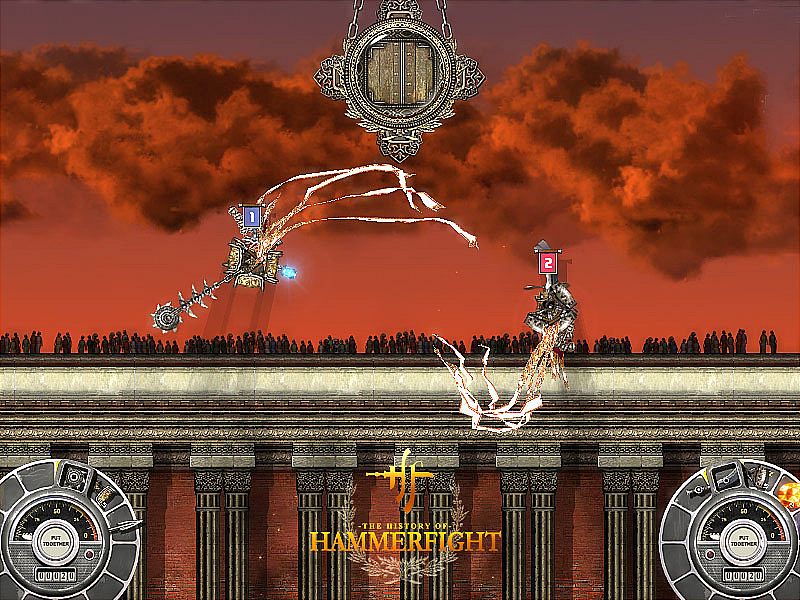
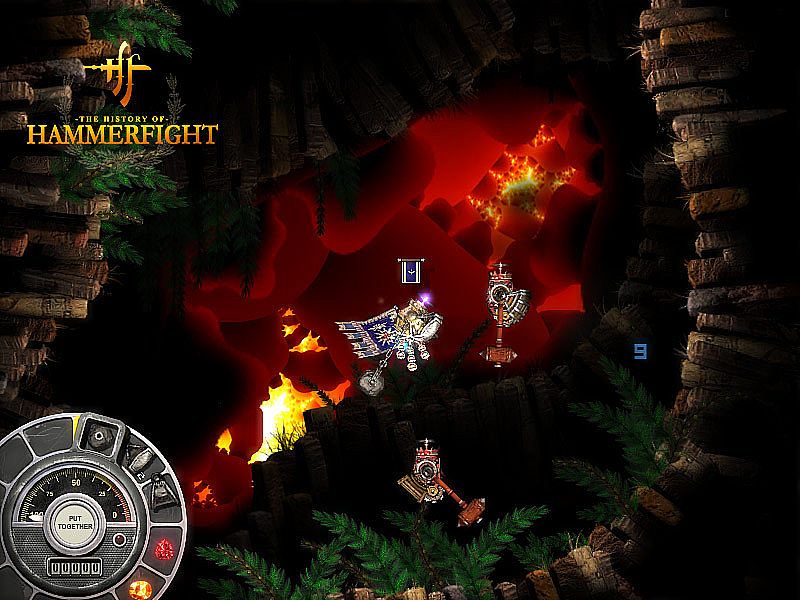
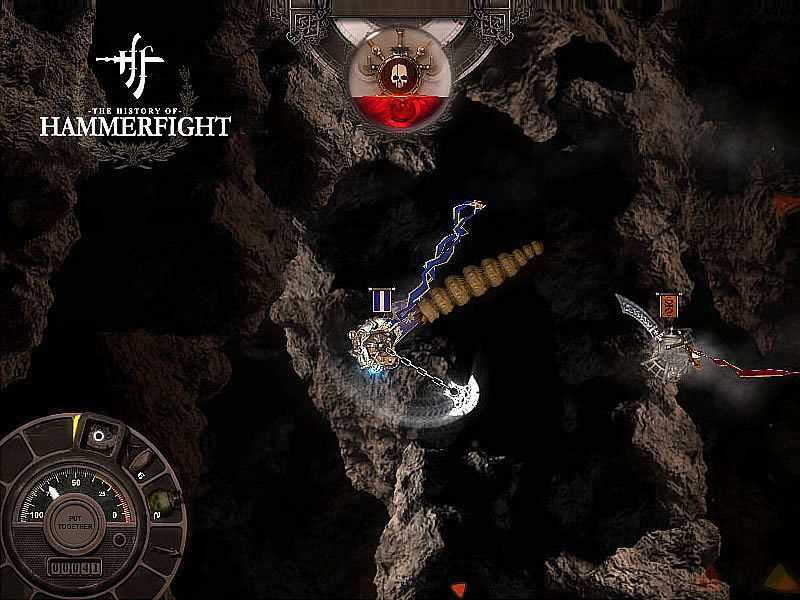
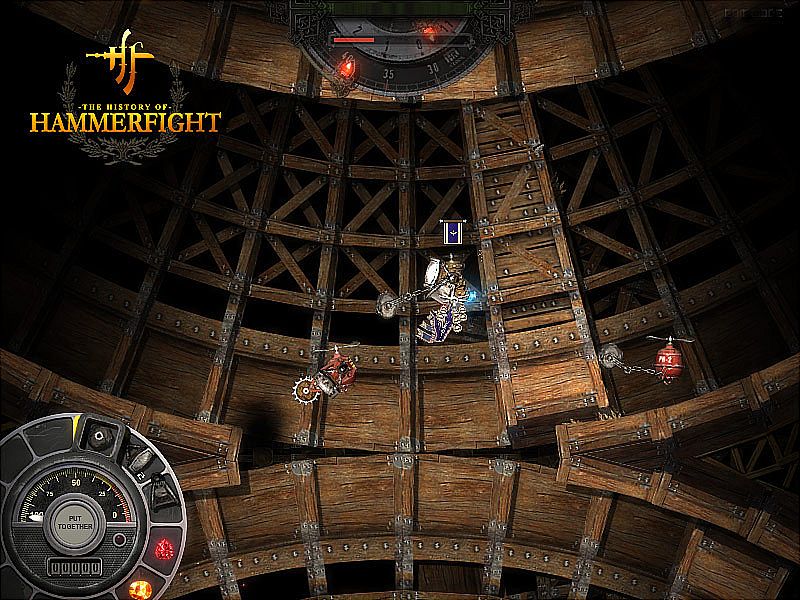
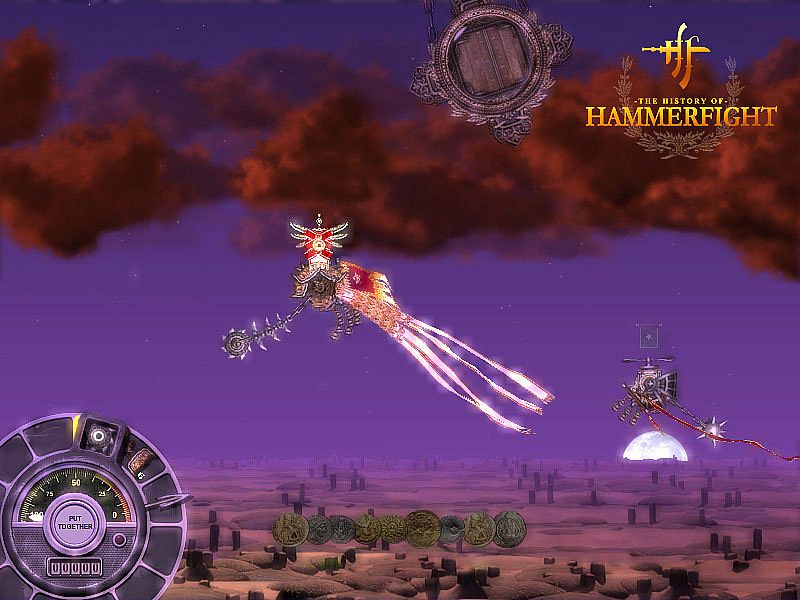
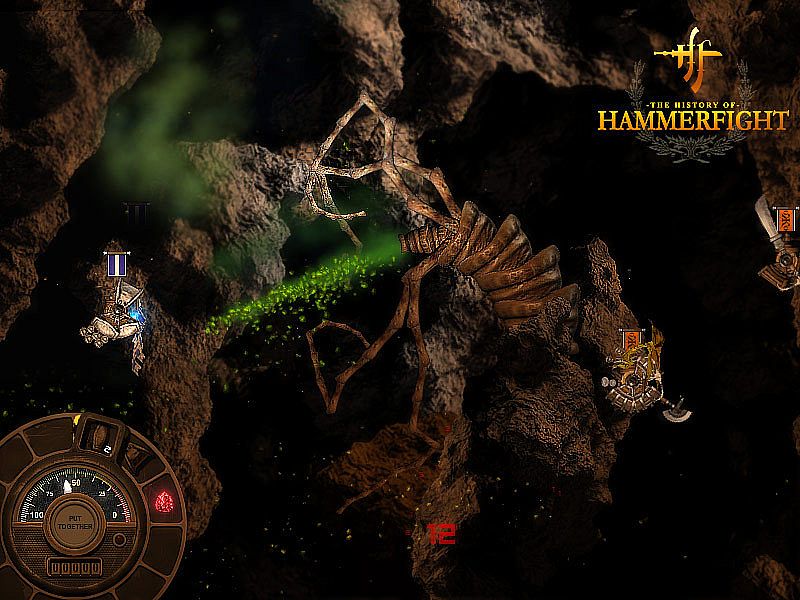
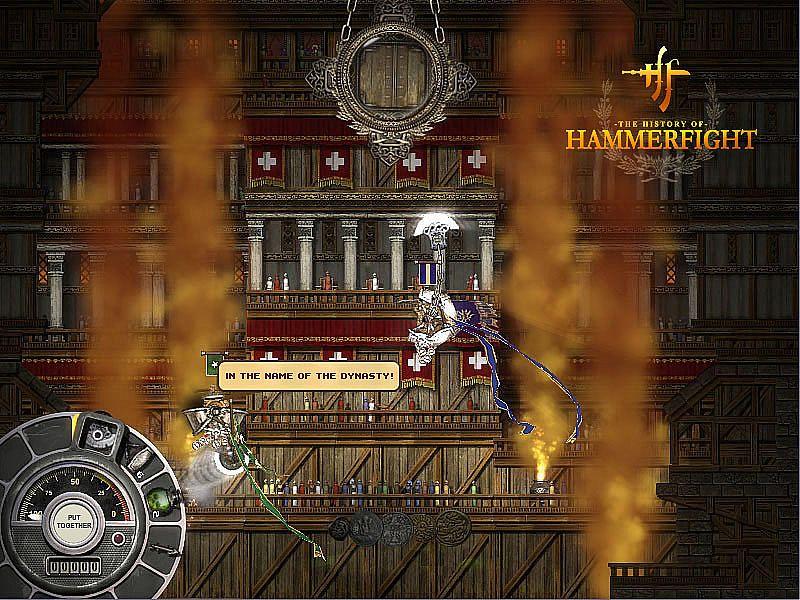
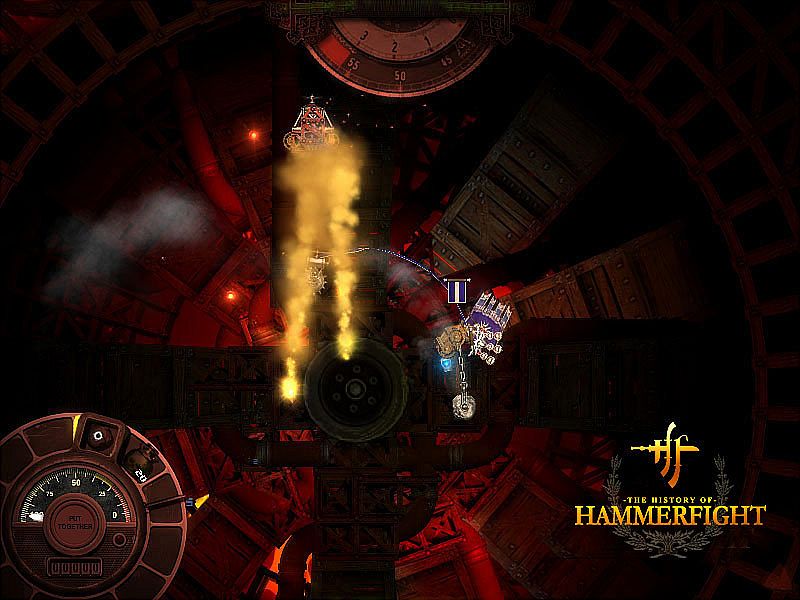
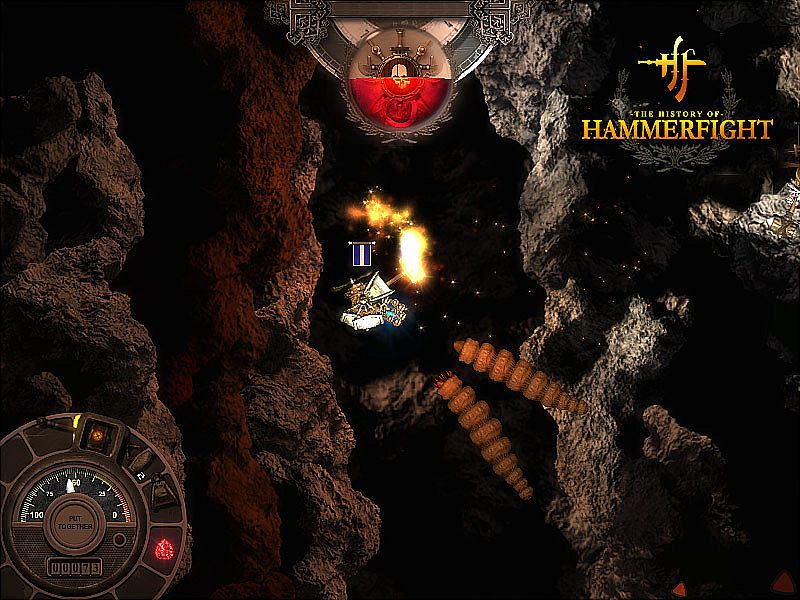
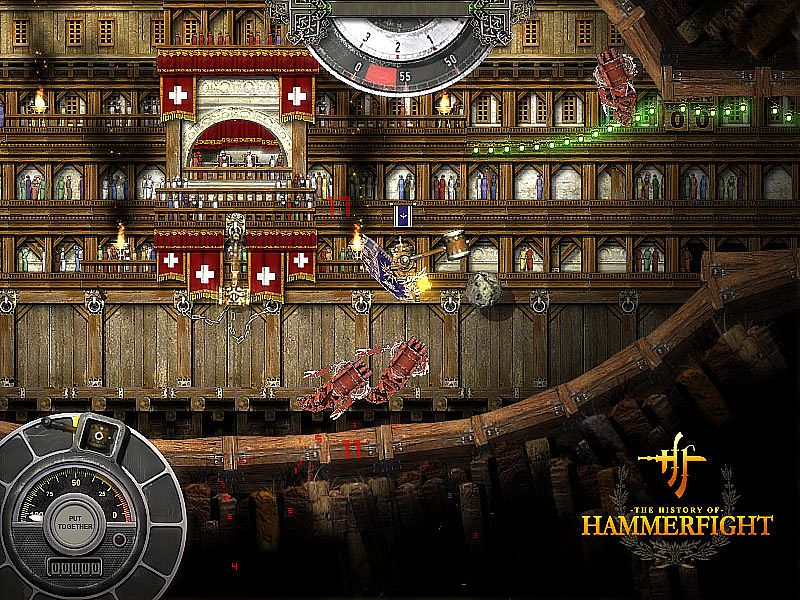
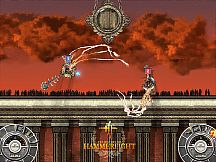
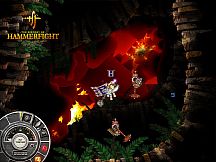
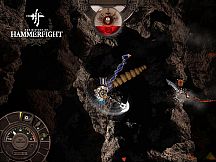
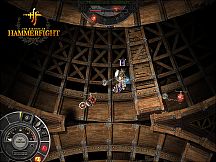
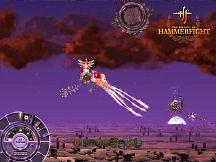
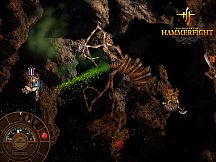
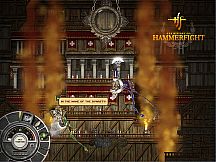
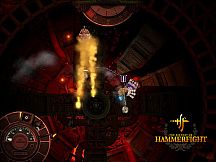
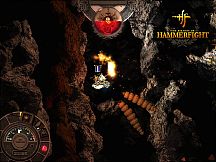
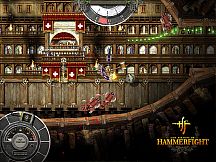
Hammerfight is a 2D action indie game centered on physics-driven combat between flying machines armed with melee weapons. Players pilot hovering vehicles through enclosed arenas, swinging attached blades, hammers, maces, and other implements by moving the mouse. The core loop revolves around building momentum through circular motions to deliver strikes that exploit centripetal force and inertia, rather than direct button presses or aiming.
Gameplay
The combat system ties rider movements directly to mouse input, creating a tactile sense of weapon weight and swing arc. Vehicles hover in side-view environments filled with breakable structures and environmental hazards that react realistically to impacts. Different weapon categories influence tactics: lighter slashing tools favor speed and reach against unarmored targets, while heavy blunt options excel at shattering armor through raw momentum. Players can equip two weapons simultaneously and experiment with combinations that complement their preferred flight patterns and strike timing.
Progression involves a single-player campaign that introduces new arenas, enemy types, and weapon unlocks. Over fifty distinct weapons appear across the experience, each with unique mass, damage profiles, and handling characteristics. Physics simulation extends to vehicle handling, where sudden stops or collisions affect stability and positioning. The visual style emphasizes clean 2D artwork with detailed machinery and particle effects during impacts.
Game Modes
The main campaign provides a structured narrative experience with escalating challenges and story beats. Completing sections of the campaign unlocks three additional modes that shift focus away from linear progression. These include competitive or survival-oriented formats that support up to four players through local multi-mouse input on a single system.
One mode emphasizes direct confrontations in arena-style layouts, another incorporates hunting elements against specific creature types, and a third introduces ball-based mechanics that repurpose the swinging physics for different objectives. Each mode reuses the same core control scheme and weapon roster, encouraging players to refine techniques across varied rulesets rather than learning entirely new systems.
Control and Physics Systems
Mouse movement translates into vehicle positioning and weapon swings without additional input layers. Circular motions generate the speed needed for powerful hits, while precise adjustments allow defensive maneuvers or chaining attacks. The simulation accounts for recoil, object breakage, and momentum transfer between colliding entities, producing emergent outcomes during prolonged engagements.
Weapon variety supports multiple playstyles within the same physics framework. Players adjust their approach based on enemy armor levels and arena layout, learning to maintain spin on heavier tools or execute quick flicks with lighter ones. Breakable objects add tactical layers, as destroyed cover can alter flight paths or create openings for follow-up strikes.
Is It Worth Playing?
Hammerfight suits players who enjoy skill-based mechanics that reward practice over reflexes or resource management. The physics-driven combat creates a distinct feel compared to traditional action titles, with mastery coming from consistent mouse control and adaptation to different weapon weights. Local multiplayer options add replay value for groups willing to share input devices.
The game launched in 2009 and remains available as a complete package without ongoing seasonal content or major patches. Its focused design and emphasis on mechanical depth continue to attract interest from those seeking unconventional indie experiences. Individuals drawn to experimental control schemes and physics experimentation will find the most satisfaction, while those preferring modern online features or frequent updates may look elsewhere.