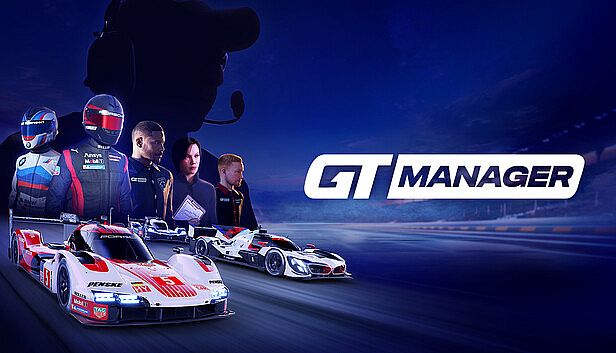





















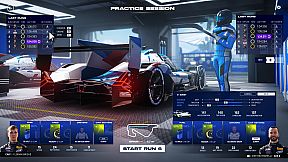
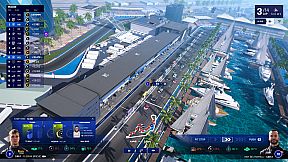
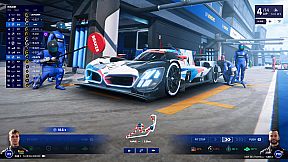
GT Manager is a strategy and simulation game focused on motorsport team management. Players take on the role of a team principal building and leading a racing outfit through the world of endurance GT racing on PC.
Gameplay
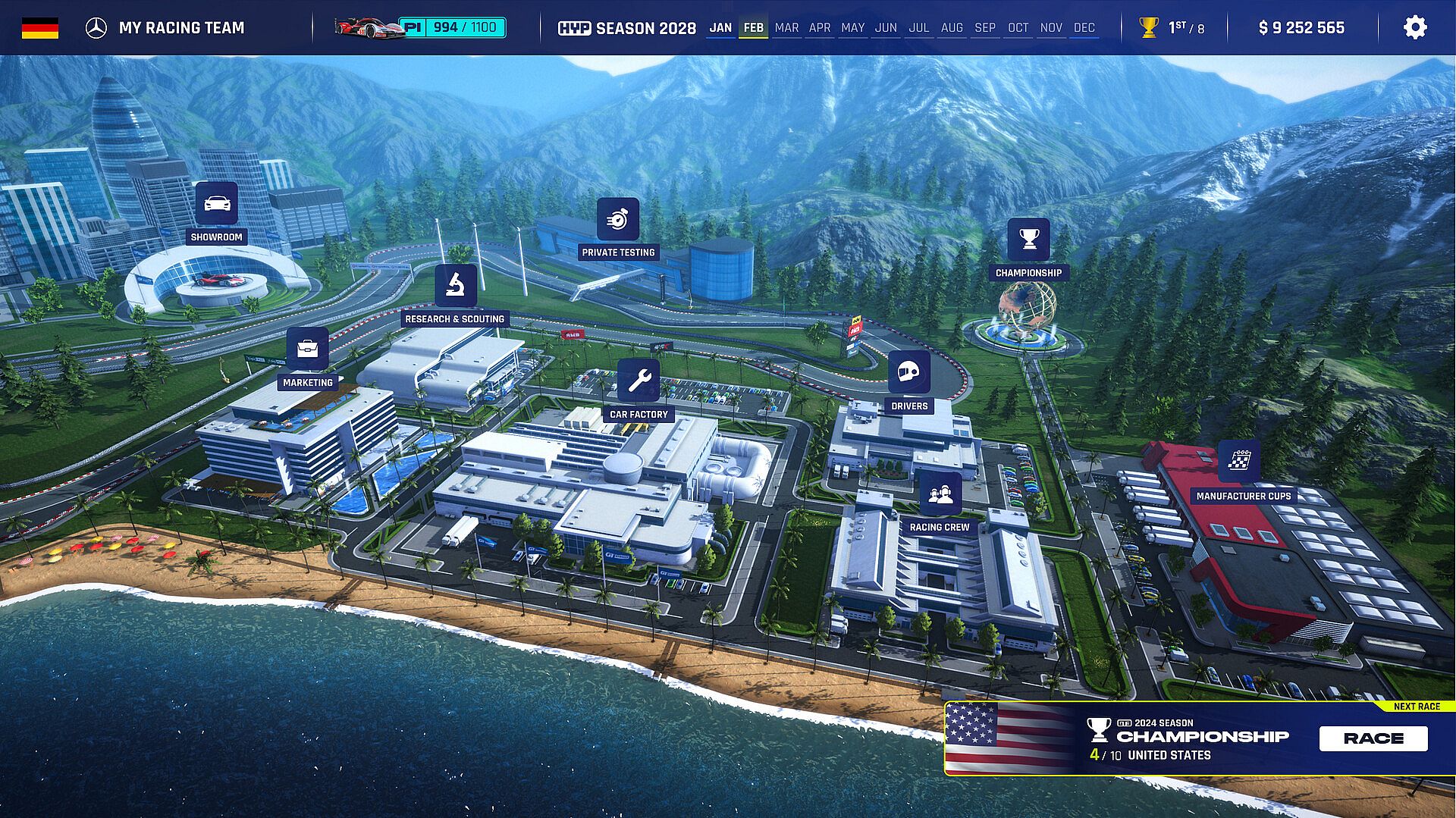
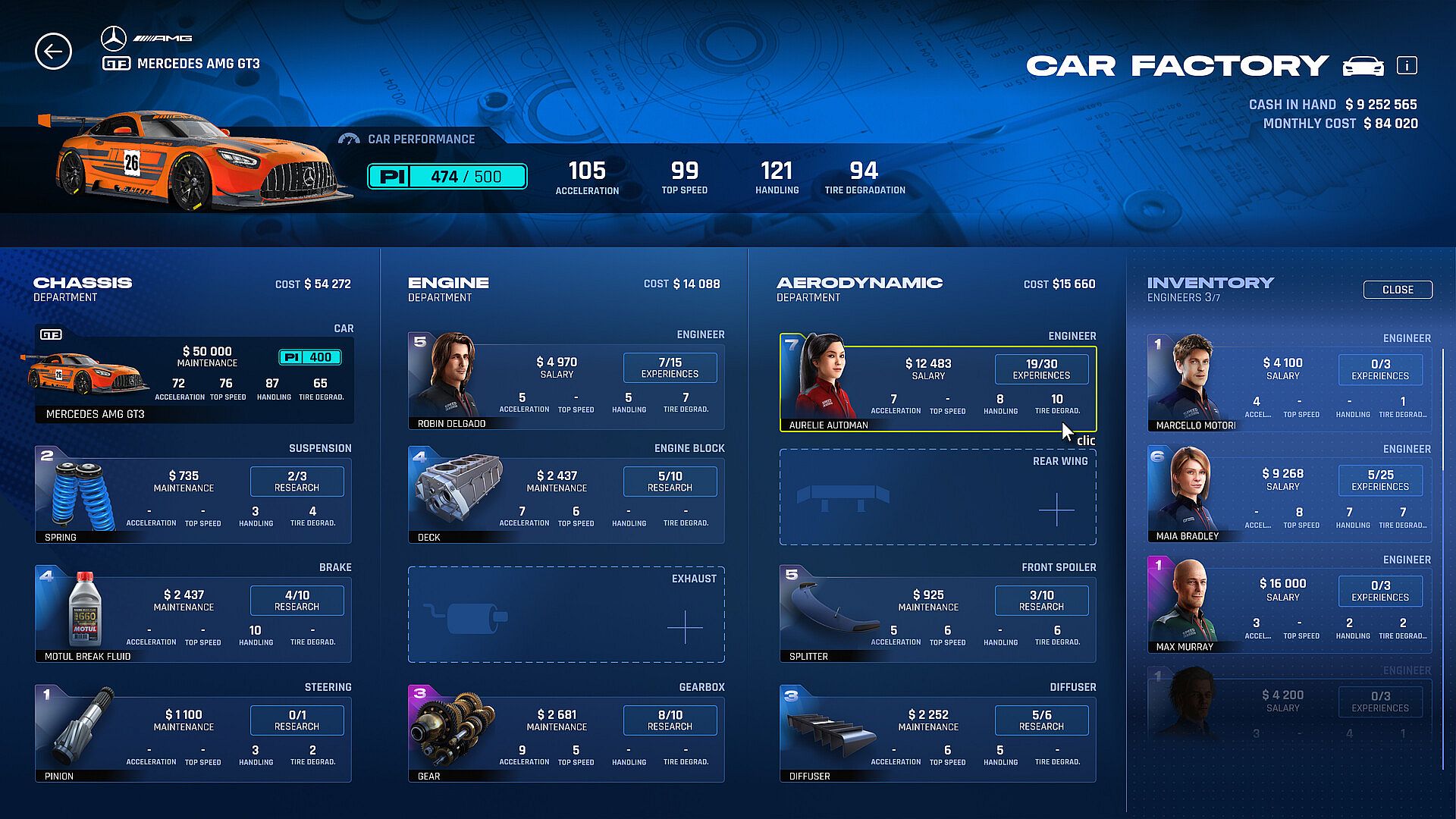
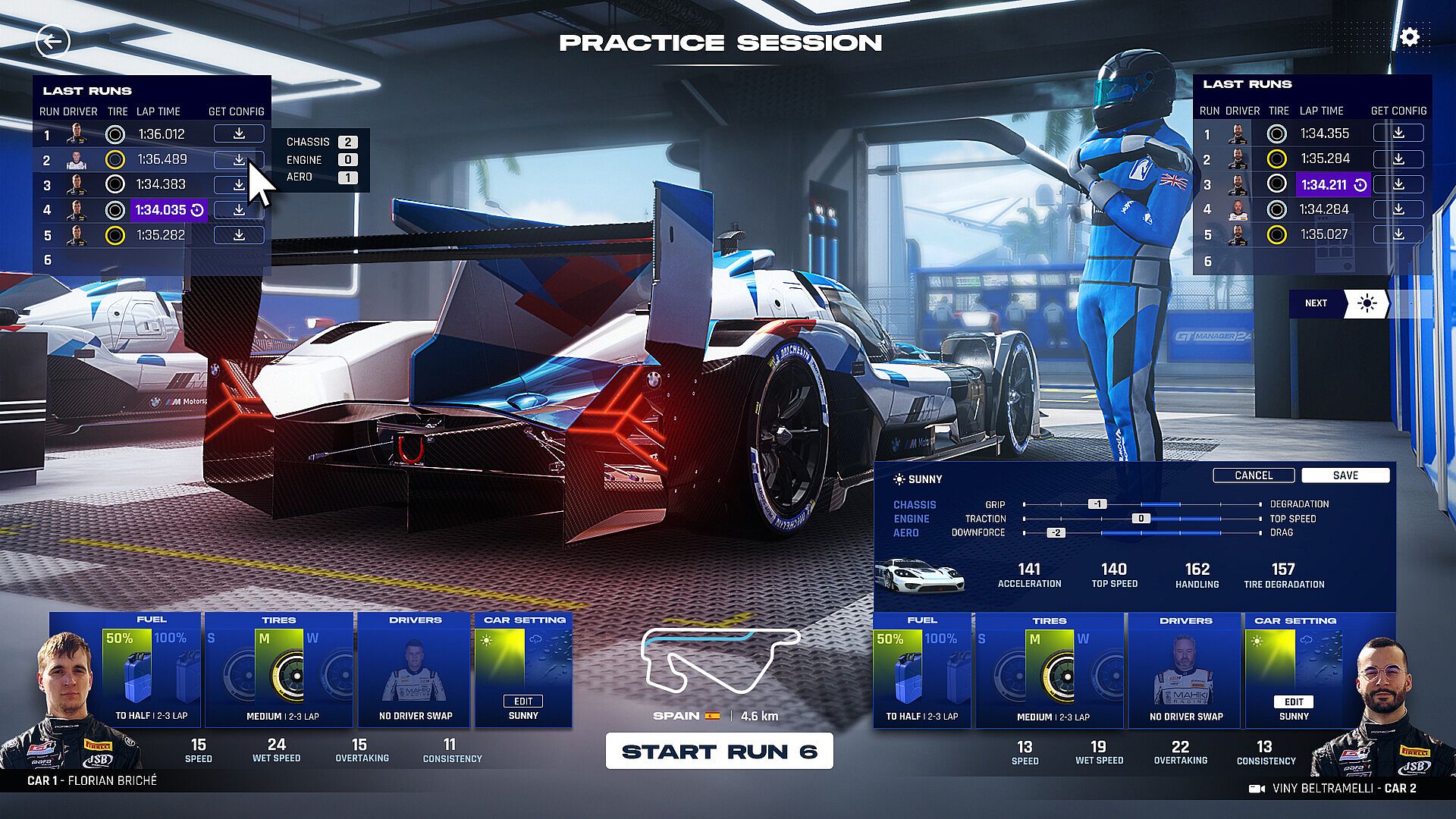
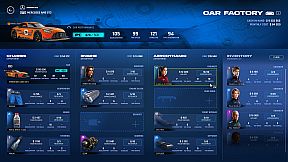
The core loop centers on long-term team development and race-day decision making. Players begin with a GT4 squad and handle everything from facility construction to staff hiring and car upgrades. Facilities expand from a basic regional factory into advanced workshops that support research, marketing, and pit-crew improvements. Car performance is tuned through engine, aero, and chassis upgrades while balancing reliability against outright speed. Between events, setup experiments occur on practice runs that account for track-specific grip, weather, and tire wear.
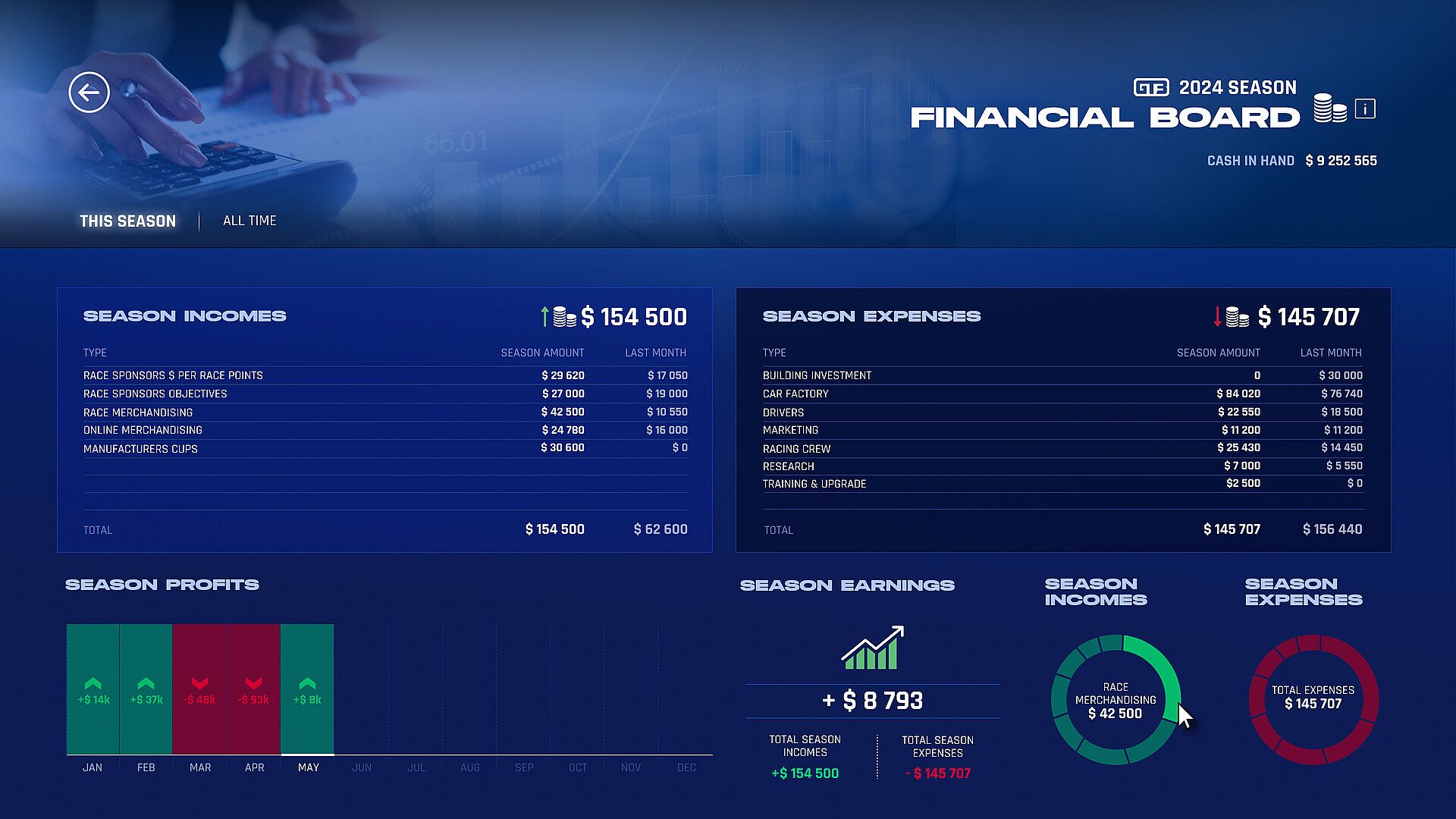
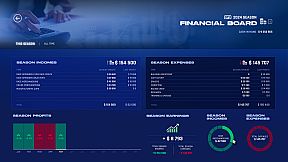
Financial management runs alongside technical work. A detailed ledger tracks monthly revenues and expenses, guiding choices on sponsorship contracts, performance bonuses, or seasonal loans. Staff contracts renew each season, letting managers allocate resources toward faster pit stops, deeper research, or stronger marketing income. Wrong calls on spending or upgrades can derail an entire campaign, placing full responsibility on the player for every outcome.
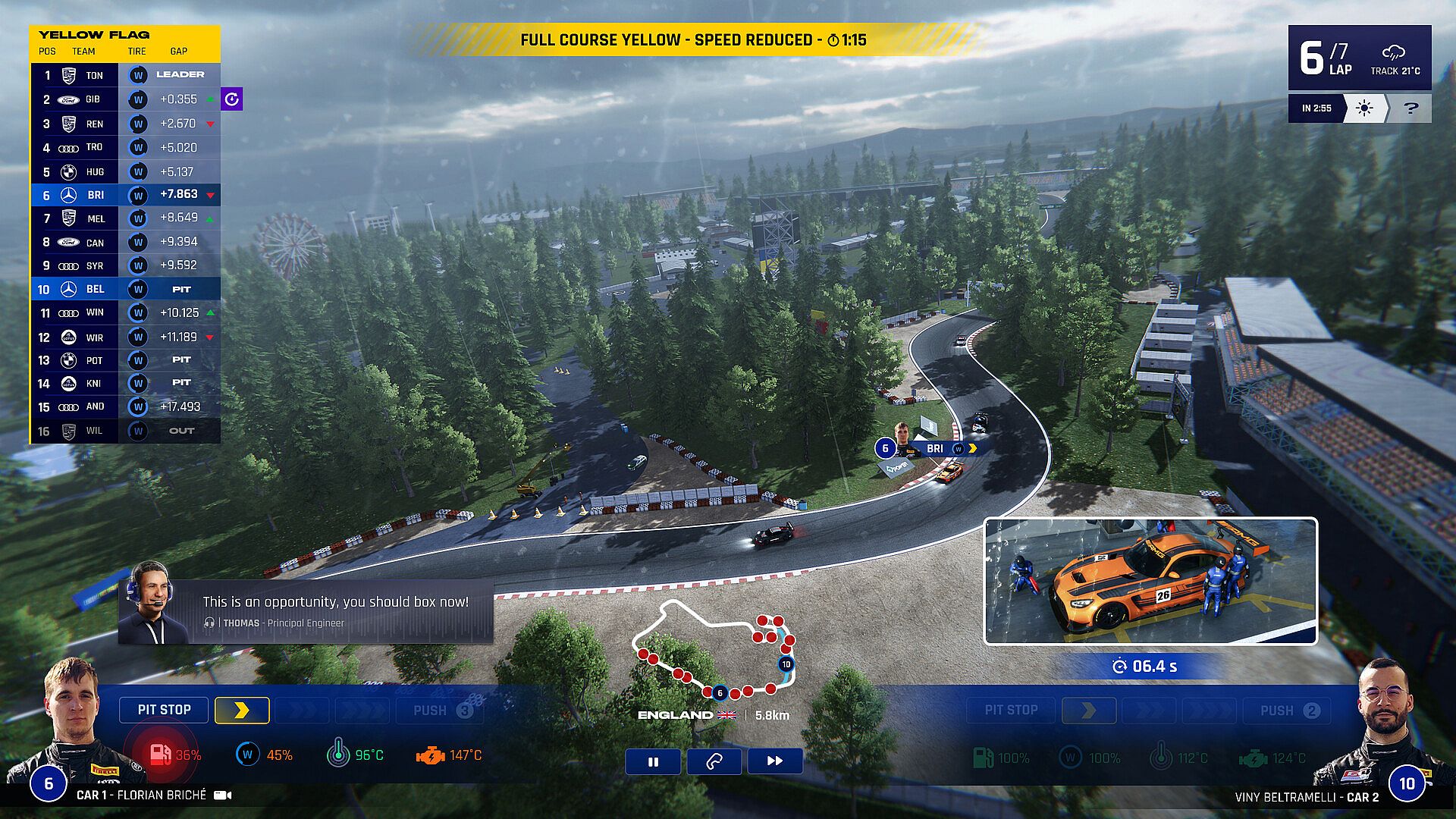
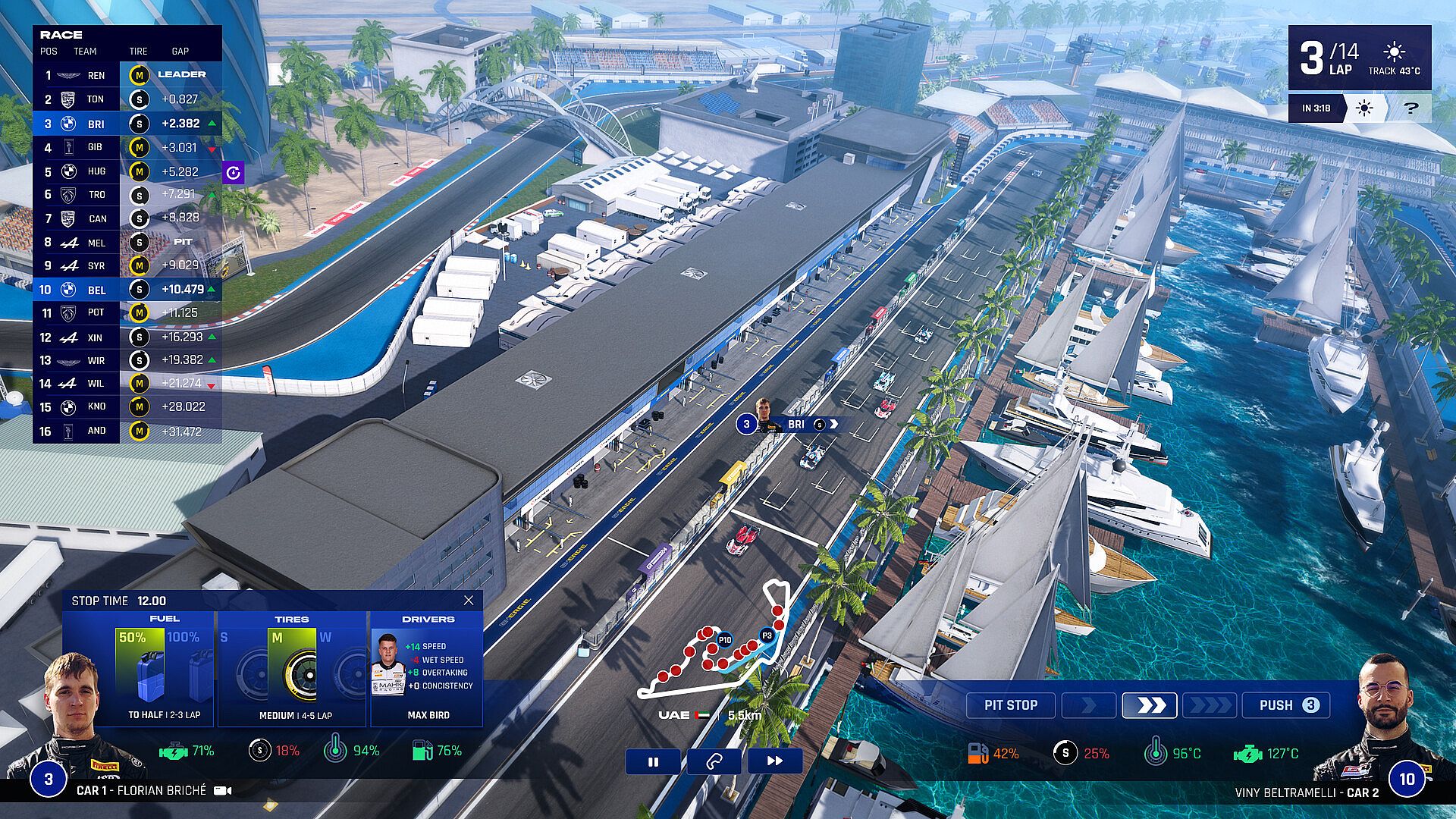
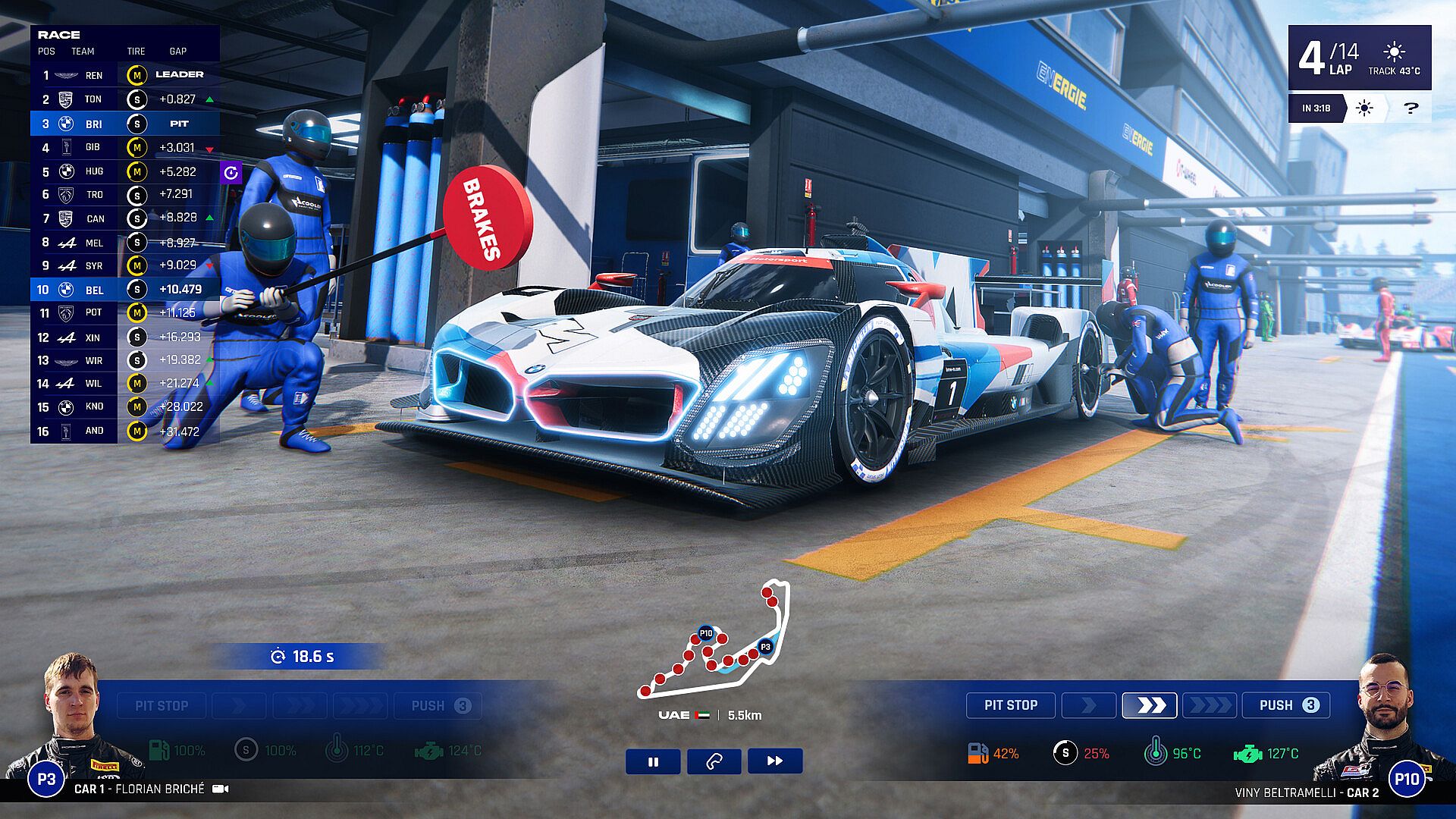
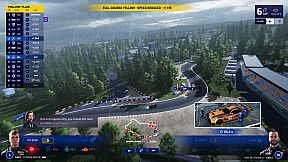
Race weekends demand constant attention. Drivers are selected for qualifying and stints, strategies are set for two or three stops, and real-time adjustments respond to changing conditions, overheating engines, or sudden incidents. Full-course yellow periods, on-track accidents, and mandatory driver swaps add layers of complexity that increase with league progression. The simulation tracks tire degradation, track evolution, and rival behavior, requiring quick tactical shifts to gain positions or protect equipment.
Game Modes
Competition unfolds across five official leagues that mirror real GT and endurance categories. The structure begins in GT4 and advances through GT3, GT2, and GTE before reaching the top-tier Hypercar division. Each league introduces new performance demands and strategic depth while unlocking additional simulation features such as more frequent incidents or complex pit rules.
Seasons consist of eight to ten events held on thirteen distinct circuits. Races range from shorter sprints to extended endurance formats, each presenting unique challenges in setup, tire management, and fuel strategy. Official cars from manufacturers including Porsche, Peugeot, Alpine, BMW, Acura, Ford, Audi, Corvette, and Aston Martin populate the grids, alongside real driver rosters and competing teams drawn from series such as the WEC, IMSA, and GT World Challenge Europe. Progression requires accumulating points through consistent results to earn promotion and ultimately claim the Hypercar championship.
Team Building and Progression
Recruitment draws from a pool of more than forty licensed drivers with proven race-winning and championship pedigrees. Contracts and development focus on matching driver strengths to specific tracks and race lengths. Visual team identity, headquarters expansion, and department specialization create a personalized organization that grows across multiple seasons. The system rewards careful planning, as each upgrade path influences income, reliability, and on-track competitiveness over the long term.
Is It Worth Playing?
GT Manager delivers a focused management experience for players who enjoy overseeing every detail of a racing operation without direct driving control. The game reached full release on June 2, 2025, following an Early Access period that began in September 2024. Steam user reviews stand at mixed with 68 percent positive from roughly 218 ratings, reflecting appreciation for the strategic depth alongside notes on the heavy micromanagement required during races. It suits enthusiasts of simulation titles who value progression systems, financial oversight, and tactical race calls in a realistic GT setting. Those seeking arcade-style action or lighter casual play may find the pace and decision volume demanding. The single-player campaign provides substantial content through its league structure and seasonal variety, making it a solid choice for dedicated motorsport management fans.