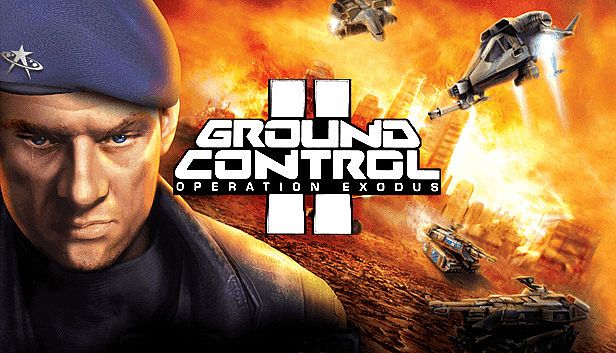















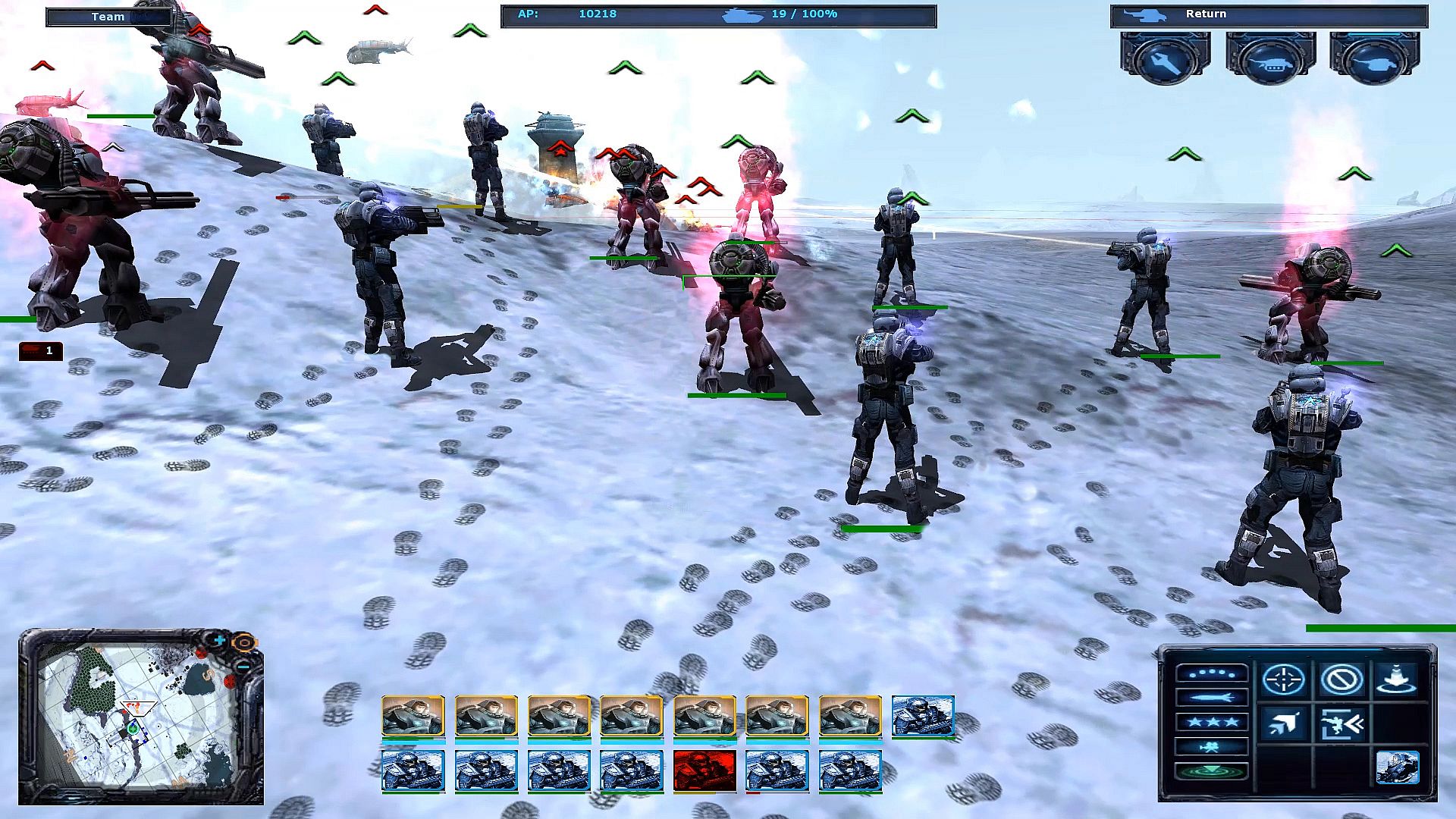
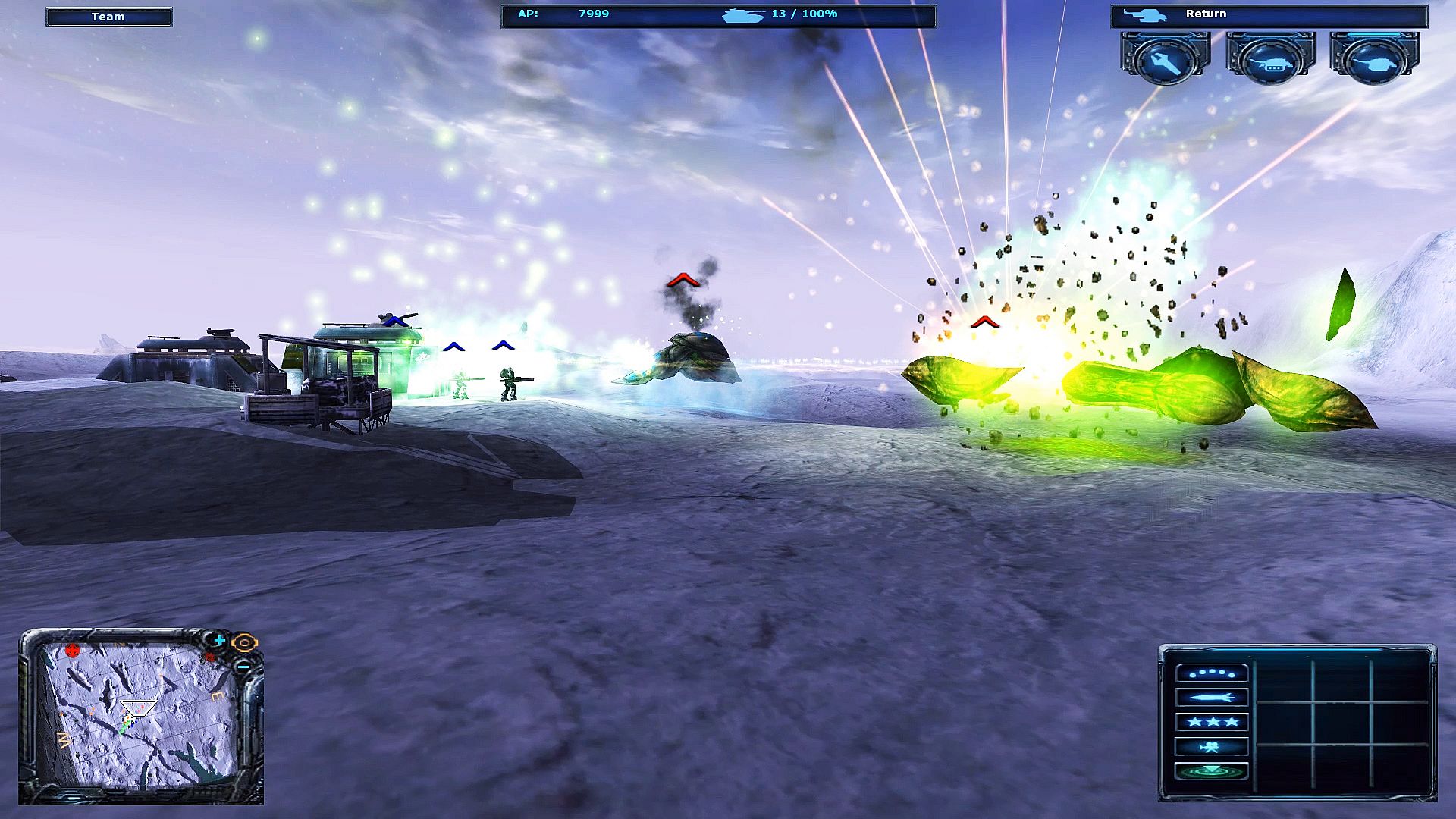
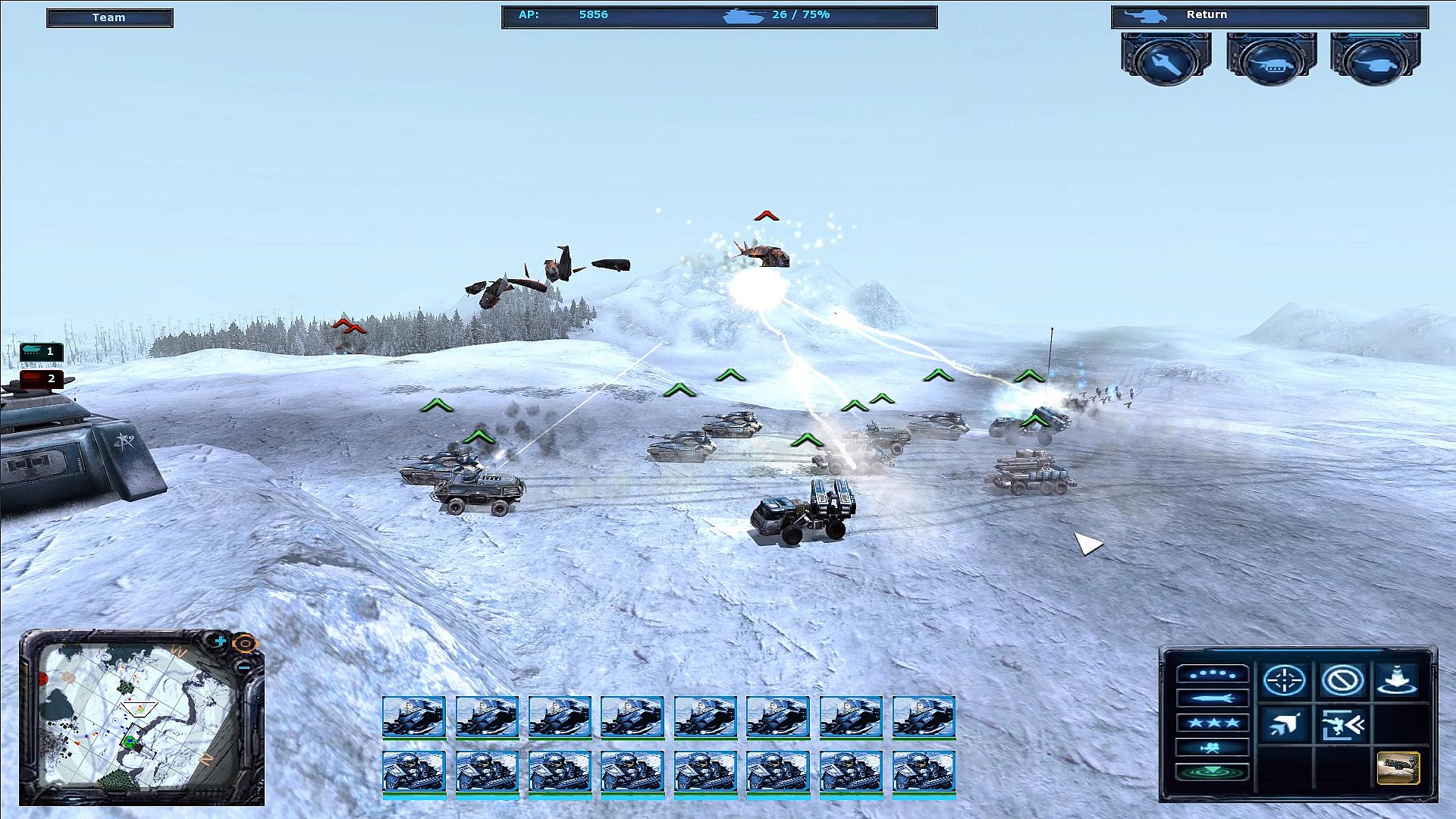
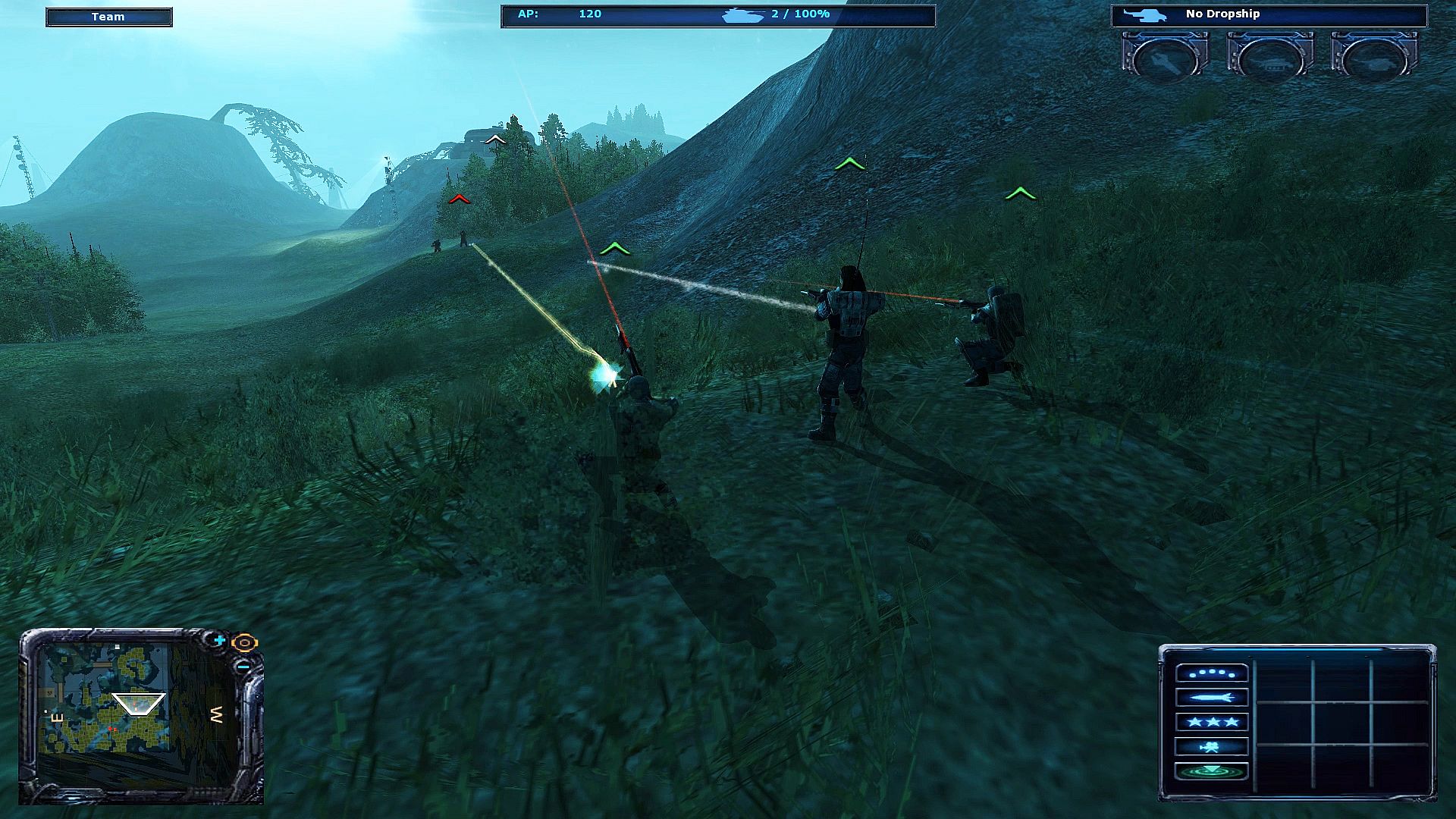
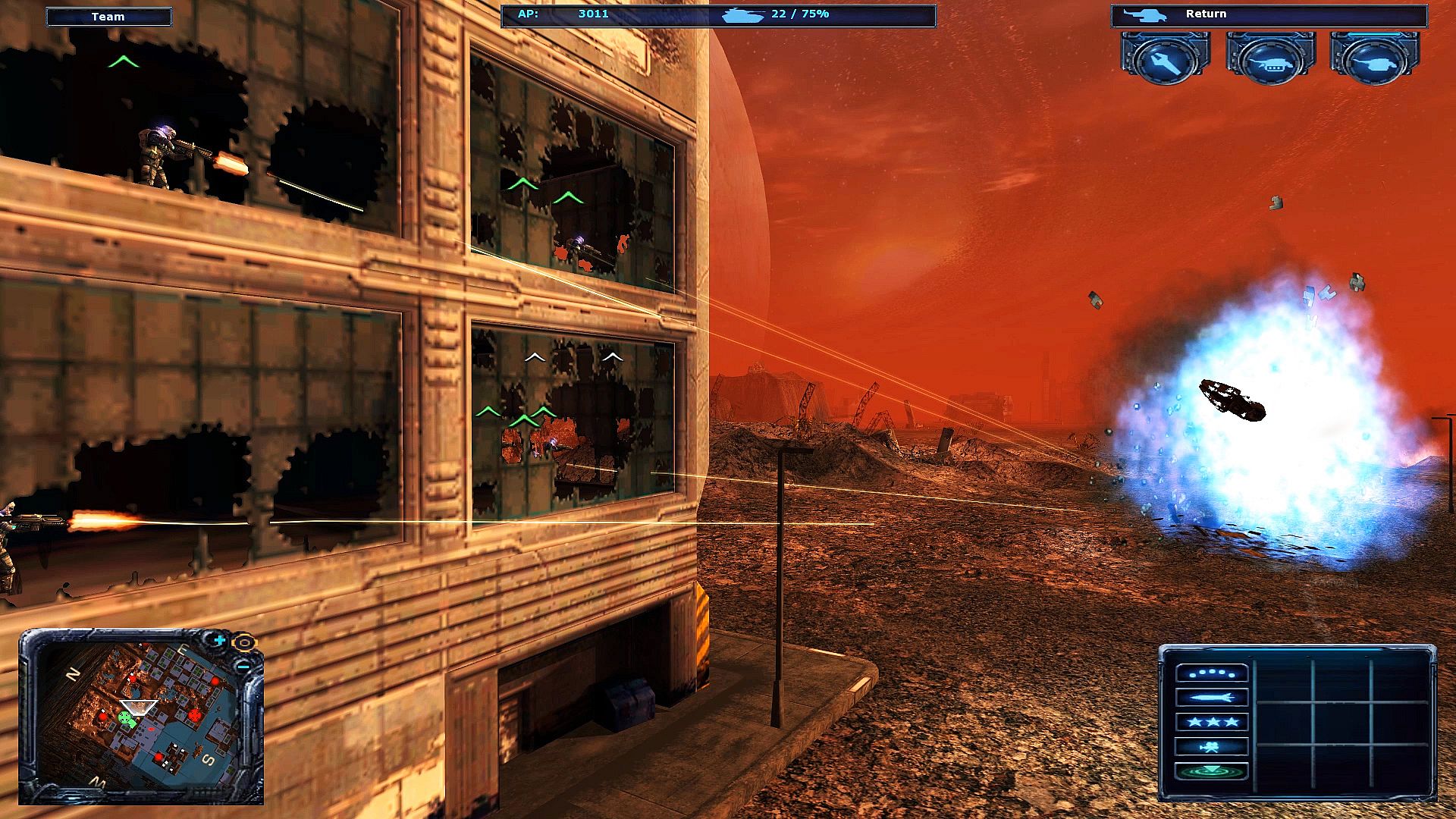
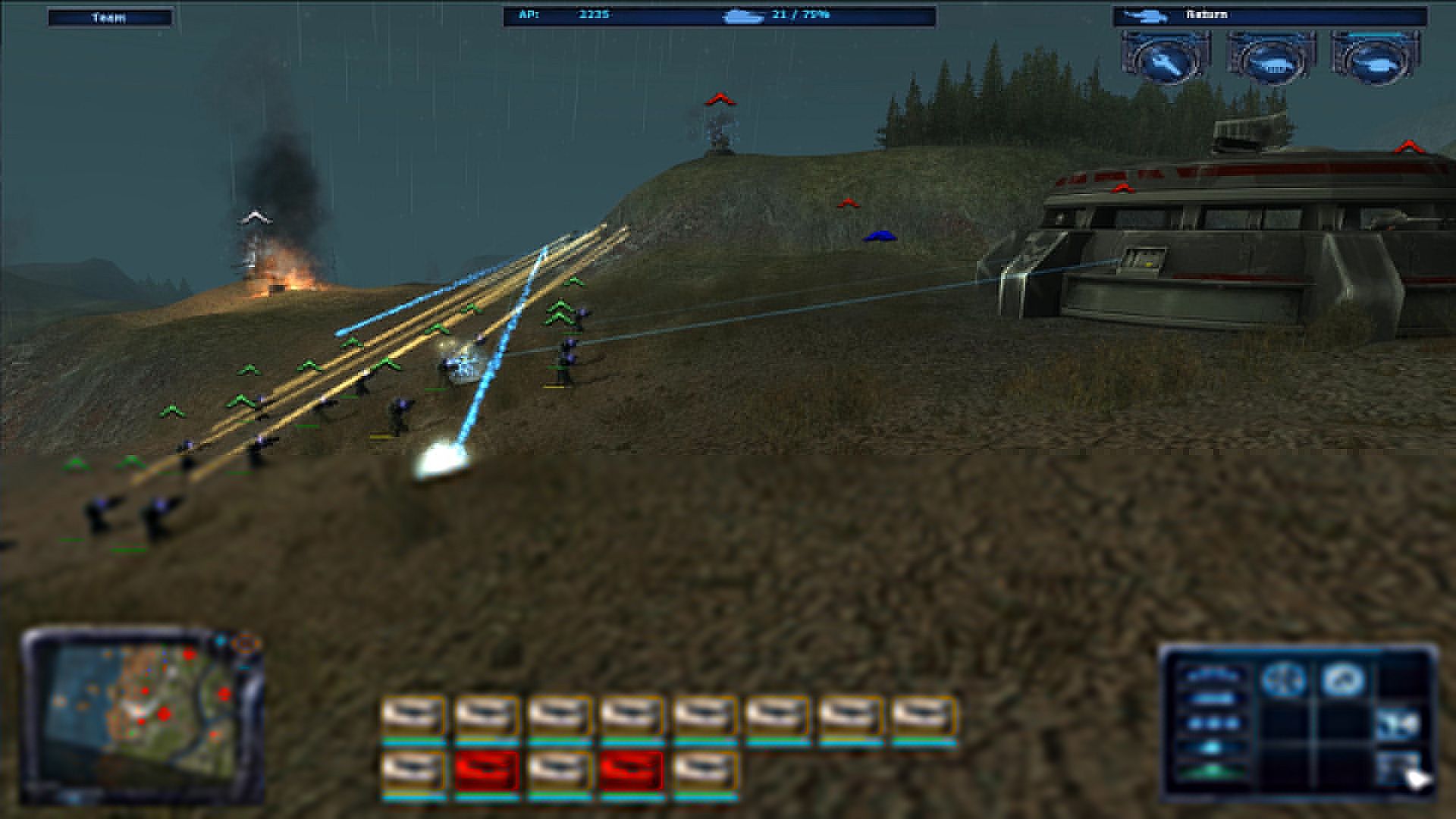
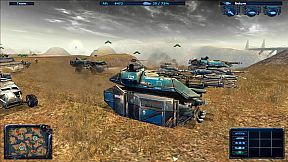
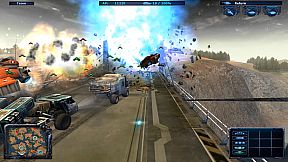
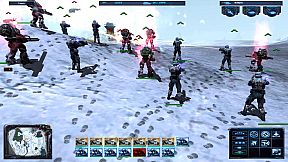
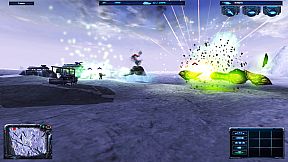
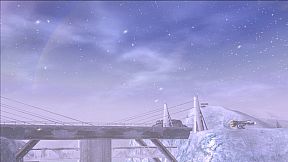
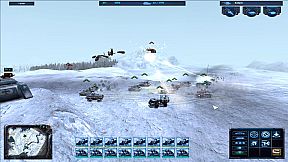
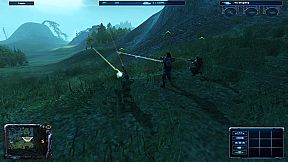
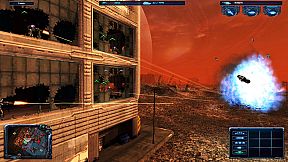
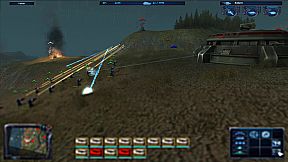
Ground Control II: Operation Exodus is a real-time strategy game that emphasizes tactical squad command over traditional base building. Set in a futuristic conflict, players direct forces in fast-paced battles where positioning, unit composition, and timely support calls determine the outcome. The core loop revolves around deploying units via dropships, capturing key locations to gain acquisition points, and using those points to reinforce squads or call in faction-specific abilities while engaging enemy forces across varied terrain.
Gameplay
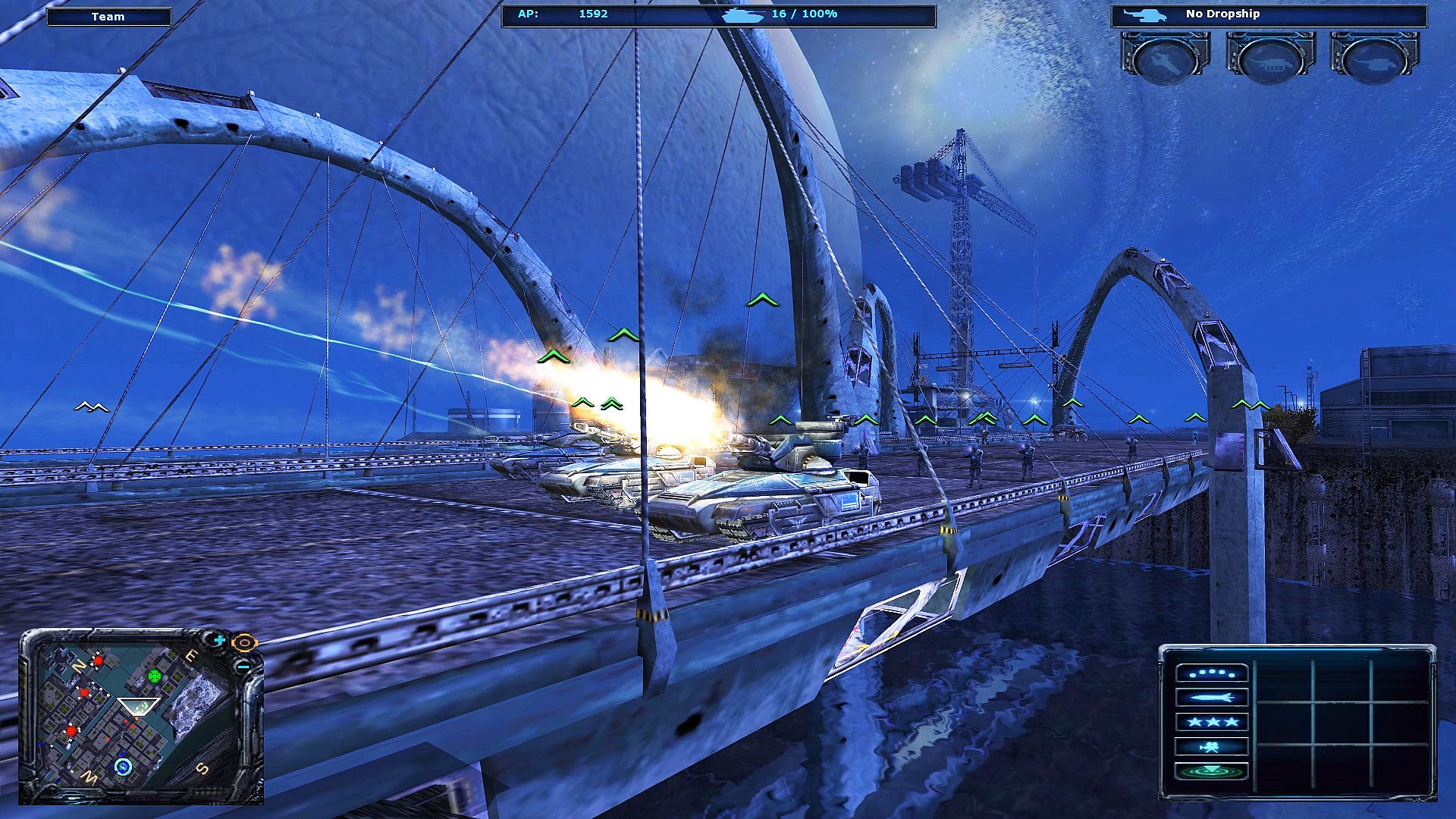
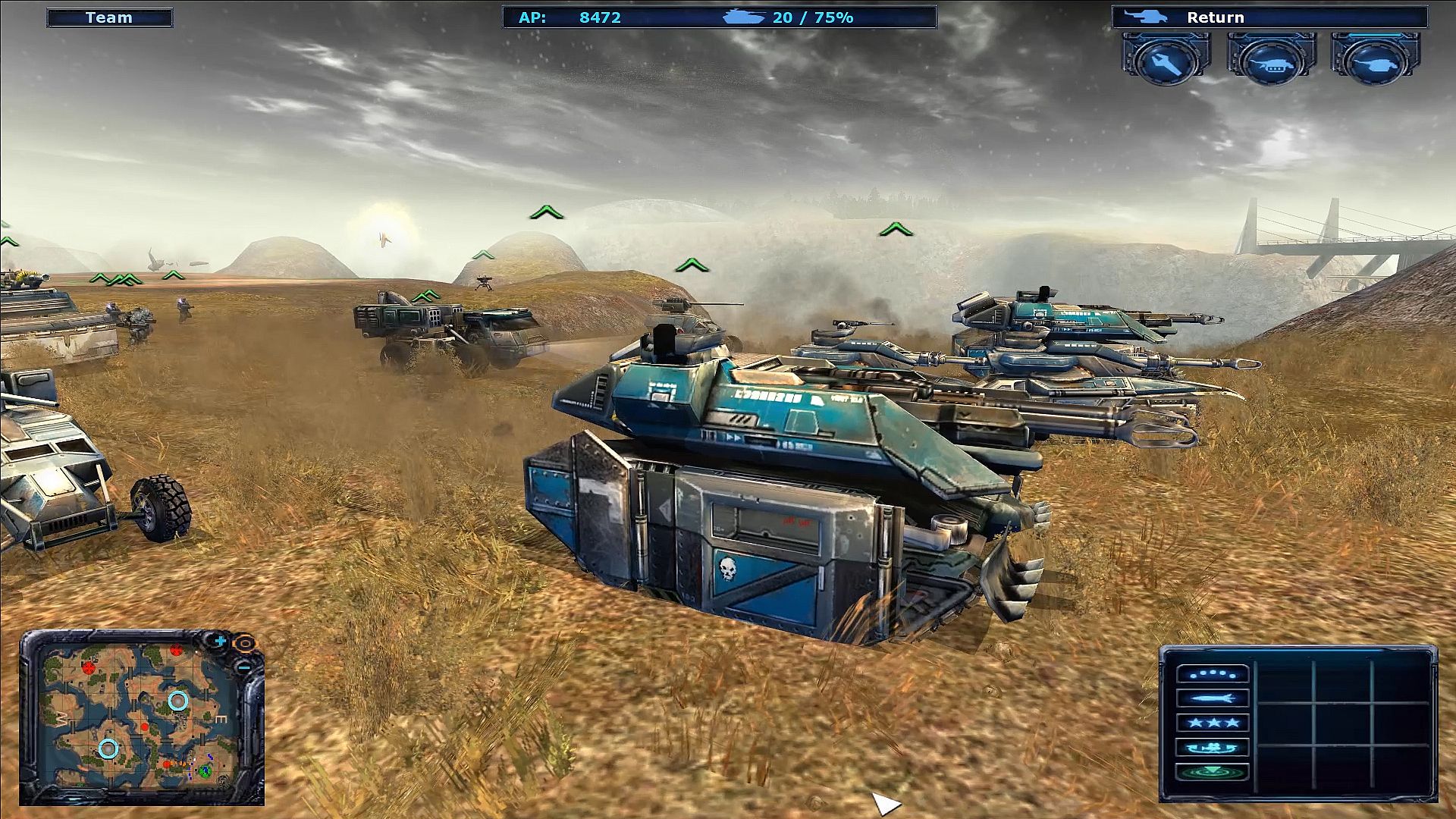
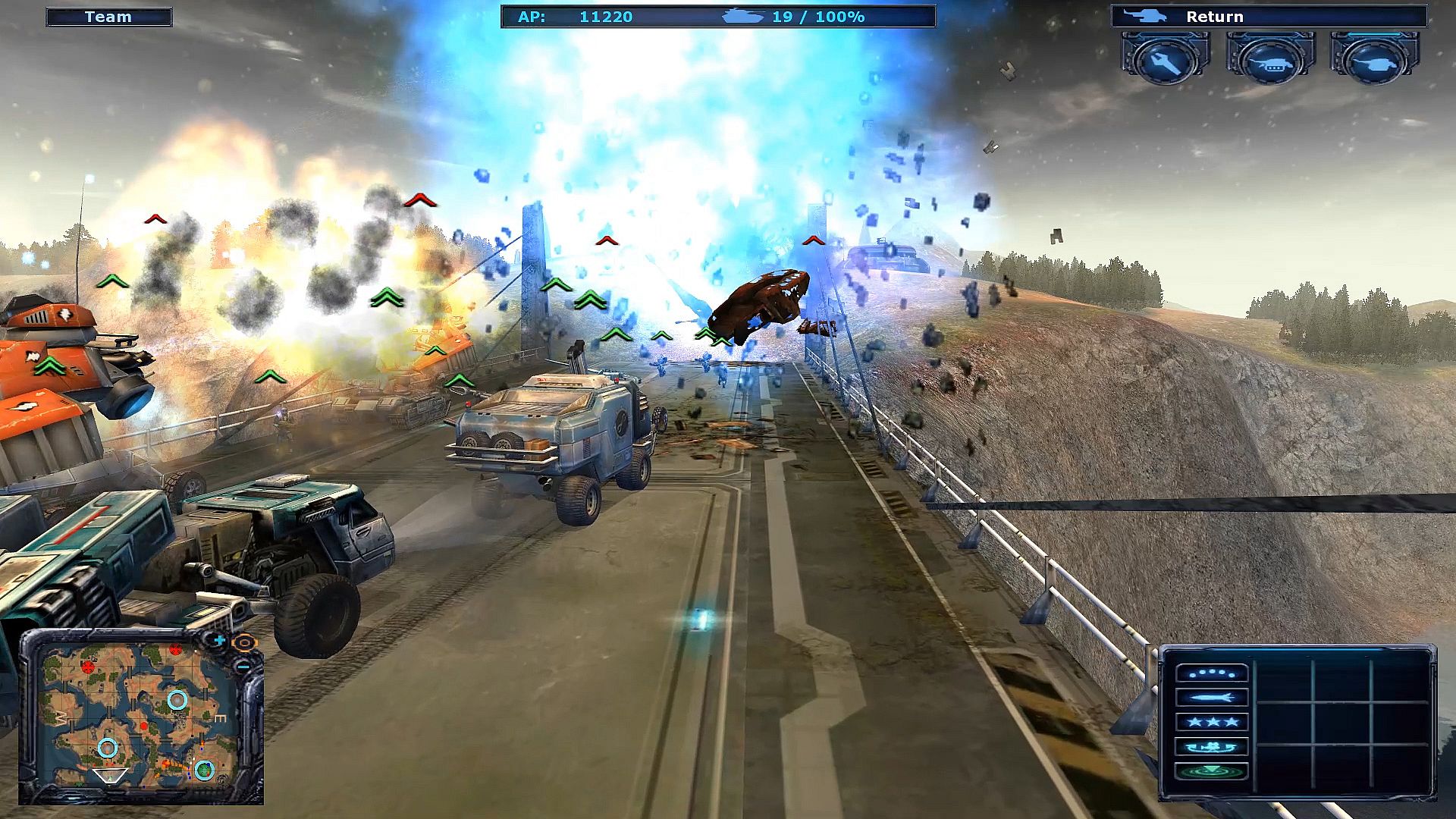
Combat focuses on direct control of mixed squads that include infantry, tanks, artillery, aircraft, and static emplacements. Units arrive on the battlefield through dropships and operate with fixed secondary functions rather than customizable loadouts. Players manage a resource called acquisition points, earned by seizing victory locations and eliminating opponents, which then funds additional deployments and support weapons unique to each side.
Two factions offer distinct playstyles. The Northern Star Alliance fields conventional human military units suited to combined-arms tactics. The alien Viron Nomads allow troops to meld into stronger combined forms, creating opportunities for aggressive, adaptive formations. A total of 33 units across both sides provide variety in firepower, mobility, and durability without requiring extensive economy management.
The pace stays brisk compared with slower real-time tactics predecessors, rewarding quick decisions and coordinated strikes. Camera controls permit full rotation and zooming for precise oversight of engagements, while the absence of persistent bases keeps attention on frontline maneuvering and objective control.
Game Modes
The singleplayer campaign spans 24 squad-based missions divided between the two playable factions. Missions advance a narrative of desperate defense and strategic retreats, with objectives that range from securing landing zones to protecting critical assets under pressure.
Cooperative play lets up to two additional players join the campaign missions, sharing command of squads and coordinating acquisition point spending for combined assaults. This mode preserves the core tactical depth while adding teamwork elements to larger engagements.
Competitive multiplayer supports up to eight participants on ten dedicated maps. Matches emphasize direct confrontation and map control, with all activity restricted to local area network connections following the shutdown of the original online service infrastructure.
Story and Setting
The narrative unfolds in 2741 amid a galaxy-spanning war between the expansionist Terran Empire and the freedom-oriented Northern Star Alliance. After space battles force the NSA into a final defensive stand on its homeworld, an ancient technological artifact emerges as a potential path to survival. Players experience these events through the eyes of field commanders whose decisions influence both immediate battles and larger plot developments, including unexpected alliances and betrayals.
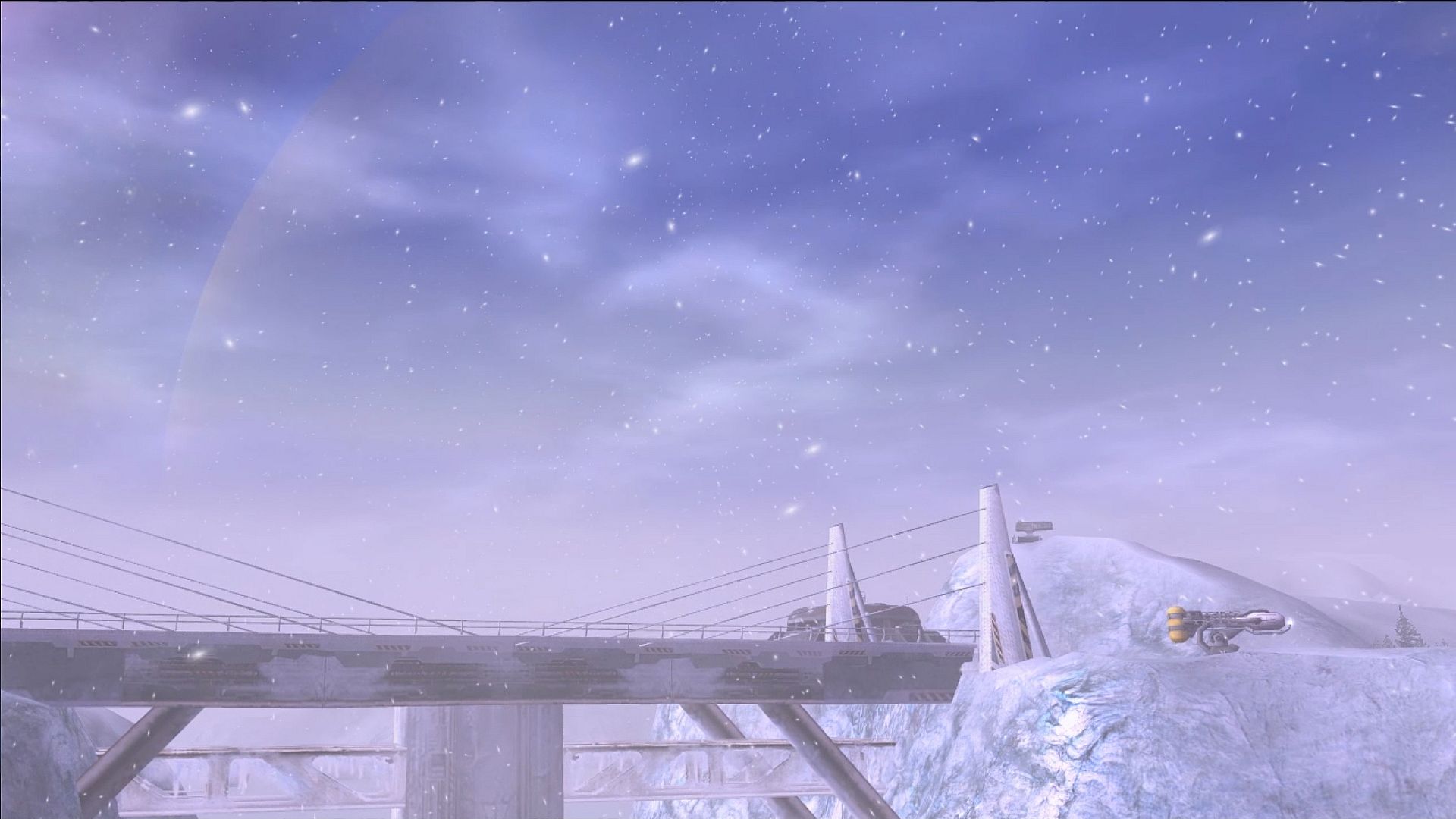
Environmental details and mission briefings convey the scale of the conflict without relying on extensive cutscenes, keeping focus on the tactical layer while providing context for the escalating stakes.
Is It Worth Playing?
Player feedback on current digital storefronts rates the title very positively, with 89 percent approval from several hundred reviews. The campaign delivers a complete singleplayer experience that remains accessible today, supported by graphics that continue to hold visual appeal for their era. Co-op sessions extend replay value for those who enjoy shared tactical challenges.
Limitations center on multiplayer, which functions only through local networks and lacks any ongoing updates or seasonal content. Those seeking modern online matchmaking or frequent patches will find the game dated in that regard. Fans of squad-focused real-time strategy who prioritize mission design and faction asymmetry over base-building loops will find the package rewarding, especially at its modest current price point. The title suits players comfortable with older interfaces who value thoughtful unit command in a self-contained story campaign.