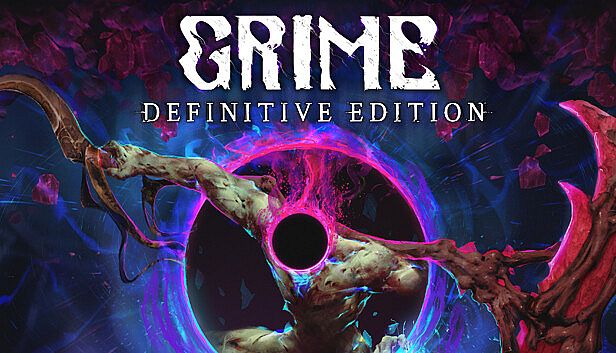


























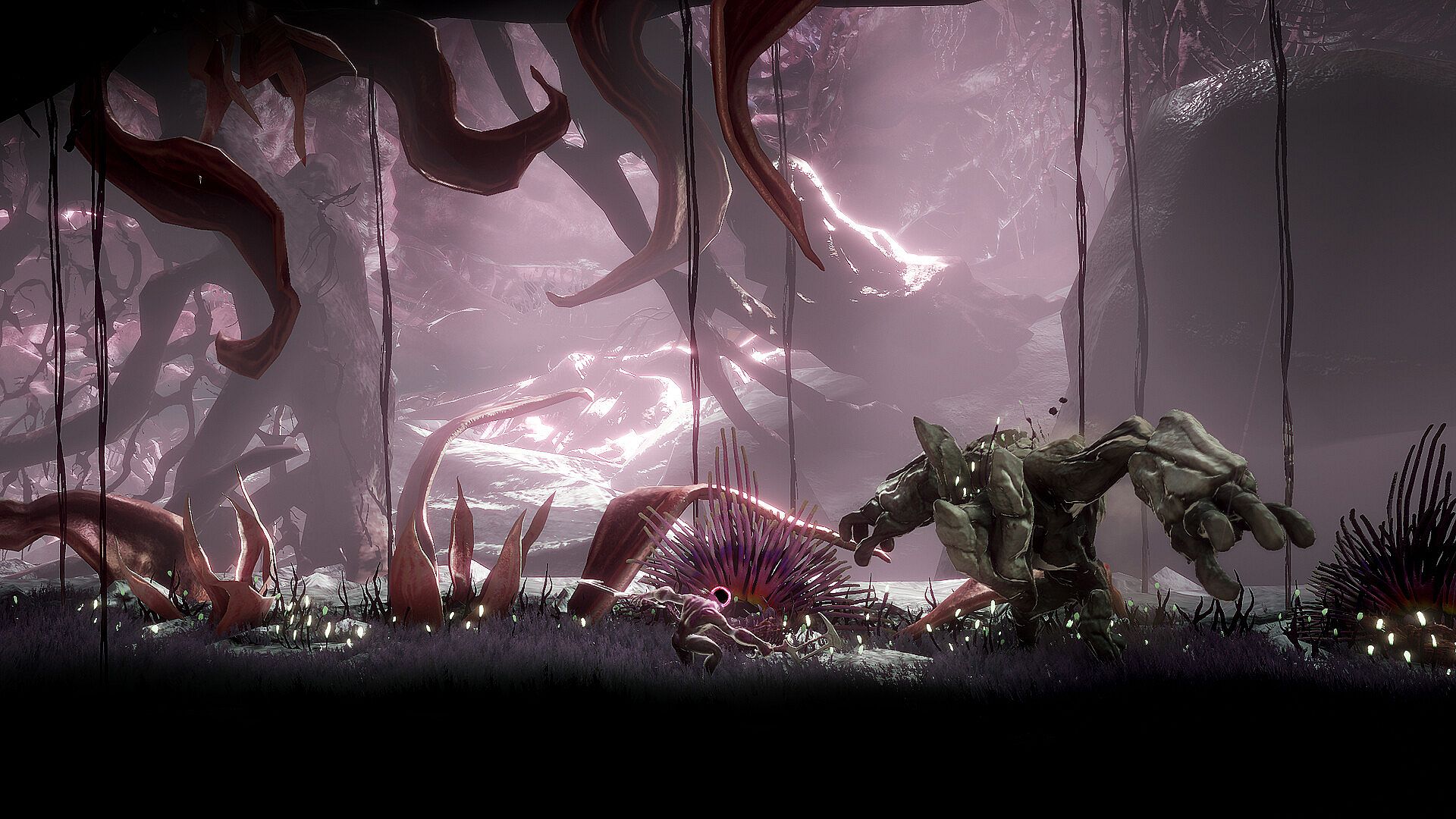
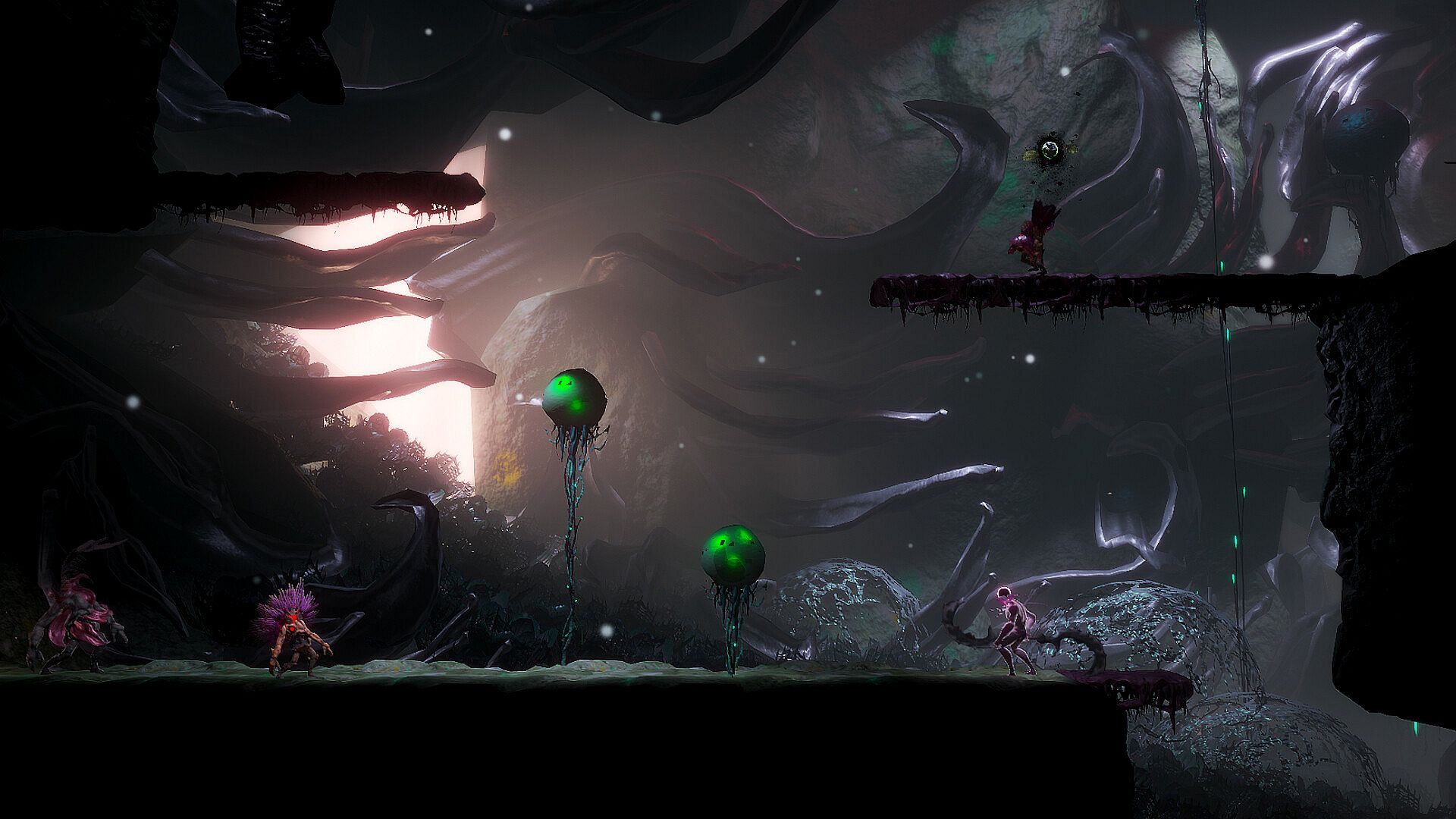
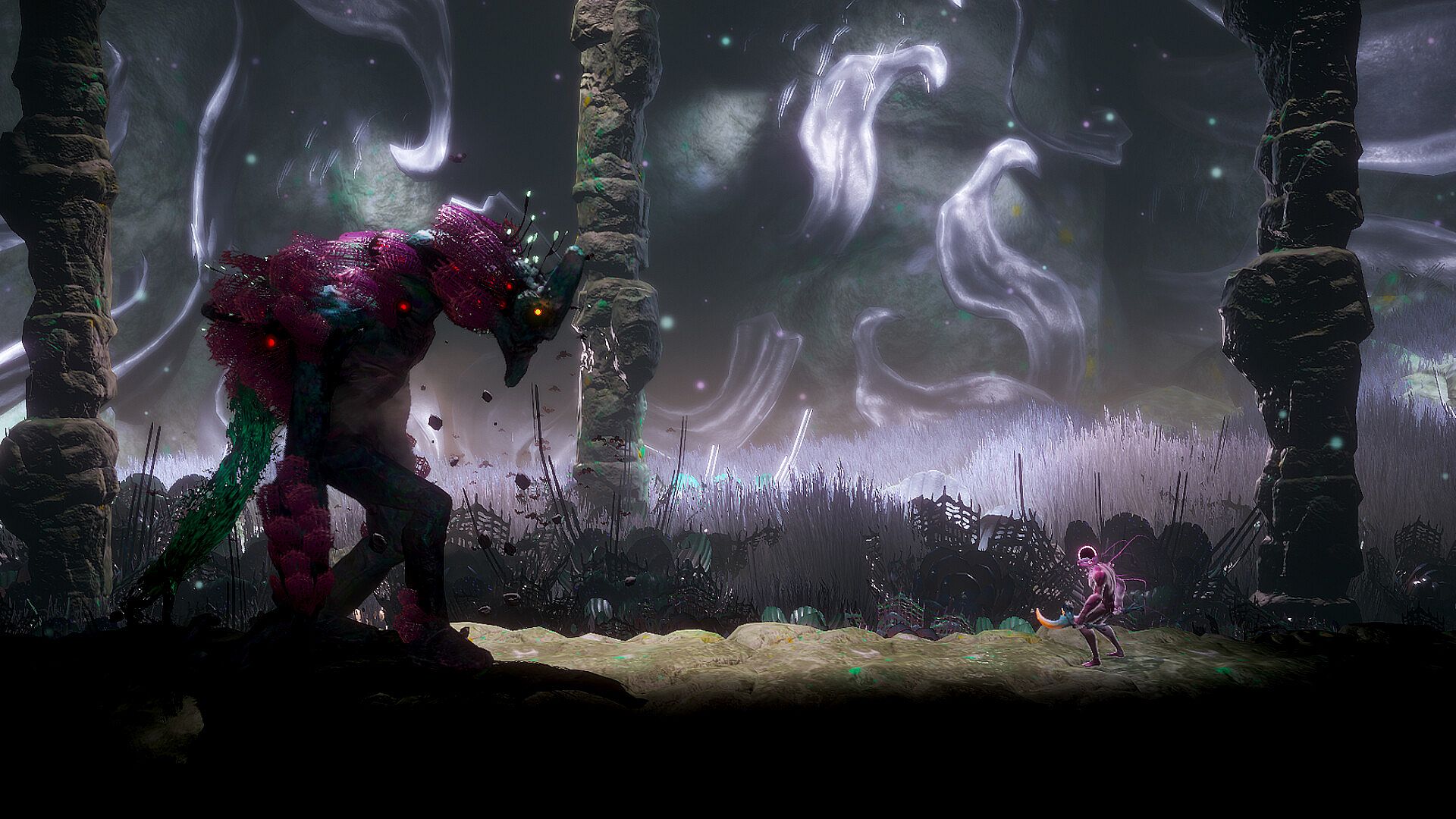
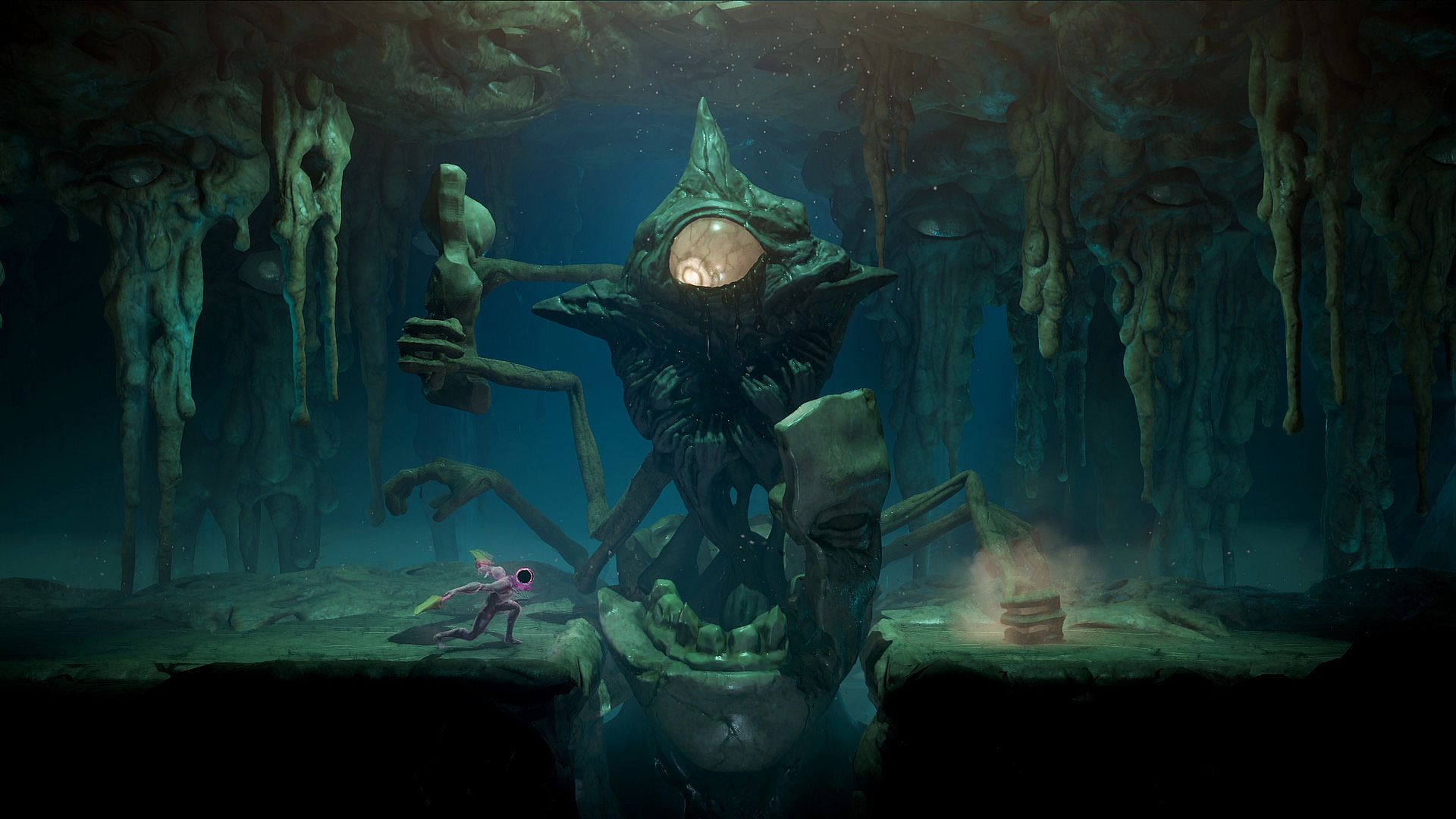
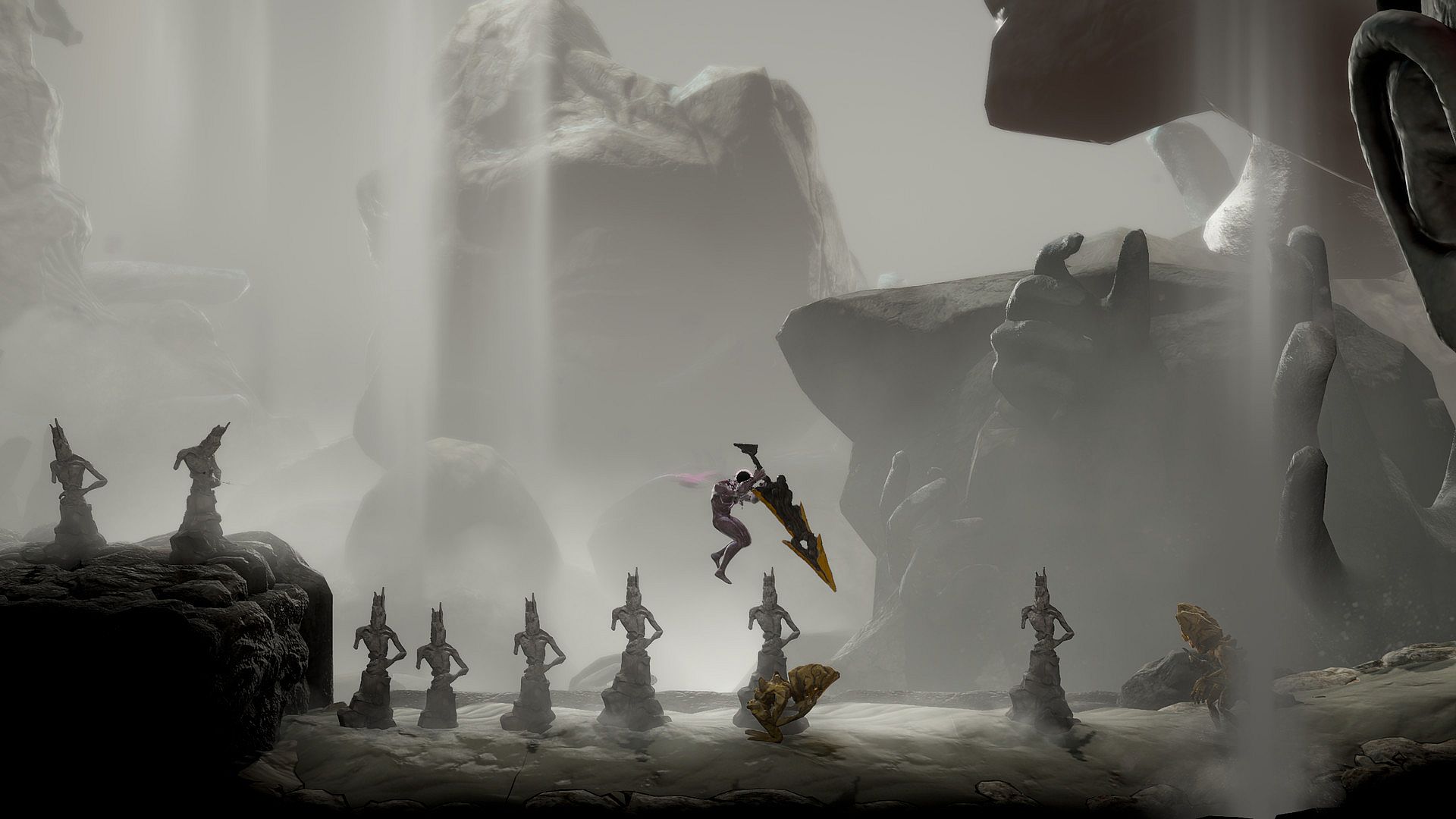
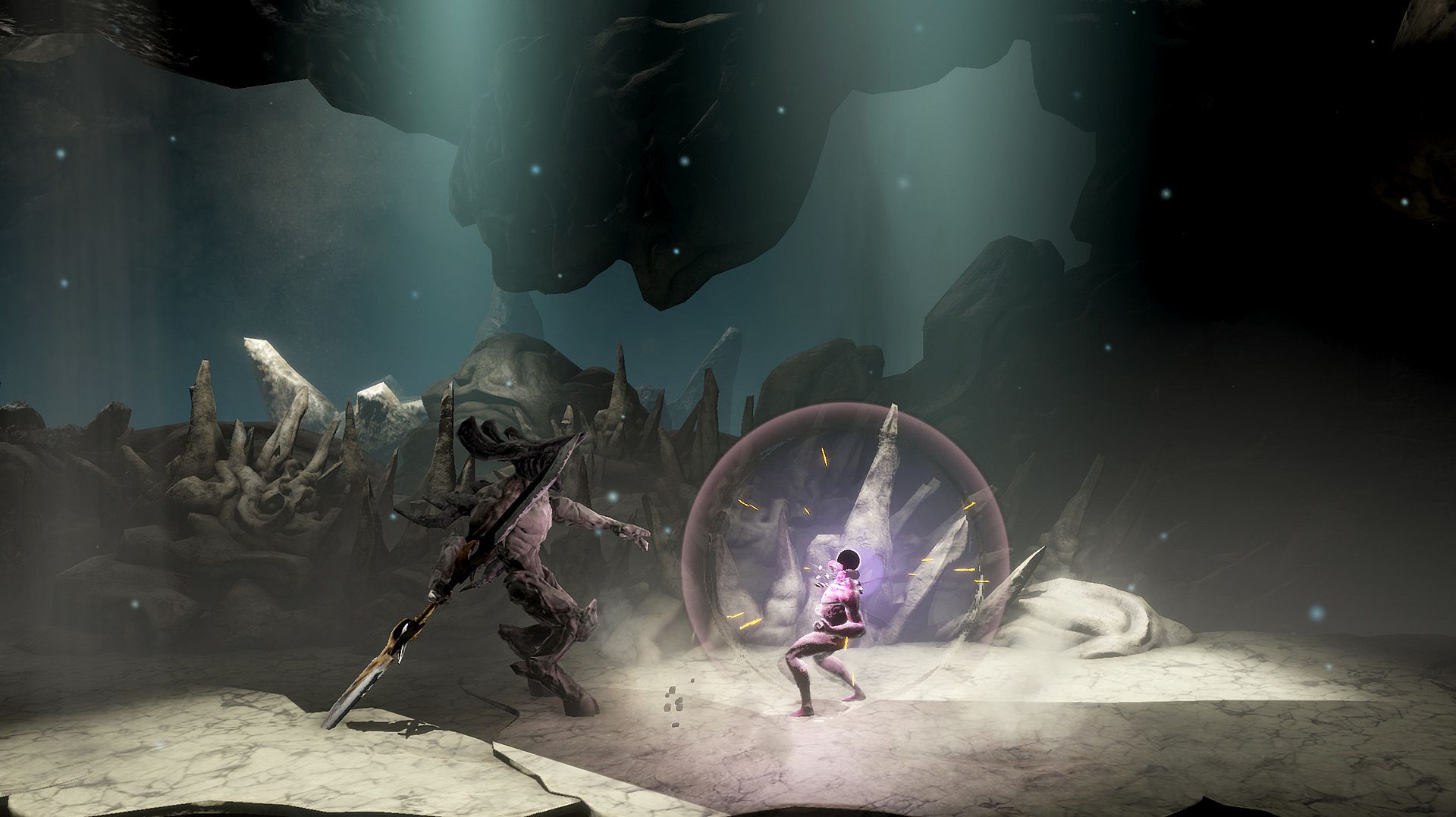
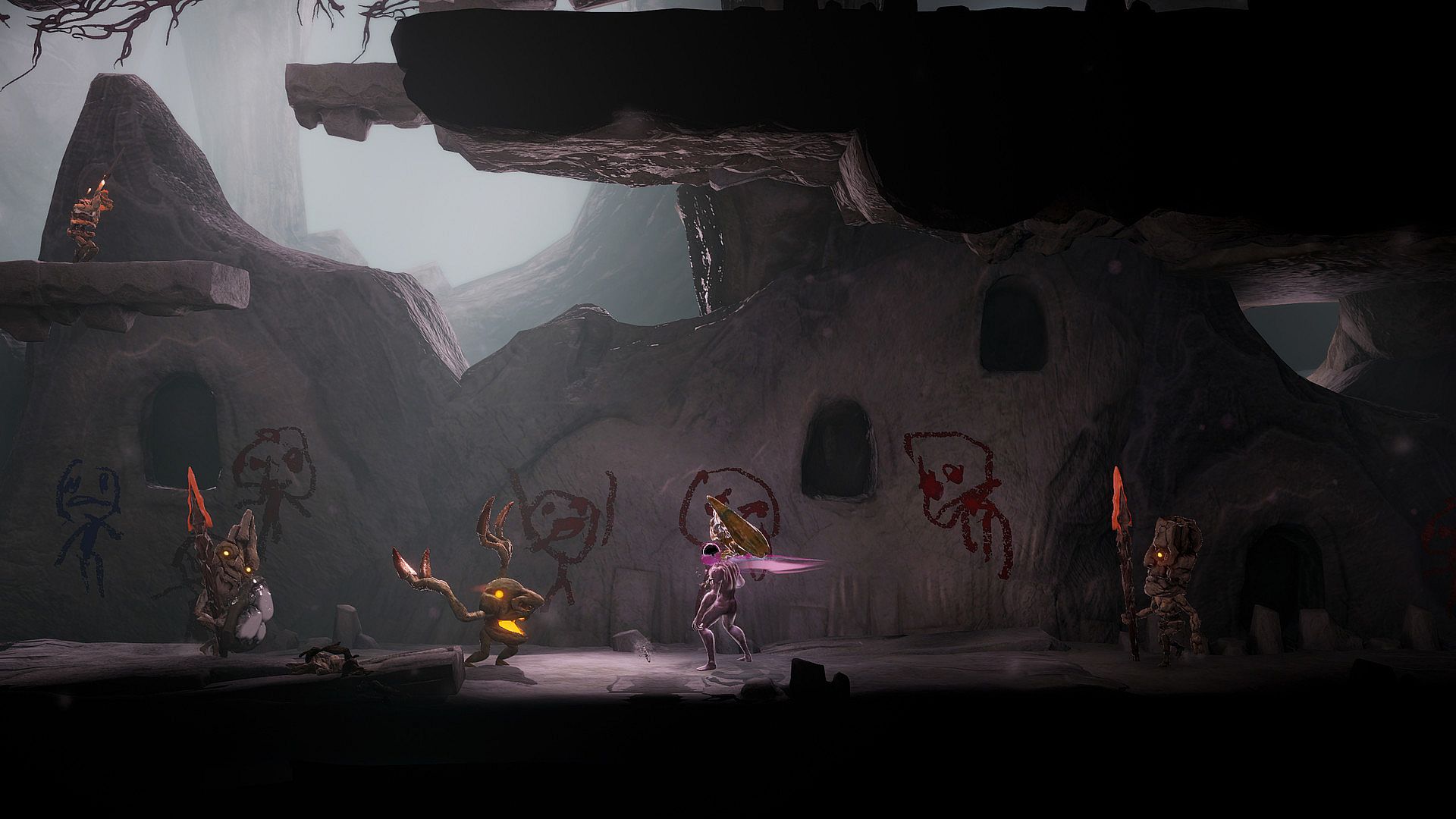
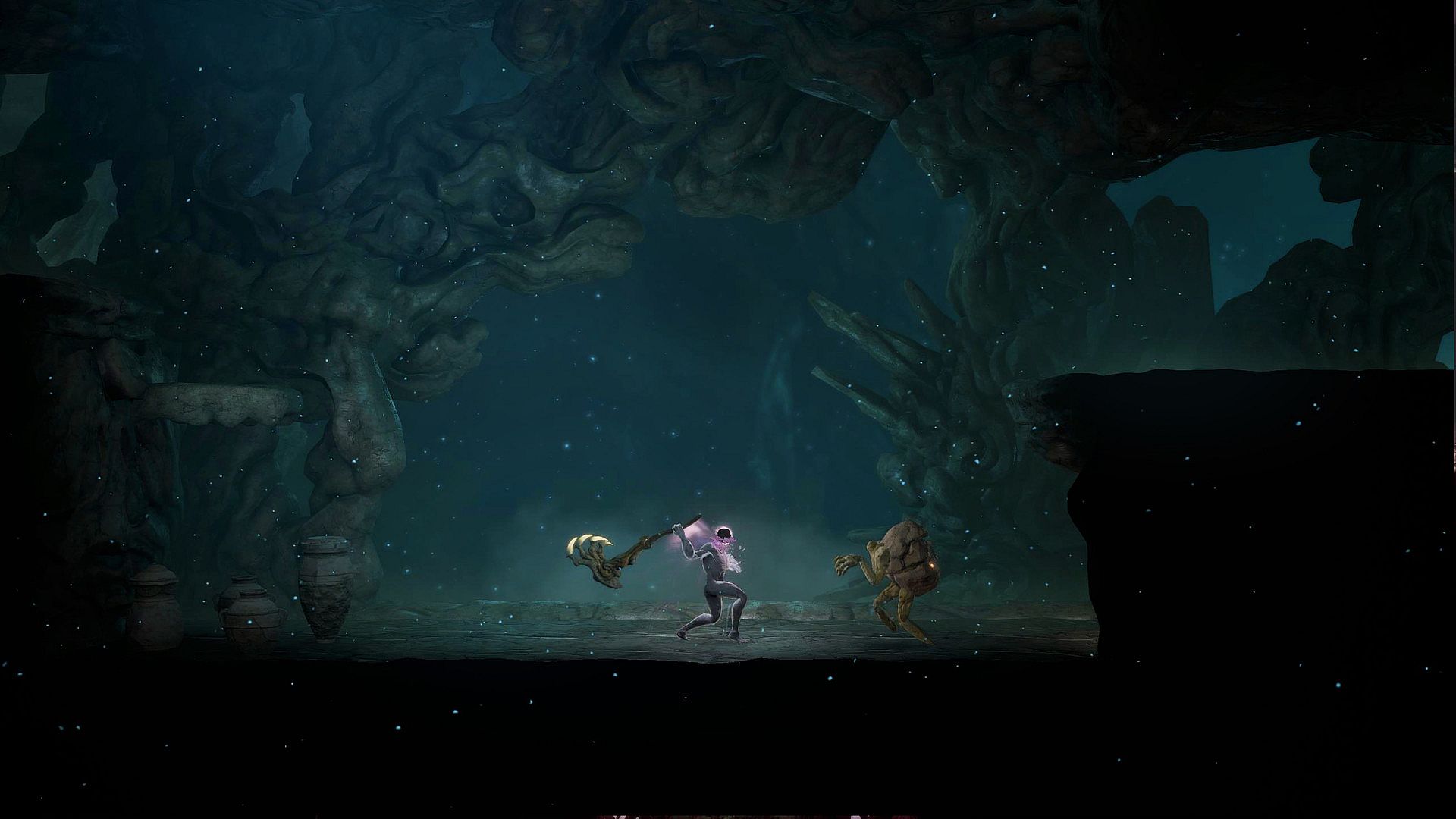
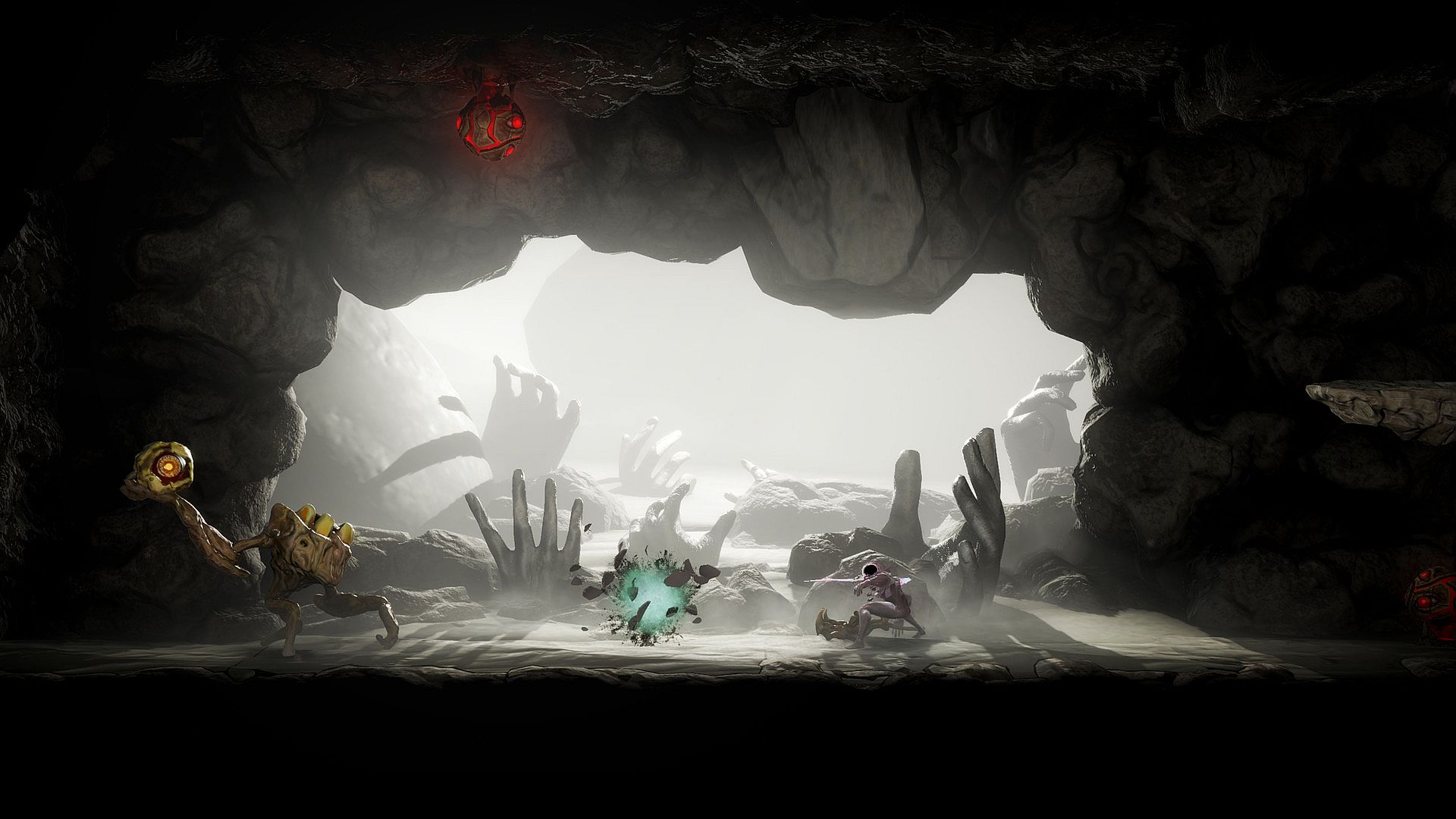
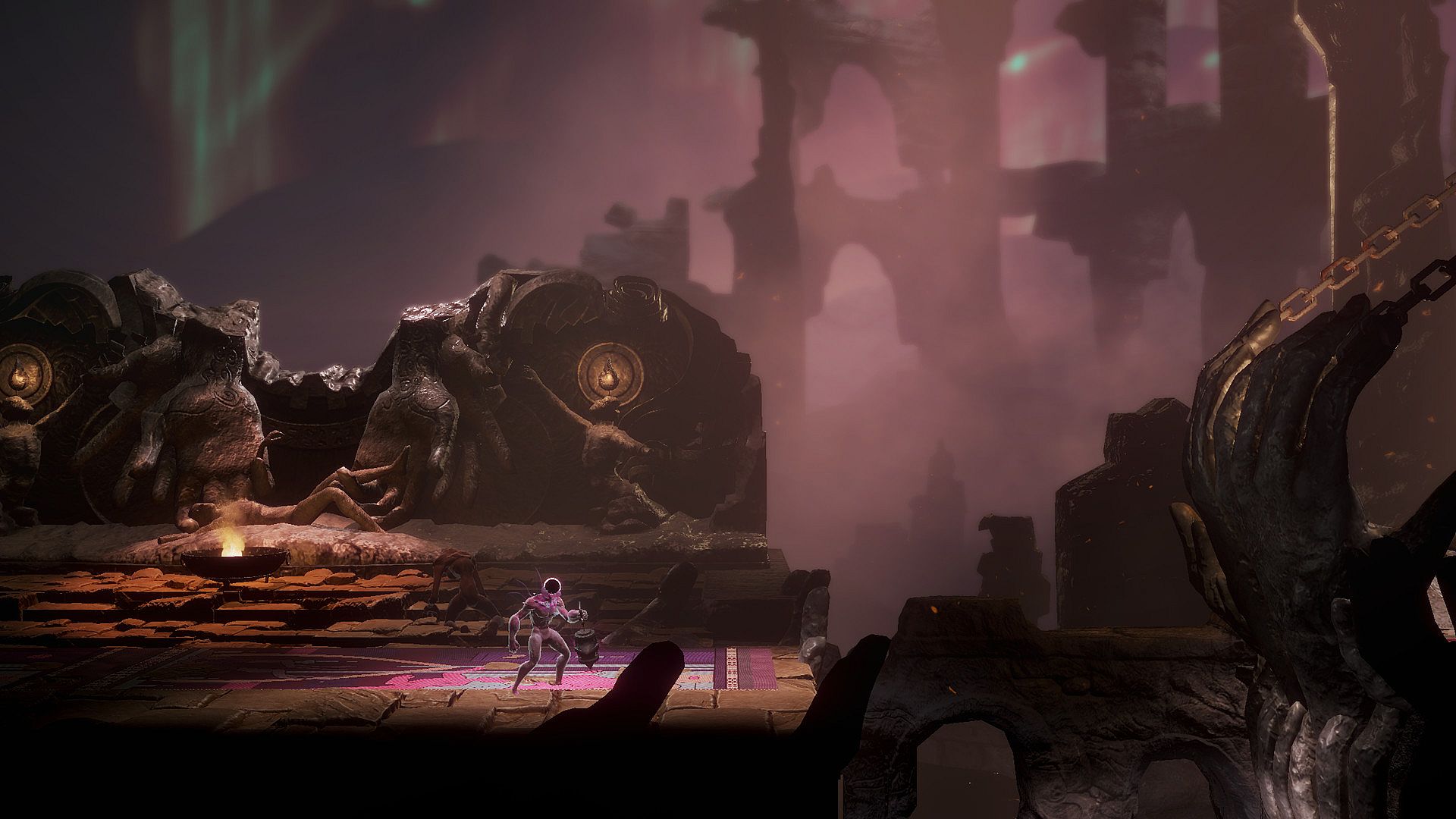
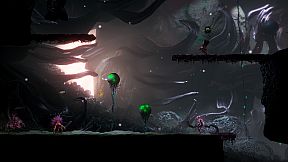
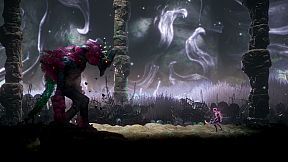
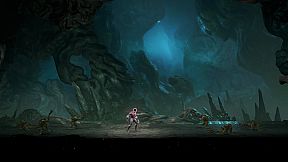
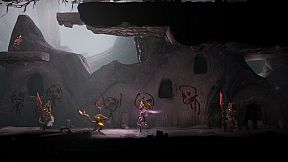
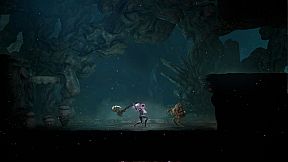
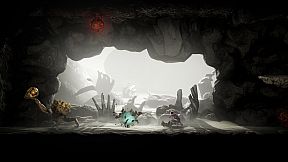
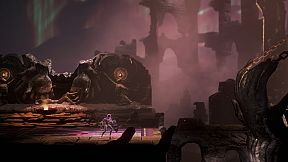
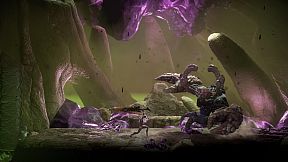
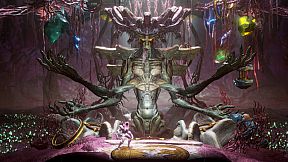
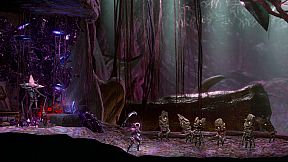
GRIME stands out as a singleplayer action RPG that blends intense combat with exploration in a grotesque, interconnected world of anatomical horror. Players take control of a vessel born from collapsing material, tasked with surviving and growing stronger amid surreal environments filled with twisted creatures and enigmatic civilizations. The core loop revolves around crushing enemies using adaptable weapons, then absorbing their essence to enhance abilities and progress through challenging terrain.
Gameplay
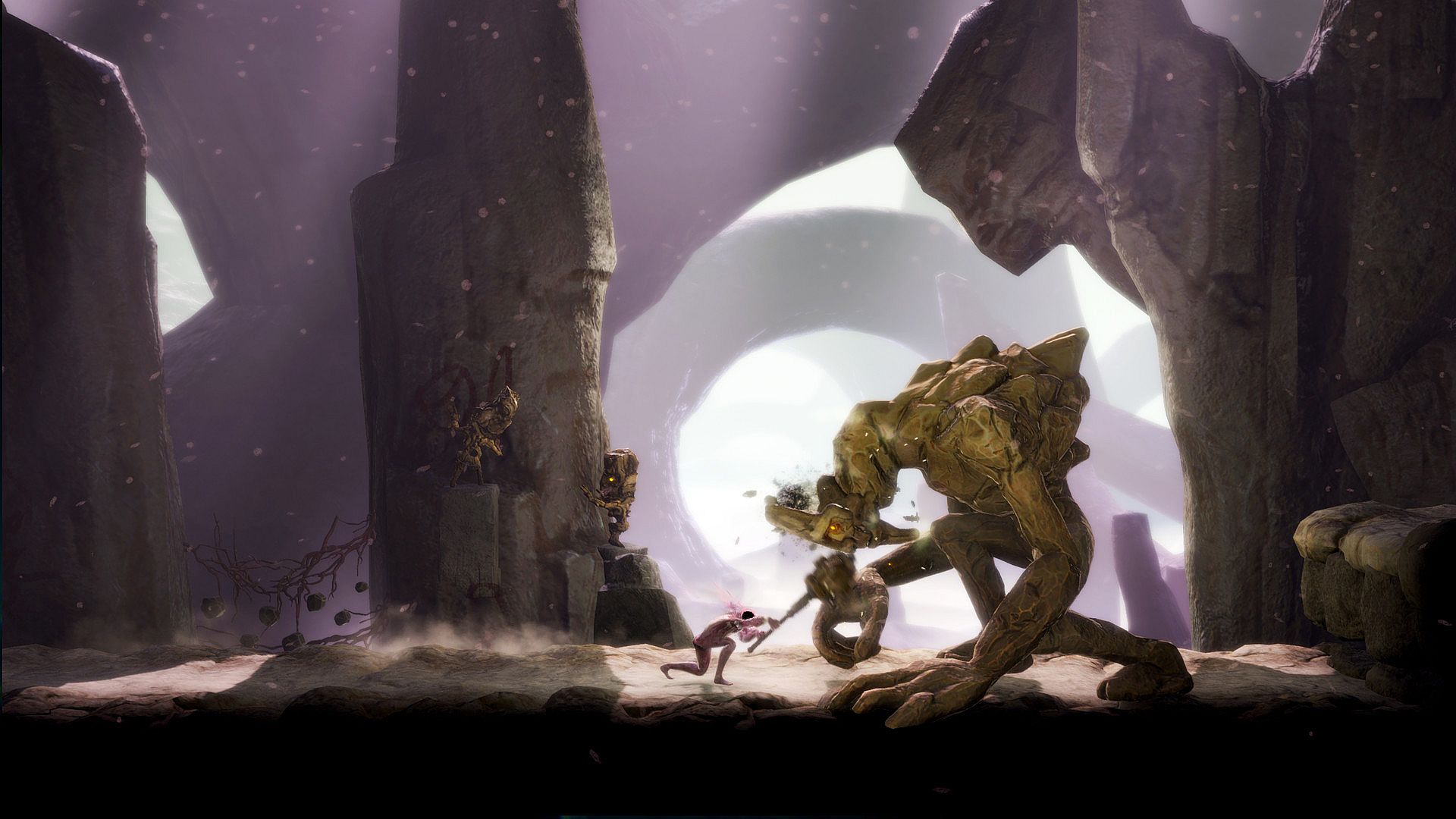
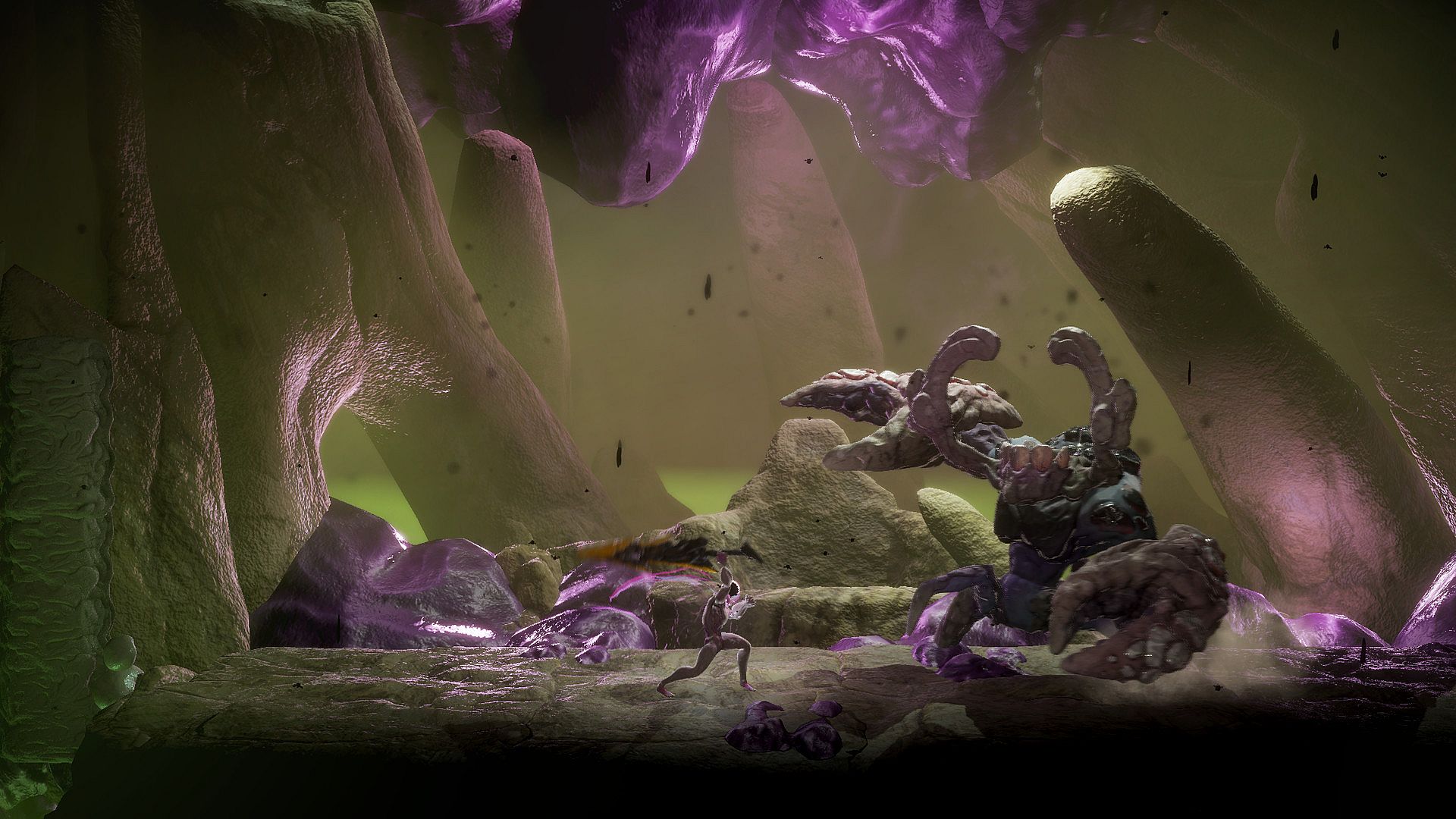
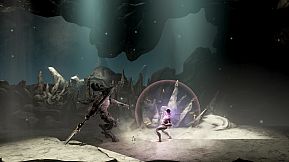
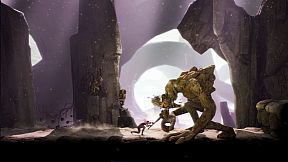
Combat emphasizes precise timing and aggression, allowing players to parry incoming strikes, launch foes into the air, or smash them against surfaces before consuming remains via a black hole mechanic. This absorption process directly fuels upgrades to the vessel, granting new traits and power that alter both fighting style and movement options. Weapons themselves function as living entities, shifting forms mid-battle from solid blades to flexible whips or other mutated shapes drawn from the creatures encountered.
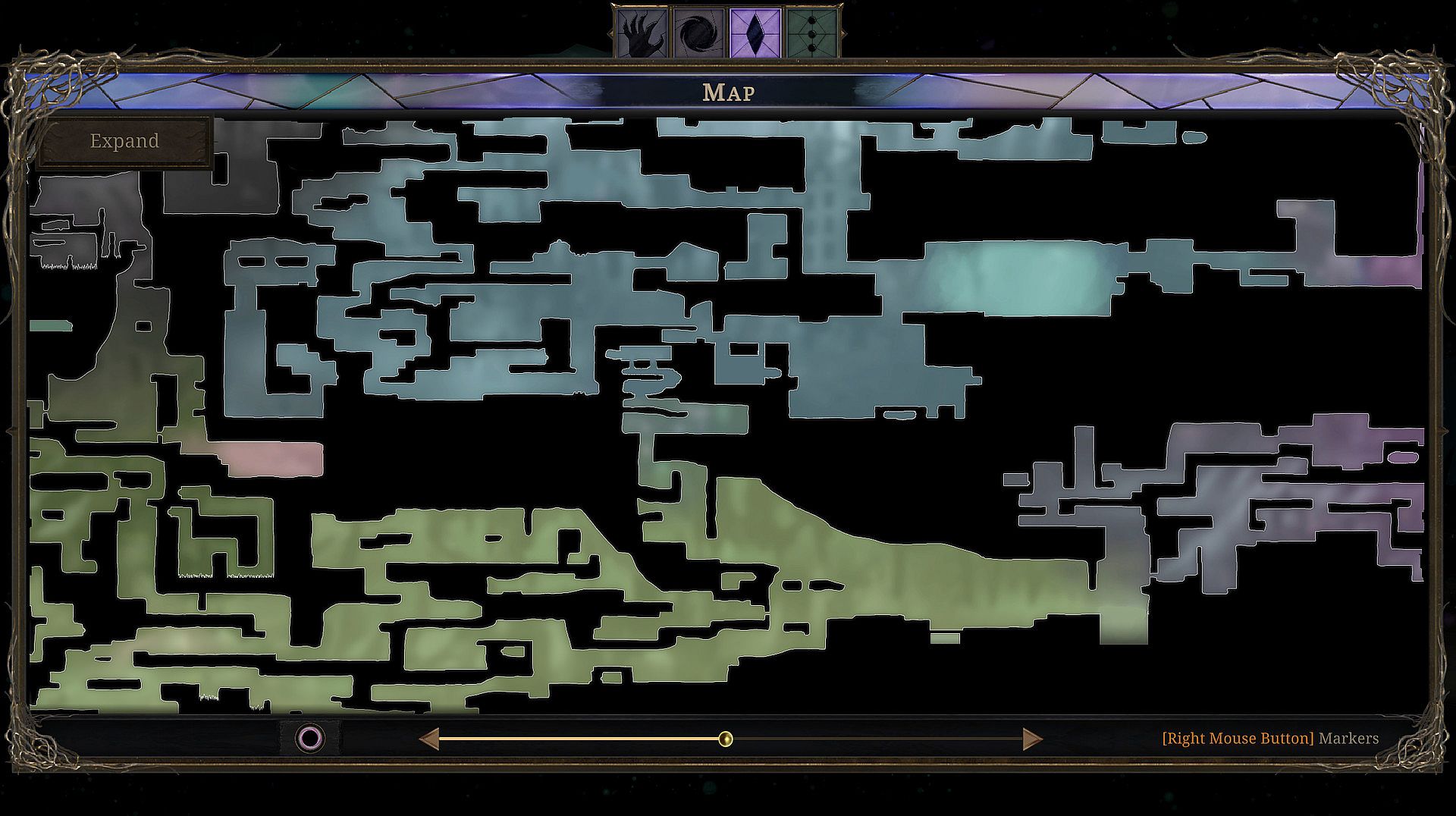
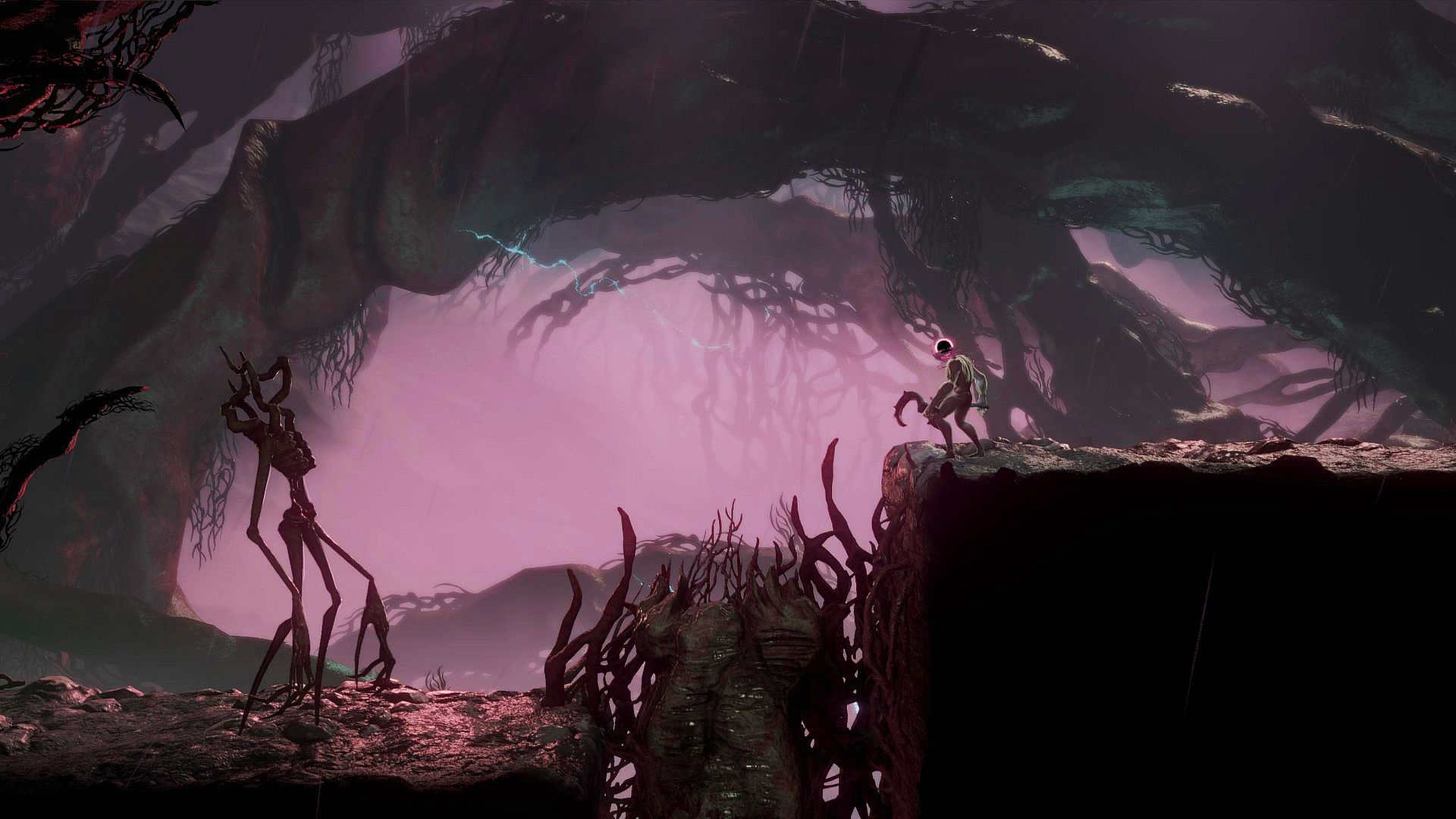
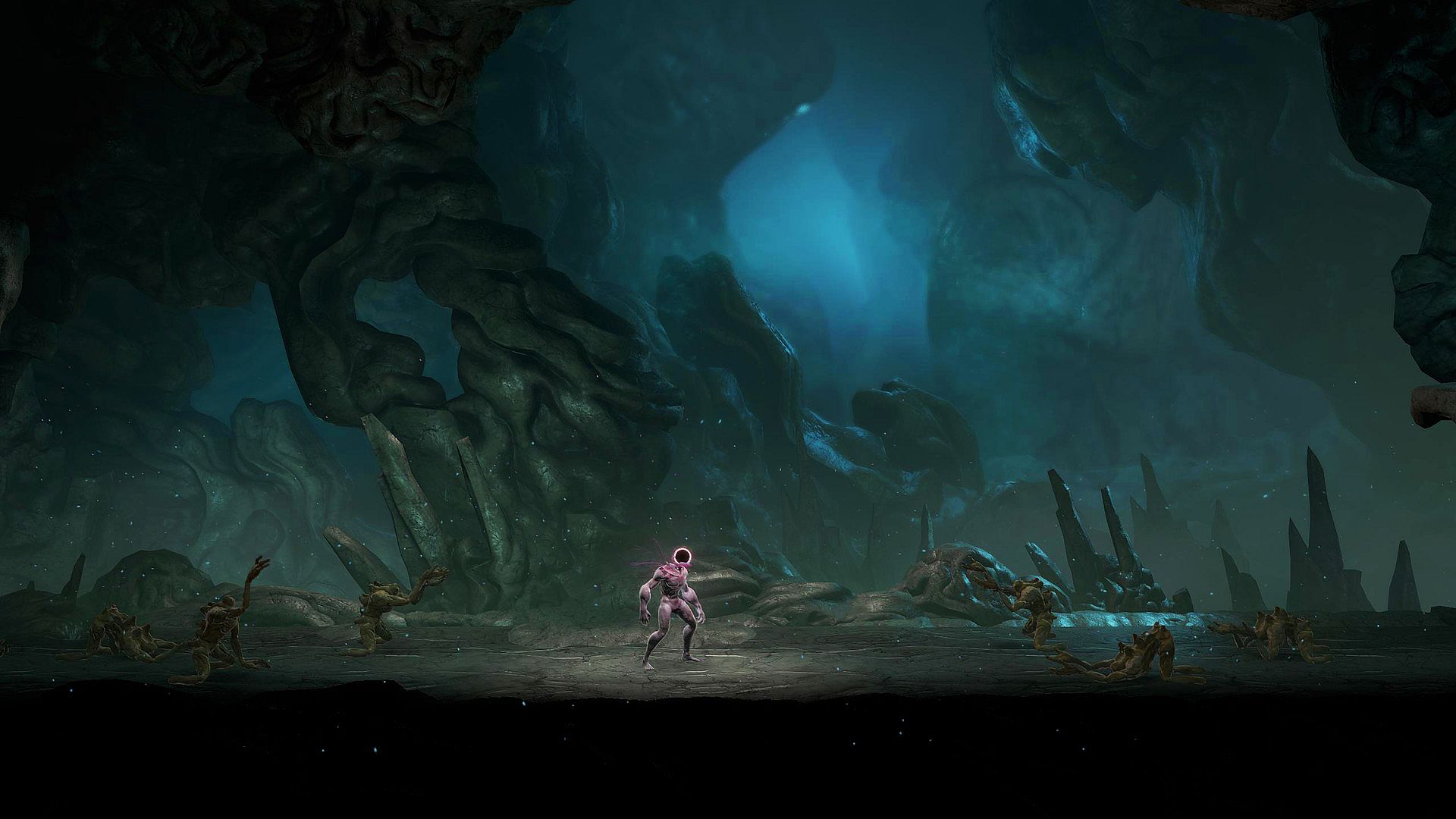
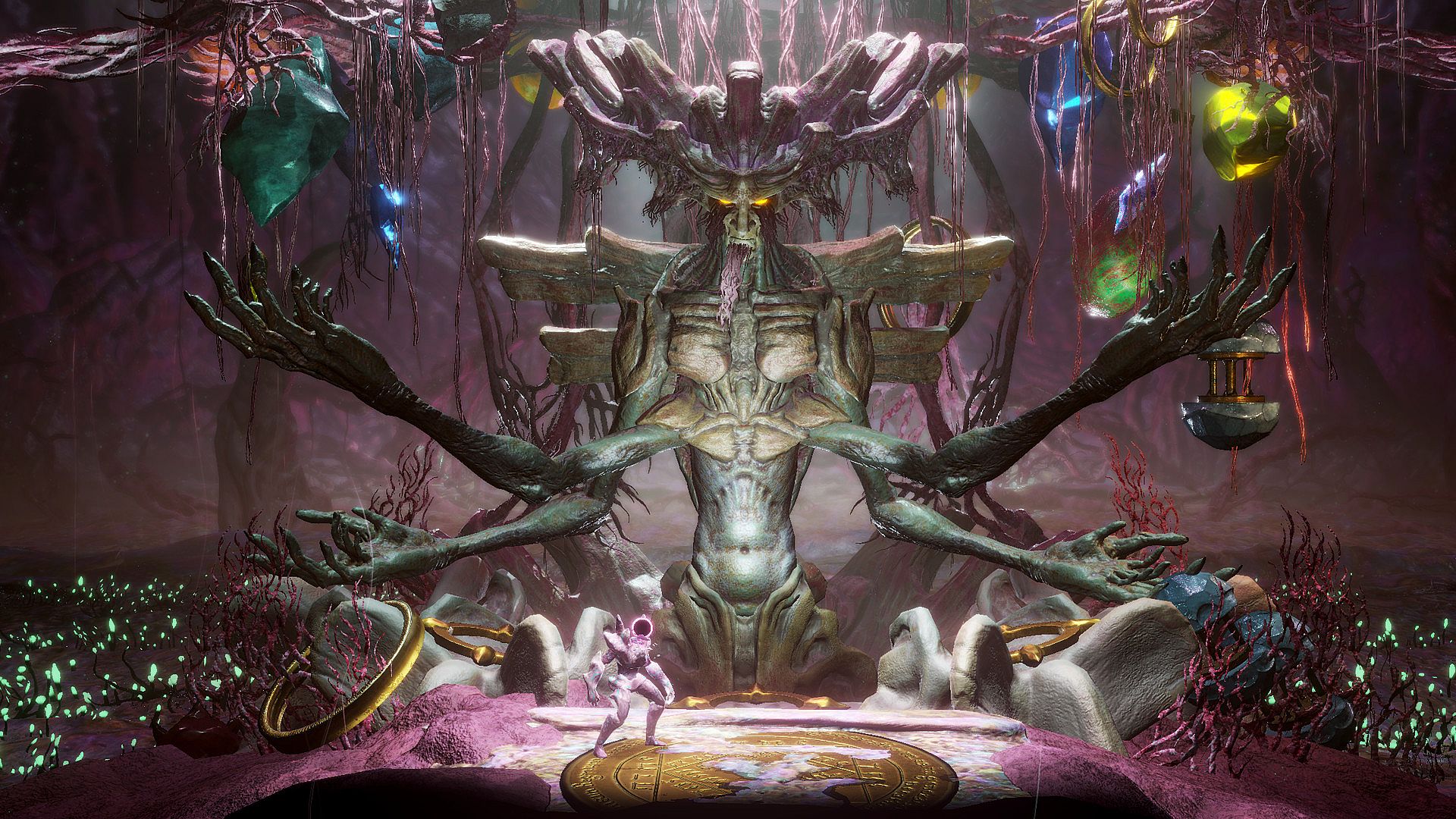
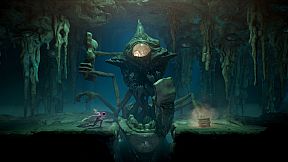
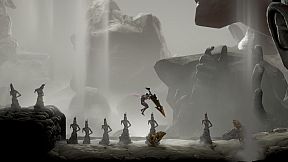
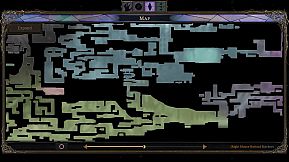
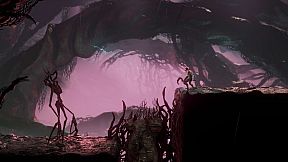
Exploration drives much of the experience, with players navigating organic caverns, deserts marked by faces, and other evocative locales that connect in a Metroidvania-inspired structure. Platforming elements test reflexes through precise jumps and aerial maneuvers, while hidden paths and secrets reward thorough investigation. Boss encounters pit the player against massive entities whose patterns demand adaptation, with victory yielding abilities that open new traversal routes or combat options. Skill progression remains flexible, as absorbed monsters provide targeted improvements tailored to individual preferences rather than a rigid tree.
Game Modes
The primary experience unfolds in a singleplayer campaign focused on discovery and survival within the main world. New Game Plus arrives through the Tinge of Terror update, which modifies existing bosses with altered attacks and behaviors, introduces a new boss encounter, and adds fresh music along with weapon options for an escalated challenge. Progression carries over fully, enabling infinite upgrades and access to a secret boss fight.
Additional content expands the map significantly. Colors of Rot introduces the massive Childbed area with three new bosses, new abilities, weapon traits, and music that deepen the interconnected layout. Parting Shade adds the Abandoned Opus region atop the Weeping Cavity, presenting grueling platforming sequences and further environmental variety. These modes integrate seamlessly into the core loop, encouraging multiple playthroughs with evolving threats and rewards.
World and Progression Systems
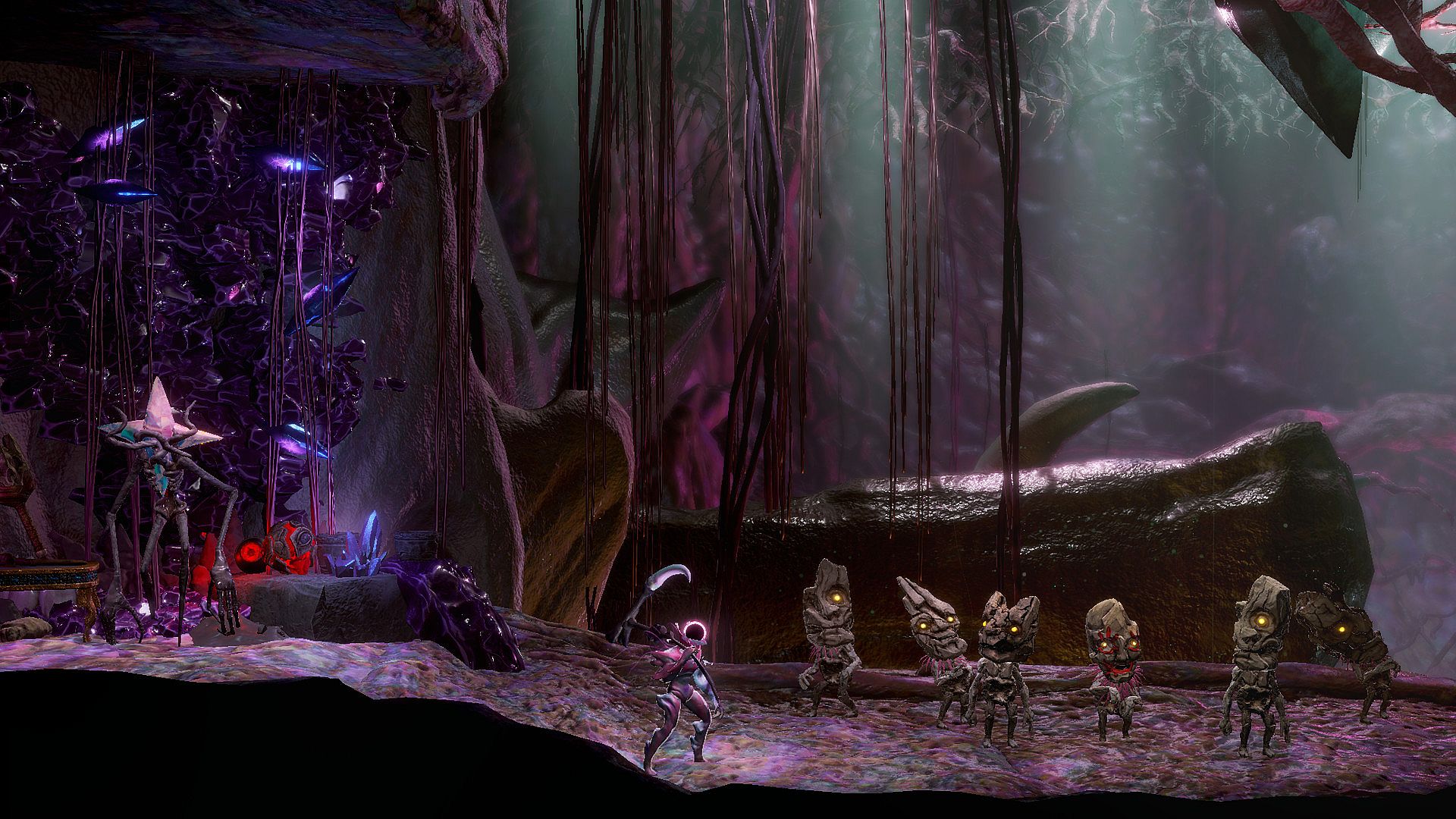
The setting unfolds as an alien yet familiar realm of weeping caves and face-covered expanses, populated by otherworldly inhabitants whose madness stems from the world's own fabric. Players encounter distinct civilizations and absorb traits from foes born directly from the environment, turning enemy strengths into personal advantages. This system supports varied approaches, from aggressive absorption-focused builds to defensive parry strategies, all while uncovering the origins of the surrounding intrigue.
Upgrades emphasize customization through targeted absorption of challenging monsters, allowing players to prioritize traits that match their preferred combat and exploration methods. Living weapons evolve during use, providing seamless swaps that keep encounters dynamic without relying on traditional inventory management.
Is It Worth Playing?
GRIME appeals strongly to those who enjoy demanding action RPGs with Souls-inspired combat and Metroidvania exploration. Its unique absorption and living weapon mechanics set it apart, delivering satisfying progression tied directly to defeating and consuming enemies. The game maintains active support through multiple free expansions that add substantial new areas, bosses, and modes without altering the base experience.
Reception highlights its brutal yet fair difficulty, atmospheric world design, and replay value via New Game Plus and expansions. It suits players comfortable with precise platforming, adaptive boss fights, and a focus on singleplayer discovery rather than multiplayer elements. Those seeking a distinctive take on the genre will find its systems rewarding across repeated runs, particularly with the added content layers enhancing longevity.