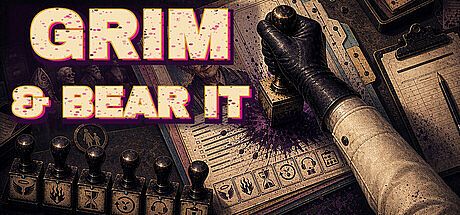


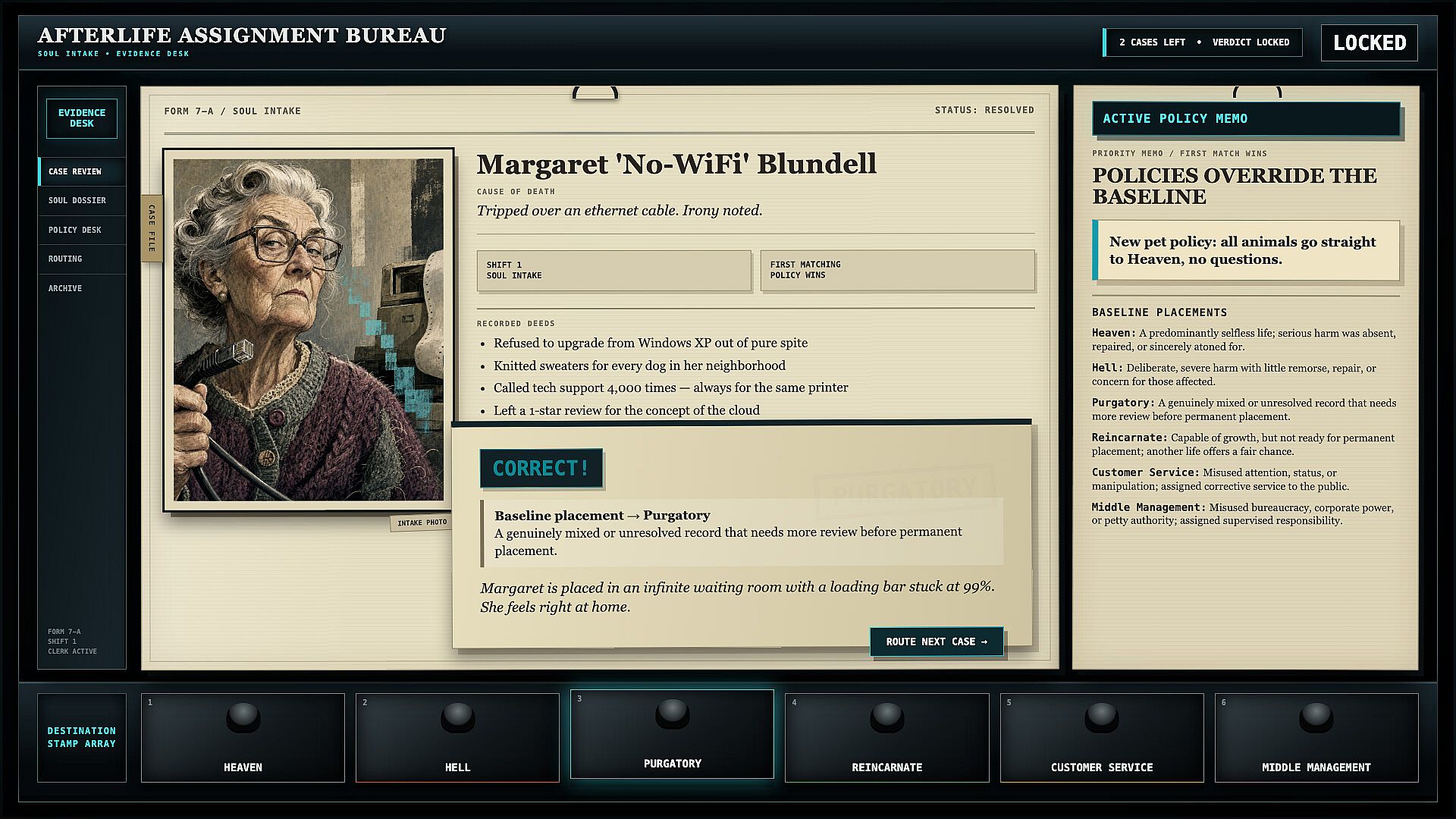
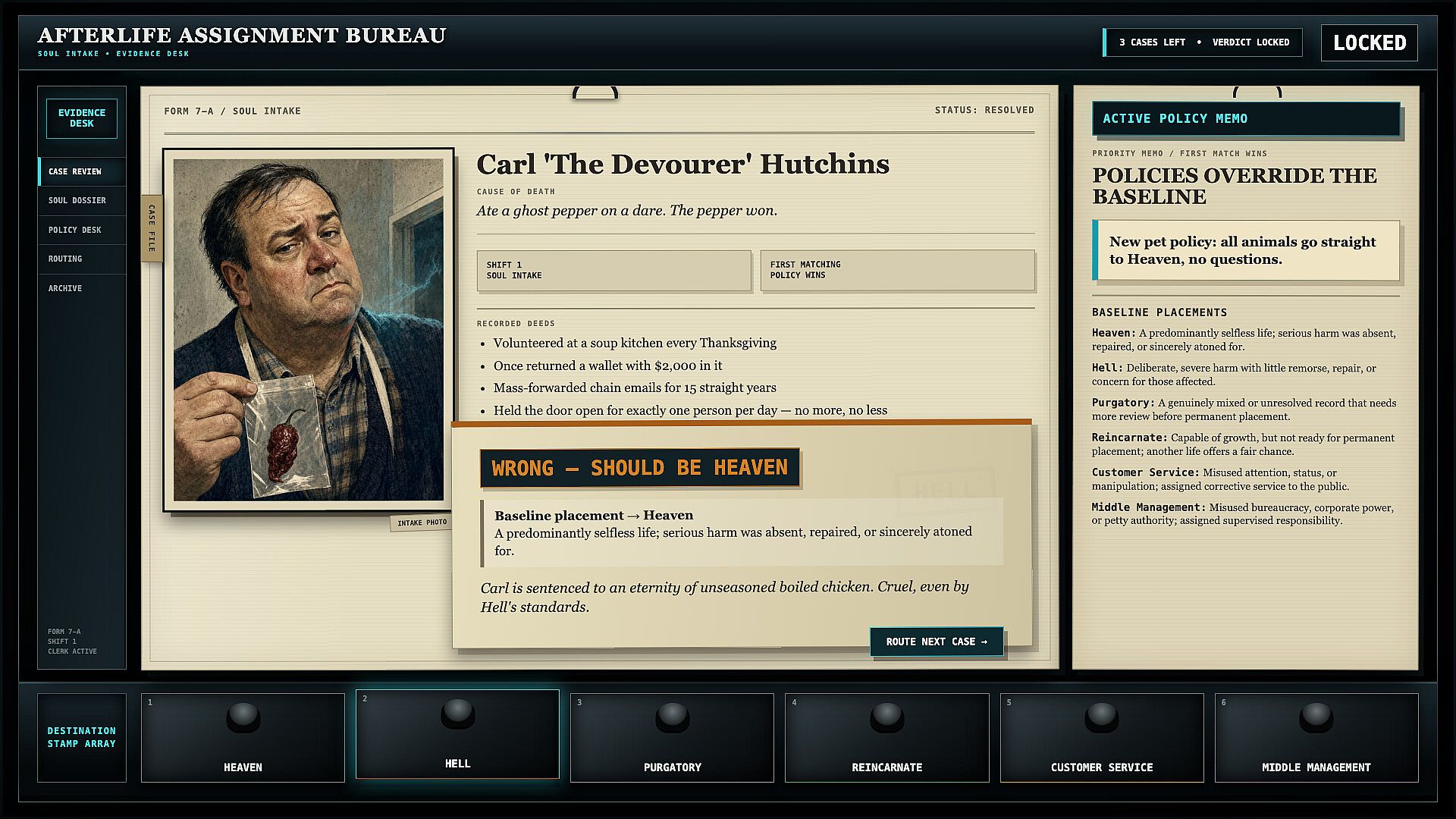
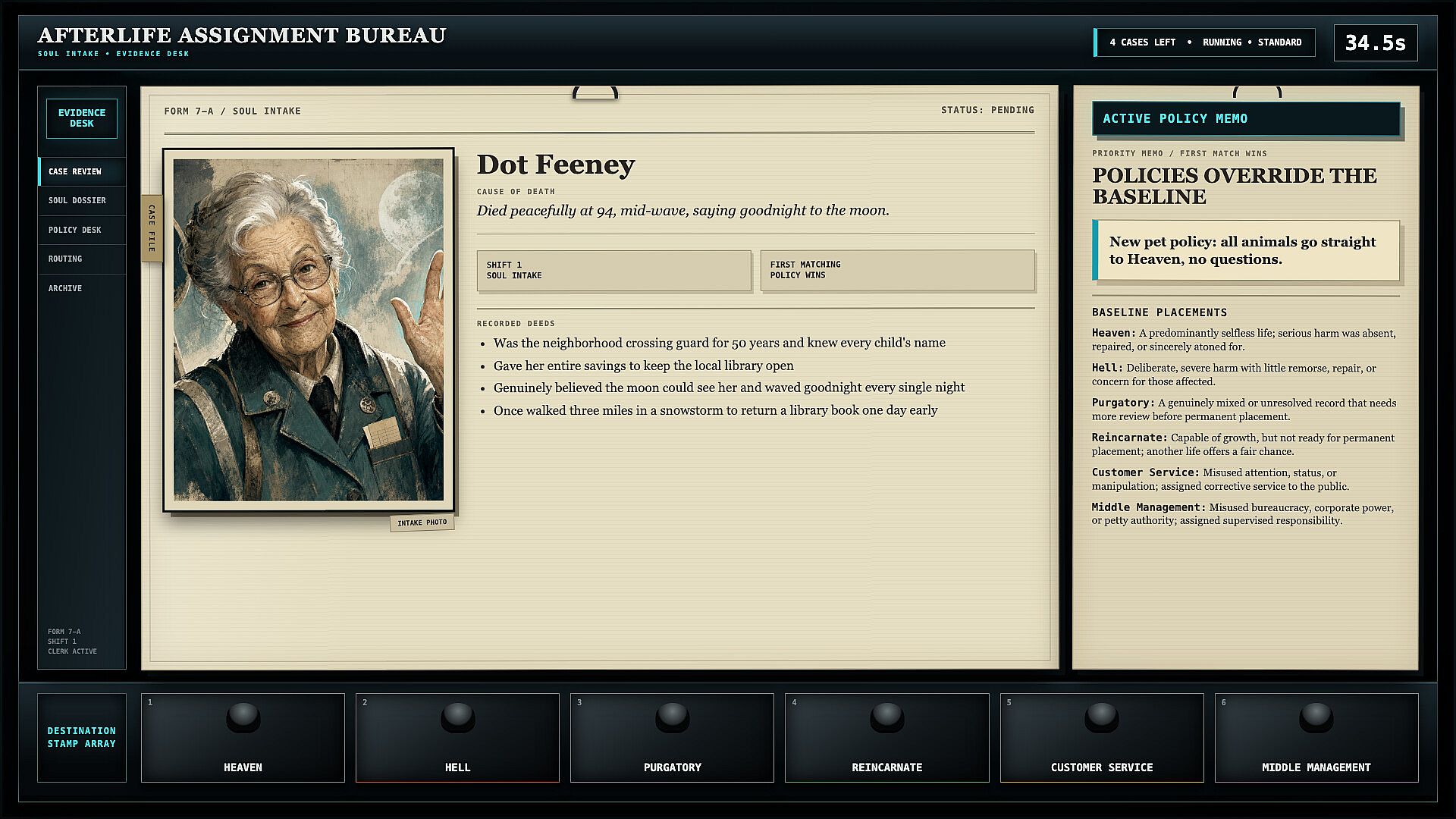
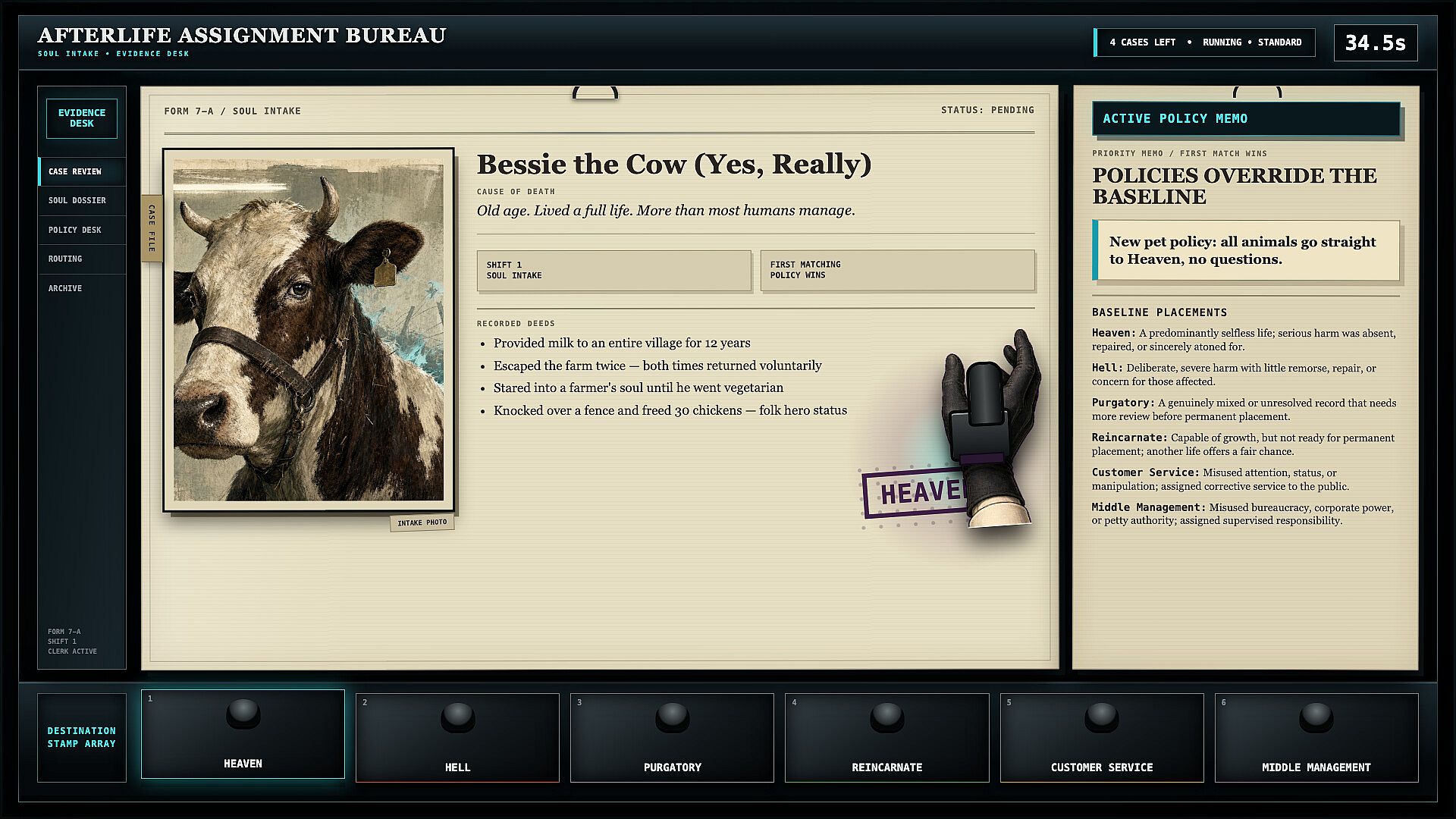
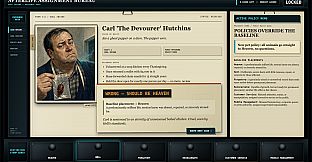
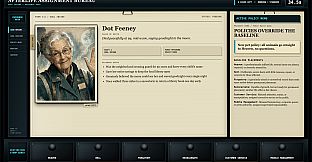
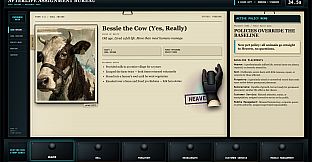
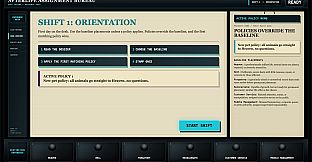
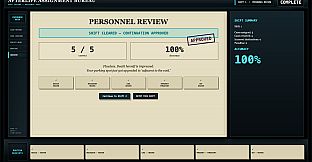
Grim & Bear It is a simulation game set in a bureaucratic afterlife office. Players take on the role of a new intern at the Bureau of Afterlife Assignment, processing incoming souls through case files that list names, causes of death, and life deeds. The core loop involves reviewing each file against the current shift's rulebook, then applying one of six stamps to assign the soul to its destination before the timer expires and the queue grows unmanageable.
Gameplay
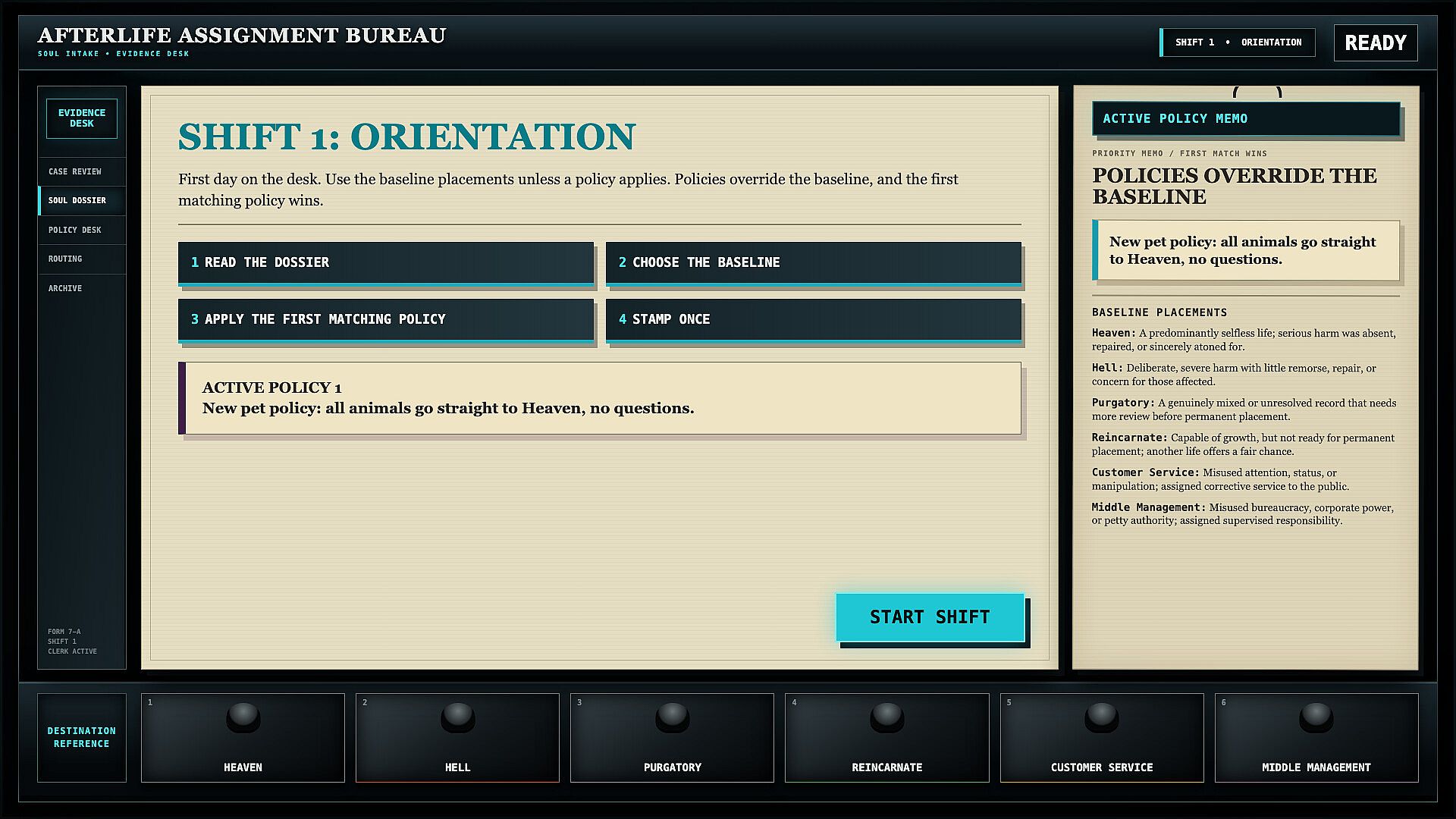
The gameplay centers on reading short, often contradictory case files and applying stamps that send souls to one of six possible outcomes. Heaven and Hell represent traditional extremes, while Purgatory and Reincarnate offer middle paths. Customer Service and Middle Management function as literal departments with their own consequences. Each decision must align with the active rulebook, which updates at the start of every shift and frequently contradicts prior instructions. Examples include rules that send politicians to Hell unless they showed kindness to interns, or that elevate the pious unless their paperwork arrived late. A timer adds pressure to each case, turning the experience into a test of quick rule interpretation rather than fast reflexes. The narrative stays in character as dry corporate HR language, framing eternal judgment as routine office work where flexibility earns praise from management.
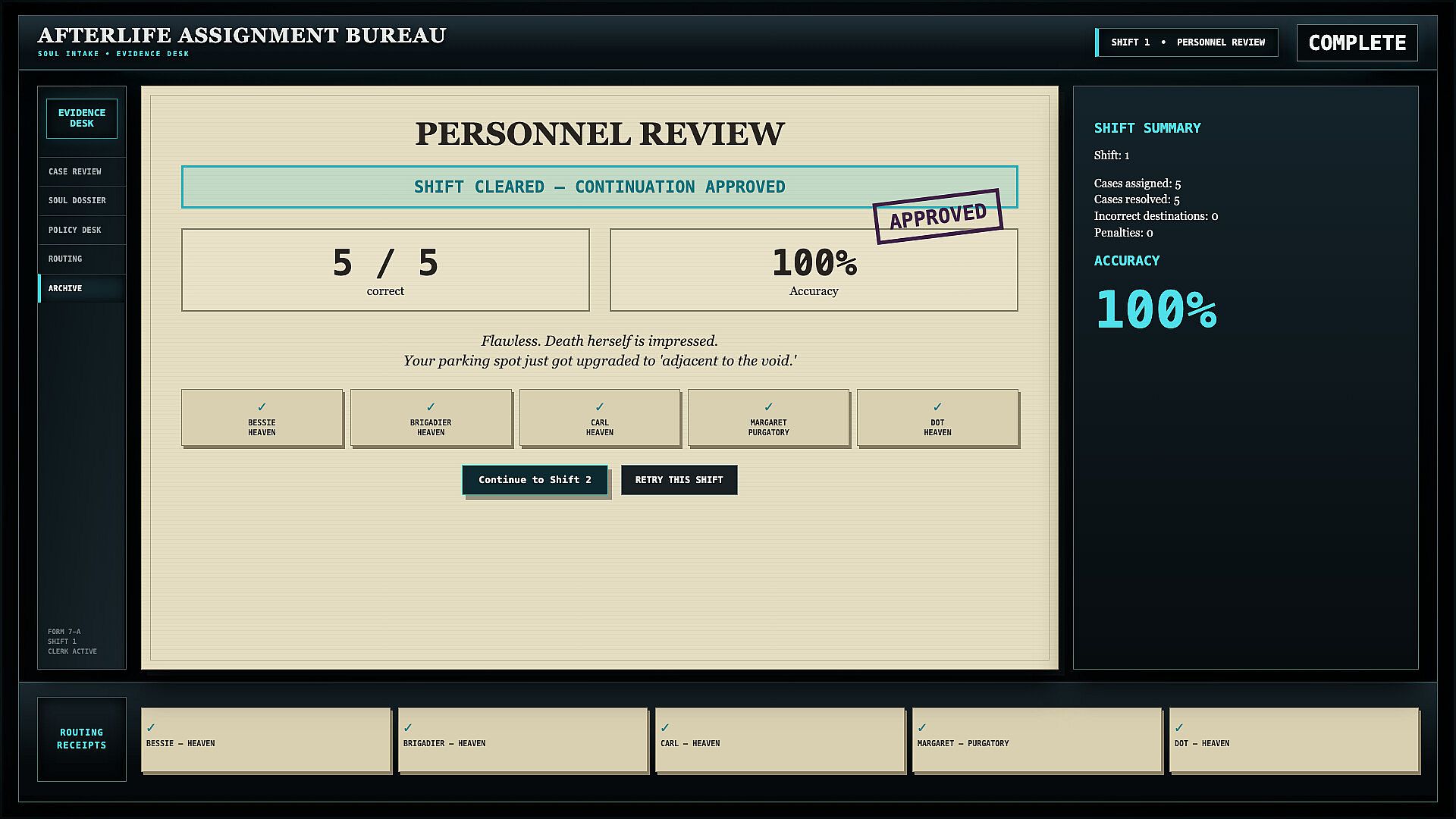
Over the course of the experience, players handle 75 distinct hand-written souls spread across a 12-shift campaign divided into three acts. The rulebook escalates in complexity with each new directive, forcing players to reconcile conflicting guidelines under time constraints. This structure emphasizes careful reading and logical deduction over action or resource management typical in other simulation titles.
Game Modes
The game operates as a single continuous campaign without separate selectable modes. All play occurs within the 12-shift structure that advances through three narrative acts. Each shift presents a fresh set of case files alongside the updated rulebook, maintaining the same core stamping and assignment mechanics throughout. There are no additional modes such as endless queues, challenge variants, or multiplayer options. The focus remains on progressing through the escalating contradictions and completing the full sequence of shifts.
Narrative and Tone
The story unfolds entirely through the case files and rulebook entries, delivered in consistent bureaucratic language that treats cosmic consequences as standard performance reviews. Players encounter a range of souls whose deeds range from mundane to incriminating, and the shifting rules highlight the arbitrary nature of the system. The Bureau itself appears cheerful and supportive on the surface while enforcing outcomes that players must carry out without moral commentary from the game. This approach keeps the tone satirical and detached, avoiding any sense of heroic judgment or personal redemption arcs.
Is It Worth Playing?
Grim & Bear It suits players who enjoy narrative-driven simulation experiences built around reading, rule interpretation, and decision-making under constraints. The campaign structure with its fixed number of shifts and hand-written cases provides a complete, self-contained story that rewards attention to detail and adaptation to changing directives. Those who appreciate dark comedy framed in office-speak and the mechanics of bureaucratic absurdity will find the core loop engaging. As an upcoming title with no released updates or seasons at this stage, it offers a focused single-player experience centered on its unique premise rather than ongoing content additions. If the combination of timer pressure, contradictory rules, and afterlife bureaucracy appeals, the game delivers a distinct take on the simulation genre.