











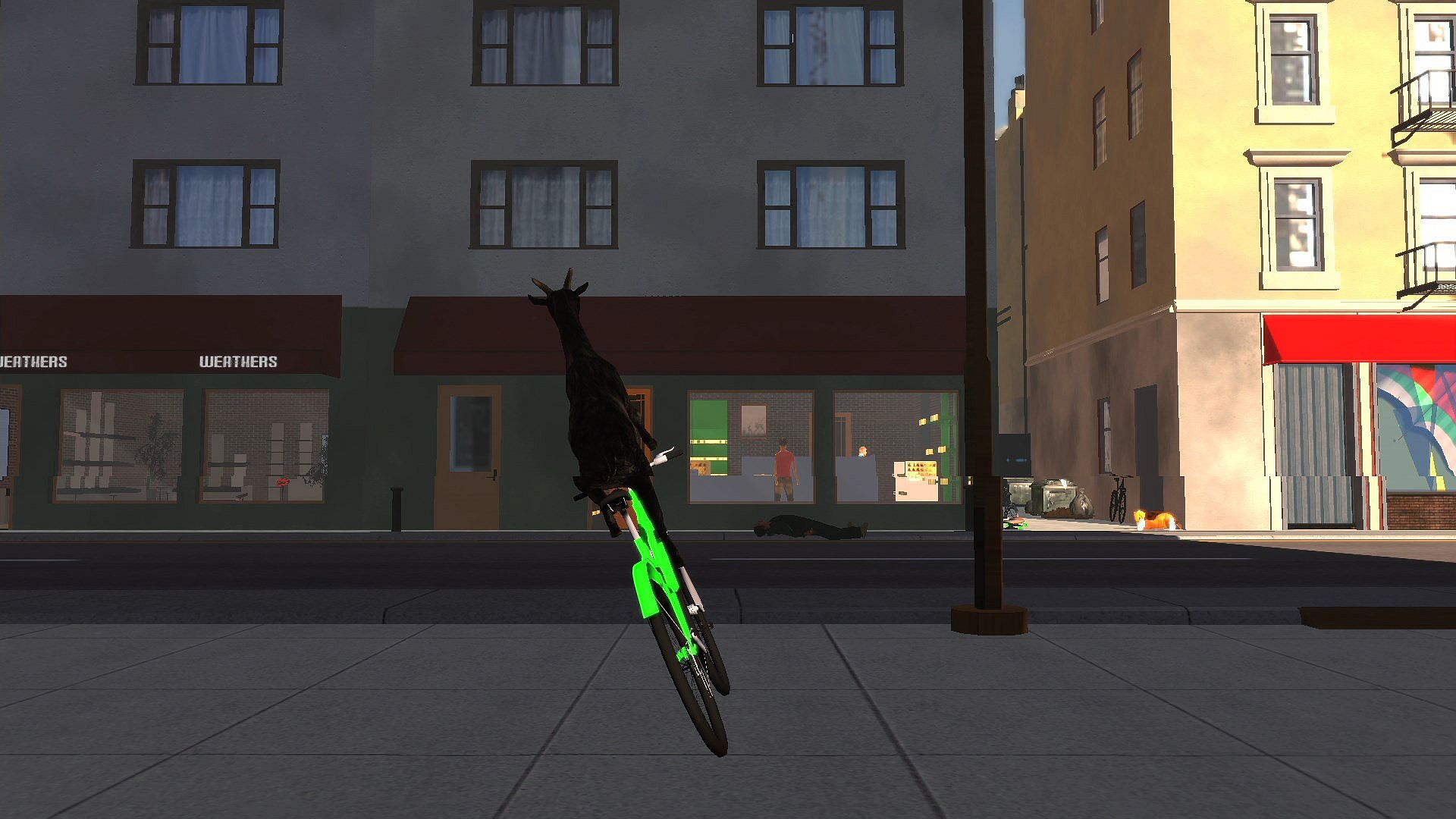
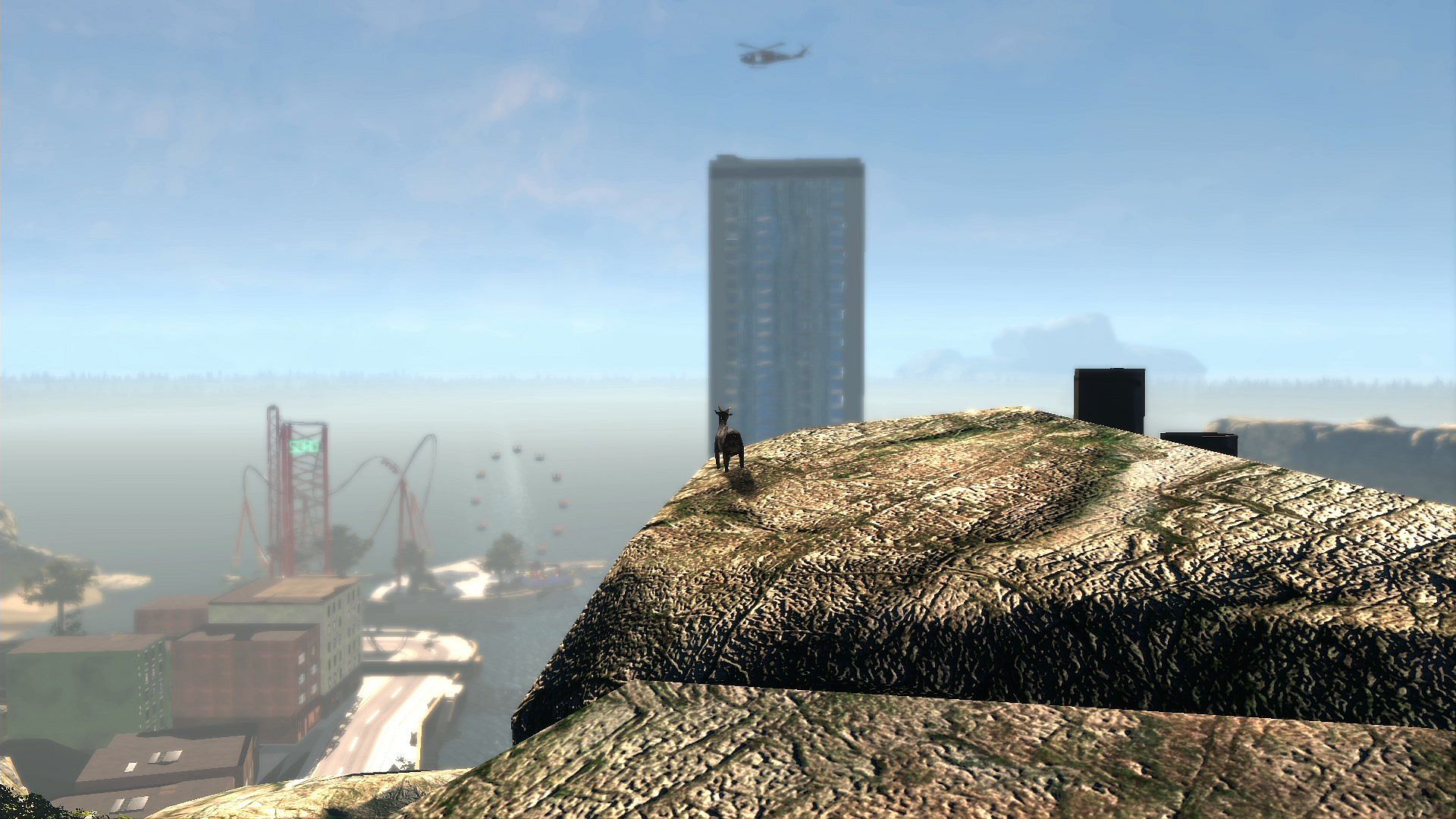
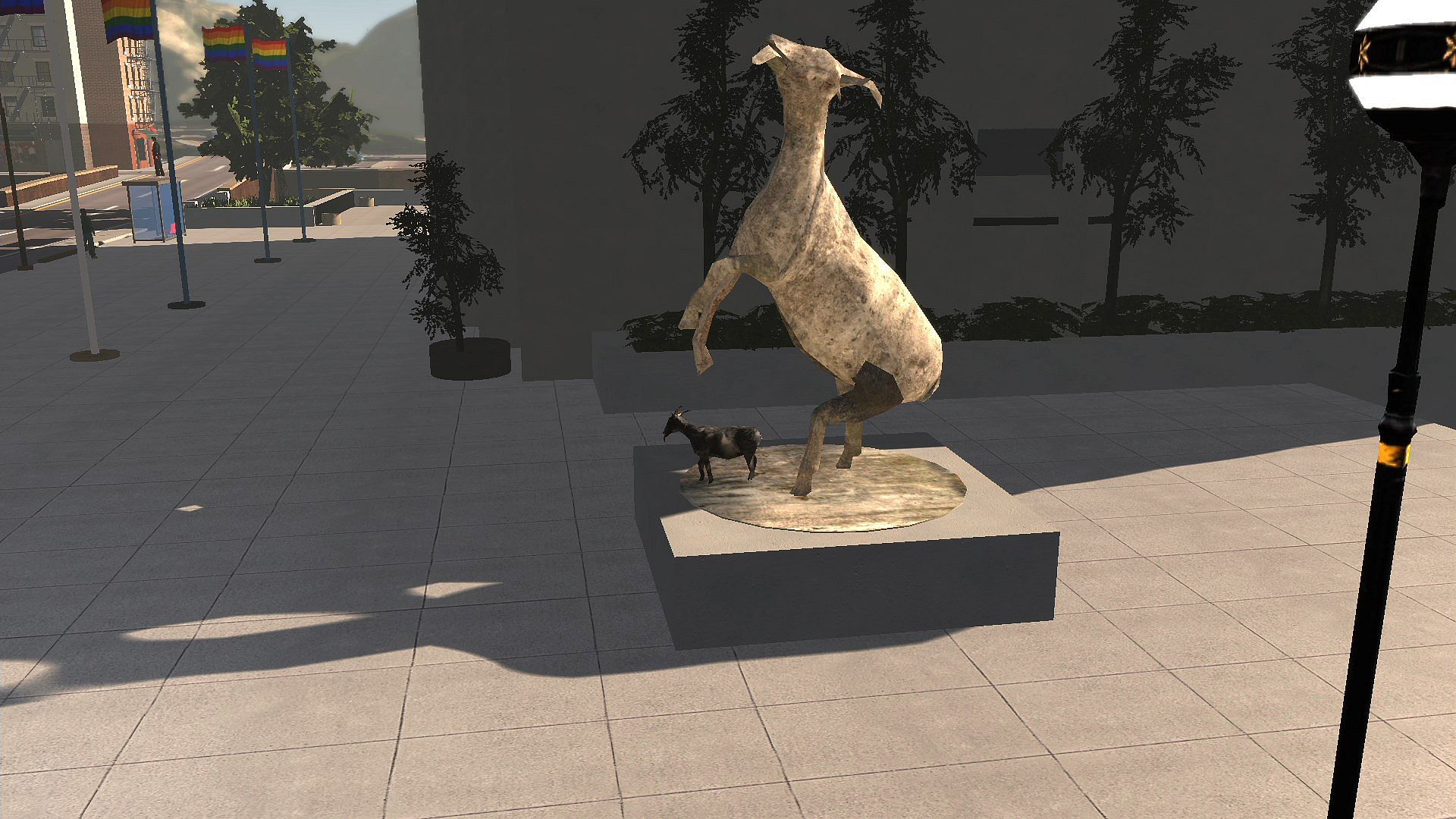
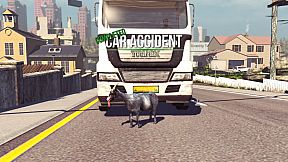
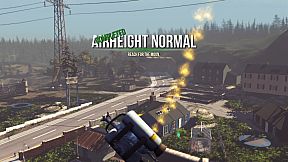
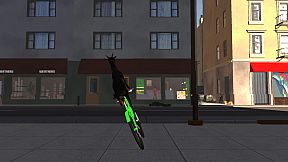
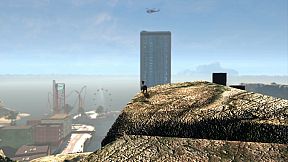
Goat Simulator is an action game centered on controlling a goat in an open suburban environment. Players take on the role of the animal and focus on exploration combined with chaotic interactions with the surroundings. The experience emphasizes freedom to move around, interact with objects, and generate disorder through the goat's abilities.
Gameplay
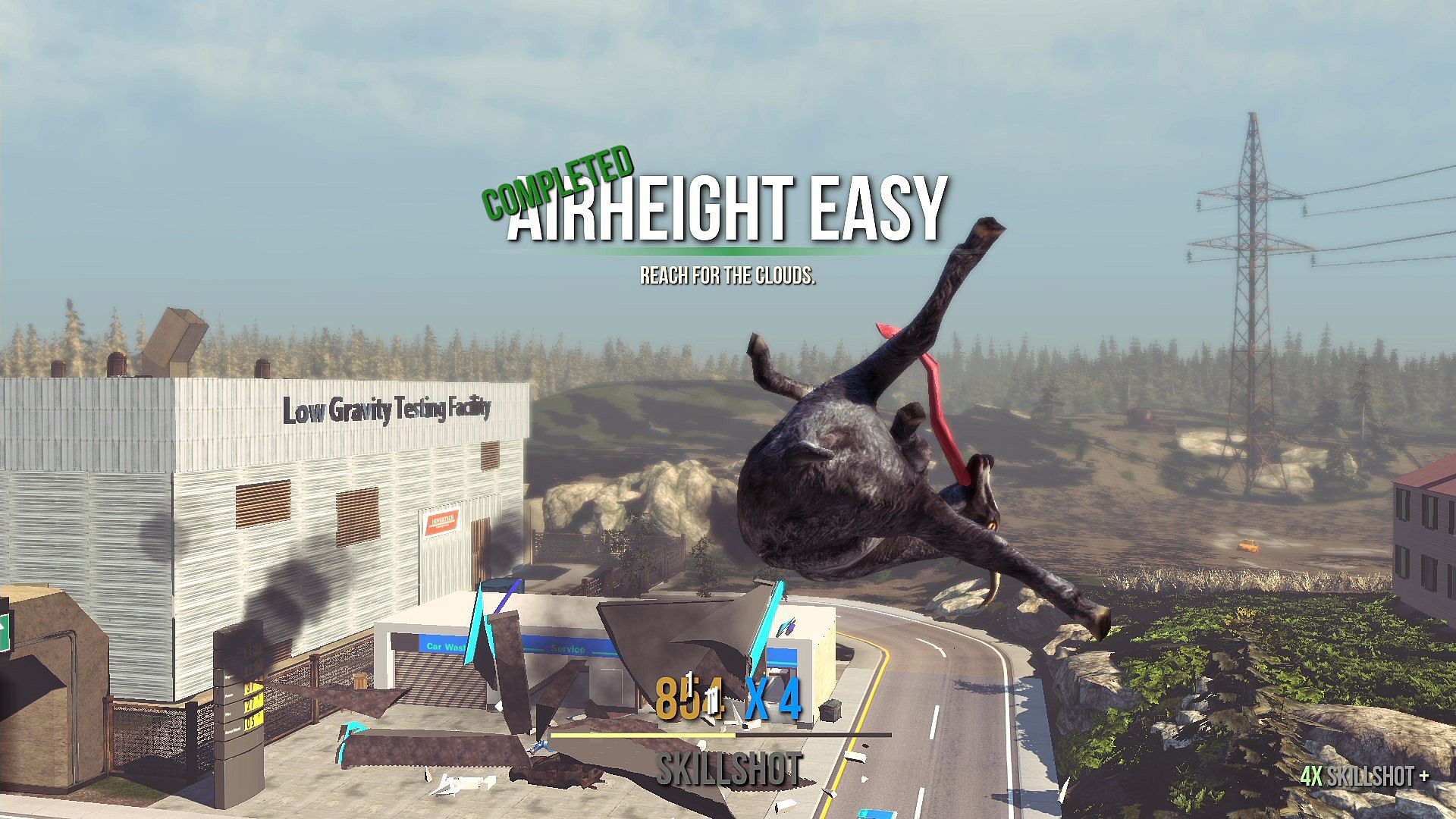
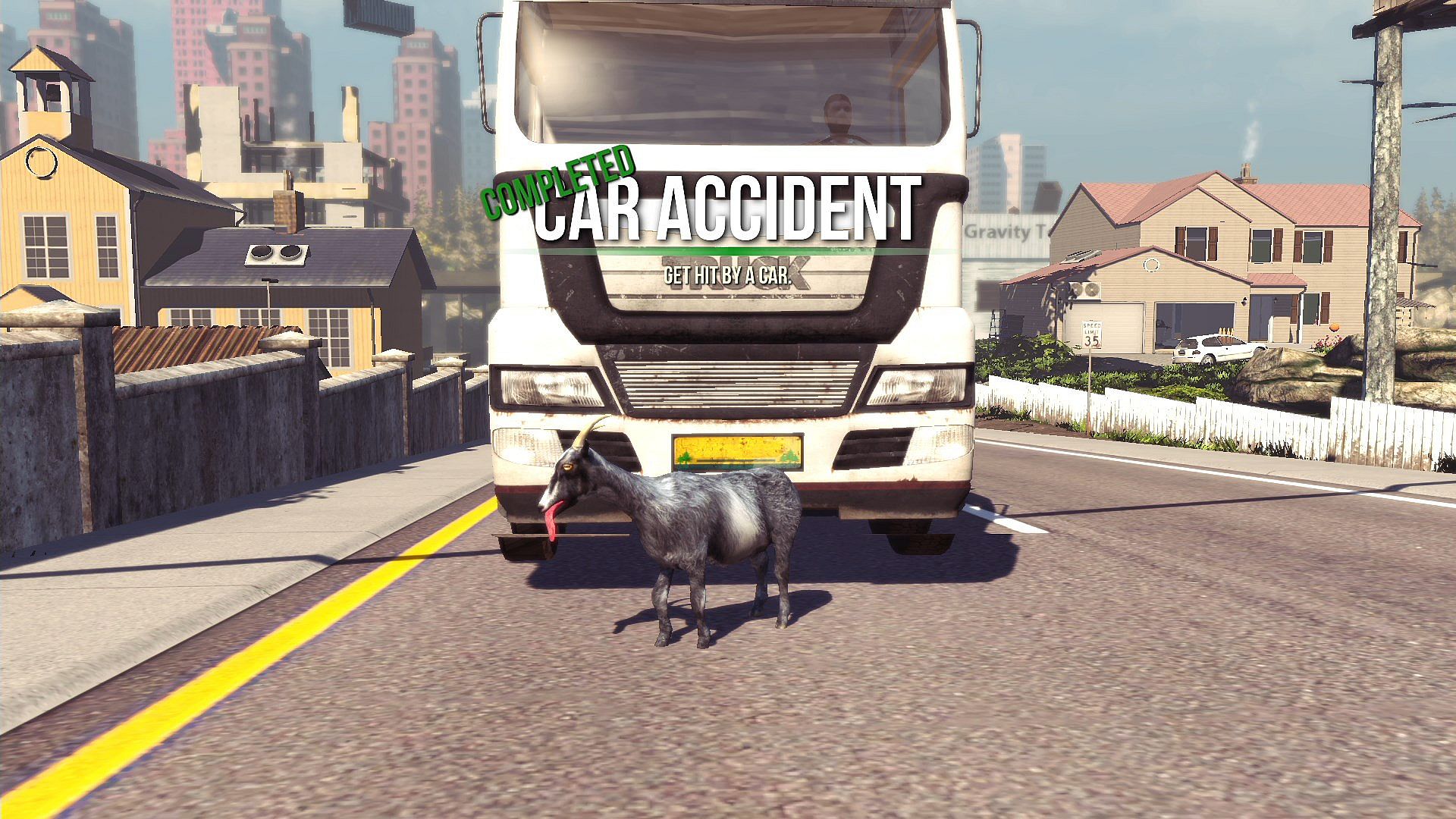
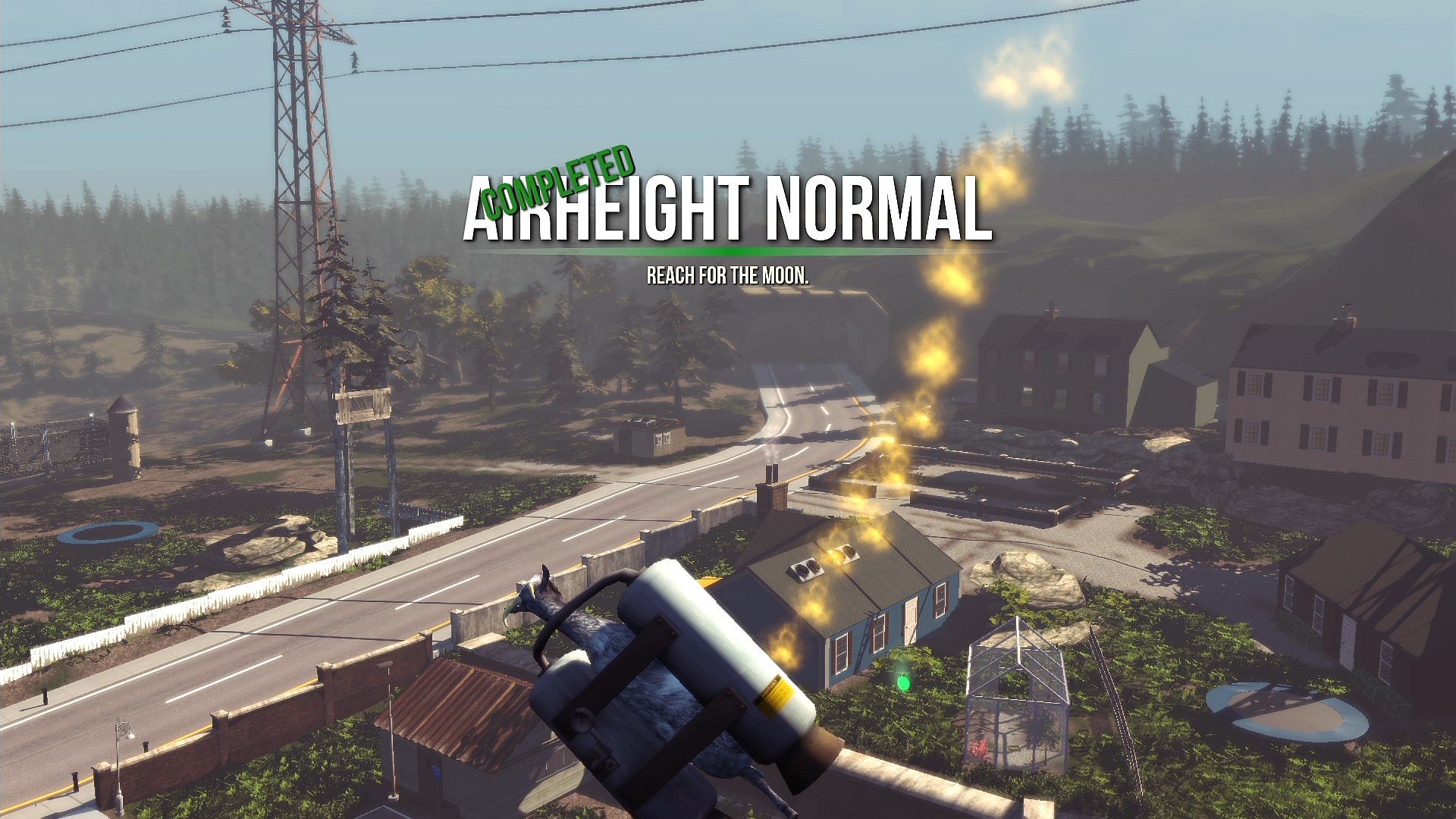
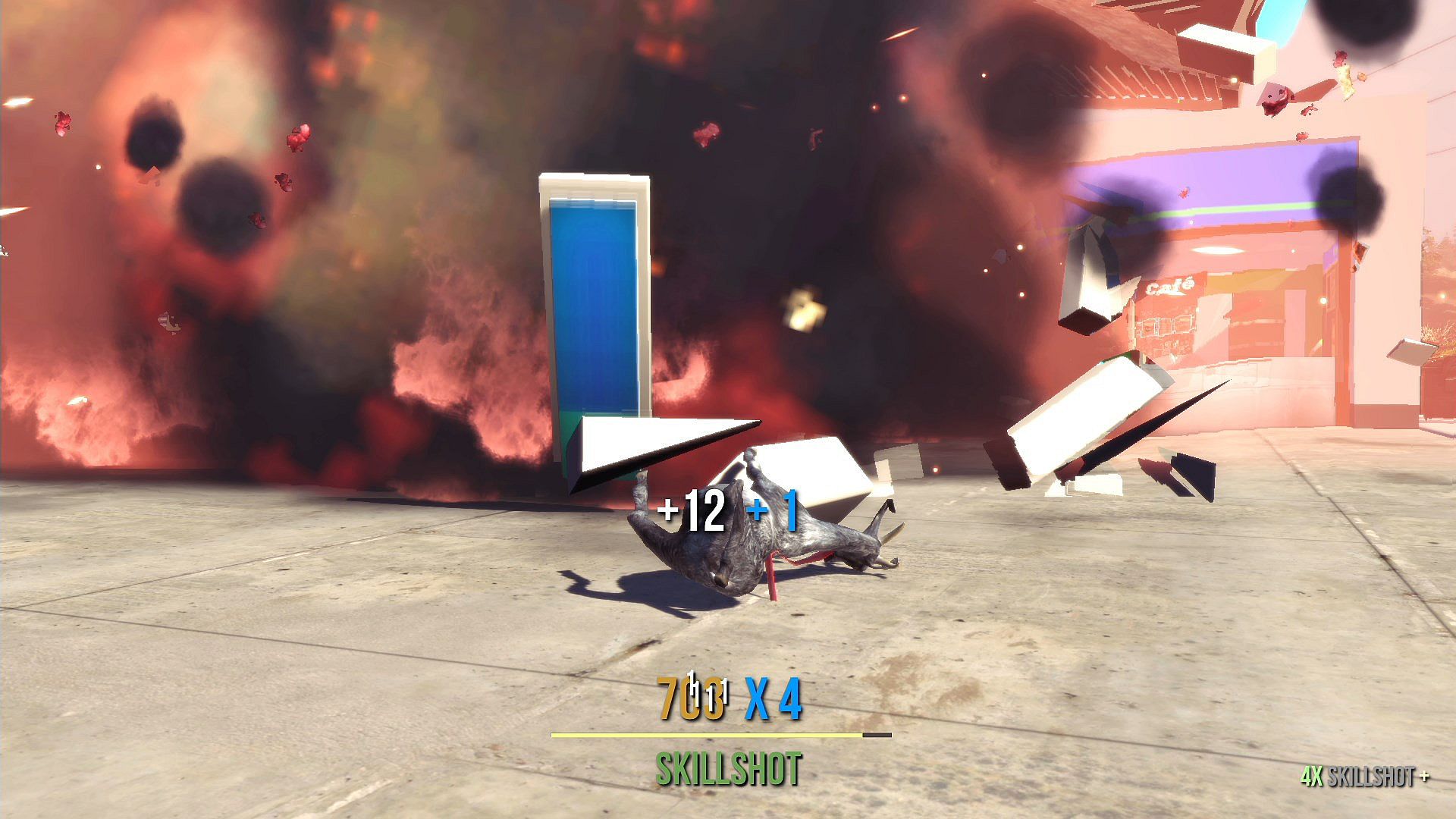
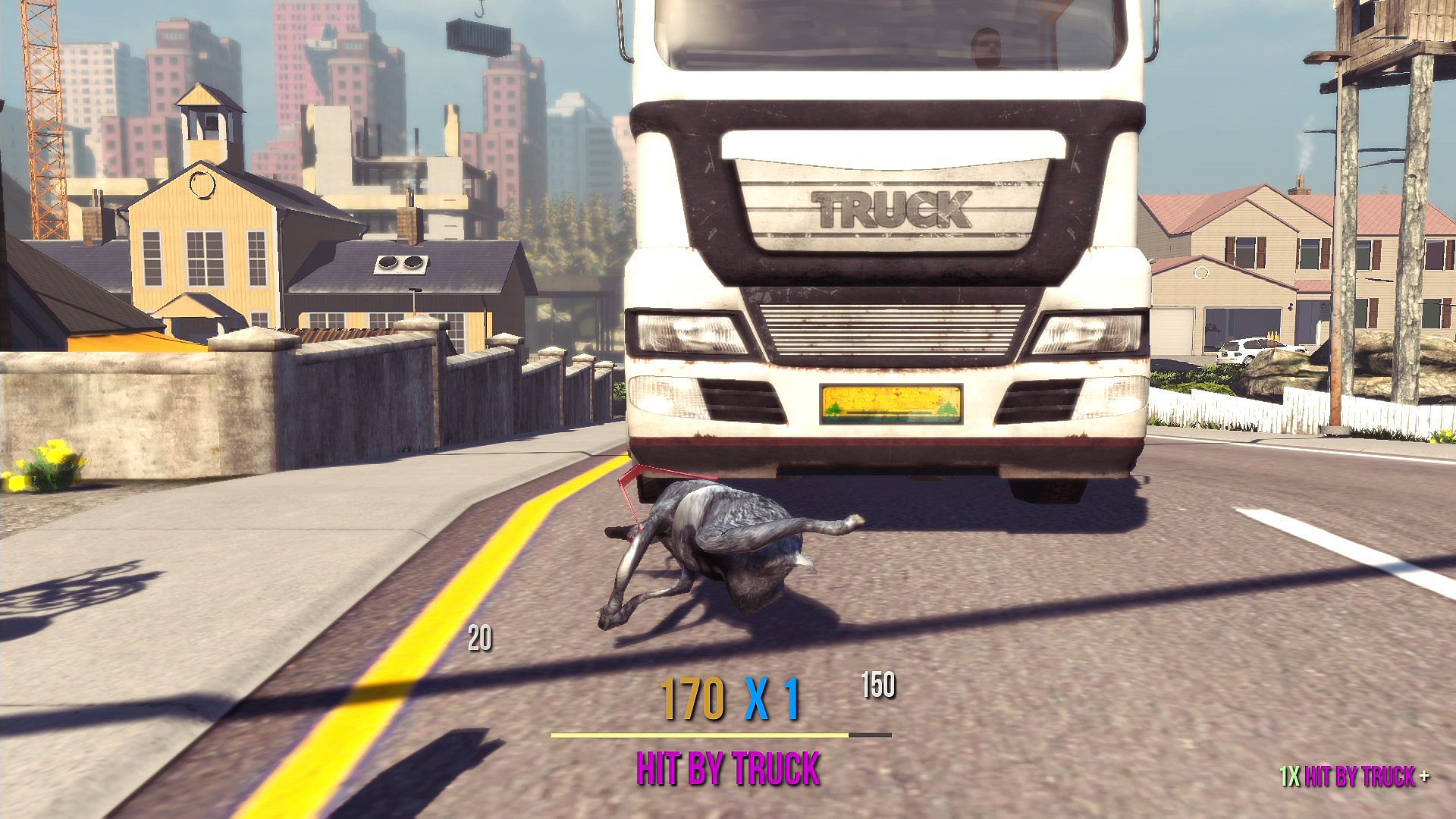
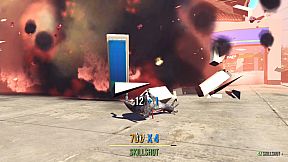
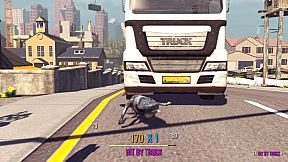
The core loop involves navigating the world on four legs while using basic controls for movement, jumping, and headbutting. Licking objects allows the goat to attach to and manipulate items, which often leads to unexpected chains of events due to the physics system. Points accumulate from destruction, with higher scores awarded for stylish combinations such as flips or spins during impacts. The goat's neck and body react in exaggerated ways to collisions, creating humorous and unpredictable outcomes. Exploration reveals various objects and structures that respond differently when disturbed, encouraging repeated sessions to discover new ways to interact.
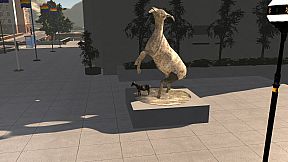
Physics glitches form a deliberate part of the design. The game intentionally retains many of these behaviors rather than fixing them, resulting in moments where the goat clips through surfaces or objects behave in absurd fashions. This setup rewards creative play, as players experiment with timing and positioning to chain events together for maximum effect. The suburban setting provides a contained area filled with everyday items that become tools for mayhem once the goat gets involved.
Game Modes
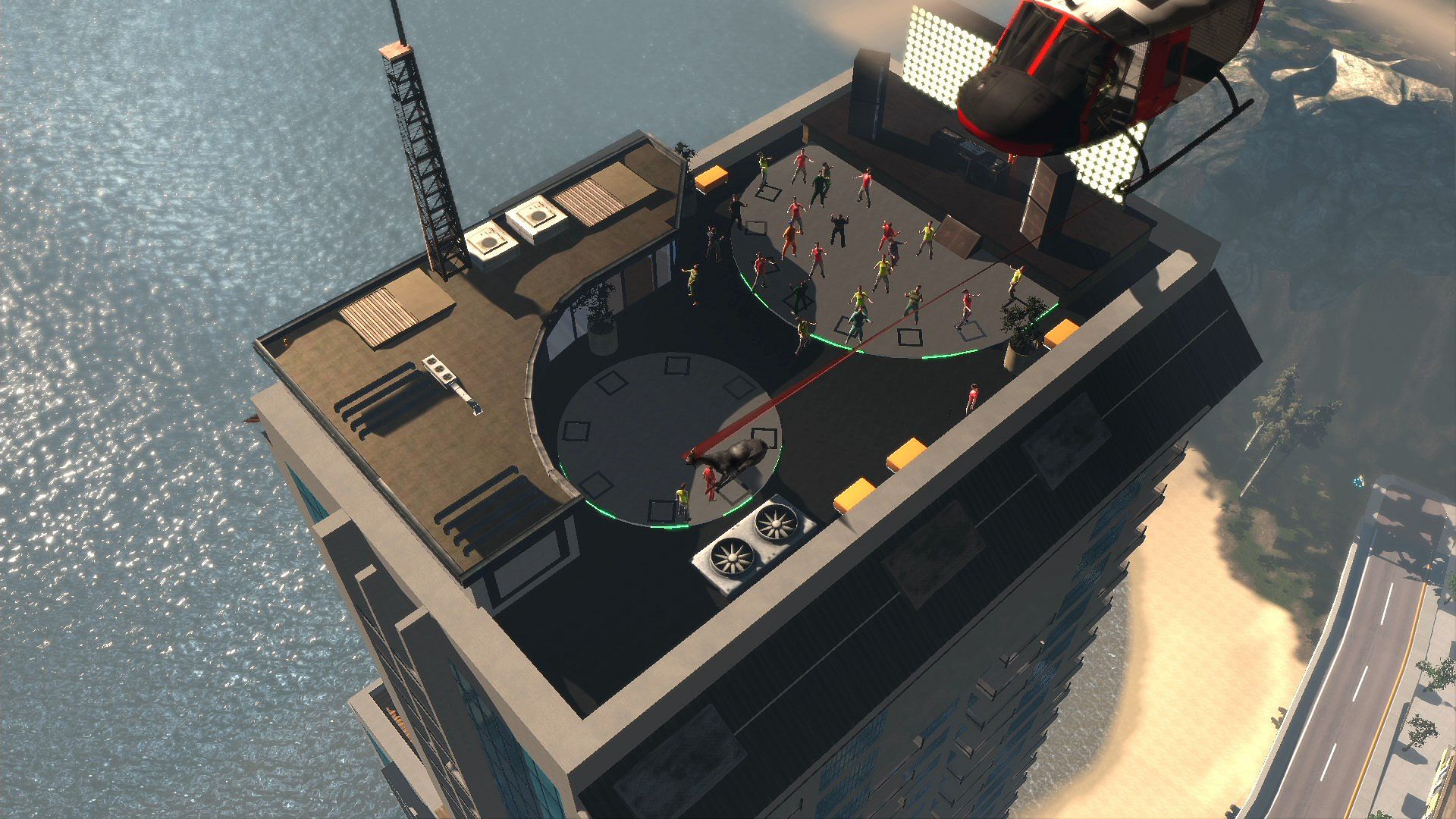
The primary experience runs in single-player, allowing uninterrupted focus on personal exploration and point chasing. Multiplayer support exists for local sessions, where additional players can join on the same screen to share the space and compete informally for destruction. A separate patch introduced Goat MMO Simulator, a gamemode that mimics online role-playing structures within the same goat framework, complete with quests and progression elements that parody larger-scale games while remaining playable solo or with local friends.
These options keep the emphasis on the same foundational mechanics across variations. No complex faction systems or seasonal content appear, as the design prioritizes immediate, repeatable sandbox activity over structured progression tracks.
Key Mechanics and Features
Point systems track destruction with multipliers tied to flair. Headbutting combined with aerial maneuvers yields better results than simple collisions. The ability to switch between normal movement and a manual front-leg walk adds minor variety for reaching certain spots or performing specific actions. Collectibles and hidden interactions exist throughout the environment, though they serve mainly as optional distractions rather than required objectives.
Bug retention stands out as a highlighted aspect. Developers noted that crash fixes would occur but left other glitches intact because they contribute to the entertainment value. This approach results in a title where instability becomes part of the appeal, leading to emergent moments that players share through video clips or personal stories.
Is It Worth Playing?
Goat Simulator suits players who enjoy short, absurd sessions focused on physics experimentation and humor rather than narrative depth or competitive balance. Its straightforward premise delivers consistent laughs through the goat's antics and the world's reactions, making it a light diversion for those seeking something different from standard action titles. The Xbox versions on One and Series consoles maintain the original feel with the same emphasis on destruction and glitches.
Reception highlights its cult status among fans of silly simulators, though opinions vary based on tolerance for repetition and lack of traditional goals. Those who appreciate the disclaimer-style self-awareness in the game's own description often find the most enjoyment, treating it as a novelty experience rather than a long-term commitment. Availability on current Xbox hardware allows easy access for anyone curious about the premise without additional barriers.