







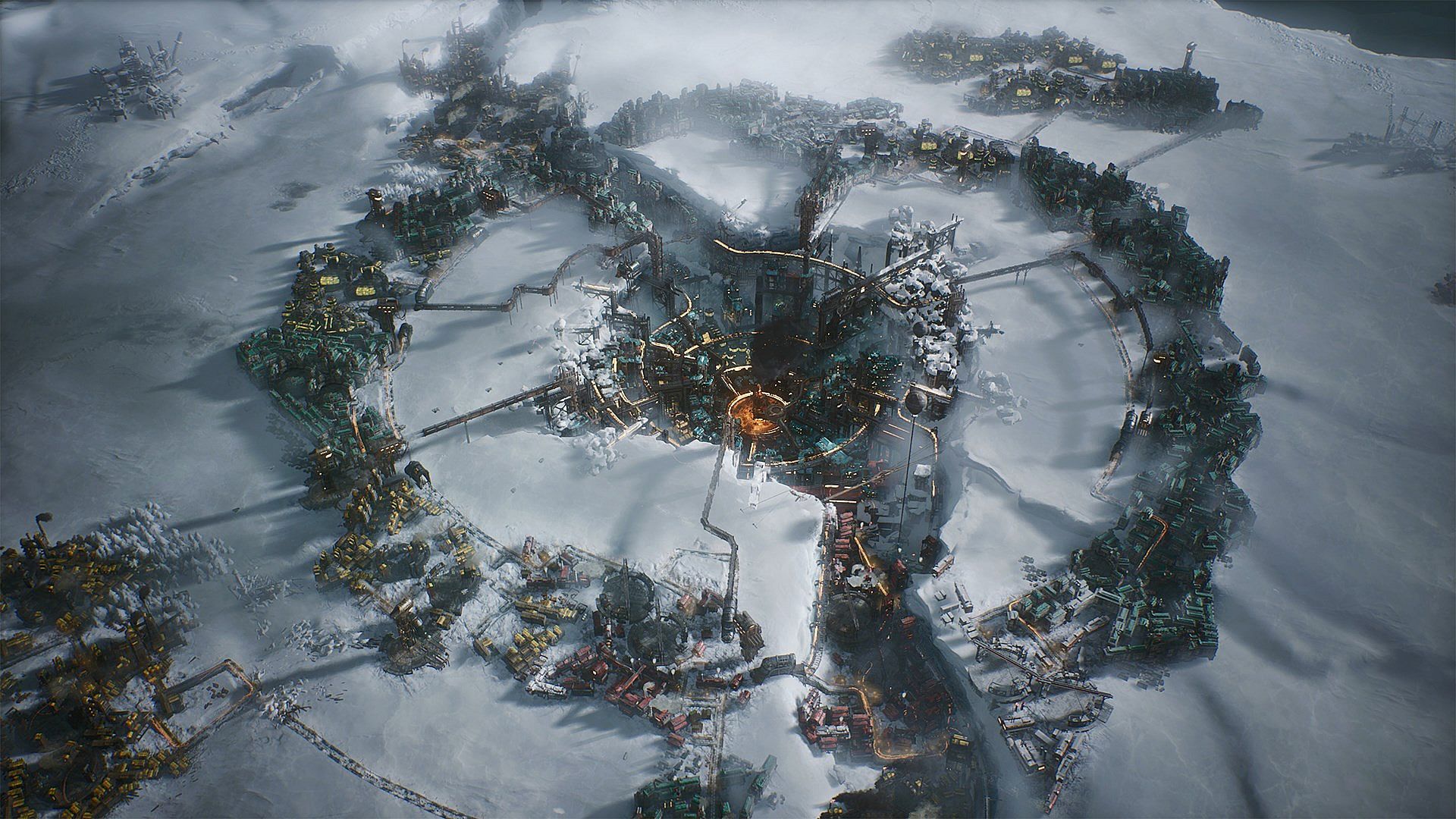
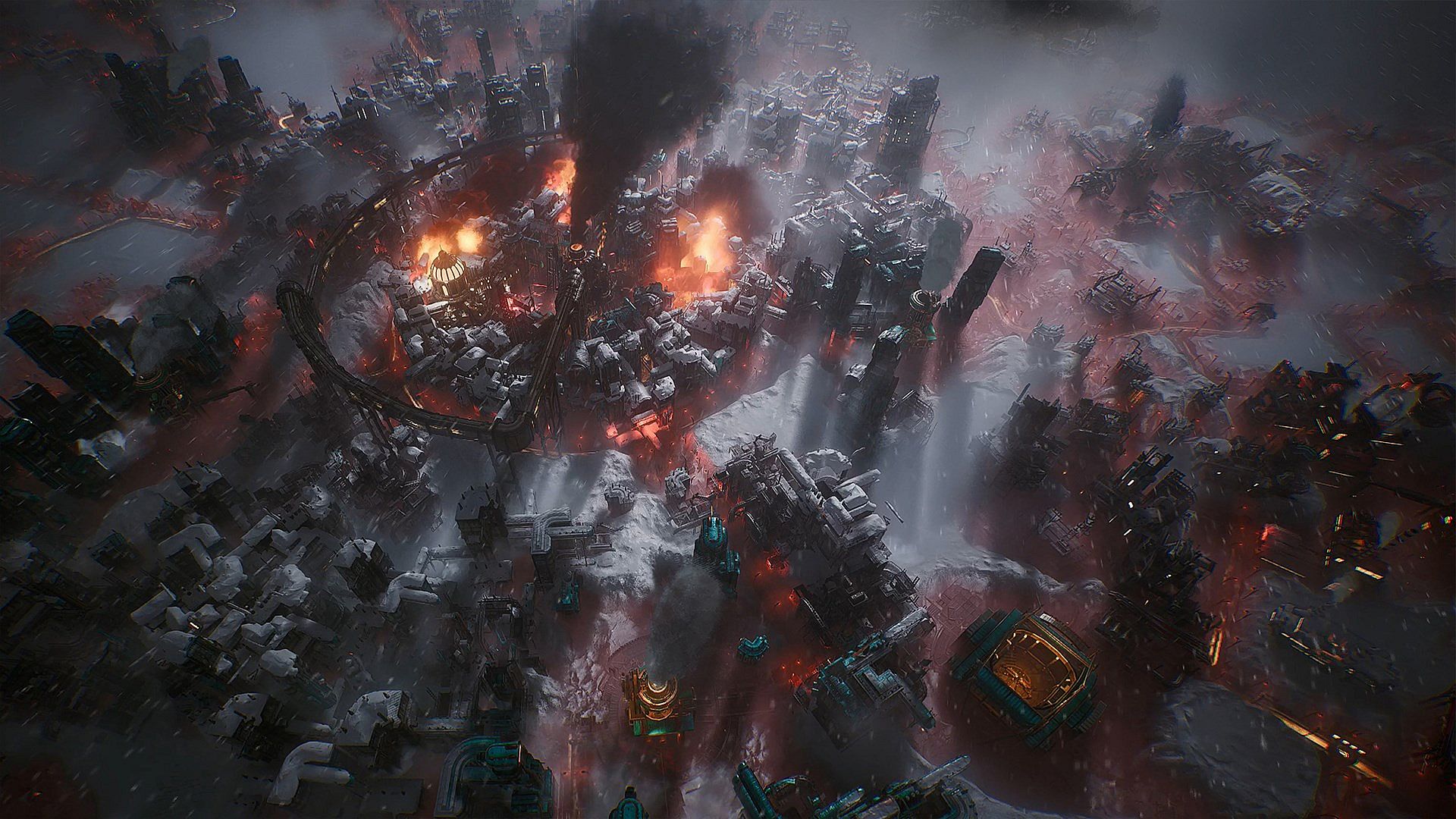
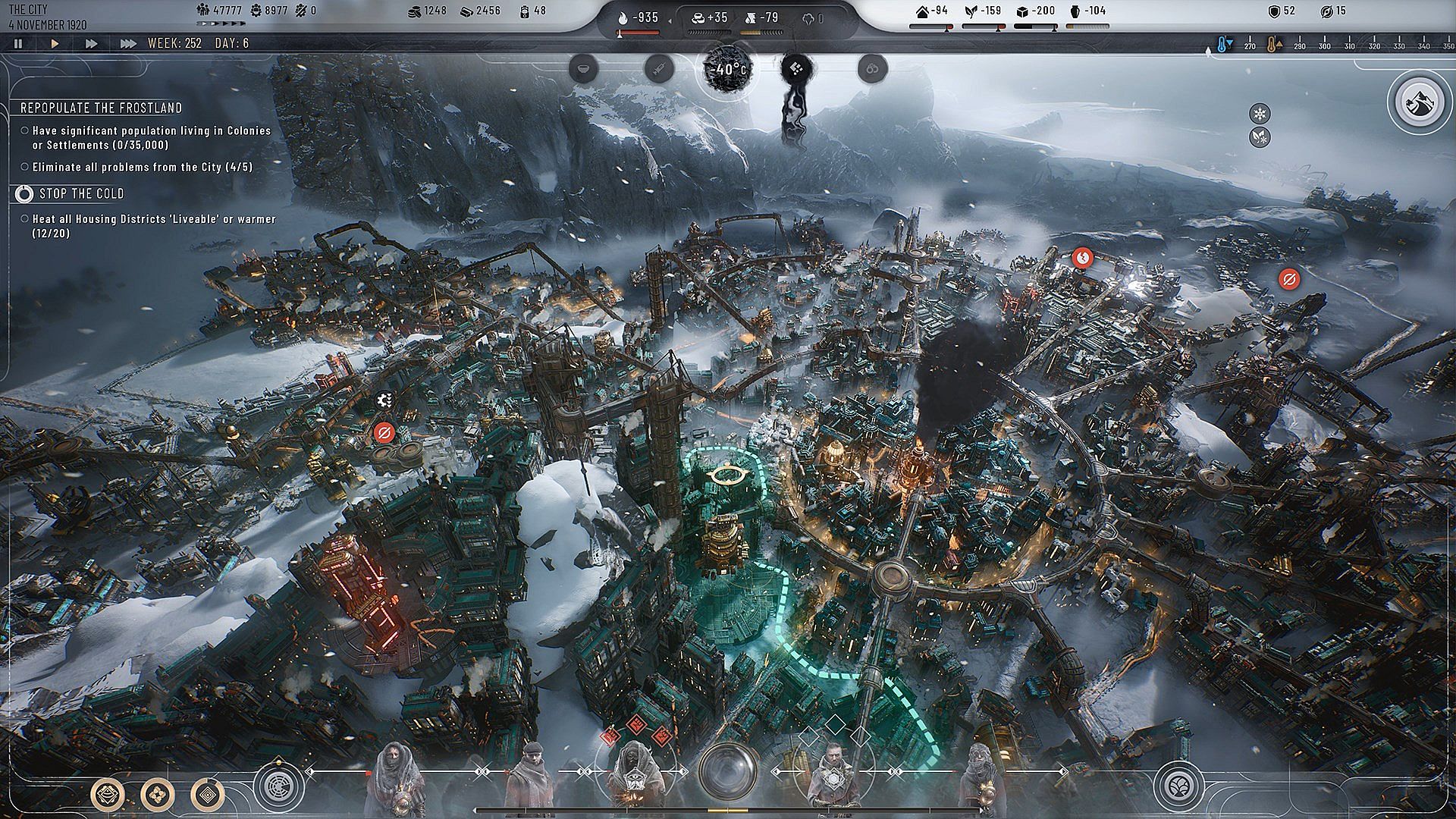
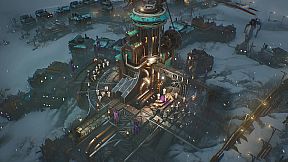

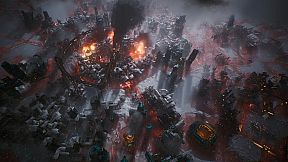
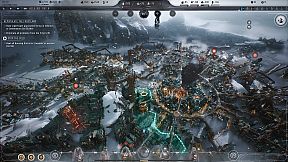

Frostpunk 2 is a strategy and simulation game in which players manage a city in a world locked in permanent winter. As Steward, the focus rests on expanding districts, securing resources such as coal and oil, and balancing the demands of a growing population against the limits of the environment.
Gameplay
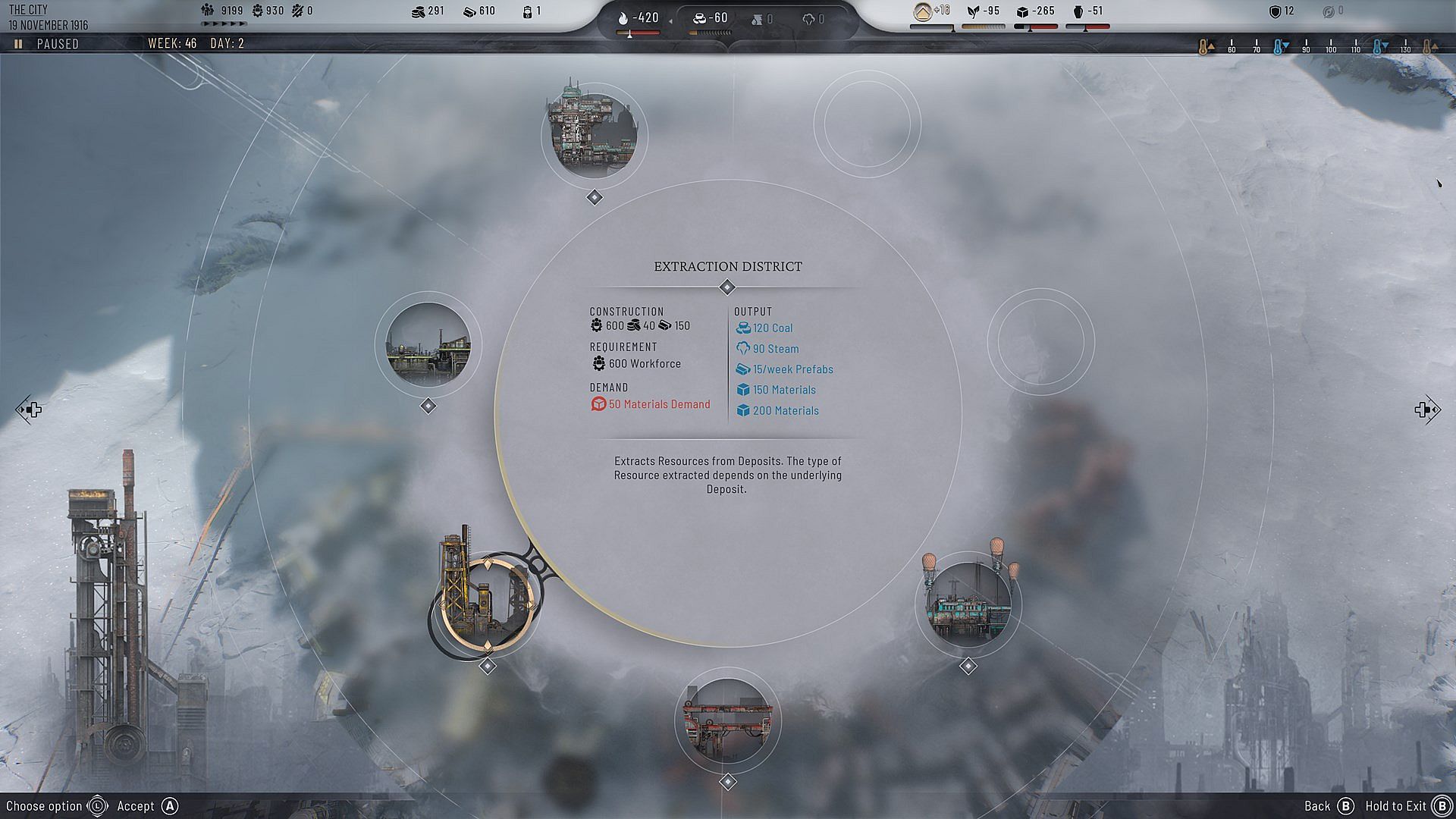
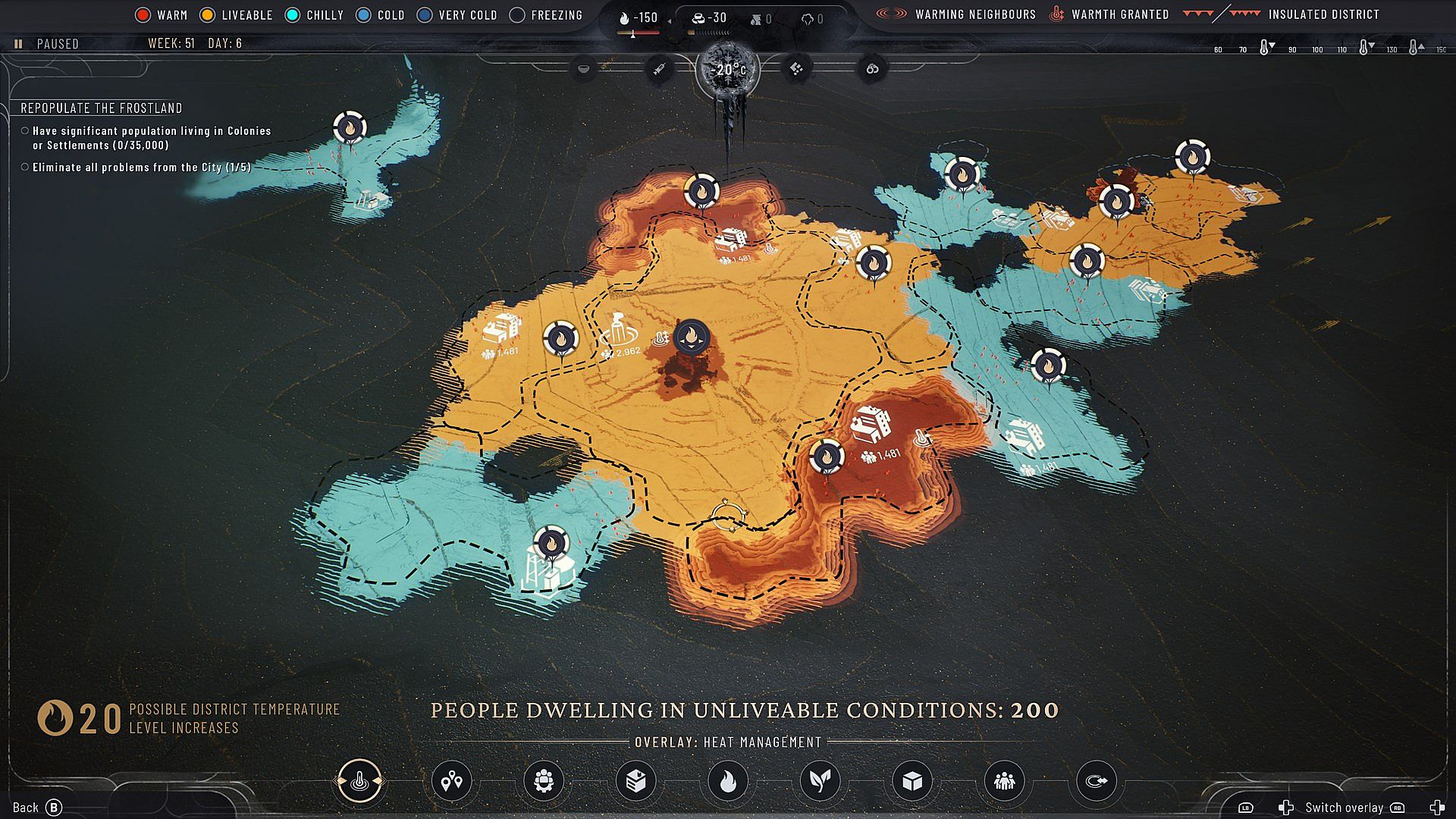
The core loop centers on district construction and resource allocation. Housing districts shelter citizens while extraction zones pull raw materials from the ice. These zones must operate together to maintain heat and food supplies across the city. Expansion requires careful planning because each new district adds its own needs for warmth, labor, and infrastructure.
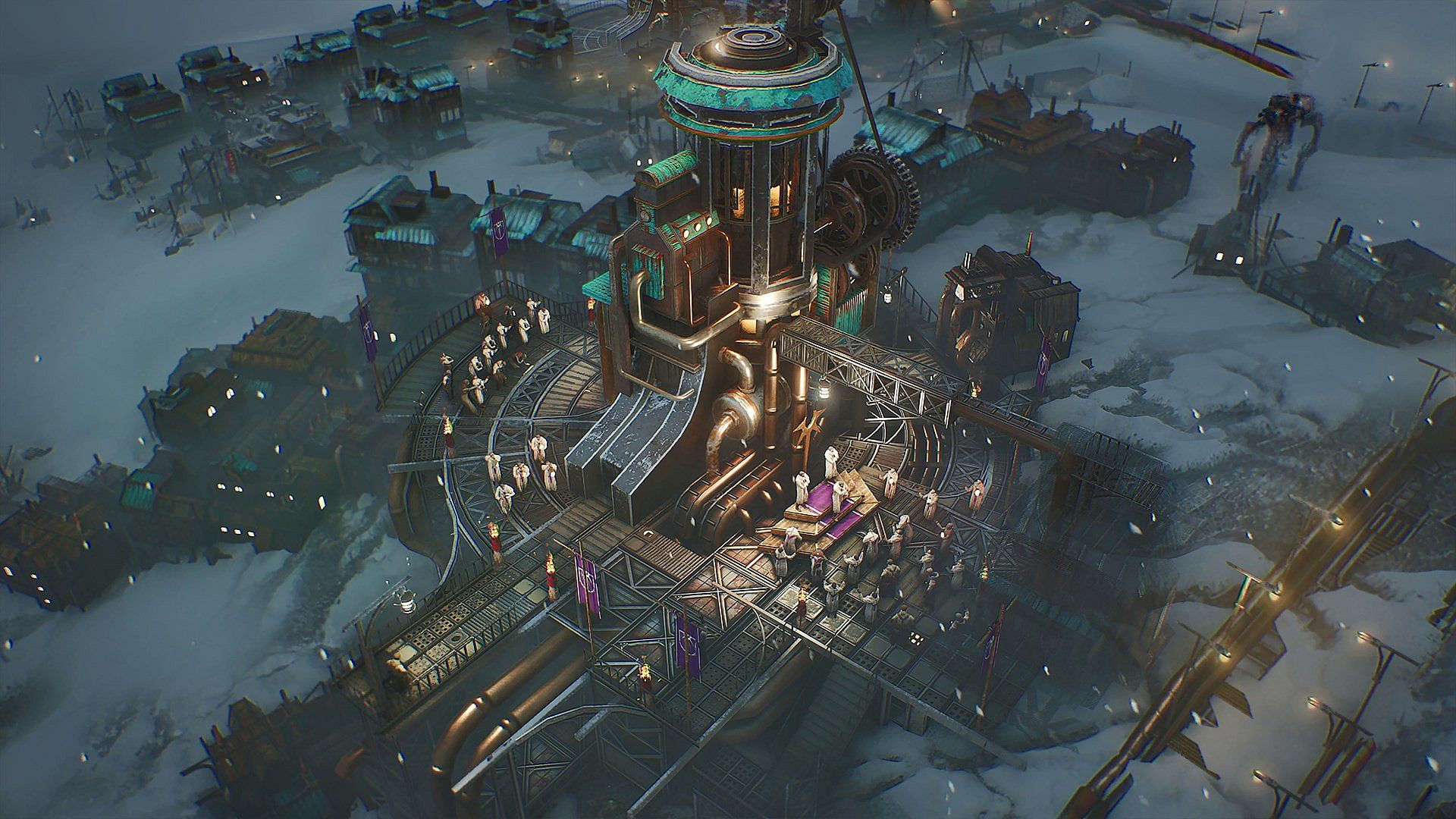
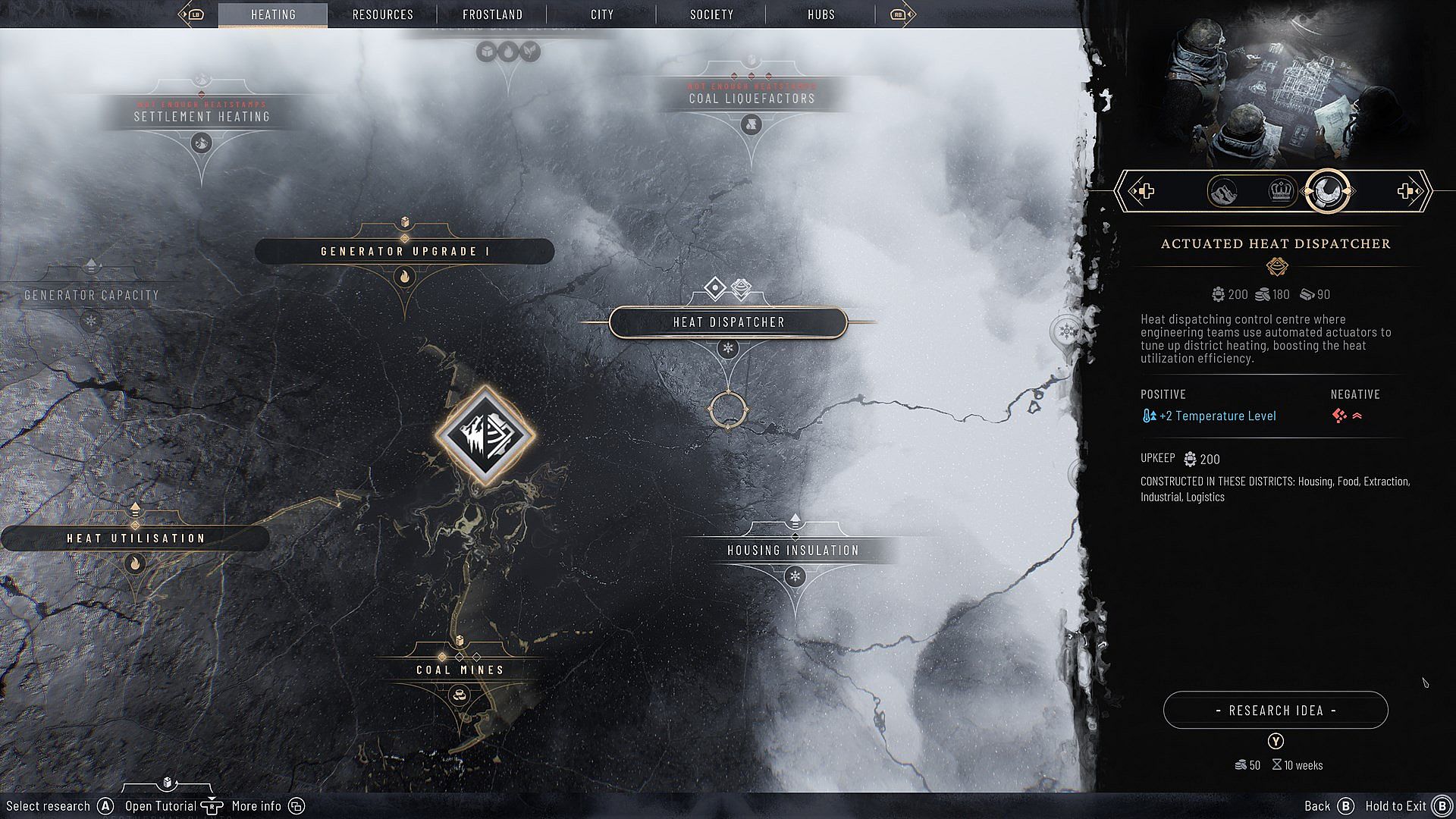
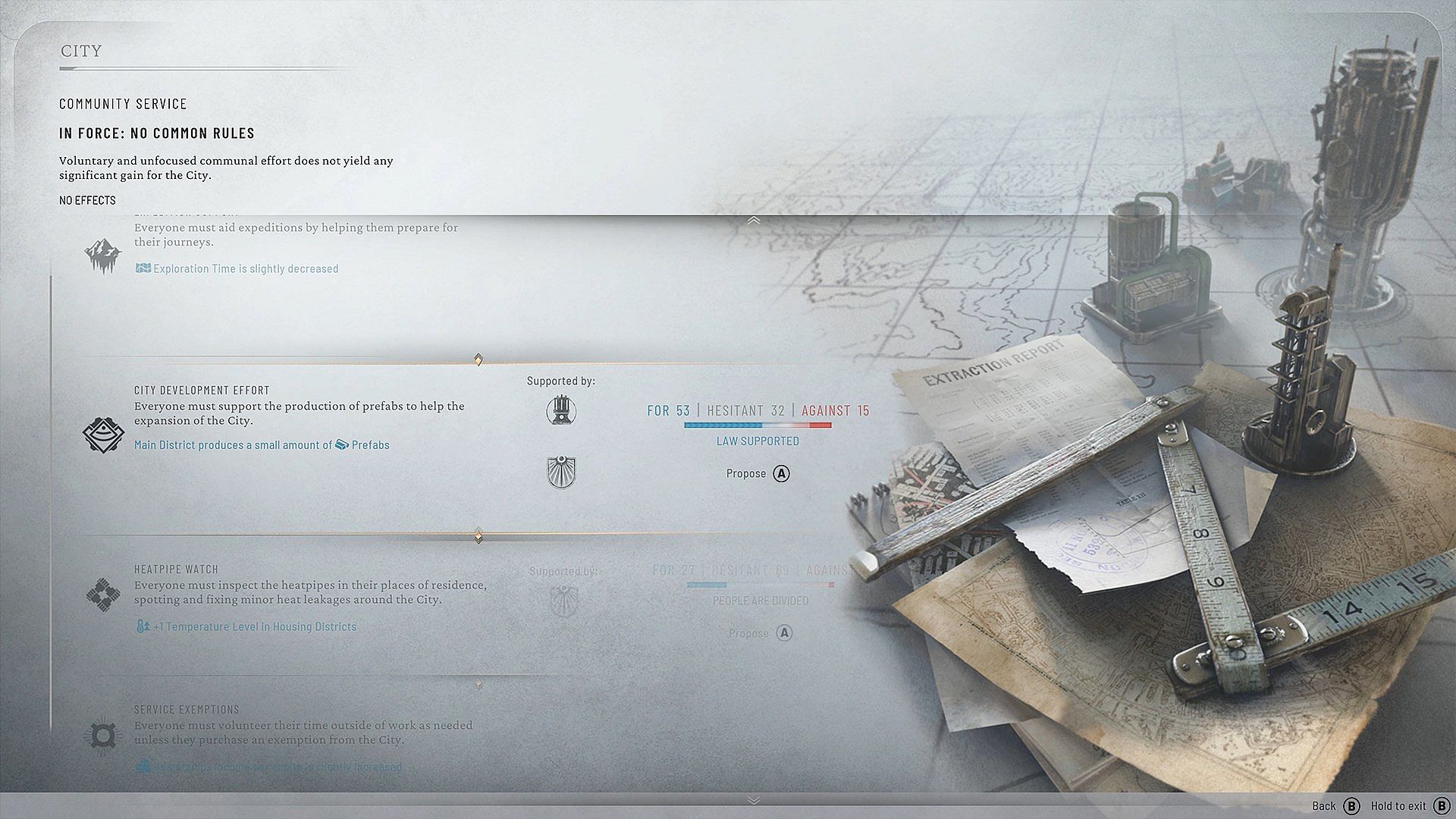
Special buildings such as the City Hall and Research Institute become essential once the population grows. The City Hall serves as the site for proposing laws and managing alliances. The Research Institute handles long-term projects that shape technological and social development. Every project is assigned to a faction, which ties progress directly to political relationships.
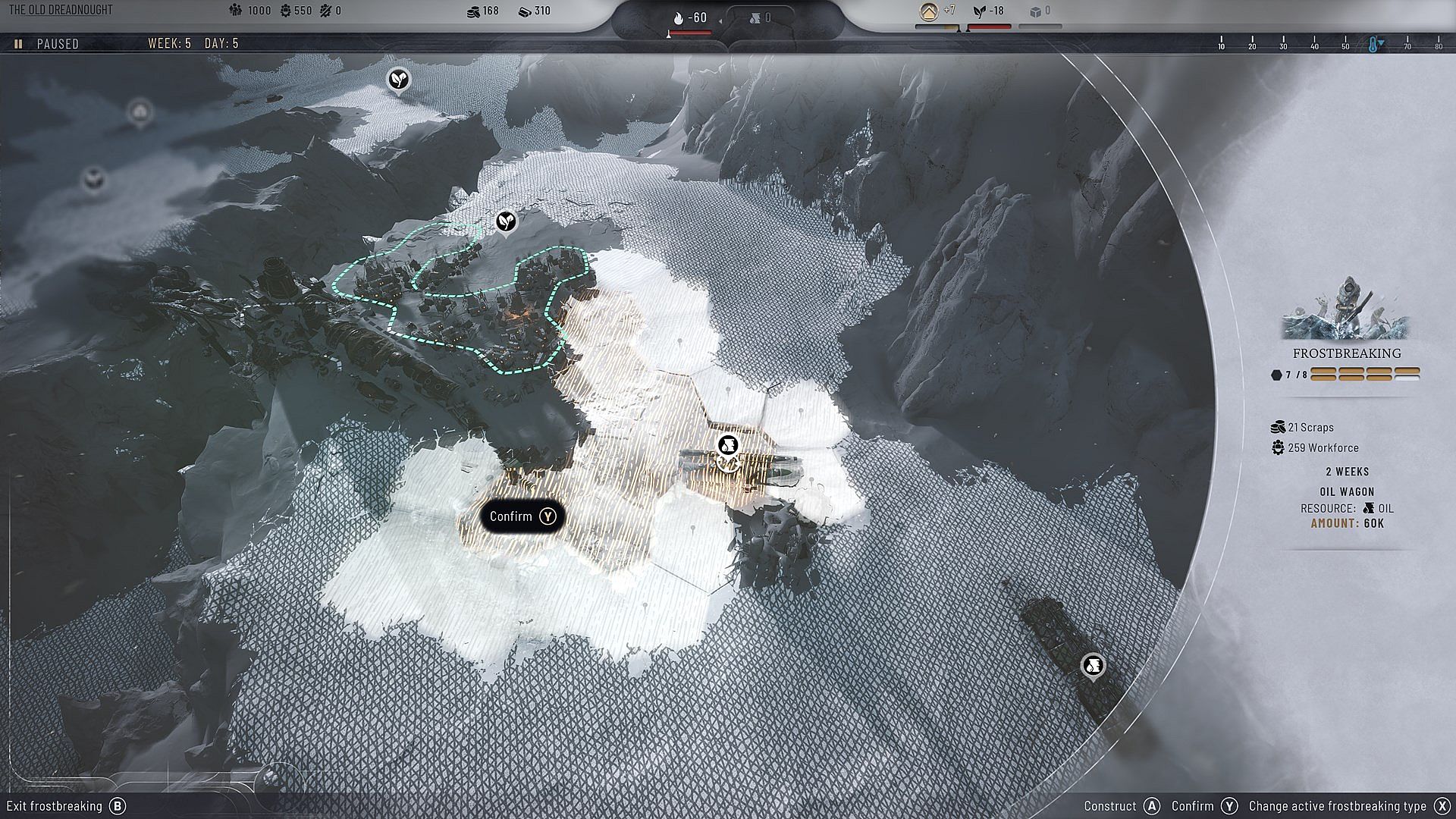
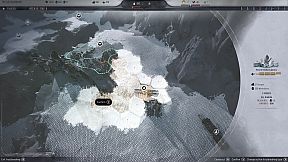
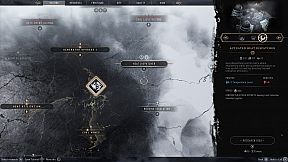
Colonies extend the city's reach into the surrounding frostland. These outposts supply additional resources that the main settlement cannot produce in sufficient quantity. Managing colony output adds another layer of logistics because transport and protection must be maintained against the cold.
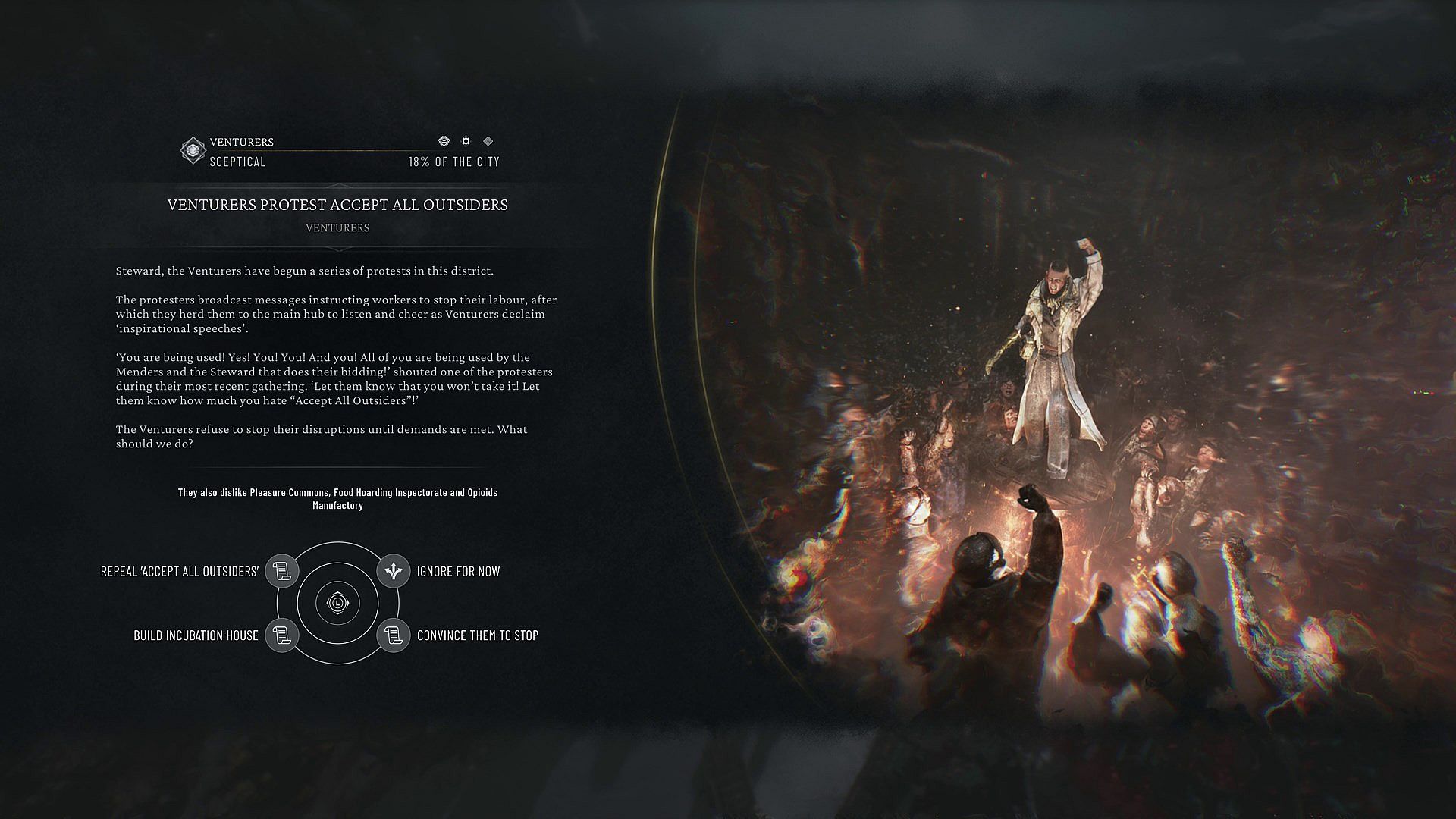
Human elements complicate every decision. Citizens form communities that later evolve into factions with distinct ideologies. These groups push their own priorities in the Council Hall, where laws are debated and voted upon. Support from one faction often reduces approval from others, forcing the Steward to weigh short-term gains against long-term stability.
Game Modes
Story Mode presents a multi-chapter campaign that follows the Steward through a sequence of events in New London. The narrative unfolds across the leader's tenure, with responsibilities scaling as the city expands and external pressures mount. Players experience the direct consequences of leadership choices within a structured sequence of challenges.
Utopia Builder functions as the open-ended sandbox option. It provides multiple starting maps and ambitions that set different long-term goals. Events and faction interactions still occur, yet the absence of a fixed storyline allows extended experimentation with social structures and city layouts. Recent expansions have added faction-specific development paths that further customize sandbox sessions.
Factions and Political Systems
Factions emerge from the broader communities that form around ideological positions. Three main axes define these positions: adaptation versus progress, equality versus merit, and reason versus tradition. Laws, research choices, and event outcomes shift faction approval and gradually establish a city-wide Zeitgeist that reflects the dominant direction of society.
Negotiations in the Council Hall require ongoing attention. Each faction demands concessions in exchange for support, and rising influence for one group can trigger discontent elsewhere. The system rewards deliberate alliance building rather than blanket approval, because alienating multiple factions risks unrest or open conflict.
Is It Worth Playing?
Frostpunk 2 suits players who enjoy detailed city management combined with political negotiation. The district and colony systems create a steady flow of logistical decisions, while the faction mechanics add recurring tension to law-making and research. The Xbox version runs without community mods, whereas the PC edition supports them through dedicated tools.
Updates have continued since launch, including content that deepens the sandbox experience with new faction progression options. Reception highlights the depth of the political layer and the visual scale of the districts, though some players note the steep initial learning curve. Those comfortable with complex simulation titles that emphasize trade-offs and long-term planning will find the most consistent engagement here.
- Strong emphasis on resource chains and district synergy
- Political systems that change with every major decision
- Two distinct modes that support both guided and open play