









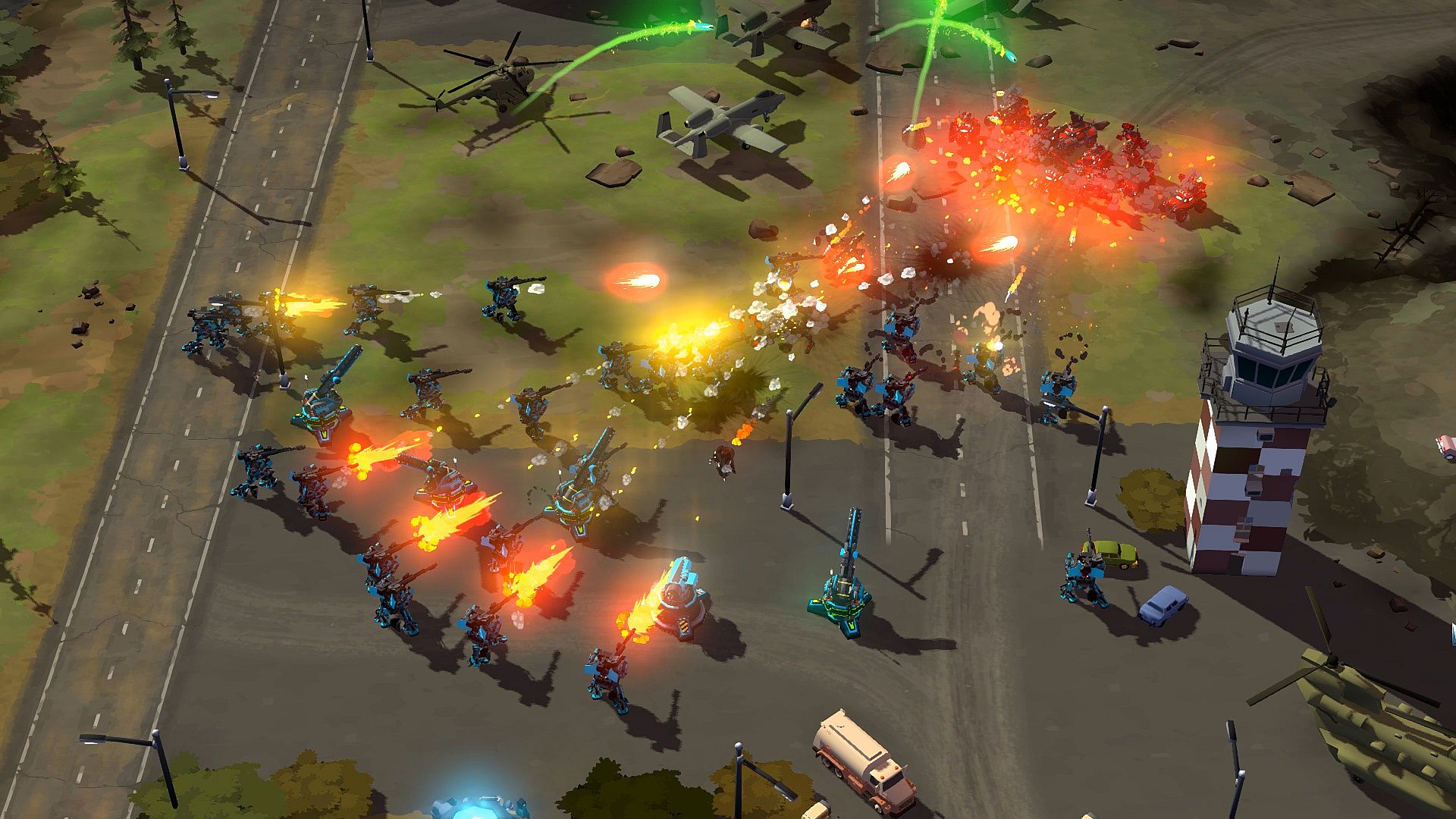
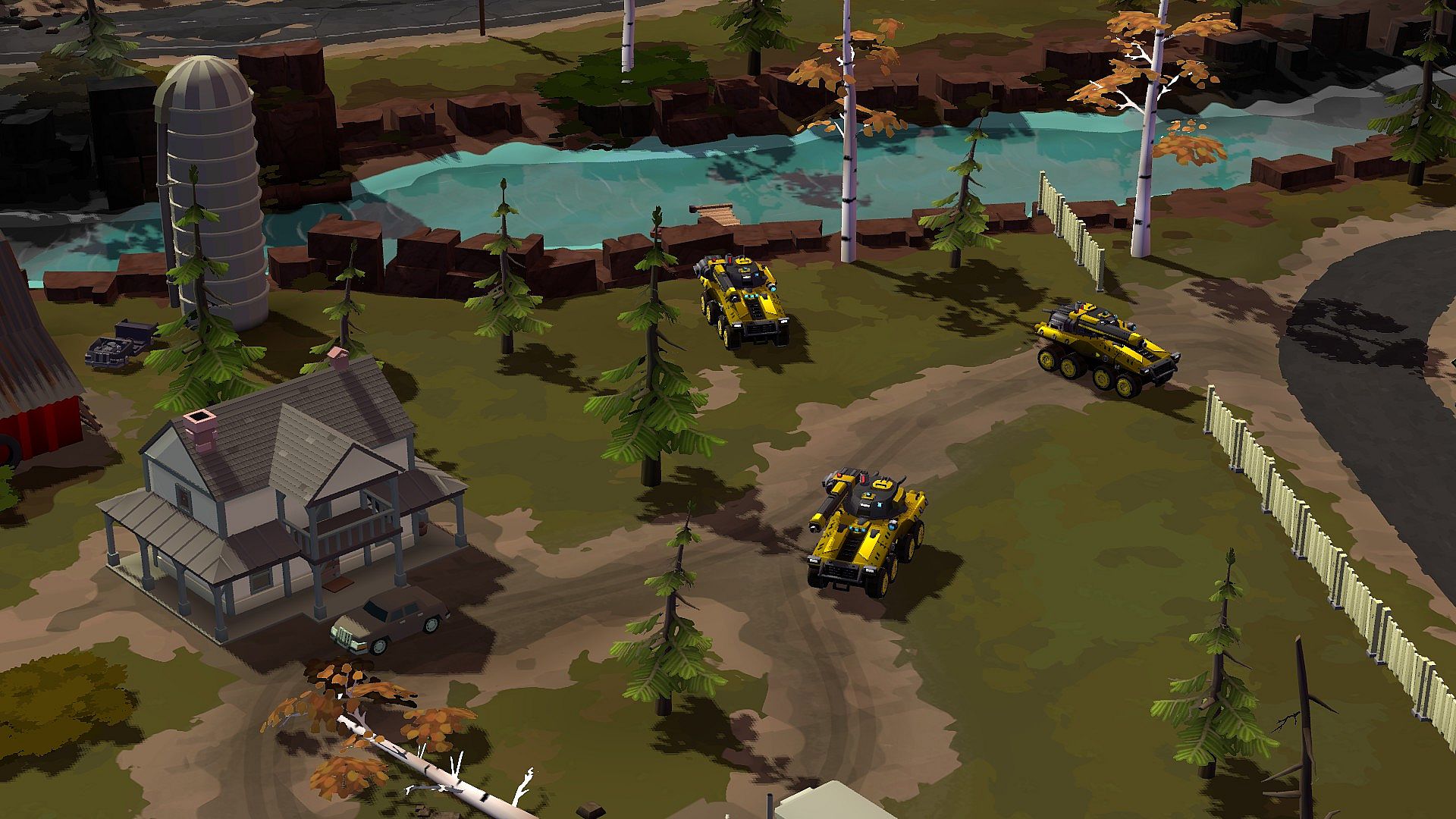
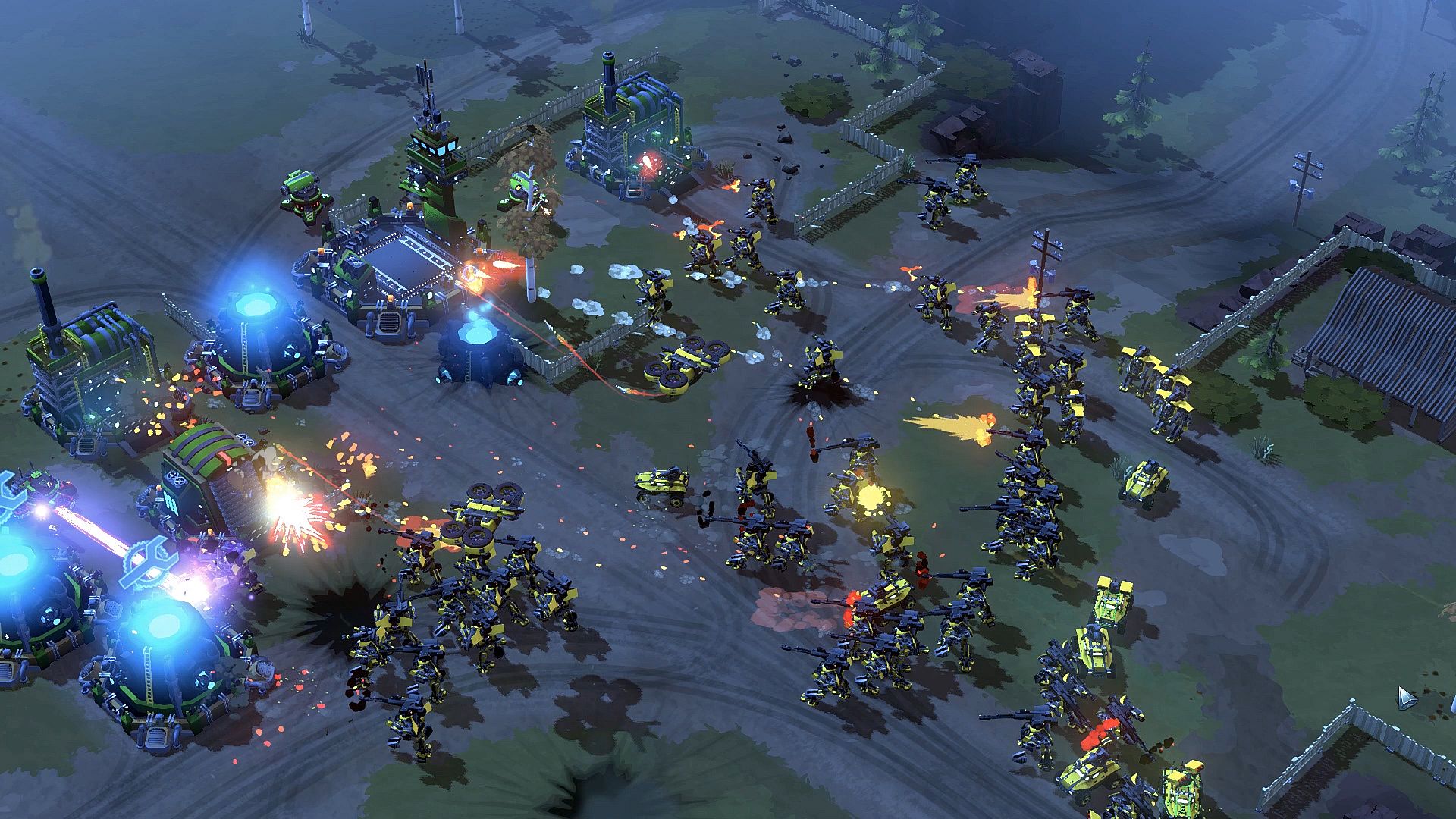
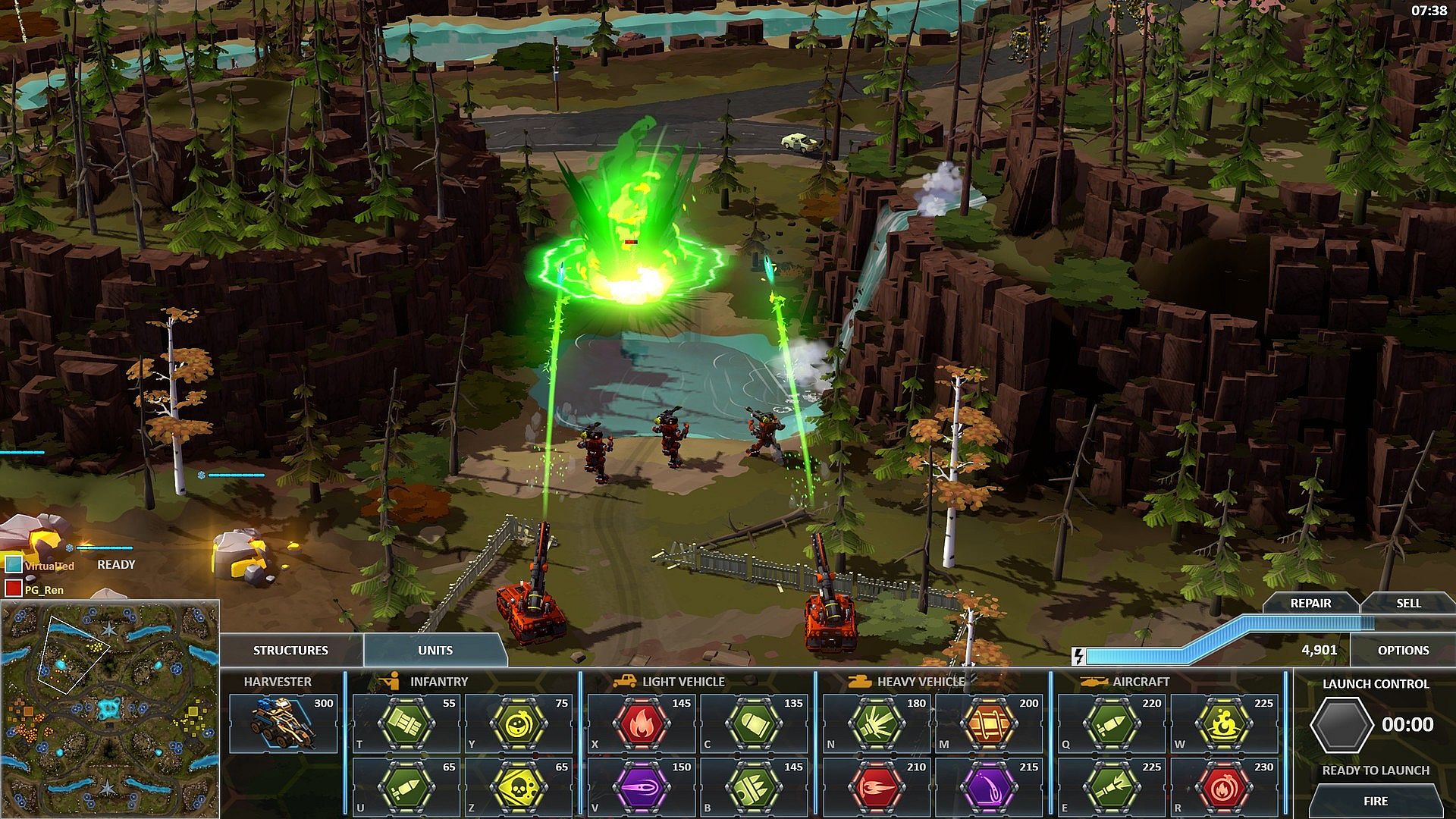
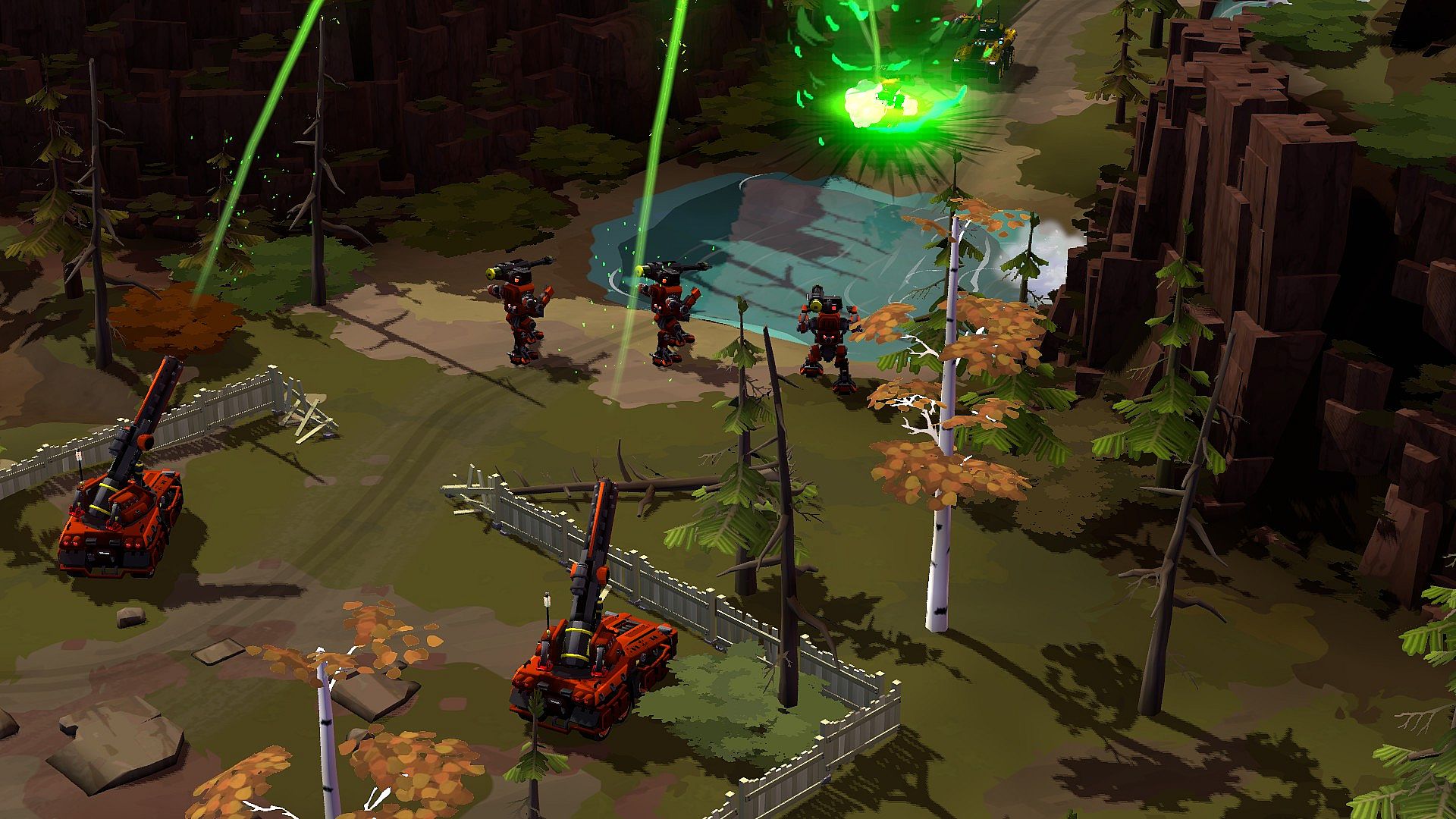
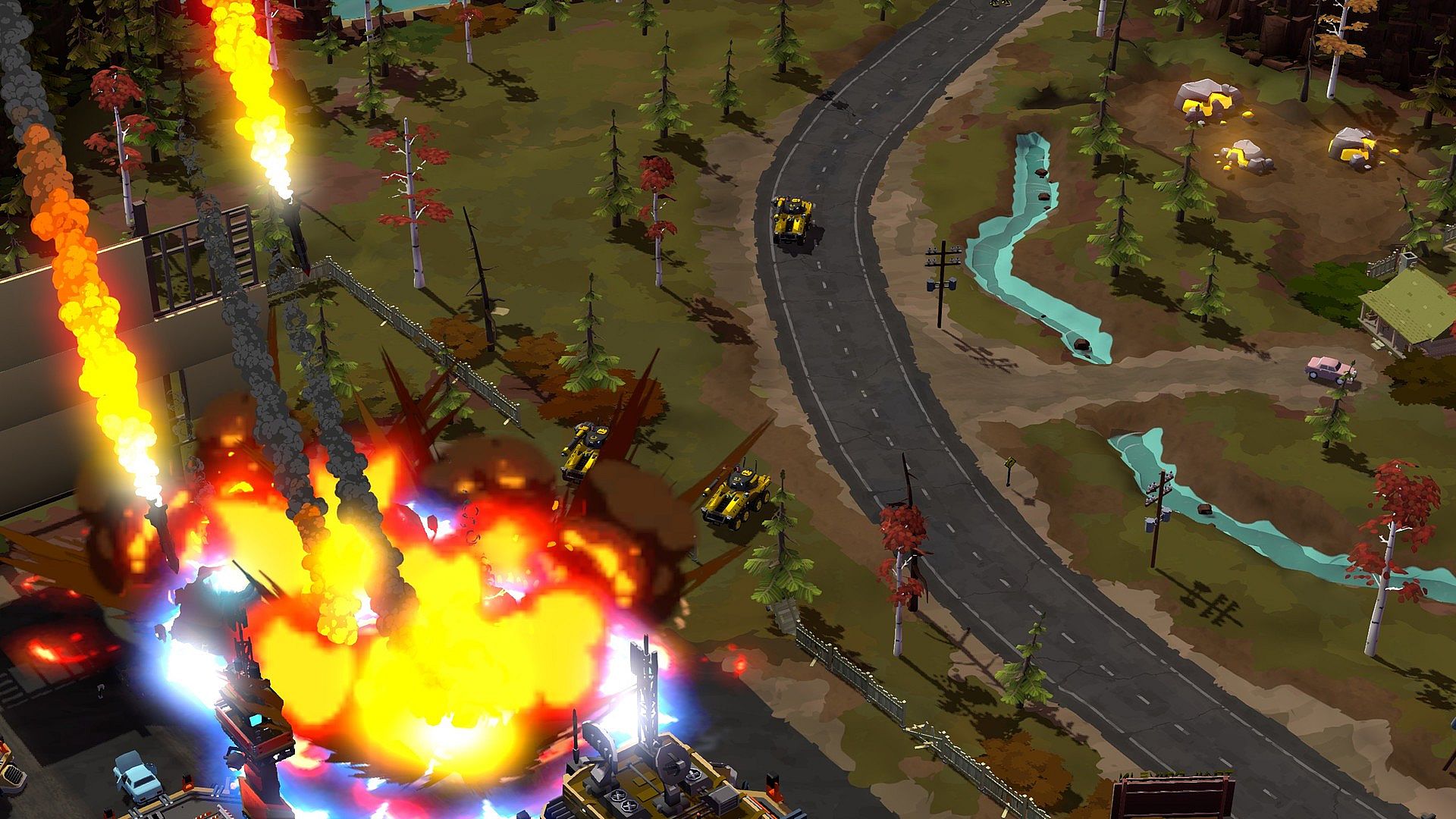
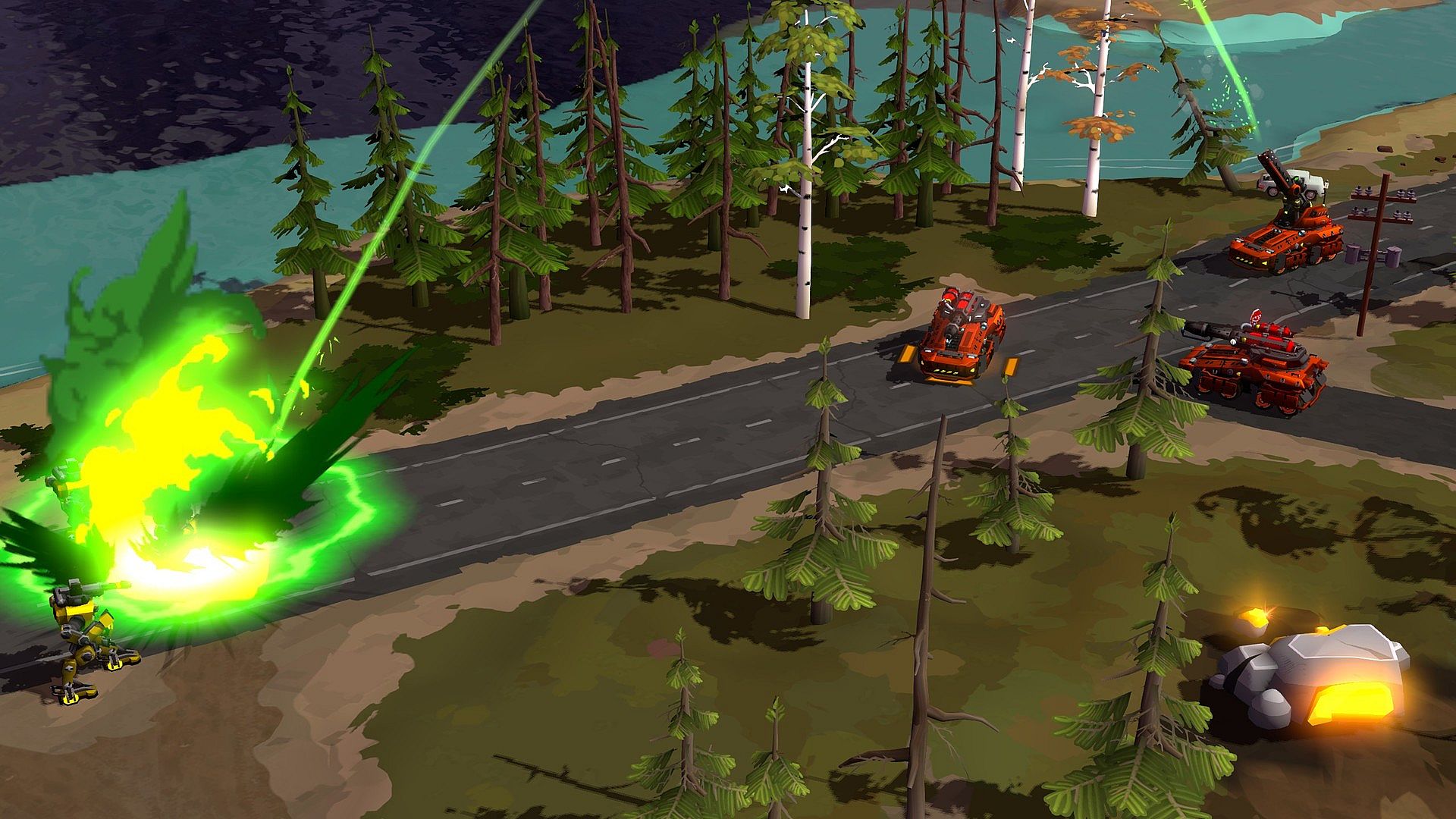
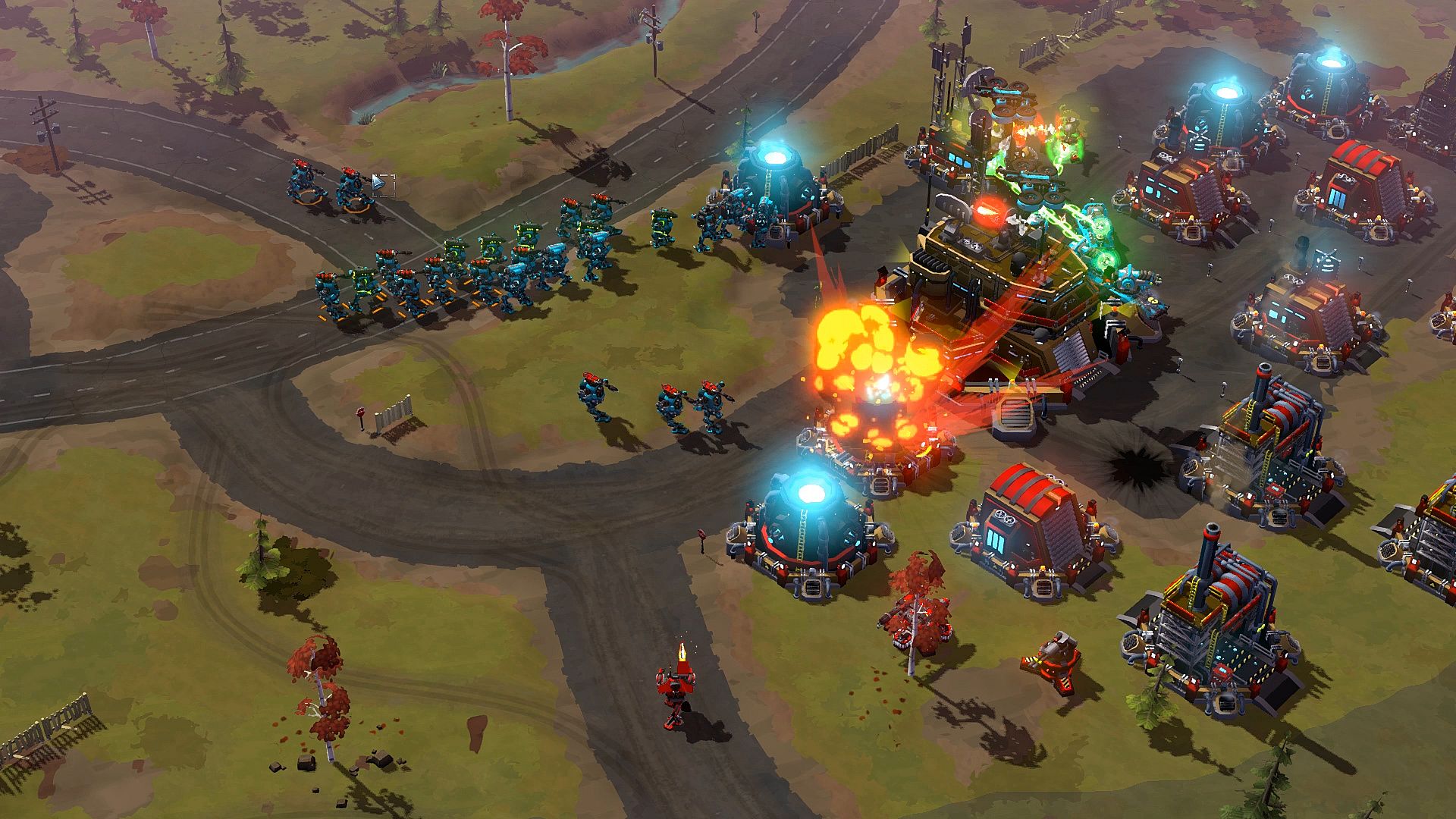
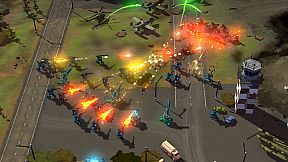
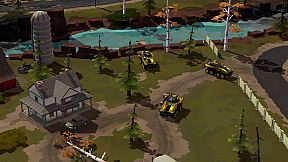
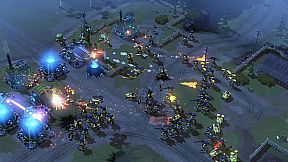
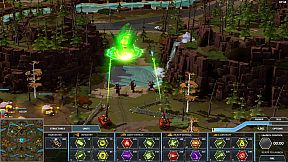
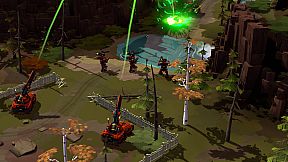
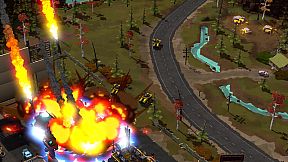
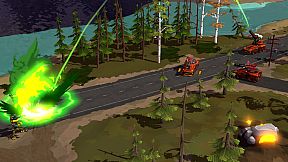
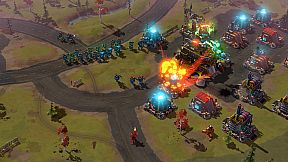
Forged Battalion is a real-time strategy game that blends simulation elements with deep customization systems. Set in a future devastated by climate change, players join a resistance force opposing a global military power known as The Collective. The core appeal lies in building and refining a personal faction through engineering choices rather than selecting from preset armies.
Gameplay
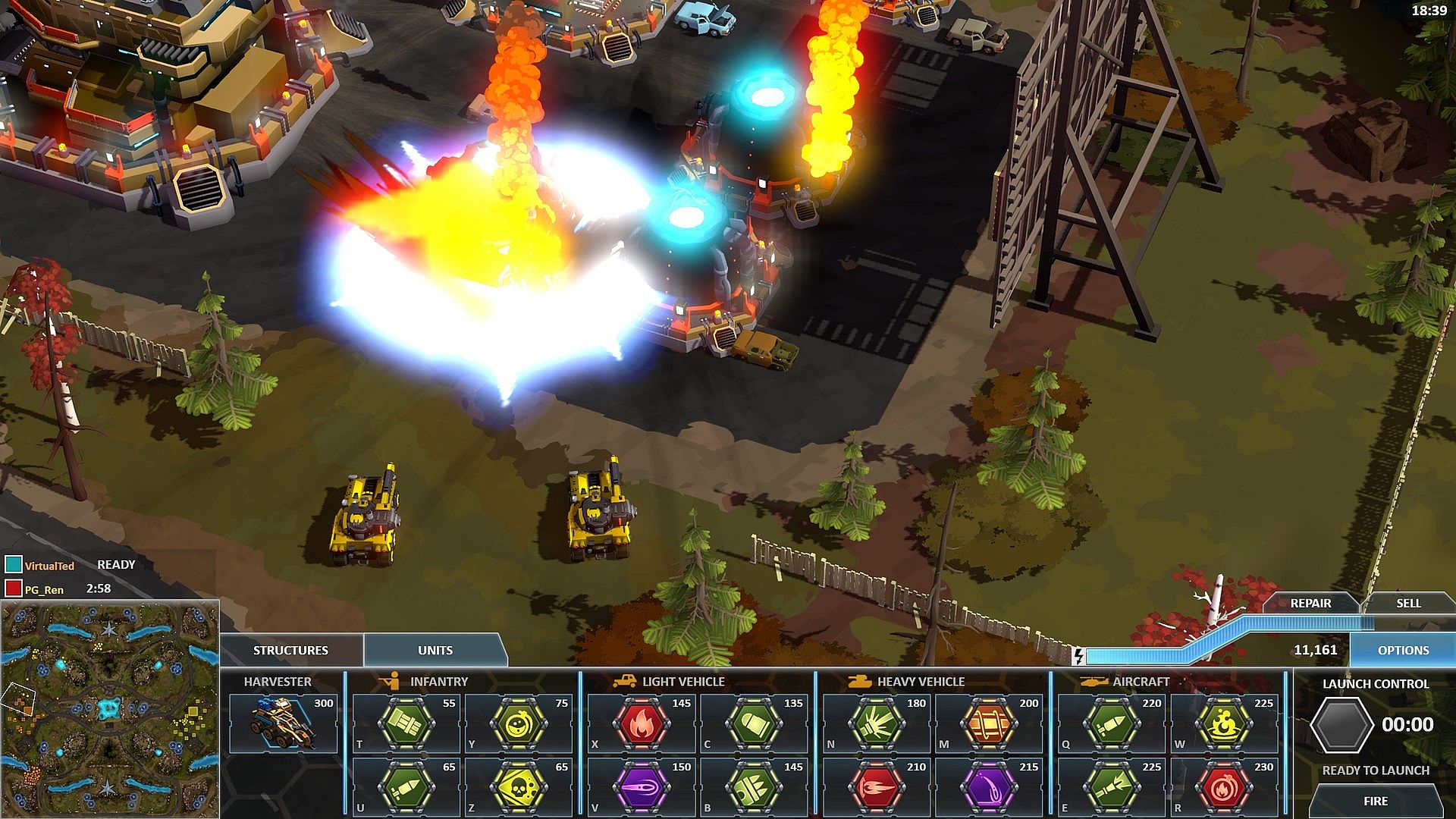
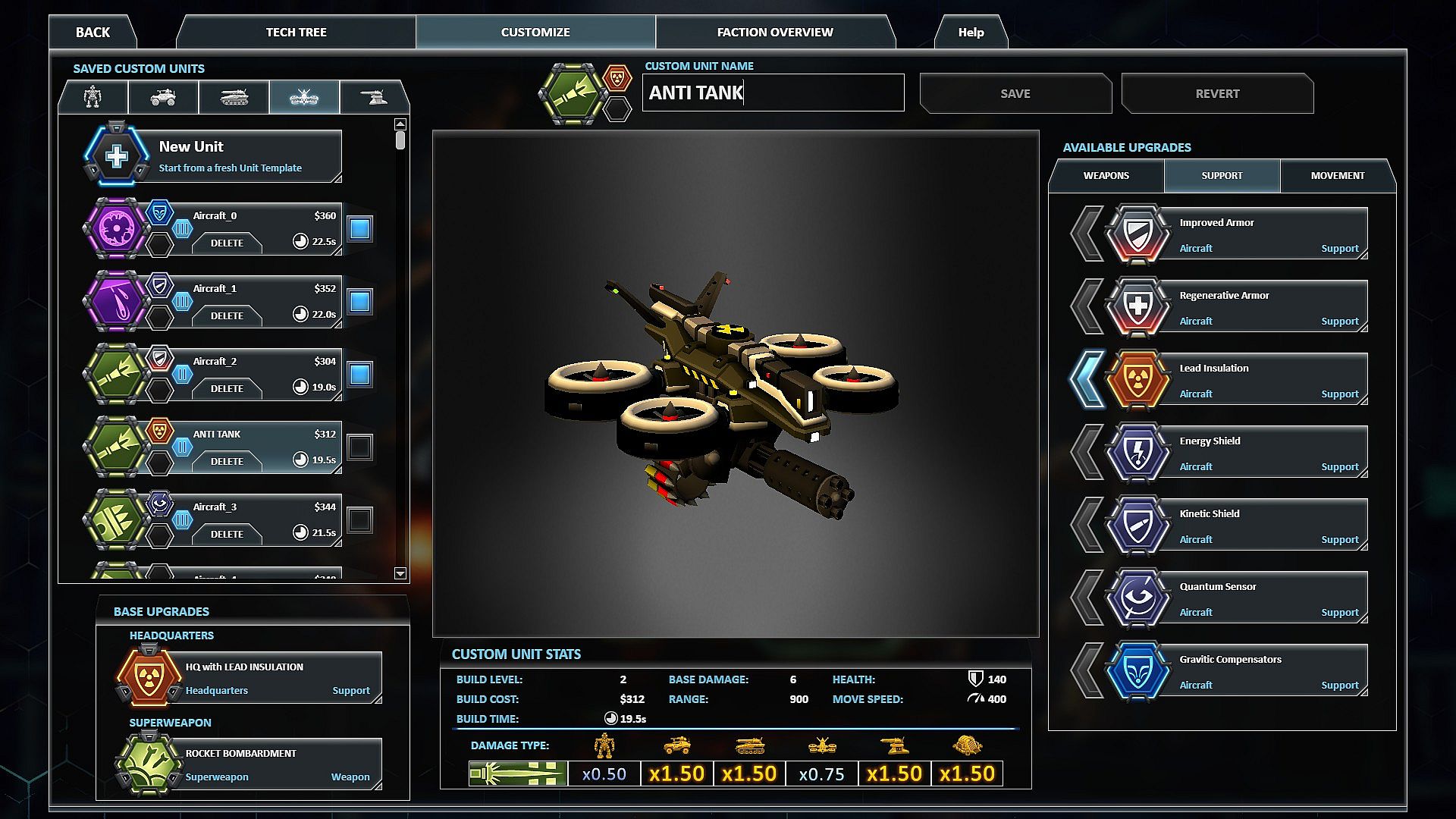
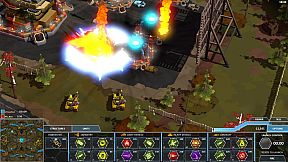
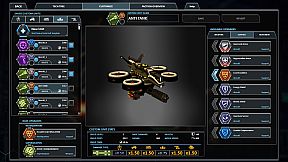
Players act as both commanders and engineers, controlling units, factories, superweapons, and the overall economy. The central system revolves around a persistent tech tree that advances with each victory across different modes. Resources collected in battles fund unlocks along four tiers, granting access to more than sixty attachments. These components determine unit archetypes, armor types, locomotor options, weapons, and abilities such as stealth or regeneration.
Designs begin simple and grow more complex as the tree expands. A single faction can incorporate regenerative armor on light vehicles alongside anti-tank guns mounted on aircraft. Factories and headquarters receive the same level of modification, allowing players to adapt production and support structures to specific threats. Superweapons become available at higher tiers and deliver decisive battlefield effects when deployed.
The loop emphasizes experimentation. Winning matches unlocks new paths, which in turn enable stronger or more specialized units for future encounters. This metagame progression carries forward, so repeated play in any format strengthens the same faction over time.
Game Modes
Skirmish battles let players test custom factions against AI opponents on varied maps. The solo campaign follows a story that escalates the conflict with The Collective, requiring adaptation to new enemy compositions across multiple missions. Multiplayer supports up to eight participants in cooperative and versus formats, including dedicated 1v1 ranked matches on official servers.
Map creation tools allow users to design custom battlefields, which integrate with workshop features for sharing and downloading community content. These options encourage ongoing variety without relying on official seasonal content.
Customization and Progression
Every unit blueprint can be rebuilt from the ground up using unlocked parts. Locomotors affect speed and terrain handling, while weapon choices range from basic firearms to specialized anti-armor or area-effect systems. Special abilities add layers such as passive healing or temporary invisibility. Saved faction profiles carry these configurations into any mode, enabling quick switches between aggressive rush builds and defensive siege setups.
The tech tree rewards consistent play rather than one-off sessions. Different science paths branch into distinct equipment categories, producing thousands of potential combinations even with the limited attachment count. This system replaces traditional faction selection with a single evolving force that grows stronger through accumulated victories.
Audio and Production
Sound design, voice-overs, and the full soundtrack come from composer Frank Klepacki, whose work on earlier real-time strategy titles shapes the game's auditory identity. Unit responses, weapon effects, and ambient battle sounds align with the post-climate-change setting without overpowering the strategic focus.
Is It Worth Playing?
Forged Battalion suits players who enjoy real-time strategy with heavy emphasis on unit and base customization over traditional faction asymmetry. The persistent tech tree and cross-mode progression provide long-term goals that reward experimentation and repeated matches. Those seeking a complete, self-contained experience with map editing tools will find the feature set intact years after its 2018 release from early access.
The game appeals most to fans of engineering-focused RTS titles where the same faction evolves across skirmish, campaign, and multiplayer sessions. Limited ongoing development means the title stands as a finished product rather than a live-service platform, which aligns with players who prefer static but deep mechanical systems over frequent balance patches.