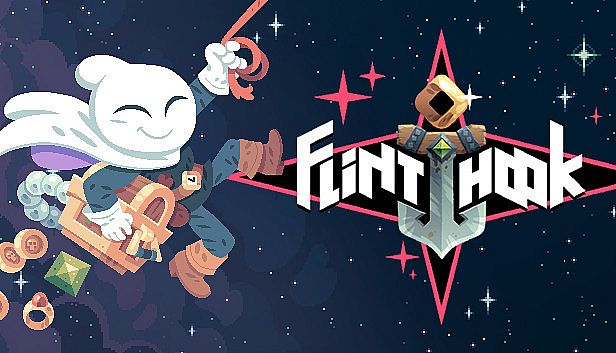












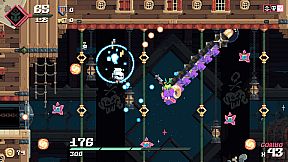
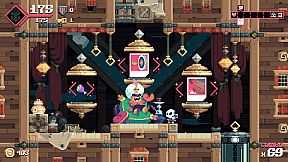
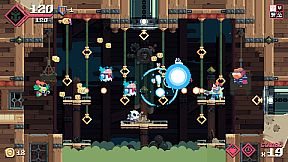
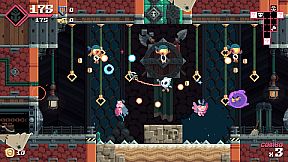
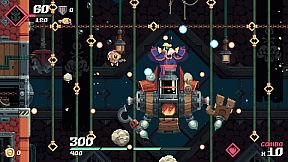
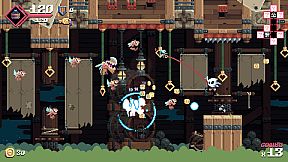
Flinthook is an action-platformer with roguelike elements that puts players in the role of a space pirate navigating procedurally assembled spaceships. The core loop revolves around fast movement, precise shooting, and resource management across repeated runs, with each attempt building on collected upgrades and knowledge of enemy patterns.
Gameplay
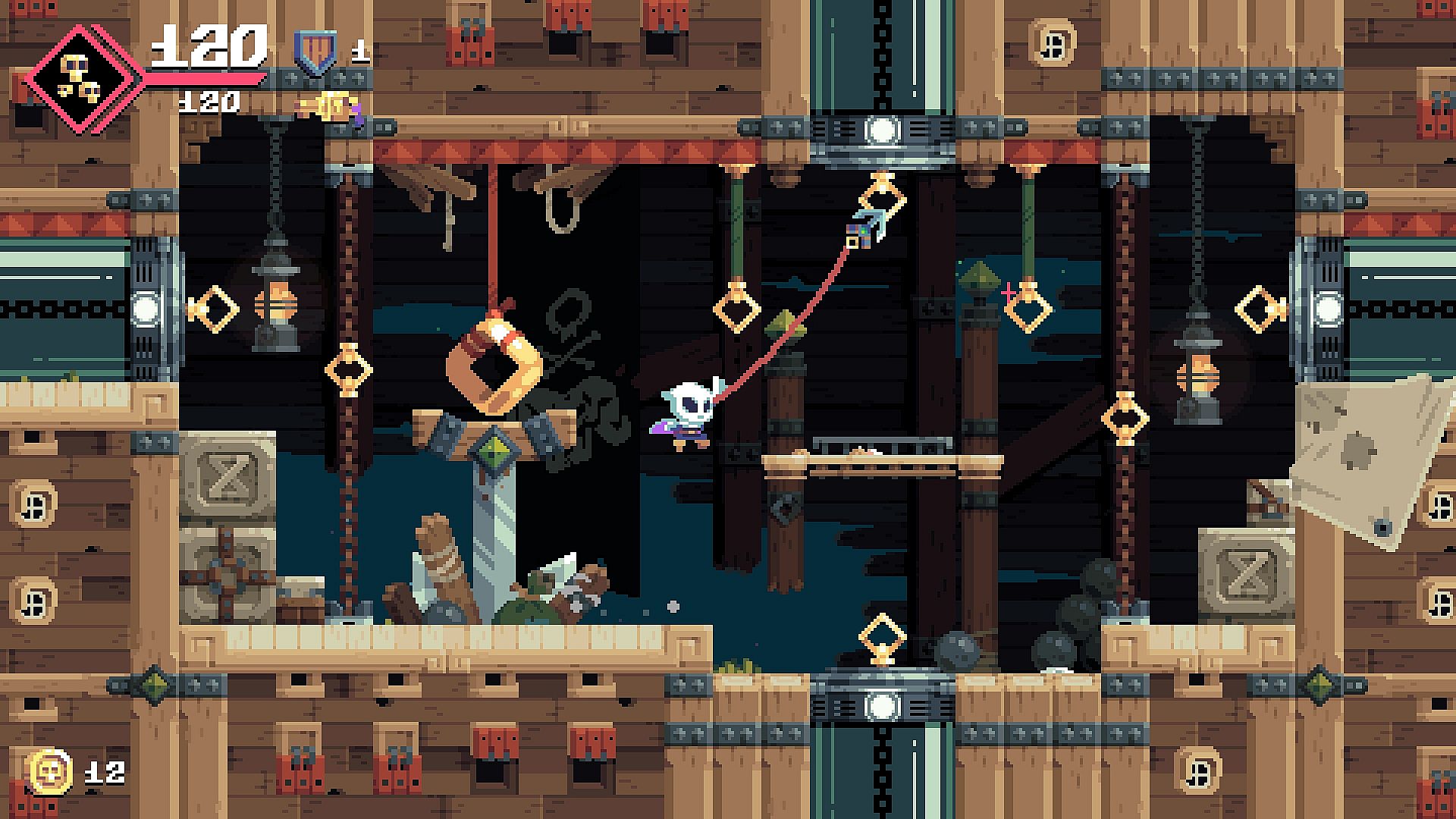
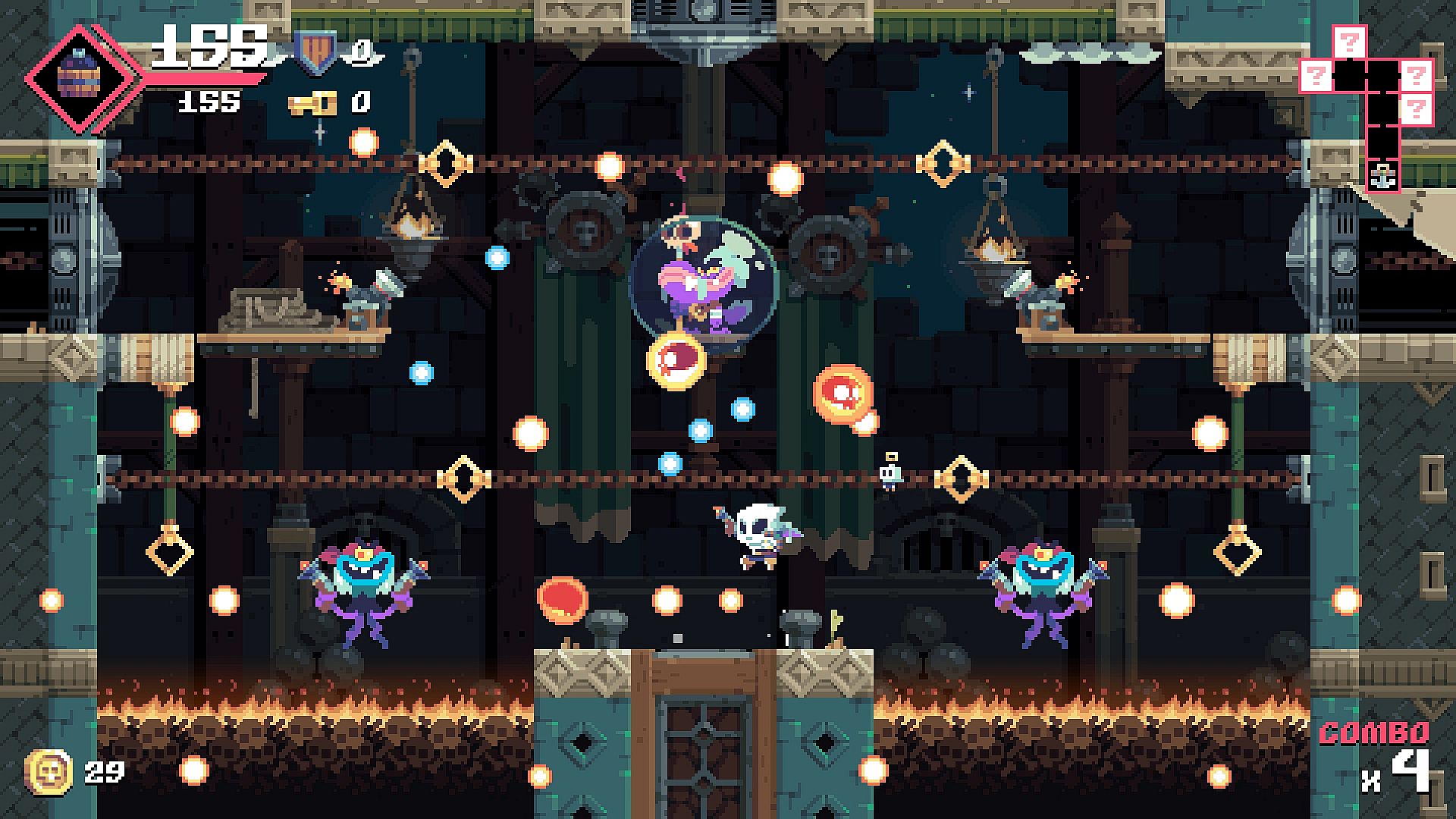
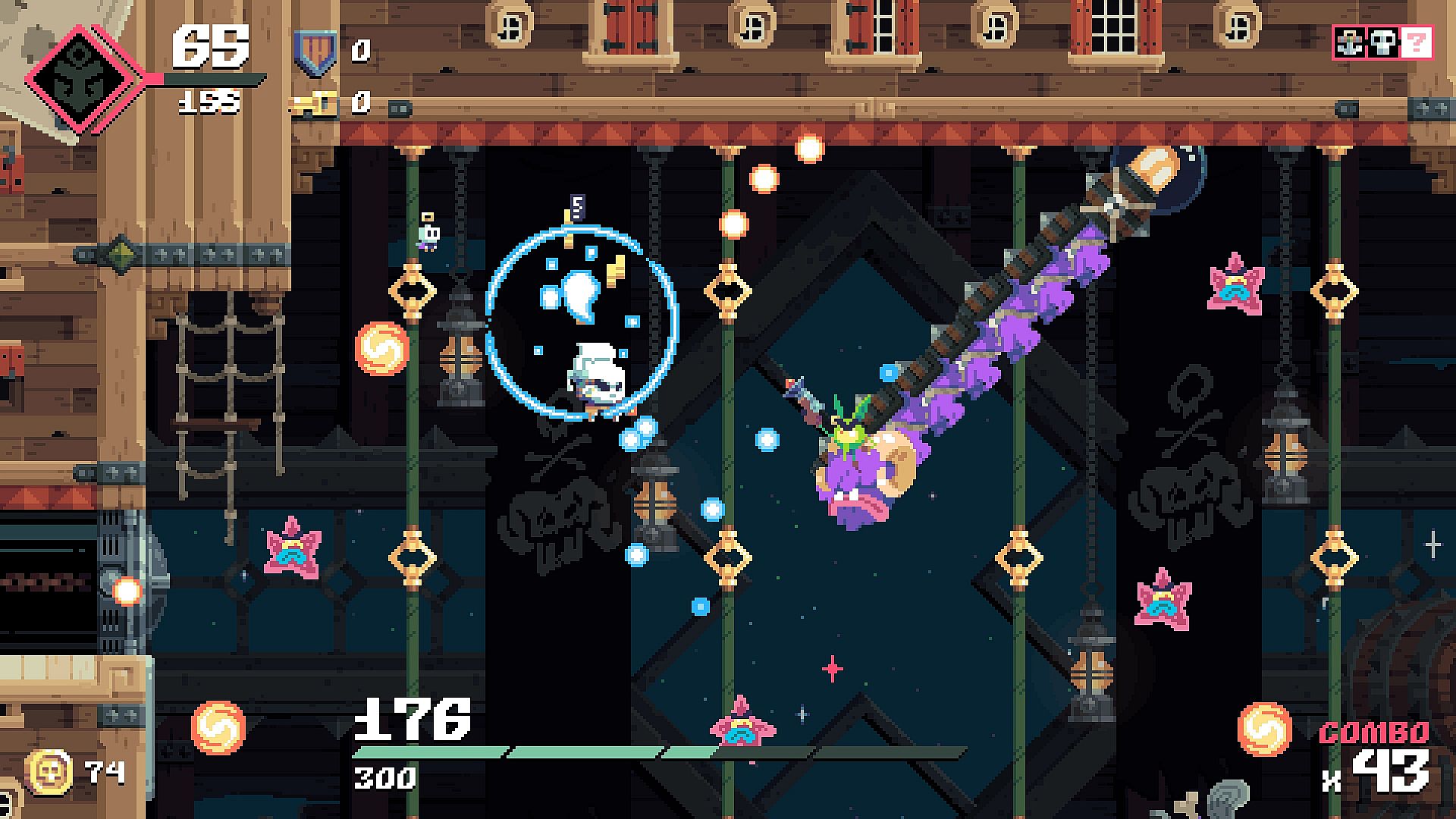
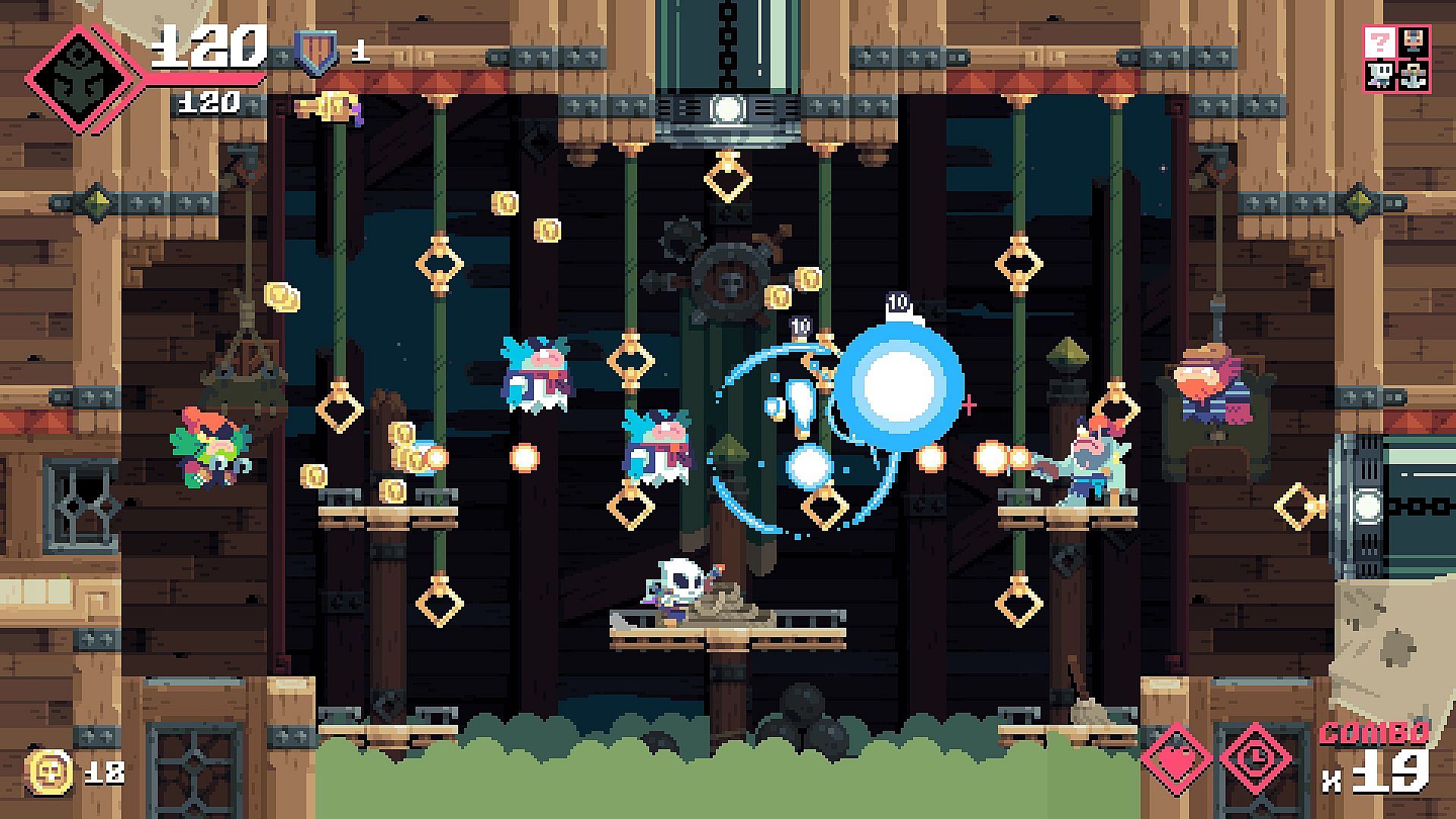
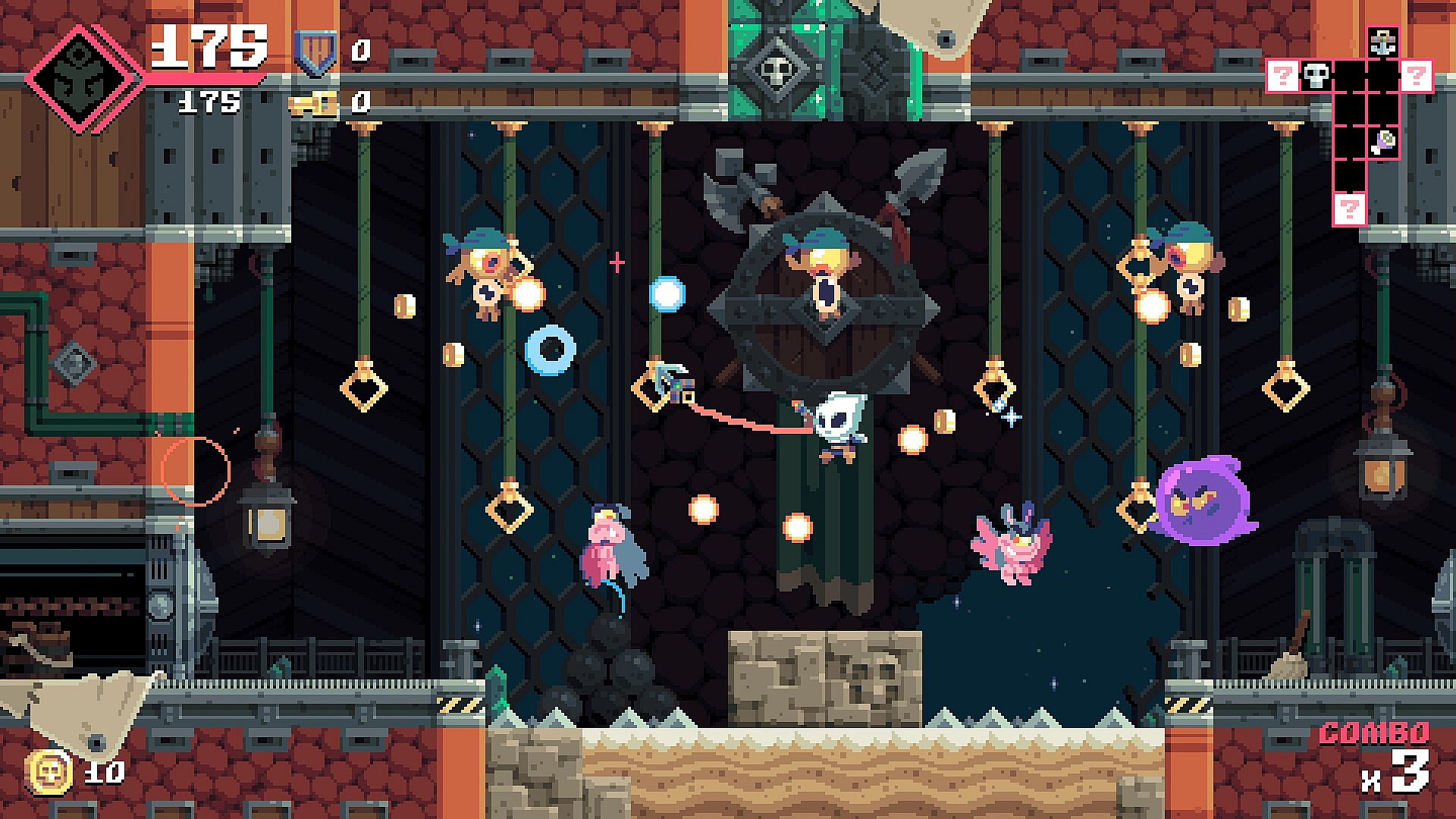
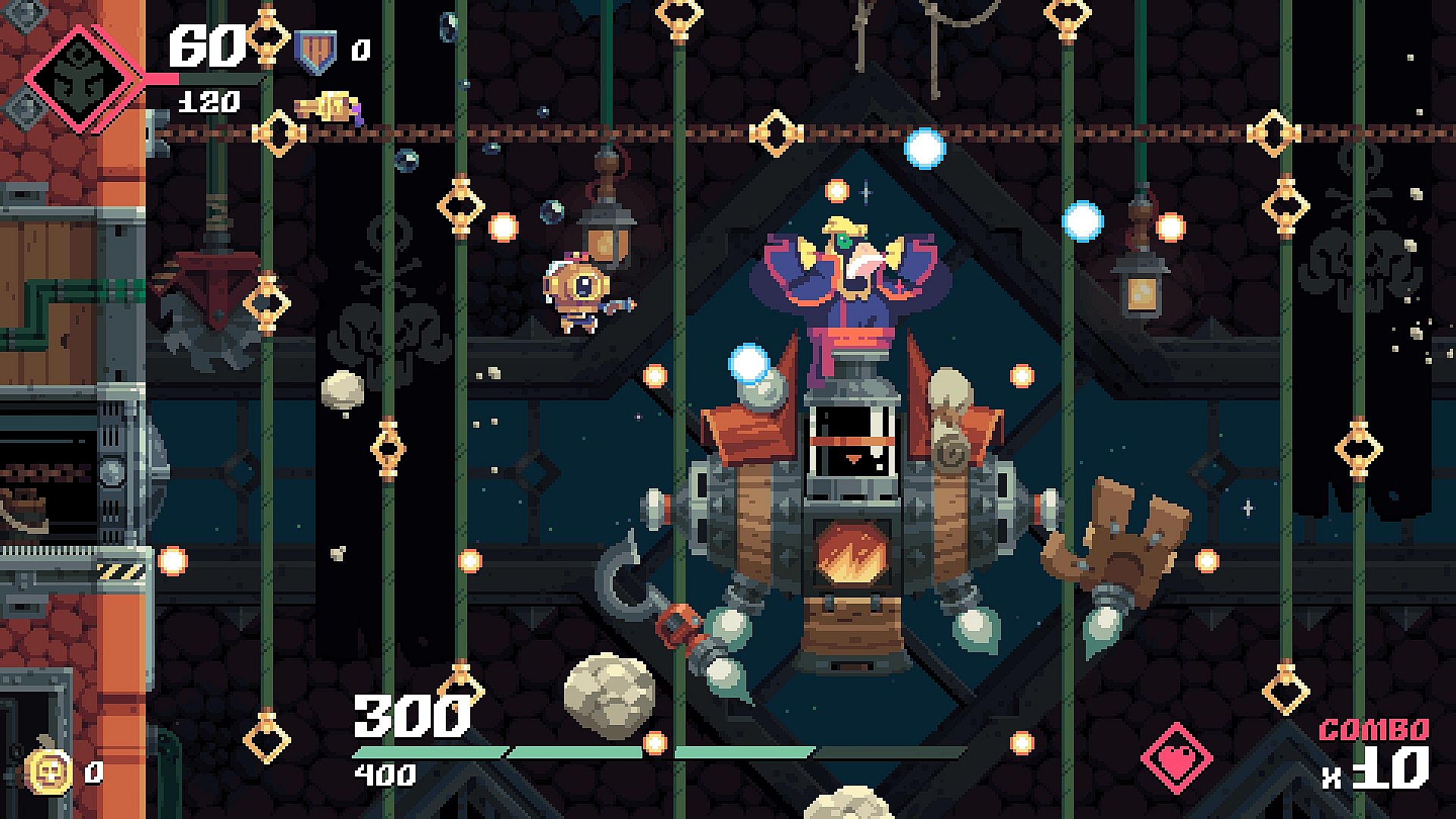
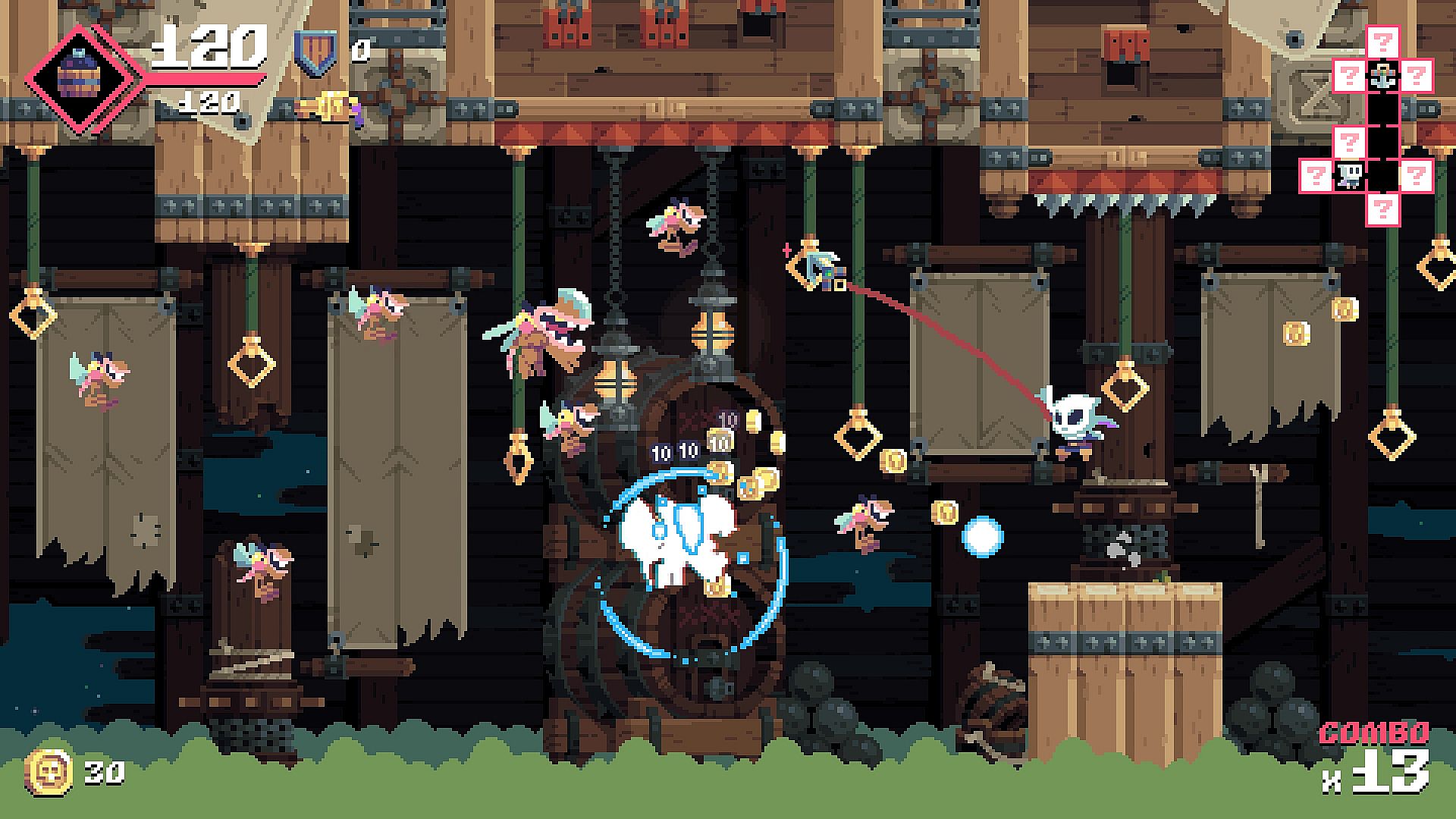
The central mechanic involves a hookshot that latches onto golden rings scattered throughout levels, allowing rapid propulsion and aerial maneuvers to avoid hazards and projectiles. This system encourages chaining swings for momentum while maintaining control in tight spaces filled with enemies and obstacles. Complementing the hook is a blasma pistol that fires in any direction, enabling players to clear threats from multiple angles during traversal. Slow-motion abilities pause time briefly for aiming adjustments or complex stunts, recharging quickly to support frequent use without disrupting flow.
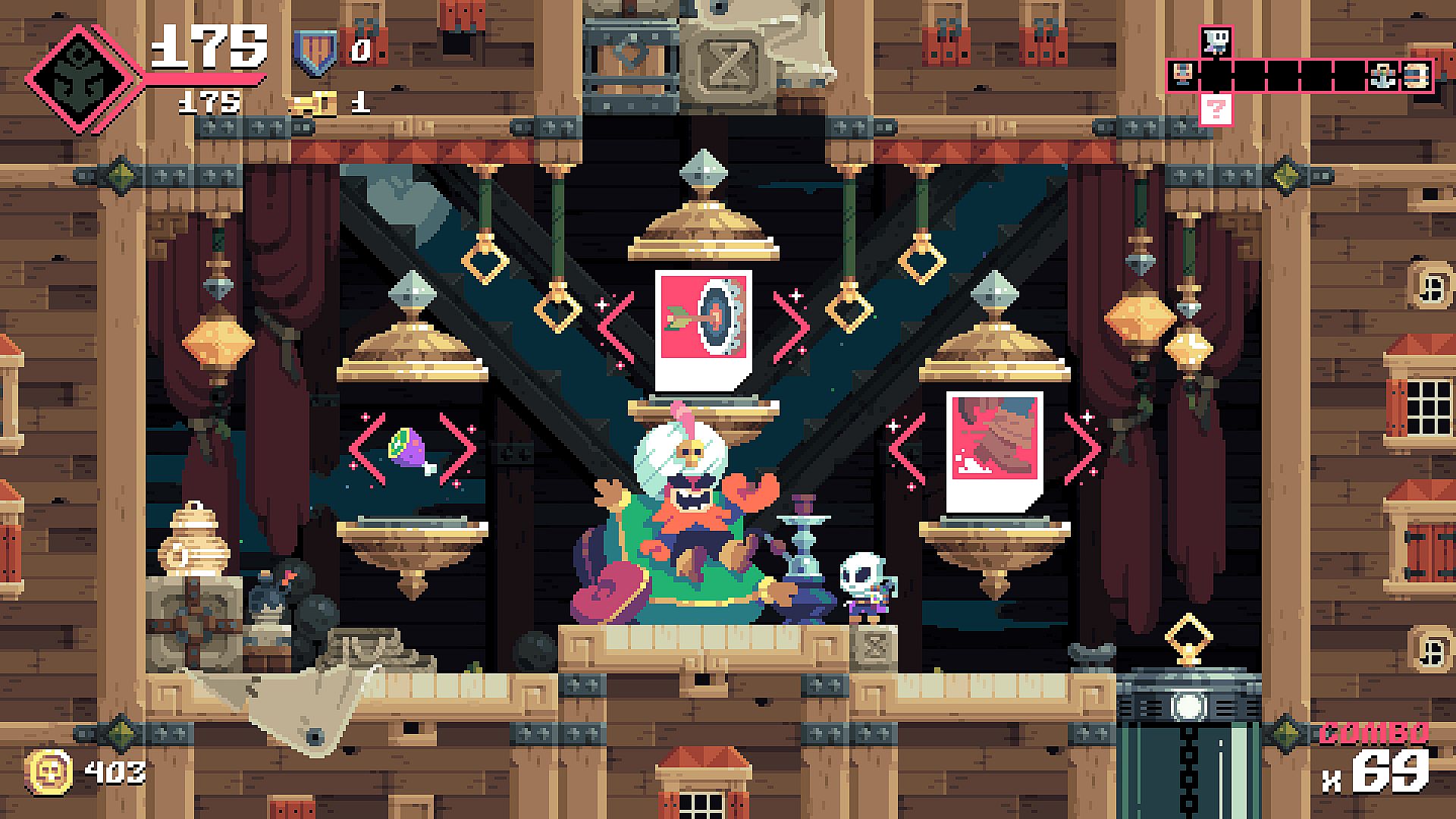
Levels consist of hand-crafted rooms combined procedurally into unique ship layouts each run, populated by waves of varied enemies and hidden treasures. Players track rival pirate lords through a compass creature that reveals boss locations after sufficient feeding, leading to confrontations that test accumulated skills. Relics and perk cards drop as rewards, feeding into a progression system where leveling unlocks equippable abilities, while a black market offers permanent enhancements purchased with looted currency.
Game Modes
Flinthook operates entirely in a single-player format centered on roguelite runs through randomized spaceship interiors. Each session starts from a hub area and proceeds through successive ships, with failure resetting progress but retaining unlocked perks and upgrades for future attempts. The structure emphasizes hunting specific bosses tied to the Cluster Clan, requiring preparation through relic collection and perk experimentation before engaging these tougher encounters.
Exploration within runs focuses on clearing rooms, gathering loot, and uncovering lore pages that expand on the pirate setting. No separate modes alter the fundamental loop, keeping emphasis on adapting to procedural variations and refining movement techniques across multiple attempts.
Progression and Customization
Advancement occurs through a combination of temporary run benefits and lasting unlocks. Perk cards provide situational advantages during individual attempts, while relics contribute to a broader collection that influences long-term power. The black market serves as a hub for spending earned resources on upgrades that persist across runs, encouraging repeated play to amass stronger builds.
Enemy variety and room modifiers introduce new challenges as players progress, forcing adjustments in strategy. The compass mechanic adds a layer of targeted objectives, directing efforts toward boss hunts rather than open-ended wandering.
Is It Worth Playing?
Flinthook delivers a focused experience for those who enjoy precise platforming and roguelite repetition, with movement feeling responsive and satisfying once mastered. Reviews from its 2017 release highlighted the hookshot as a standout feature that elevates traversal above standard genre entries, paired with solid pixel art and chiptune audio that supports the pirate theme without distraction.
The game suits players comfortable with failure and iteration, as runs can end abruptly from misjudged swings or overwhelming enemy groups. Its single-player design means no online components or seasonal content, leaving the experience in a stable state years after launch. Those seeking tight action-platforming with light progression layers will find consistent engagement, while players preferring narrative depth or multiplayer may look elsewhere.