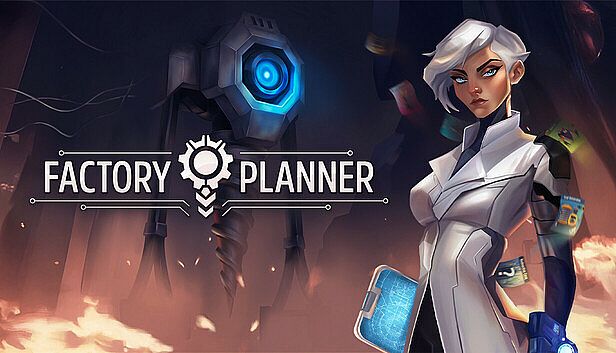
















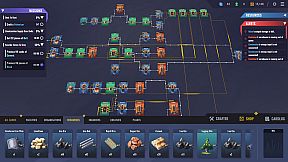
Factory Planner is a card-based strategy and simulation game available on PC in Early Access. Players build and optimize factories by combining cards that represent facilities, resources, engineers, and organizational elements to create efficient production chains from basic materials onward.
Gameplay
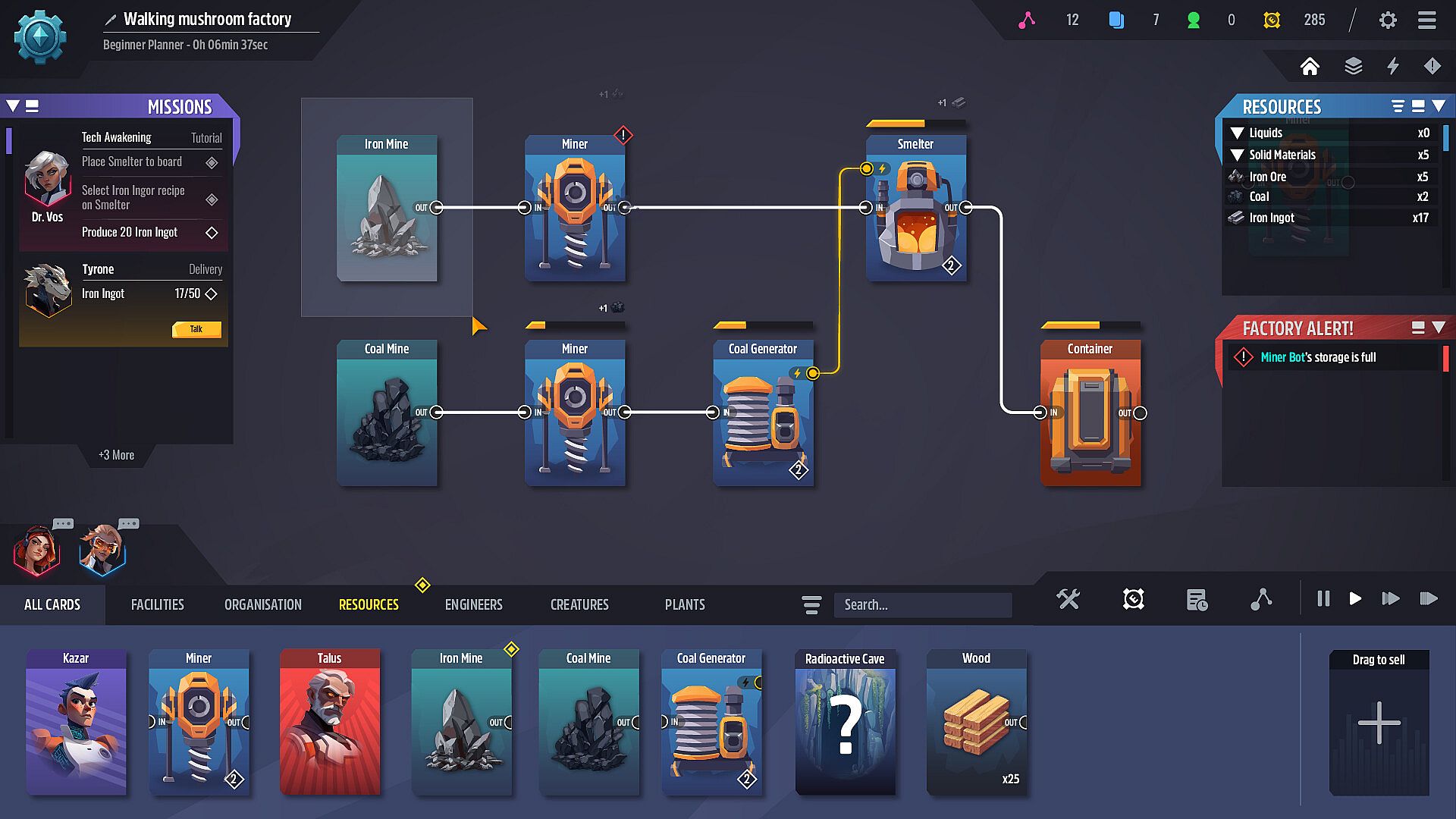
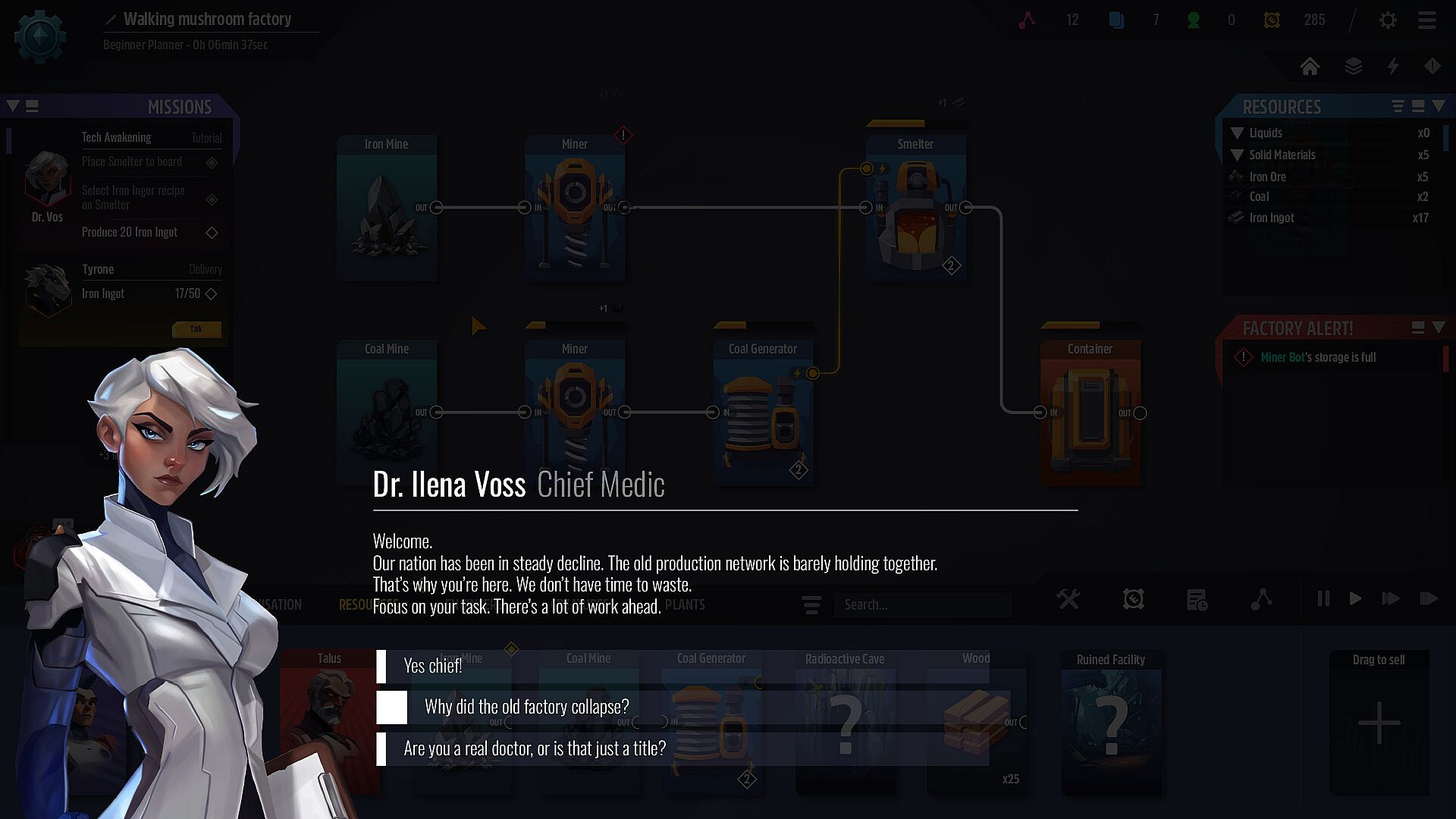
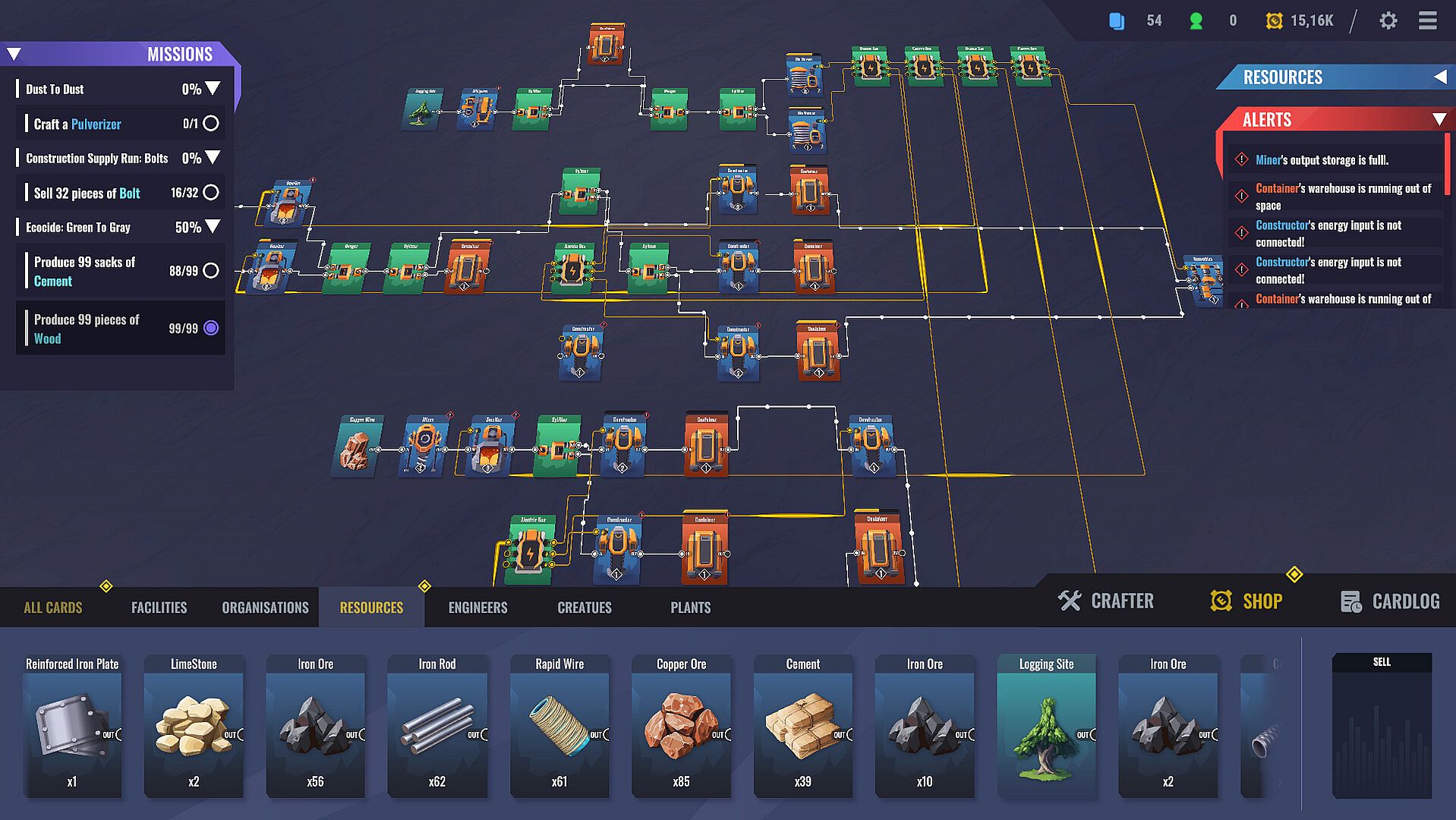
The core loop centers on placing and connecting cards to form functional production lines. Facility cards handle gathering or manufacturing, resource cards supply inputs like wood or iron, and organization cards manage flow. Connections for solids, liquids, and power must align properly at 90-degree angles, with splitters and mergers helping balance distribution. A mismatch in any link can stop output entirely, so players rearrange links and monitor capacity limits on storage units to prevent jams.
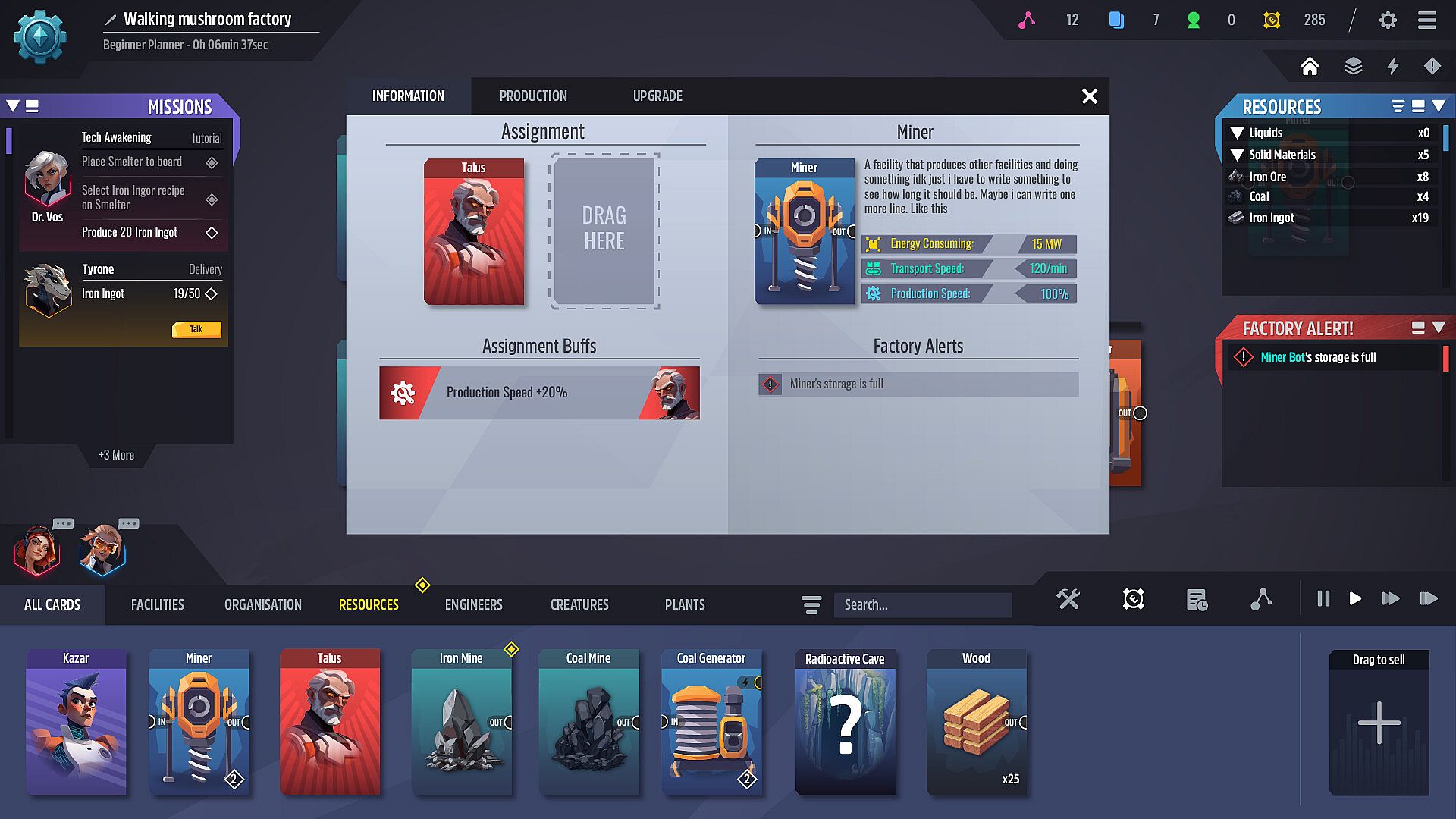
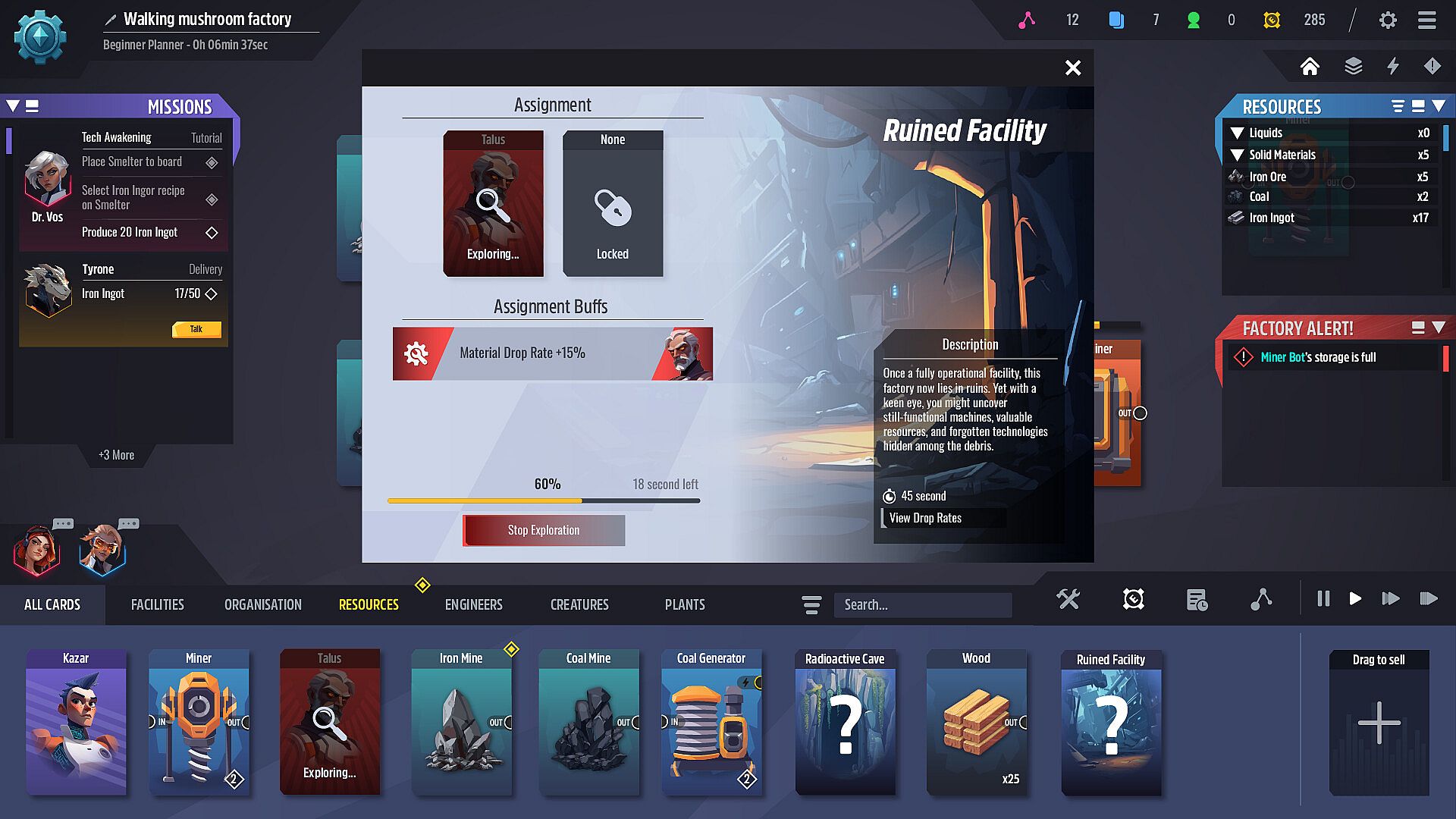
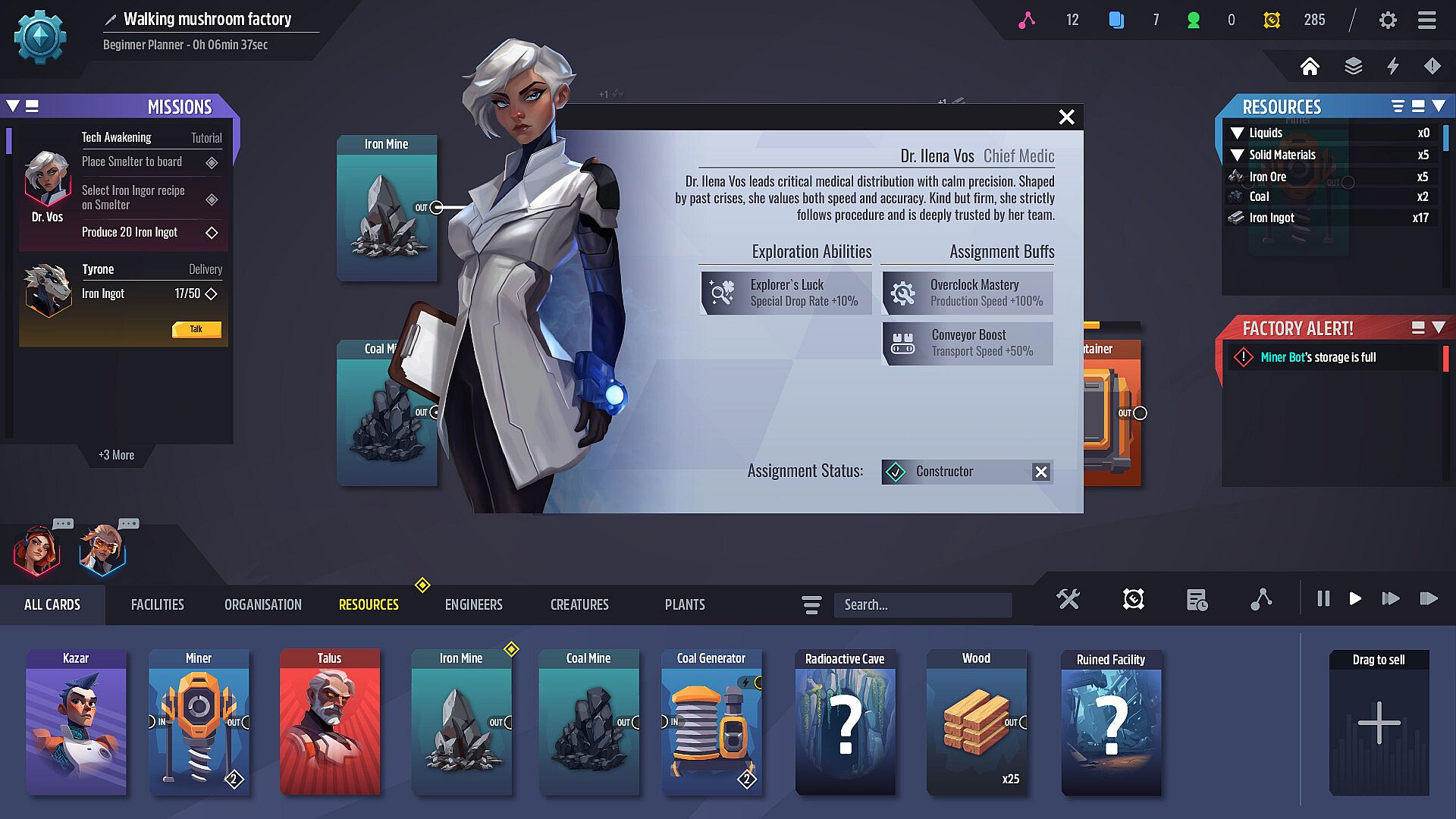
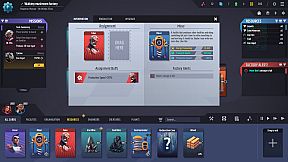
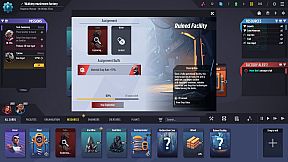
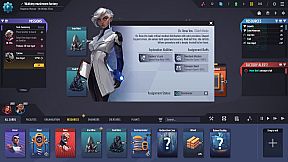
Engineer cards add another layer by assigning specialists to specific machines or storage. These assignments improve efficiency, cut energy use, or unlock new recipes, but changes only take effect after the current production cycle completes. Power comes from thermal generators and flows across the grid; excess demand triggers shutdowns and alerts. Players track metrics such as active cards, engineer assignments, and resource balances through an on-screen system that flags issues like missing inputs or full storage in real time.
Progression involves crafting or upgrading cards to handle more advanced resources, including sulfur and uranium, and scaling toward nuclear-powered setups. The technology tree unlocks these options gradually, encouraging experimentation with layouts and card combinations. The experience remains purely production-focused, with no combat or time pressure, allowing players to iterate on designs at their own pace.
Game Modes
Factory Planner offers a single sandbox mode that emphasizes creative freedom and iterative building. There are no separate competitive, story-driven, or multiplayer modes confirmed. Players start with basic cards and expand their setup through the technology tree, fulfilling orders and refining automation without external threats or timers. This structure supports multiple approaches, from compact efficient layouts to sprawling experimental designs, all within the same open-ended session.
Key Mechanics and Progression
Resource management requires balancing input and output speeds across solid and liquid lines while maintaining stable power. Storage limits force careful planning, as excess output without proper connections halts collection. Card upgrades and new recipes expand capabilities over time, moving from simple wood and iron processing to complex high-tech production. The alert system provides immediate feedback on grid status, engineer performance, and flow problems, helping maintain momentum during longer sessions.
Early Access development focuses on expanding the card roster, adding recipes, and incorporating player feedback for future content such as quests. The current version already includes core systems for power distribution, engineer assignments, and dynamic connections that adjust to layout changes.
Is It Worth Playing?
Factory Planner suits players who enjoy deliberate planning, resource optimization, and card-driven systems in a relaxed simulation setting. Reviews on the platform stand at Mostly Positive, reflecting appreciation for the depth of the card connections and engineer mechanics alongside notes on its Early Access state. The game delivers a focused sandbox where decisions about layout and assignments directly shape factory output and efficiency. Those interested in automation titles or strategic card placement will find the systems rewarding, especially as updates continue to add resources and refinements based on community input. Availability on PC makes it accessible for testing the current build and following ongoing development.