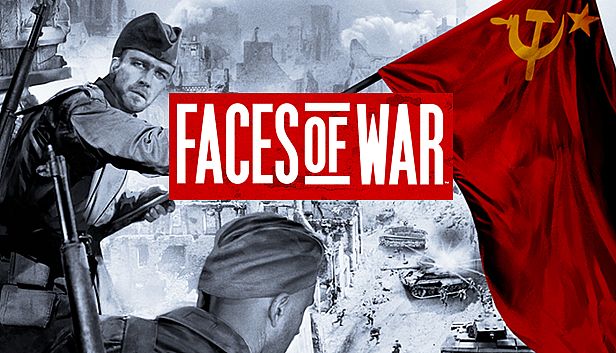










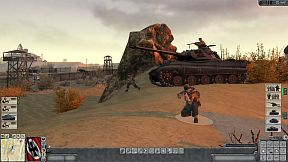
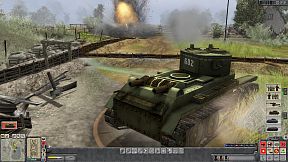
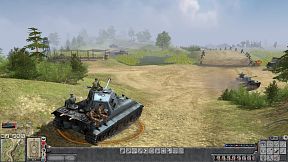
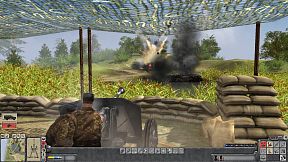
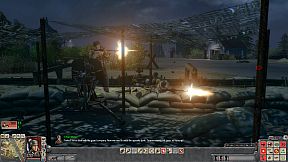
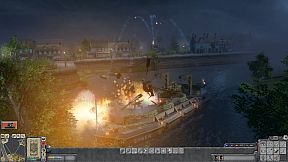
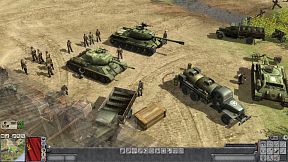
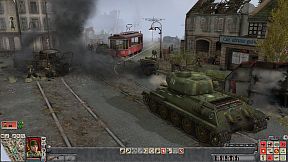
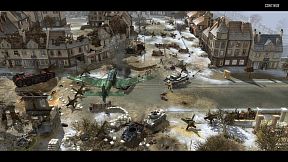
Faces of War is a real-time strategy game with strong tactical simulation elements that places players in command of ground forces during the final years of World War II. Developed as the direct follow-up to Soldiers: Heroes of World War II, it emphasizes direct control over units alongside broader strategic oversight on destructible battlefields across Europe in 1944 and 1945.
Gameplay
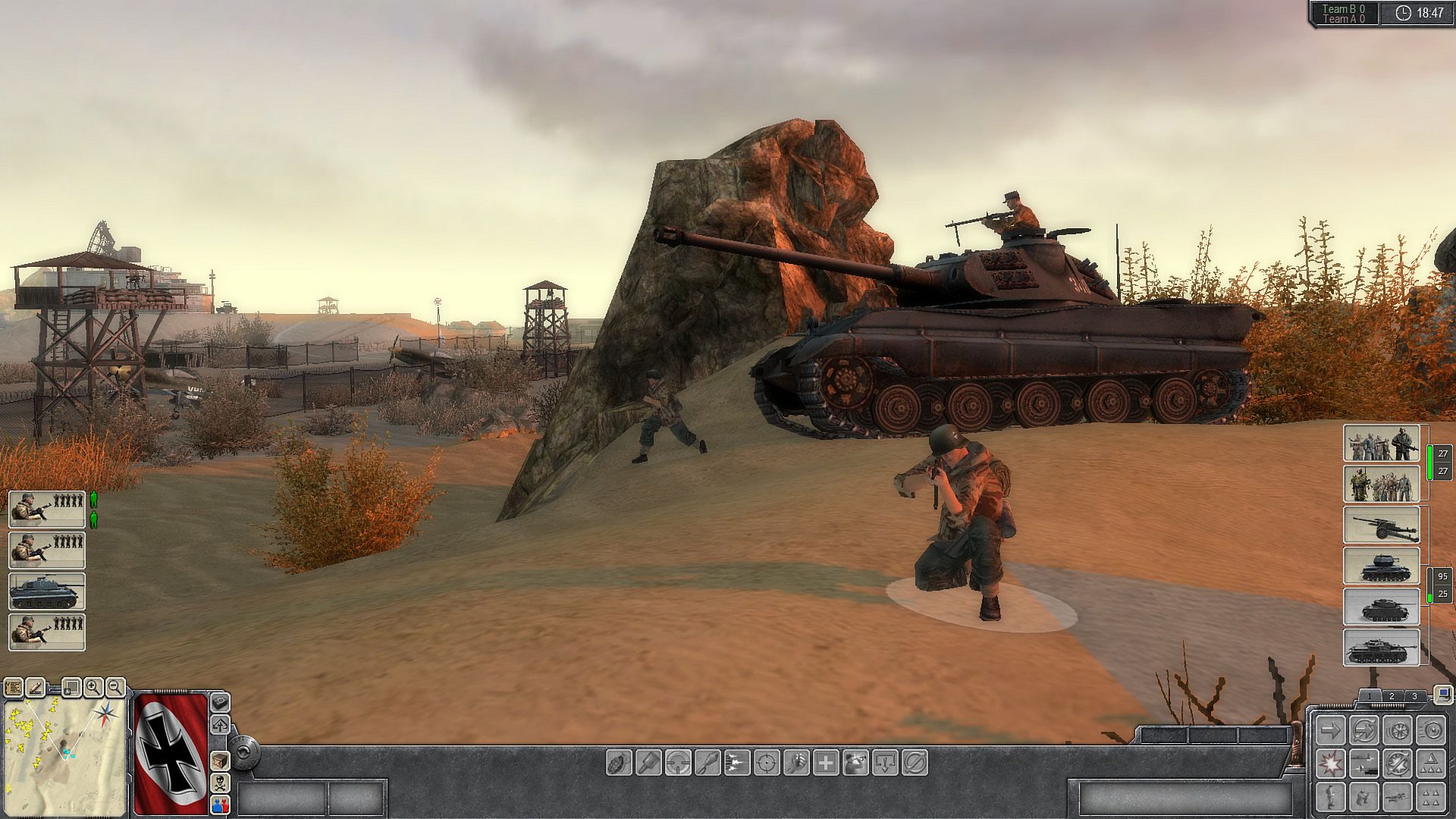
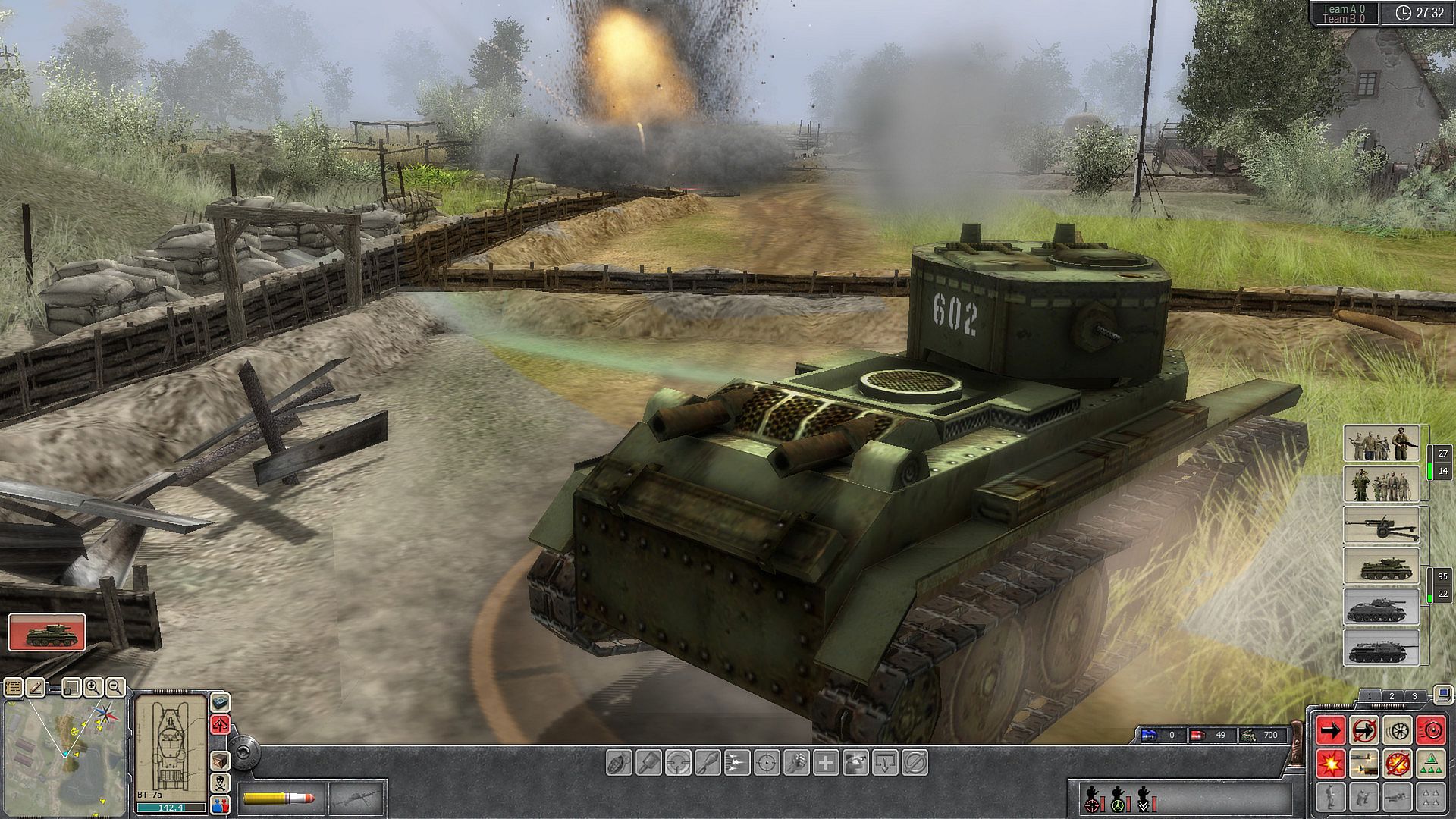
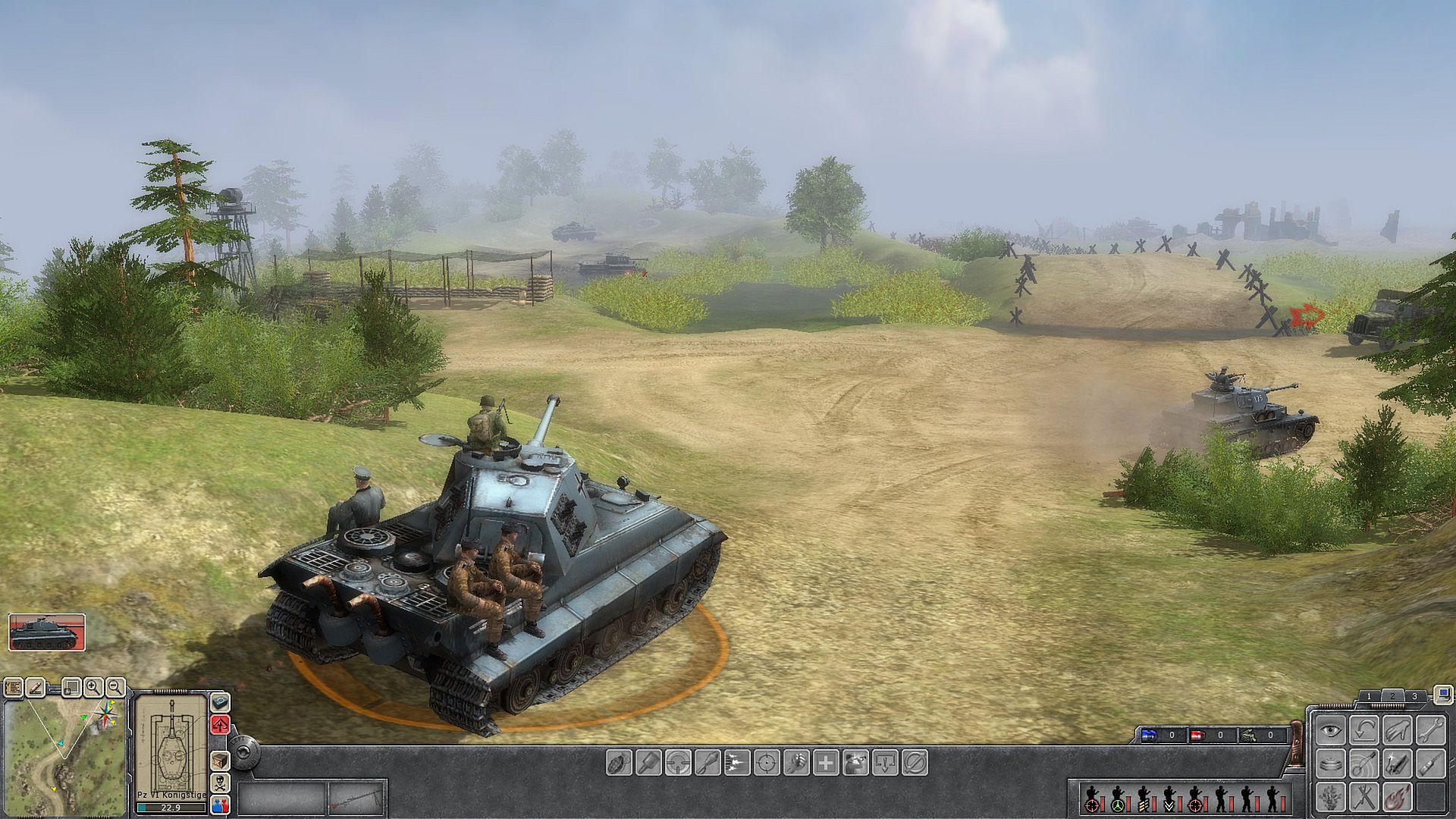
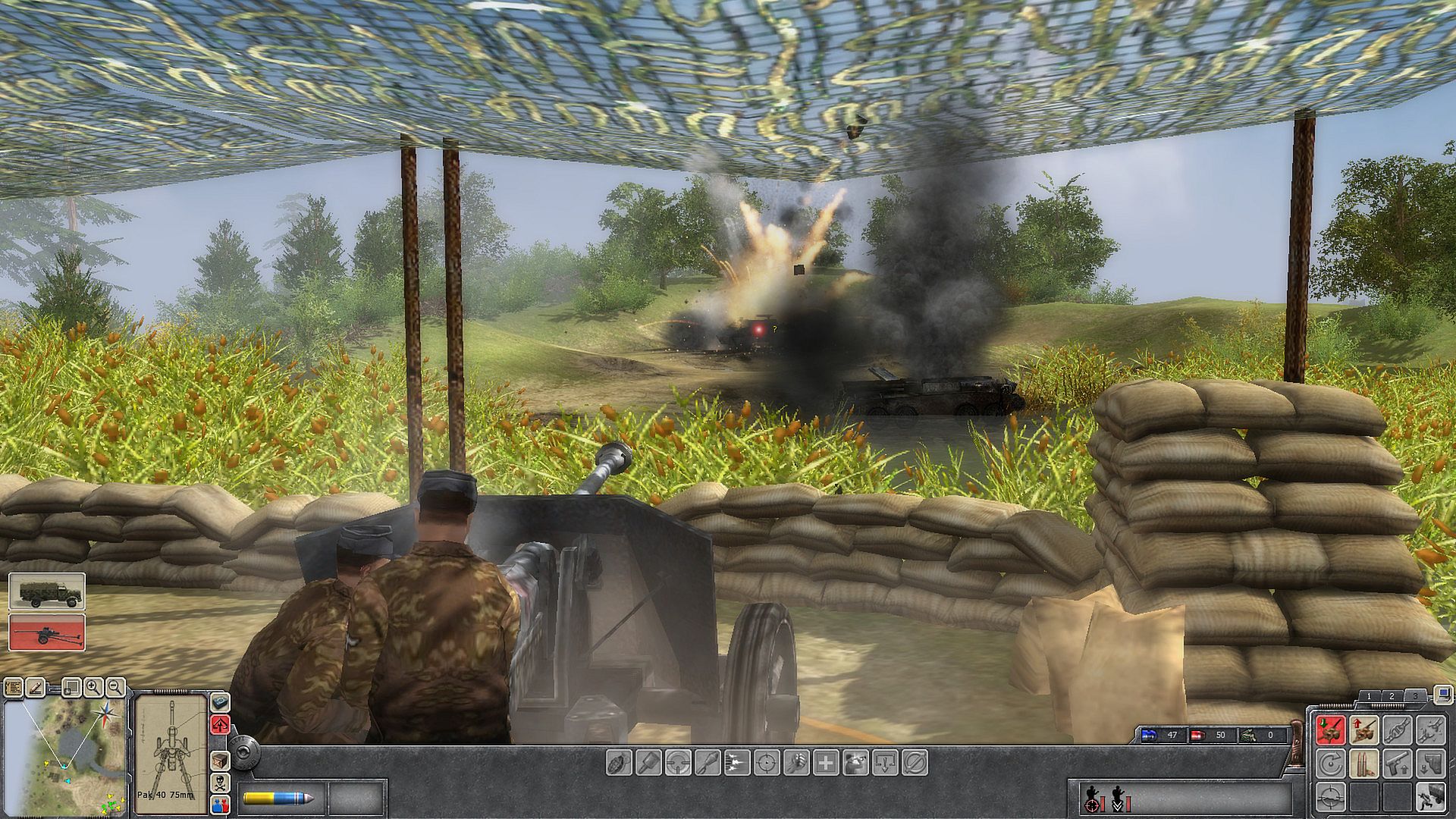
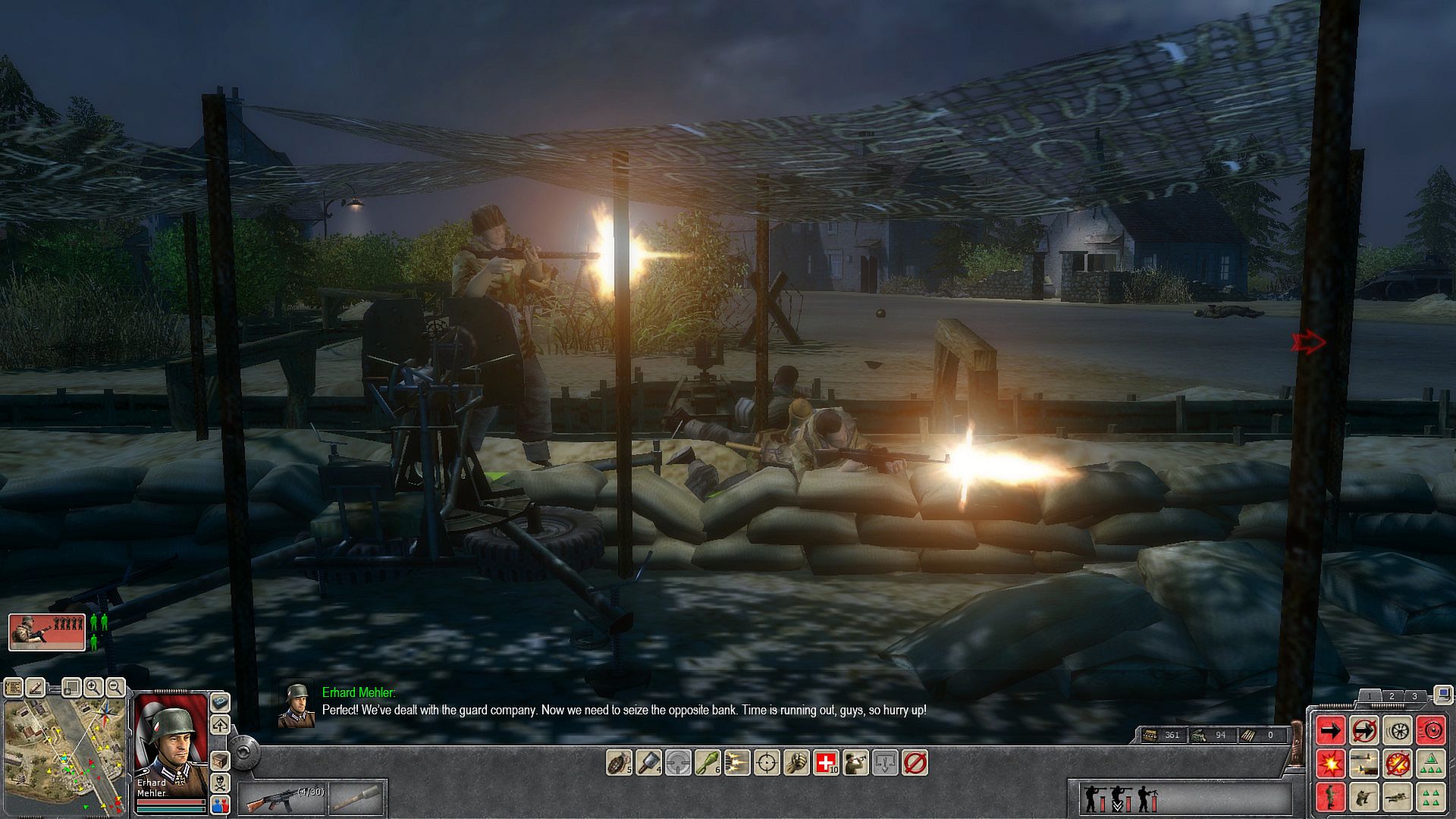
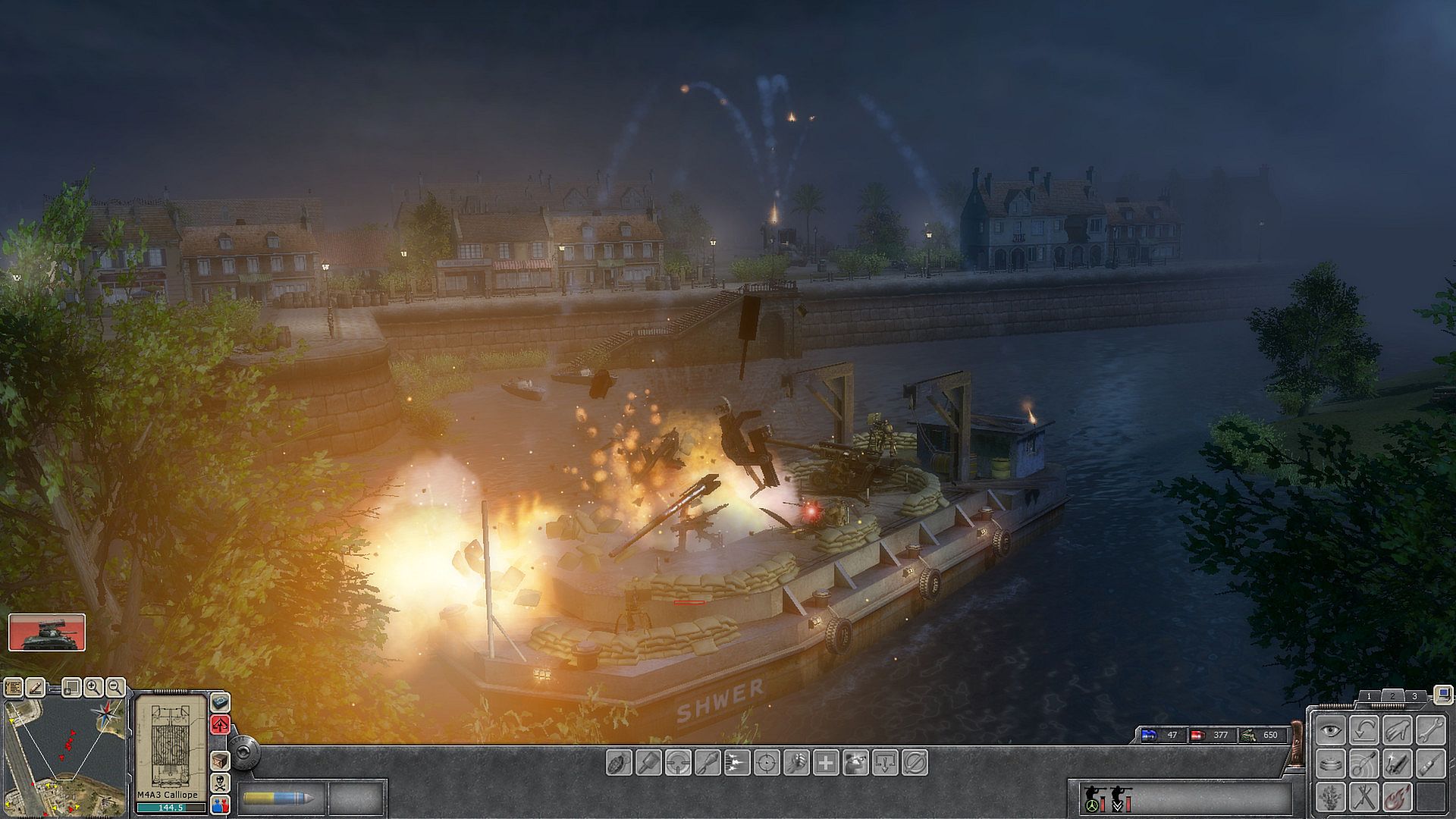
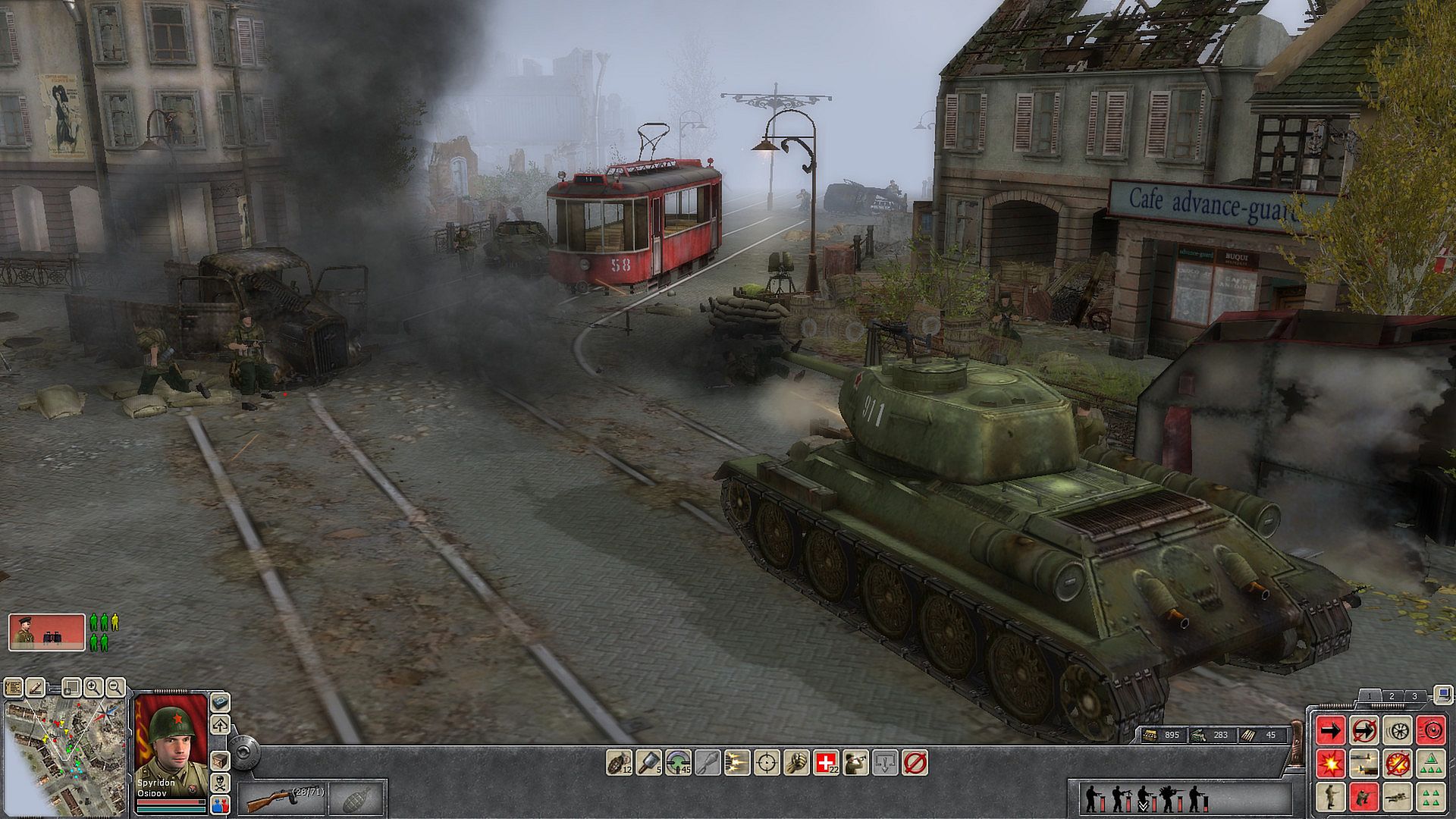
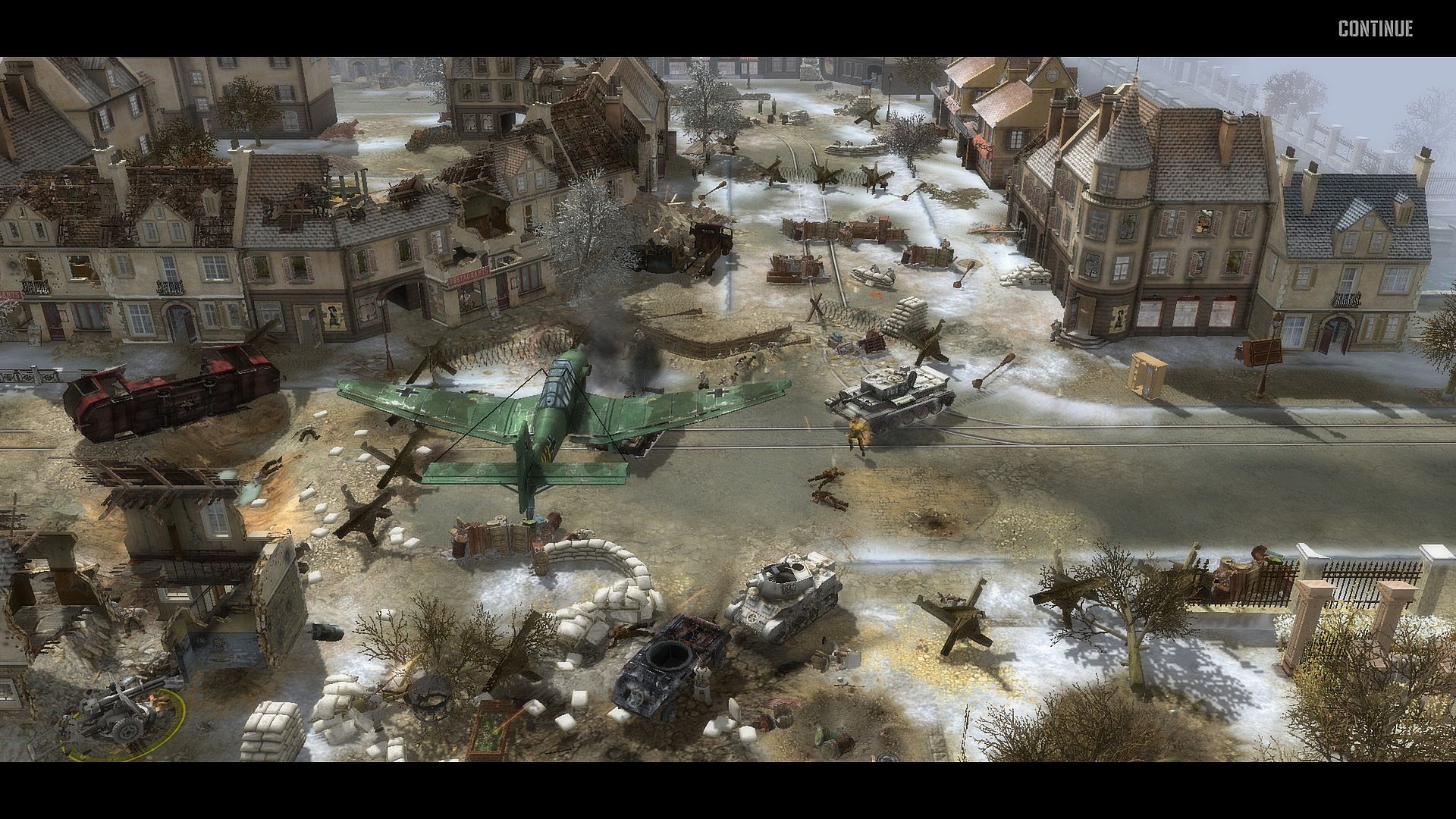
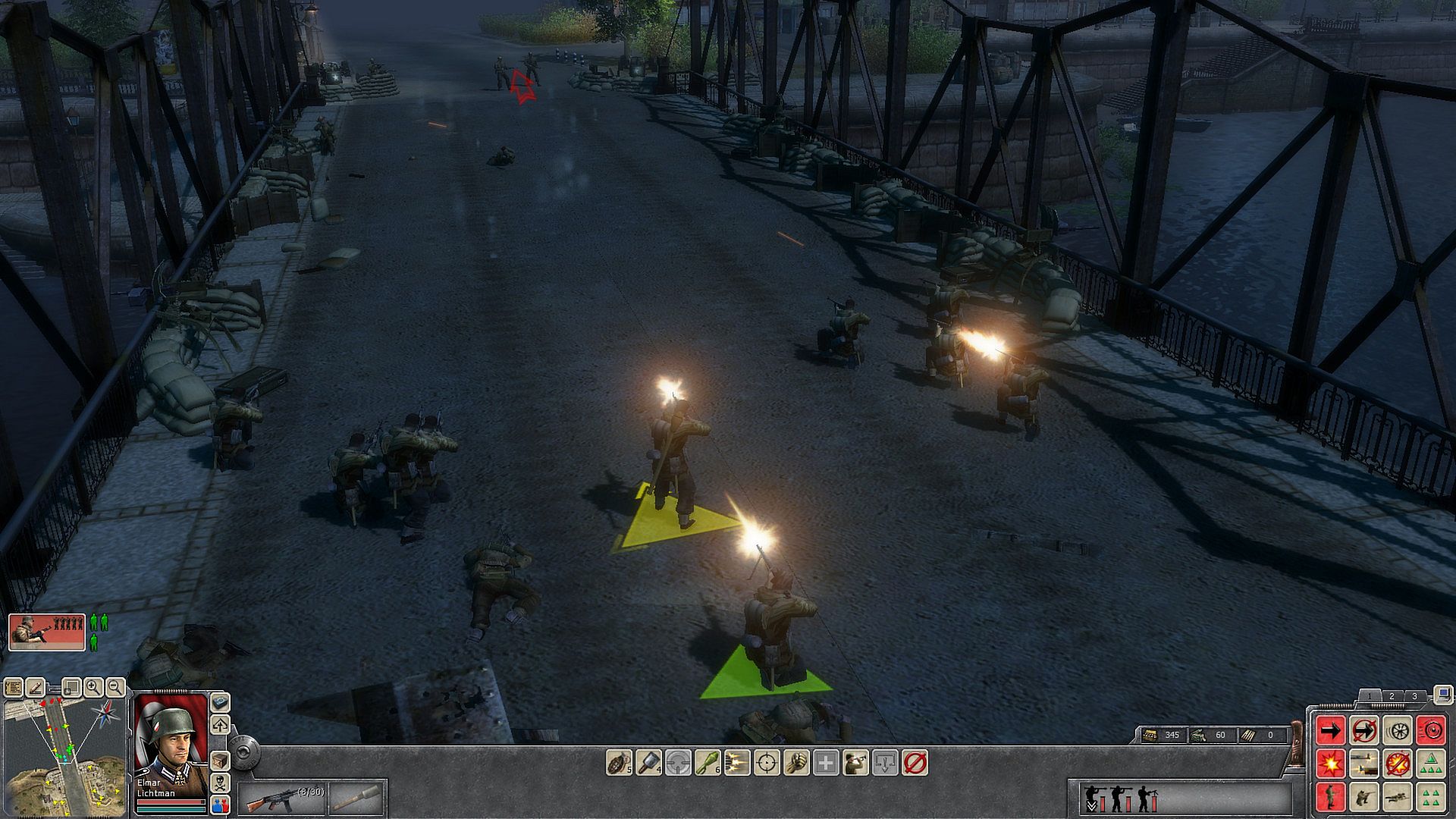
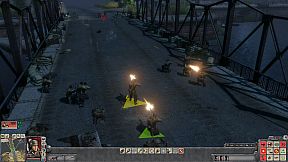
The core loop revolves around managing small squads of infantry, vehicles, and support units in real time while having the option to seize direct control of any individual soldier for precise aiming, movement, or special actions. Orders can be issued from a top-down view for coordinated advances or ambushes, then shifted to first-person perspective when finer execution is needed. Terrain plays a decisive role because explosions and heavy fire can collapse buildings, create craters for cover, or scatter debris that blocks lines of sight and movement.
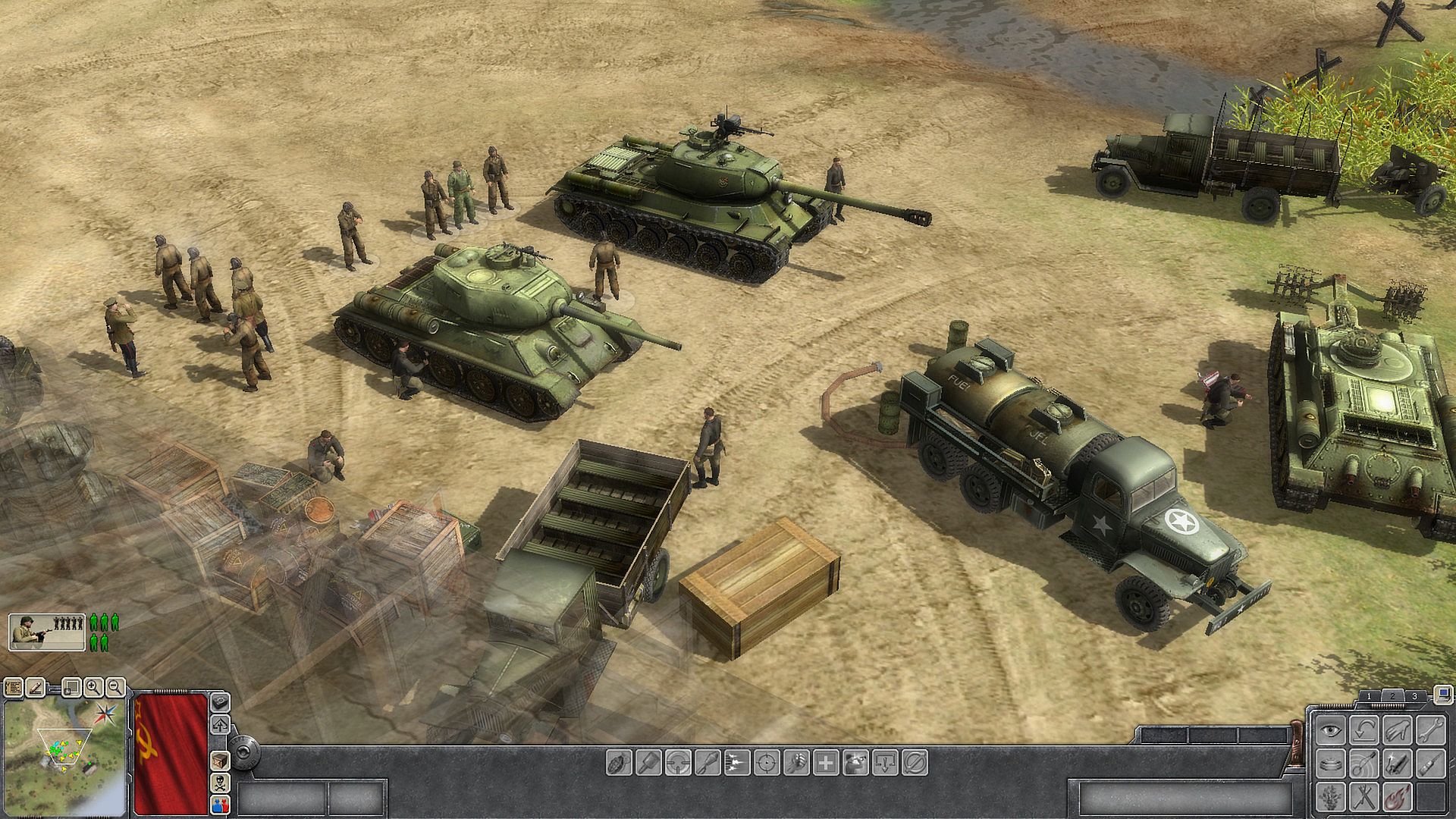
Physics govern every projectile, vehicle collision, and blast effect, giving weight to artillery barrages and tank ramming. Soldiers exhibit advanced AI behaviors that let them seek cover, suppress enemies, or react to flanking threats without constant micromanagement. Resource management stays grounded in realistic logistics, where captured weapons, ammunition crates, and even enemy vehicles become usable assets on the fly. The result is a system where careful positioning and quick adaptation outweigh raw numerical superiority.
Game Modes
Singleplayer content centers on campaign missions that follow Allied, German, and Soviet operations through historically inspired European theaters. These missions encourage varied approaches, from stealthy infiltrations to large-scale armored pushes, with outcomes shaped by how players exploit the environment and unit capabilities.
Skirmish modes allow custom battles against AI opponents on selected maps, providing practice or standalone challenges without campaign constraints. Multiplayer supports competitive matches and cooperative sessions where players can team up or face off in direct confrontations. A built-in mission editor further extends replayability by letting users design and share their own scenarios for both singleplayer testing and multiplayer use.
Multiplayer connectivity now relies on LAN, Direct IP connections, or third-party services such as GameRanger following the earlier shutdown of older matchmaking infrastructure.
Historical Context and Factions
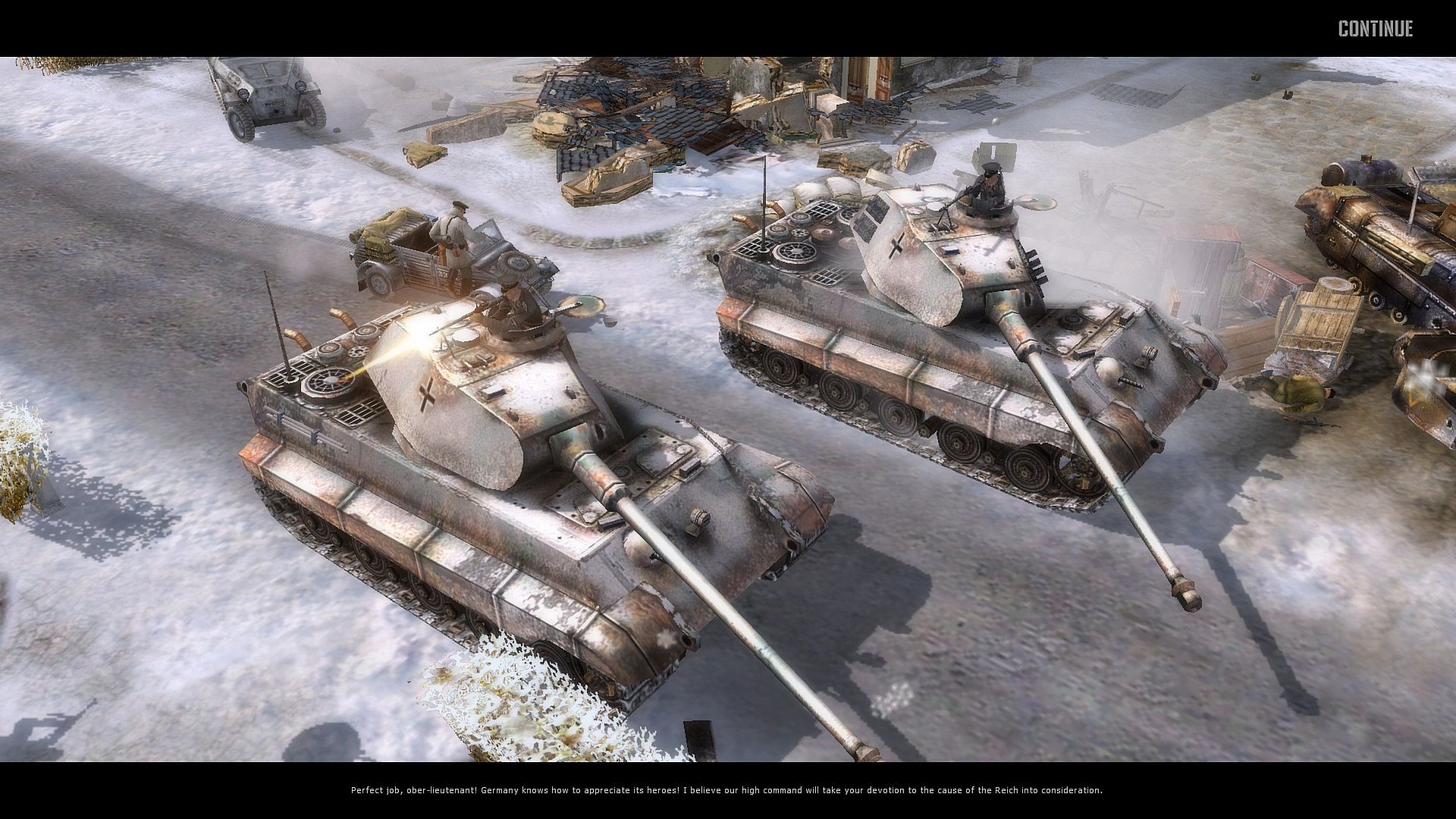
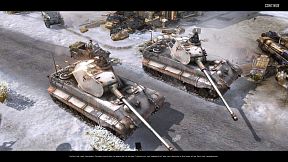
Players lead forces from the Allied, German, or Soviet sides, each equipped with period-accurate weapons, vehicles, and infantry types that reflect real doctrinal differences. Allied units often emphasize combined arms flexibility, German forces bring strong armored options and defensive setups, while Soviet troops favor massed infantry supported by heavy artillery. Campaigns span key 1944-1945 engagements, with maps that recreate varied terrain from urban ruins to open countryside where line-of-sight and elevation matter.
Authenticity extends to small details such as weapon handling, vehicle performance, and the way wounded or suppressed soldiers behave under fire. No scripted sequences dictate outcomes; every engagement evolves according to player decisions and environmental changes.
Is It Worth Playing?
Faces of War maintains a Very Positive rating from over one thousand Steam reviews, with players frequently praising its tactical depth and destructible environments. The singleplayer campaigns and skirmishes deliver consistent value for those who enjoy deliberate, ground-level command in a World War II setting. Multiplayer remains viable through direct connections or community tools, though it lacks modern matchmaking and requires coordination outside the game client.
The title suits fans of realistic real-time tactics who prioritize thoughtful unit control and environmental interaction over fast-paced action or large-scale base building. Its age shows in the interface and graphics, yet the underlying systems continue to hold up for players seeking an unscripted, physics-driven experience. Those interested in the broader Men of War lineage will find this entry a solid starting point for understanding the series foundations.