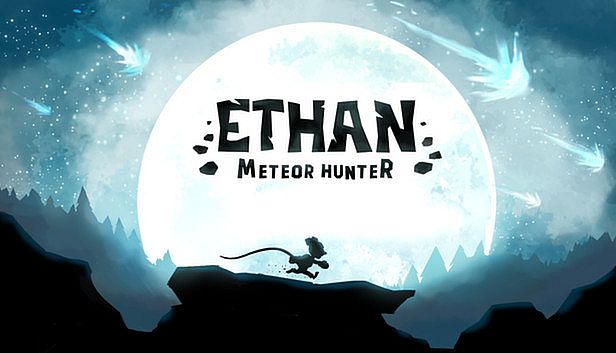
















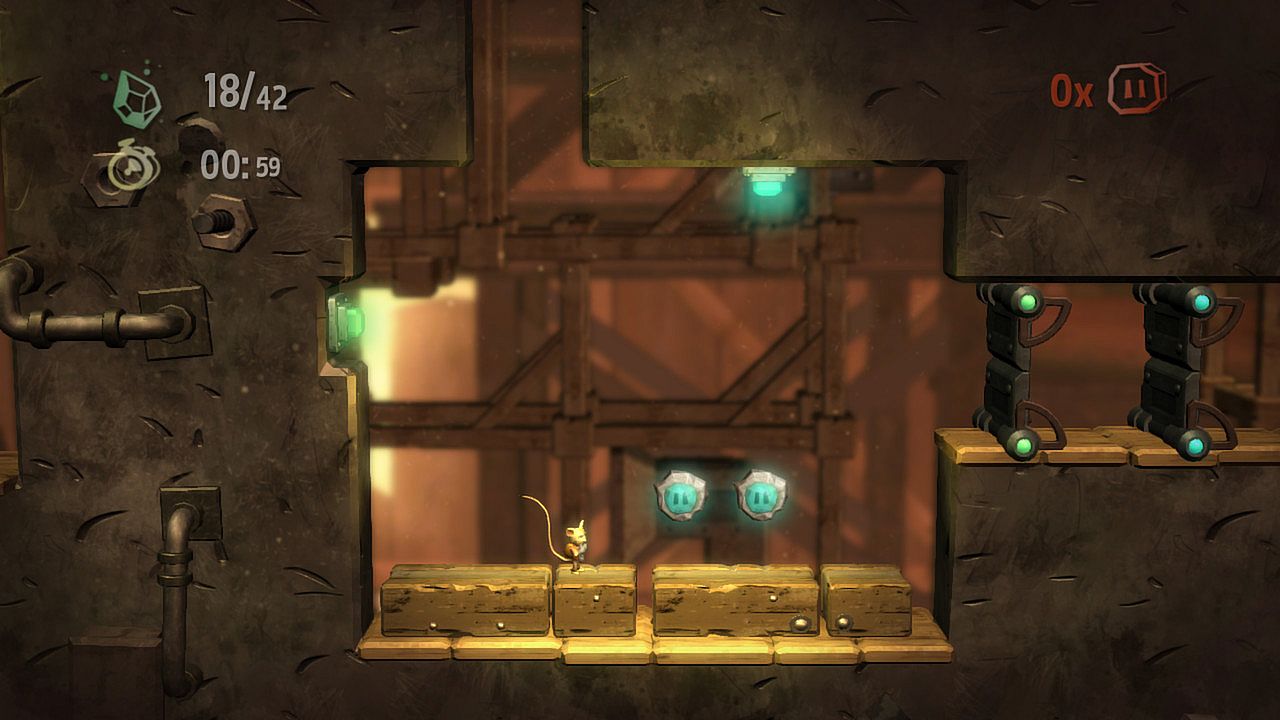
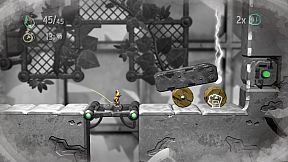
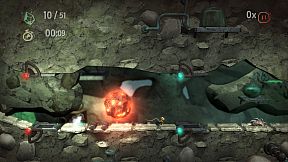
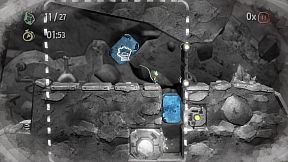
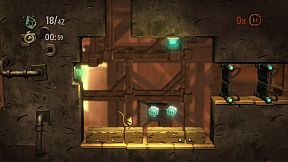
Ethan: Meteor Hunter is an action indie game developed for PC that combines precise platforming with time manipulation mechanics. Players control Ethan, a rat empowered by meteorites with telekinetic abilities that allow freezing time and repositioning objects in the environment. The core loop revolves around navigating hazardous levels by pausing the action to rearrange physics-based elements, creating custom paths through obstacles that would otherwise block progress.
Gameplay
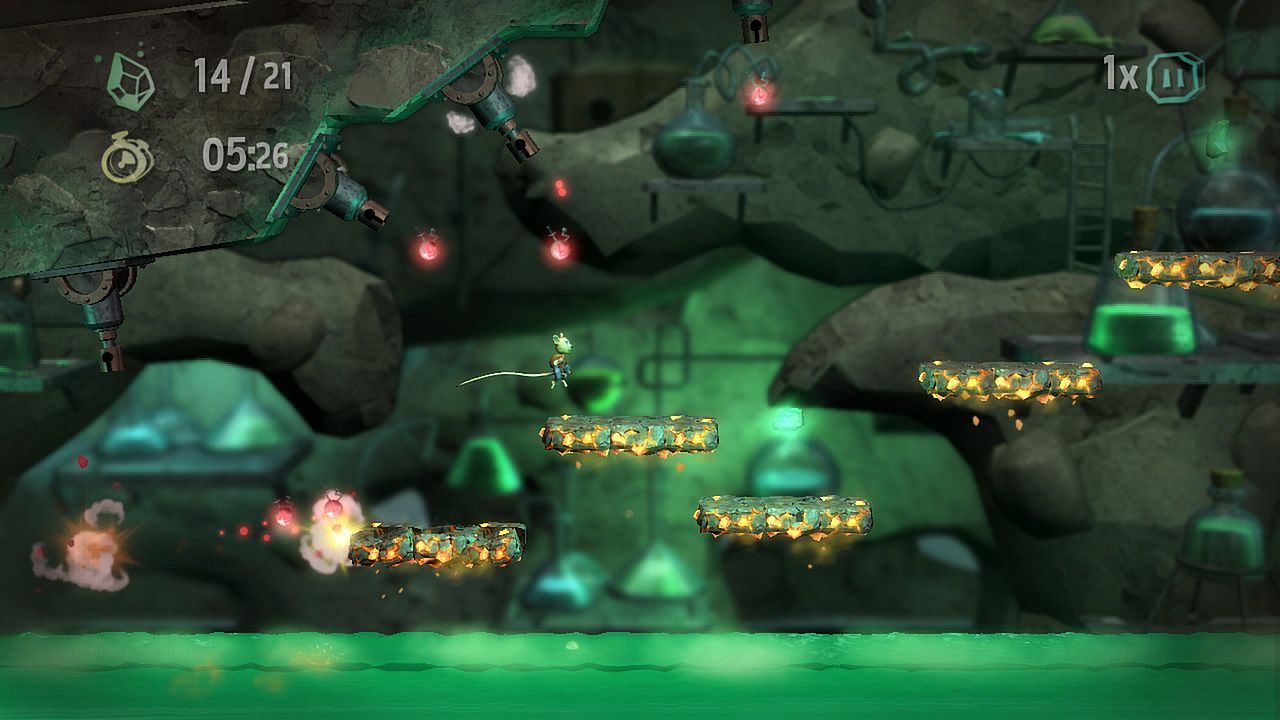
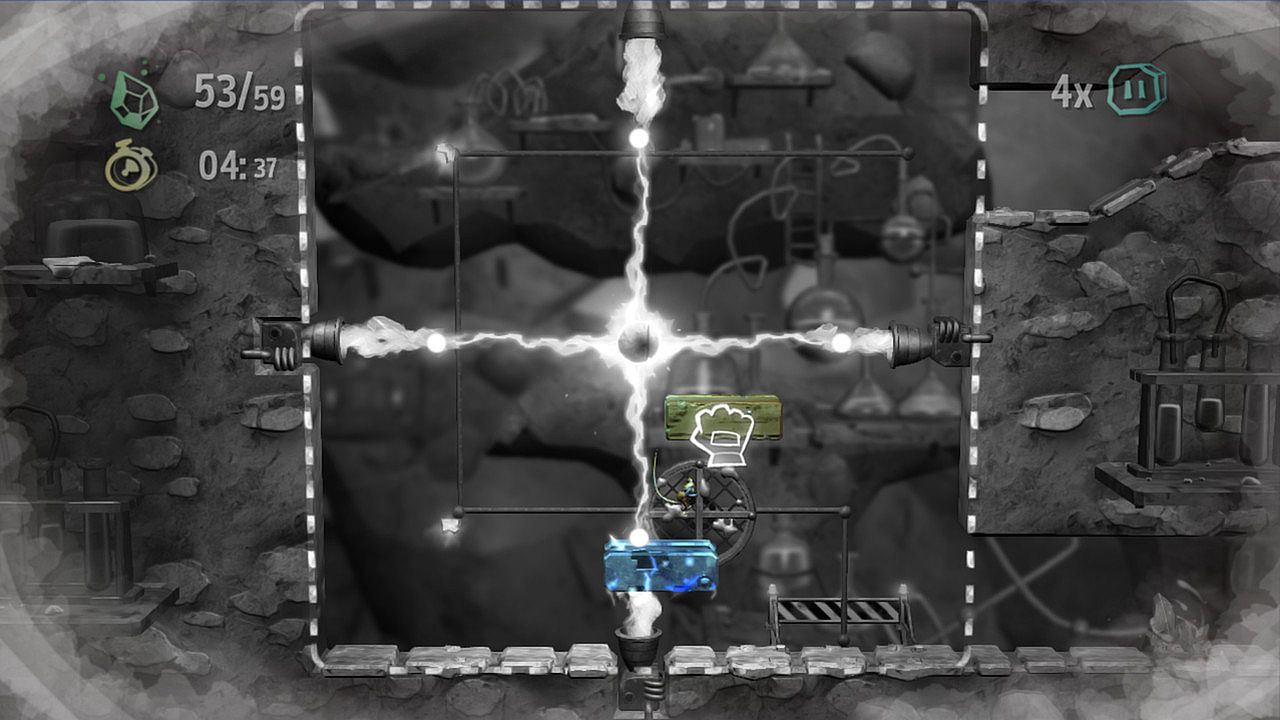
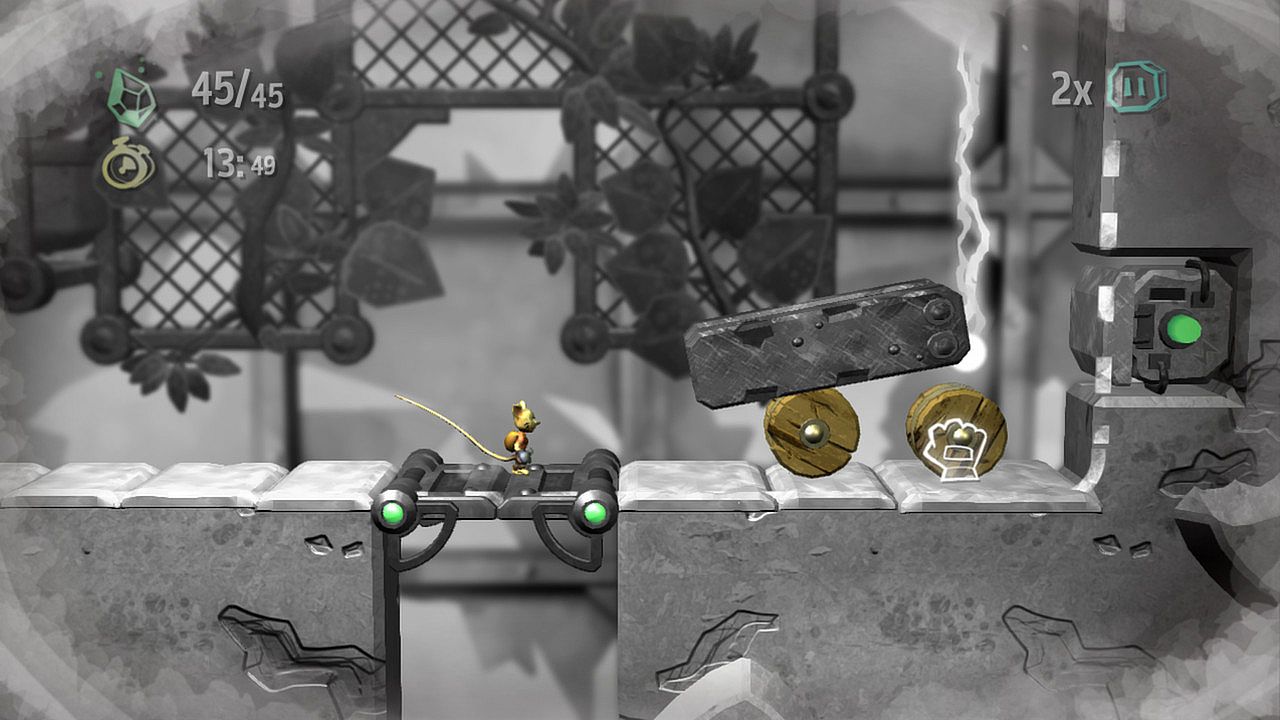
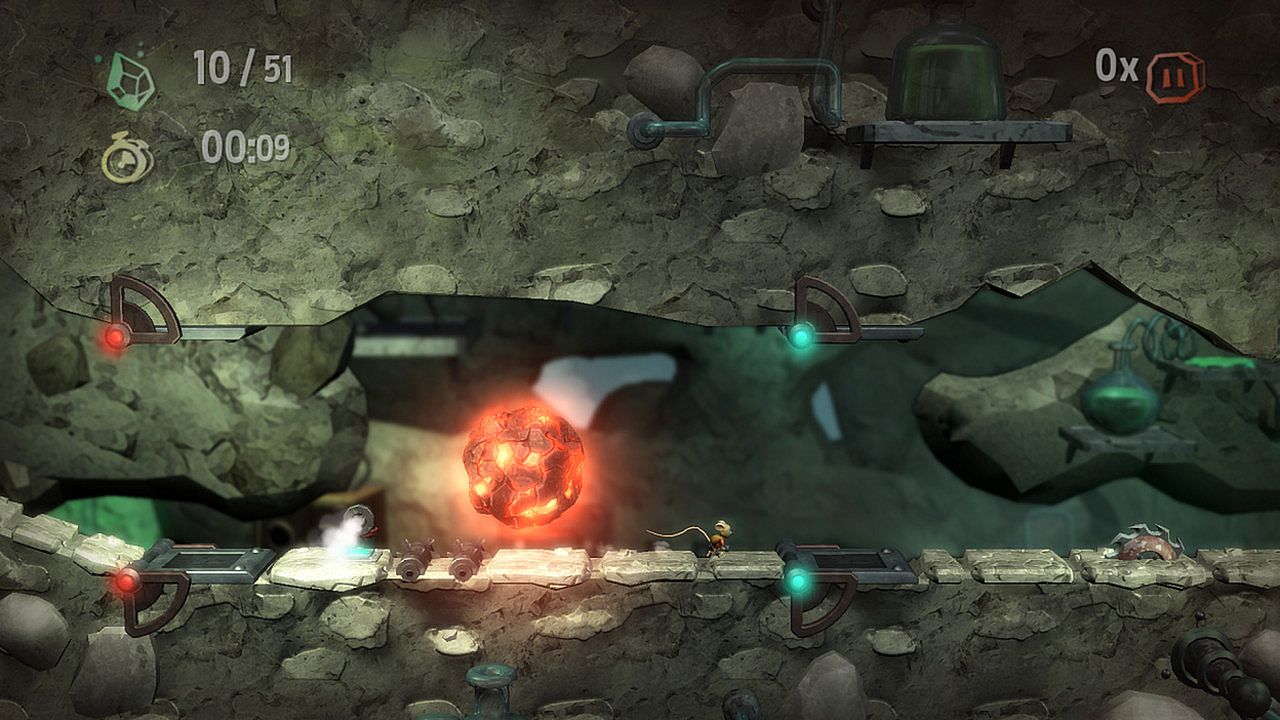
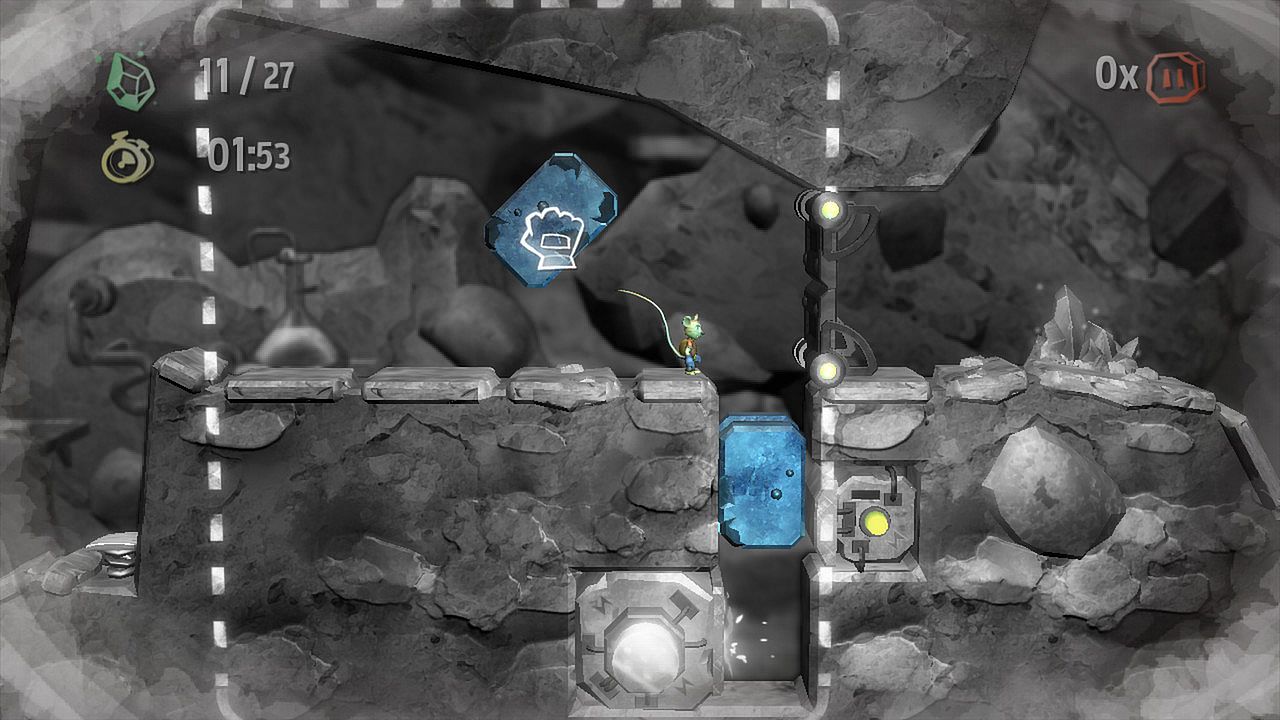
The gameplay centers on a blend of fast-paced running and jumping with deliberate puzzle solving. Ethan moves through levels filled with traps, moving platforms, and environmental hazards that demand exact timing. Freezing time halts the world, enabling players to grab and shift objects of varying weights and properties to form bridges, counterweights, or launch points. Each interaction respects real-time physics, so repositioned items behave consistently once time resumes. Instant respawns reduce downtime between attempts, encouraging repeated efforts on difficult sections without lengthy reloads. Levels emphasize multiple valid solutions rather than a single prescribed route, rewarding experimentation with object placement and timing.
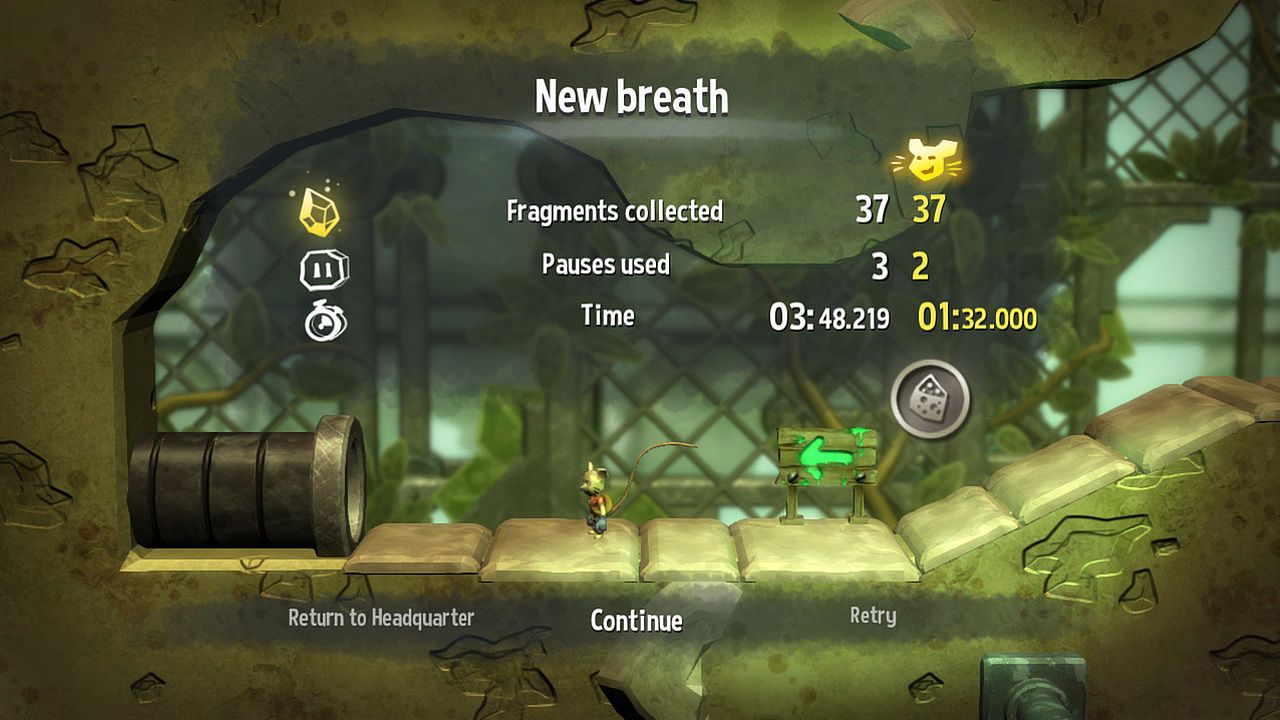
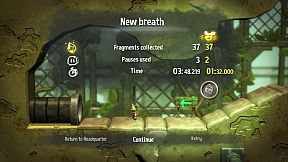
Progression involves collecting fragments scattered throughout stages while managing the number of pauses used. Telekinesis serves as the primary tool for both traversal and problem solving, with objects reacting differently based on their mass and shape. The experience scales in complexity across its environments, introducing new hazards and object types that build on core mechanics without introducing unrelated systems.
Game Modes
The game operates entirely in single-player format with built-in replay structures. Standard level completion forms the base experience, but additional goals include minimizing the number of time pauses per stage and collecting all available fragments. Time-attack challenges track completion speed for those seeking faster runs. Leaderboards allow comparison of best times against other players once mastery is achieved. These options extend engagement beyond the initial playthrough by providing measurable targets tied directly to the existing level design.
Completionist elements focus on unlocking all achievements and secret bonuses through thorough exploration and efficient play. No separate campaign branches or alternate story paths exist; instead, the modes layer objectives onto the same set of stages for varied replay approaches.
Level Structure and Progression
More than 50 stages are distributed across three distinct worlds, each introducing thematic variations in hazards and available objects. Early areas focus on basic platforming combined with simple object manipulation, while later sections integrate denser puzzles that require chaining multiple telekinetic actions. The structure supports both linear advancement and optional challenges within each world, with secrets hidden to encourage full exploration. Physics interactions remain consistent throughout, ensuring that solutions discovered in one area can inform approaches in others.
Is It Worth Playing?
Player reception stands at mixed, with 60 percent of reviews rating the experience positively. The title suits those who enjoy challenging precision platformers that incorporate puzzle elements, particularly players comfortable with trial-and-error learning and instant restarts. Its design avoids scripted sequences in favor of open-ended problem solving, which appeals to completionists tracking fragments, pause counts, and leaderboard positions. The game remains available as a standalone purchase with a demo for testing core mechanics beforehand. Those seeking straightforward action without puzzle layers or multiplayer components may find the focus narrower than expected, while fans of time-manipulation platforming will encounter a focused implementation that rewards persistence.