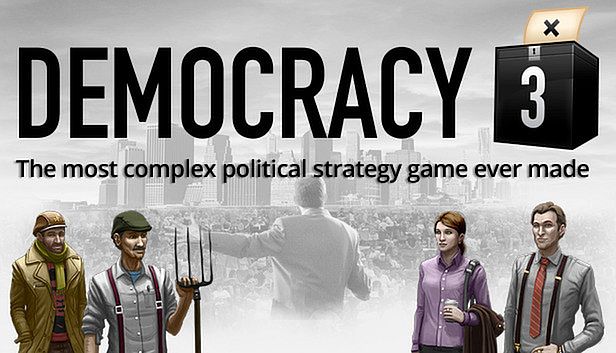




















Democracy 3 stands as a detailed political strategy simulation game for PC. Players take on the role of president or prime minister in a virtual Western industrialized nation, tasked with addressing issues like crime, unemployment, national debt, terrorism, and climate change through policy decisions. The experience centers on managing complex interconnections between laws, economic factors, and public opinion to maintain power across election cycles.
Gameplay
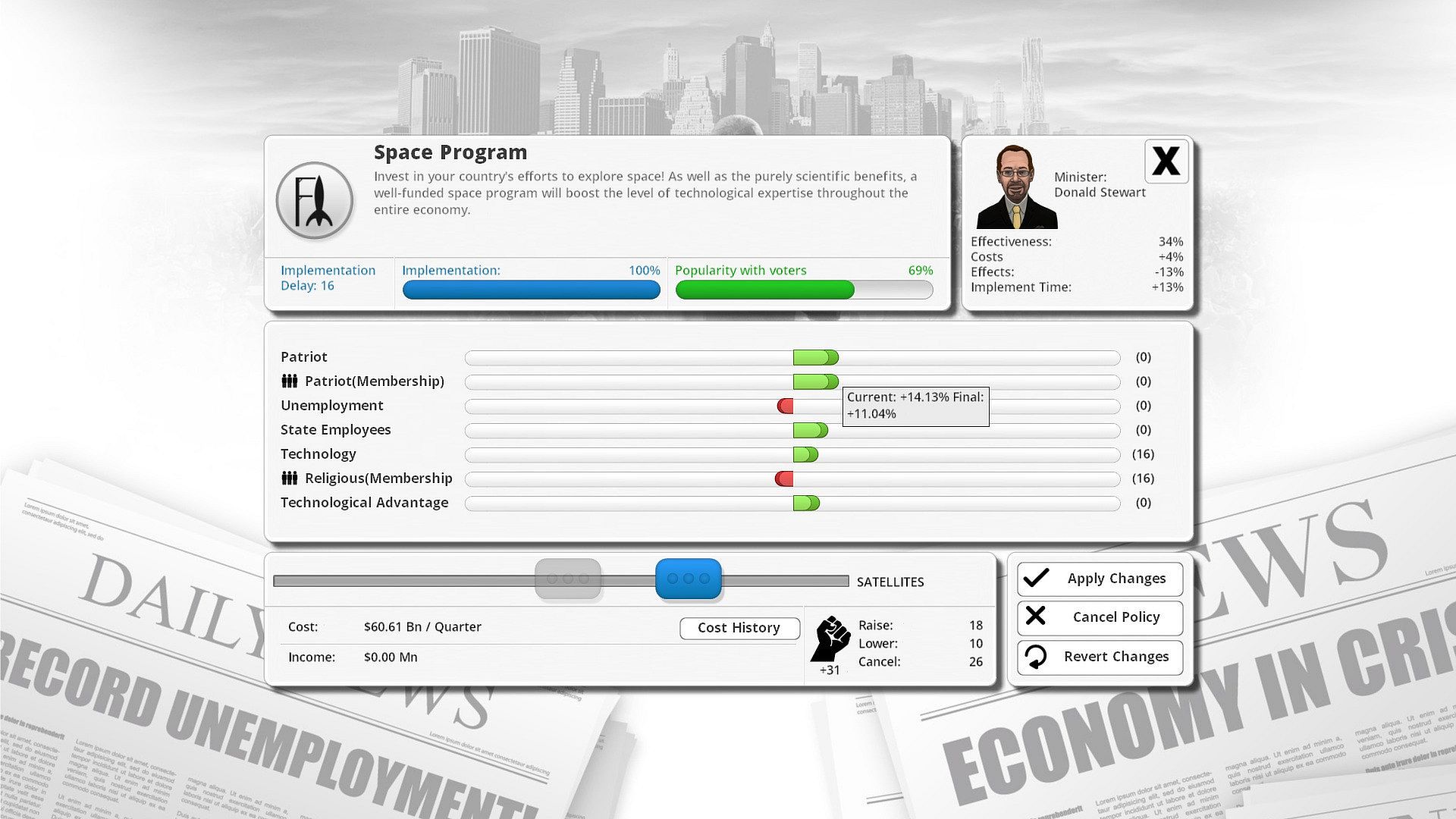
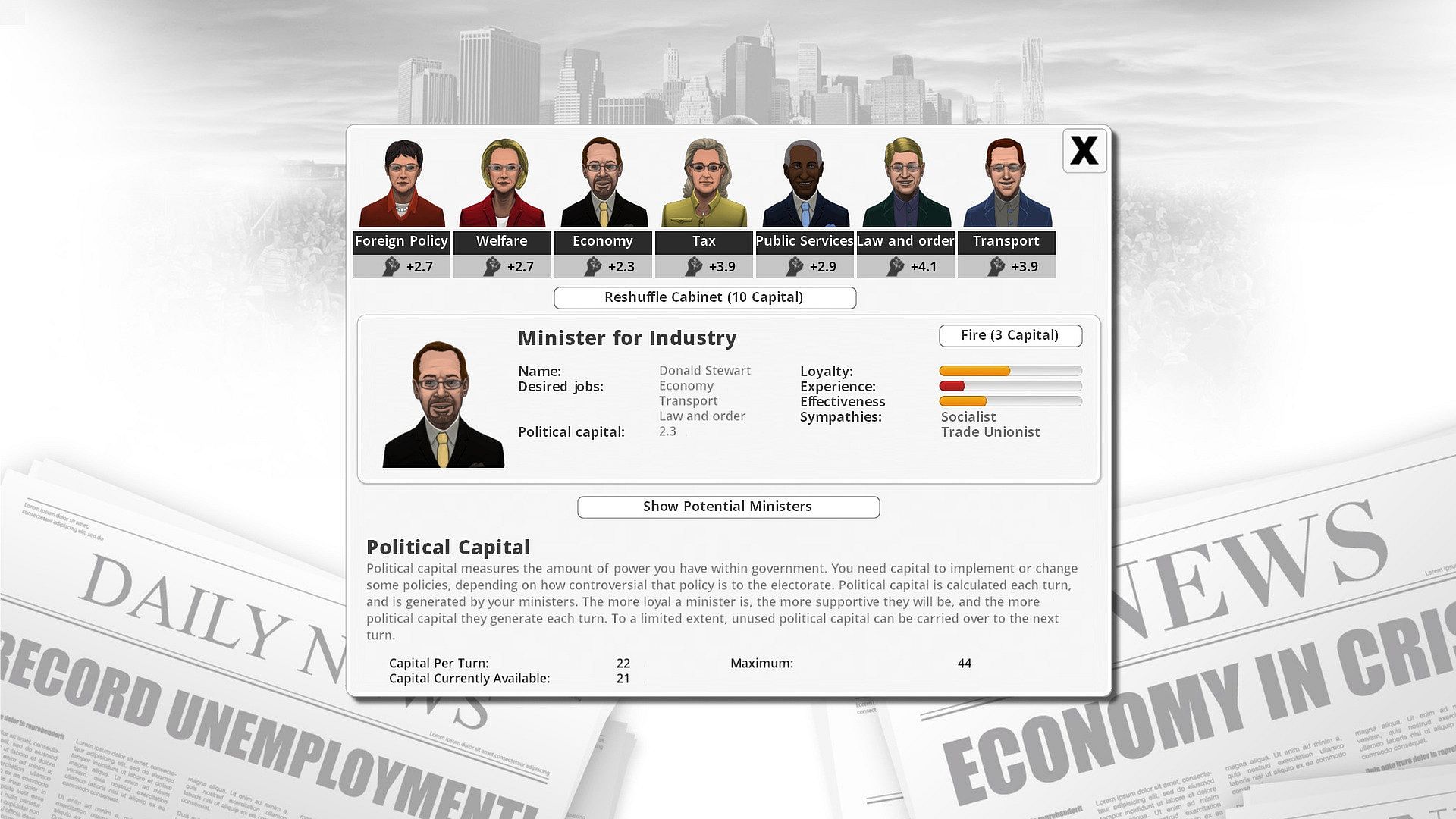
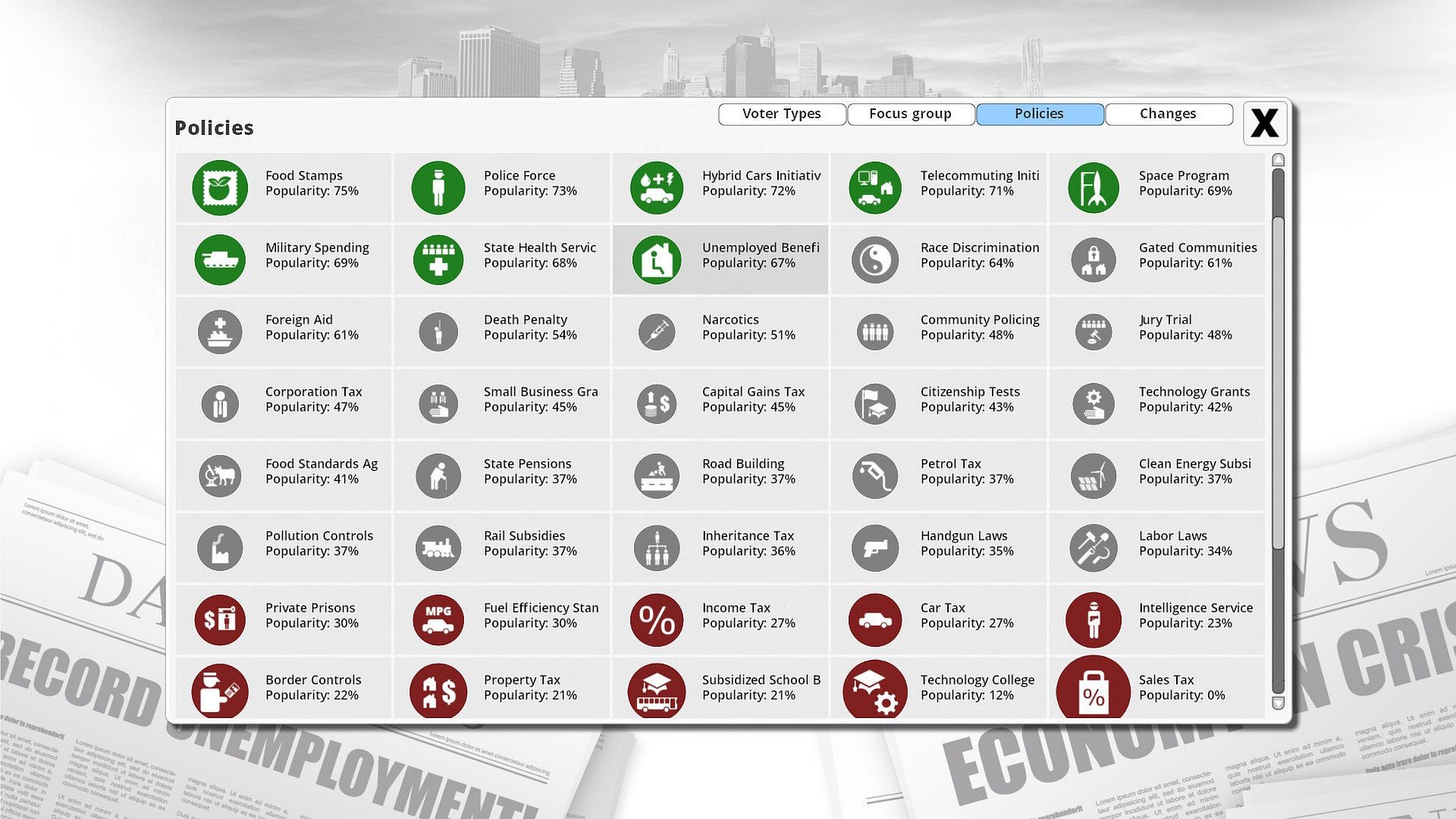
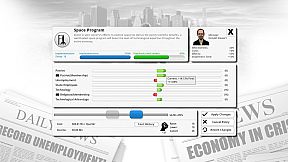
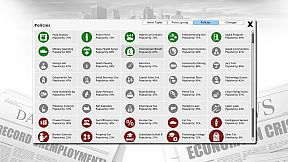
The core loop involves selecting policies across categories such as taxation, welfare, foreign relations, transport, law enforcement, and public services. Adjustments to funding levels, tax rates, and regulations consume political capital earned through ministerial support and successful governance. A custom neural network tracks individual voter motivations, incorporating factors like income, complacency, and cynicism while modeling memberships in various groups.
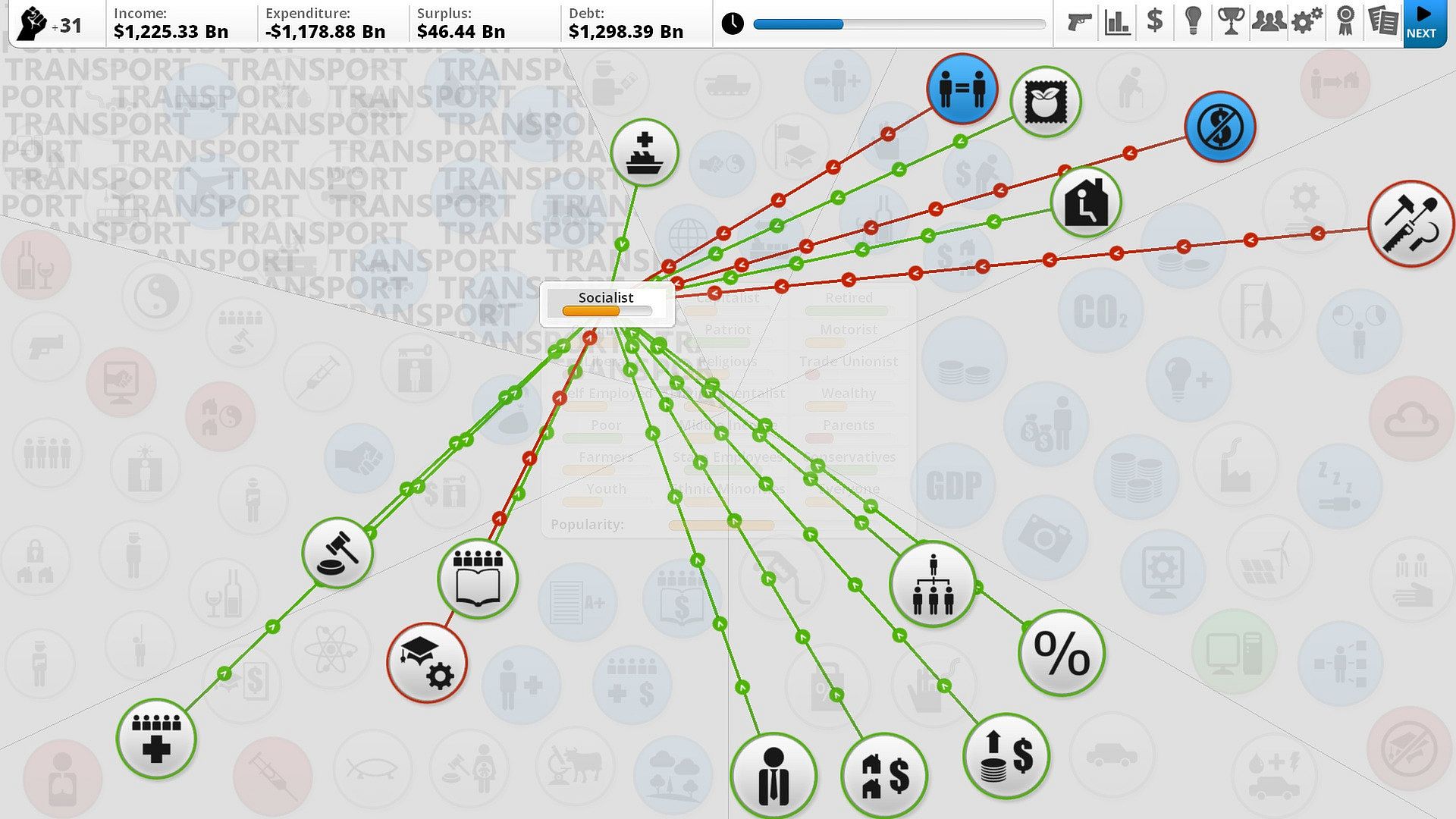
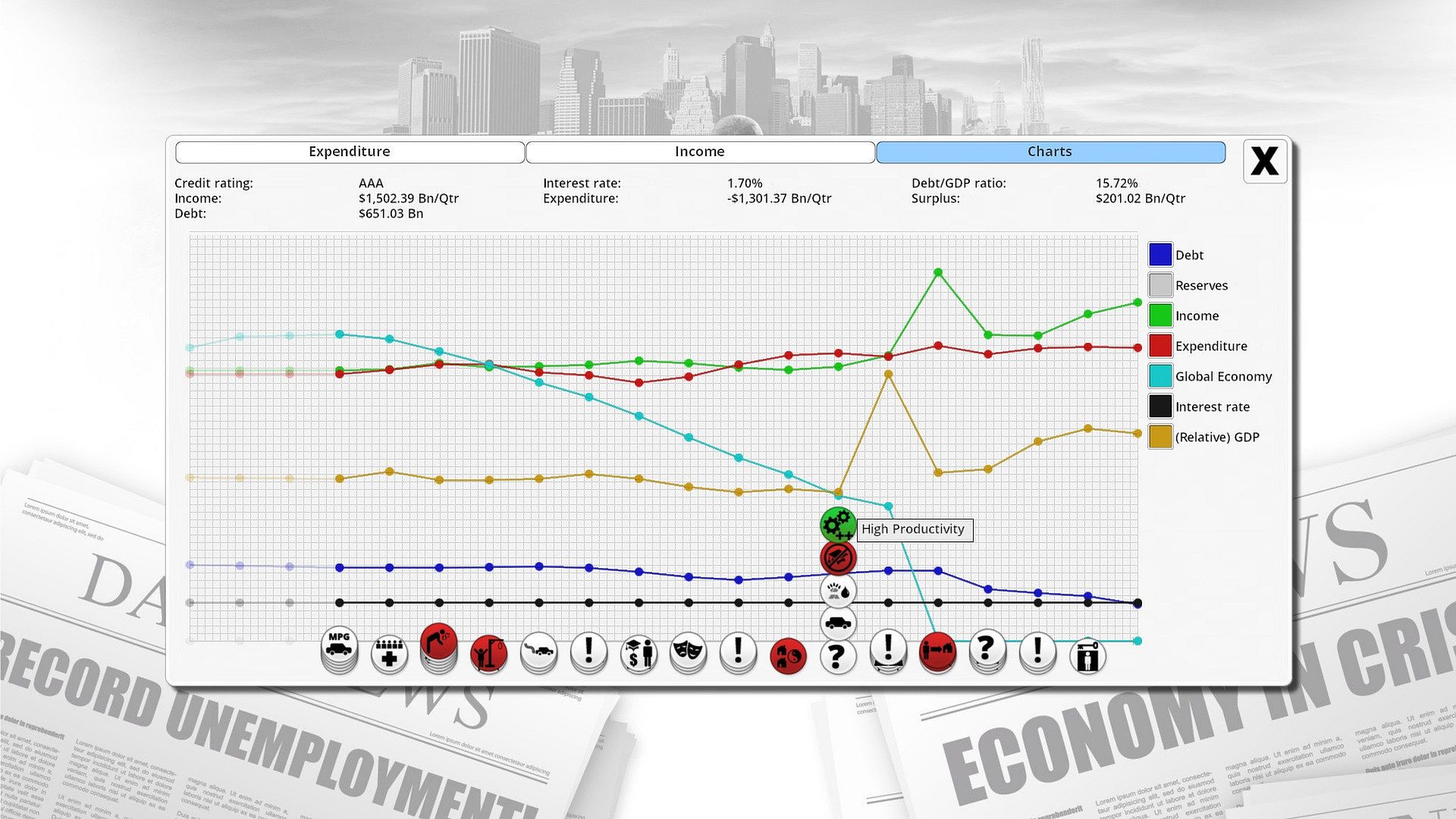
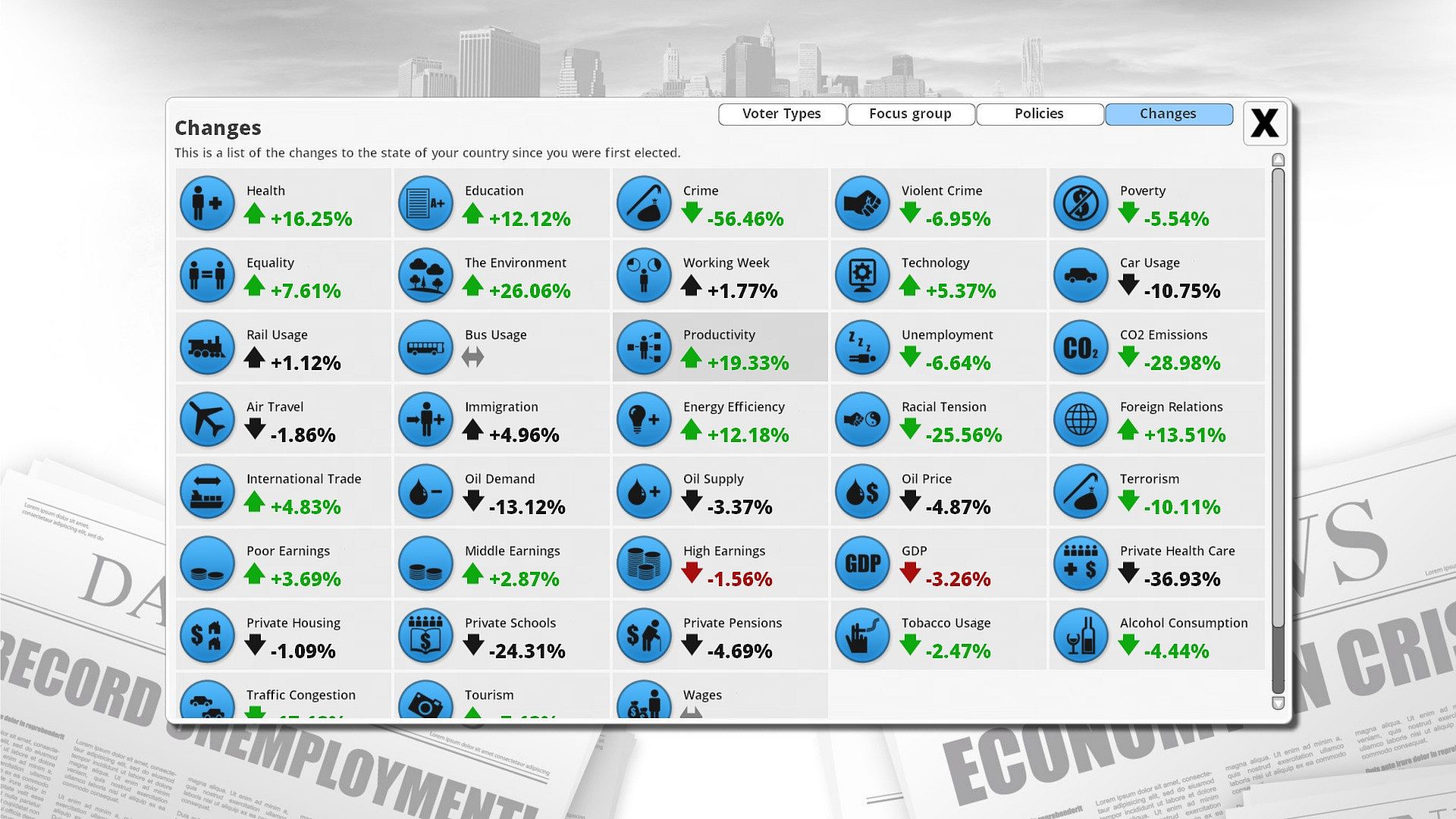
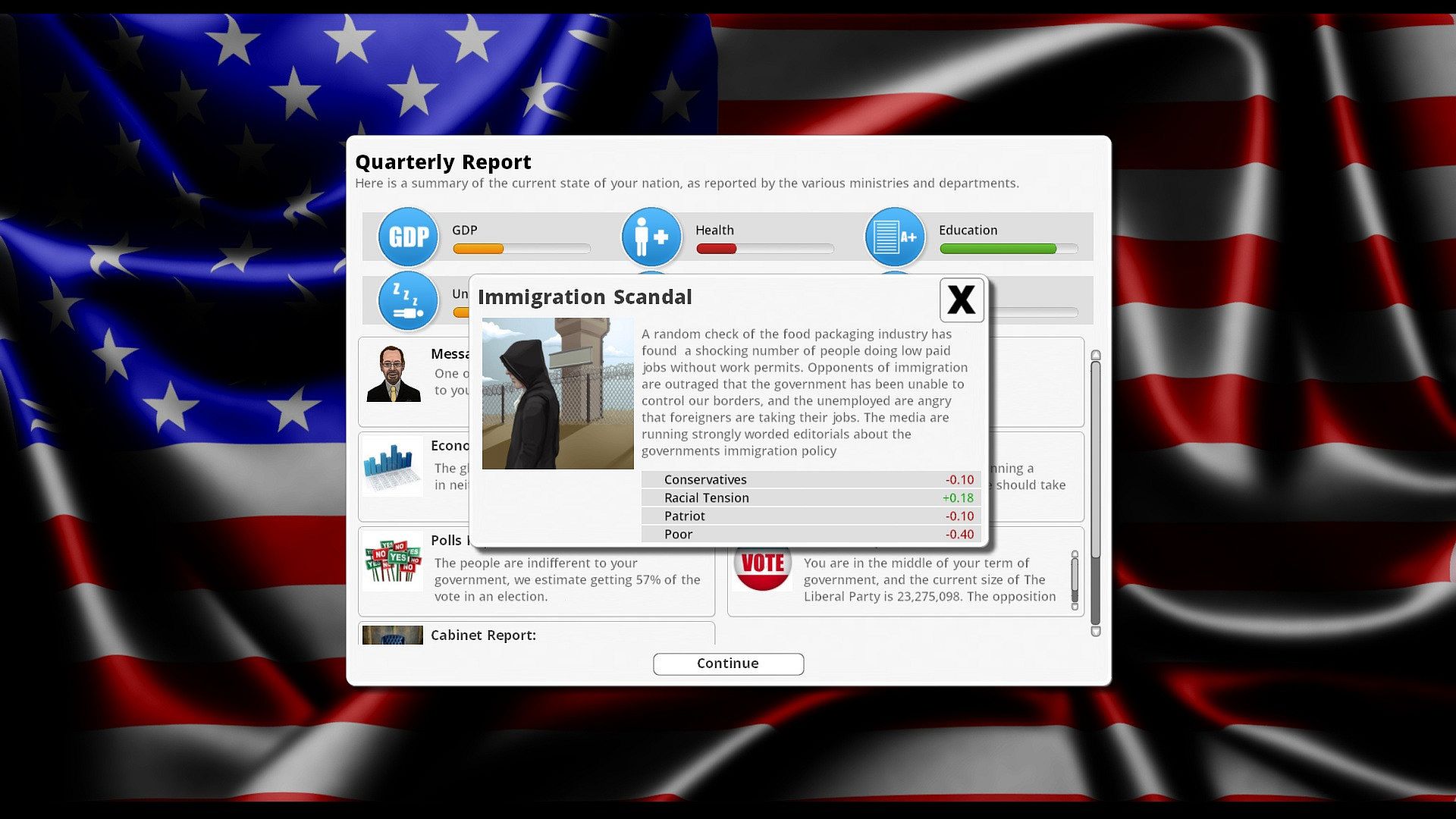
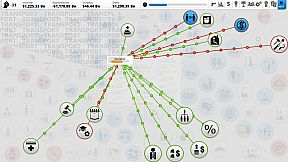
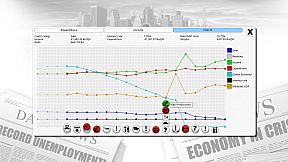
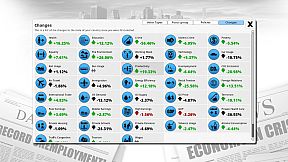
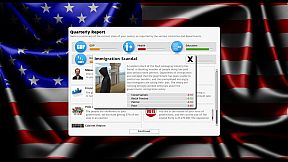
Changes ripple through the system. For instance, trade policies influence GDP, which in turn affects employment rates, poverty levels, crime statistics, tourism revenue, and ultimately the budget balance. Players monitor these chains via an iconic interface that allows drilling into relationships between decisions and outcomes. Events, dilemmas, and ongoing situations arise periodically, requiring responses that can shift voter loyalties or economic stability.
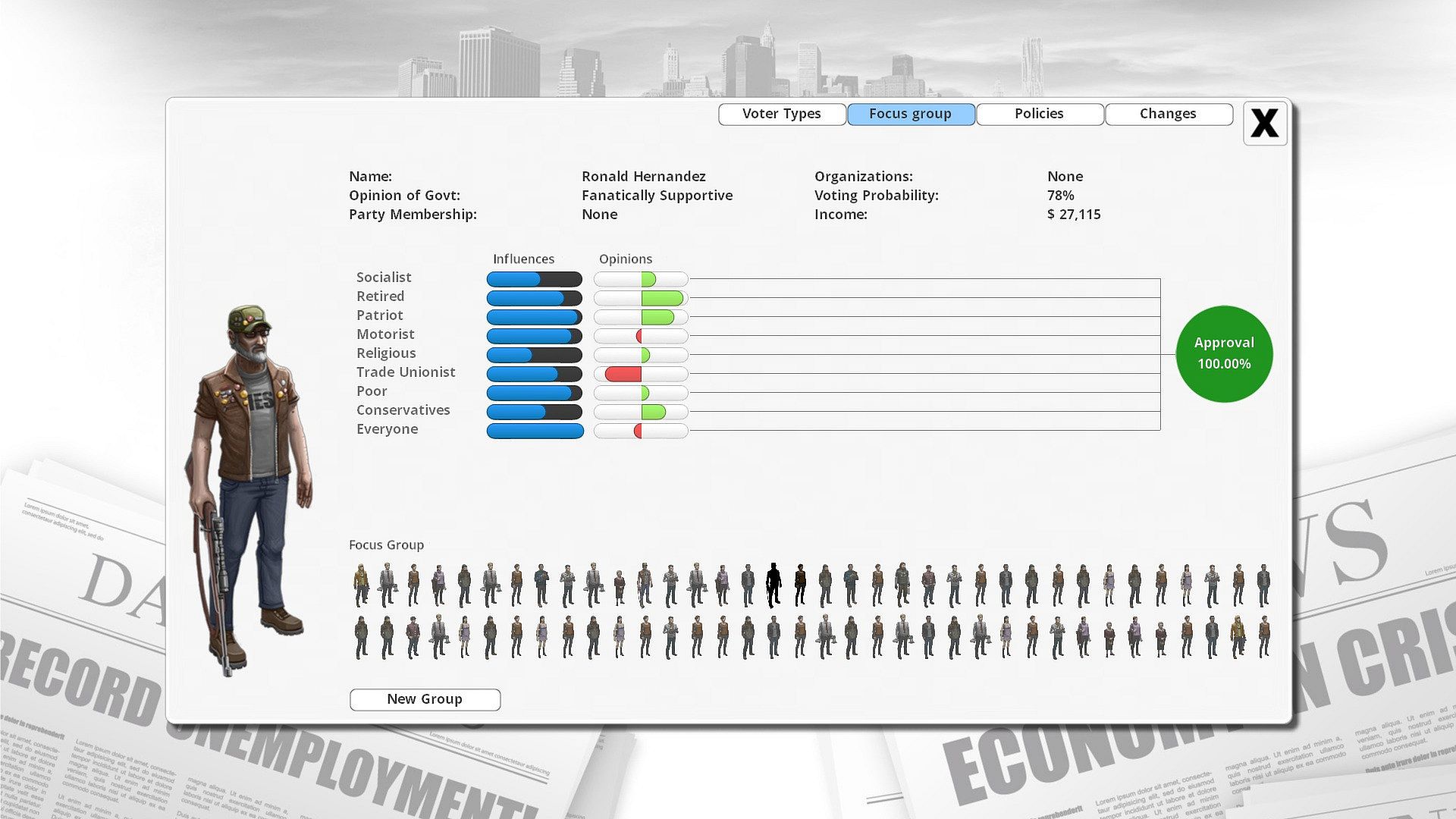
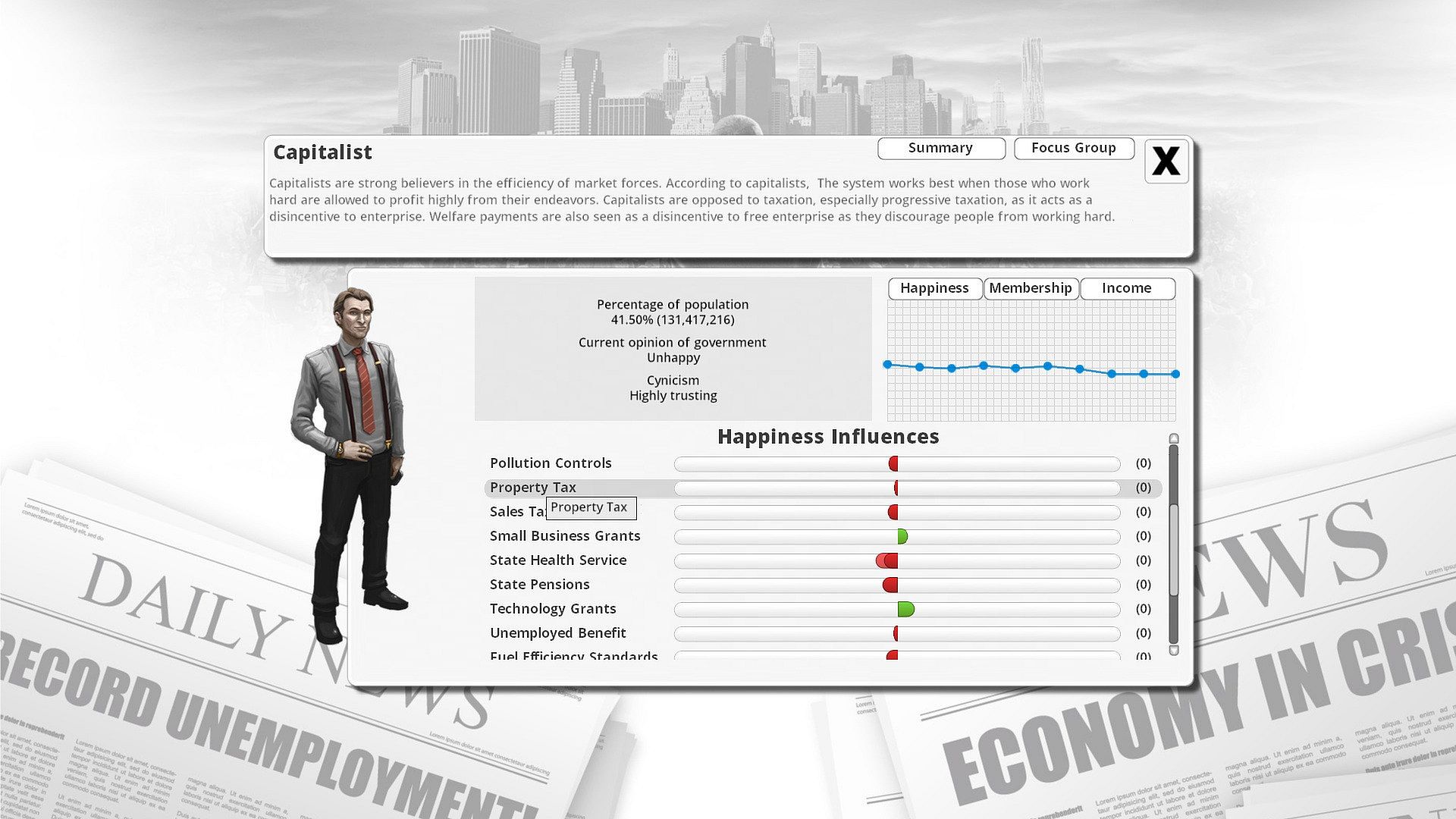
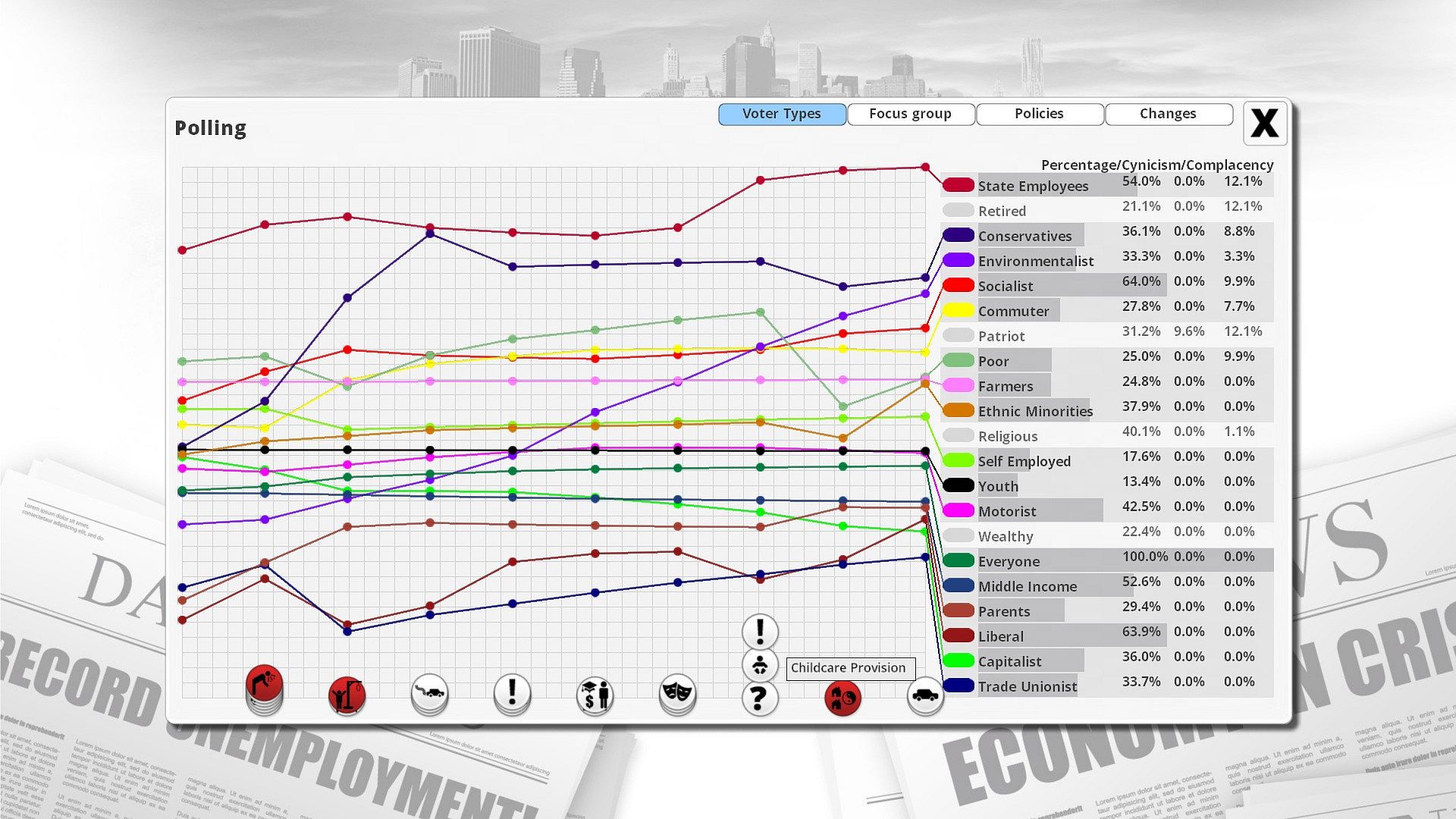
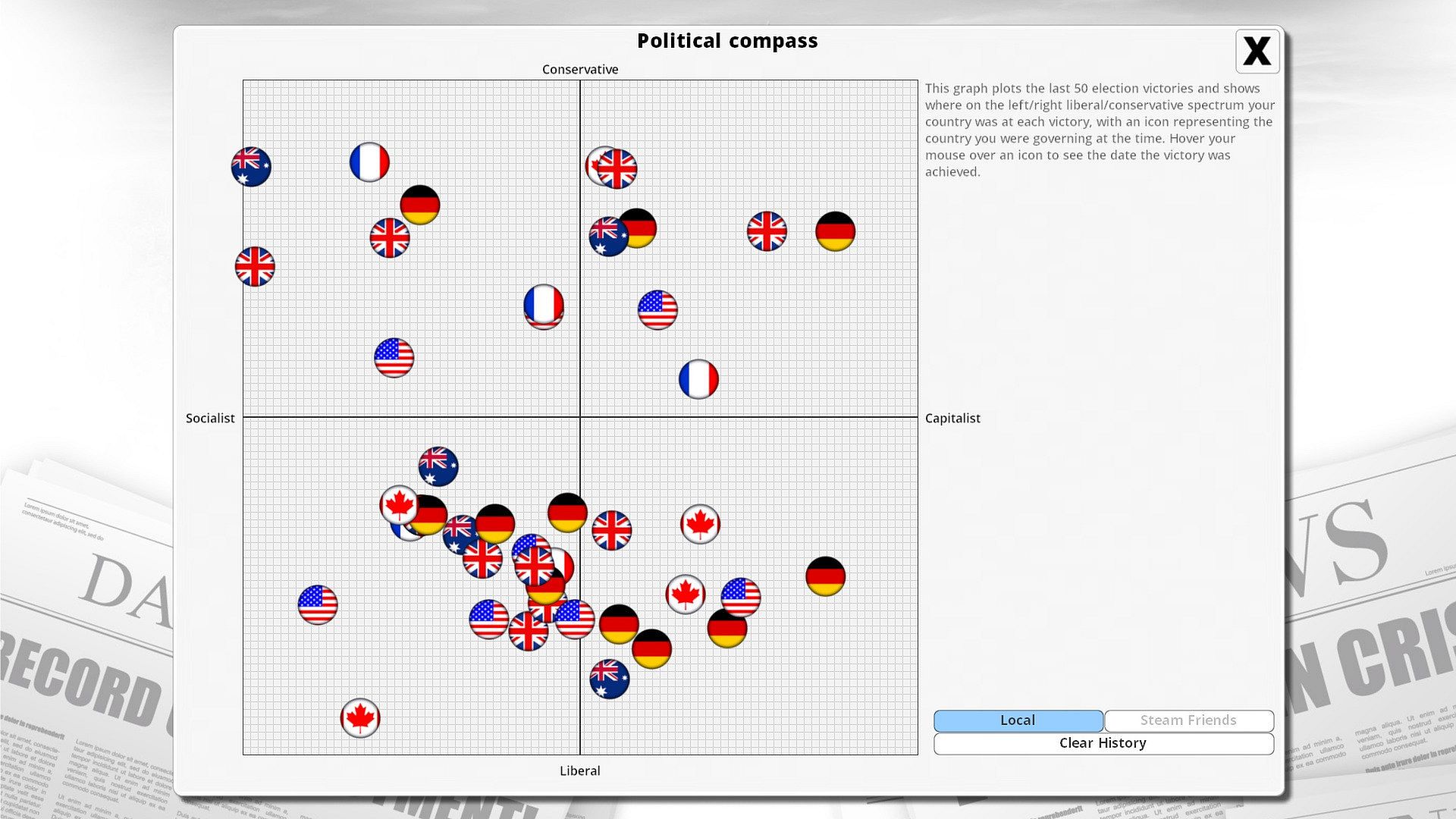
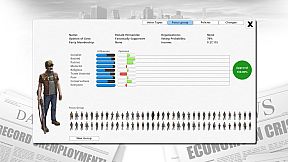
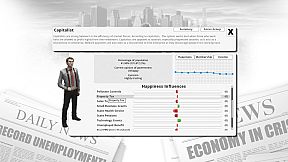
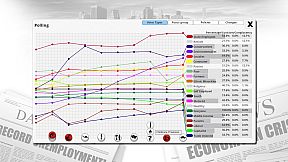
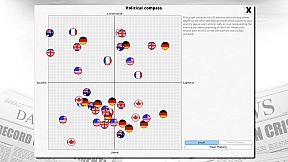
Each voter represents a blend of up to 21 distinct groups, with identification levels that evolve based on long-term policy impacts. A focus group tool reveals the precise reasoning behind individual voting choices, highlighting how factors like religious views, economic status, or ideological leanings interact with implemented laws.
Game Modes
Democracy 3 operates as a singleplayer simulation without separate multiplayer components. The primary experience lets players choose from multiple starting nations, each with unique initial conditions, voter compositions, and challenges. Success requires balancing the budget, avoiding debt crises or tax evasion spikes, and securing enough support to win subsequent elections.
Gameplay emphasizes iterative policy refinement over time rather than discrete campaigns or competitive matches. Different nations serve as entry points that alter the starting voter demographics and economic baselines, encouraging repeated playthroughs to test varied approaches to the same underlying mechanics.
Modding and Customization
The game supports extensive modifications through simple text or spreadsheet edits, requiring no programming knowledge. Users can adjust existing policies, introduce new ones, alter cause-and-effect relationships, create custom countries, or even overhaul economic and political models entirely. Steam workshop integration simplifies browsing and installing community content, while a dedicated guide assists those building their own changes.
This flexibility extends the base simulation by allowing tailored voter groups, new situations, or revised feedback loops. Modders have produced content that expands the range of starting scenarios and policy options available within the core singleplayer framework.
Is It Worth Playing?
Democracy 3 appeals to those interested in intricate strategy simulations that model real-world political trade-offs. Its neural network approach to voter behavior and interconnected systems deliver depth without requiring constant micromanagement, thanks to the accessible interface. The title remains available as a complete experience with ongoing community mods that keep the content fresh for dedicated players.
Reception on major platforms shows mostly positive feedback, with users highlighting the simulation's detail and replay value through different nations and policy experiments. It suits individuals who enjoy analyzing cause-and-effect chains in governance rather than fast-paced action or narrative-driven stories. Those seeking a thoughtful singleplayer strategy title focused on long-term national management will find substantial engagement here, particularly if they value modding potential and precise voter modeling.