




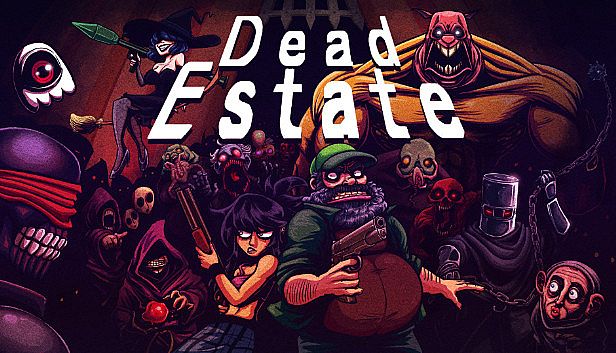












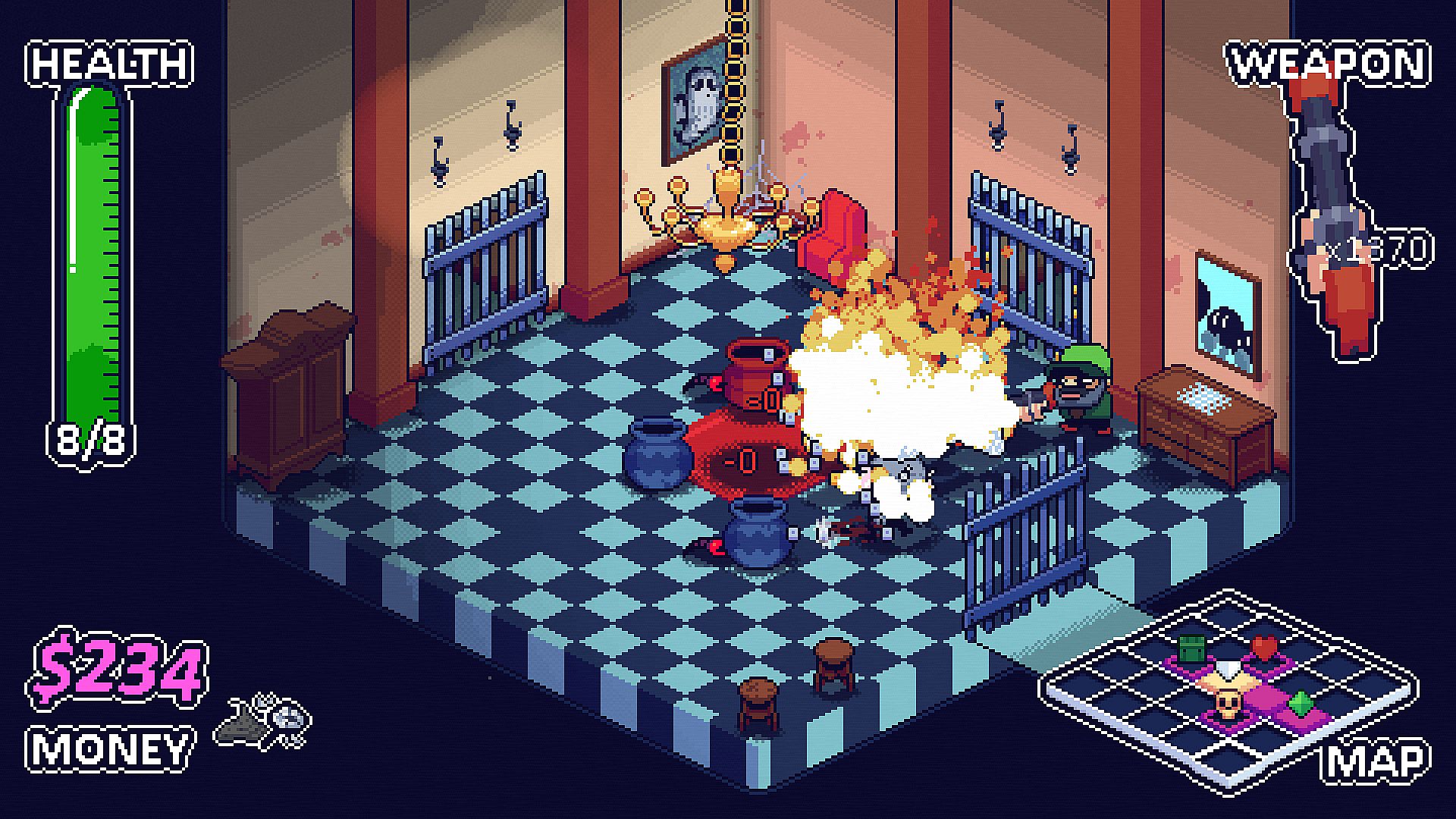
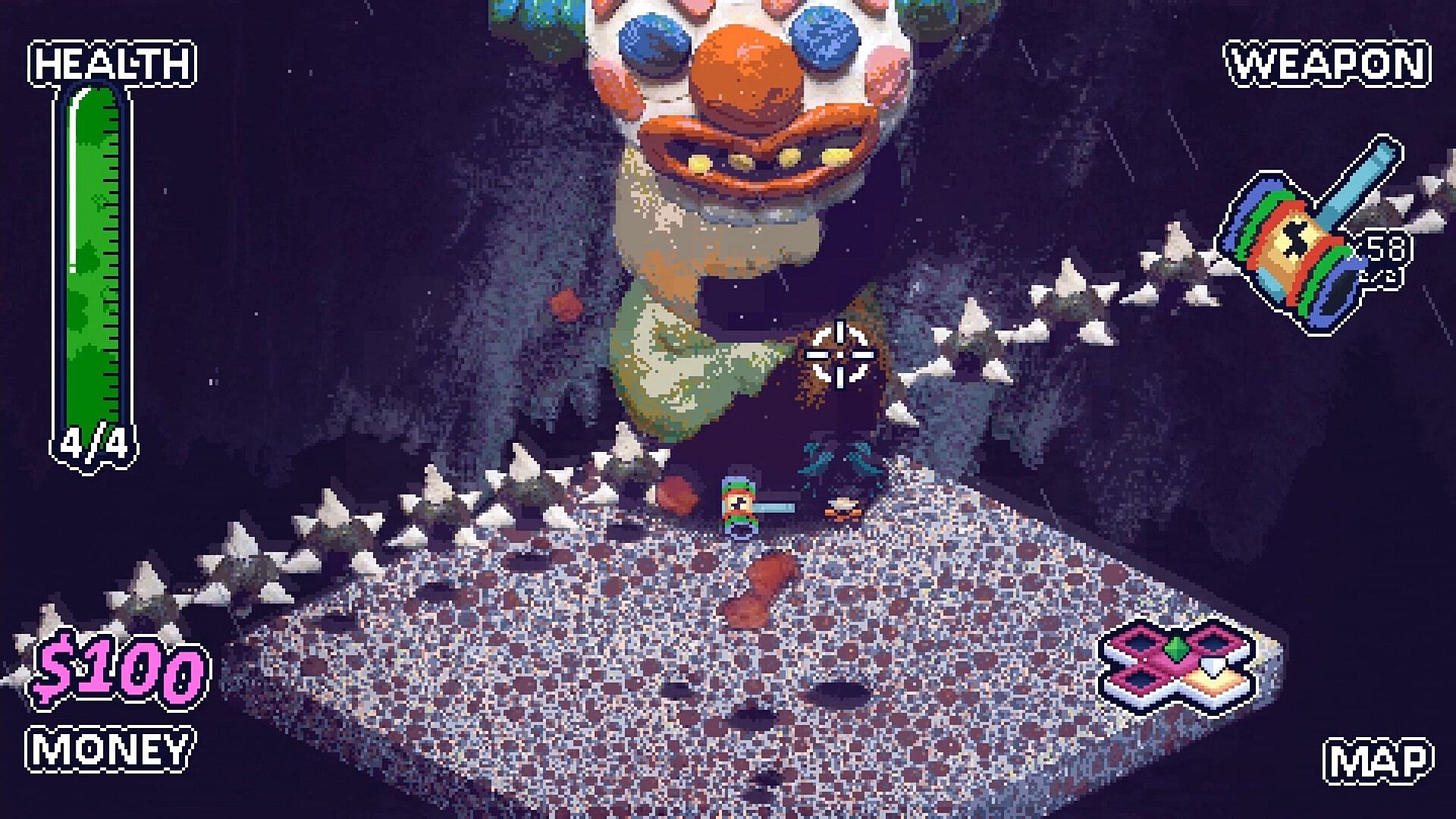
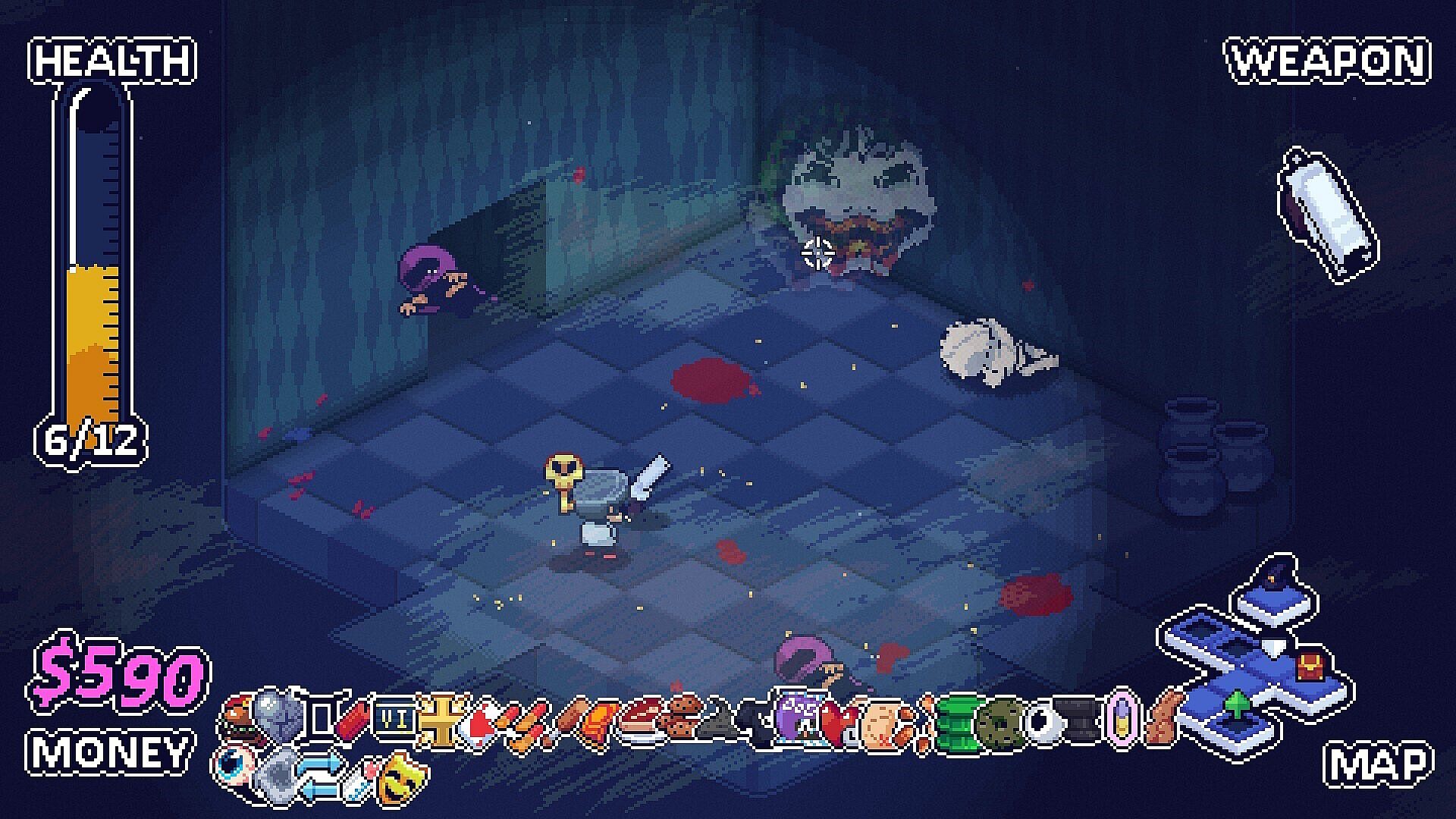
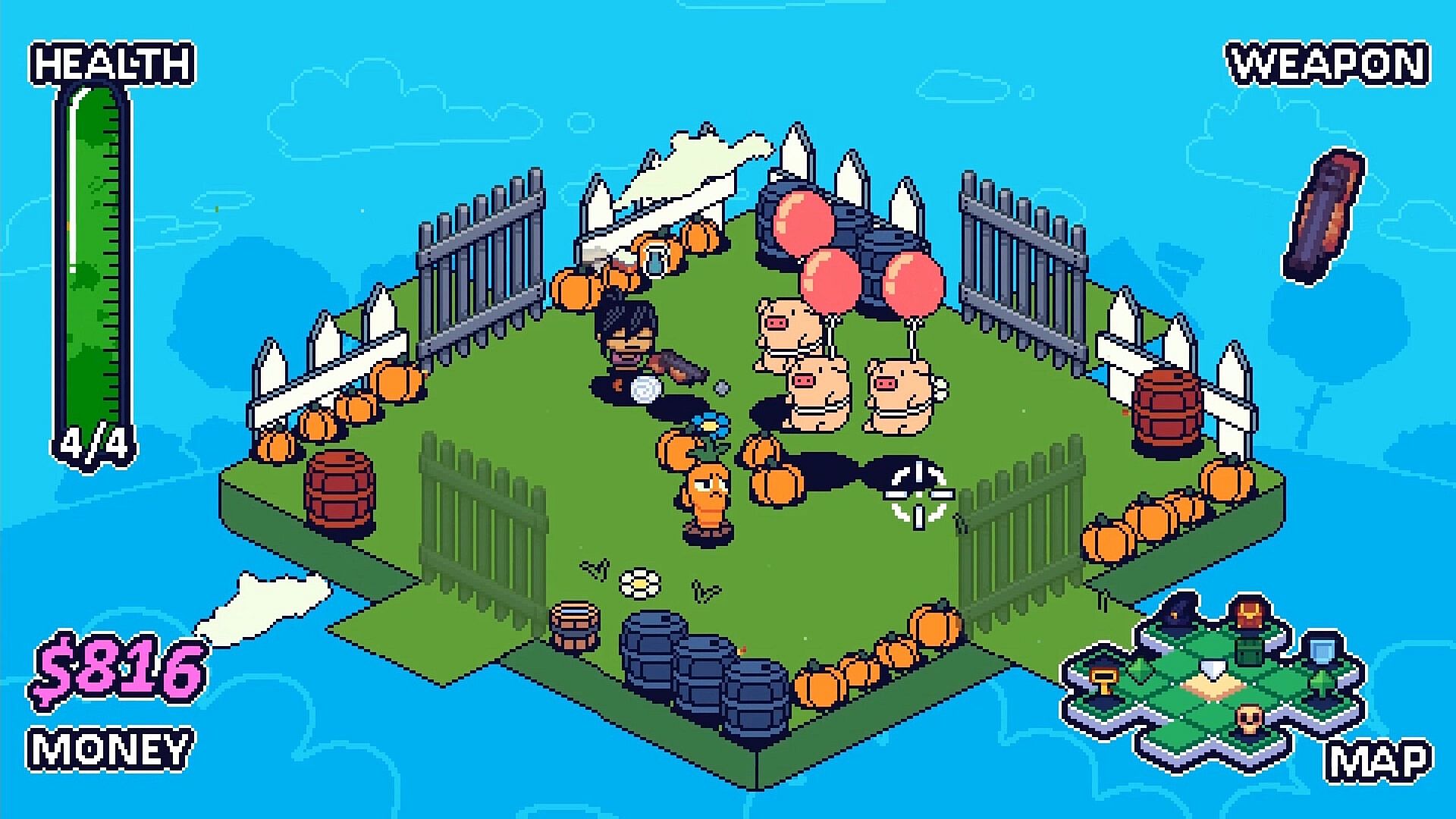
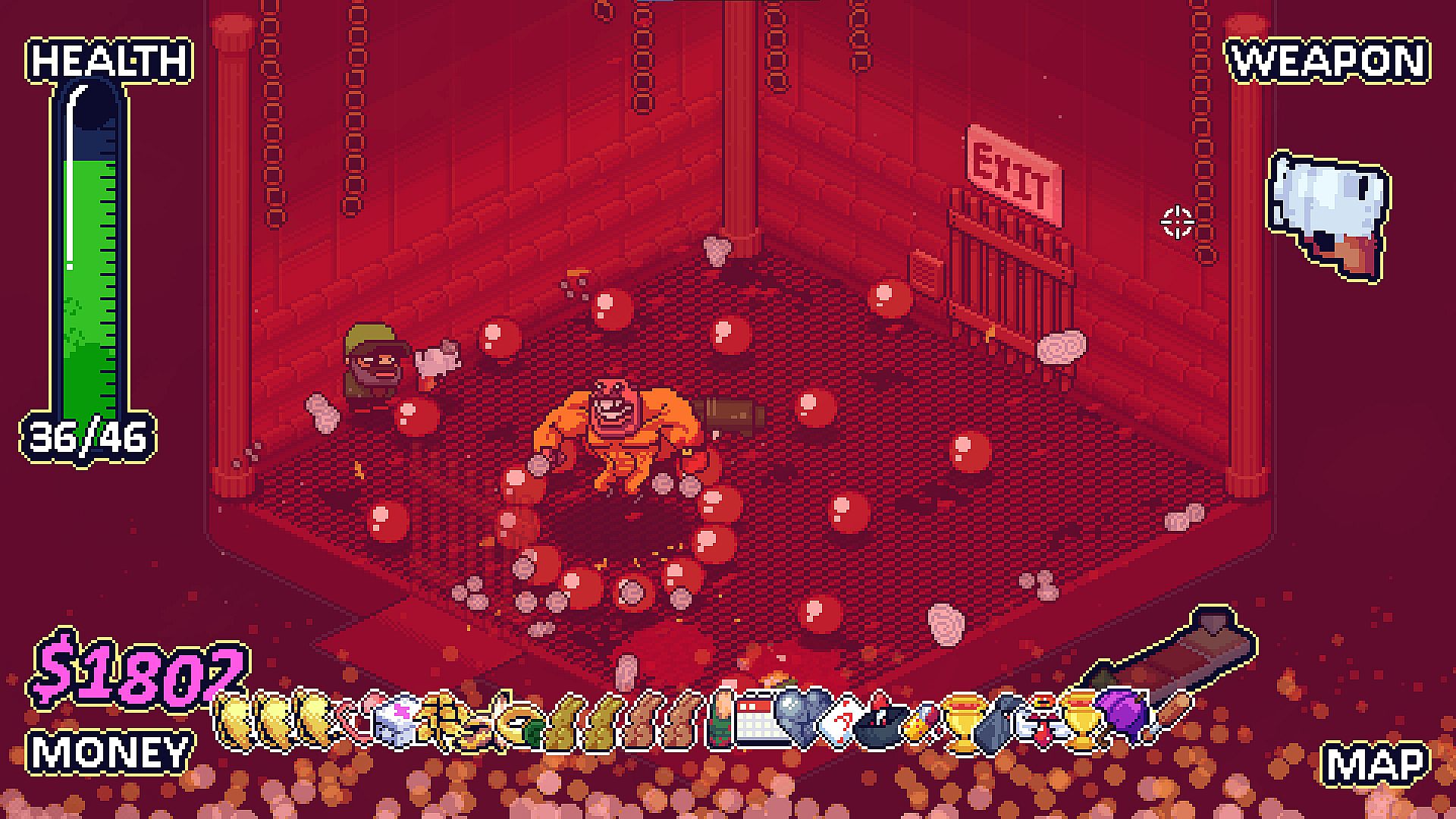
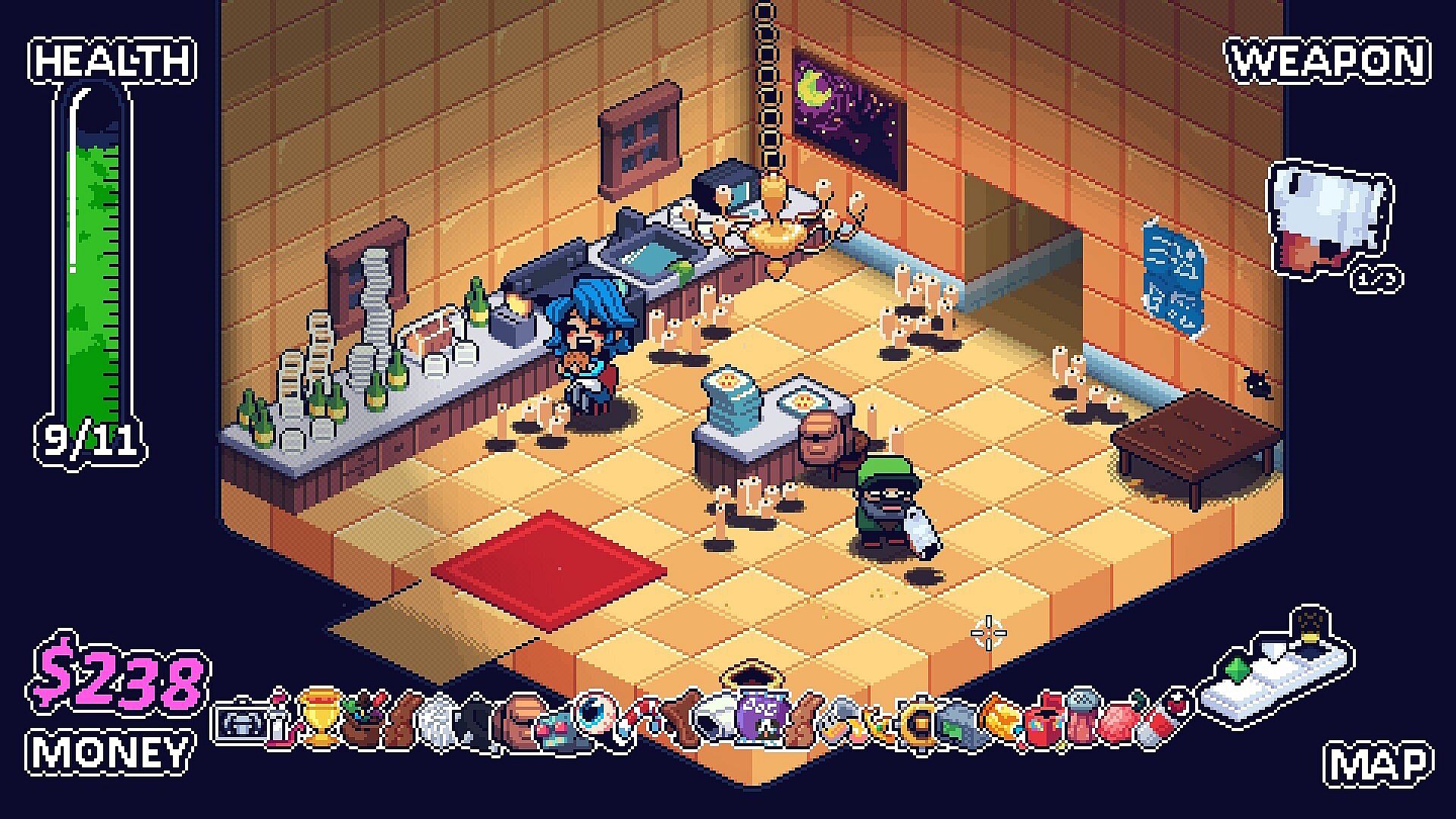
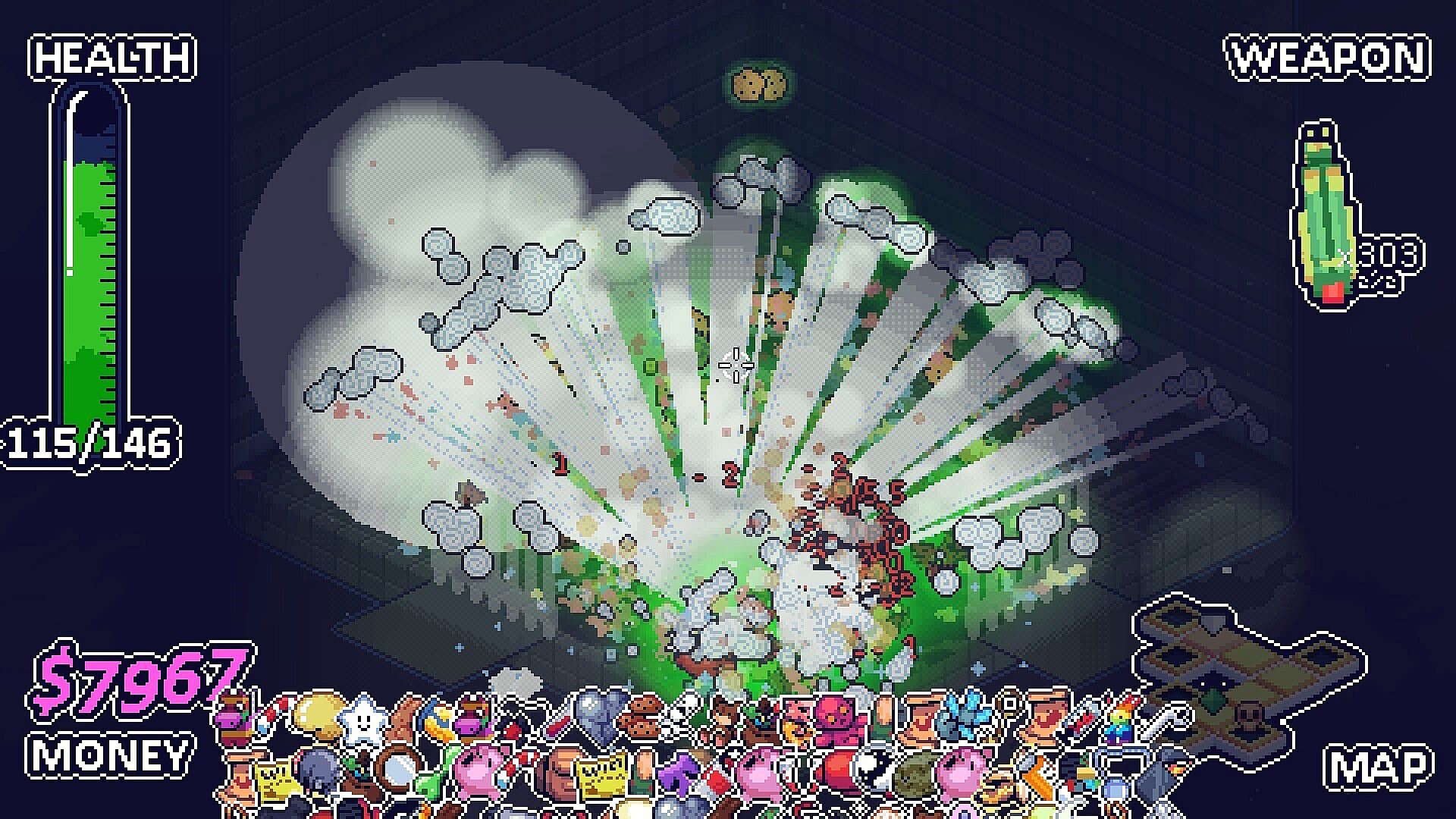
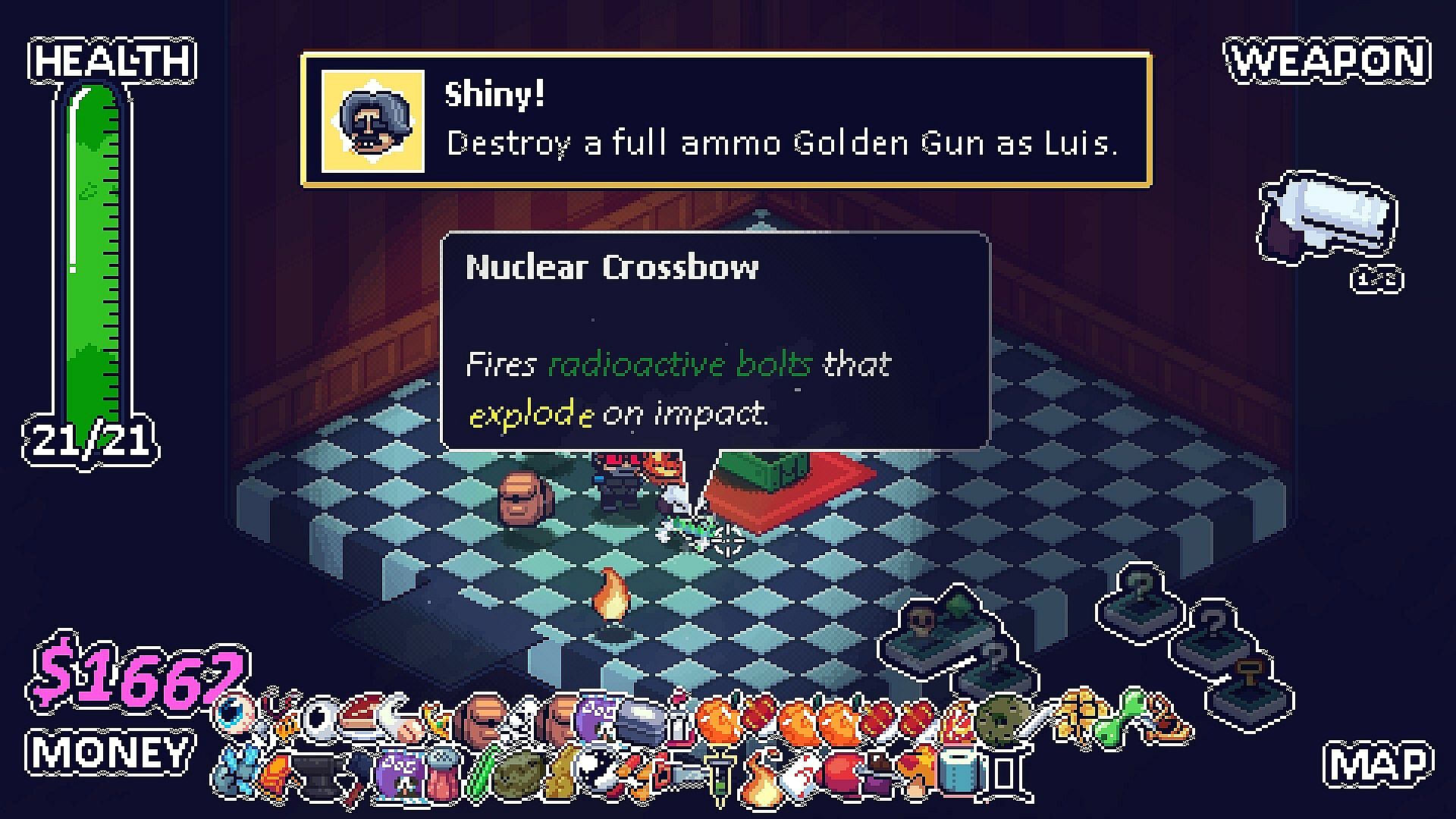
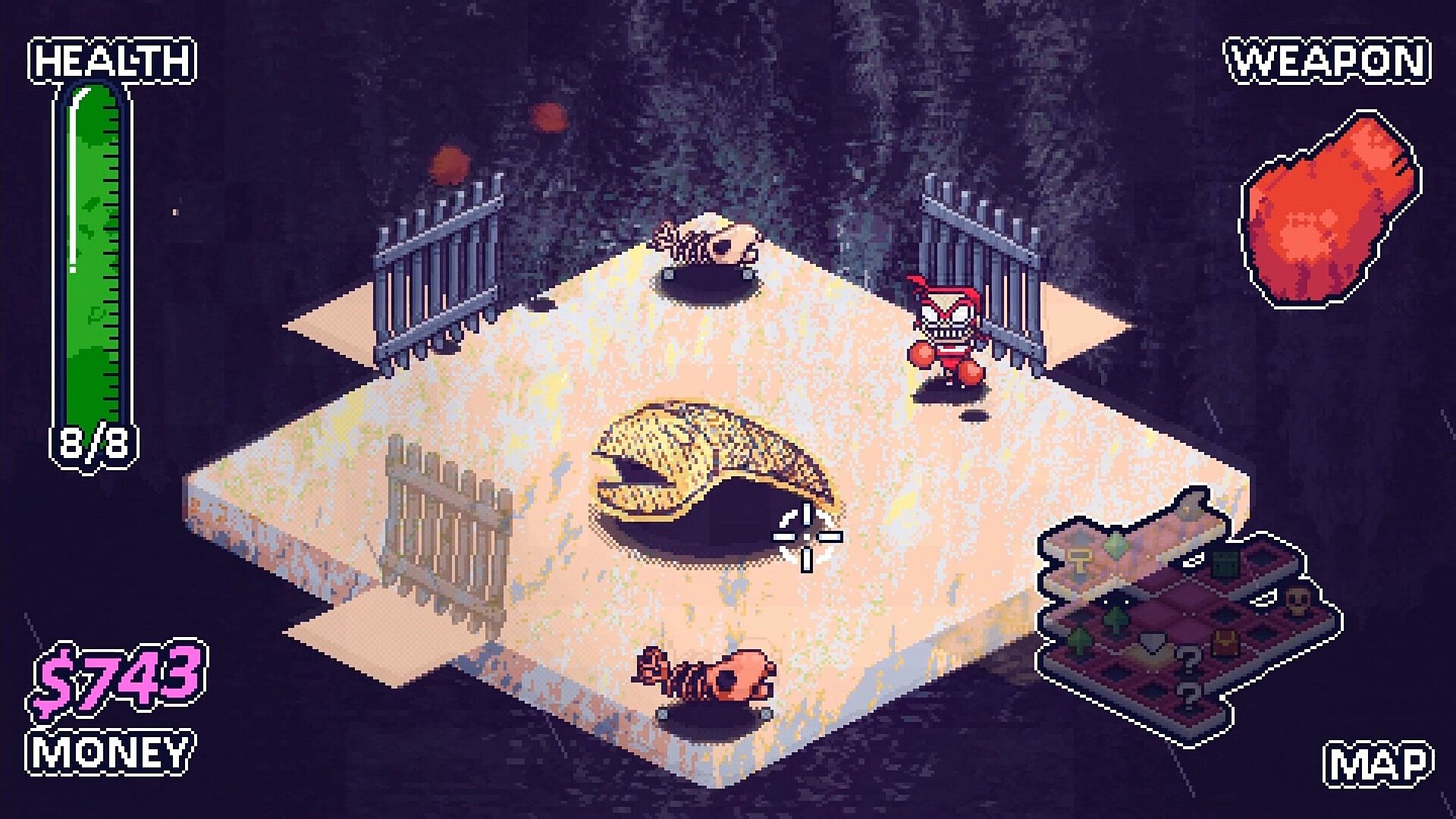
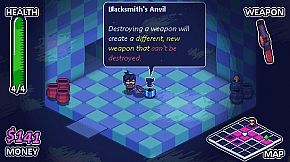
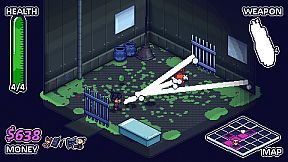
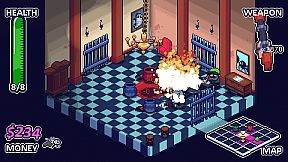
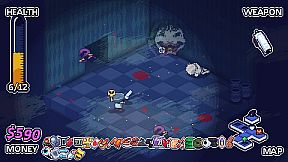
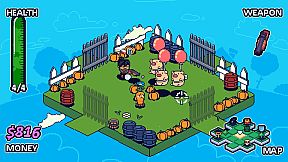
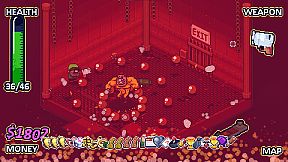
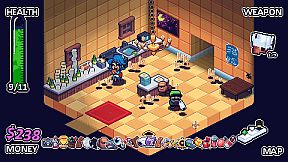
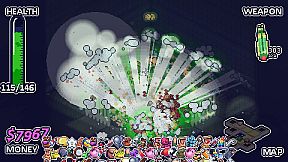
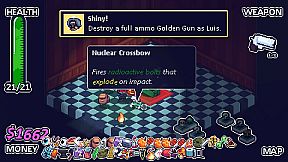
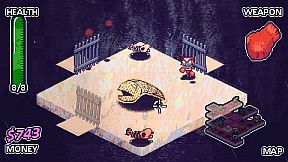
Dead Estate is a roguelike shooter that places players in control of one of ten distinct characters as they fight through the floors of a sprawling, monster-infested mansion. The game blends fast-paced twin-stick shooting with horror themes drawn from Halloween imagery and classic survival titles, creating tense encounters in tight, randomly generated rooms. Each run involves ascending through procedurally arranged floors filled with enemies, collecting weapons and items that alter playstyles on the fly, and reaching a boss encounter before a persistent pursuer forces the player onward.
Gameplay
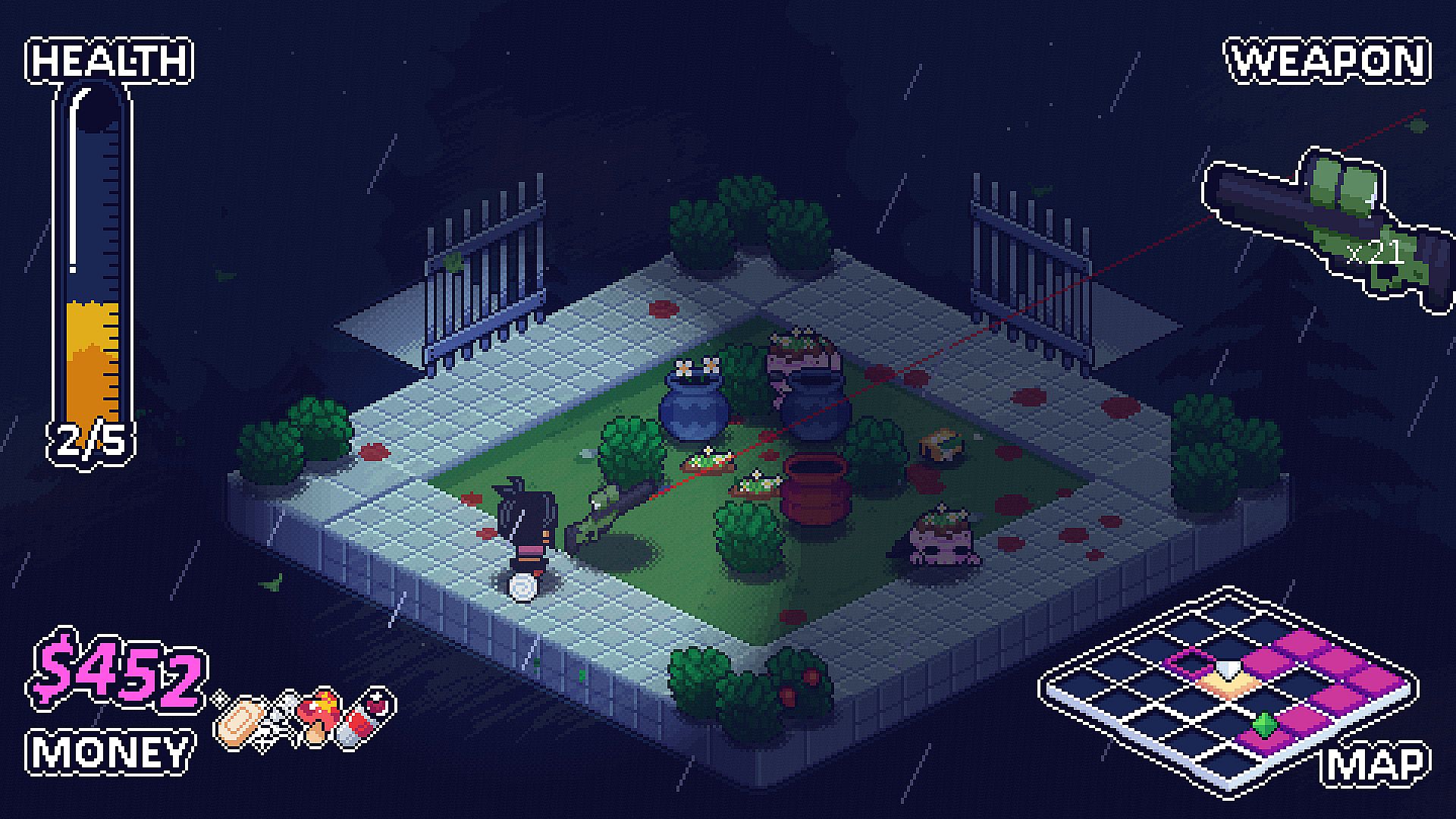
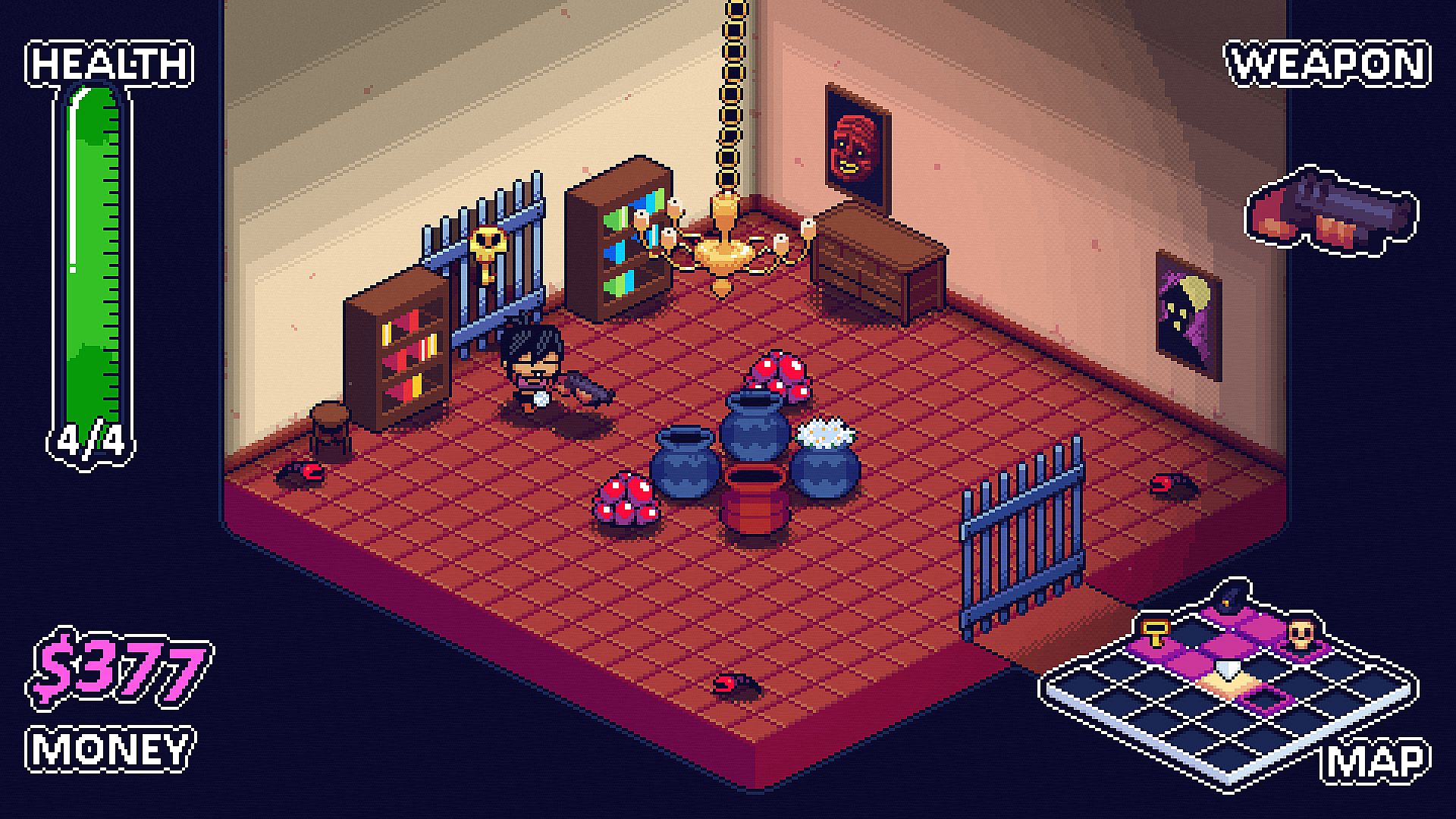
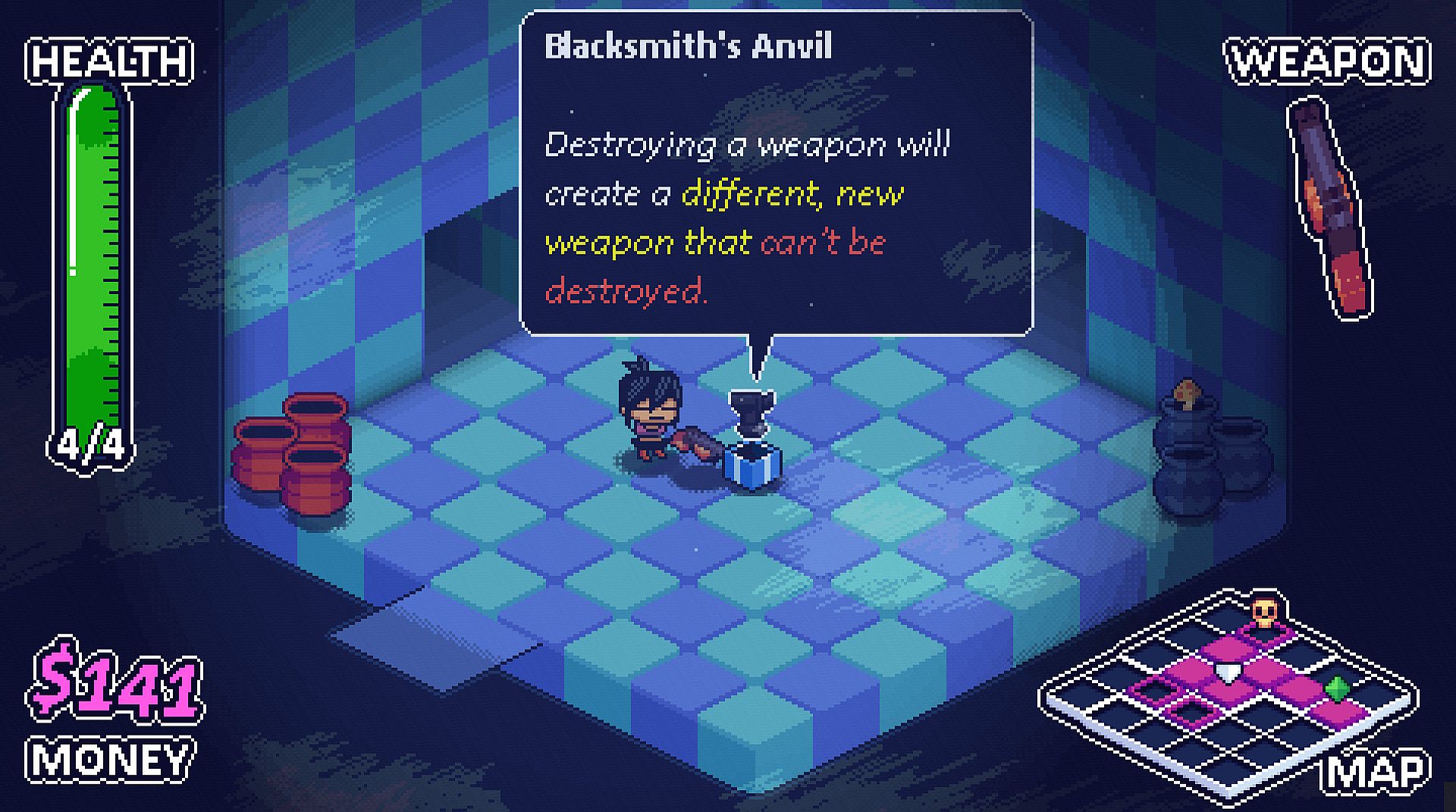
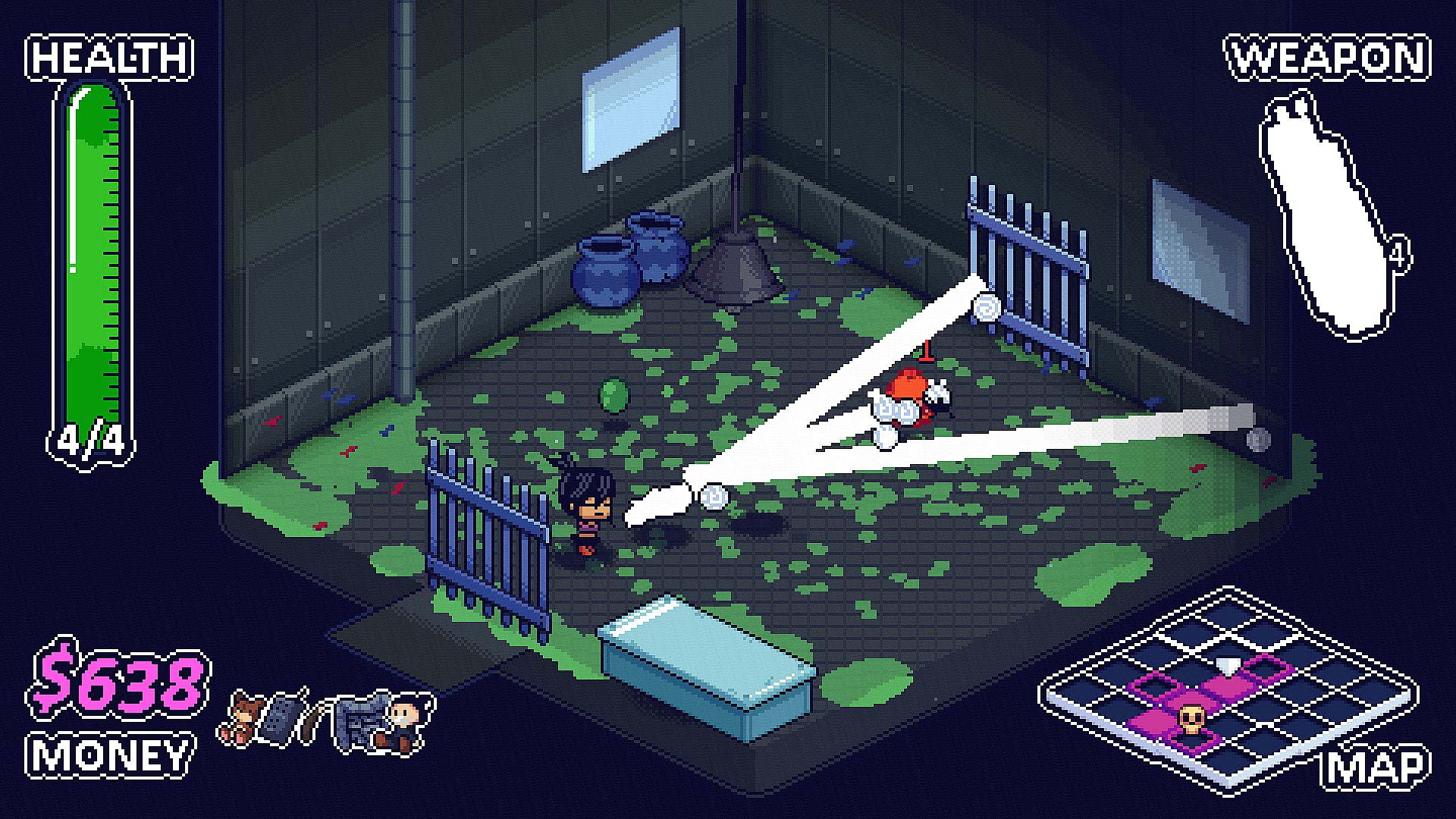
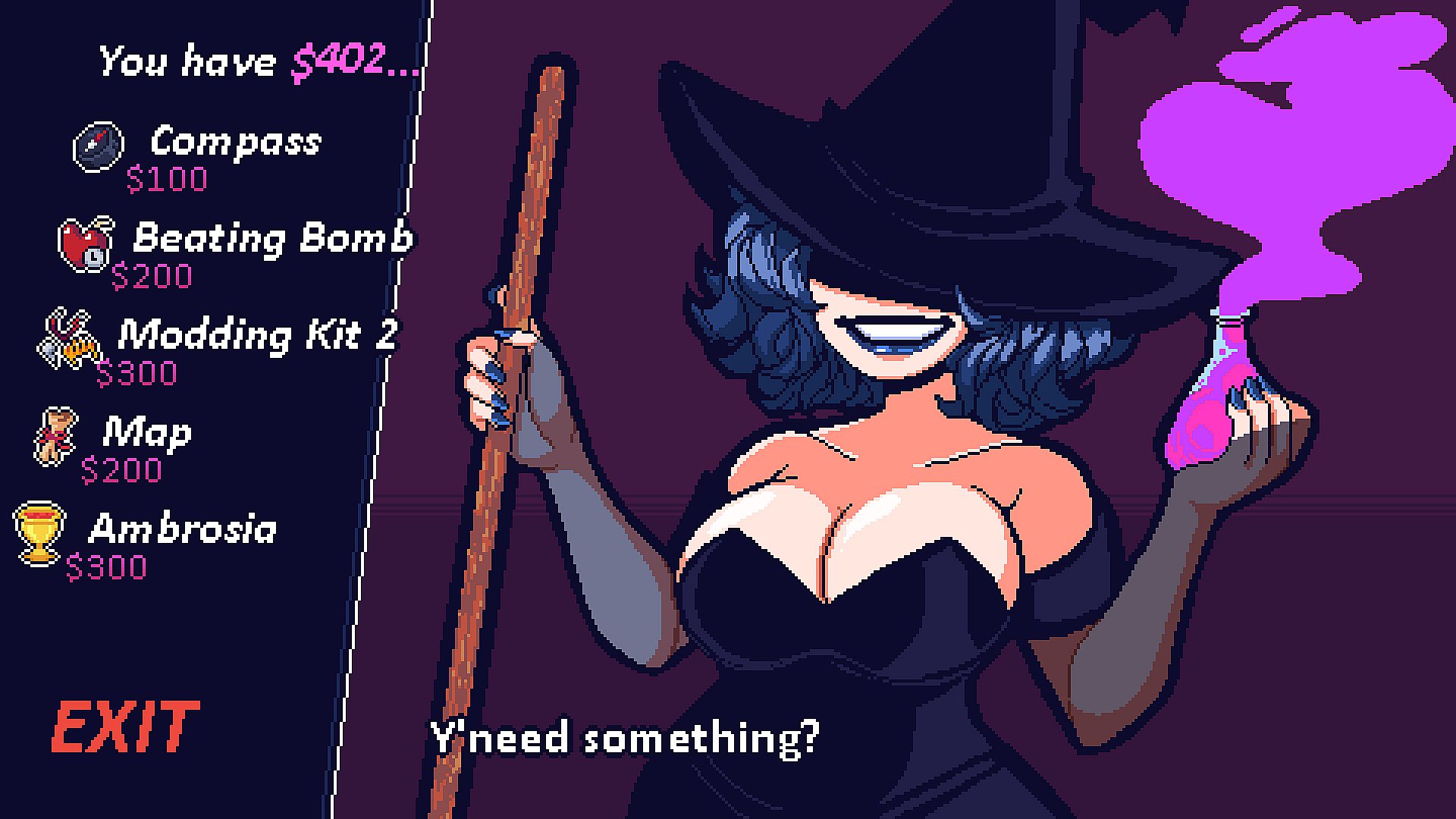
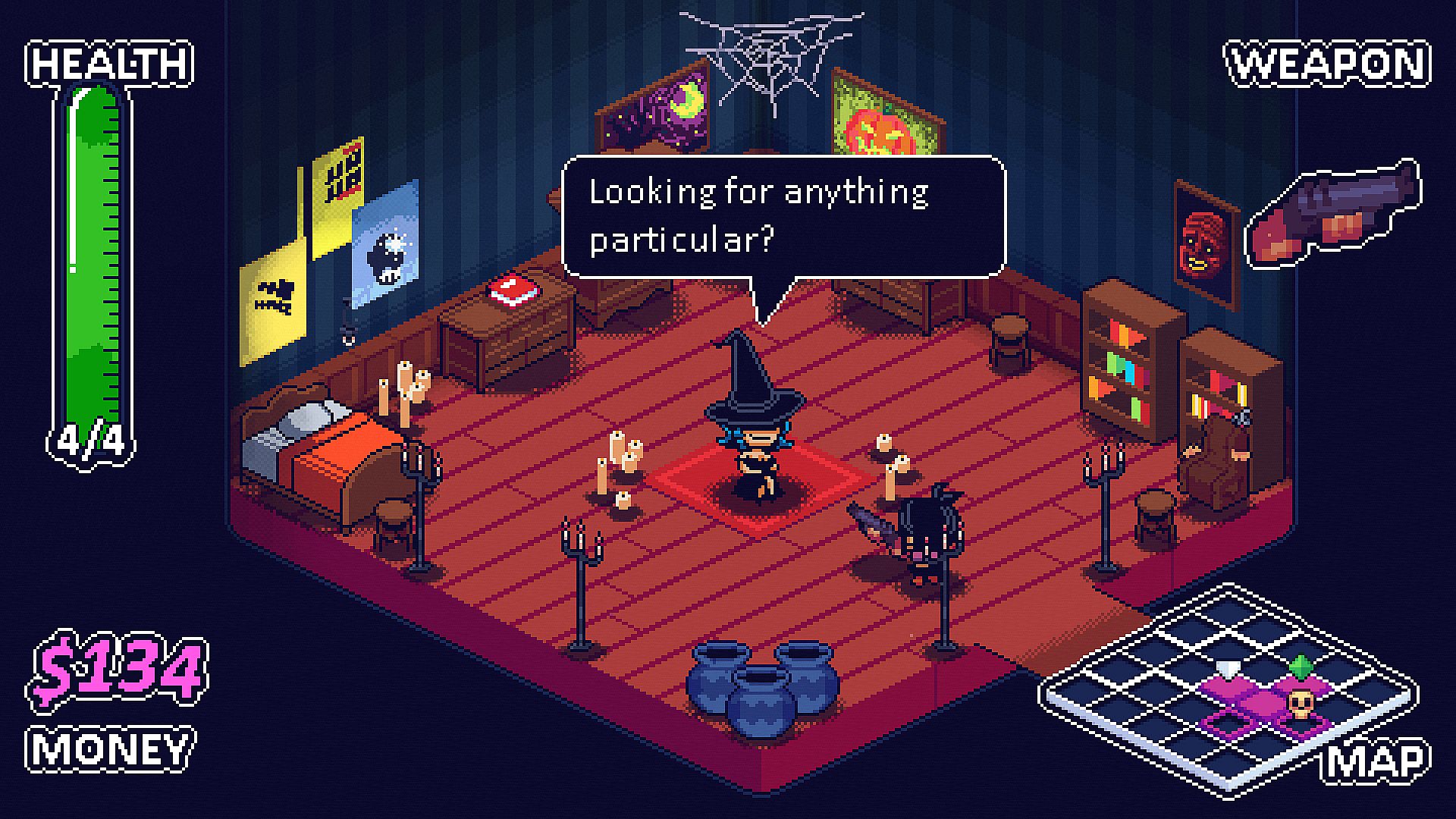
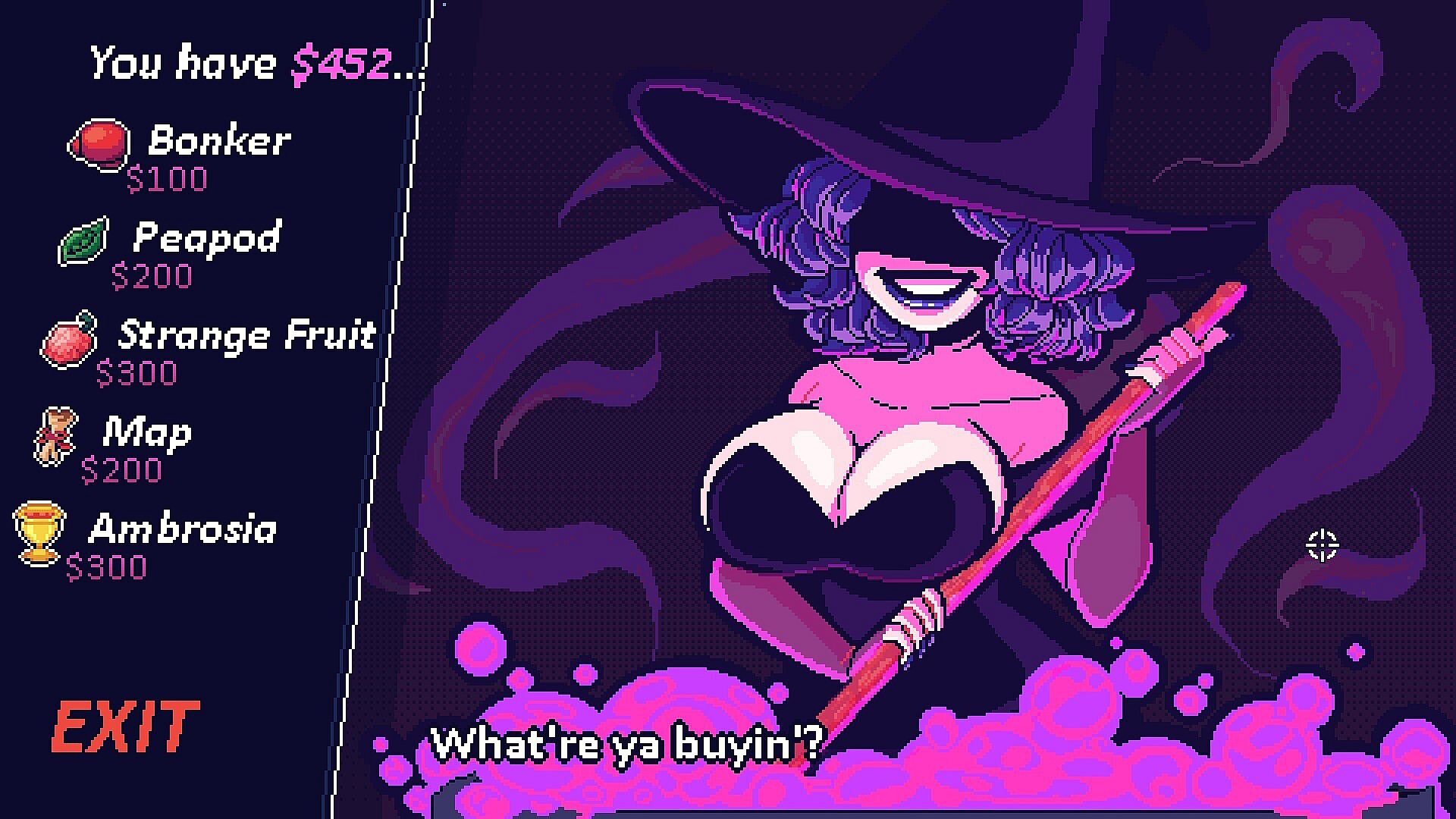
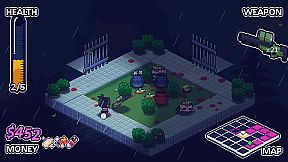
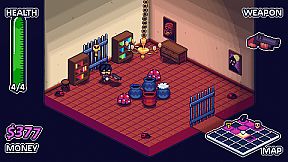
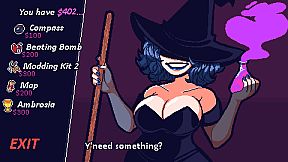
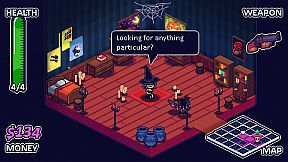
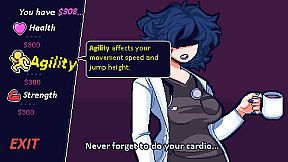
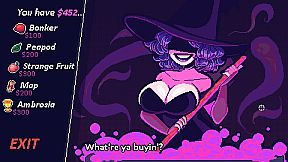
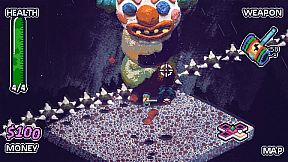
Core gameplay centers on isometric top-down combat where movement and aiming rely on precise controls. Players navigate compact rooms packed with threats, using a starting weapon that has unlimited ammo alongside secondary weapons that consume limited ammunition pools. Items provide temporary or run-specific boosts, while shops scattered across floors offer opportunities to purchase upgrades or new gear. A key pressure comes from Chunks, a mutated creature that appears after extended time on a floor and chases the player until the floor is cleared or the threat is briefly suppressed with concentrated fire.
Floors feature variants and alternate layouts that introduce new enemy types, environmental hazards, and secret rooms whose entrances vanish quickly after entry. The system encourages quick decision-making during runs, as permanent character progression remains minimal and success depends on adapting to whatever combination of weapons and items appears. Difficulty scales through selectable levels and optional modifiers that introduce blessings or curses to each attempt, keeping the focus on skill and immediate adaptation rather than long-term grinding.
Game Modes
The primary experience consists of standard roguelike runs that end upon defeating the final boss or failing midway. Players can extend attempts through looped runs that continue beyond the initial completion for additional challenges. Twenty custom Challenge Runs provide structured variations with specific restrictions or goals that test different approaches to combat and exploration.
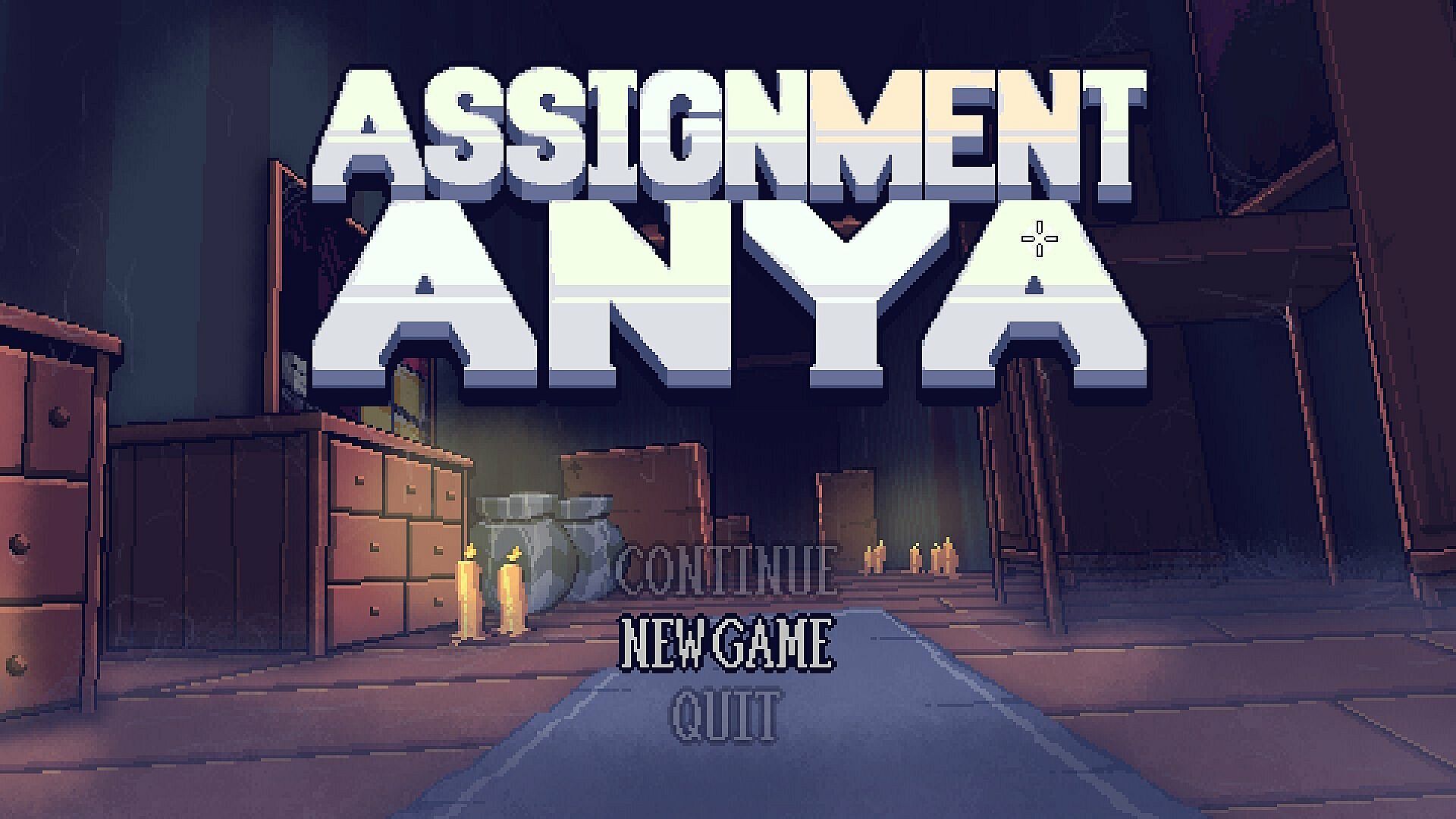
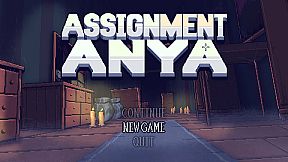
Assignment Anya serves as a standalone campaign separate from the main roguelike structure. This mode shifts toward slower, deliberate survival horror pacing inspired by earlier entries in the genre. Players control Anya, who must navigate the mansion using stealth elements, puzzle-solving, and limited resources after her film crew encounters undead attackers. The campaign occurs before the main story events and emphasizes escape over repeated runs.
Blessing and Curse modifiers further expand options by applying positive or negative effects to entire runs, while varying difficulty settings allow players to adjust the intensity of enemy behavior and resource scarcity.
Characters and Customization
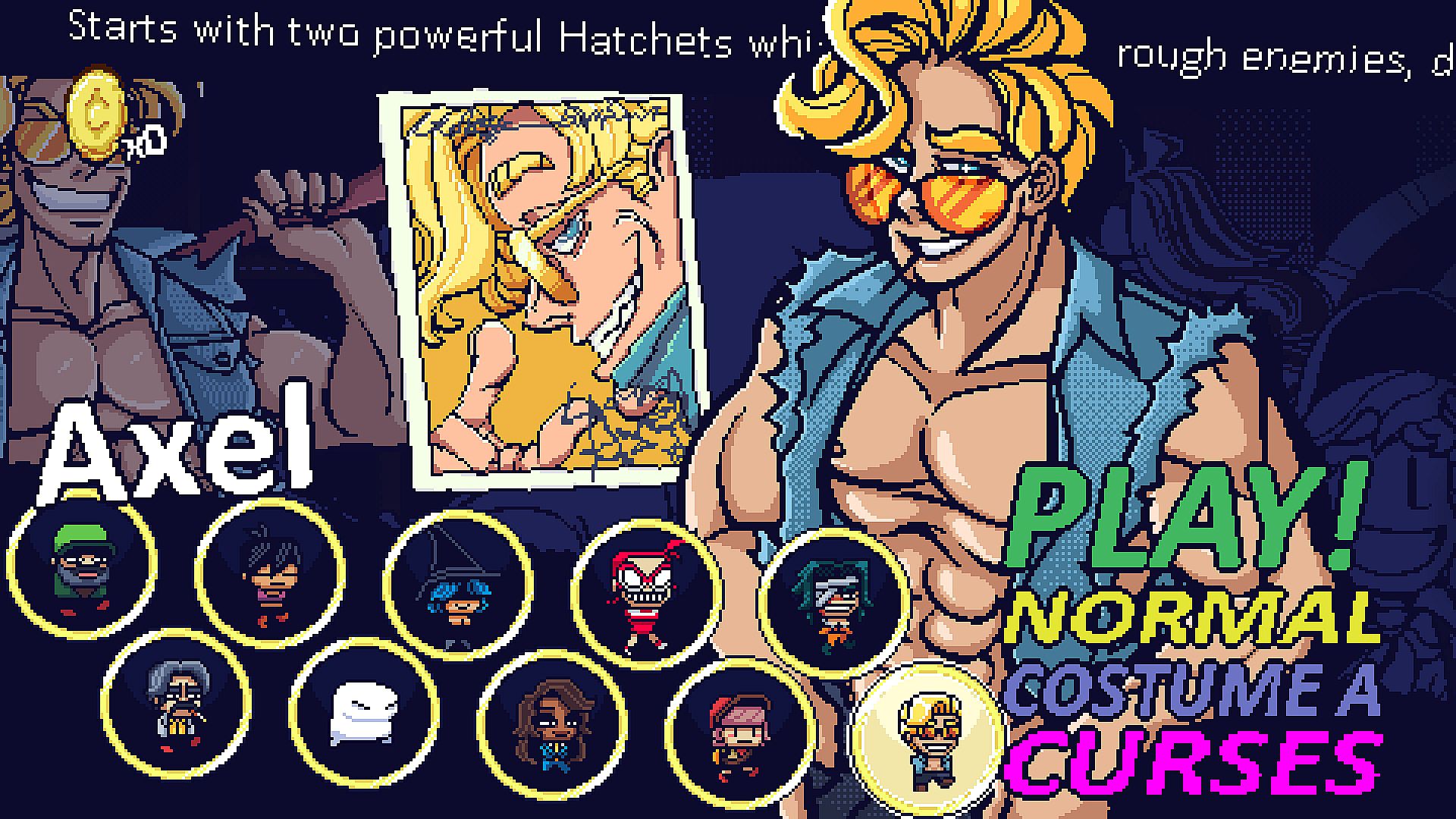
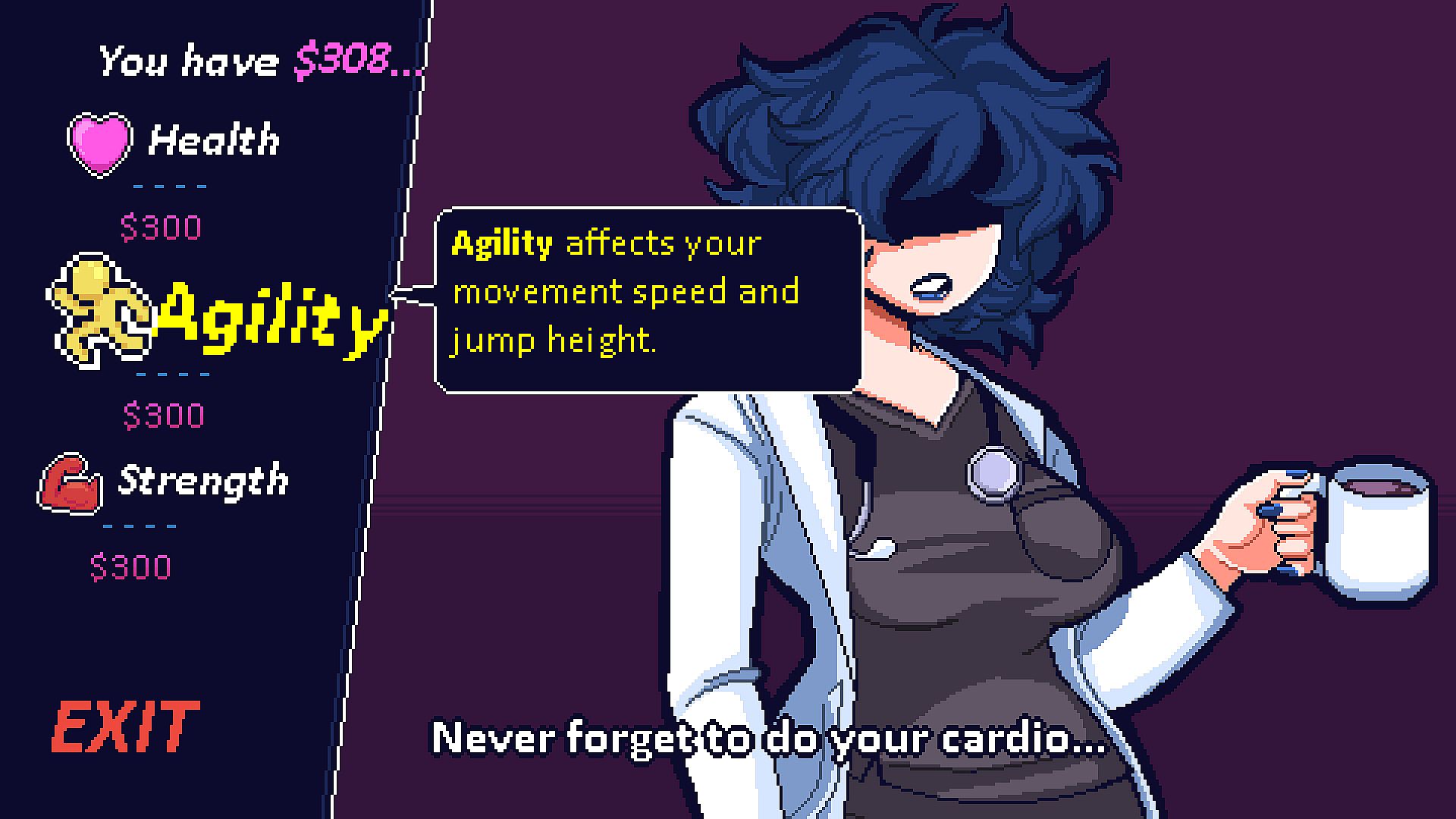
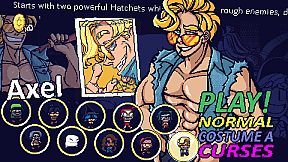
Ten playable characters each bring unique starting weapons, health values, and trade-offs that suit different combat preferences. Four costumes per character provide visual variety without altering mechanics. These options combine with the large pool of 150 weapons and 300 items to produce highly varied runs, where no two attempts feel identical even after dozens of hours.
Exploration rewards discovery of hidden elements that unlock additional content over time. The mansion expands through alternate floors that become accessible after certain conditions are met, leading to multiple endings and deeper layers of the story involving the Valentine family and supernatural forces at work.
Is It Worth Playing?
Dead Estate delivers consistent challenge through its skill-focused design, where each run demands attention to positioning, resource management, and quick reactions in close-quarters fights. The combination of roguelike randomization with horror atmosphere appeals to players who enjoy short, intense sessions that reward practice and experimentation. Recent console releases have expanded availability beyond the original PC version, and ongoing updates have added content since the 2021 launch.
Player feedback highlights the tight controls, creative item interactions, and replay value from the character roster and modifiers. The game suits those seeking a demanding single-player experience with horror themes rather than cooperative or open-world elements. Assignment Anya offers a contrasting slower pace for those interested in narrative-driven survival mechanics. Overall, the title stands out for its focused loop and high degree of variety within a compact scope.














