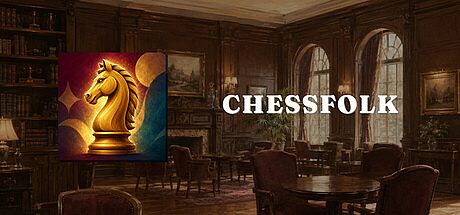


Chessfolk is a strategy chess game for PC that delivers a complete offline experience built around memorable AI opponents instead of online matchmaking. Players engage with a fictional worldwide chess community through detailed rivals, personal rating progression, and flexible time controls without needing an internet connection for the core gameplay.
Gameplay
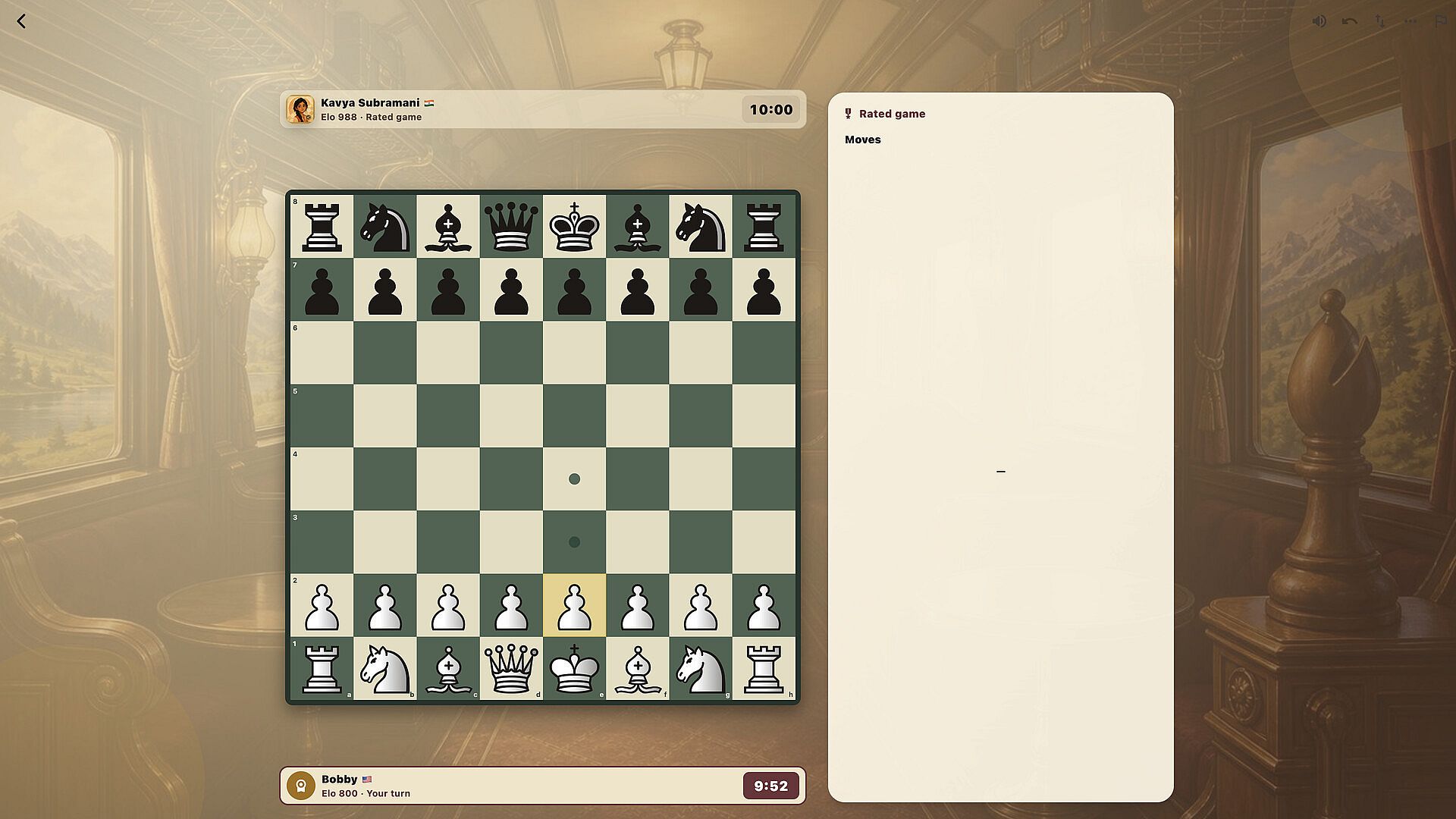
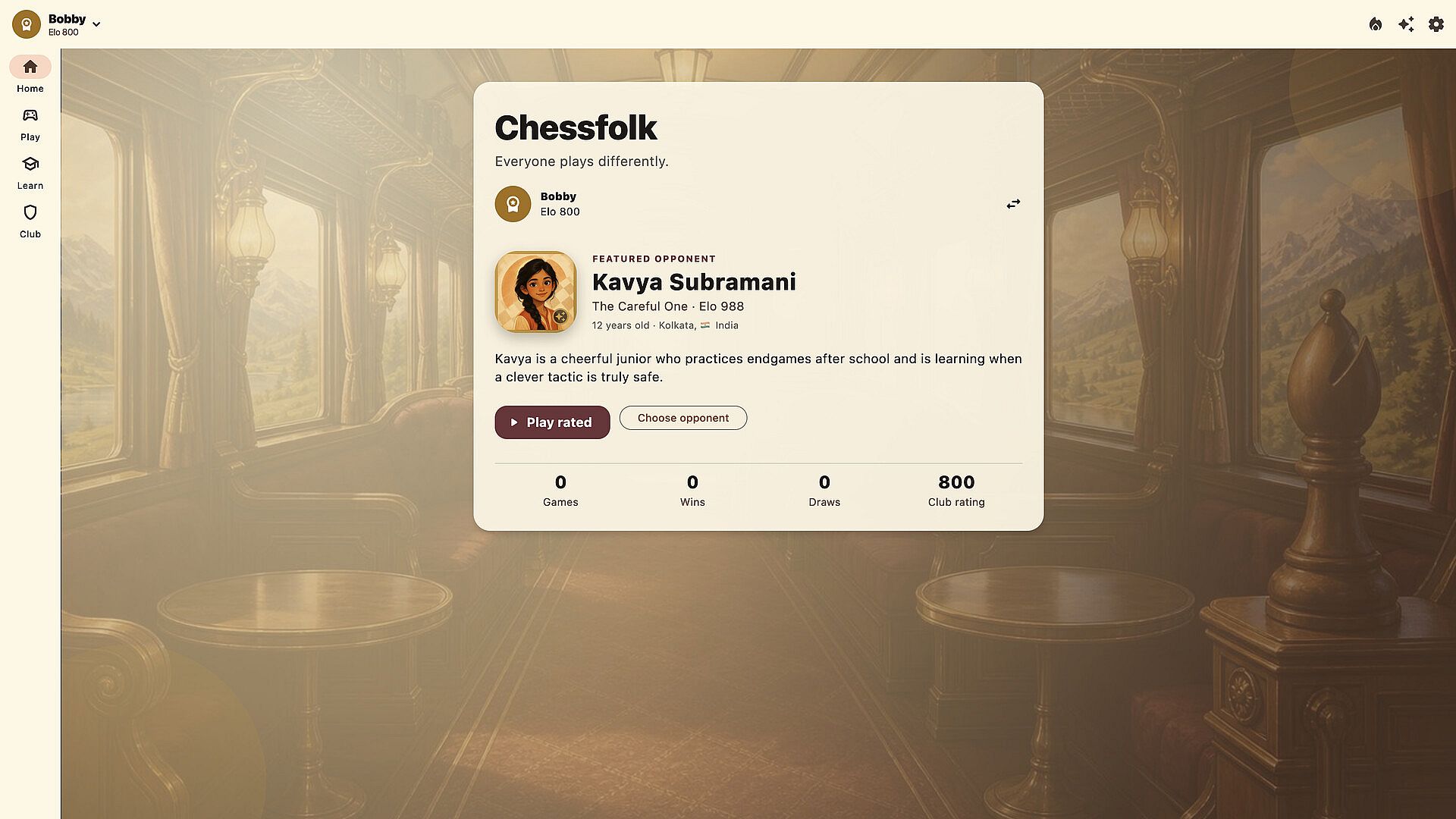
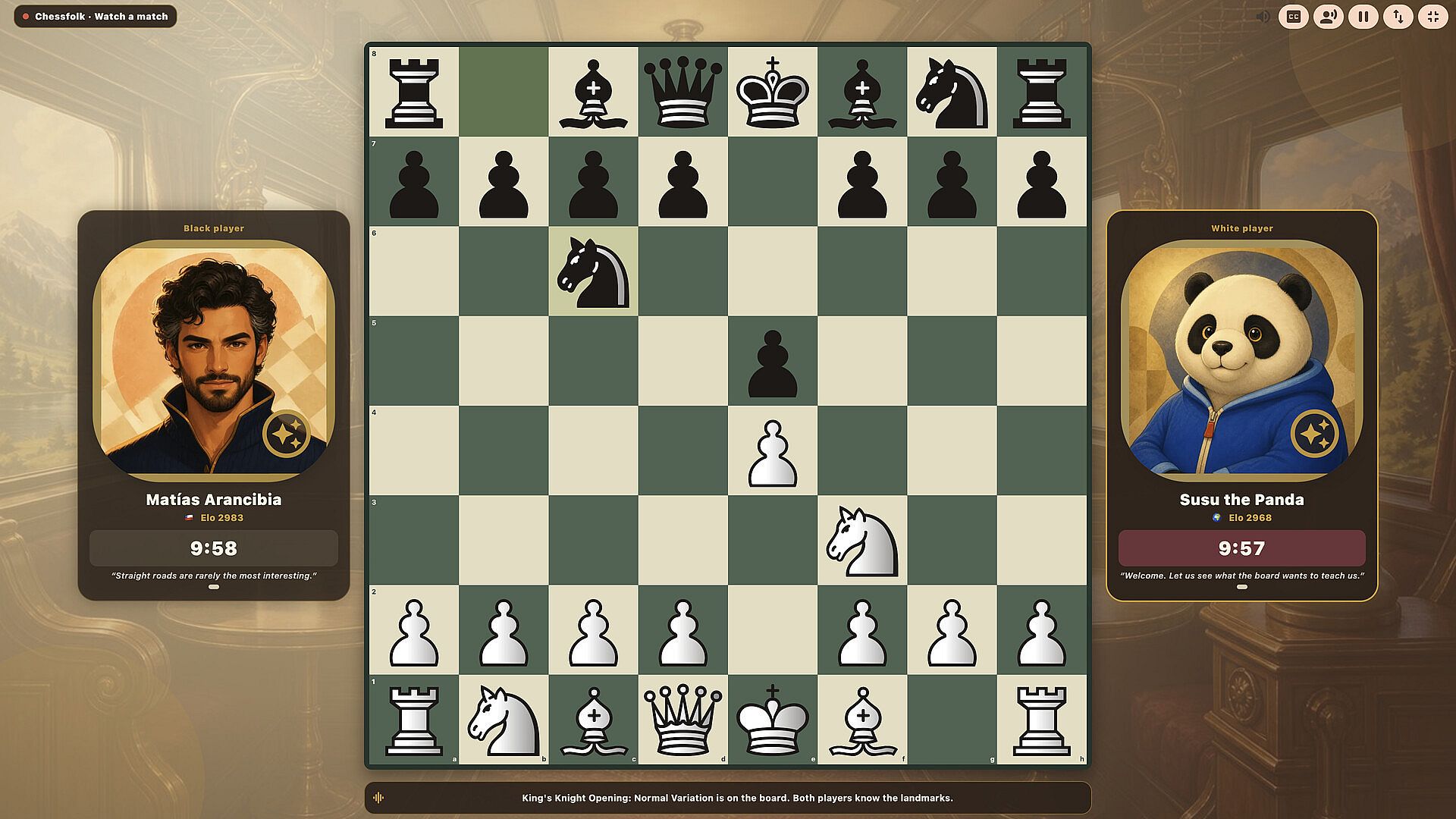
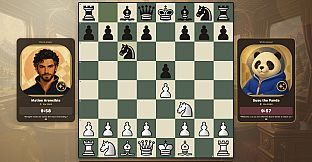
The core loop centers on selecting from more than 300 fictional Chessfolk opponents, each with a unique portrait, country, biography, opening repertoire, personality, and playing style. These rivals range from children learning at local clubs to seasoned masters and even Susu the Panda. Search options by name, nationality, or Elo rating help locate suitable matches, while quick matching suggests fresh opponents near the player's current level. Each AI manages clocks realistically, makes rating-appropriate human mistakes, and adjusts thinking depth in complex positions.
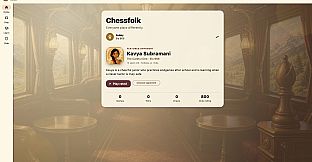
Rated games update a personal Elo rating, with tracking for current, peak, and lowest values. A full match history and rating chart provide insight into progress, including breakdowns by wins, draws, losses, favorite openings, and results across time controls. Multiple local player profiles allow separate ratings and records for different users on the same device. Opponents themselves compete and develop within the dynamic chess universe, adding layers of progression beyond individual matches.
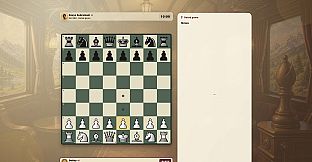
Real chess clocks support bullet, blitz, rapid, classical, increment, delay, custom settings, and official-style multi-period controls. Rated games function as live events where the clock maintains focus and fairness. Hot-seat play enables face-to-face matches with a guest without requiring a second profile, or two saved local players can compete with independent records.
Game Modes
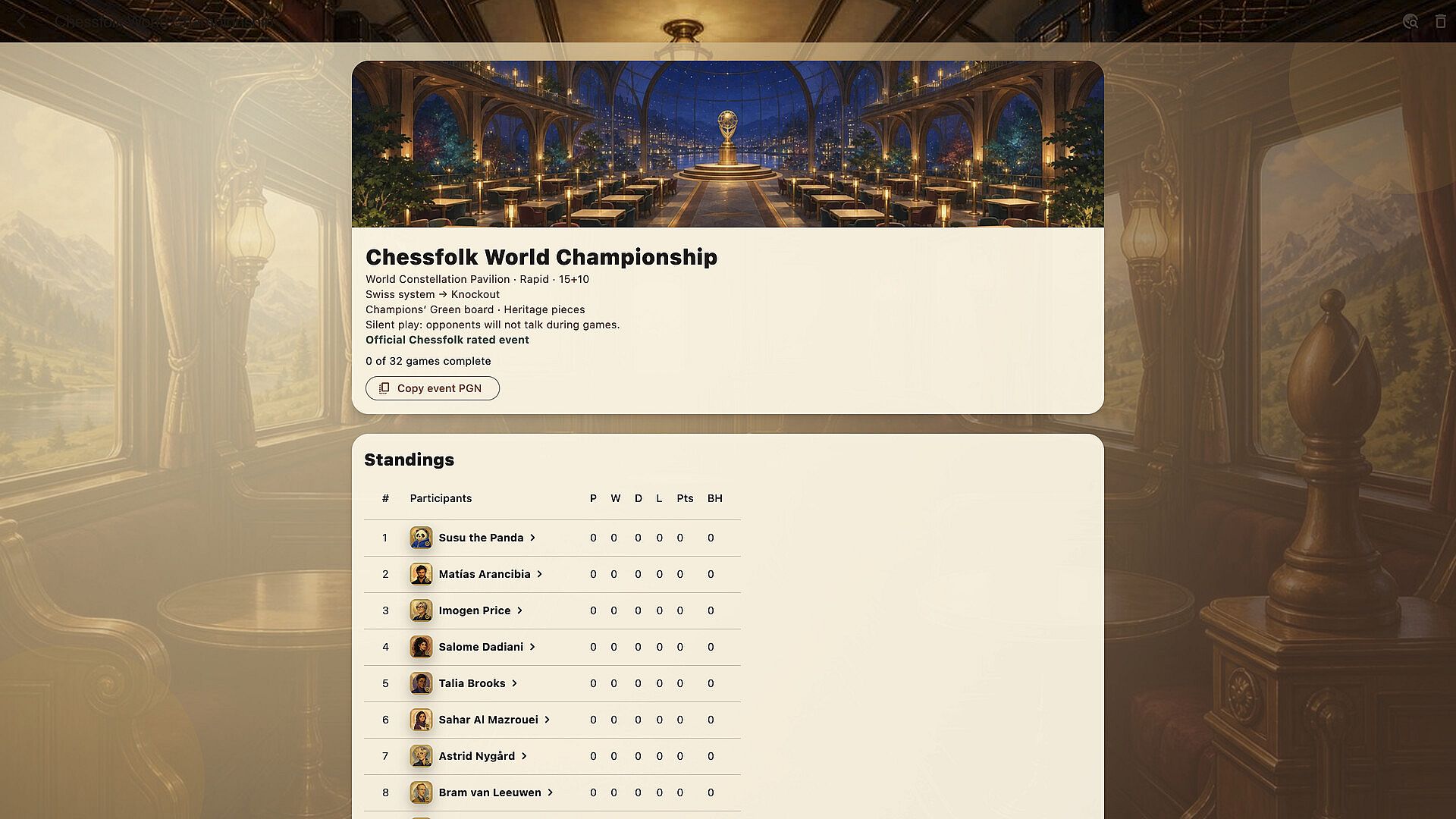
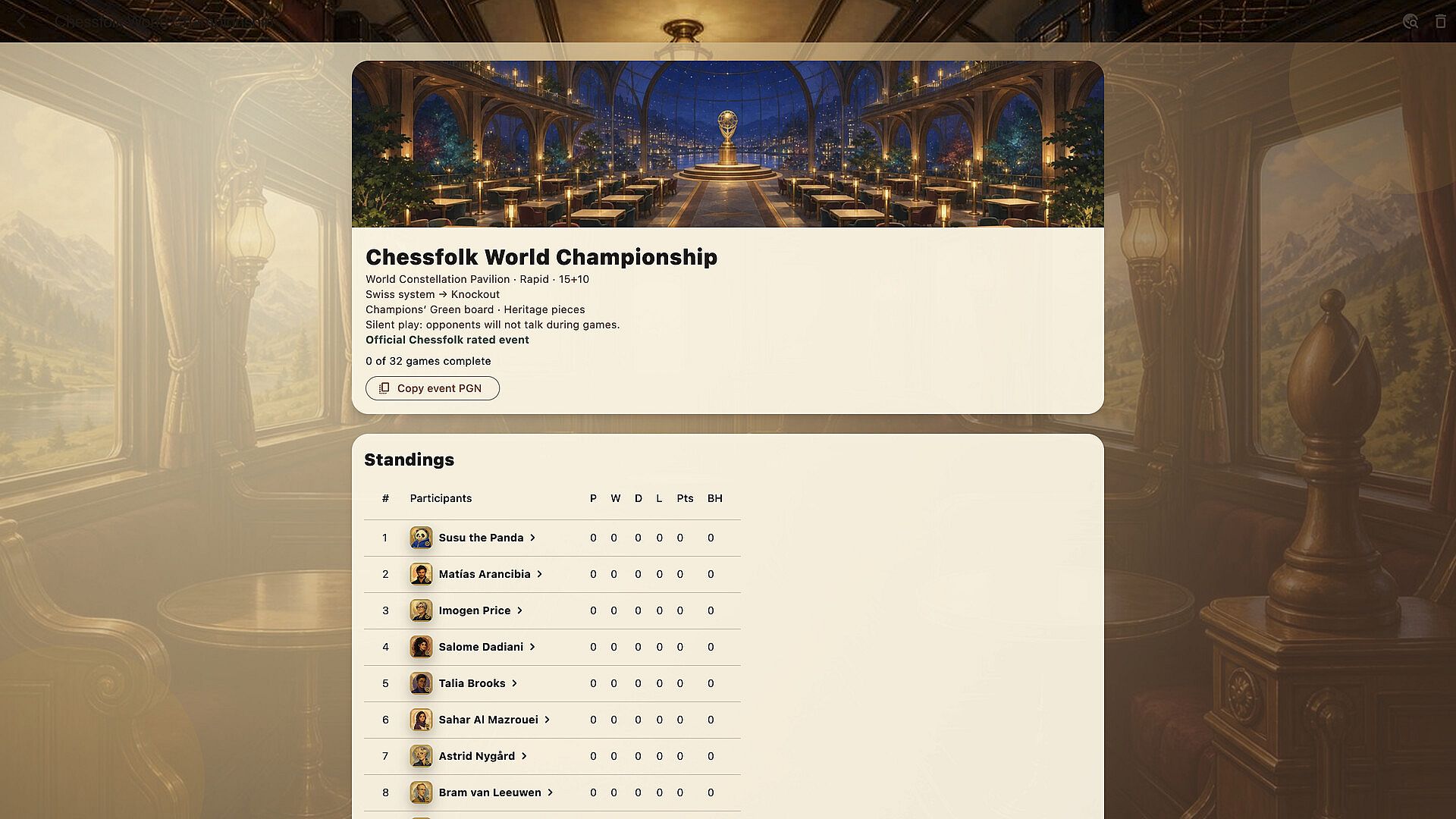
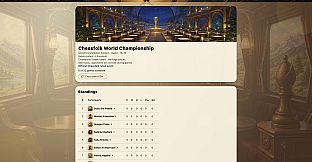
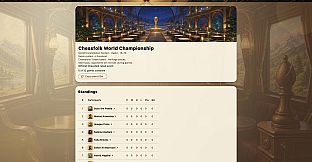
Offline tournaments form a major component, with options for round-robin, Swiss-system, or knockout formats supporting up to 64 players. Fields can be filtered by nationality and Elo, with automatic selection of competitive lineups that vary each time. Swiss pairings follow score-based rules and incorporate Buchholz tiebreaks. Recurring handcrafted events take place at illustrated famous chess venues, and complete tournament history along with PGN records is preserved for review.
Guided lessons feature explanations, animated moves, and tracking of learning progress. A premium opening explorer allows study of named opening branches and common replies. Premium game review analyzes every move in completed games, highlighting key moments and labeling strong moves, inaccuracies, mistakes, missed chances, and blunders while removing ads.
Additional tools include PGN import with comments and variations, export of completed games and tournaments, saving games for later study, custom legal board positions for play from any setup, and replay options that keep the final checkmate position visible. Opening names and material advantage display during play for ongoing reference.
Customization and Exploration
Board and piece themes can be switched even mid-game, ranging from classic tournament styles to playful Chessfolk designs that maintain clarity. The Chess Set Workshop supports importing individual piece artwork, assembling personal sets, and exporting the complete portable set for sharing. The Hall of Fame provides biographies and nationalities of undisputed World Champions alongside curated memorable games available for replay.
These elements combine the depth of traditional chess software with the atmosphere of a fictional global chess club. Whether building opening knowledge, preparing for tournaments, or simply enjoying quiet matches, the system supports varied approaches to improvement and enjoyment.
Is It Worth Playing?
Chessfolk suits players who prefer consistent offline access and character-driven AI over random online opponents. The emphasis on unique rival personalities, Elo tracking, varied time controls, and tournament structures creates a self-contained progression system that rewards repeated play. Tools for analysis and customization further support skill development without external dependencies. Those seeking a chess experience focused on personal records, human-like competition, and flexible pacing will find the features align closely with dedicated practice and casual enjoyment alike.