
















Catch a Cheater by the Hand is a strategy and casual card game for PC that combines familiar card and tile games with mechanics centered on cheating, observation, and accusation. Players compete to win money while managing risks tied to rule-bending actions and the consequences of being caught or making false accusations.
Gameplay
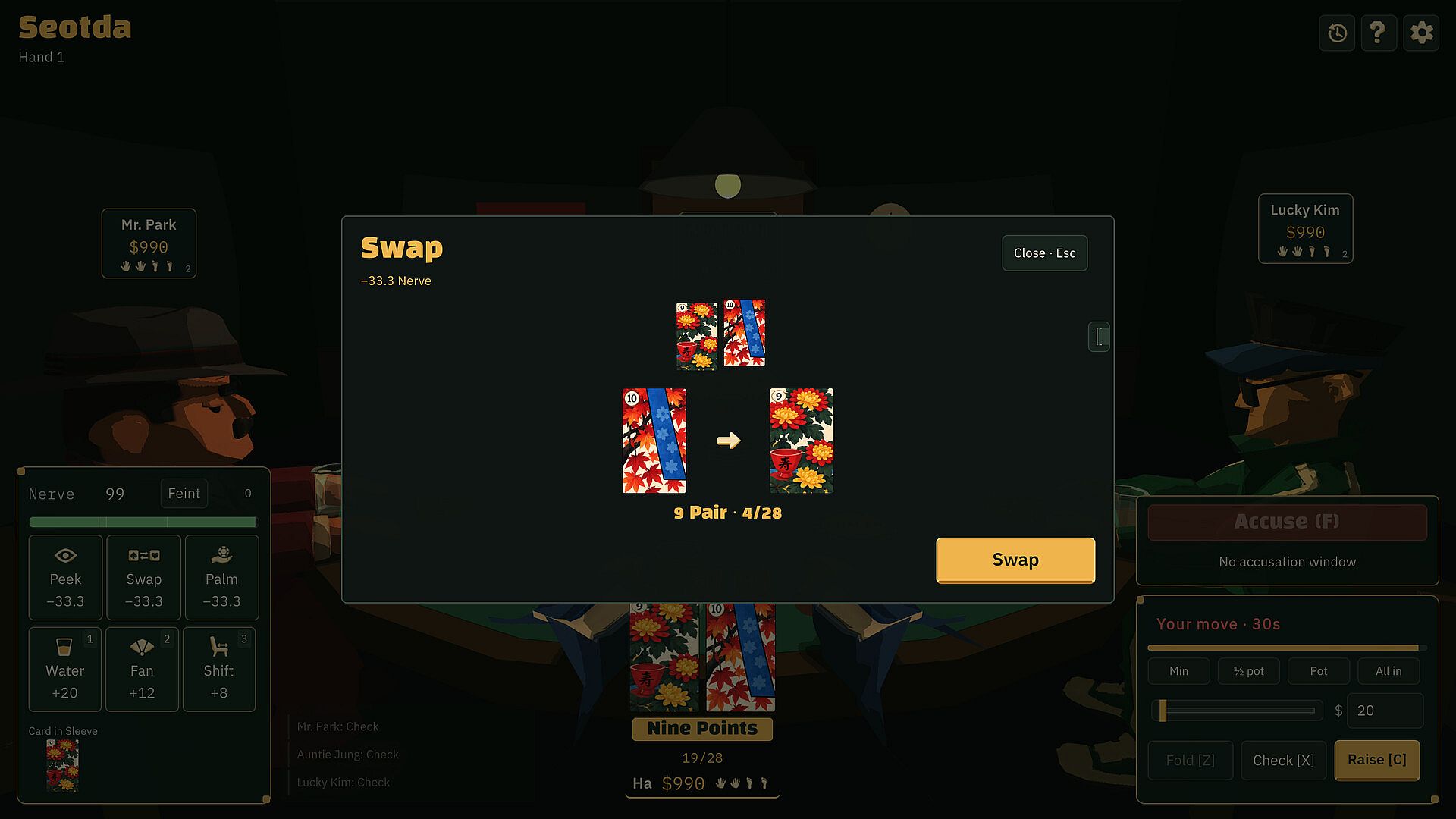
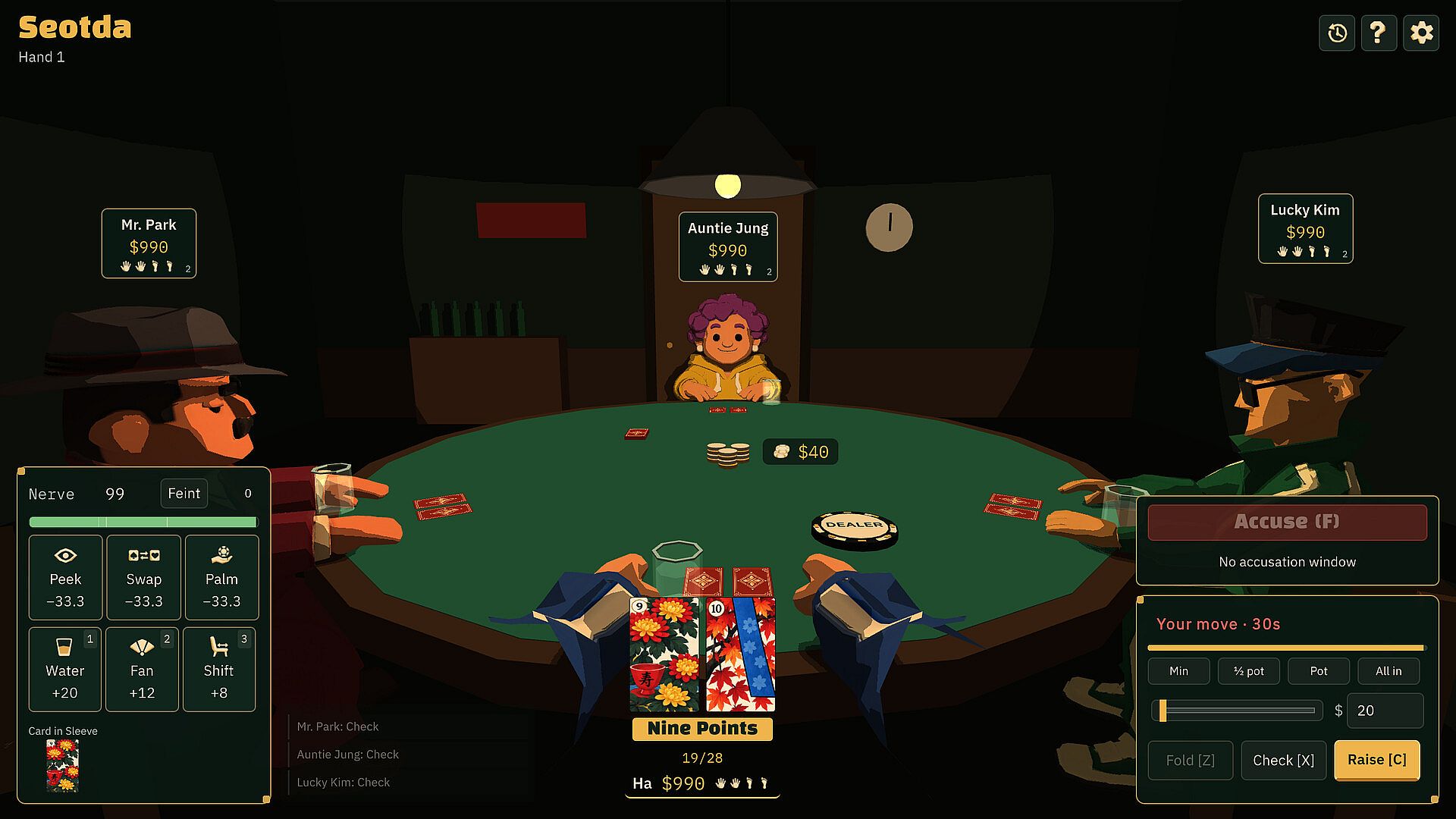
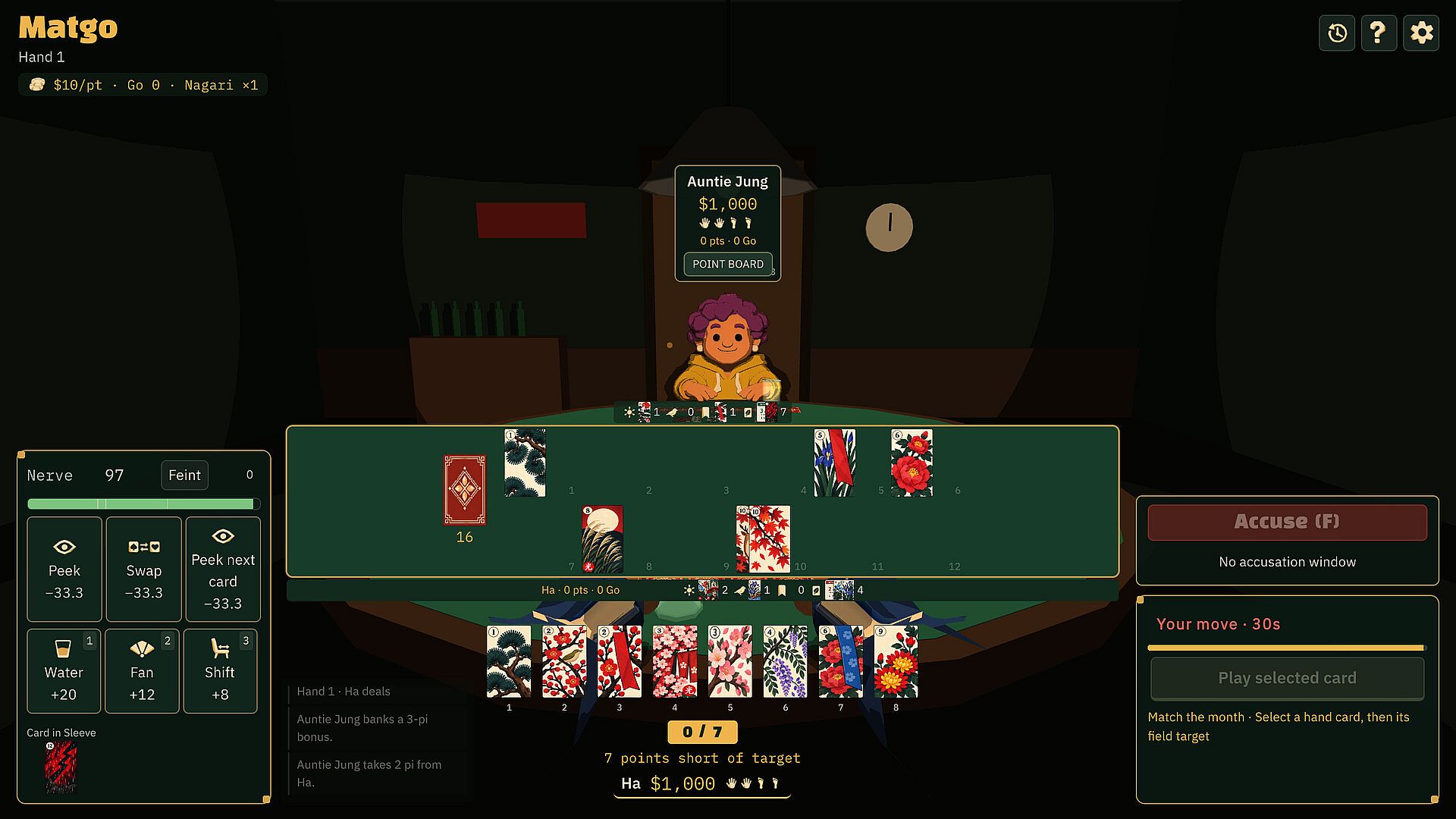
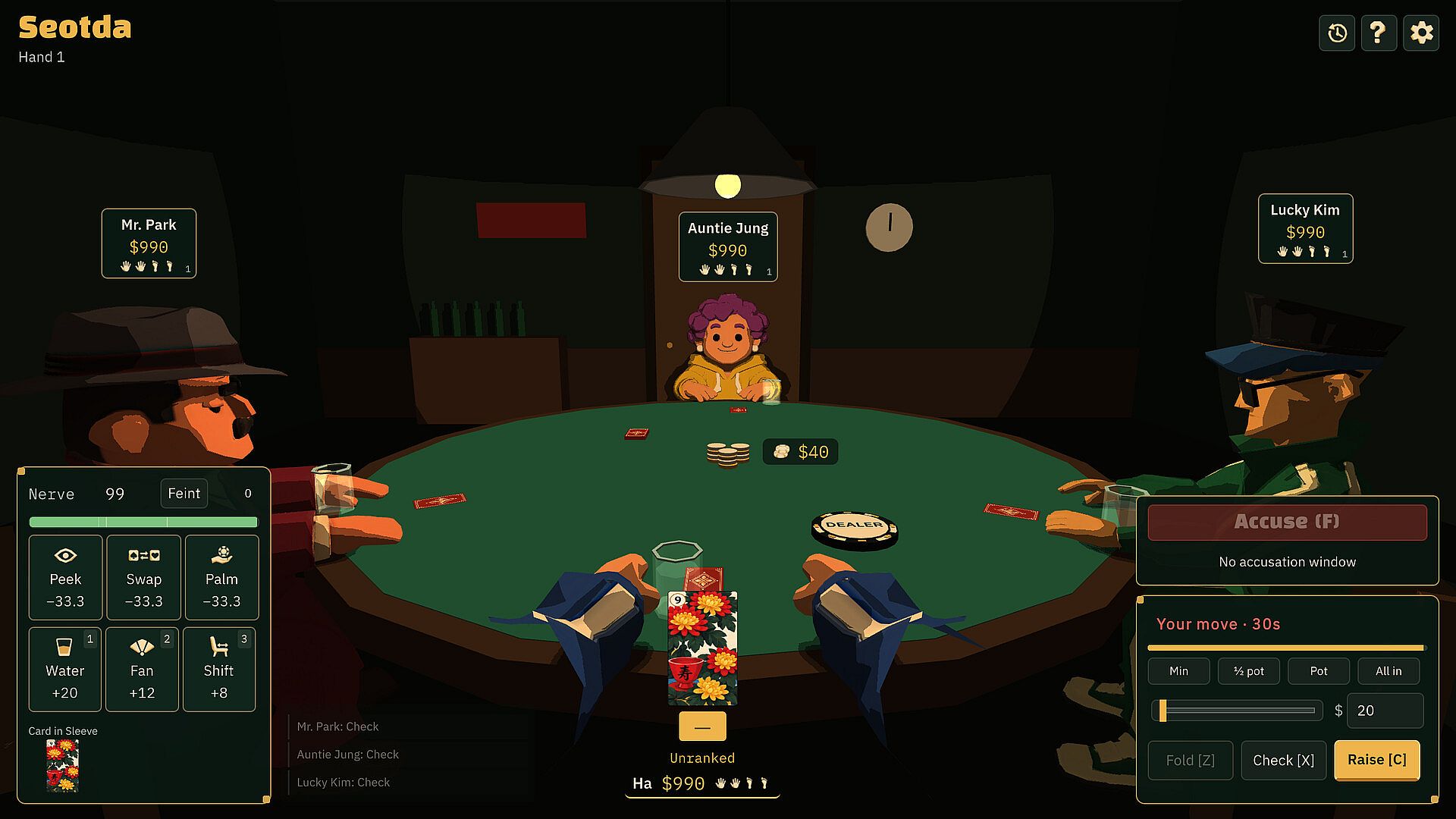
The core loop revolves around standard card play mixed with opportunities to cheat in ways specific to each game. Actions such as peeking at a rival's hand or the next card in the stock, swapping a card from a sleeve, palming chips from the pot, or stacking the deal as the dealer provide edges but reduce Nerve. Lower Nerve makes hands shakier and harder to conceal from opponents.
Recovery options include taking a drink, using a fan, or shifting in a chair, though these visible actions can draw attention. Success depends on balancing aggressive plays with composure management while monitoring opponents for tells like glances at hands, sleeve movements, or chip pile activity. These signals might indicate real cheating or serve as deliberate feints to provoke mistaken calls.
Calling out a suspected cheater puts the accused player's bankroll and a limb at risk through the Axe Man. Incorrect accusations shift the penalty to the accuser instead. The system encourages careful reading of the room alongside card strategy.
Game Modes
Nine distinct games form the playable options, each adapting the same cheating and accusation framework to its ruleset. Texas Hold'em and Five-card Draw focus on poker-style hand building with peeking and sleeve swaps available. Blackjack emphasizes dealer stacking and chip handling during rounds.
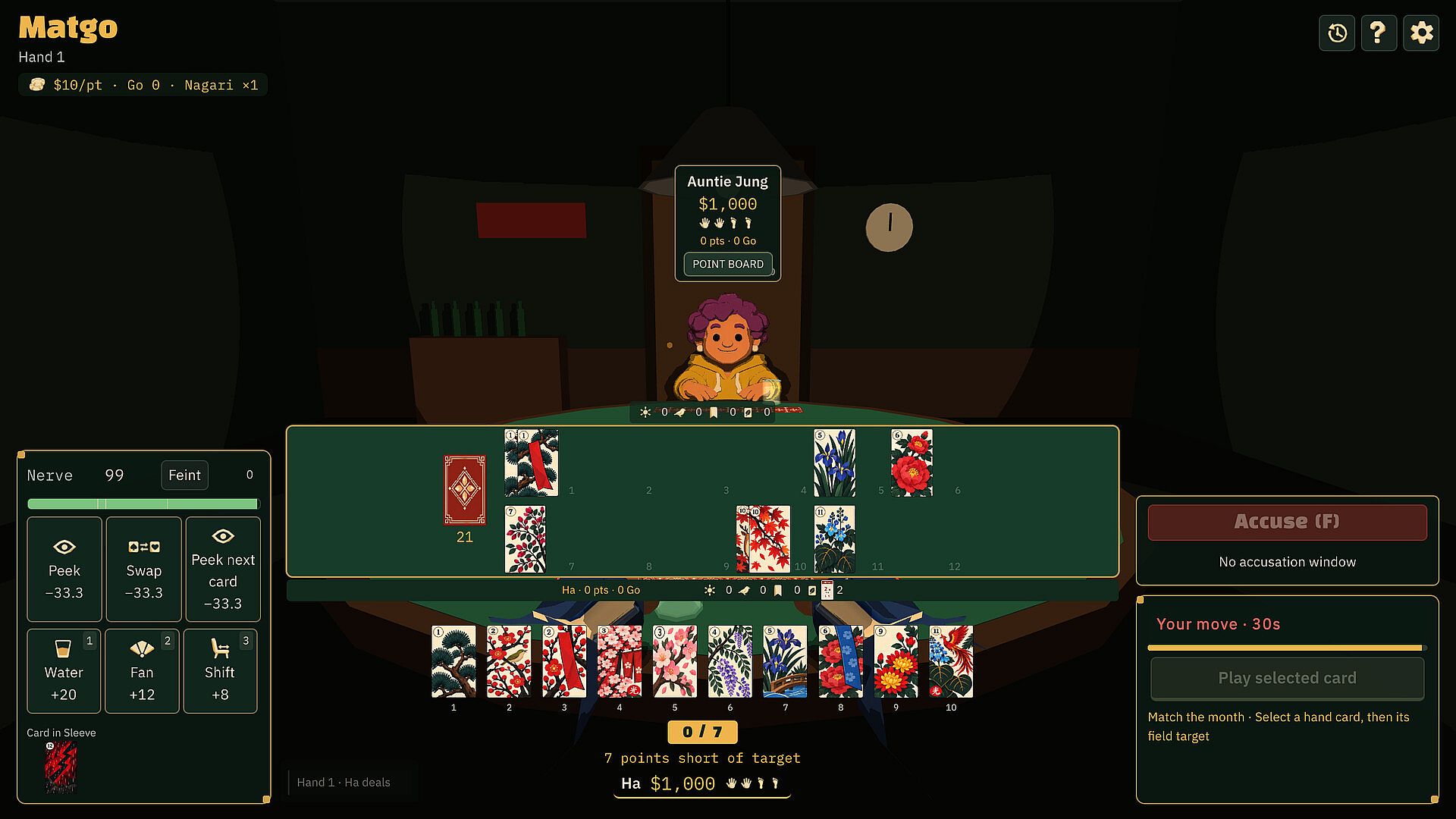
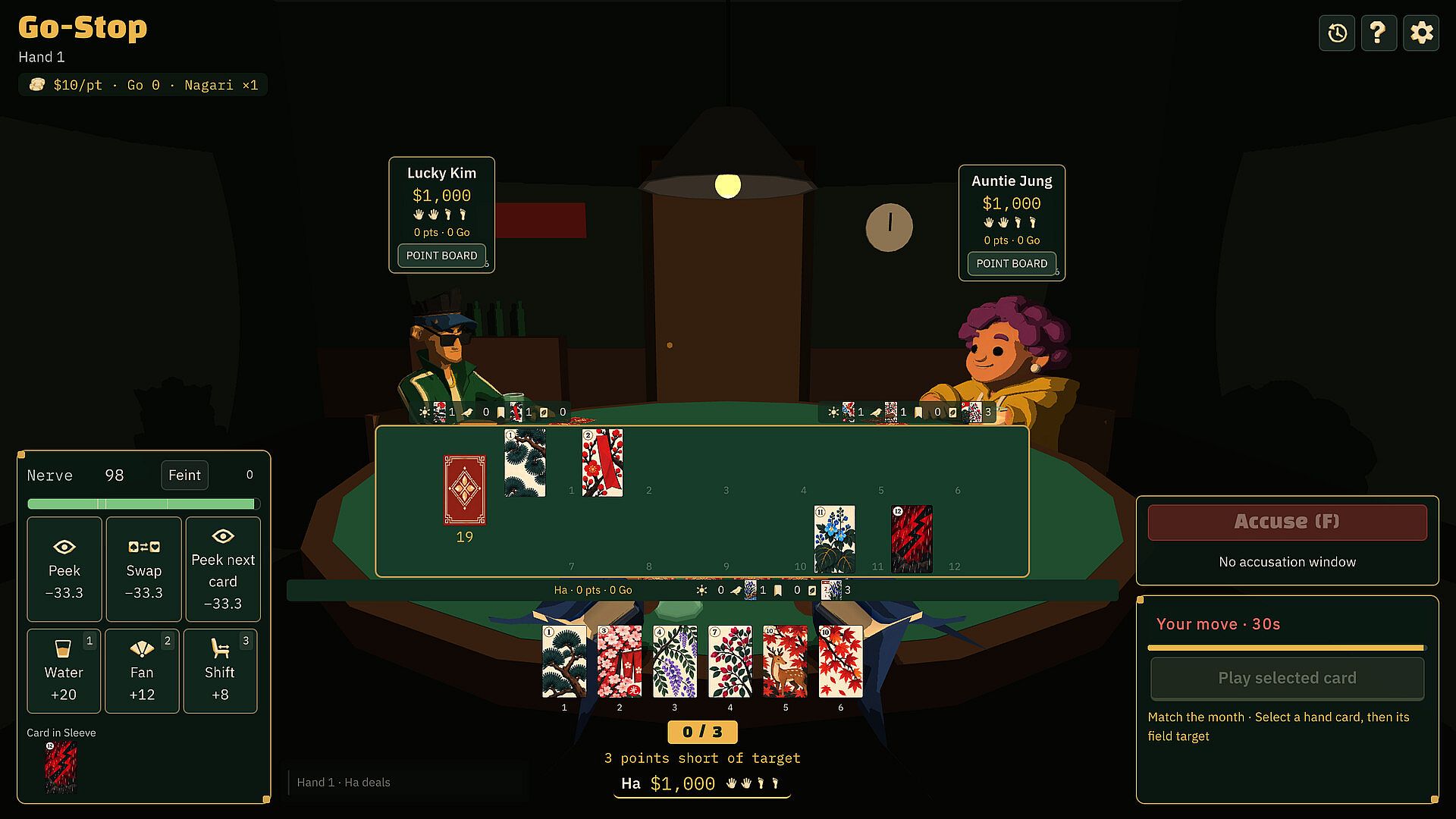
Seotda, Matgo, and Go-Stop introduce Korean Hwatu card mechanics where timing of cheats and tells shifts based on suit and point values. Mahjong brings tile-based decisions with opportunities to manipulate draws or discards. Big Two and BS add fast-paced shedding and bluffing elements that reward precise observation of opponent movements.
Each game maintains the shared tension of winning the pot while avoiding detection or erroneous calls that cost limbs. Single-player and multiplayer support allow practice against AI or competition with others.
Cheating Mechanics and Risk Management
Cheats vary by game but consistently trade short-term advantage for Nerve depletion. Peeking reveals information without immediate detection risk, while physical actions like sleeve swaps or chip palming require steady hands that degrade as Nerve drops. Recovery methods restore composure yet create new tells that observant players can exploit.
Accusation decisions hinge on accumulated evidence from observed behaviors. A successful call claims the opponent's bankroll and risks their limb, while failure applies the same stakes to the caller. The Axe Man enforces penalties without further debate, adding permanent consequences to misreads.
Is It Worth Playing?
The game targets players who enjoy card games with added layers of bluffing, risk assessment, and social deduction. Its blend of nine established games under one cheating and accusation system offers variety without requiring mastery of entirely new rulesets. Availability on PC with single-player and multiplayer options suits both solo sessions and group play.
Since the title remains in development with a coming soon status and no user reviews available yet, potential buyers should monitor release updates for final balance and feature confirmation. Those drawn to strategy titles that reward close attention to opponents alongside card skill will find the core loop aligned with that preference. Casual players seeking lighter experiences may appreciate the familiar game bases, while those preferring pure competition without hidden actions might prefer standard card titles.