

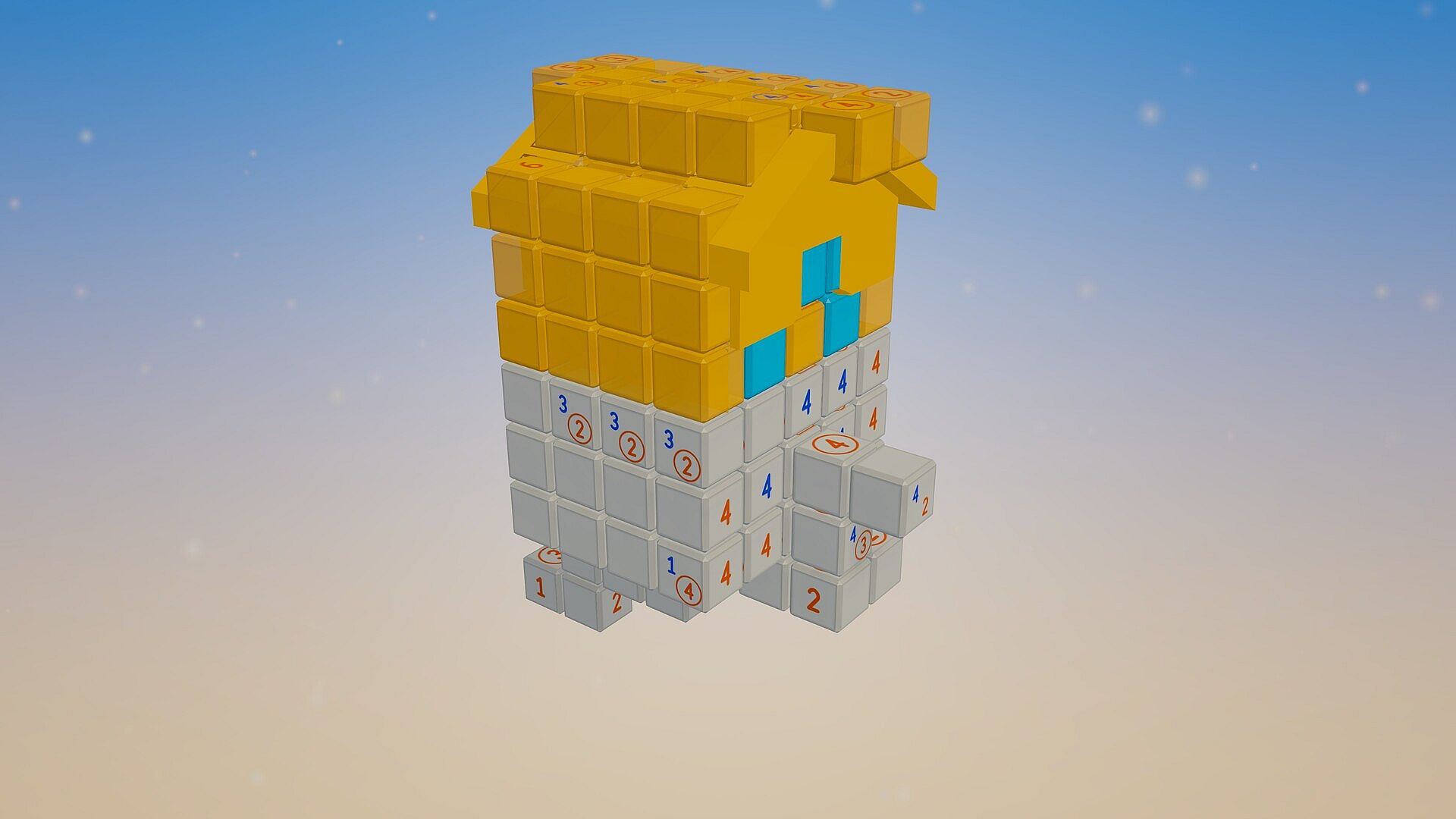
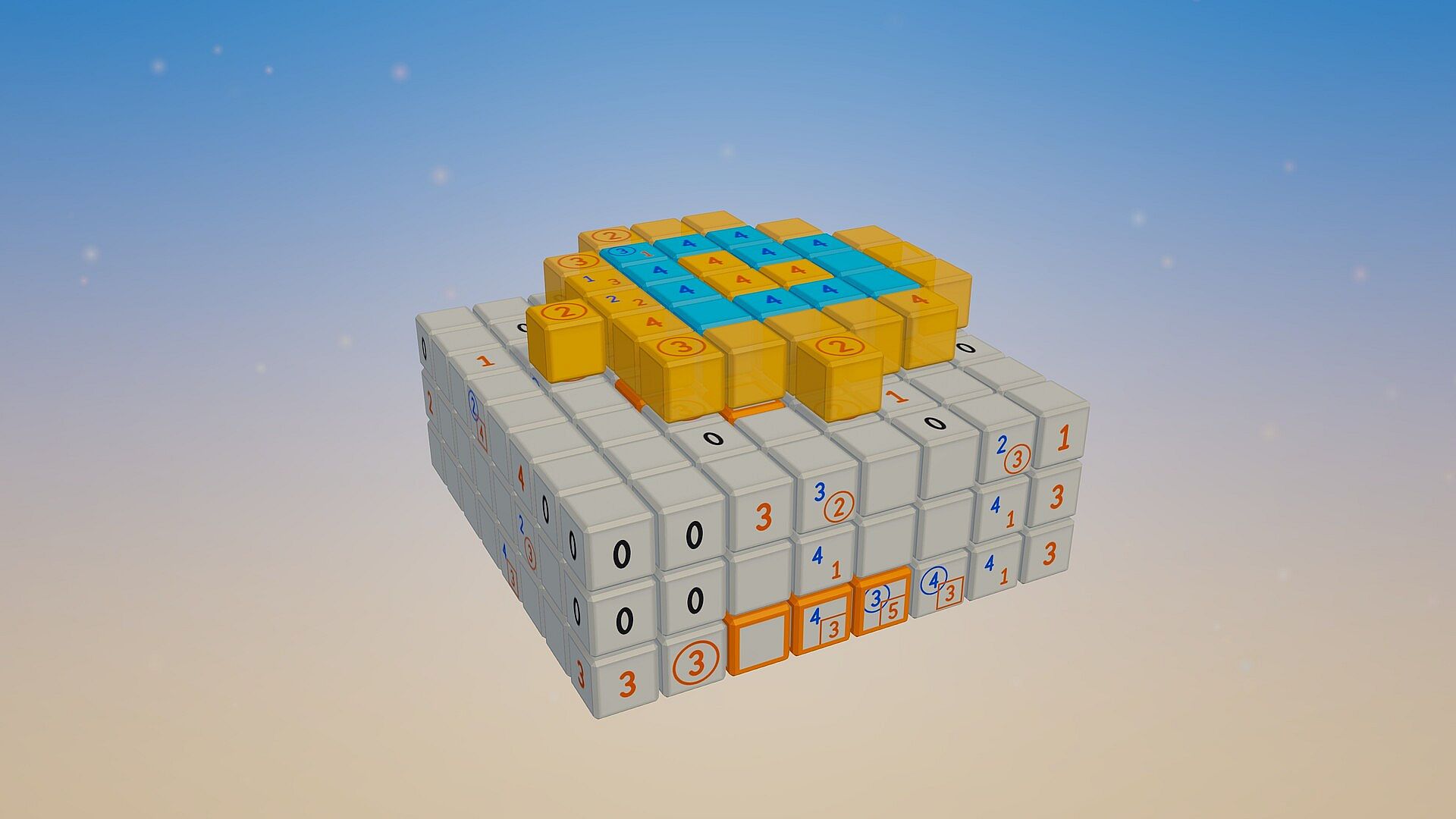




CARVEGRAM is a casual single-player puzzle game that brings the classic picross experience into three dimensions on PC. Players work through blocks of cubes where a hidden model waits inside, using line numbers to identify which cubes to remove and which to keep until the full shape emerges from every angle.
Gameplay
The core loop centers on logical deduction within each 3D grid. Numbers along the edges indicate how many consecutive cubes belong in that row or column, guiding the removal of empty space while preserving the target form. Rotation of the block becomes essential as progress reveals new perspectives and confirms placements from multiple sides. The process stays entirely logic-based, with no reliance on trial and error or random guessing at any point.
Progression follows a structured introduction to mechanics. Early sections focus on single numbers per line, then expand to multiple numbers, special circle and square markers, pencil notations for tracking possibilities, and handling larger solid blocks. Each new puzzle draws only from concepts already covered, building confidence steadily. A reference codex remains available throughout for quick reminders of techniques without interrupting flow.
Scale varies widely across the collection. Smaller puzzles start with just sixteen cubes forming simple shapes like a butterfly, while larger ones reach up to a thousand cubes and greater complexity. Themed groupings organize the content into distinct volumes that maintain visual and conceptual variety while reinforcing the same solving principles.
Game Modes
Clue visibility serves as the primary adjustable setting. Five tiers range from full information on every line down to an expert mode with minimal guidance, allowing players to match the challenge level to their experience or preference. This system directly affects how much deduction is required upfront.
Additional tools support different approaches without becoming mandatory. Layer-by-layer slicers expose internal structures gradually, pencil marks help track candidate cubes, and optional aids like hints or a bomb provide targeted assistance when needed. A one-color viewing mode simplifies visual processing during intricate sections.
Completion rewards encourage deeper engagement through an optional star system. Up to five stars per puzzle become available by selecting higher clue difficulties, respecting a strike limit on errors, and finishing within a set time benchmark. These elements turn standard solves into personal challenges without altering the underlying logic rules.
Puzzle Structure and Progression
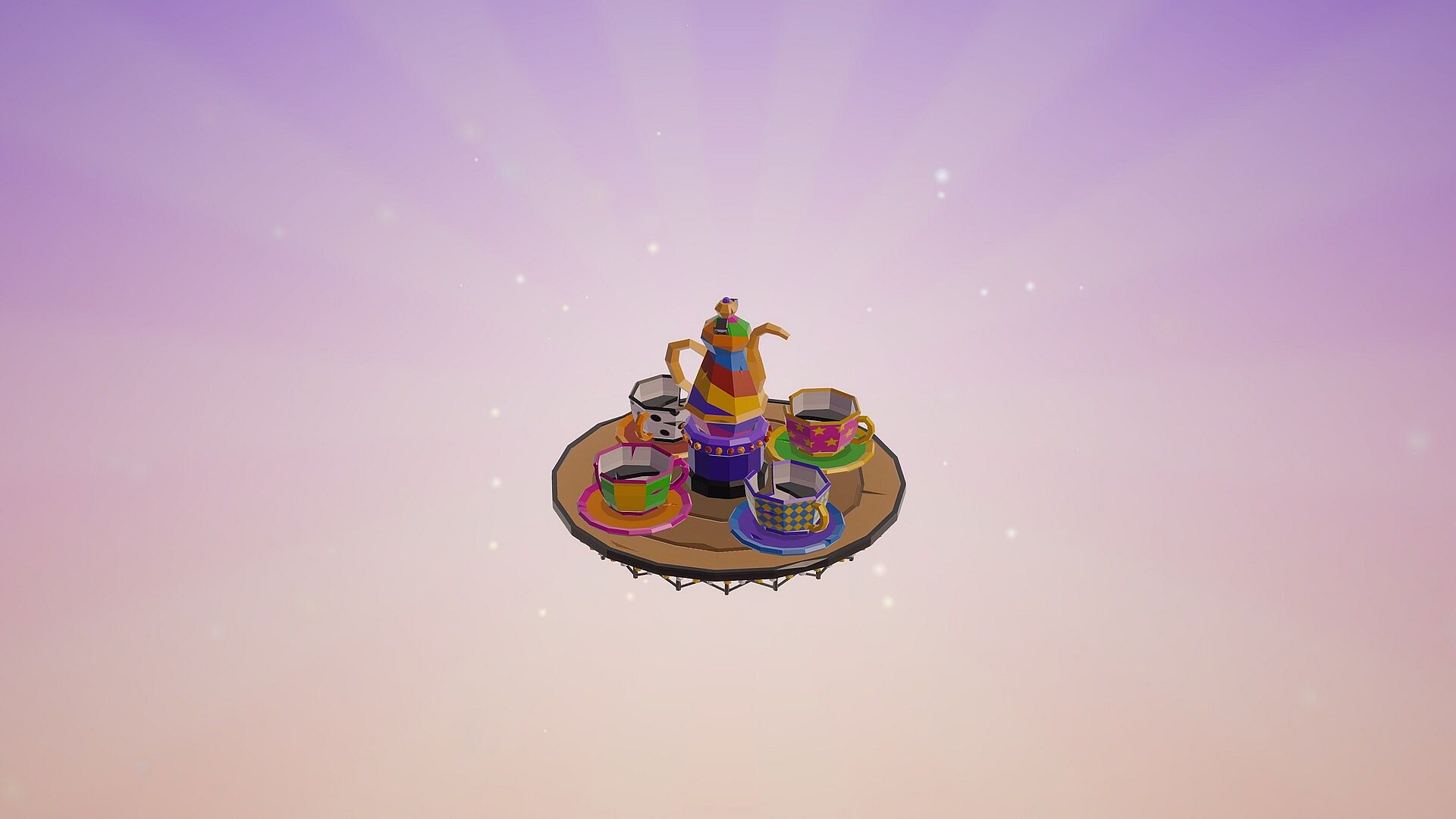
Fifty chapters divide the three hundred puzzles into manageable sequences that introduce and reinforce ideas incrementally. Themed volumes provide context and aesthetic shifts, moving between subjects such as nautical scenes, athletic equipment, and produce arrangements. Every puzzle remains self-contained yet contributes to a cumulative sense of mastery as techniques compound across chapters.
Support features keep sessions flexible. Integrated tutorials explain each new concept at the moment it appears, while the soundtrack maintains a consistent calm atmosphere that adapts to chapter themes. Seventeen language options broaden accessibility for a wide range of players seeking a focused logic experience.
Is It Worth Playing?
CARVEGRAM suits anyone who enjoys methodical, logic-driven puzzles without time pressure or competitive elements. The gradual teaching approach and adjustable clue levels make it approachable for newcomers to 3D picross while still offering depth through larger grids and stricter settings. The optional star challenges add replay value for completionists who want to refine their efficiency and accuracy.
With its emphasis on pure deduction and a substantial number of puzzles organized into themed chapters, the game provides extended solo play that rewards careful observation and pattern recognition. Players who prefer calm, self-paced sessions over fast action or multiplayer will find the structure and tools align well with that preference. As a title built around verified logic mechanics and progressive learning, it stands as a solid choice for dedicated puzzle fans seeking a three-dimensional twist on a familiar format.