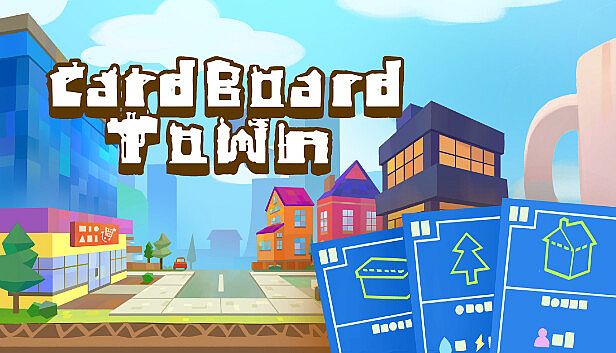












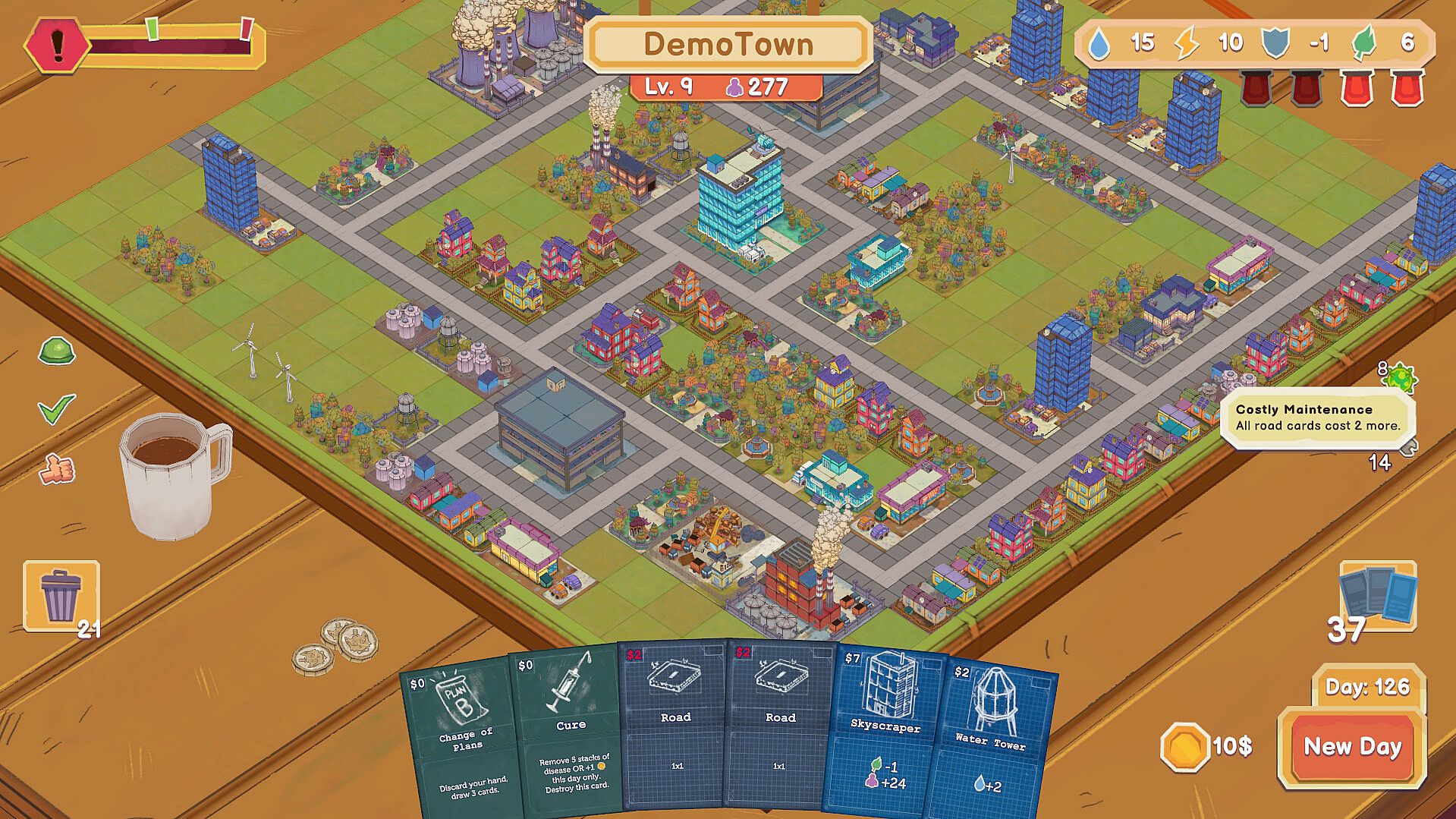
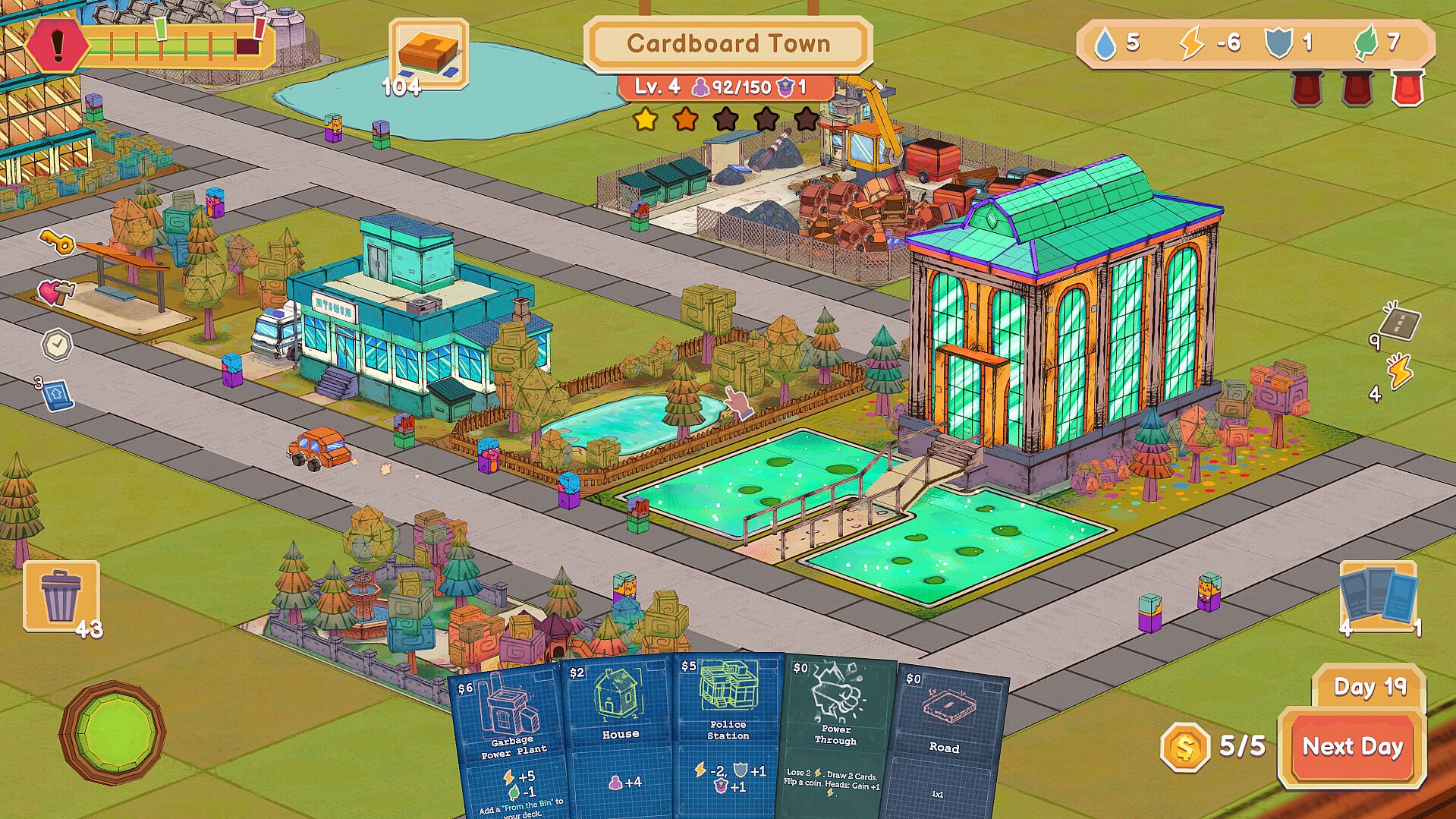
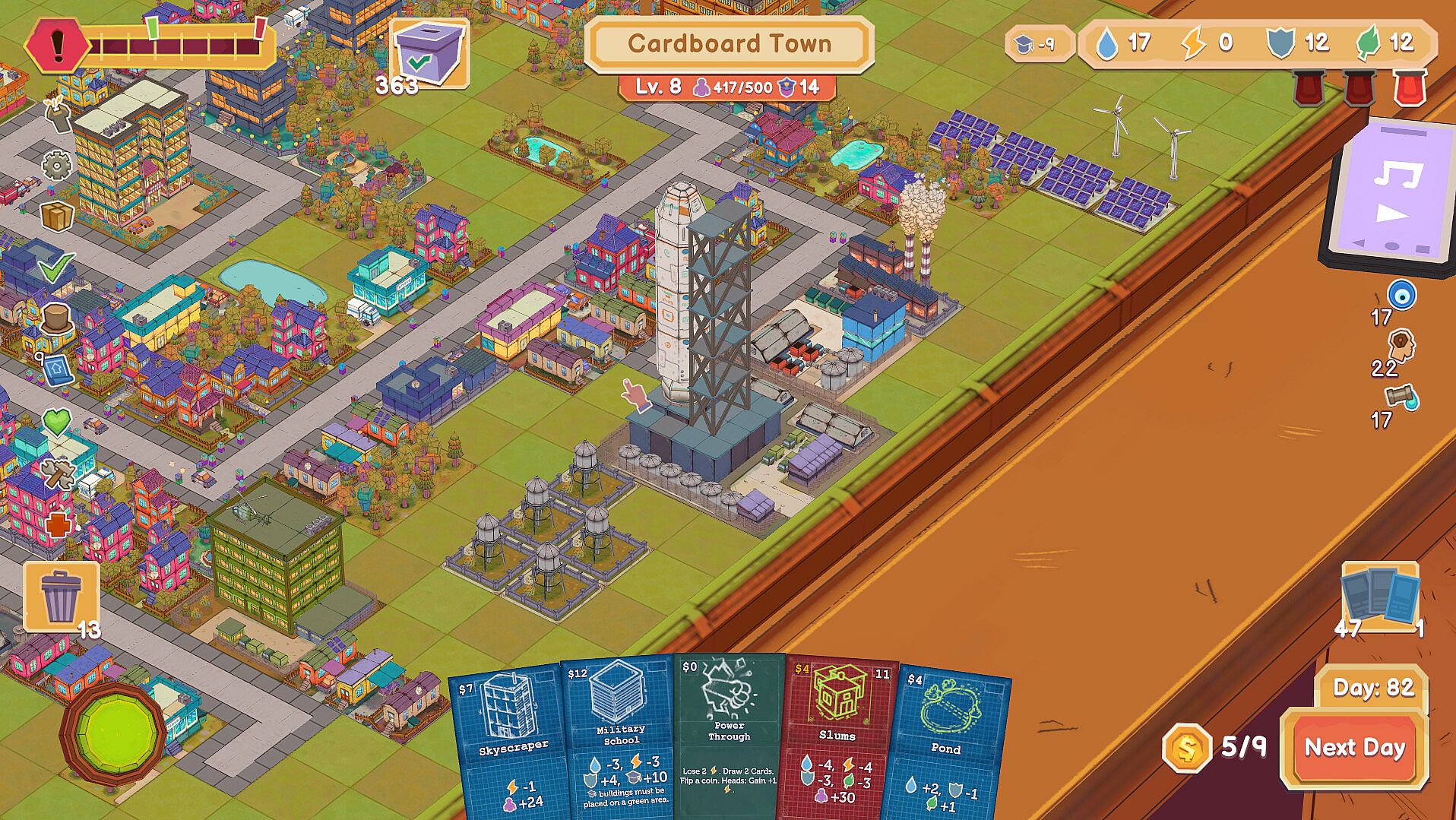
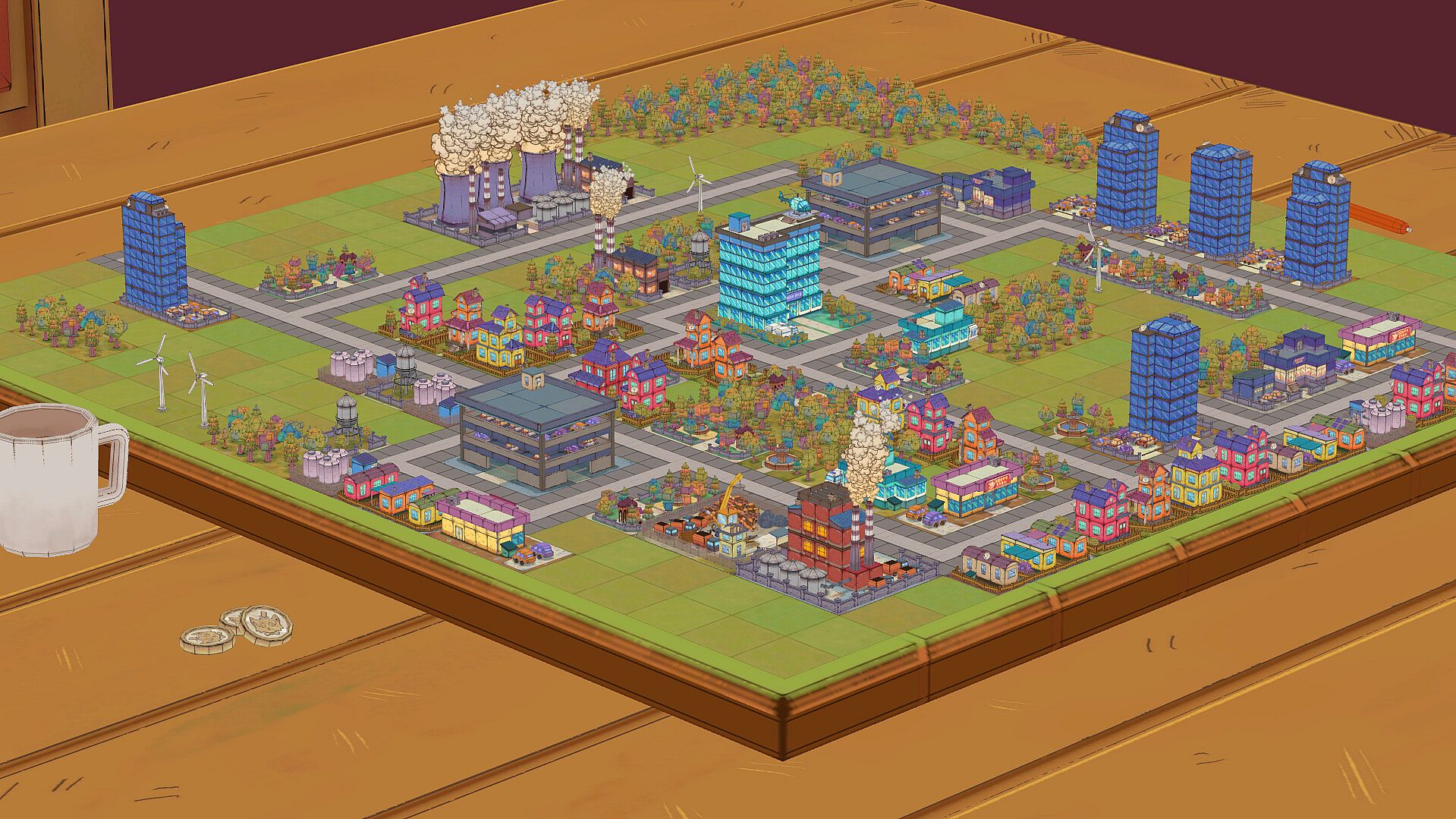
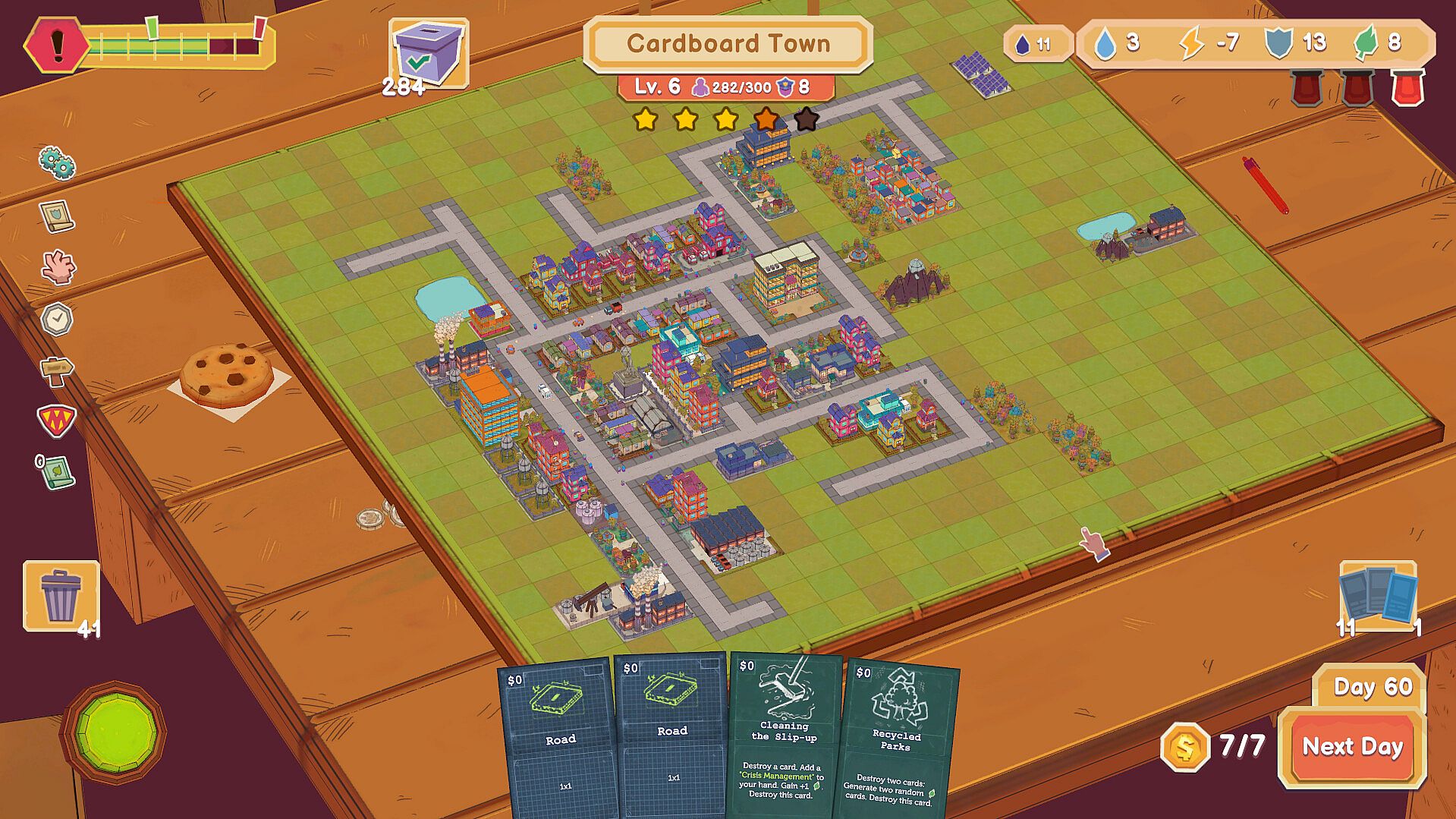
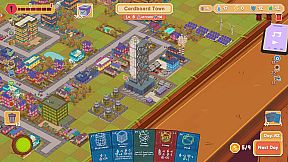
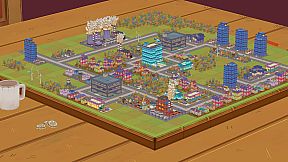
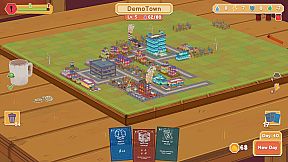
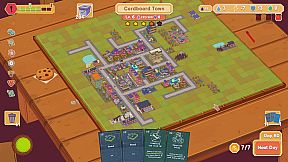
Cardboard Town is a strategy card game that blends city building with resource management and roguelite progression on PC. Players construct a tabletop metropolis by playing cards that represent buildings, actions, and quests while balancing key resources to keep the population stable.
Gameplay
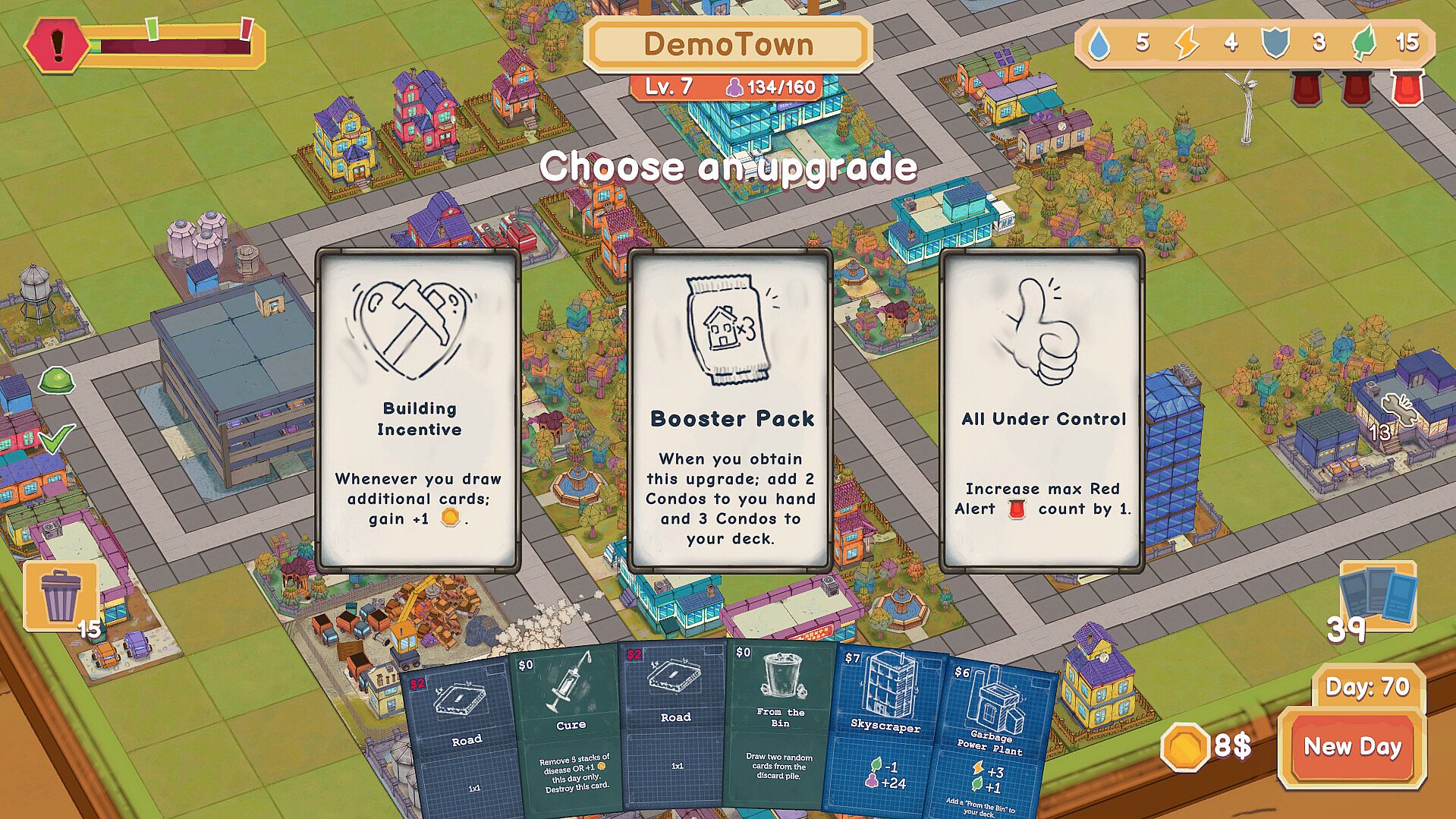
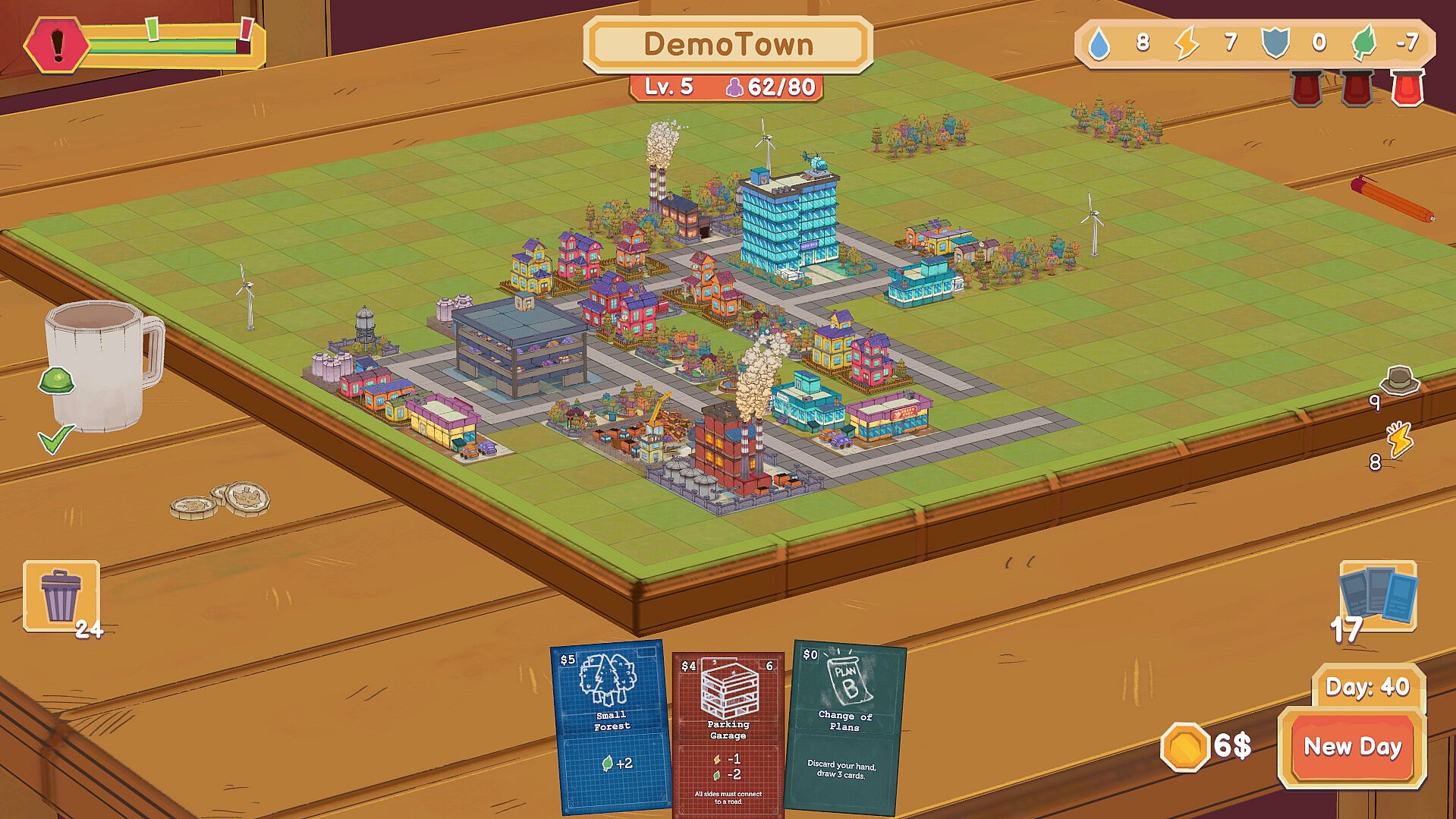
The core loop centers on drawing a hand of cards each turn and choosing how to spend limited resources. Buildings increase population and generate income, but they also demand electricity, water, and safety measures to avoid penalties. Environment scores rise with parks and green options, while safety cards help counter threats from random events.
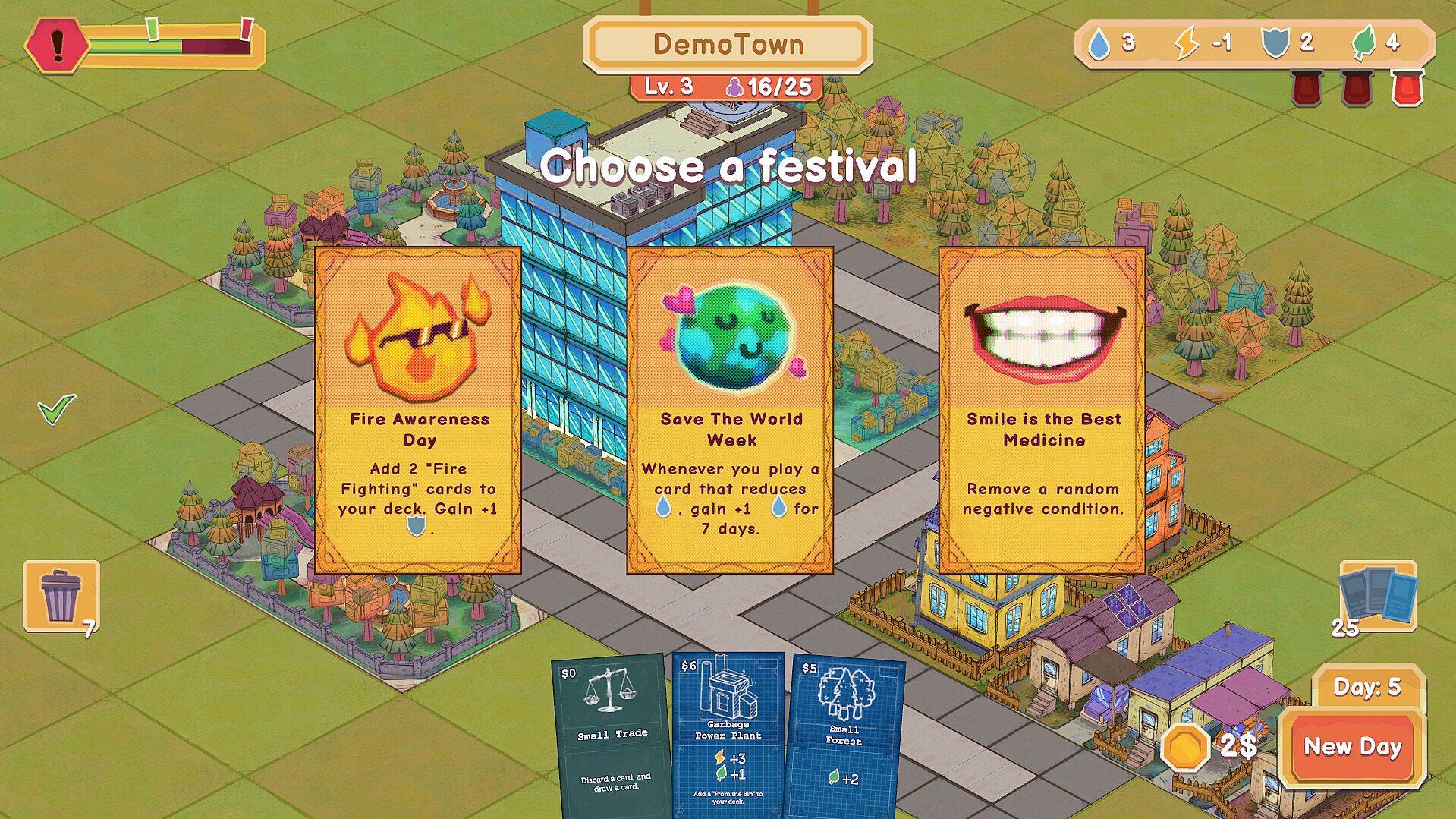
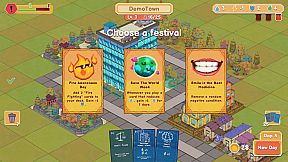
Disasters and festivals arrive unpredictably, forcing quick decisions with action cards that can mitigate damage or boost specific stats. Population growth fuels more card plays per turn, yet unchecked expansion without supporting infrastructure triggers alerts. Three accumulated alerts end the run, emphasizing careful planning over rapid expansion.
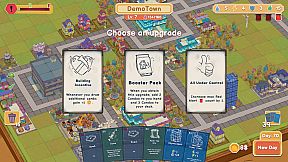
Persistent upgrades carry over between attempts, expanding the available deck with new building types, resource adjustments, and event responses. The hand-drawn aesthetic gives every placement a physical, folding-card feel as structures animate into place on the table surface.
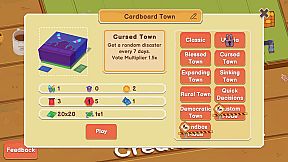
Game Modes
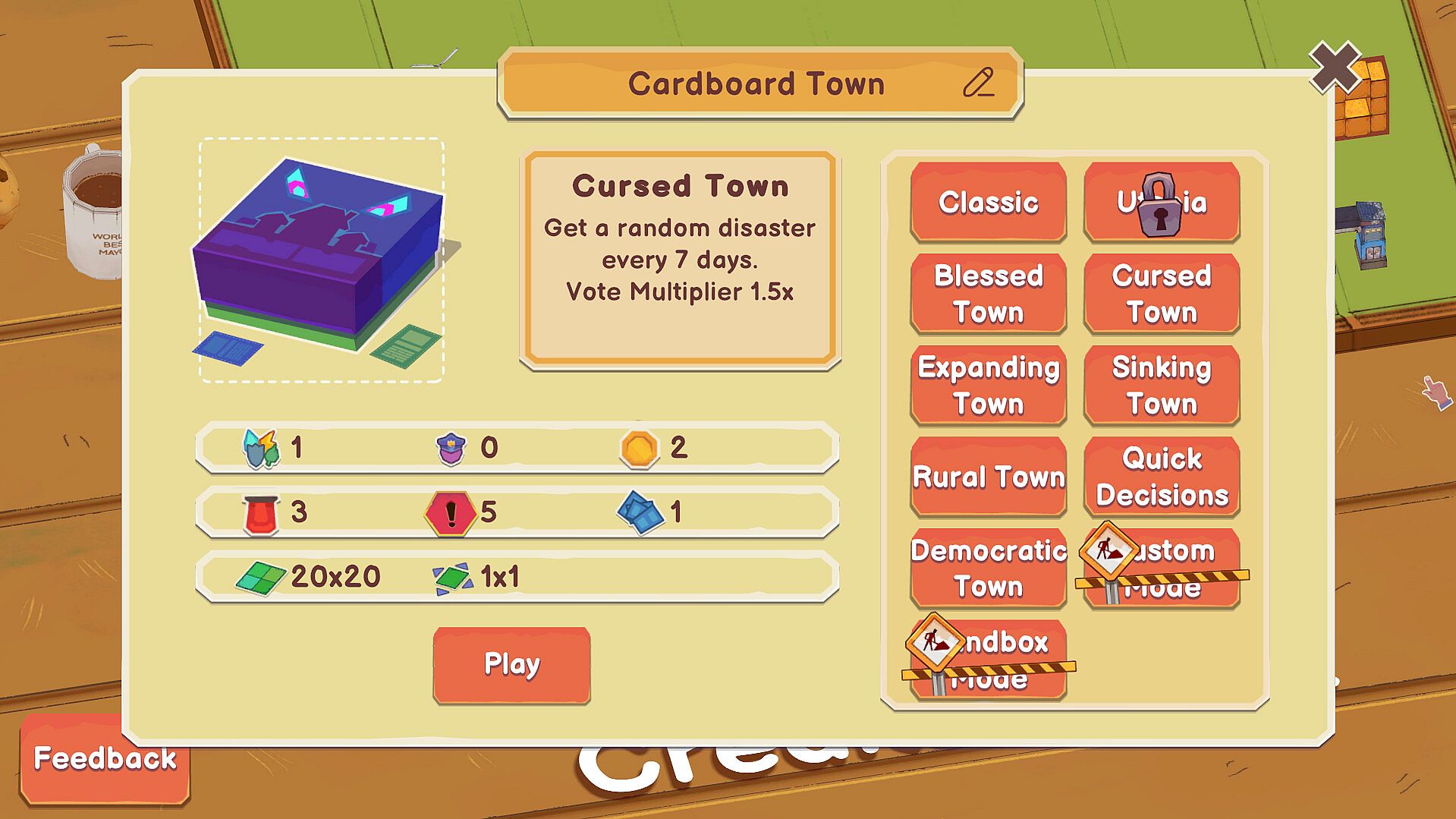
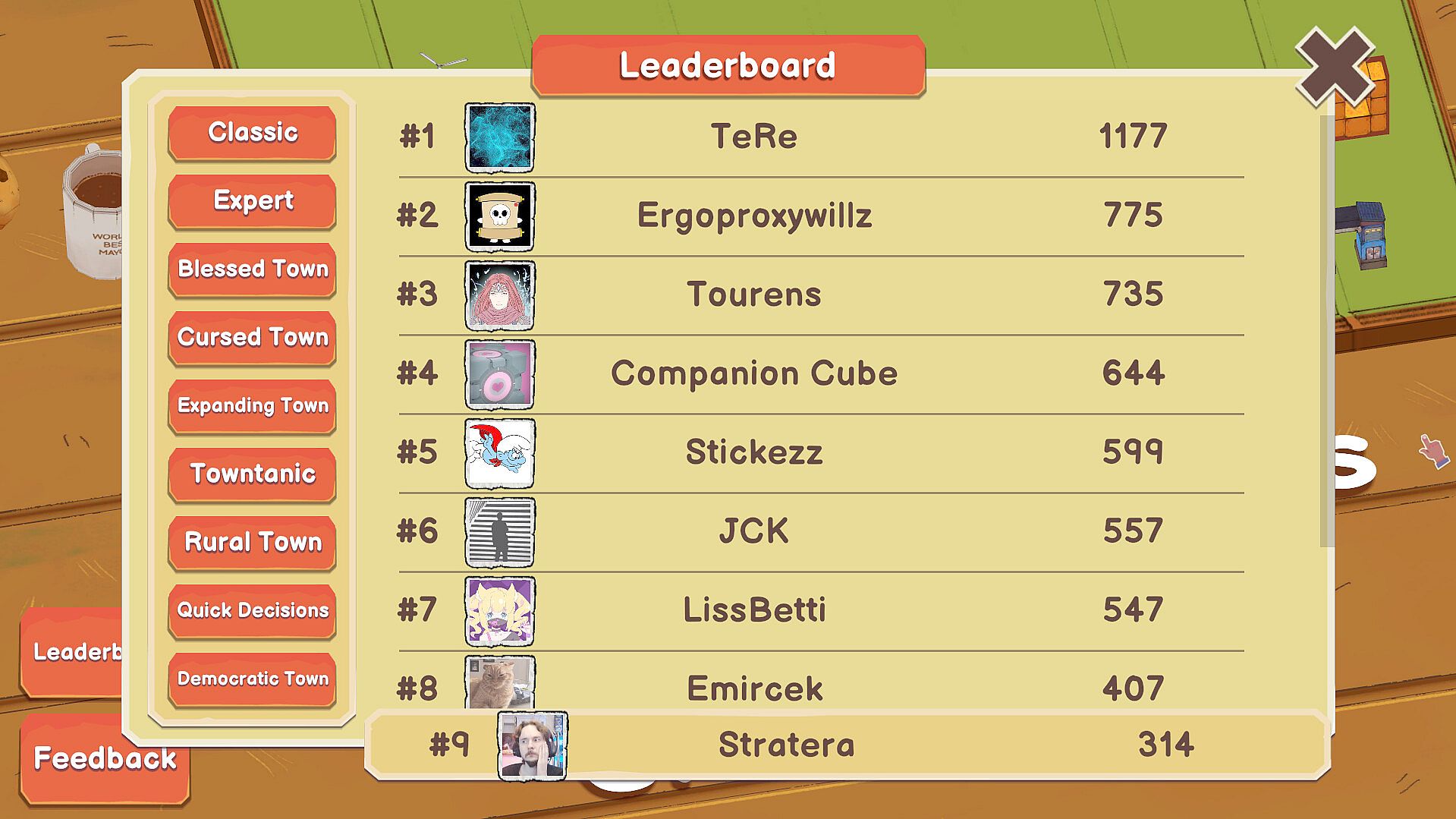
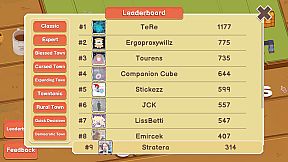
Classic mode provides a balanced starting point with extra initial resources and a standard multiplier for scoring. It suits players learning the systems or aiming for steady high scores across multiple runs.
Expert mode increases the challenge by reducing starting advantages and heightening the impact of every choice. Resource margins stay tighter, and events demand more precise responses to reach comparable scores.
Sandbox mode removes scoring pressure for open-ended building. Players experiment with card combinations and layouts without the risk of alerts ending the session, supporting creative city designs and testing of different resource strategies.
Card Variety and Progression
The deck exceeds three hundred cards across buildings, actions, quests, festivals, and upgrades. Building cards form the foundation of the city, while action cards address immediate crises and quest cards deliver bonuses for satisfying citizen needs. Road cards improve connectivity and flow, and festival cards introduce temporary effects that alter resource production.
Each run unlocks additional options that persist, allowing gradual expansion of strategies. One attempt might focus on eco-friendly buildings to raise environment scores, while the next emphasizes industrial output and safety infrastructure. Random elements ensure no two sessions follow identical paths.
Is It Worth Playing?
Cardboard Town appeals to players who enjoy resource-balancing strategy games with short, repeatable sessions and deck-building elements. The roguelite structure rewards experimentation through unlocks, and the alert system adds tension without requiring long commitments per attempt.
Recent player feedback highlights the appealing art style and accessible mechanics alongside notes on occasional bugs that developers continue to address through updates. Those who prefer deliberate planning and adapting to changing conditions will find the systems engaging, particularly in modes that match their preferred difficulty.
The game suits casual sessions or deeper dives into optimization, depending on the chosen mode and personal tolerance for random events. Availability on PC makes it straightforward to try the core loop and decide based on direct experience with the card interactions and city growth.