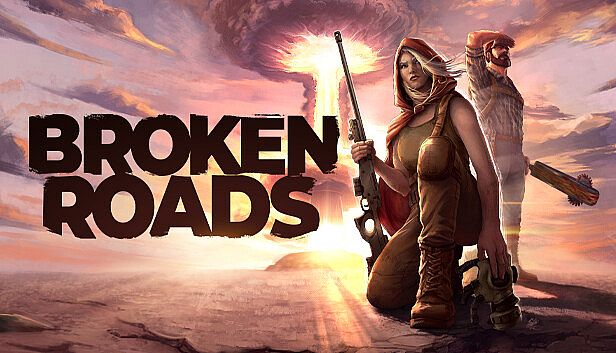





















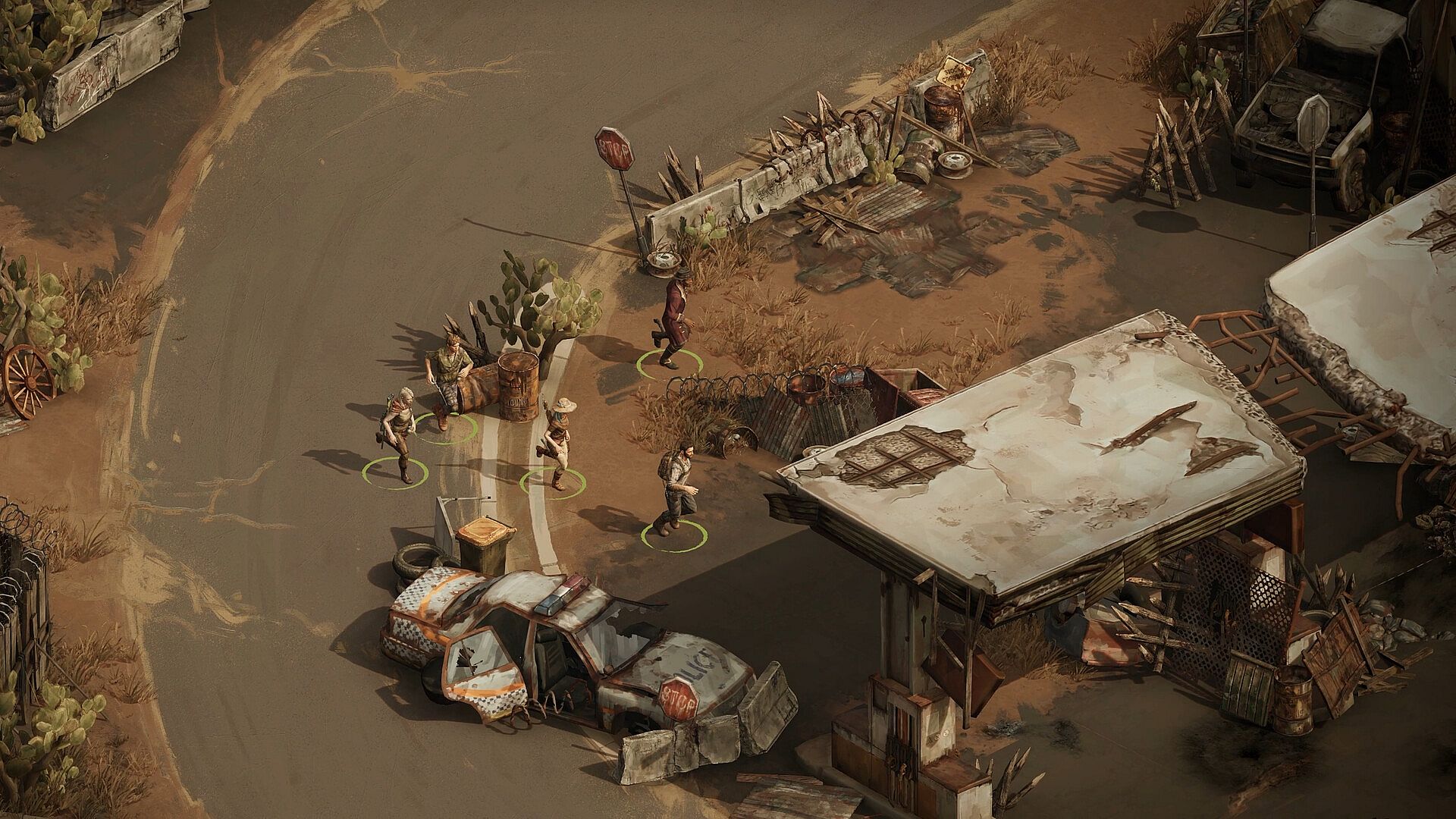
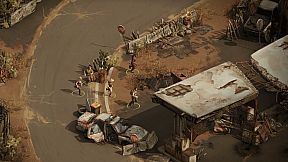
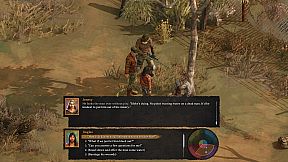
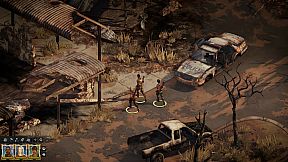
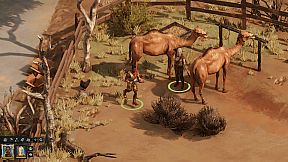
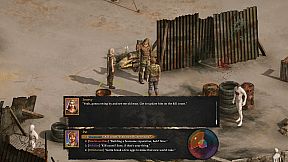
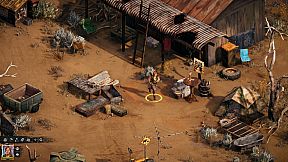
Broken Roads is a single-player post-apocalyptic RPG set in a decaying version of Western Australia. Players control a customizable protagonist who travels with a party through the outback, making decisions that shape both the story and the character's philosophical outlook via the Moral Compass system.
Gameplay
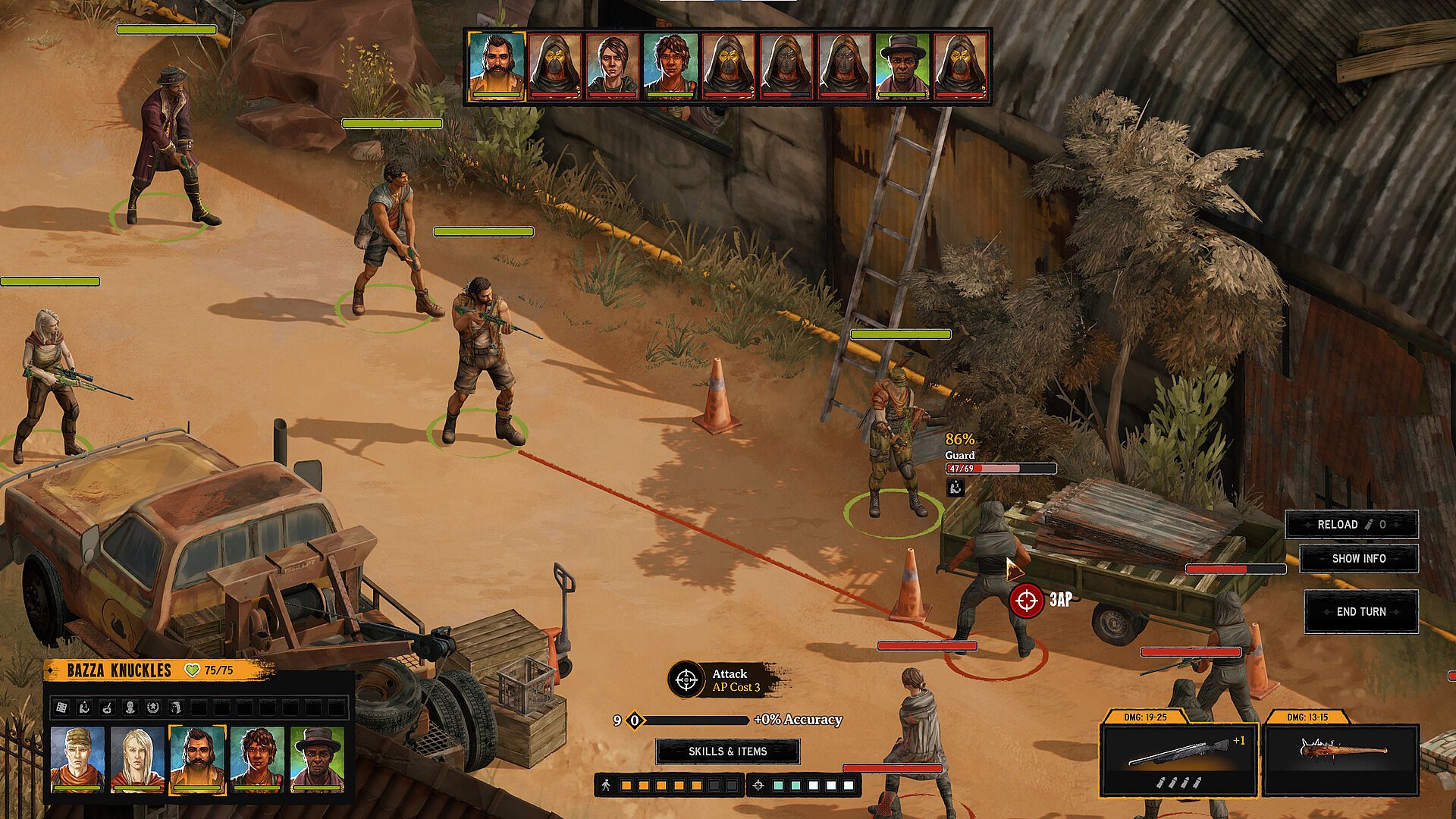
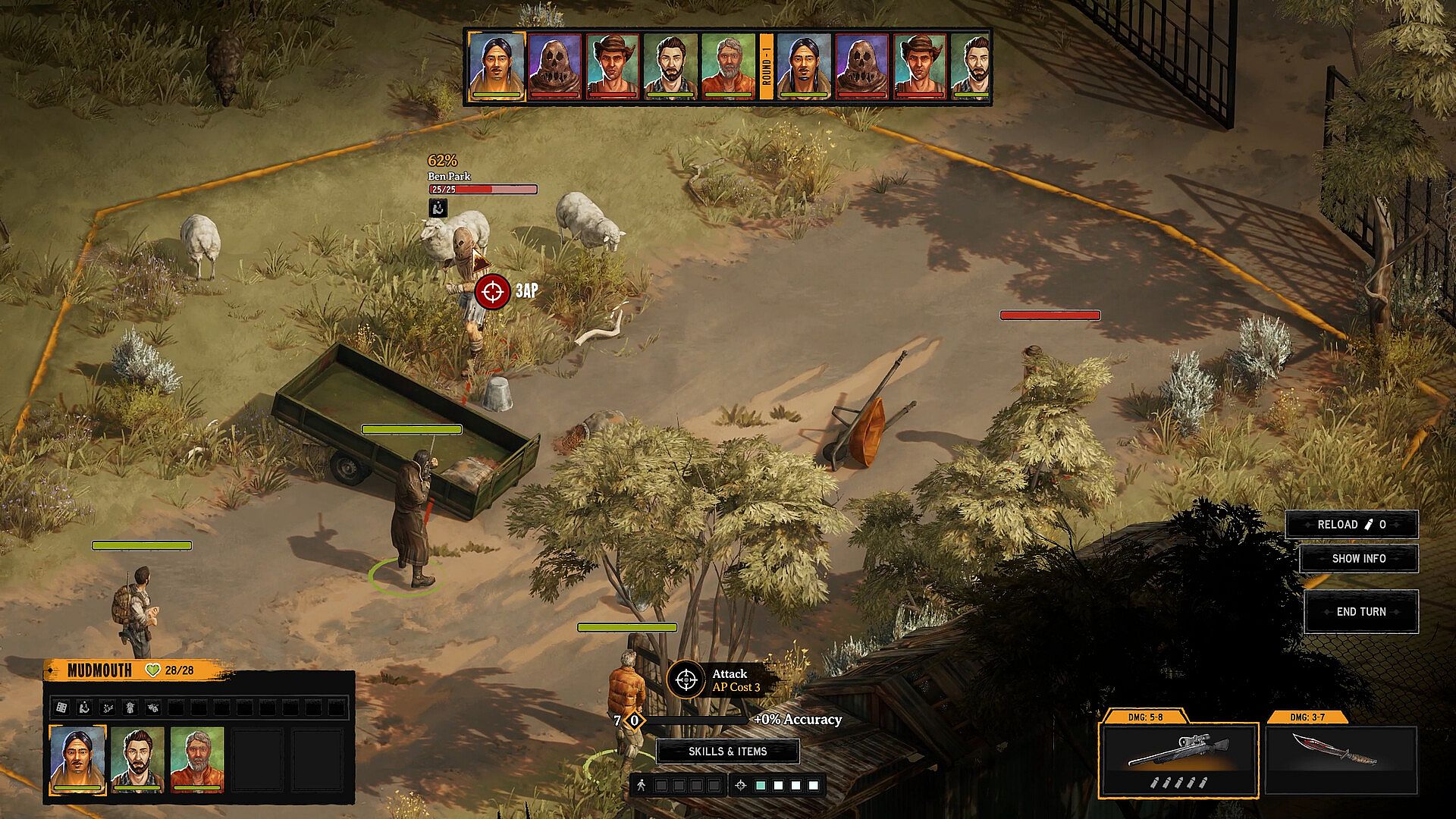
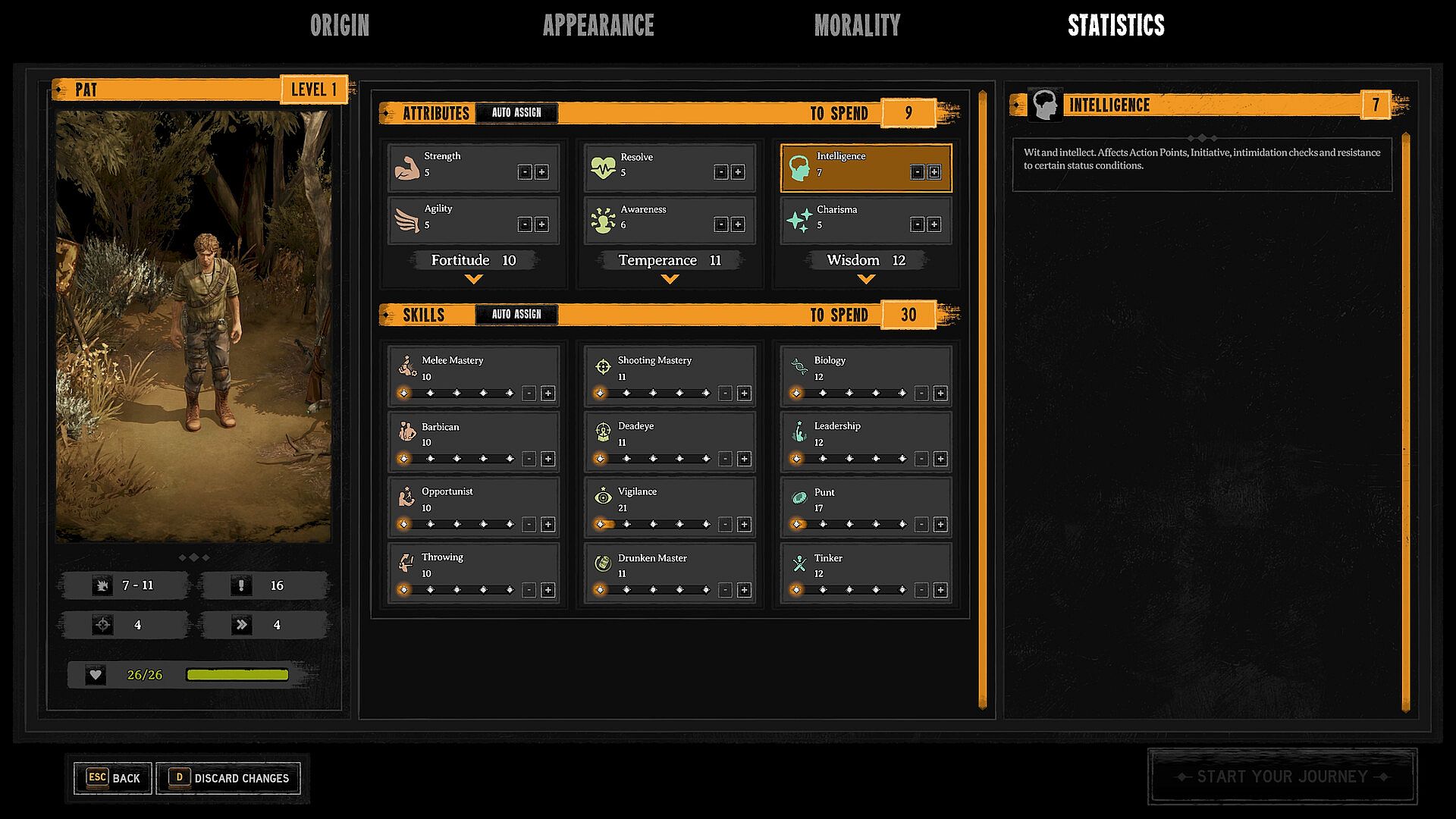
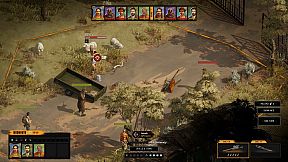
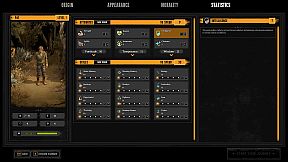
The core loop centers on exploration, dialogue-heavy quests, and turn-based tactical combat. Players navigate a world map where random ambushes can trigger fights, then enter isometric combat encounters that use action points and movement points. Cover plays a role in positioning, and players can equip two weapons at once while managing reloads even though ammunition itself is unlimited. Skills fall into three broad categories: Fortitude for physical attributes like Strength and Agility, Temperance for Resistance and Awareness, and Wisdom for Intelligence and Charisma. Each level grants points to distribute across these areas and individual skills such as Shooting Mastery or Vigilance for overwatch attacks.
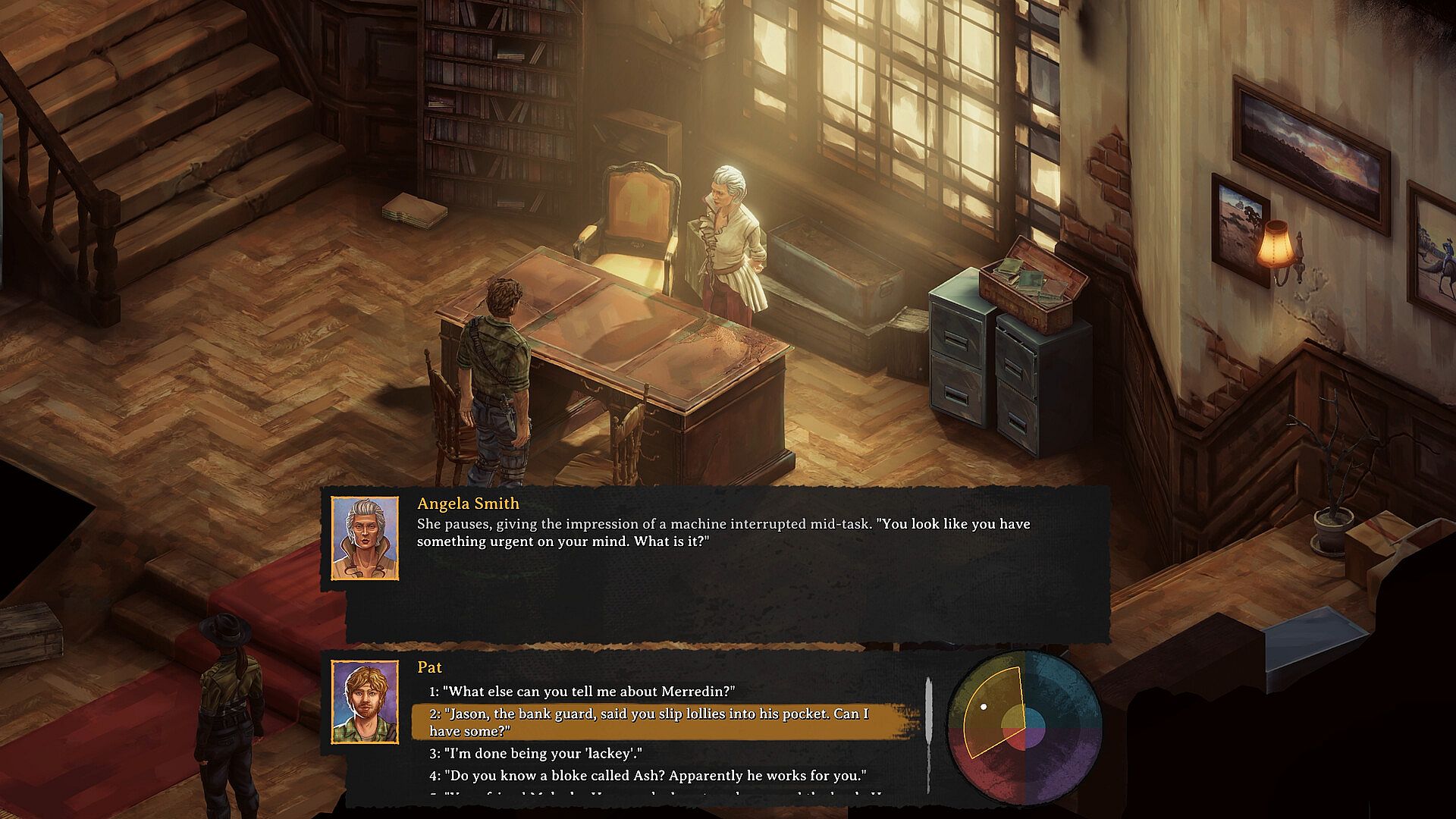
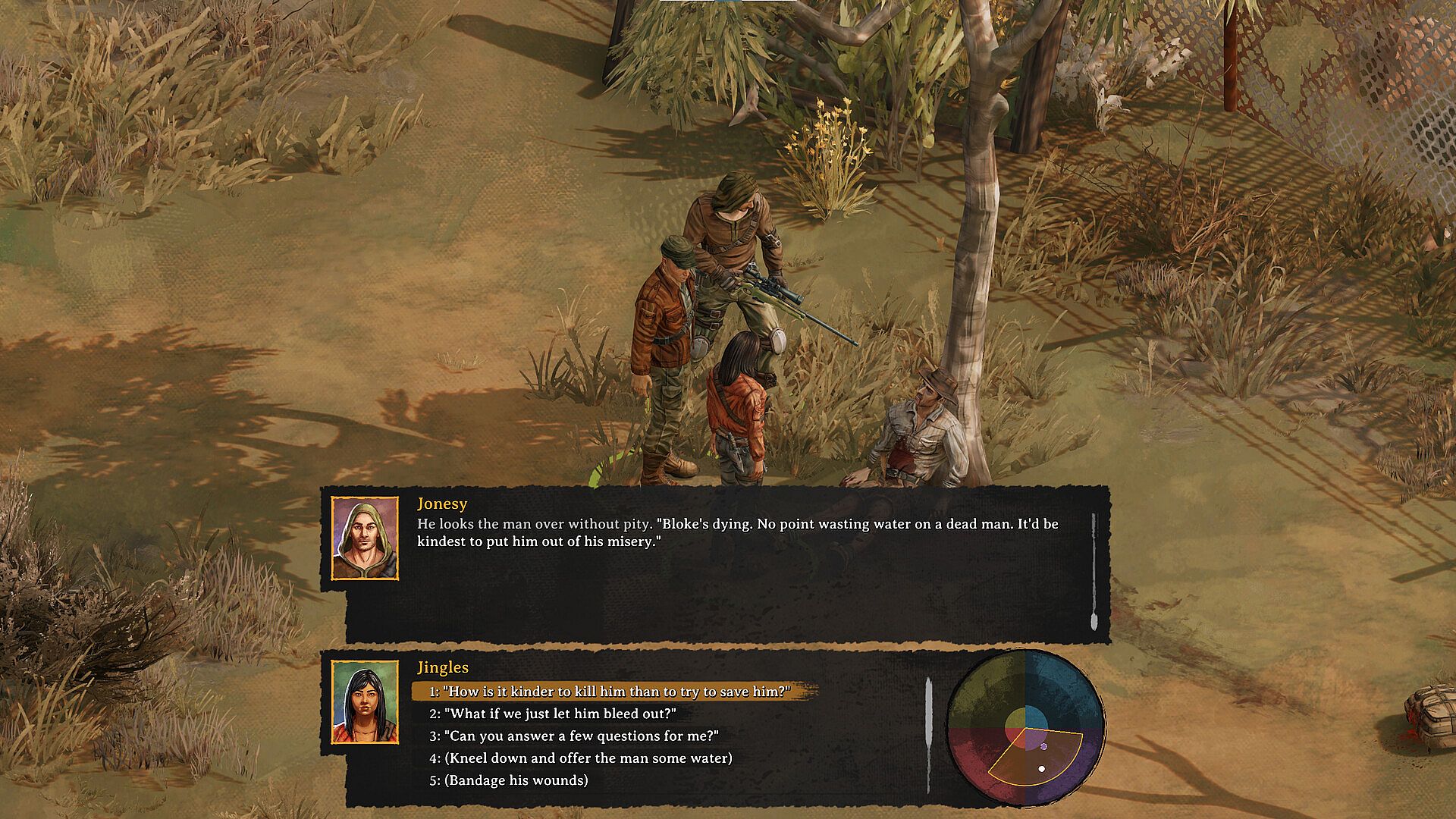
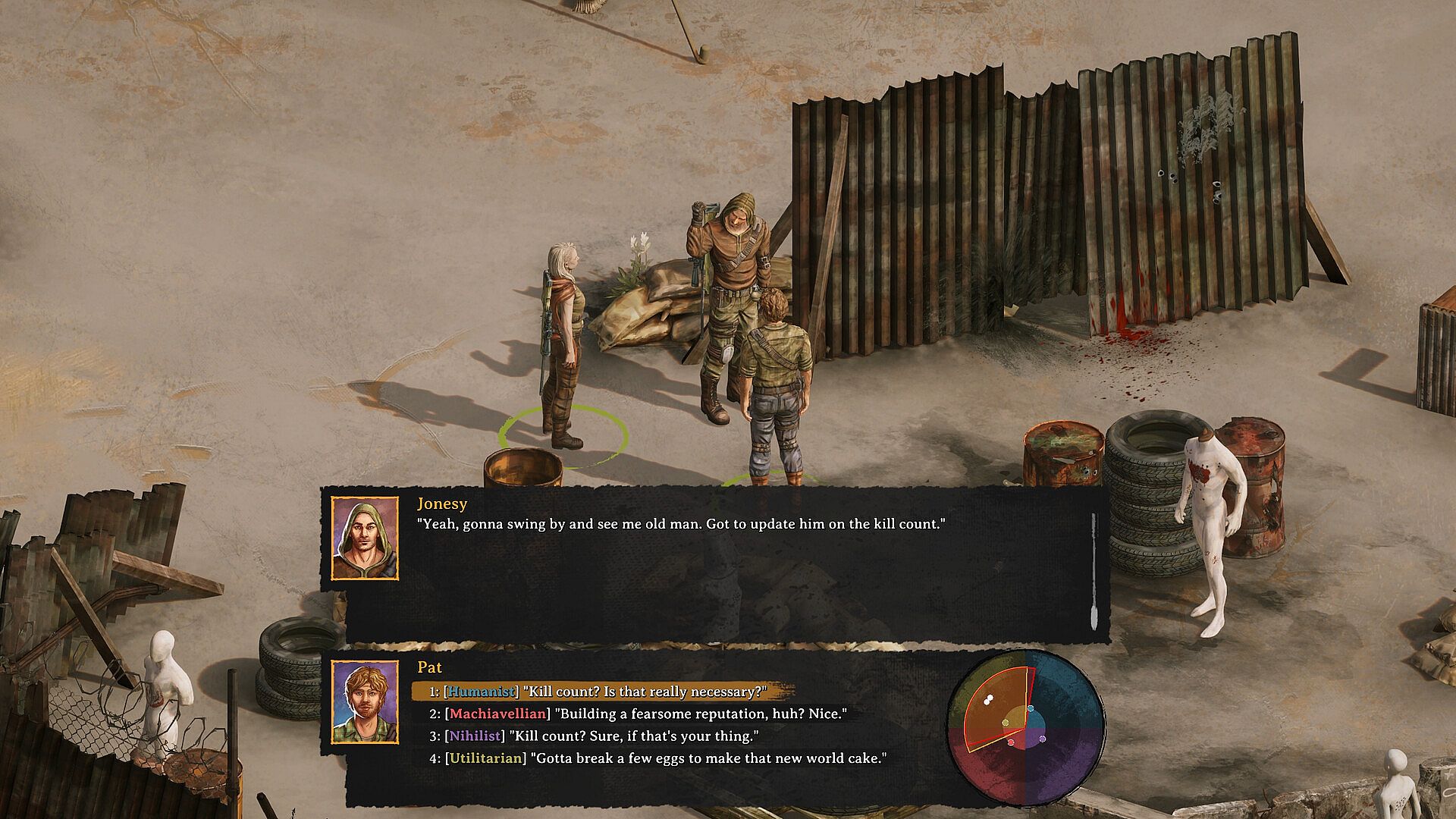
Character origins provide starting bonuses. Options include Surveyor, Barter Crew, Jackaroo, and Hired Gun, each granting attribute boosts and skill advantages that influence early progression. The game supports a party of up to five members whose individual Moral Compasses affect how they respond to the player's choices and statements during conversations.
Game Modes
Broken Roads offers only a single-player experience focused on one continuous narrative campaign. There are no separate multiplayer modes, co-op options, or additional game types. The entire playthrough revolves around progressing through story events, side quests, and exploration in the post-apocalyptic Australian setting, with all mechanics tied to the single campaign structure. Play sessions typically last between seven and twenty-five hours depending on how thoroughly players engage with dialogue and side content.
Narrative and Moral Choices
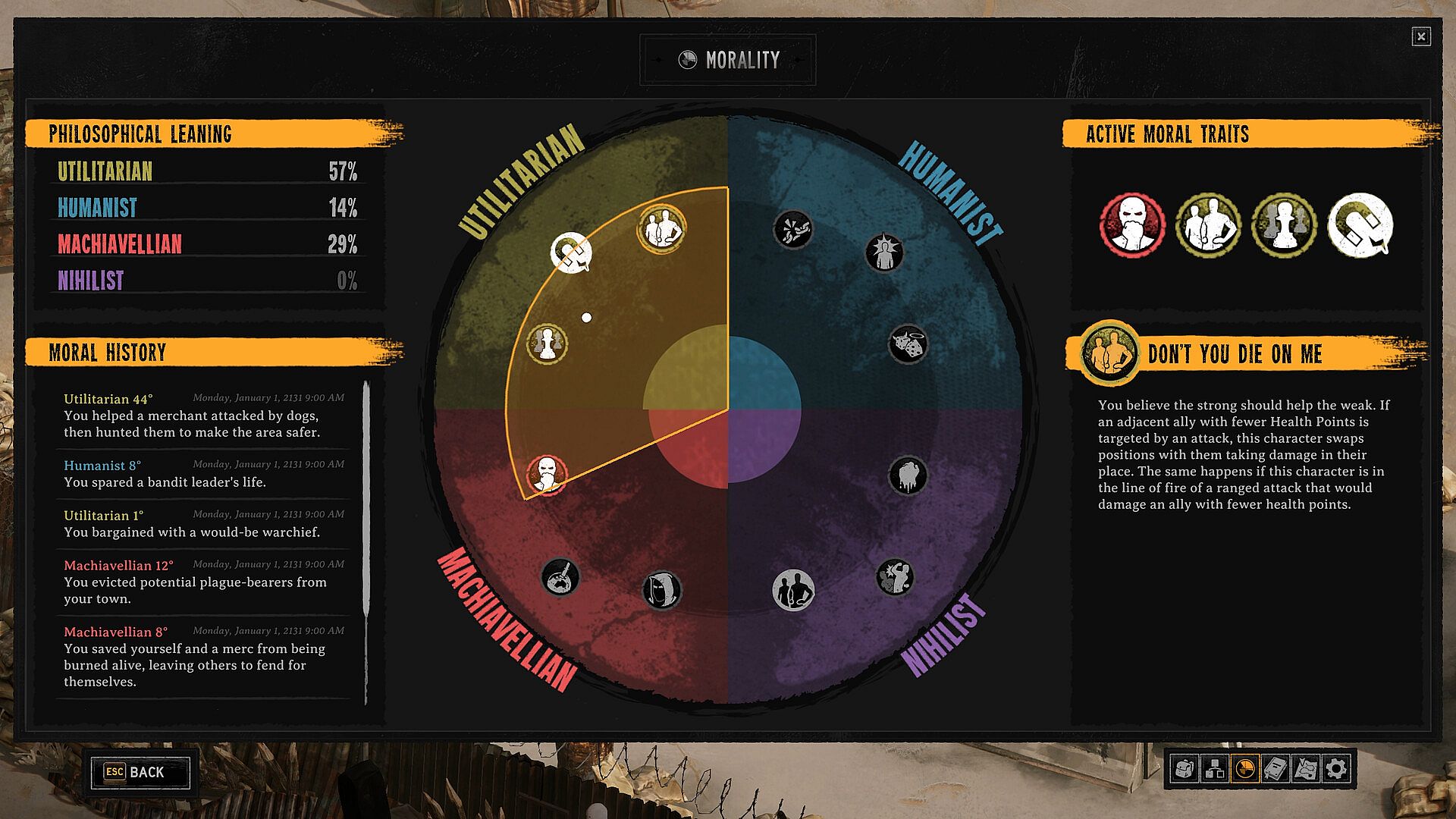
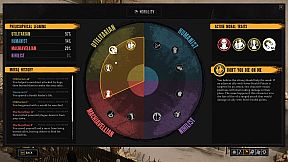
Dialogue and quest decisions feed directly into the Moral Compass, which positions the protagonist across four philosophical quadrants: Utilitarian, Machiavellian, Nihilist, and Humanist. An initial quiz helps establish the starting location on this compass, after which actions shift the character's position and unlock or restrict certain dialogue options and combat traits. Companions react based on their own compass alignments, creating varied relationship outcomes. The system emphasizes nuanced philosophical leanings rather than simple good-versus-evil binaries, influencing both story branches and mechanical bonuses such as temporary character swaps in combat.
Character Development and Exploration
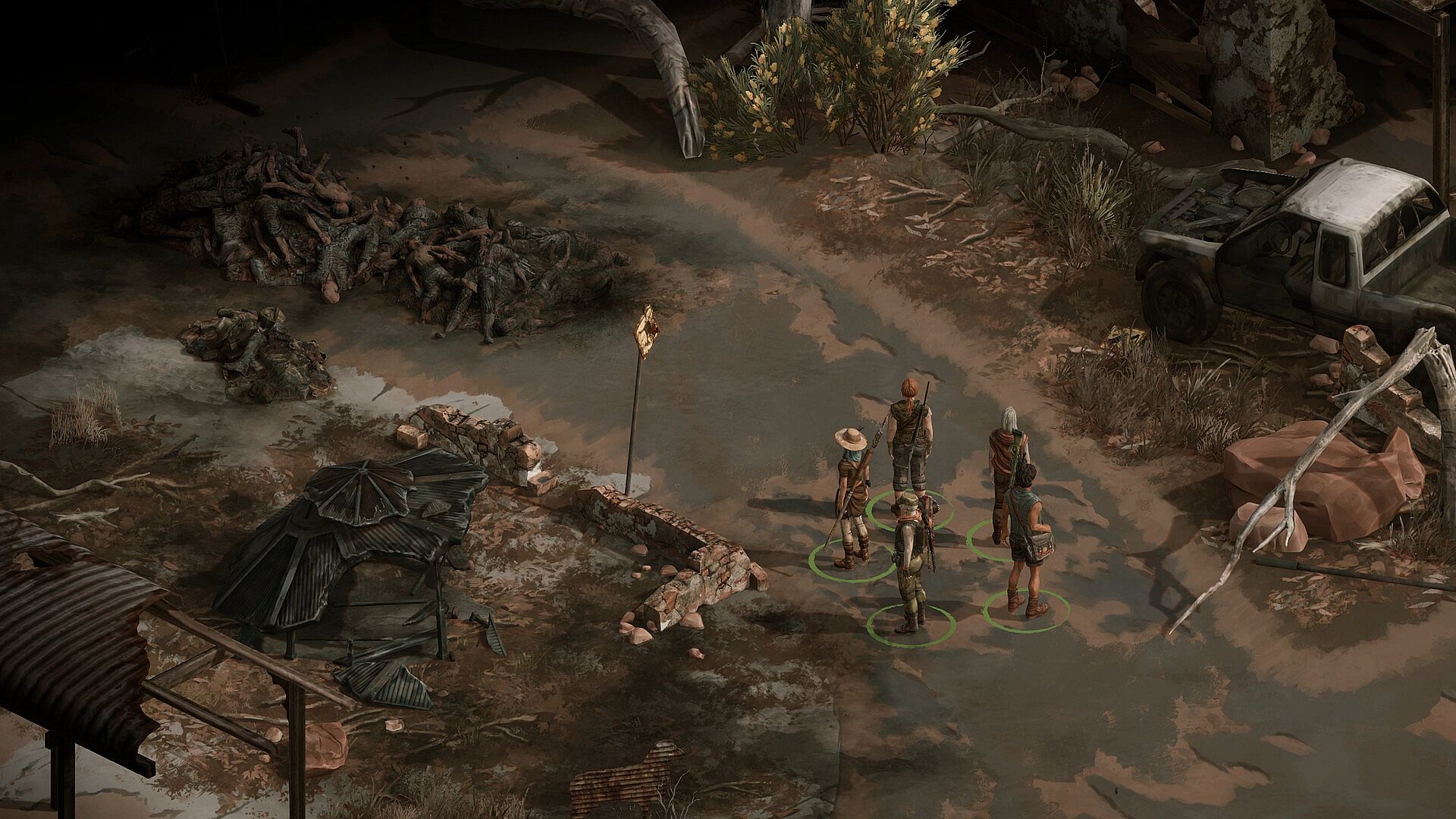
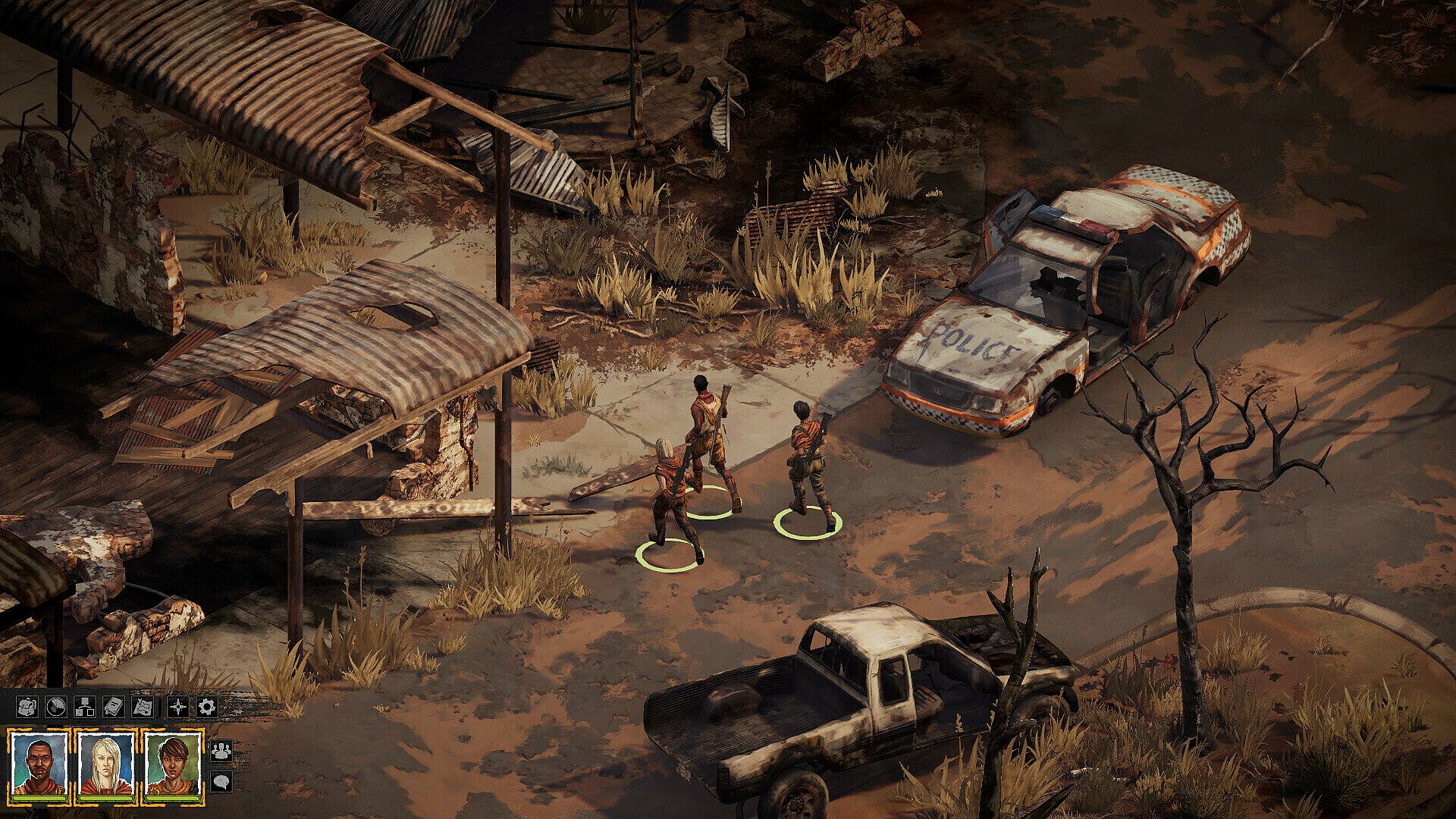
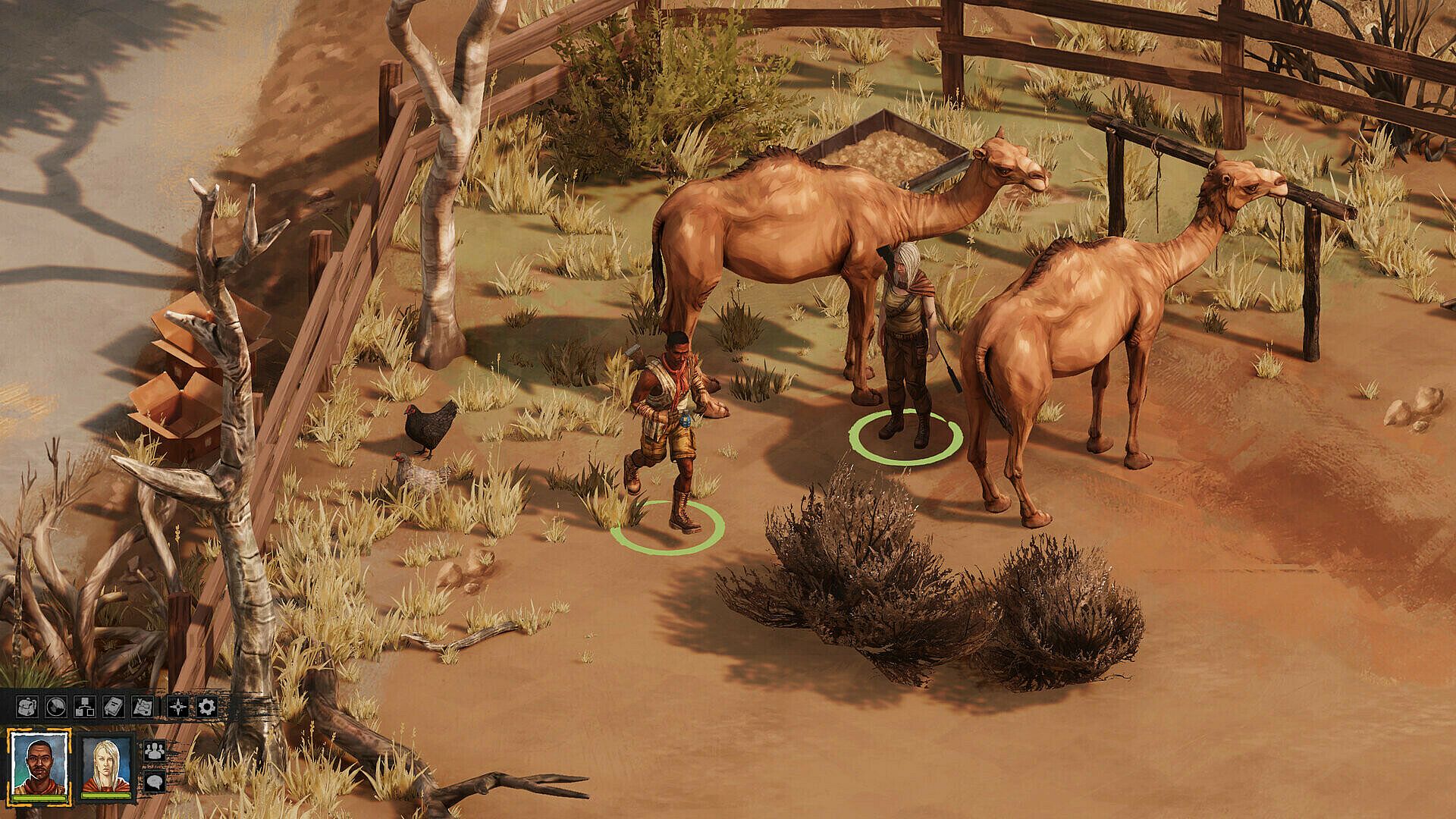
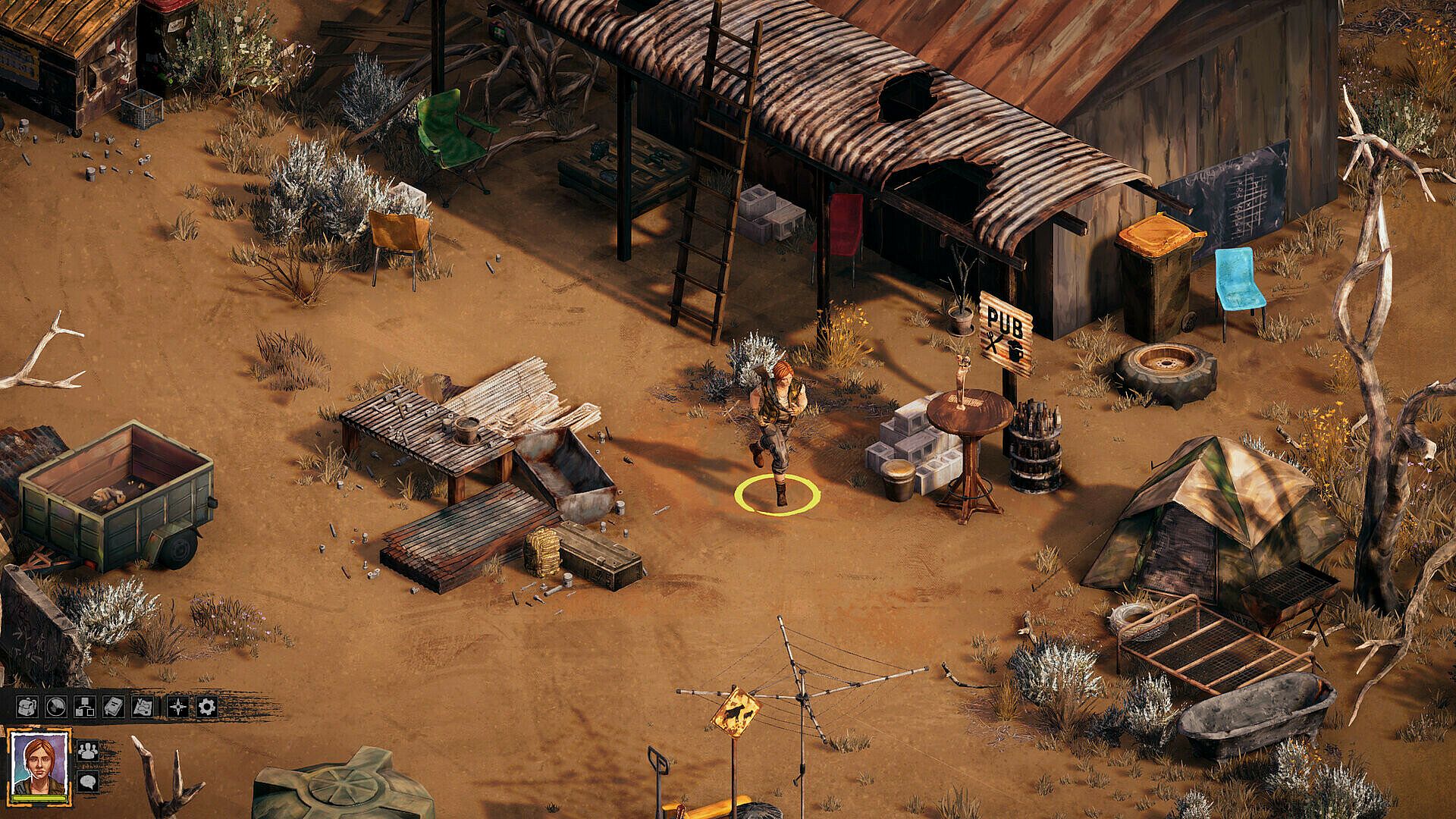
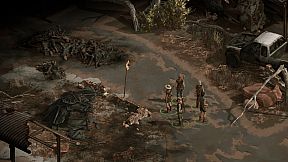
Progression remains classless, allowing flexible builds through repeated skill point allocation across the three attribute categories. Exploration covers decaying urban areas, desert regions, and rural outback locations filled with lore and encounters. World map travel between points can lead to ambushes, while hand-drawn artwork depicts the harsh Australian landscapes. The focus stays on reading dense dialogue trees and managing party interactions rather than large-scale open-world freedom.
Is It Worth Playing?
Reception has been mixed, with critics noting strong ambition in the Moral Compass and setting but criticizing the limited depth of combat and some undercooked systems. The game suits players who prioritize narrative choices and philosophical role-playing in a shorter CRPG package over polished tactical combat or extensive replayability. Those drawn to party-based single-player stories with meaningful decision consequences may find value in its unique morality mechanics, while players seeking robust combat variety or longer campaigns might look elsewhere. Availability remains on PC through standard digital storefronts following its 2024 release.