














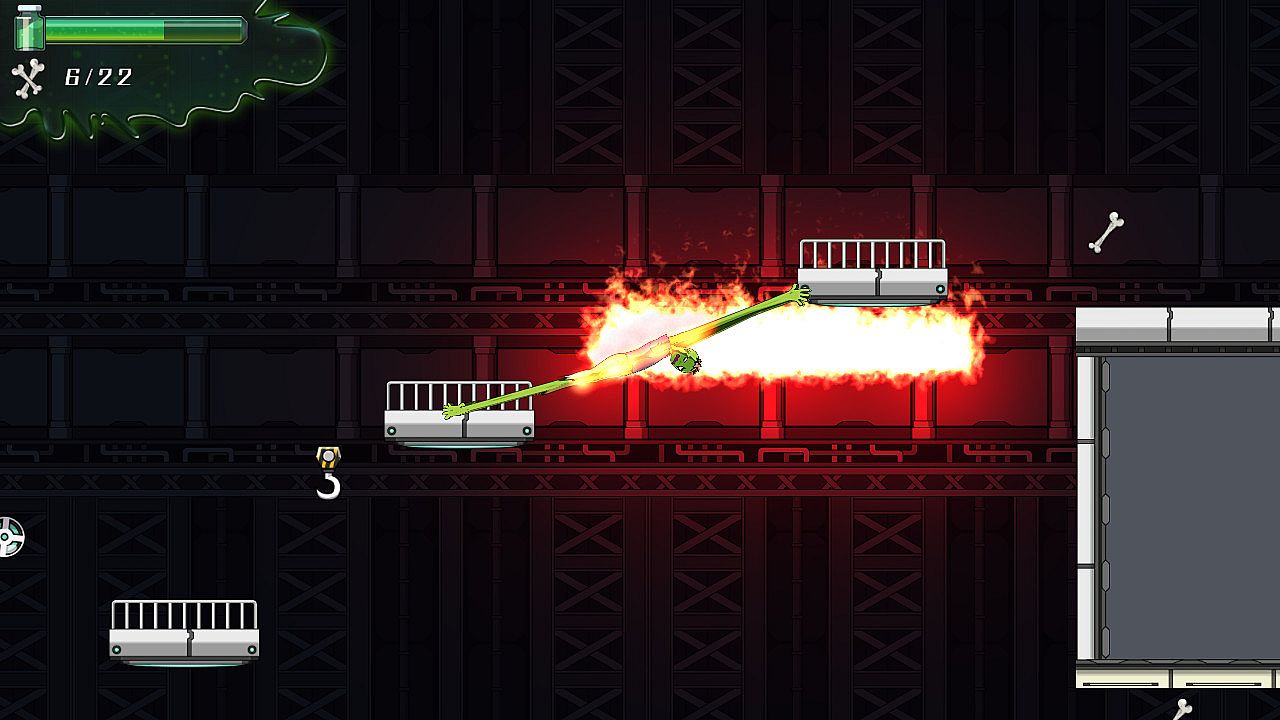
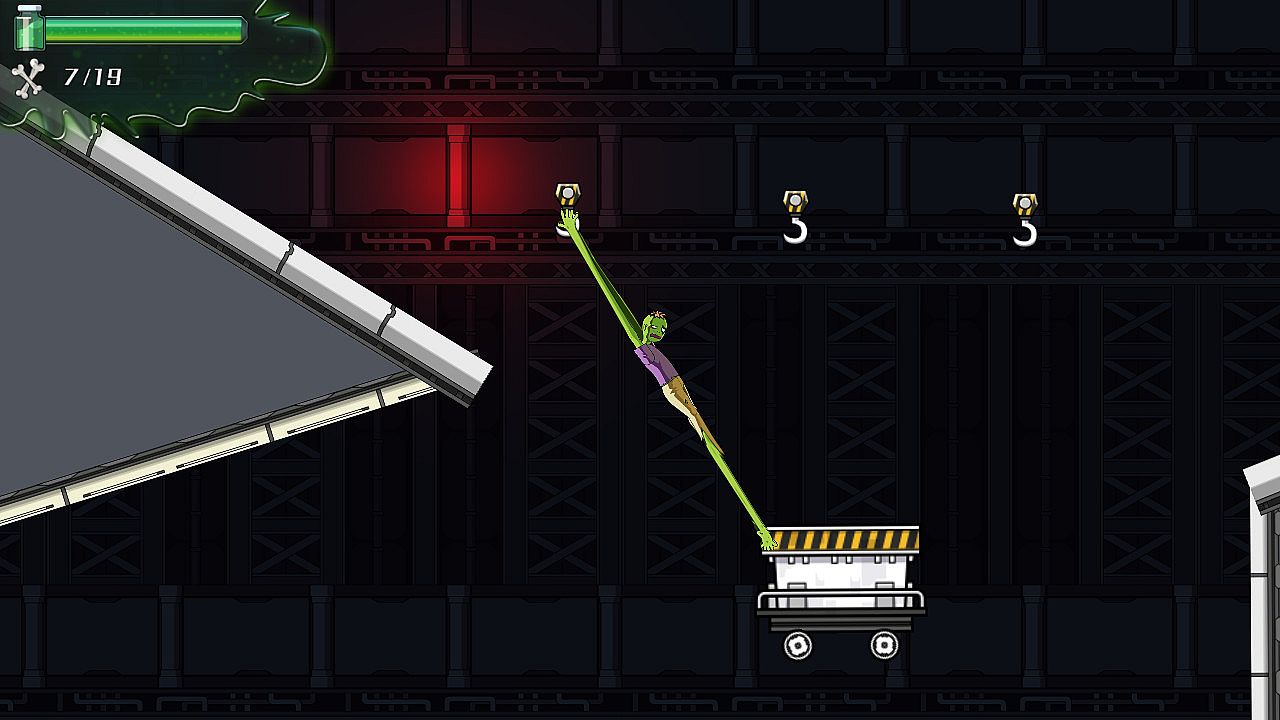
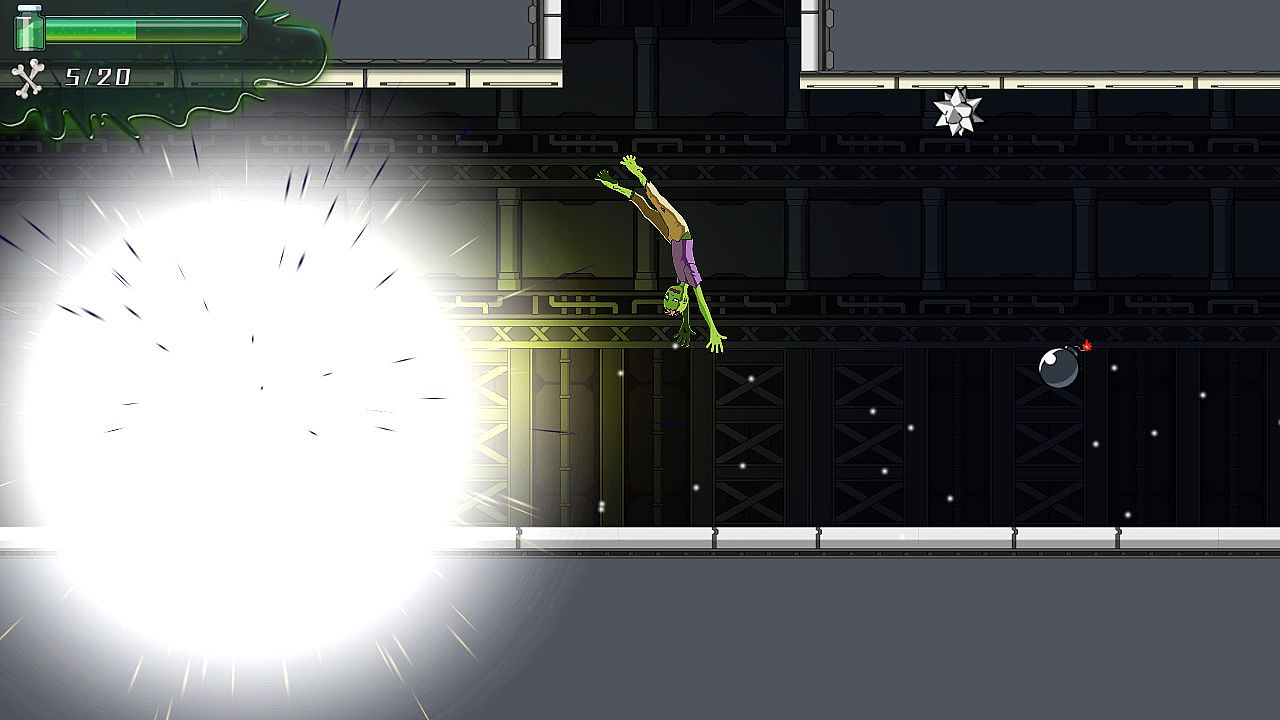
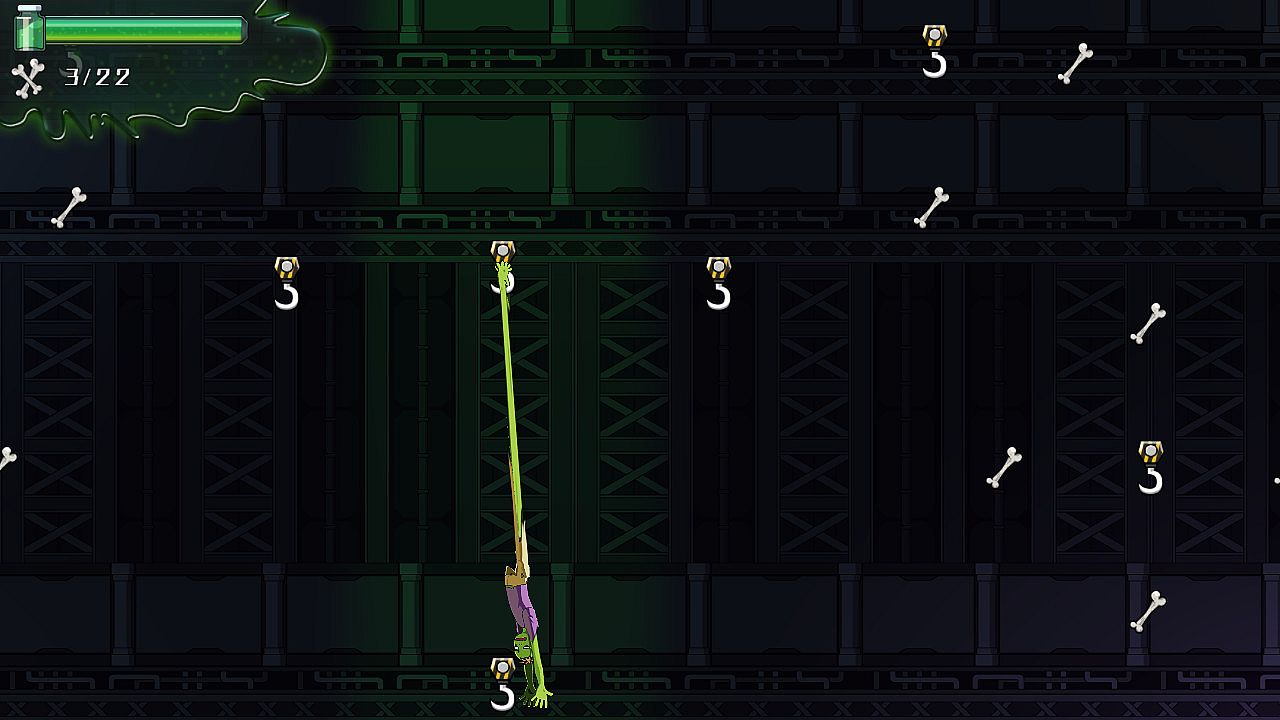
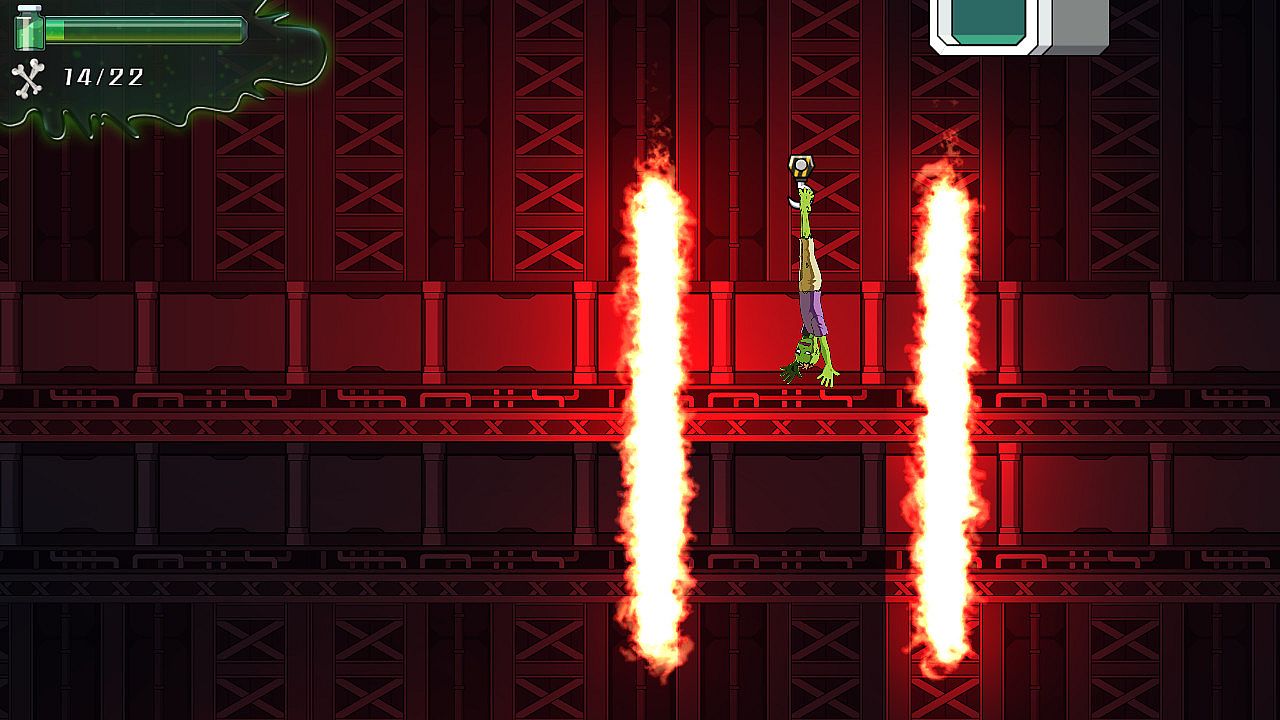
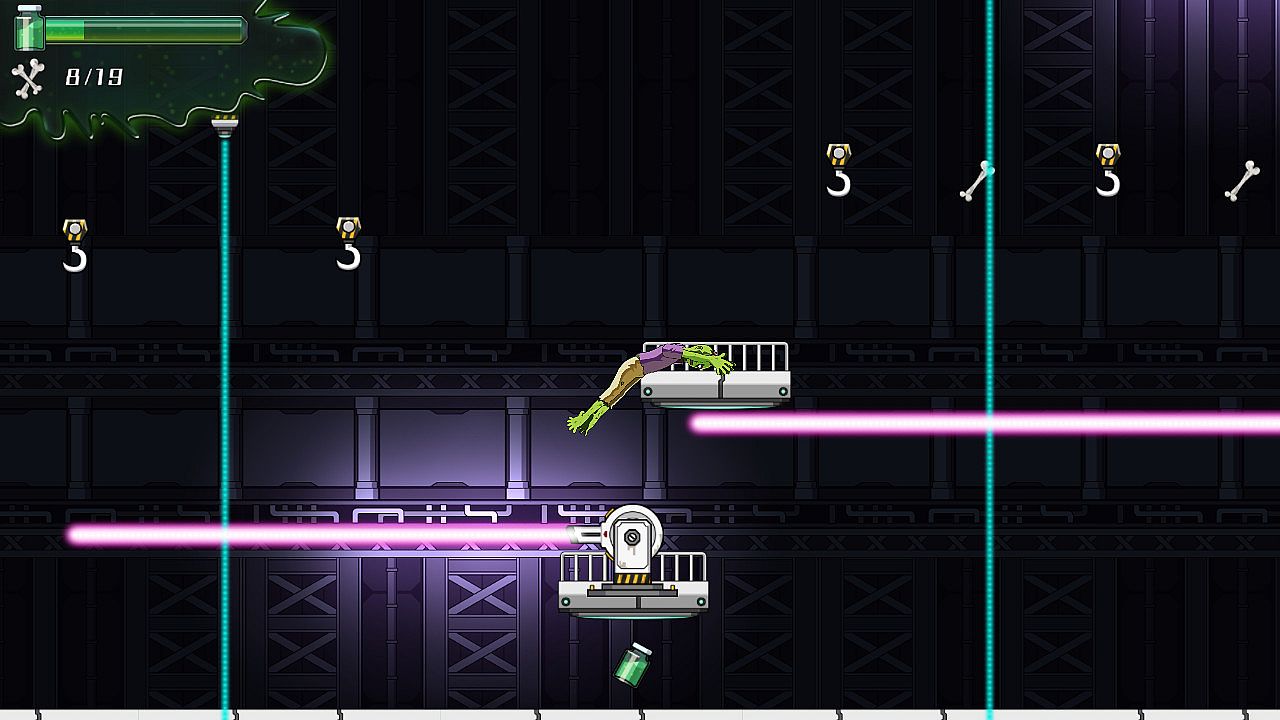
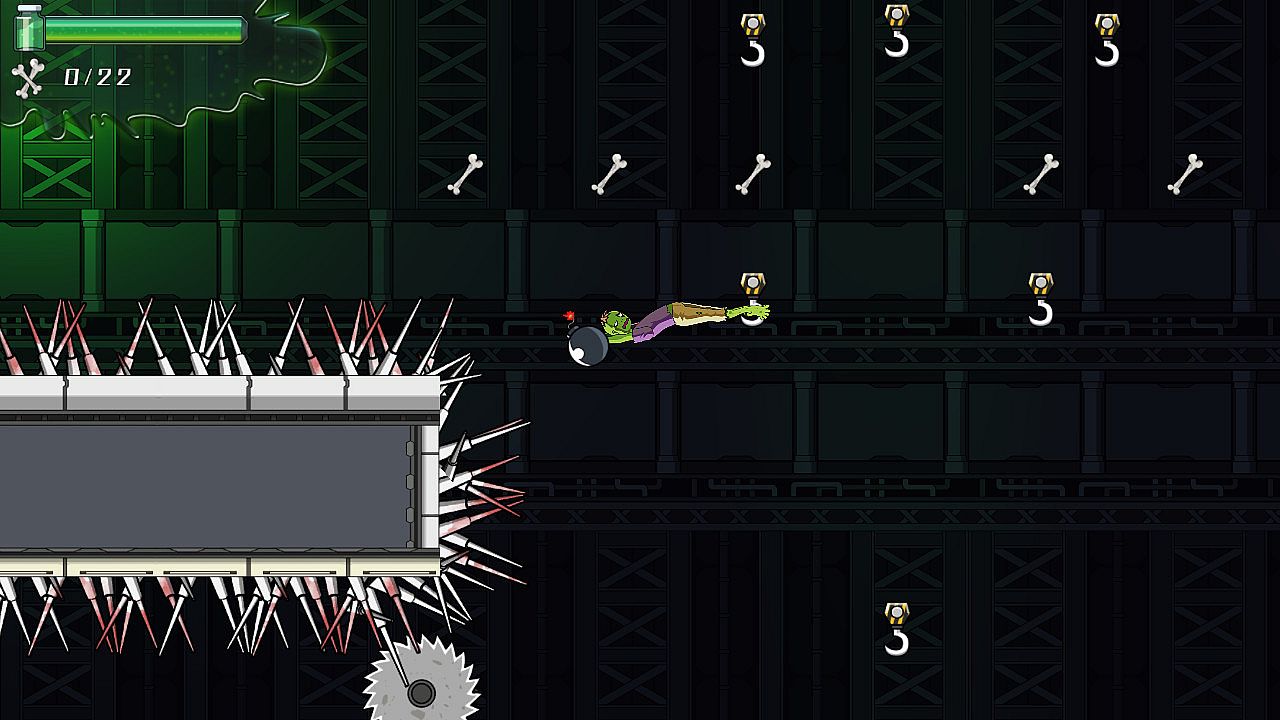
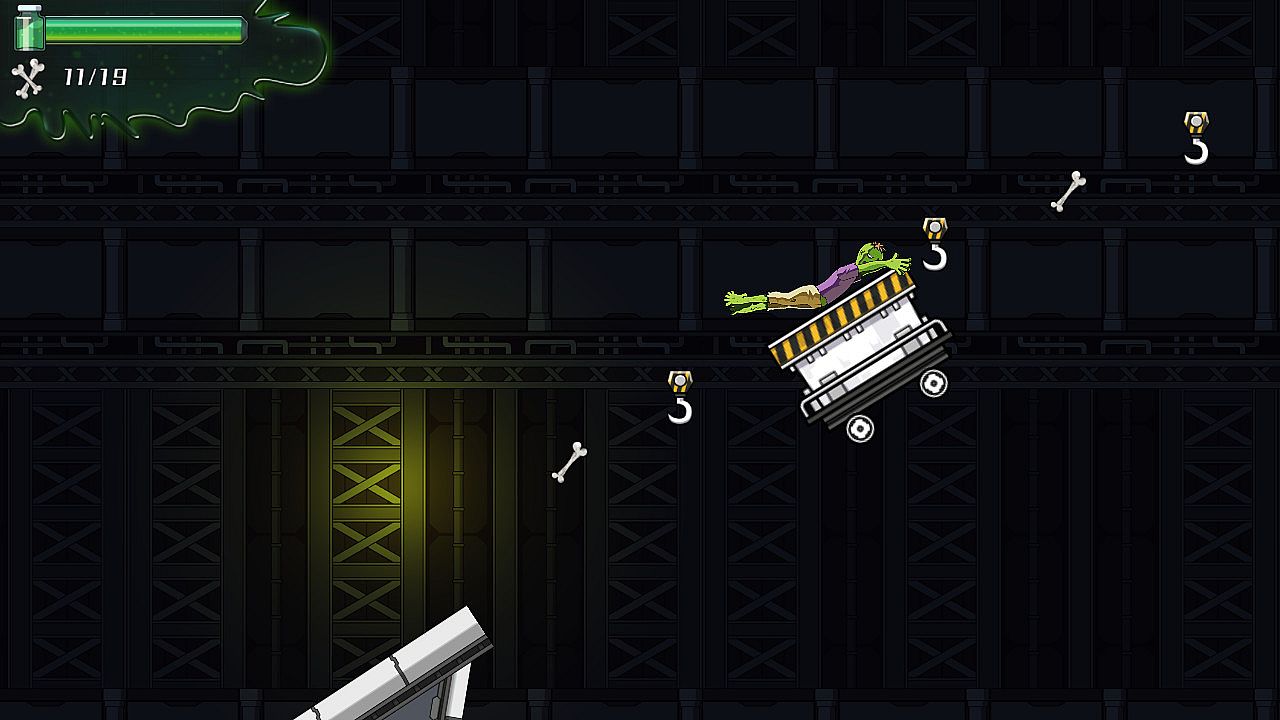
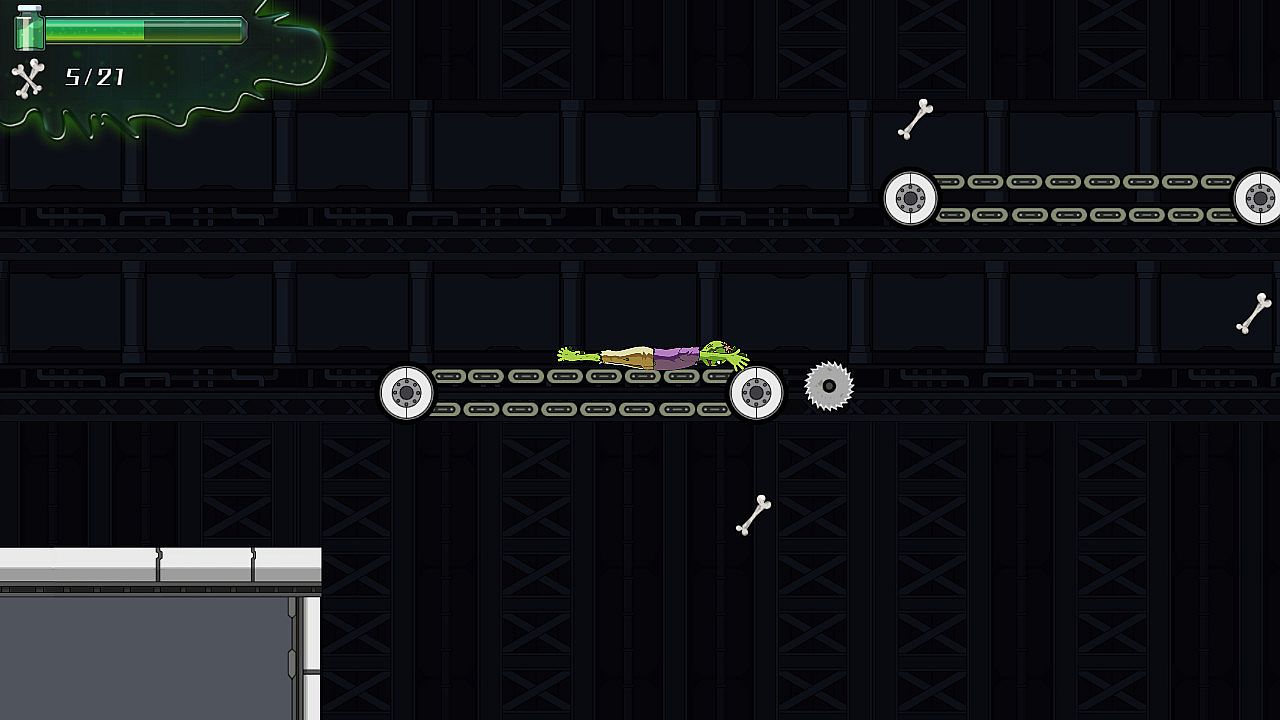
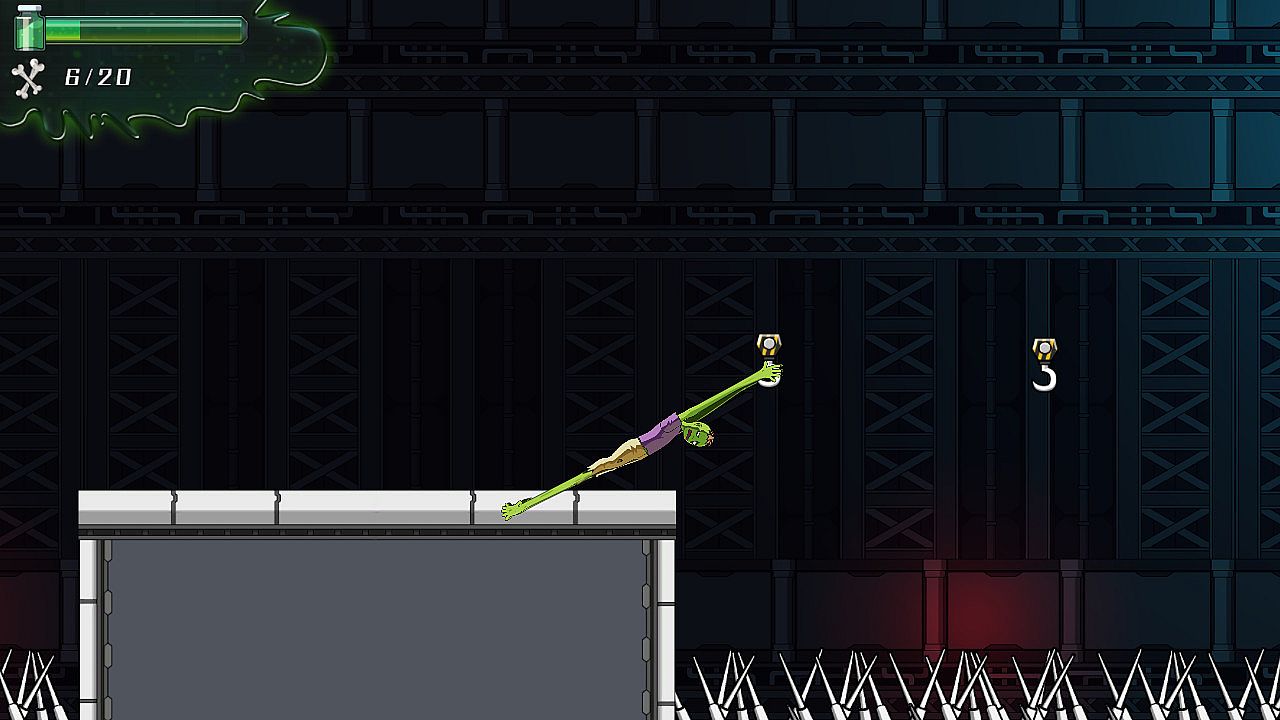
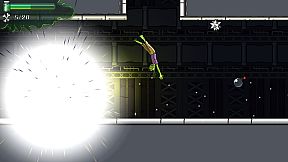
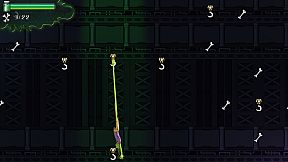
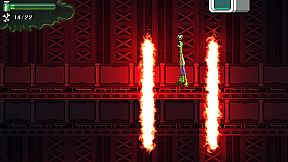
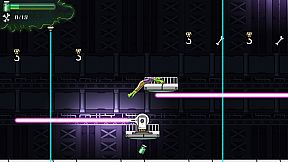
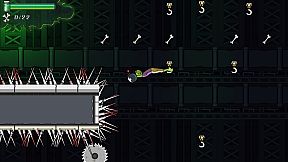
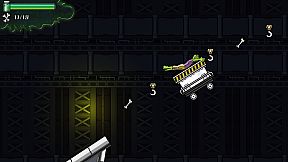
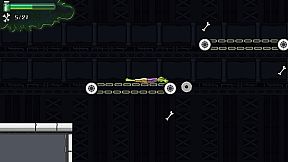
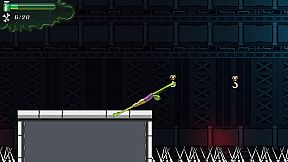
Boneless Zombie is a 2D physics platformer where players control a rubber-bodied zombie navigating laboratory stages toward an exit. The core appeal lies in its elastic movement system that turns basic platforming into a puzzle of stretching and retracting limbs to interact with the environment.
Gameplay
The central mechanic revolves around the zombie's boneless form, which stretches arms and legs on command to reach distant platforms, pull the body upward, or latch onto surfaces. This allows climbing vertical walls and hanging from ceilings to bypass ground-level obstacles. Stages incorporate various traps and environmental gimmicks that demand precise timing and creative use of the stretch ability to progress safely.
Physical interactions produce unusual motions as the body extends and snaps back, often leading to momentum-based swings or rebounds off surfaces. A self-destruct option serves as a reset tool during tricky sections. Scattered bones appear throughout each stage as collectibles that encourage exploration beyond the direct path to the goal.
Controls remain straightforward, relying on directional input combined with stretch commands rather than complex button combinations. The casual action focus keeps sessions short while the physics layer adds replay value through different approaches to the same obstacles.
Game Modes
Boneless Zombie operates as a single-player experience centered on sequential stage completion. Each area presents a self-contained challenge where the objective is reaching the exit while managing the zombie's elastic properties against traps and layout constraints. Progression builds familiarity with the stretch mechanics across increasingly intricate setups.
Collection of bones adds a secondary layer within stages, prompting players to deviate from the main route for optional items. No separate competitive or cooperative formats exist, keeping the emphasis on individual mastery of the physics-based navigation.
Story and Setting
The narrative follows a young man transformed into the boneless zombie during experiments at a secretive laboratory. After rescue by his girlfriend, security measures activate, separating the pair and forcing the protagonist to escape alone using his new abilities. The laboratory environment serves as the sole setting, filled with the traps and capsules that define the gameplay obstacles.
Story elements appear through brief context rather than extended cutscenes, framing the escape as a personal drive tied to the hope of reunion. This minimal approach aligns with the game's focus on mechanical experimentation over narrative depth.
Is It Worth Playing?
Reception stands at mixed levels with 64 percent positive feedback from a modest number of reviews. The title suits players drawn to short, inventive platformers that prioritize unique movement over polished presentation or lengthy campaigns. Those who enjoy experimenting with physics to solve spatial puzzles will find the stretch mechanics engaging across its stages.
Its casual nature and simple inputs make it accessible for quick sessions, though the dated release means limited ongoing support or community activity. Availability on PC keeps it straightforward for anyone interested in niche 2D action experiences centered on elastic body control and trap navigation.