




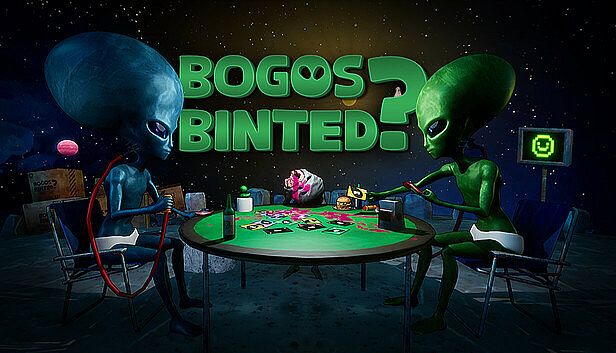













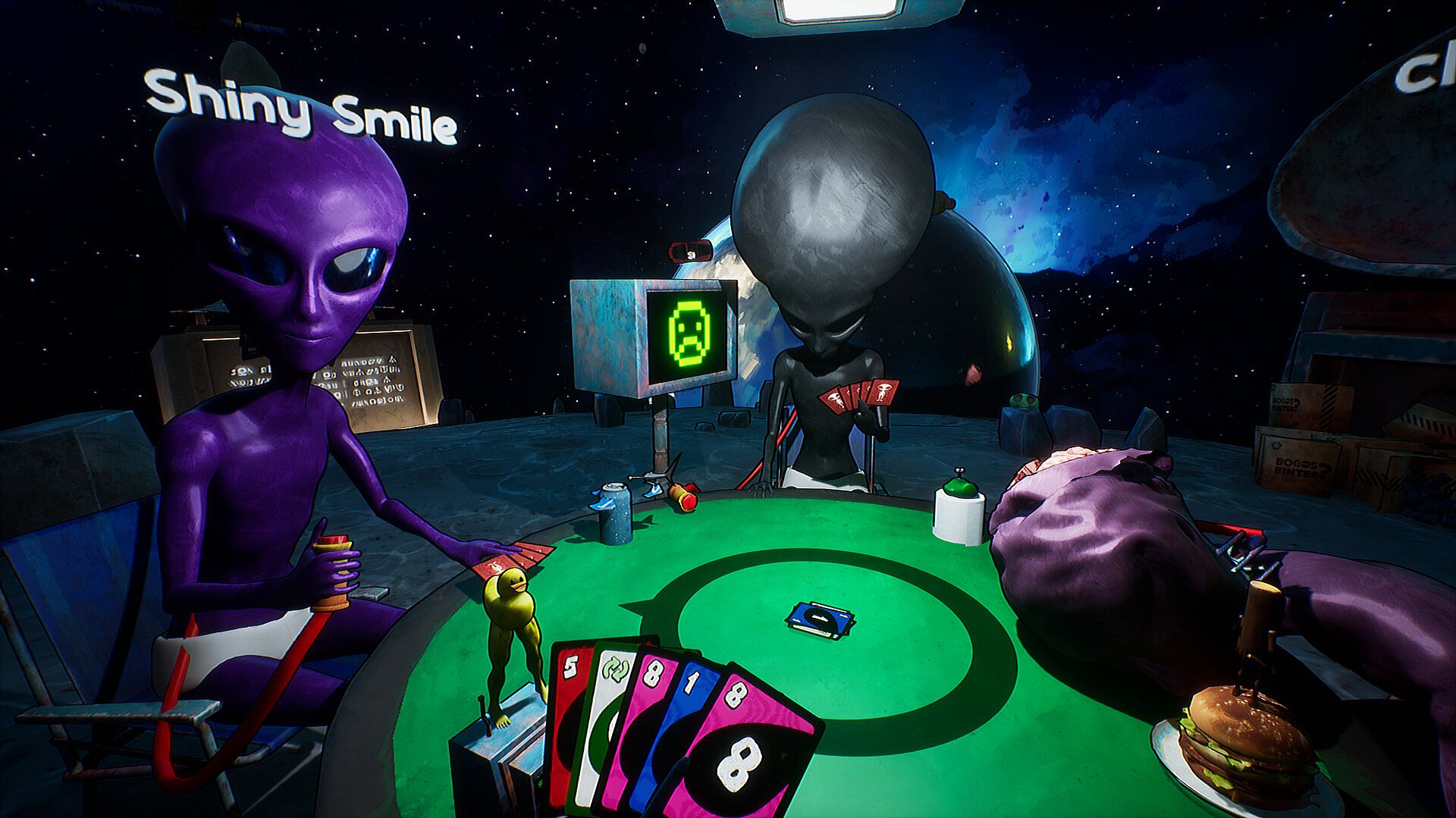
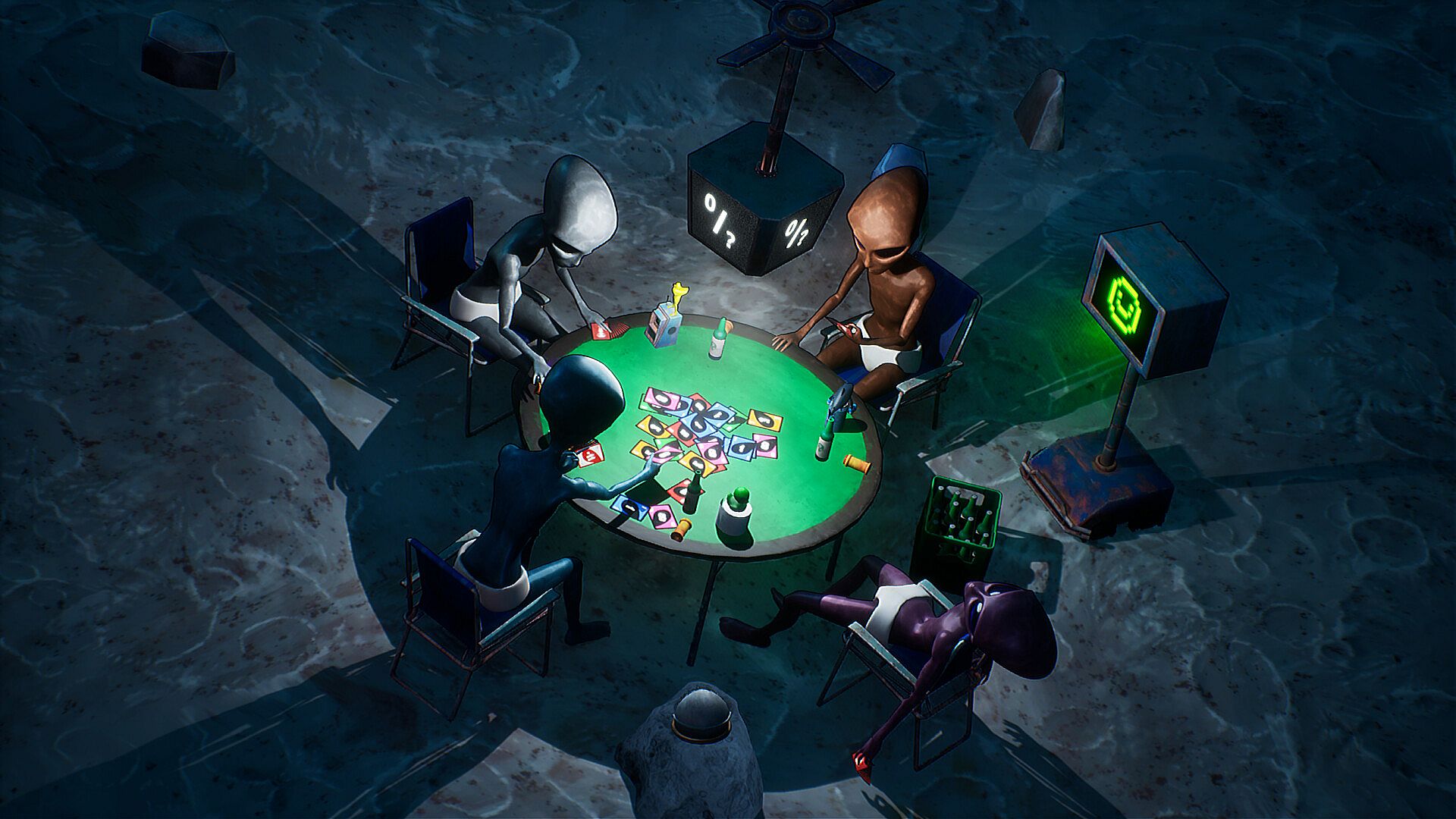
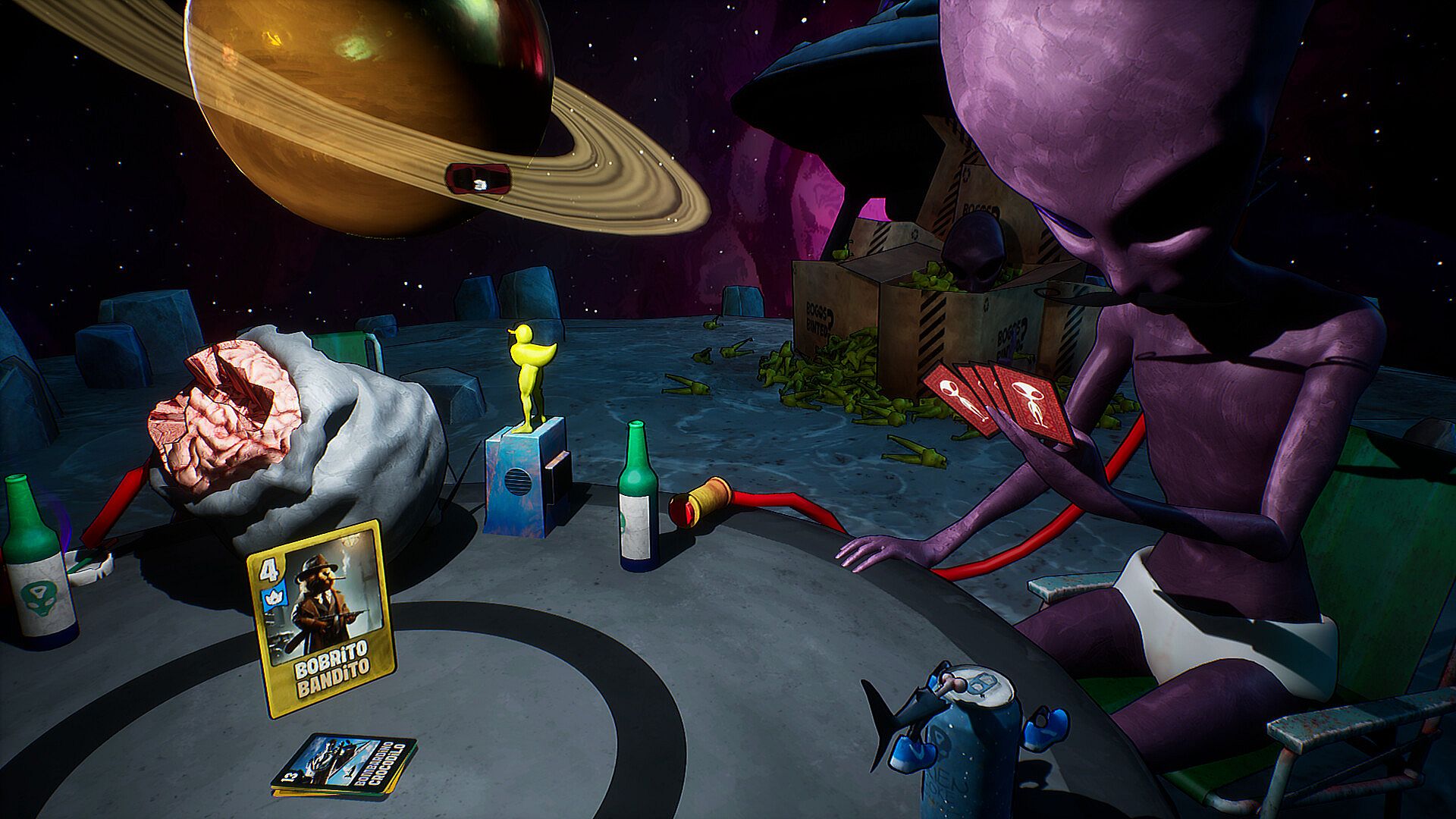
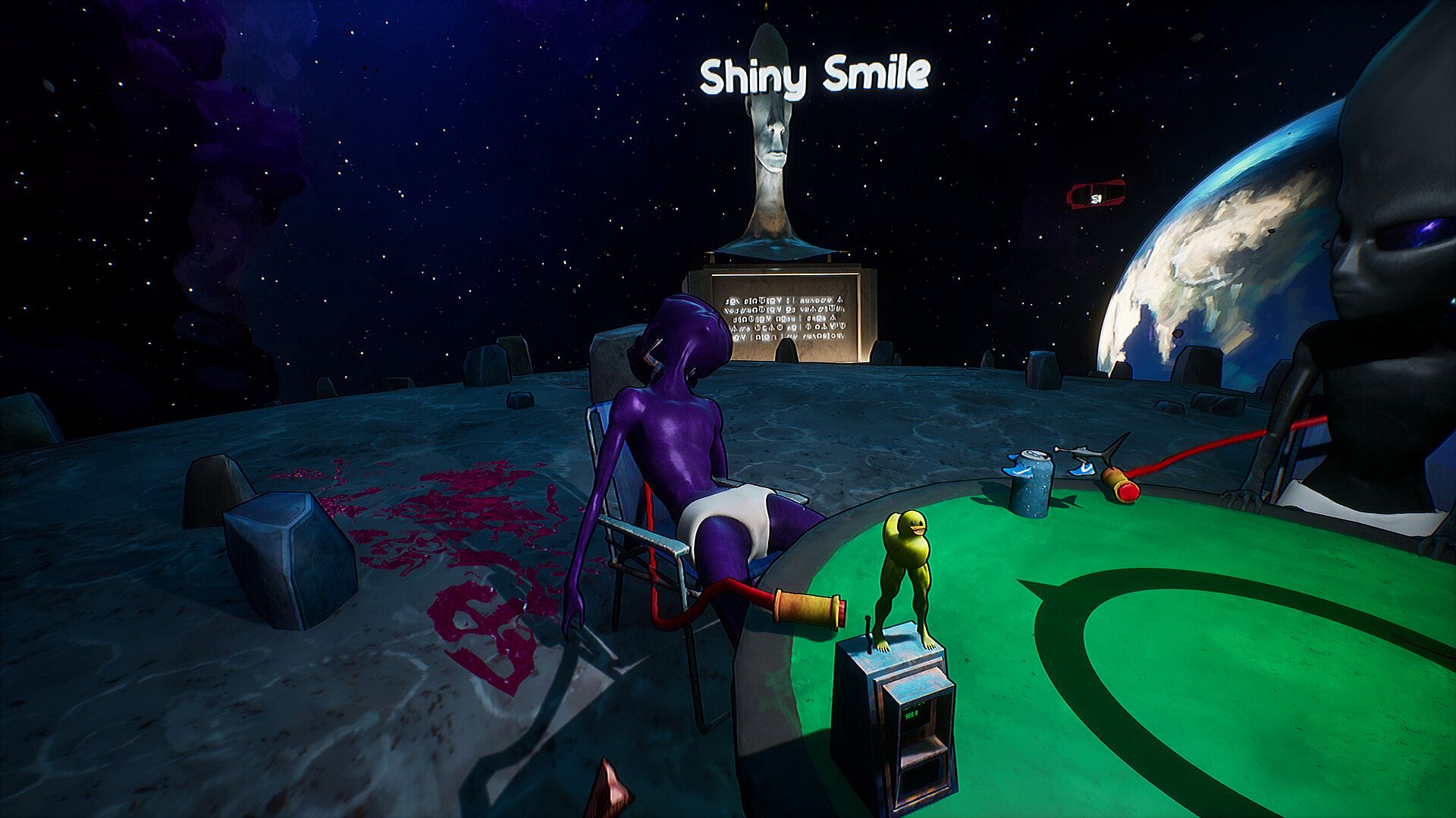
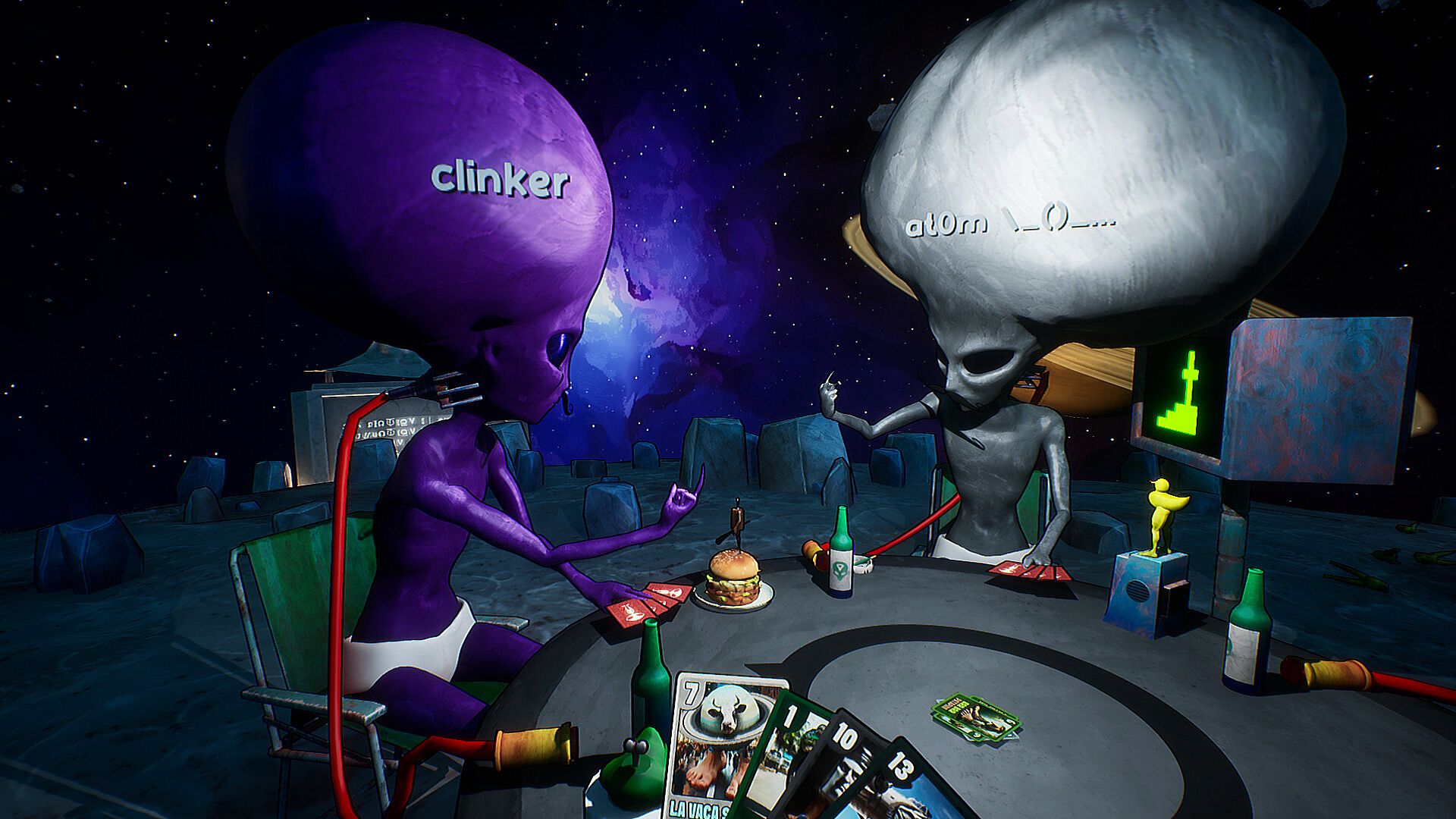
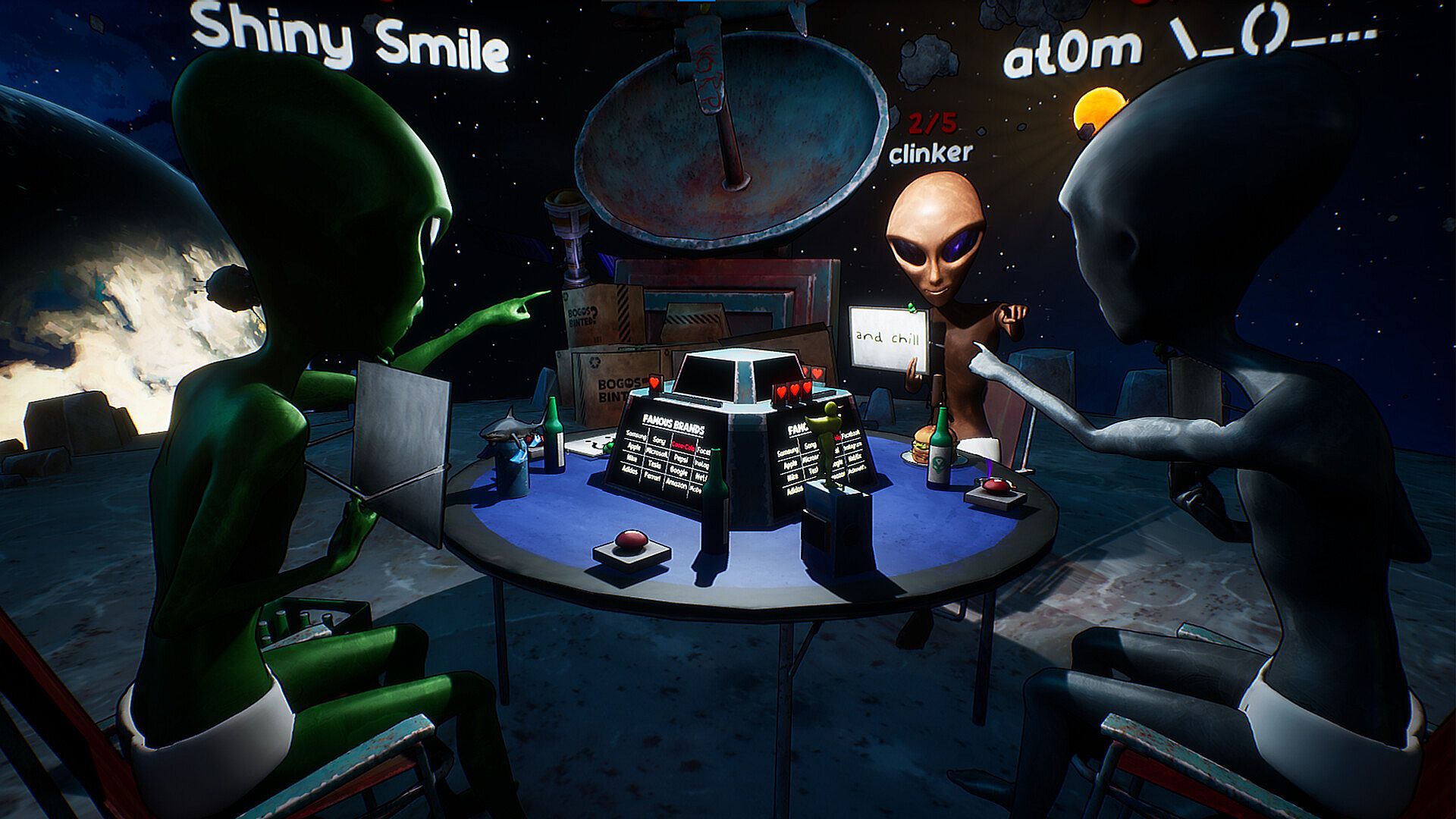
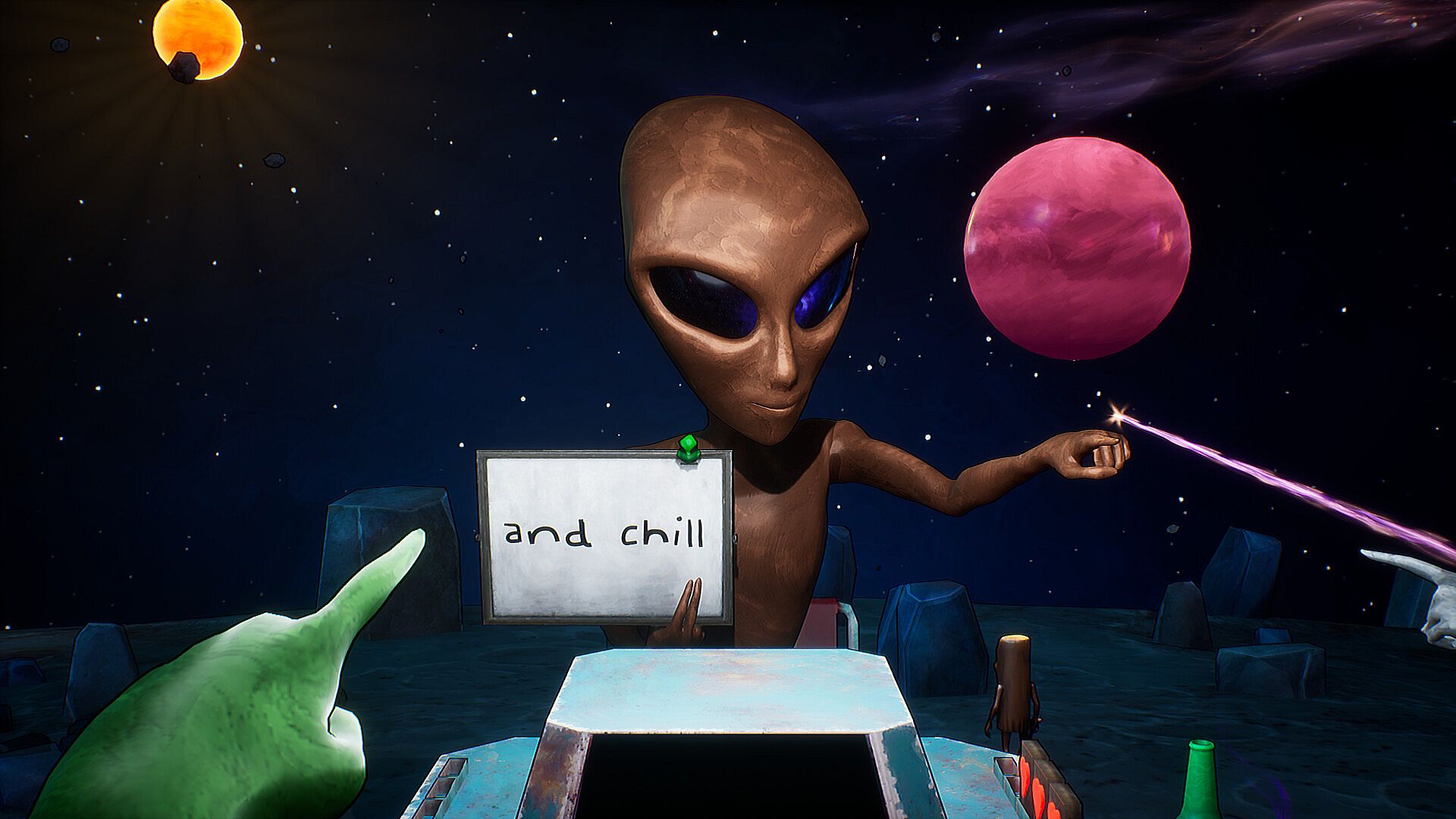
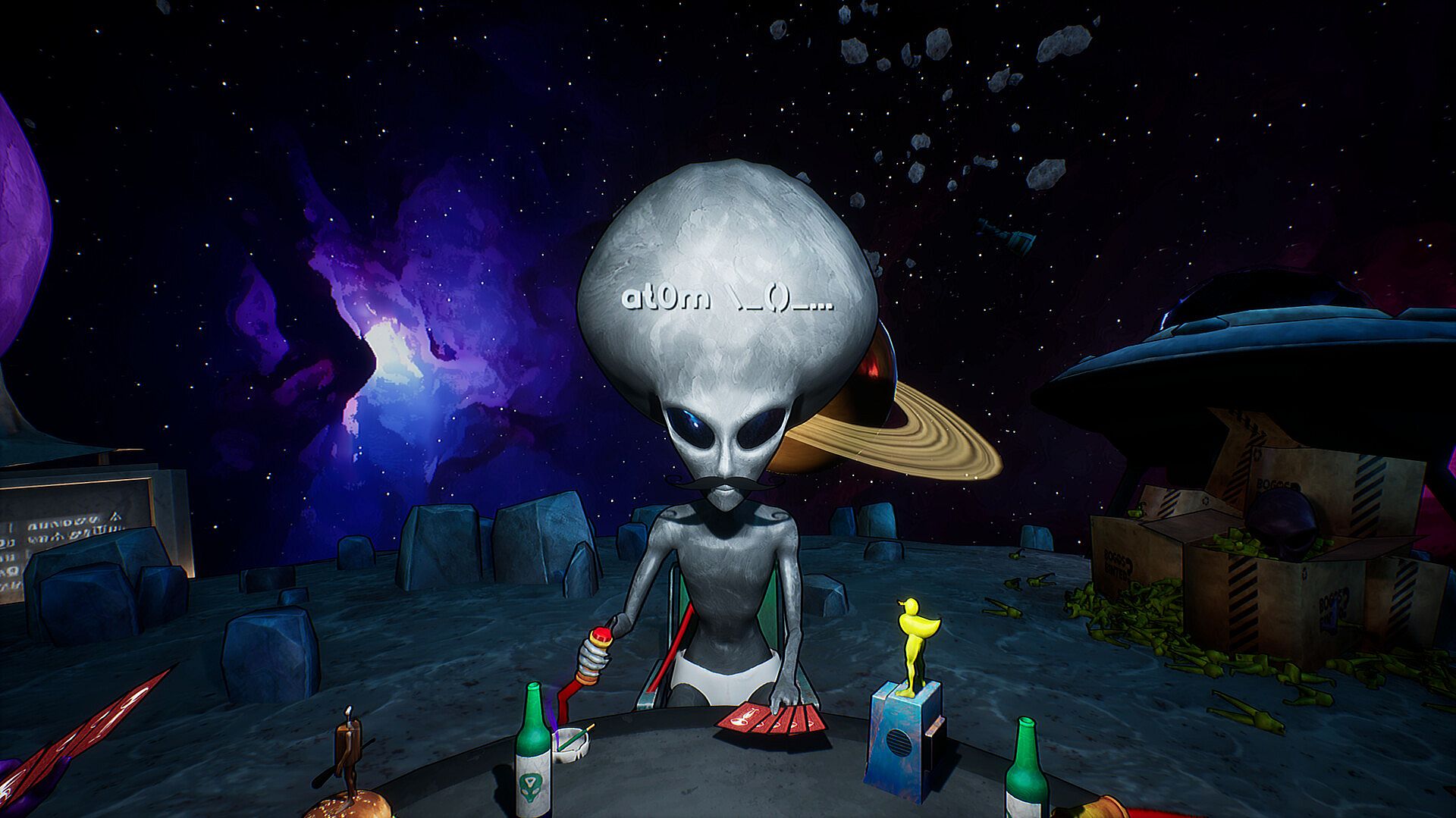
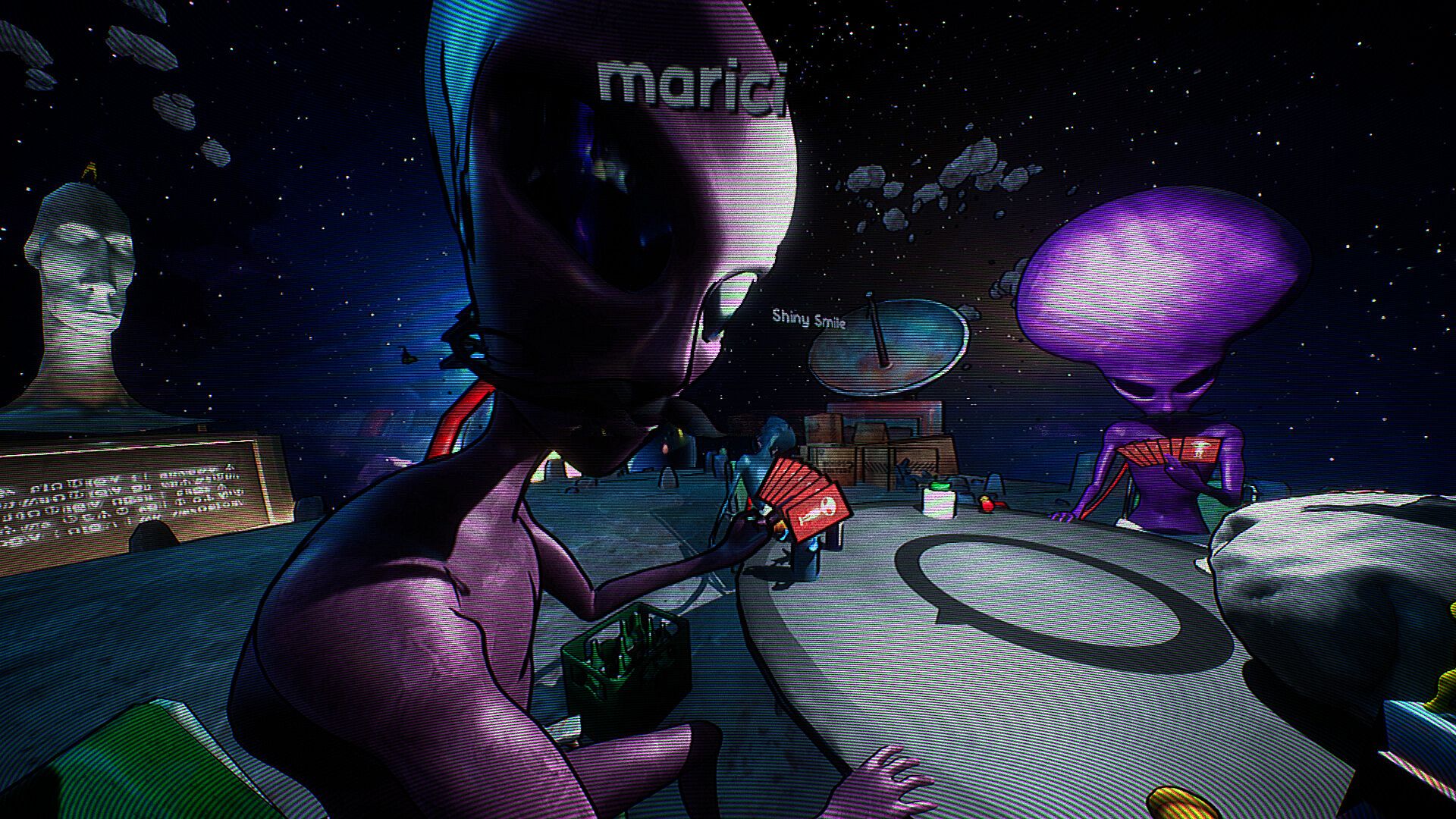

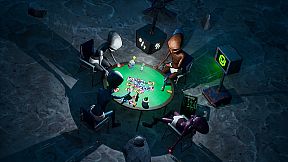
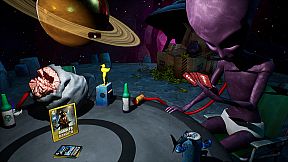
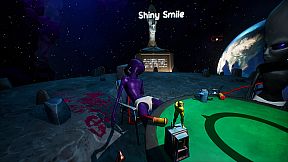
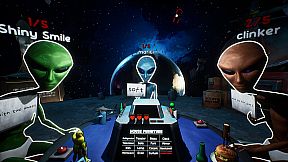
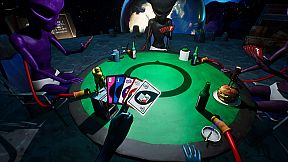
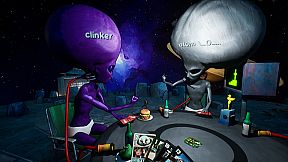
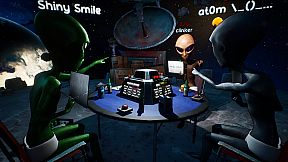

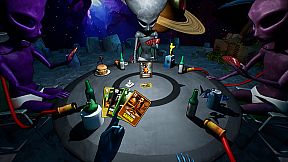




Bogos Binted? is a first-person online multiplayer strategy game for PC that places players in the role of aliens competing in twisted tabletop card games. The title combines elements of strategy, indie development, casual play, and simulation through its focus on bluffing, risk management, and social deduction mechanics. Up to four participants join sessions where the objective centers on outmaneuvering opponents without triggering the signature head inflation penalty that eliminates players from rounds.
Gameplay
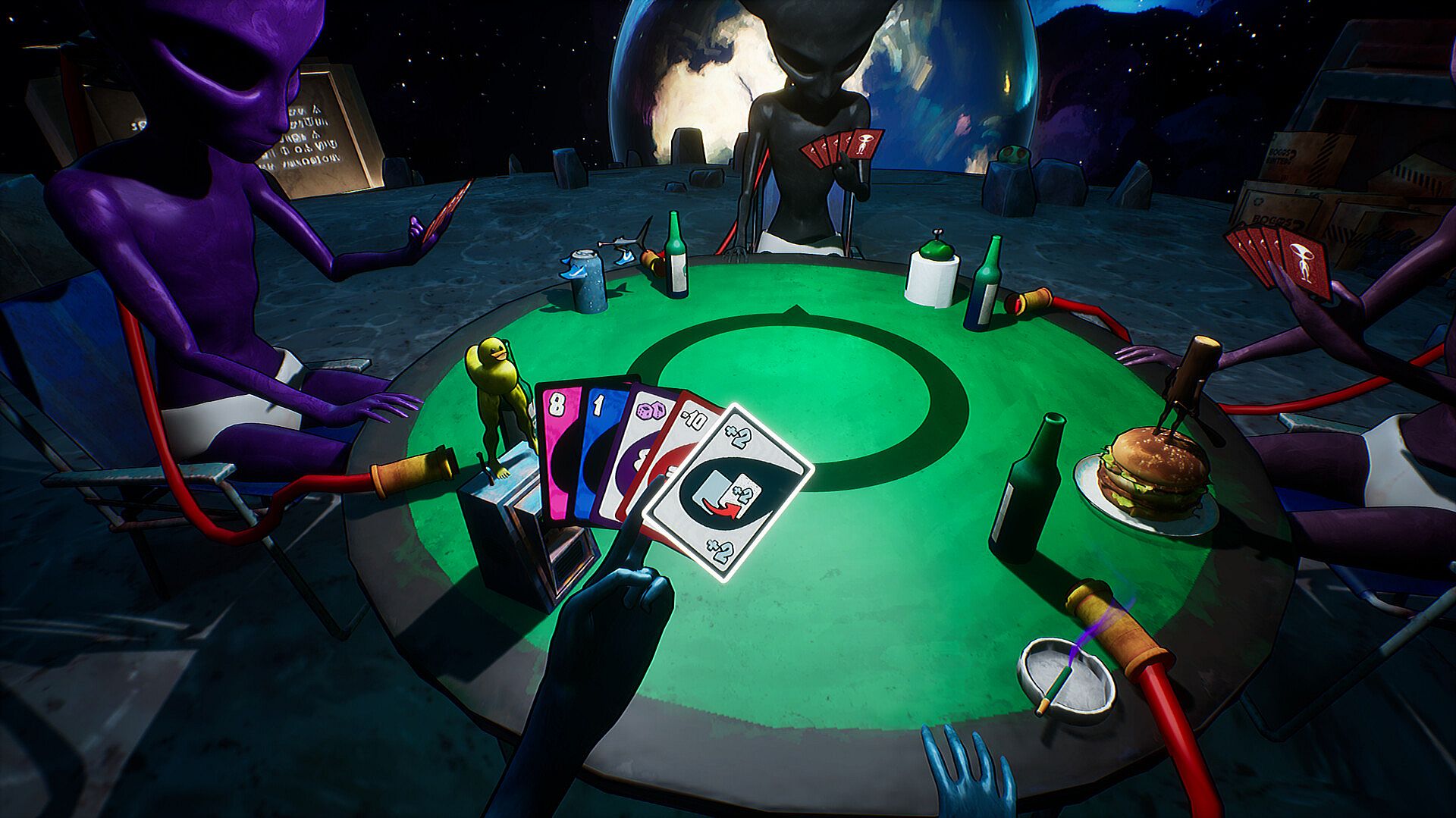
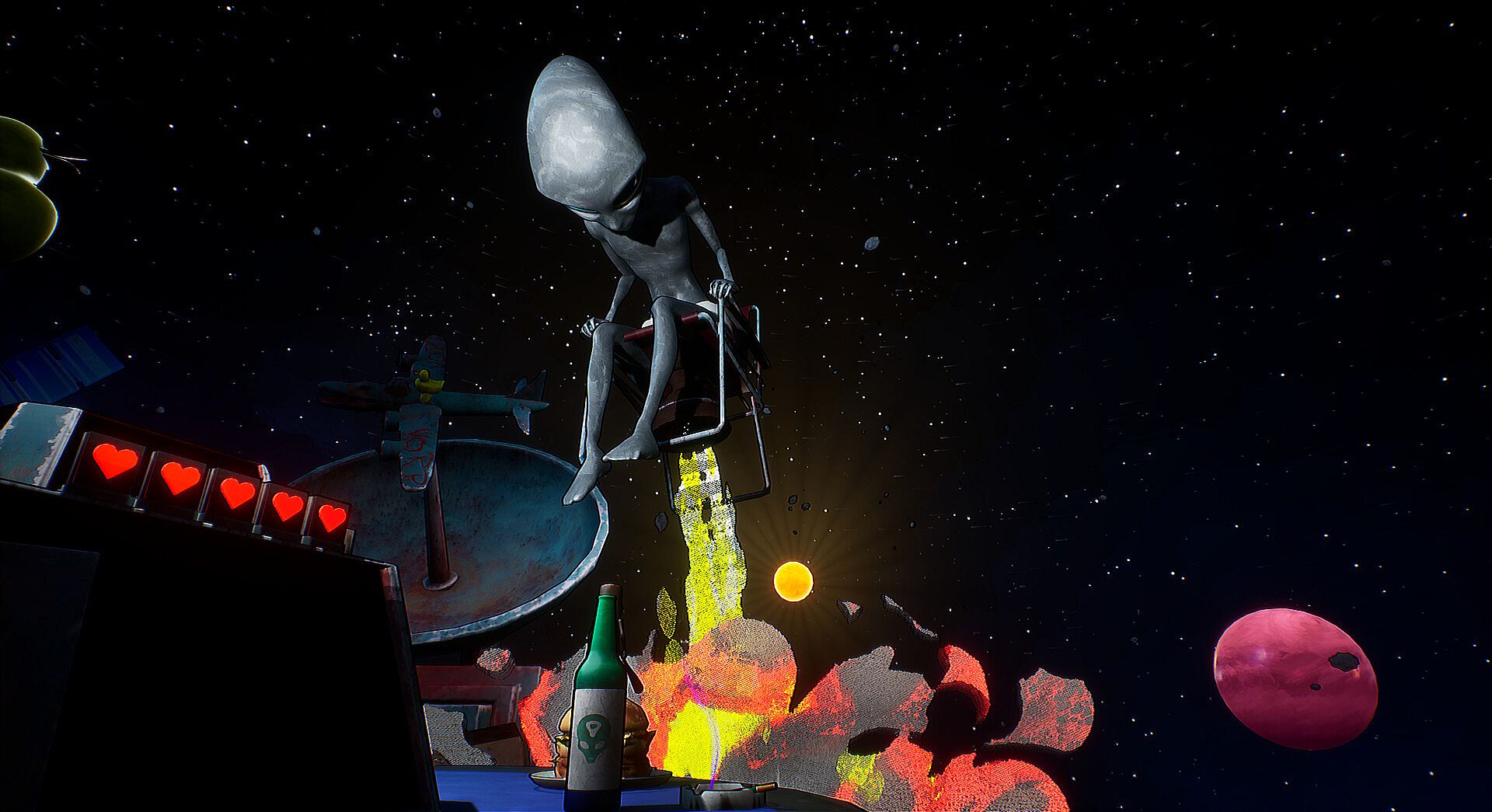
Core loops revolve around shared card tables where participants manage hands of number cards and special abilities. Turns proceed with additions to running totals or placements that match table requirements, and special cards introduce disruptions such as forced draws or direct challenges. The head inflation system serves as the primary failure state: exceeding limits or failing bluffs causes visible expansion, with survival or elimination determined by random outcomes or opponent actions. Sessions emphasize quick rounds that reward observation of patterns and timely use of tricks rather than long-term progression systems.
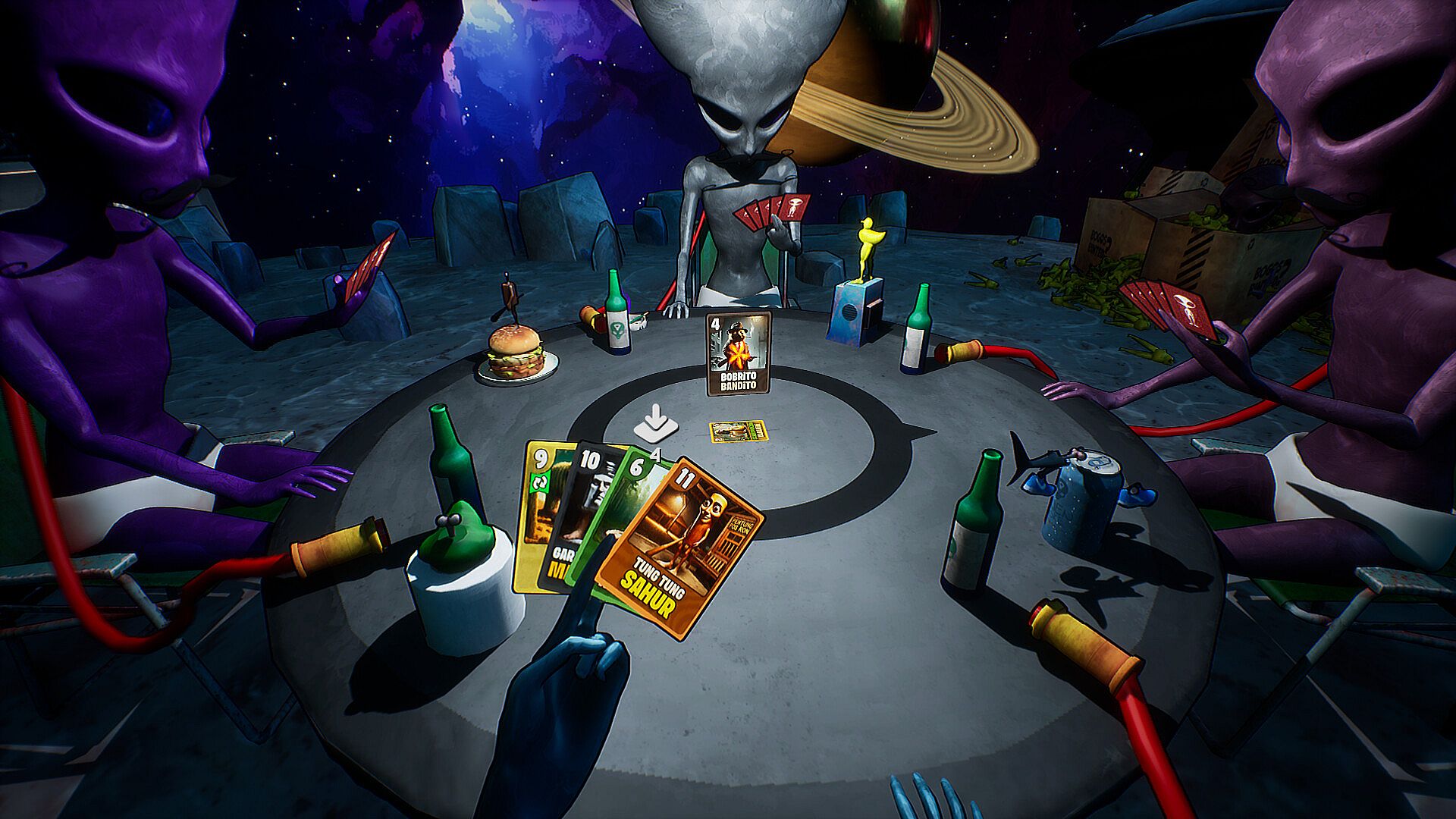
Players maintain consistent hand sizes through draws after each play, which keeps pressure high and prevents hoarding advantages. Special cards alter standard rules mid-round, forcing adaptations that shift from straightforward number management to chaotic interference. The first-person perspective keeps attention on the table and opponents' reactions, supporting the casual simulation of alien social dynamics without complex controls or movement requirements.
Game Modes
Four distinct modes structure the experience, each built around unique card interactions and win conditions. Zogblorp requires adding numbers to a shared total without surpassing a target value, with special cards enabling misdirection or penalties against rivals. Rounds end when one player exceeds the limit and faces the inflation check.
Beeble Meep involves face-down placements of matching cards accompanied by verbal declarations that may or may not match the actual values. Any participant can challenge a suspected lie by calling the mode's namesake phrase, triggering inflation for the liar on a correct call or the challenger on an incorrect one. A Deadeye card occasionally allows the accused to redirect consequences toward another player.
Zinky Zoogle deals three cards to each participant at the start of rounds, with plays required to equal or exceed the table's current card. Multiple identical numbers can combine for stronger moves, and a lack of valid plays results in immediate inflation. Special cards provide ways to reset or modify the table state.
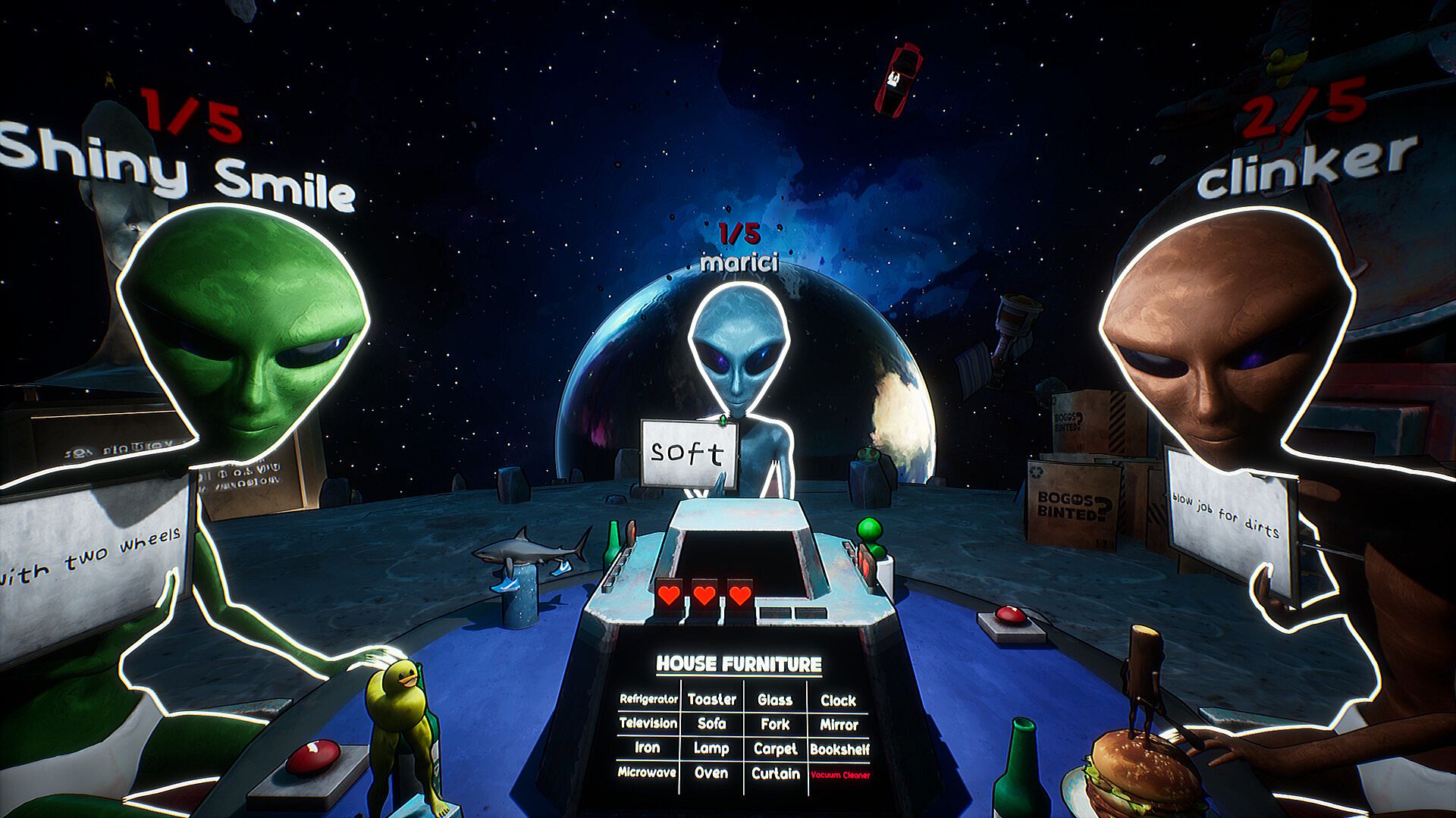
Vorp assigns one player the hidden role of impostor while others receive a secret word and write clues. The impostor fabricates a clue and attempts to identify the word during discussion and voting phases. Successful identification of the impostor leads to a final guess attempt, with repeated failures costing lives until elimination occurs.
Multiplayer Structure and Current State
Matches support two to four participants in online sessions that last roughly the length of several card rounds. No offline or solo modes extend beyond limited practice options for individual games. The design prioritizes repeated short plays that encourage repeated sessions among the same groups, with mechanics that scale in tension as players learn each other's tendencies.
The game reached full availability following its Early Access period, maintaining active support through standard updates that refine balance and add minor table variations. Player counts fluctuate but remain viable for quick matchmaking in the casual strategy niche.
Is It Worth Playing?
Reviews on major platforms classify the title as Very Positive, with over one thousand user assessments reflecting consistent enjoyment of the bluffing and inflation mechanics. The straightforward rules lower barriers for new groups while the four modes provide enough variety to sustain interest across multiple evenings. It suits players seeking short, social strategy sessions rather than deep single-player campaigns or large-scale battles.
Those who appreciate party games with lying elements and immediate feedback from physical-style penalties will find the core loop engaging. Groups that value quick setup and chaotic outcomes over polished production values or extensive customization will likely return regularly. The absence of complex progression keeps focus on the moment-to-moment decisions that define each round.














