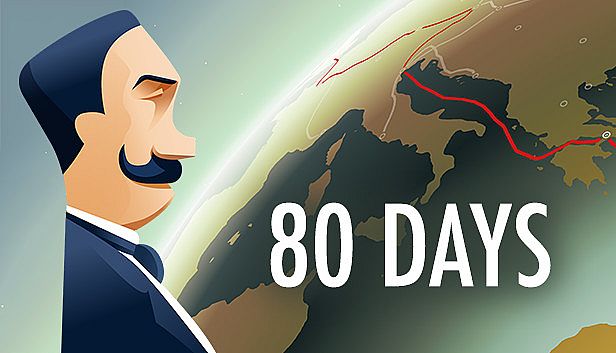











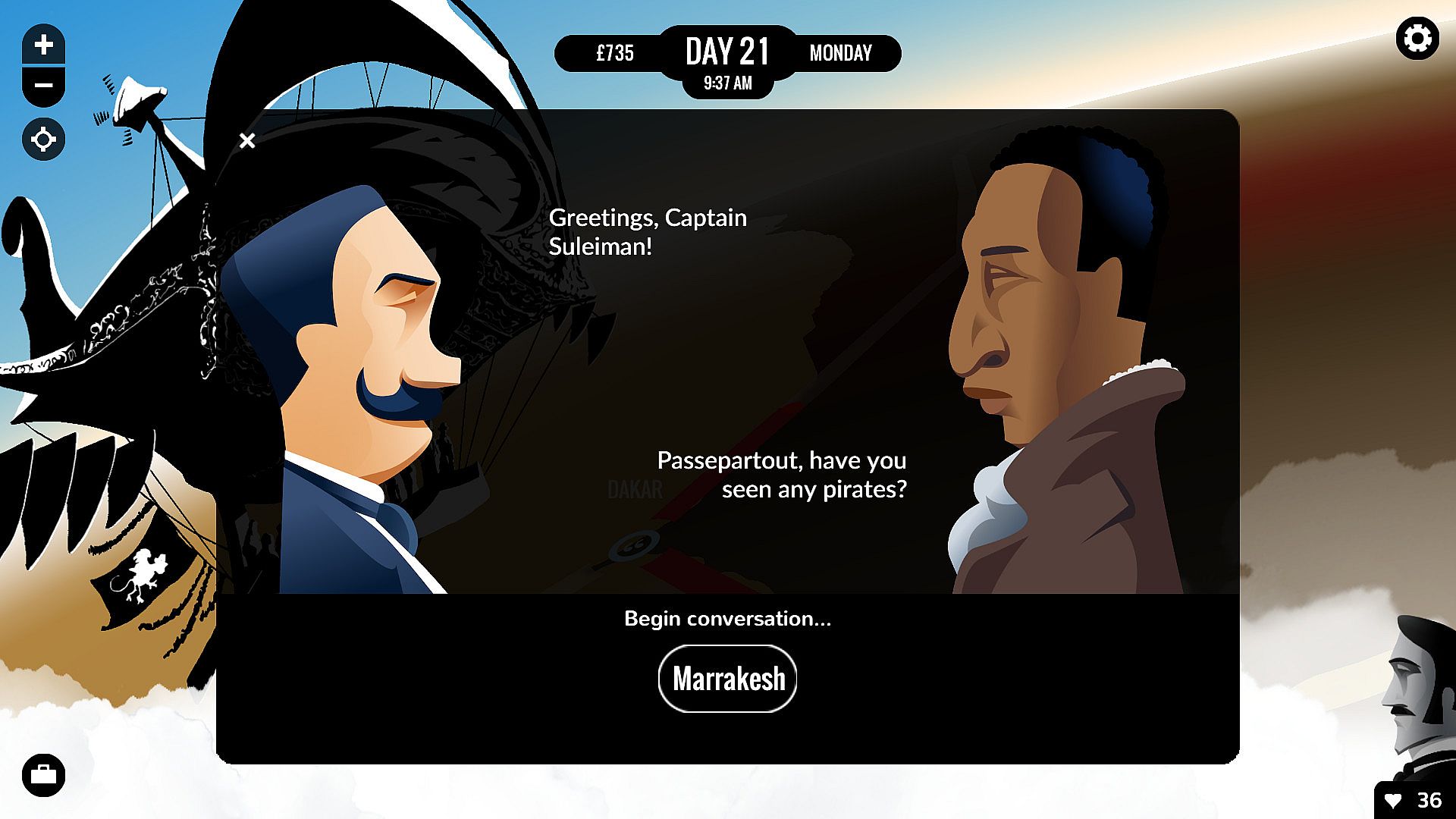
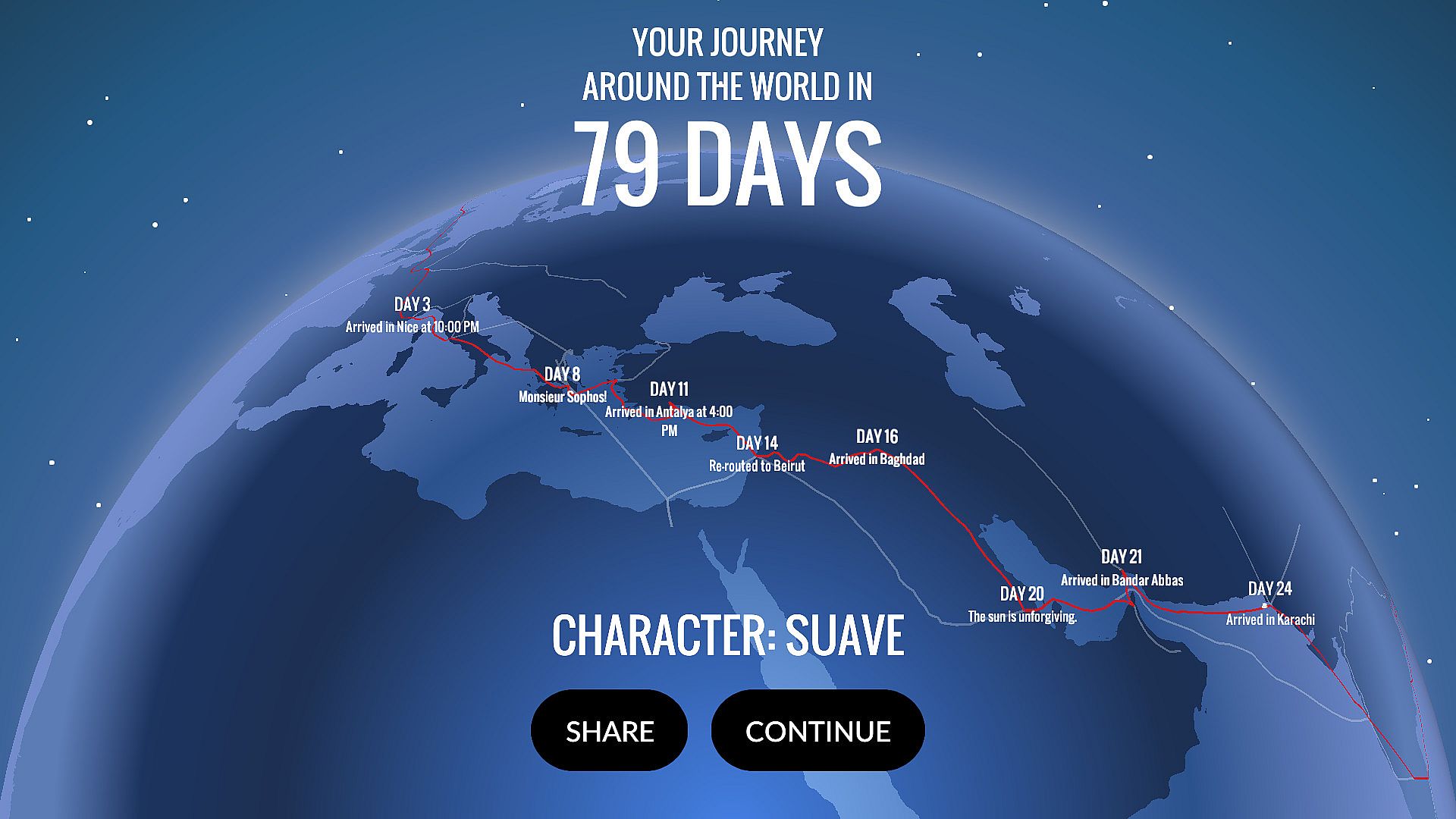
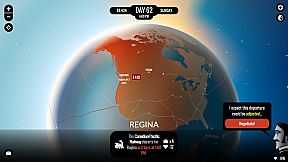
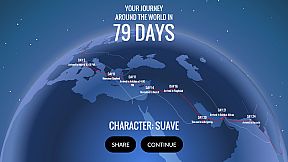
80 Days is an indie strategy adventure game that puts players in the role of Passepartout, the loyal valet to Phileas Fogg. Set in an alternate 1872 filled with steampunk inventions, the title challenges players to guide Fogg on a complete circumnavigation of the globe within eighty days. The experience blends route planning, resource management, and branching narrative choices across a detailed 3D world map featuring 170 cities.
Gameplay
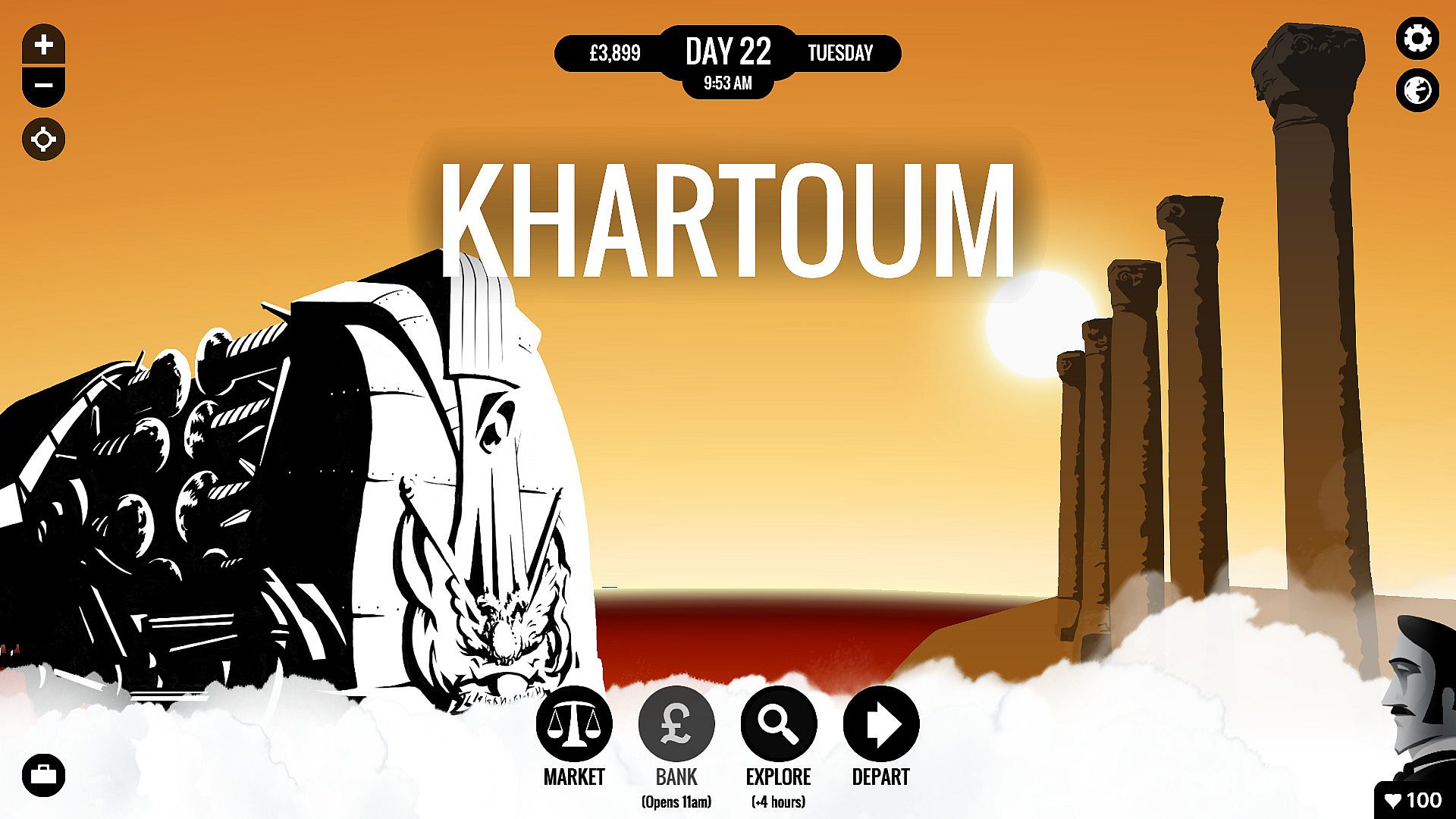
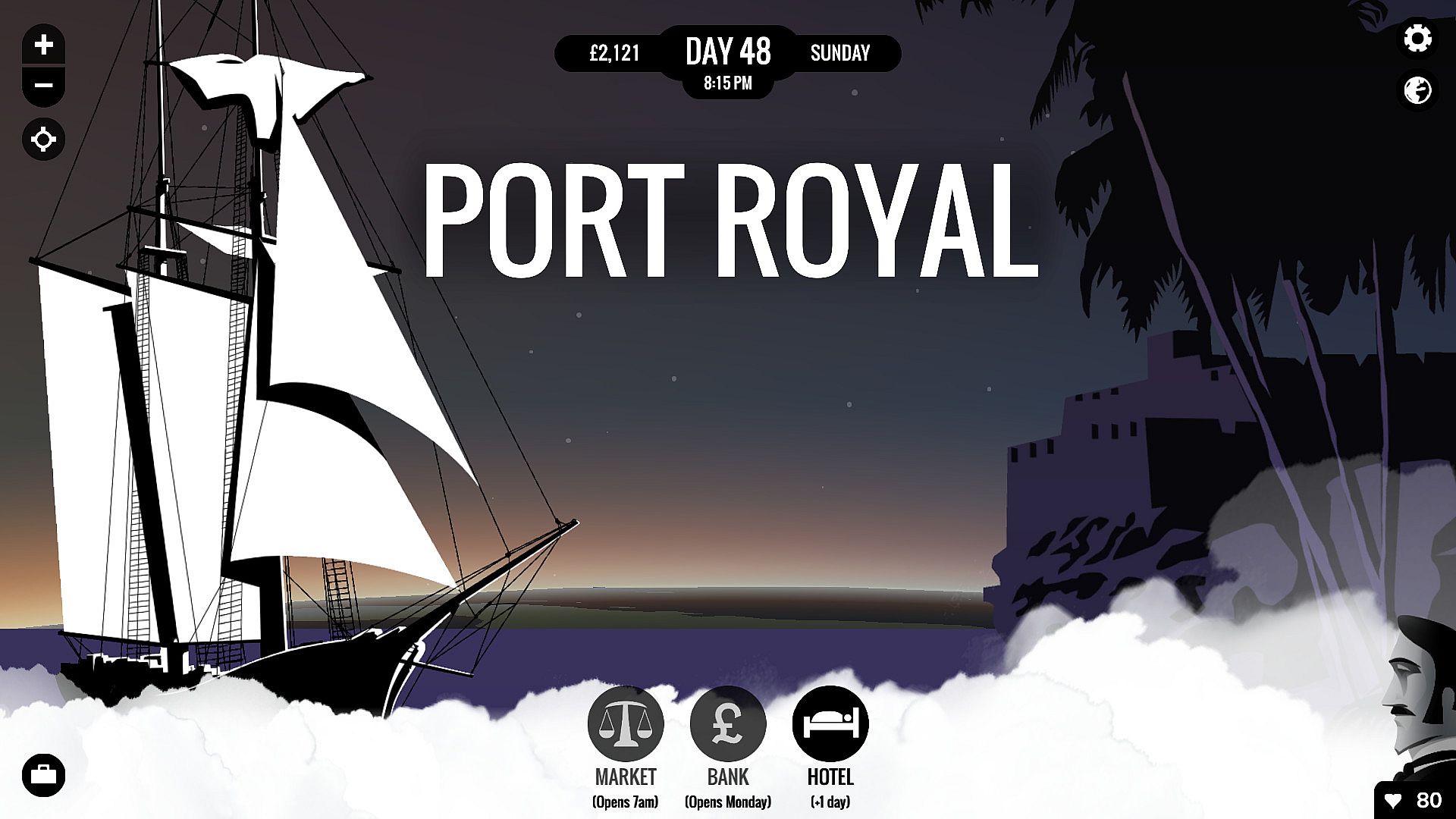
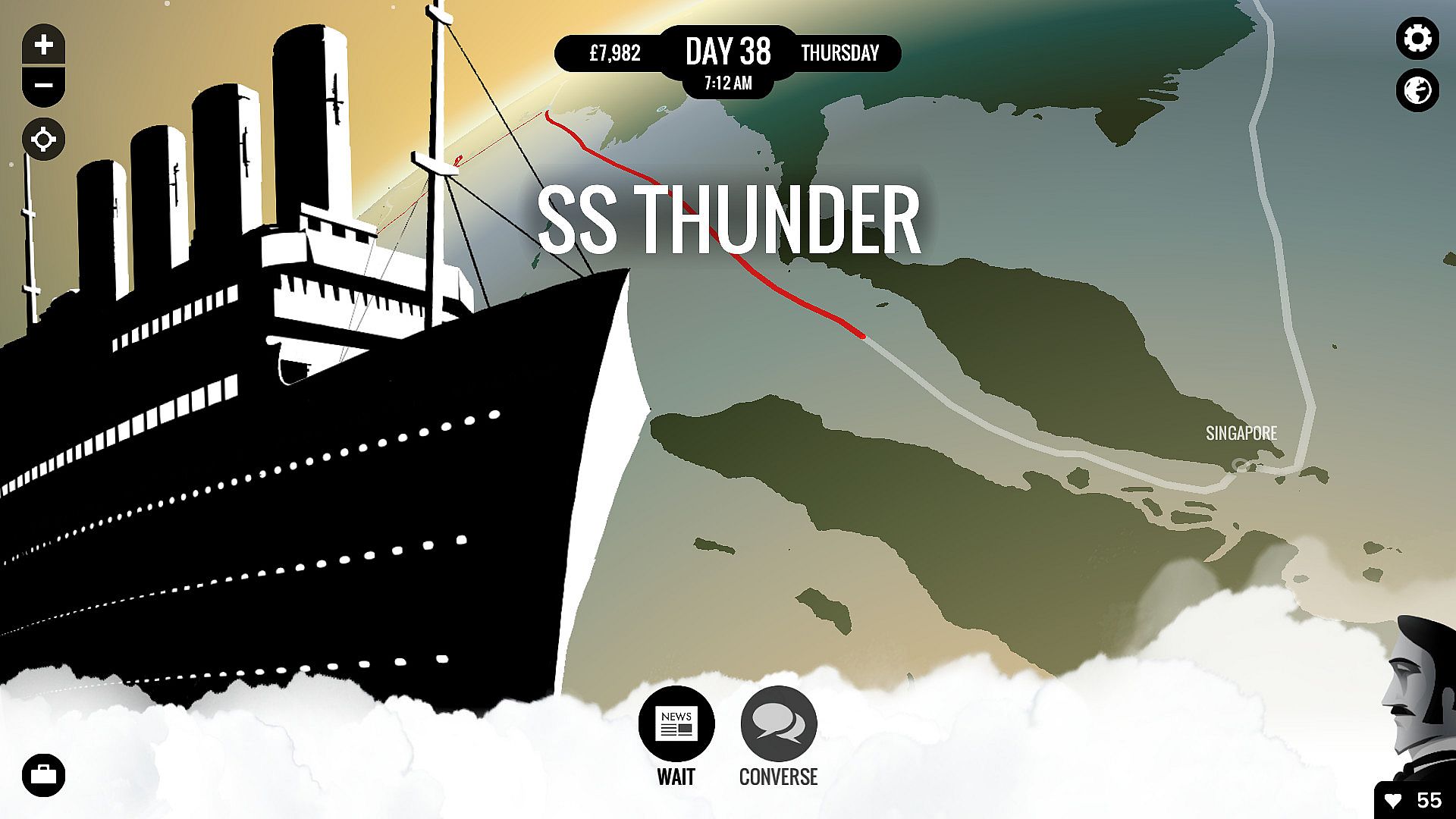
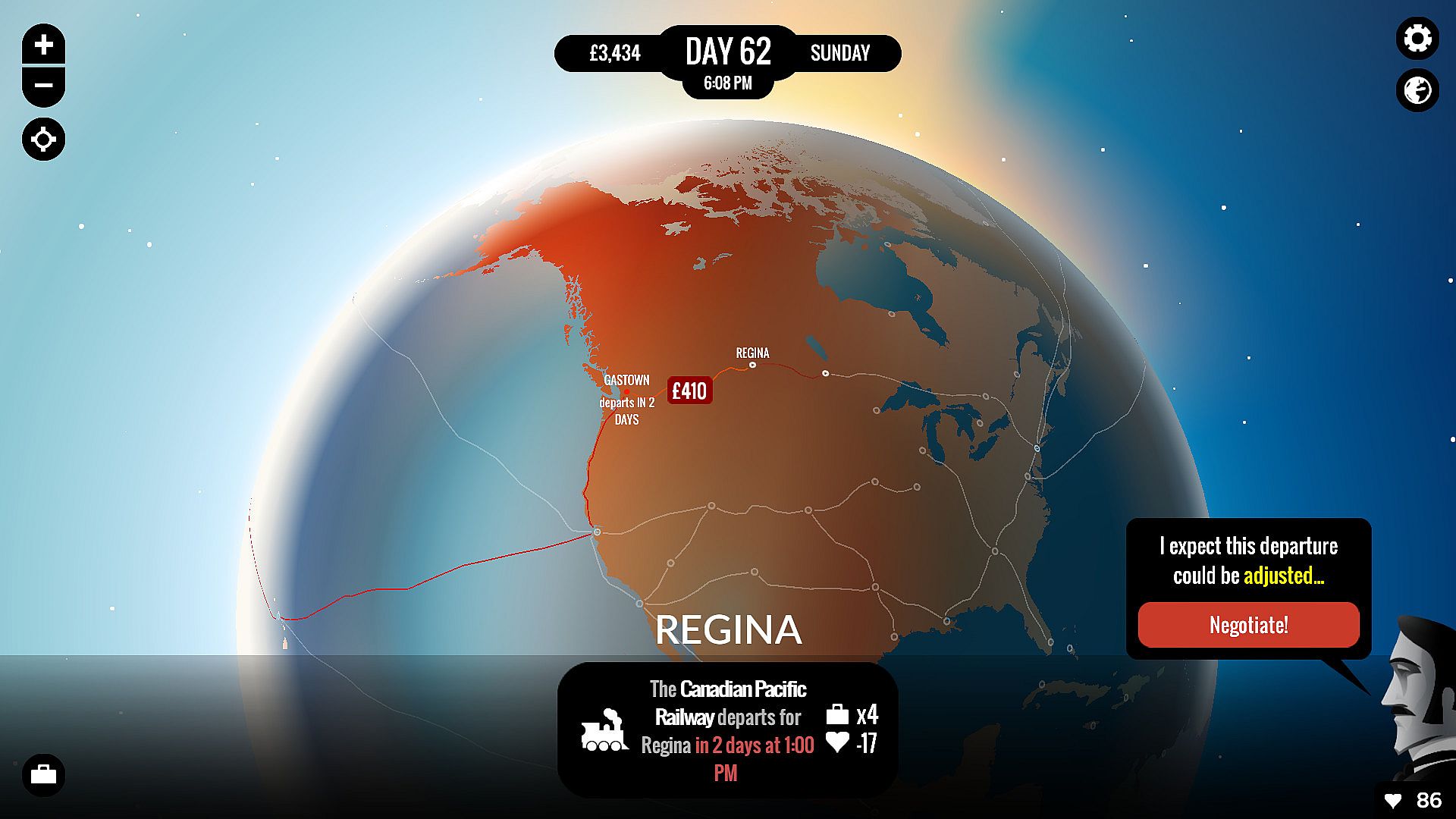
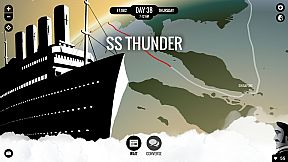
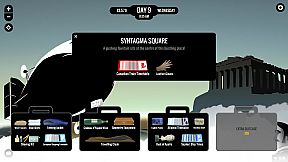
Core gameplay revolves around selecting travel routes between cities while tracking three main resources: remaining time on the ever-running clock, available funds, and Fogg's health. Each journey option lists its duration and cost, and players decide whether to accept it or seek alternatives through conversations that reveal new connections. At each stop, opportunities arise to rest, purchase items for trade or utility, and gather information that can open faster paths or shortcuts.
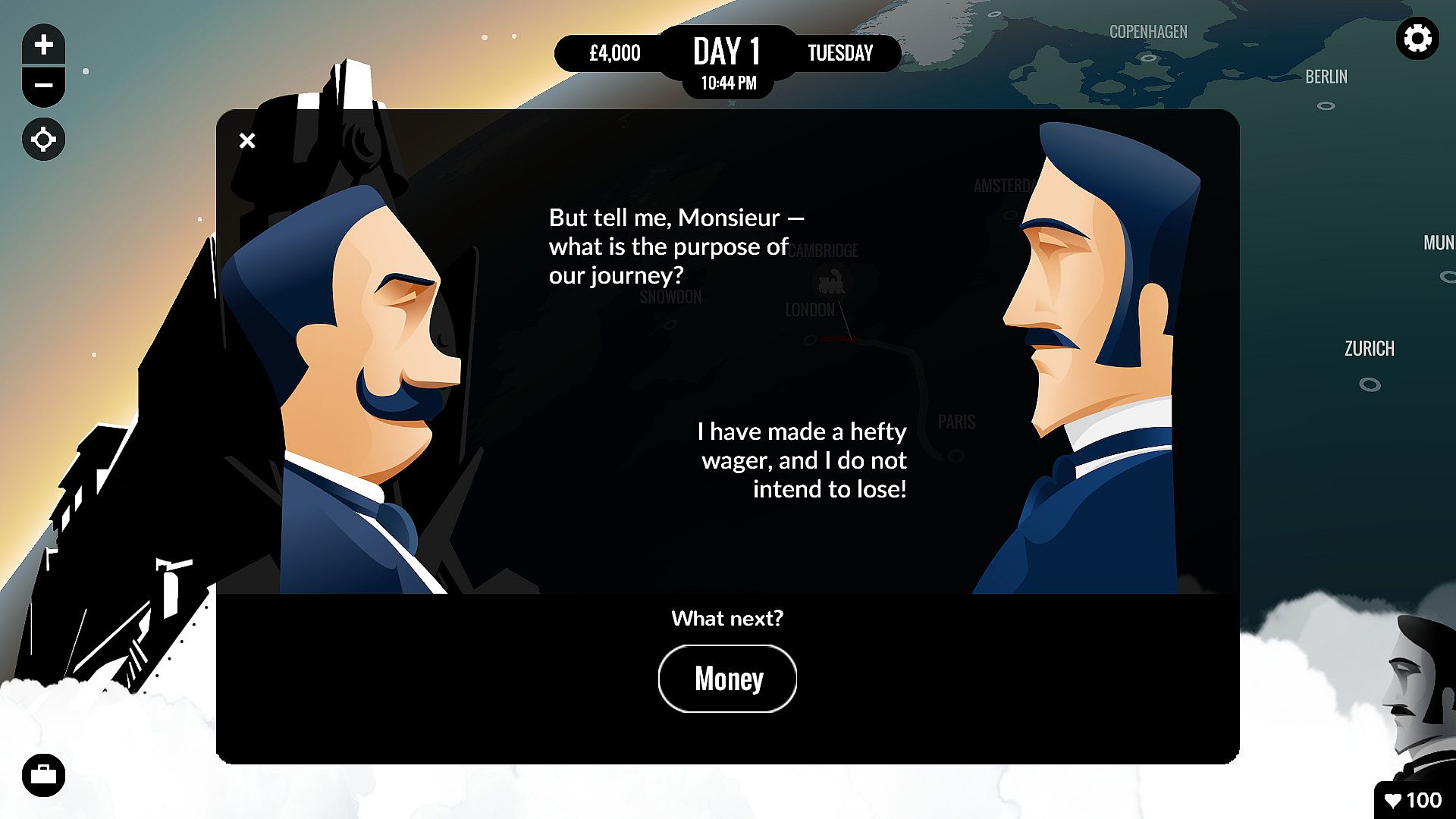
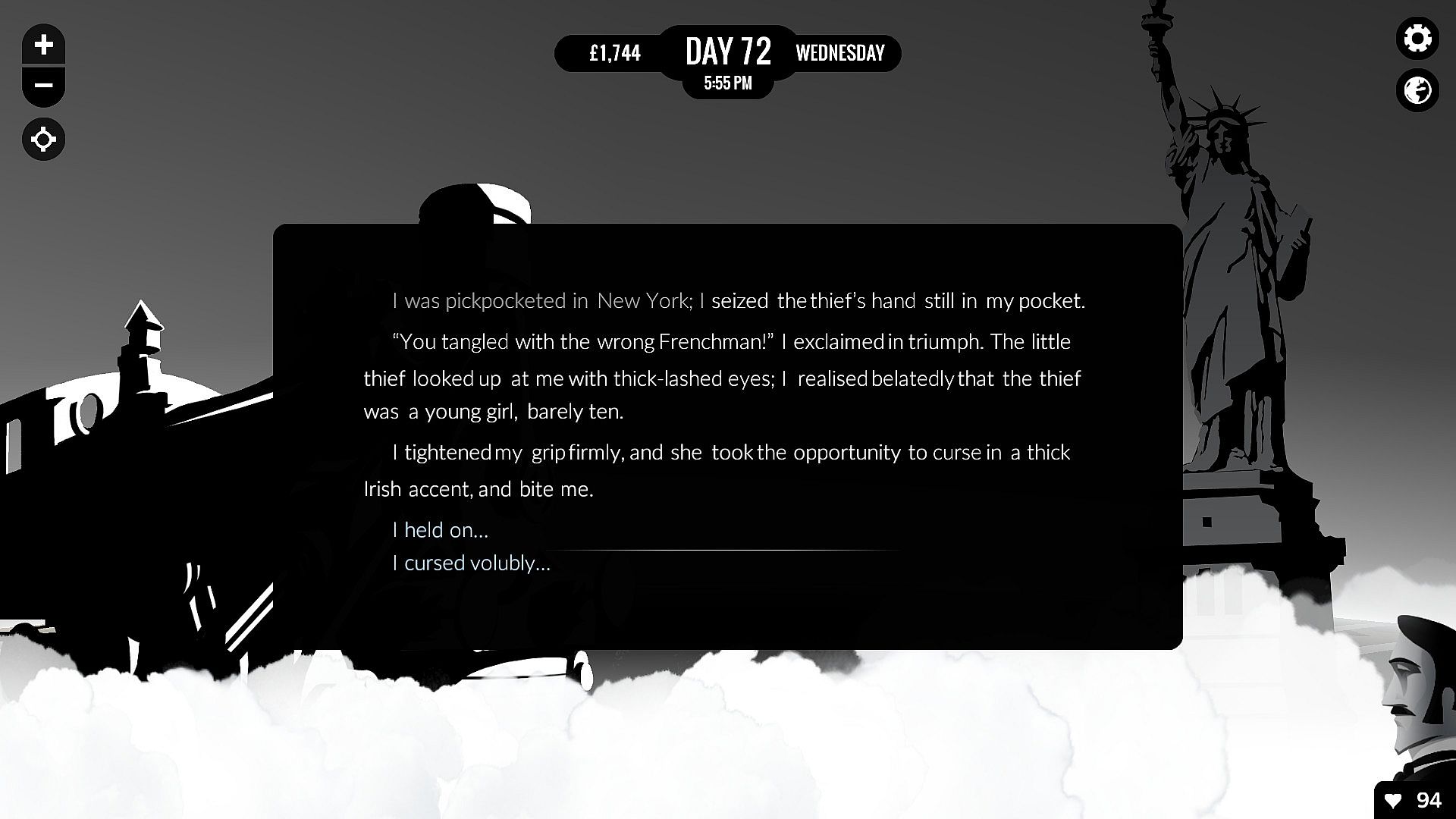
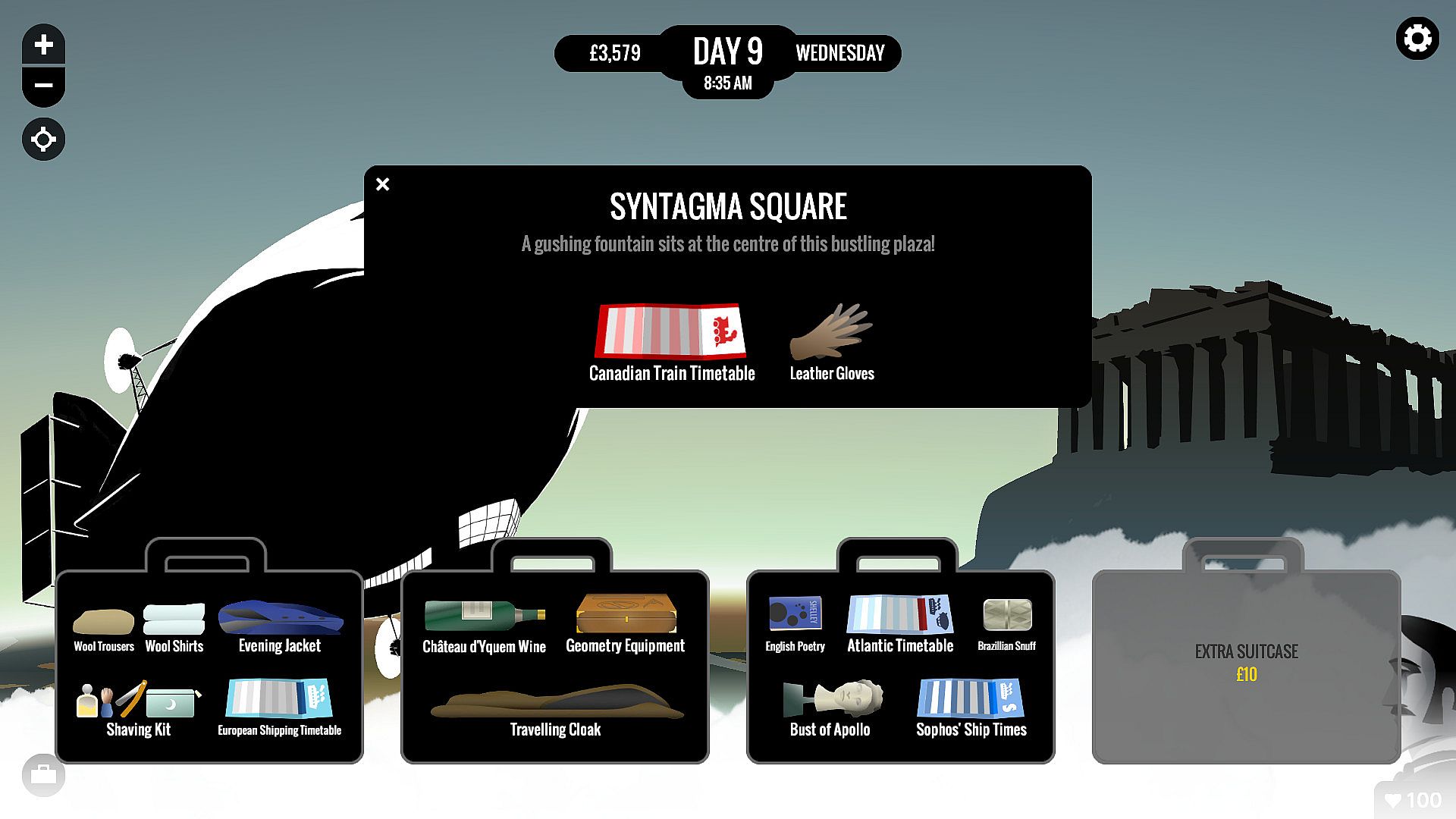
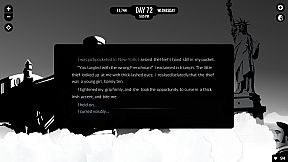
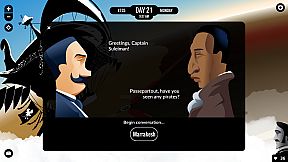
Luggage management adds another layer, as collected goods can be sold for profit at later destinations but excessive weight slows progress. Equipment suited to upcoming conditions helps maintain Fogg's well-being during harsh travels. Decisions during transit and in cities influence the relationship meter with Fogg, which affects how readily he follows suggestions and the overall tone of the journey. The narrative unfolds through interactive text passages where every choice can accelerate the schedule or introduce delays from events such as mechanical failures or local conflicts.
Game Modes
The game centers on a single continuous journey around the world, with no separate modes or variants. Replayability stems from the flexible route system and thousands of narrative branches that produce distinct experiences on each attempt. Players can experiment with different transport combinations, trading strategies, and city exploration orders to discover new outcomes and shorter overall times. The structure encourages multiple playthroughs focused on optimization or narrative variety rather than distinct competitive or cooperative formats.
World and Narrative
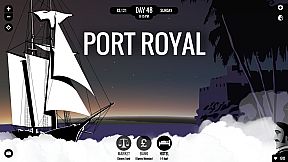
The setting reimagines the late nineteenth century with mechanical camels, submarines, airships, and steam trains integrated into everyday travel. Cities range from bustling European hubs to remote outposts in the Zulu Federation or along the Amazon, each with unique descriptions and events drawn from detailed research blended with techno-fantasy elements. Narrative threads touch on themes of exploration, invention, and social tensions, delivered through character interactions that feel personal and grounded. The 3D globe view allows visual planning of paths while the text handles the story beats, creating a balance between strategic oversight and moment-to-moment decision making.
Is It Worth Playing?
80 Days suits players who enjoy choice-driven interactive fiction combined with light strategy elements around time and resource management. Its strength lies in the consistent quality of writing and the genuine consequences of route selections, which reward careful planning and experimentation. The game remains available on PC and continues to appeal to those seeking a self-contained adventure that can be completed in a few hours per run yet offers substantial replay value through its branching structure. Those who prefer fast-paced action or traditional multiplayer systems may find the deliberate pace less engaging, while fans of narrative adventures often cite the title's memorable characters and inventive world as reasons to return for additional journeys.