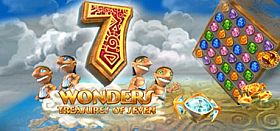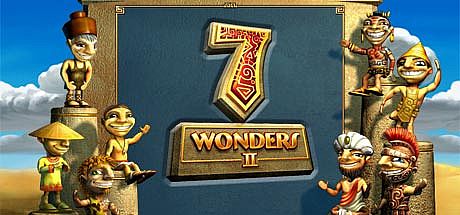











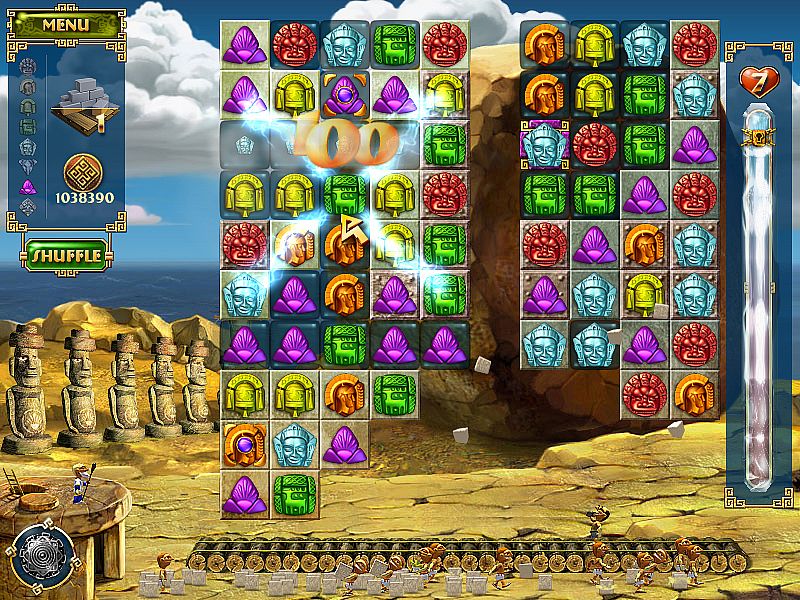
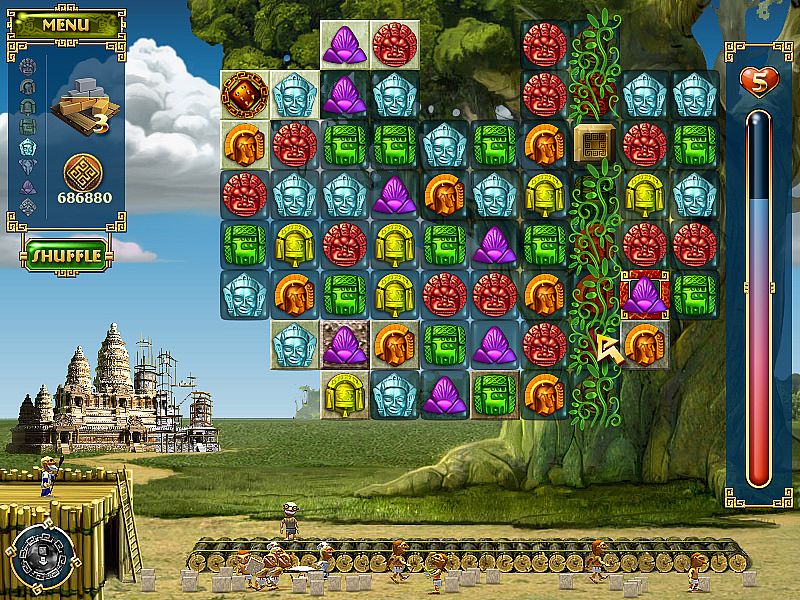
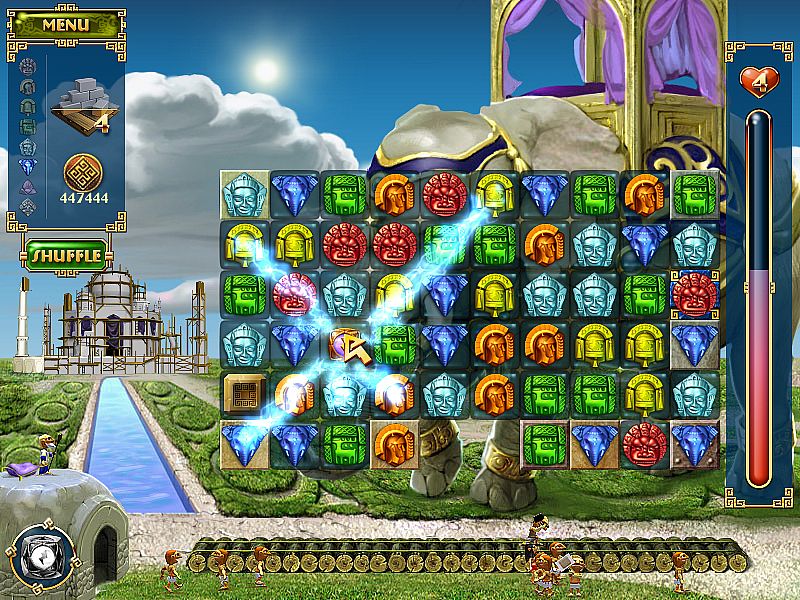
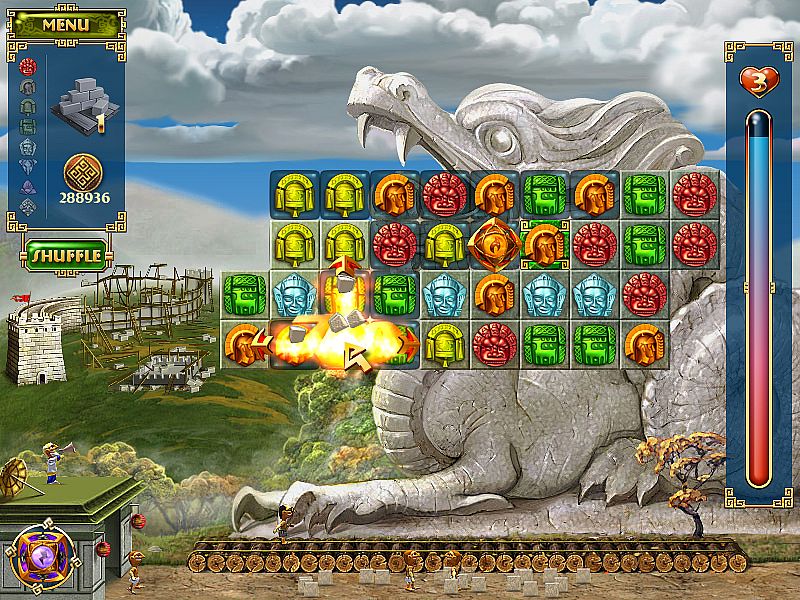
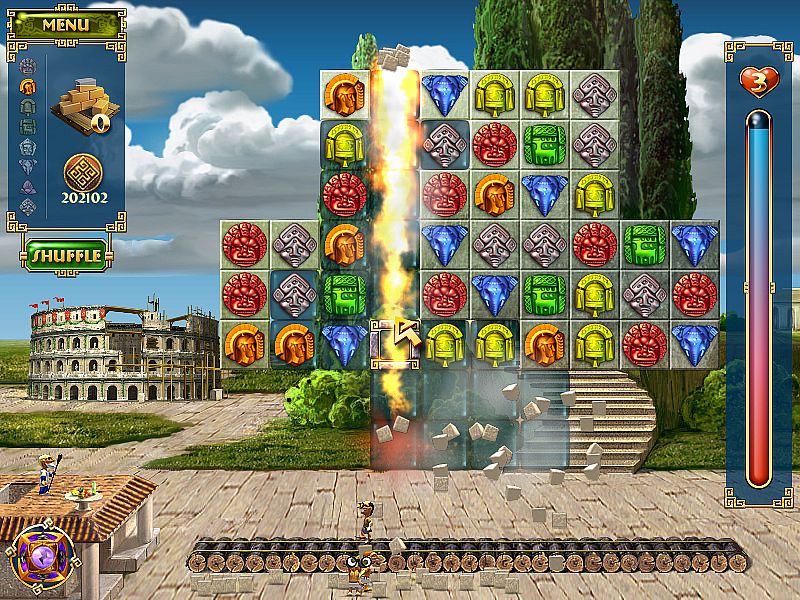
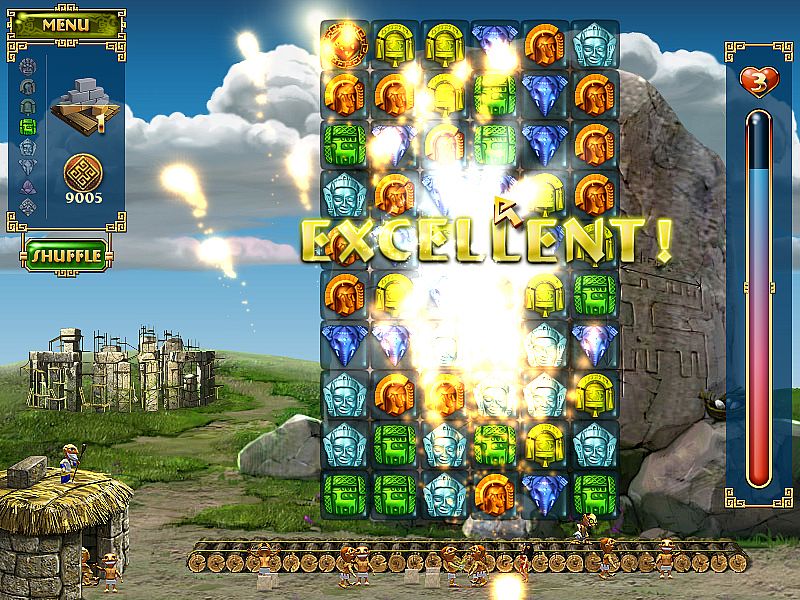
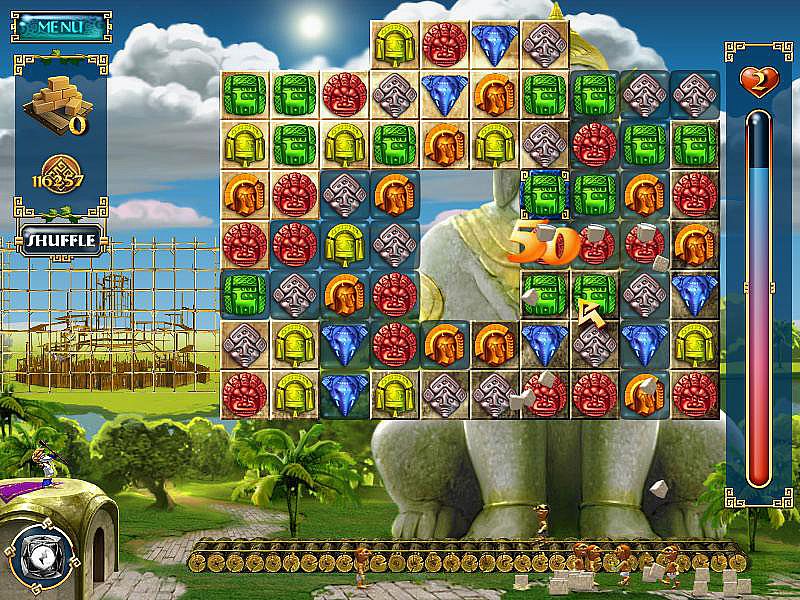
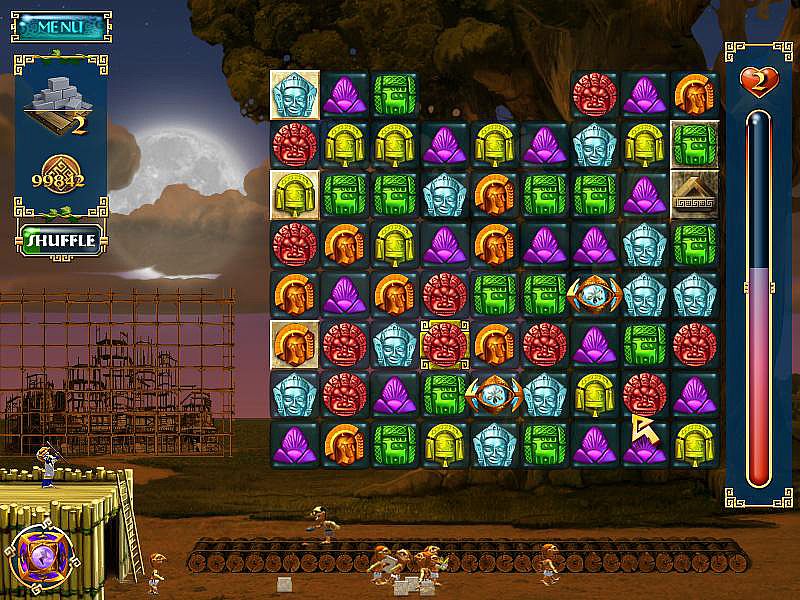
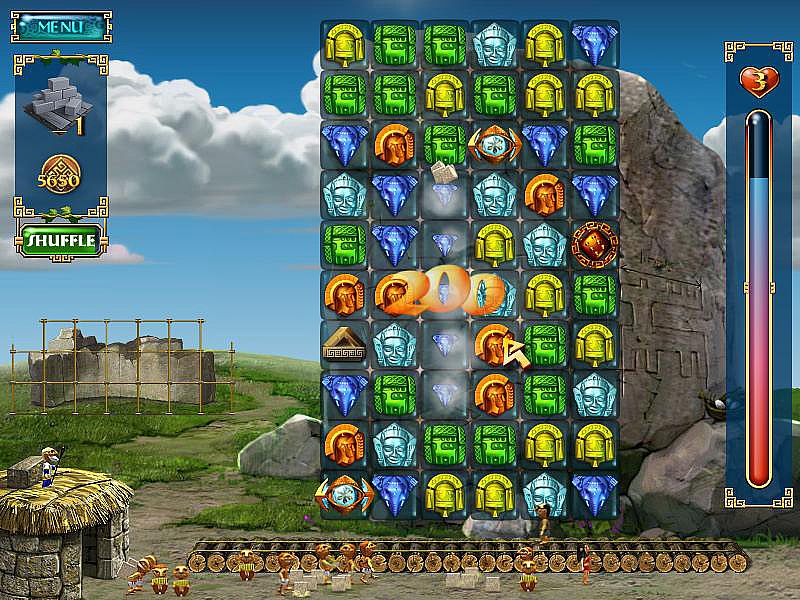
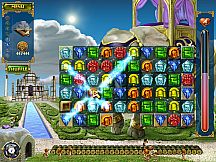
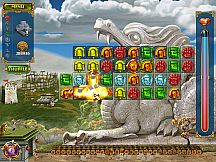
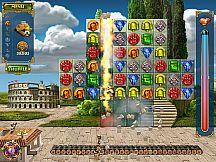
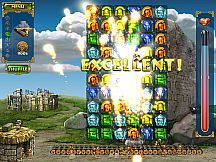
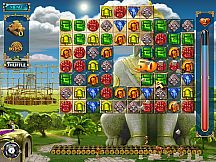
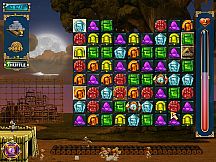
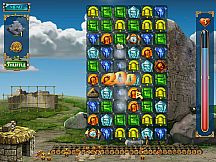
7 Wonders II is a casual match-3 puzzle game developed for PC that combines tile-swapping mechanics with a construction theme centered on historical wonders. Players progress through levels by matching colored tiles to advance pieces down the board while contributing to the assembly of structures like Stonehenge and the Taj Mahal. The game emphasizes strategic placement of a limited number of moves to achieve objectives, with visual feedback showing the wonders taking shape on screen as sections are completed.
Gameplay
The core loop revolves around swapping adjacent tiles to create matches of three or more identical colors. These matches clear space and allow special pieces to drop toward the bottom of the board. A restricted move count per level forces careful planning, as each swap counts toward the total available actions. Critical pieces must reach designated positions to fulfill level goals and unlock the next stage of wonder construction.
Enhanced animations bring the building process to life, with sections of each wonder appearing progressively on both the main screen and the game board itself. Players select which part of the structure to prioritize at certain points, adding a layer of decision-making to the matching process. The board refreshes through a shuffle option when no valid moves remain, preventing stalls and maintaining flow during longer sessions.
New power-ups expand tactical options. The Single Cell Bomb clears a targeted area in one action. The Chameleon adapts to surrounding tiles to create matches more flexibly. Timer Freeze pauses or slows time-based elements to allow extra planning. These tools integrate directly into the limited-move system, rewarding players who position them effectively amid the colored grid.
Game Modes
Progression follows a linear sequence of levels distributed across seven distinct locations. Each location introduces a new wonder to construct, with objectives tied to matching sequences that advance specific building sections. The structure encourages repeated playthroughs of individual stages to optimize move usage and complete construction visuals.
Exploration of the locations unfolds through successful level completion, revealing details about the wonders while the match-3 action continues. No separate competitive or cooperative variants exist, keeping the focus on solo progression through the campaign of building challenges.
Visuals and Presentation
Animations stand out as a key upgrade, rendering the wonders in greater detail as players contribute matches. The interactive building display updates in real time, showing incremental progress that aligns with board activity. Backgrounds and level themes reflect the historical settings without overwhelming the central grid interface.
Sound design supports the relaxed pace with fitting audio cues for matches and power-up activations. The overall presentation suits short or extended play sessions, with clear visual indicators for remaining moves and progress toward each wonder segment.
Is It Worth Playing?
Steam user reviews rate 7 Wonders II as Very Positive, with 89 percent approval from 67 total reviews. Players note the satisfying connection between match-3 actions and visible construction milestones, though some describe the level structure as repetitive across stages. The game remains available for purchase and runs on older PC hardware requirements.
It appeals to those who enjoy match-3 puzzles with a thematic overlay and light strategic elements from move limits and power-up choices. The seven locations provide a contained experience focused on completion rather than endless content or live service updates. For casual players seeking a straightforward puzzle title with building progression, the positive reception and specific mechanics make it a reasonable option to try.