















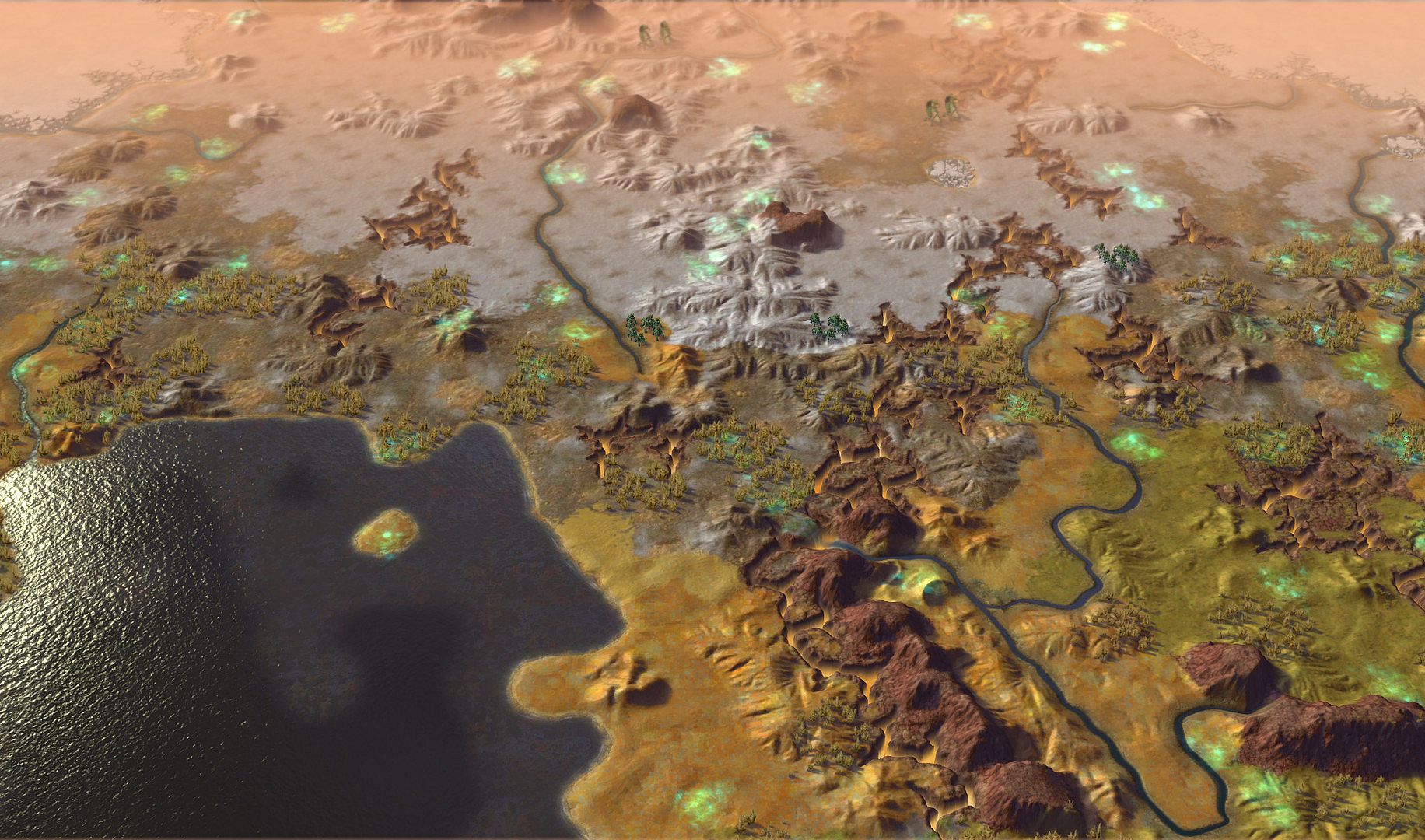
Sid Meier's Civilization: Beyond Earth Exoplanets Map Pack is a strategy expansion that adds six specialized maps to the core turn-based 4X experience of colonizing alien worlds. These maps draw inspiration from actual discovered exoplanets and incorporate custom scripts that generate varied terrain layouts on every new game start. Players engage in long-term planning around resource management, city development, technological advancement, and interactions with the planet's unique environment.
Gameplay
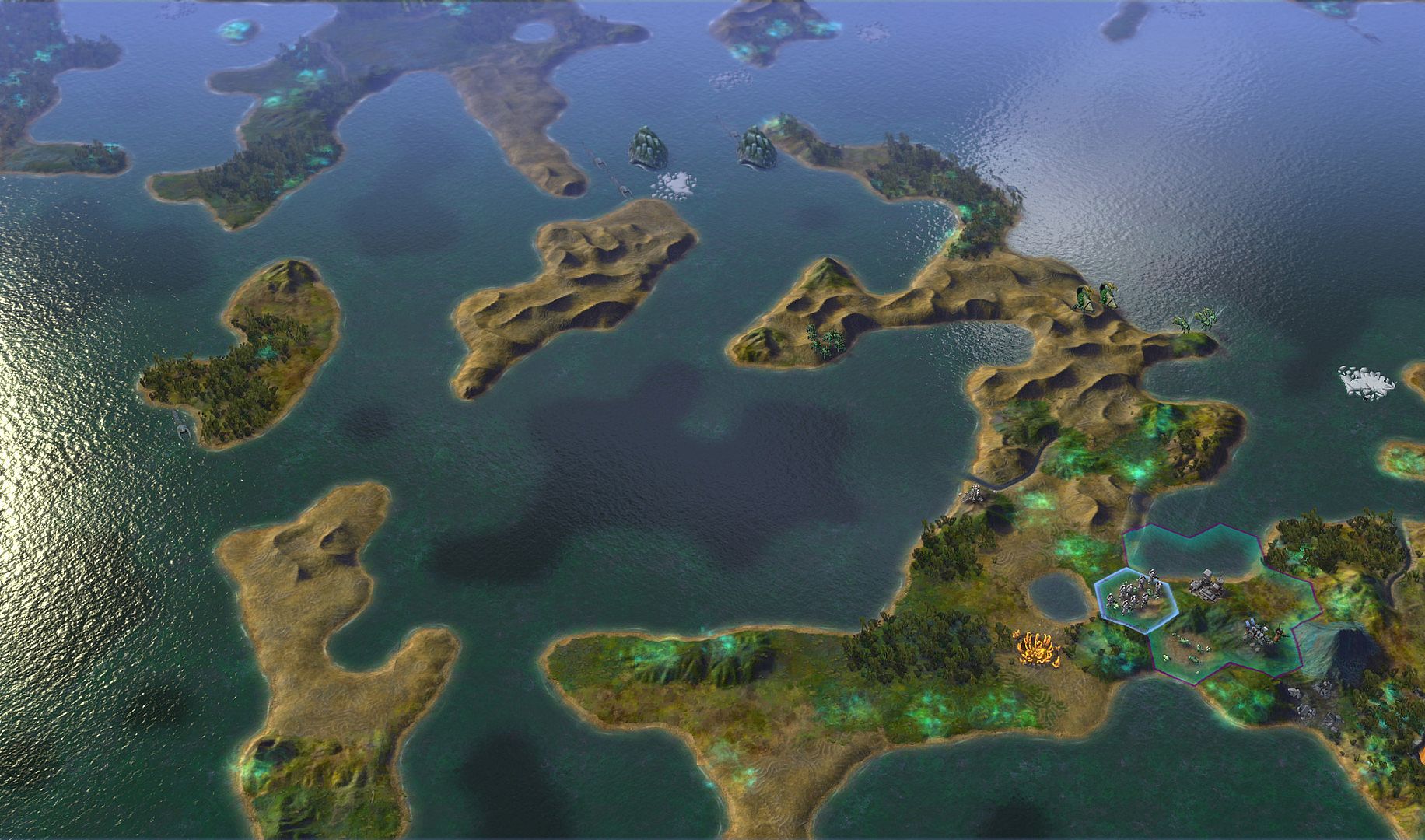
The core loop centers on establishing settlements on distant planets while adapting to local conditions. Each map introduces distinct geographic and environmental traits that influence expansion choices and long-term strategy. For example, dense forest coverage on one world encourages different settlement patterns than arid zones or coastal archipelagos on others. Tectonic activity or tidal locking effects create zones of extreme heat or cold that shape where players can safely build and harvest resources. The randomized generation ensures that repeated playthroughs on the same map yield fresh layouts rather than identical starting positions.
Exploration reveals alien biomes and hazards that require careful navigation. Resource distribution varies by map, pushing players to prioritize different technologies or expansion routes based on available water, minerals, or fertile land. The maps integrate with the game's affinity progression system, where choices in development lead to specialized paths that alter unit capabilities and planetary interactions over time.
Game Modes
These maps support standard single-player campaigns where the focus remains on achieving victory conditions through science, culture, or military dominance in the extraterrestrial setting. Multiplayer sessions allow groups to compete or cooperate across the varied planetary surfaces, with the randomized elements adding replay value to matches. The pack does not introduce new rule sets but provides fresh backdrops that alter pacing and tactical decisions in existing formats.
The Exoplanet Maps
Six distinct maps form the core of the pack. Kepler 186f features extensive forest coverage on a world long recognized for Earth-like qualities. Rigil Khantoris Bb presents a desert environment tied to historical settlement records around the nearest star to the Sun. Tau Ceti d offers a sea-rich planet with archipelagos that support high biological diversity and abundant resources. Mu Arae f includes a tidally locked body where one hemisphere remains a scorching desert under constant sunlight while the opposite side stays in perpetual frozen darkness. 82 Eridani e presents limited water alongside intense tectonic shifts. Eta Velpeculae b remains largely unknown in surface composition, adding an element of discovery to initial landings.
These layouts encourage repeated sessions because procedural scripts alter coastlines, mountain ranges, and resource clusters each time a game begins on any given map.
Is It Worth Playing?
The map pack suits players already familiar with the base game's systems who seek additional variety in planetary settings. It extends replayability through the six themed maps and their randomized generation without requiring changes to core rules. Reception among long-term fans highlights the value of these environments for testing different strategies, though the overall title sees limited ongoing developer support years after release. Those who enjoy methodical turn-based strategy with sci-fi colonization themes will find the added maps enhance existing campaigns and multiplayer games. Newcomers may prefer starting with the full base experience and expansion content before adding this pack.