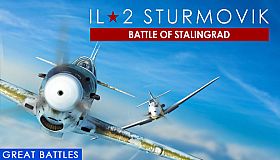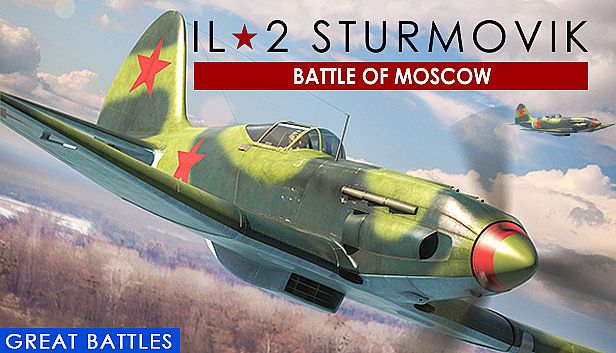
















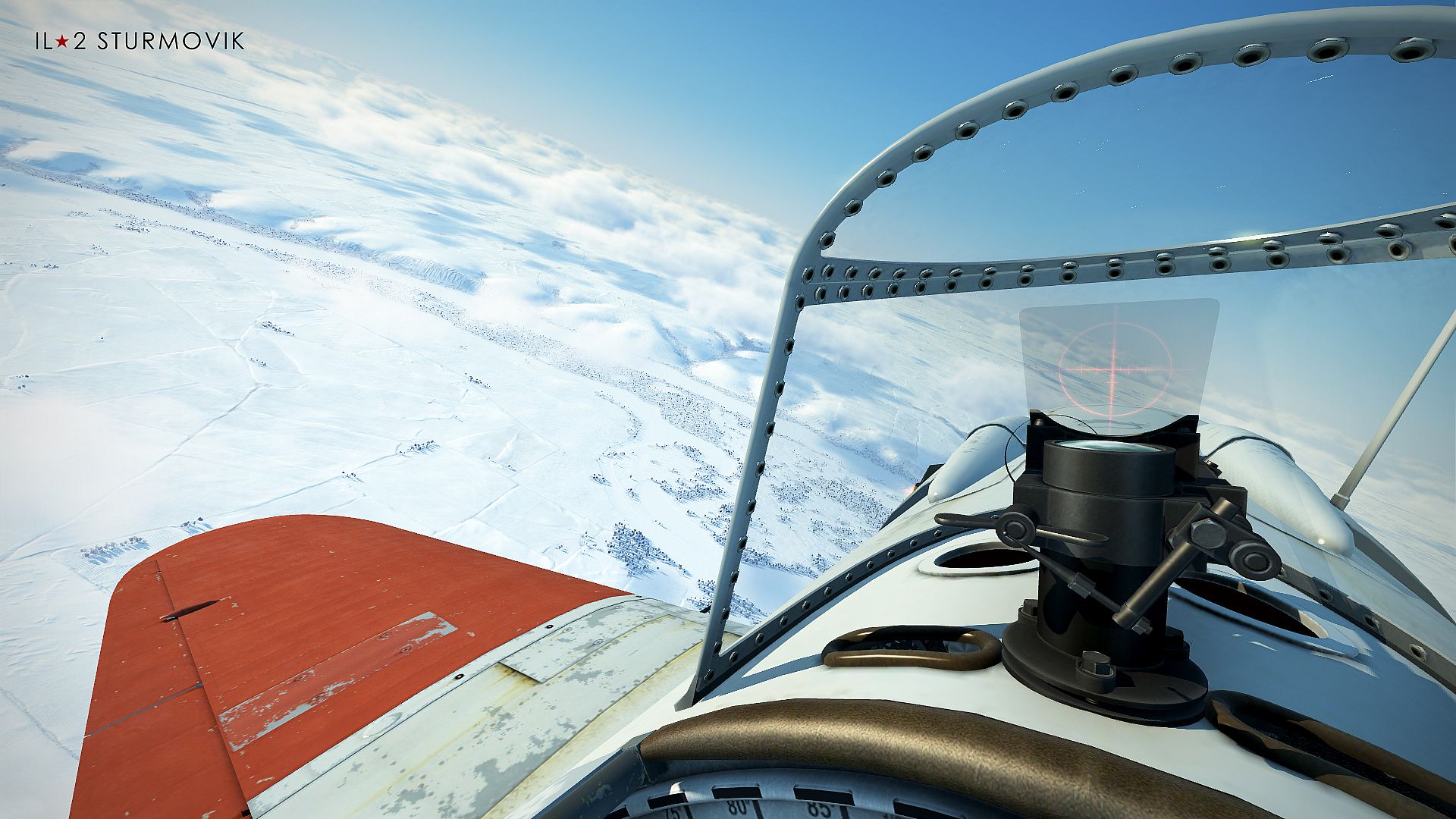
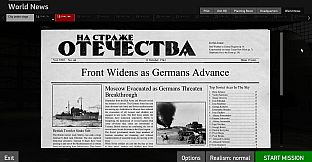
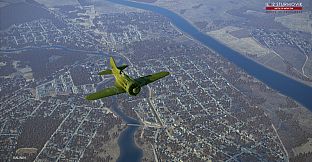
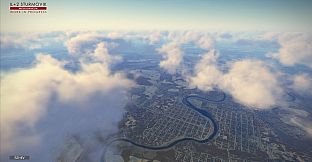
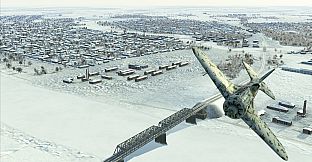
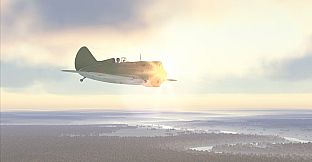
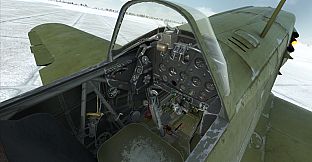
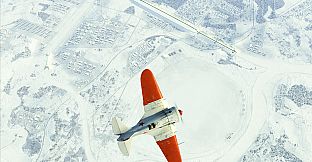
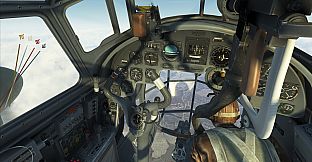
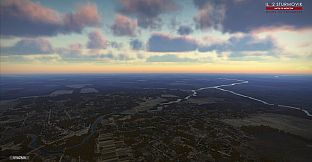
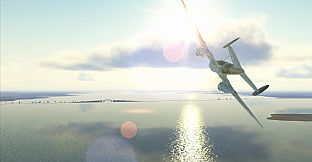
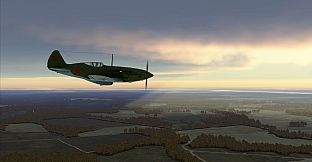
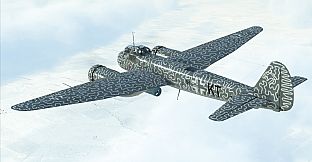
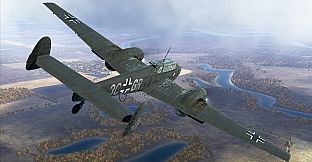
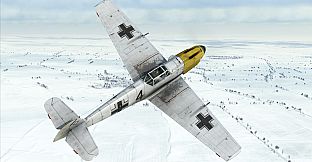
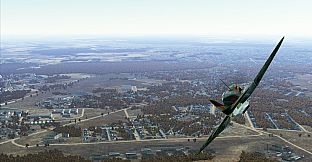
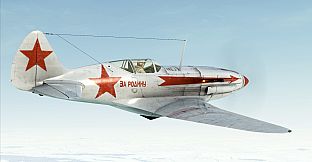
IL-2 Sturmovik: Battle of Moscow is a combat flight simulation game set during the historical World War II campaign from October 1941 to April 1942. Players take control of accurately modeled aircraft in large-scale aerial engagements over a detailed map spanning 270 kilometers by 290 kilometers, featuring autumn and winter terrain across the Moscow region.
Gameplay
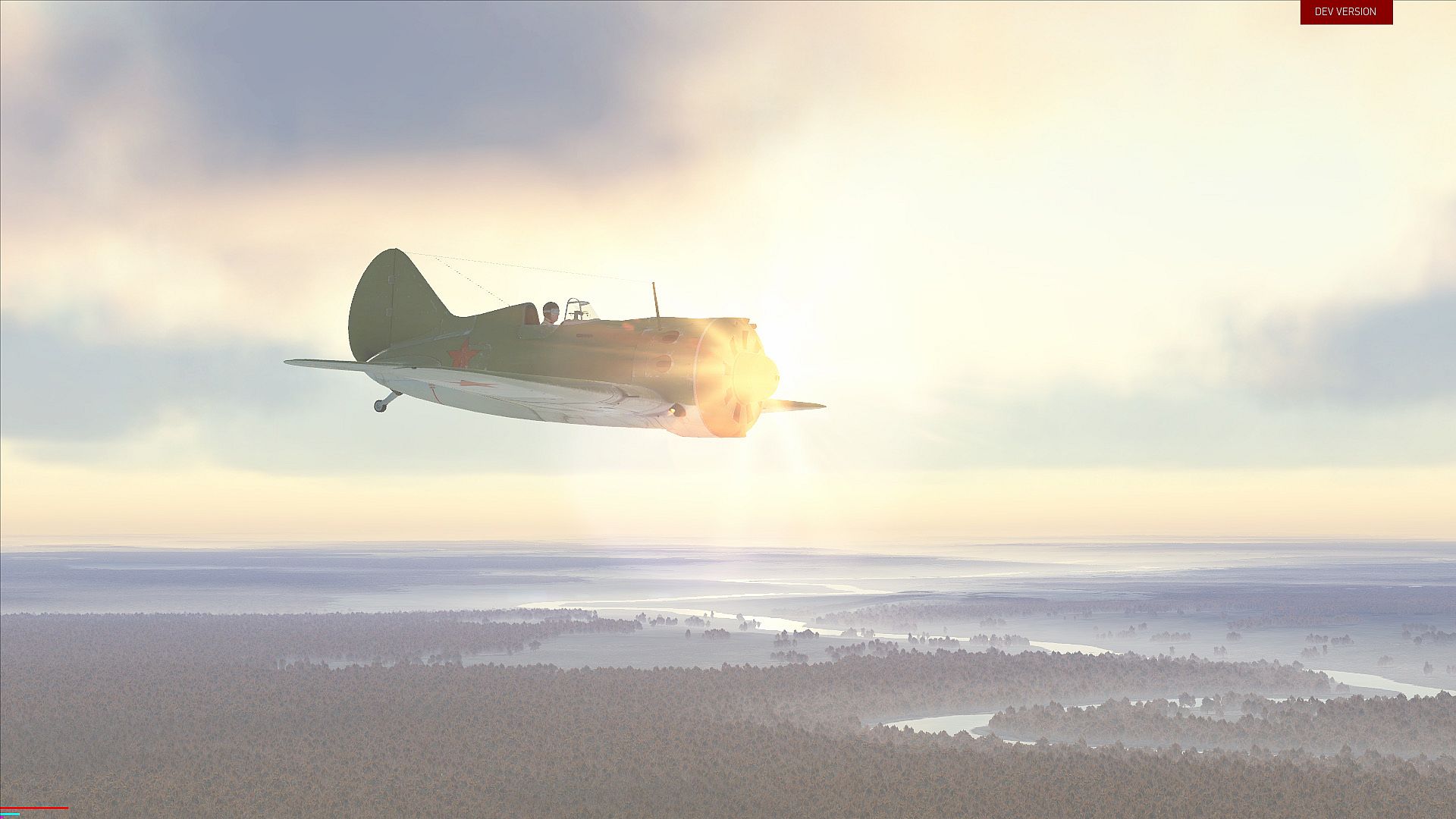
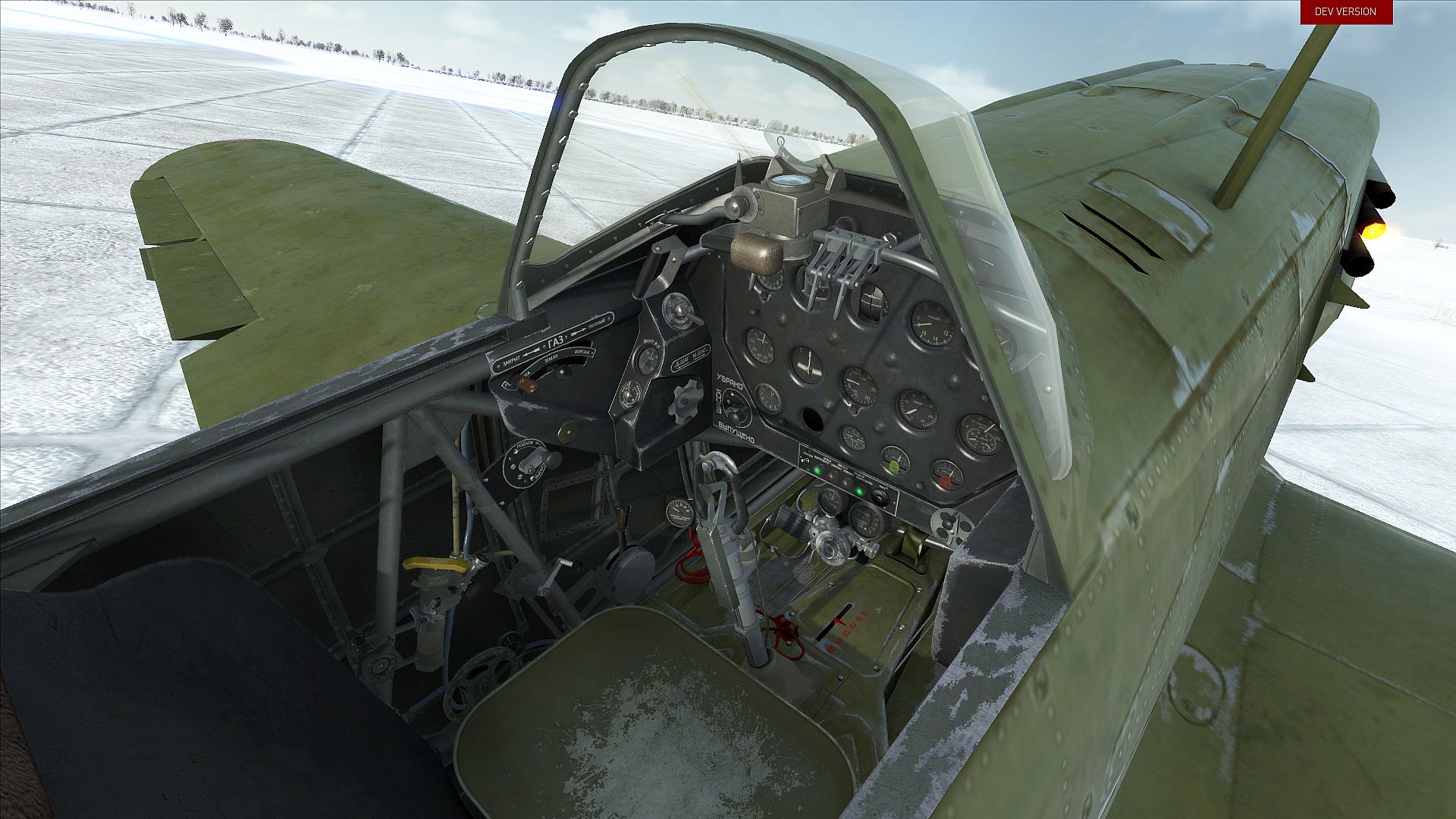
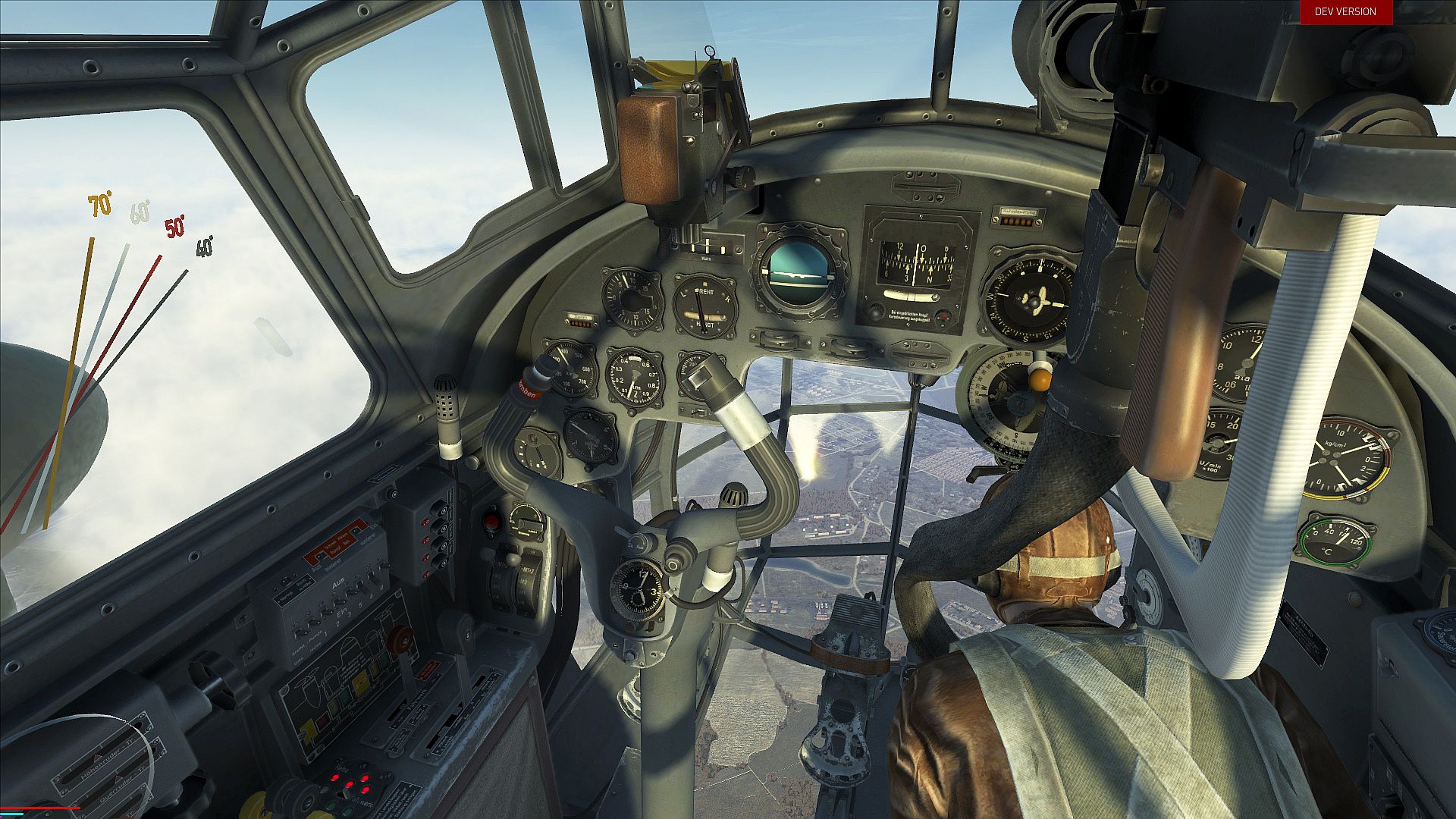
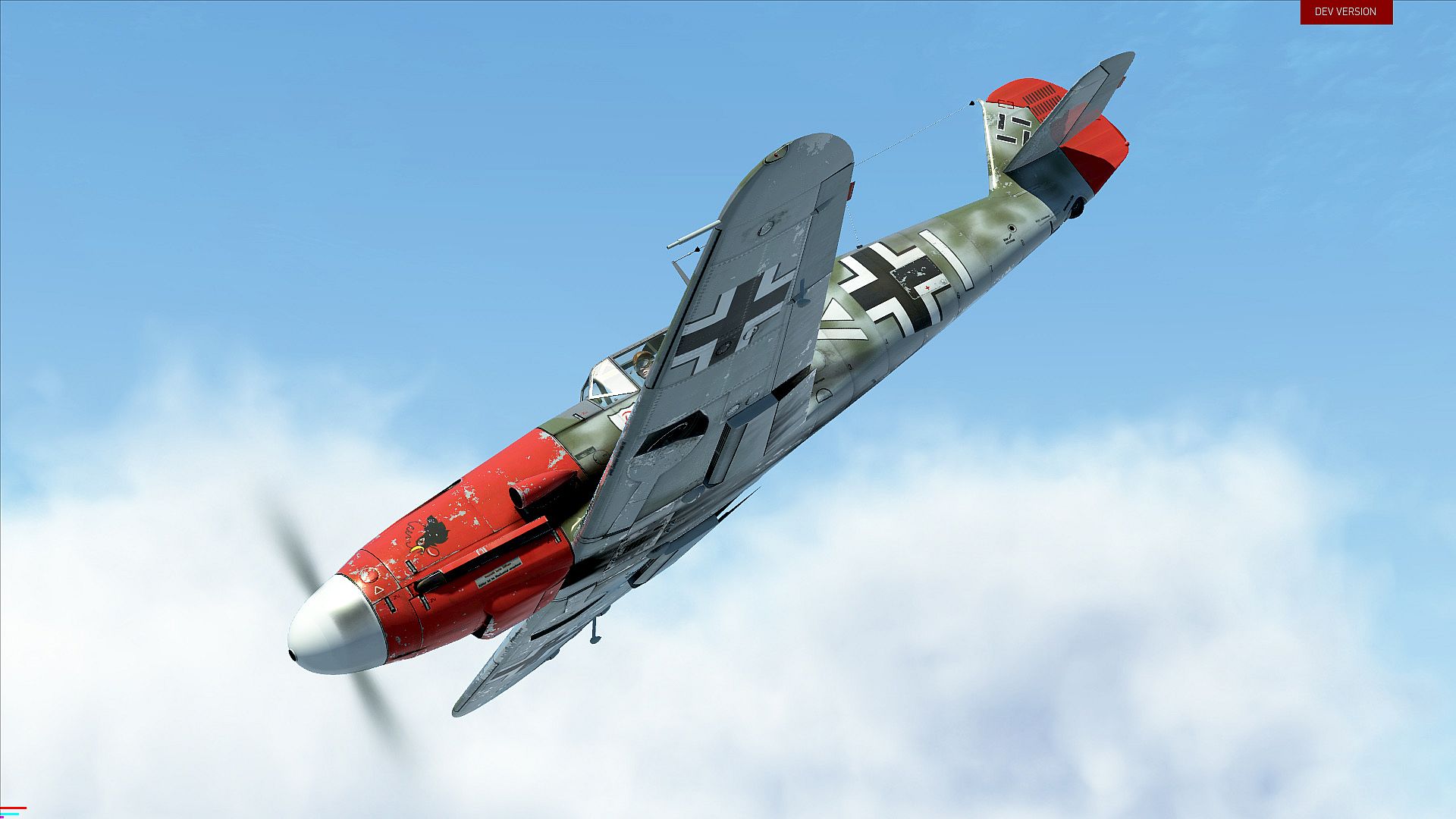
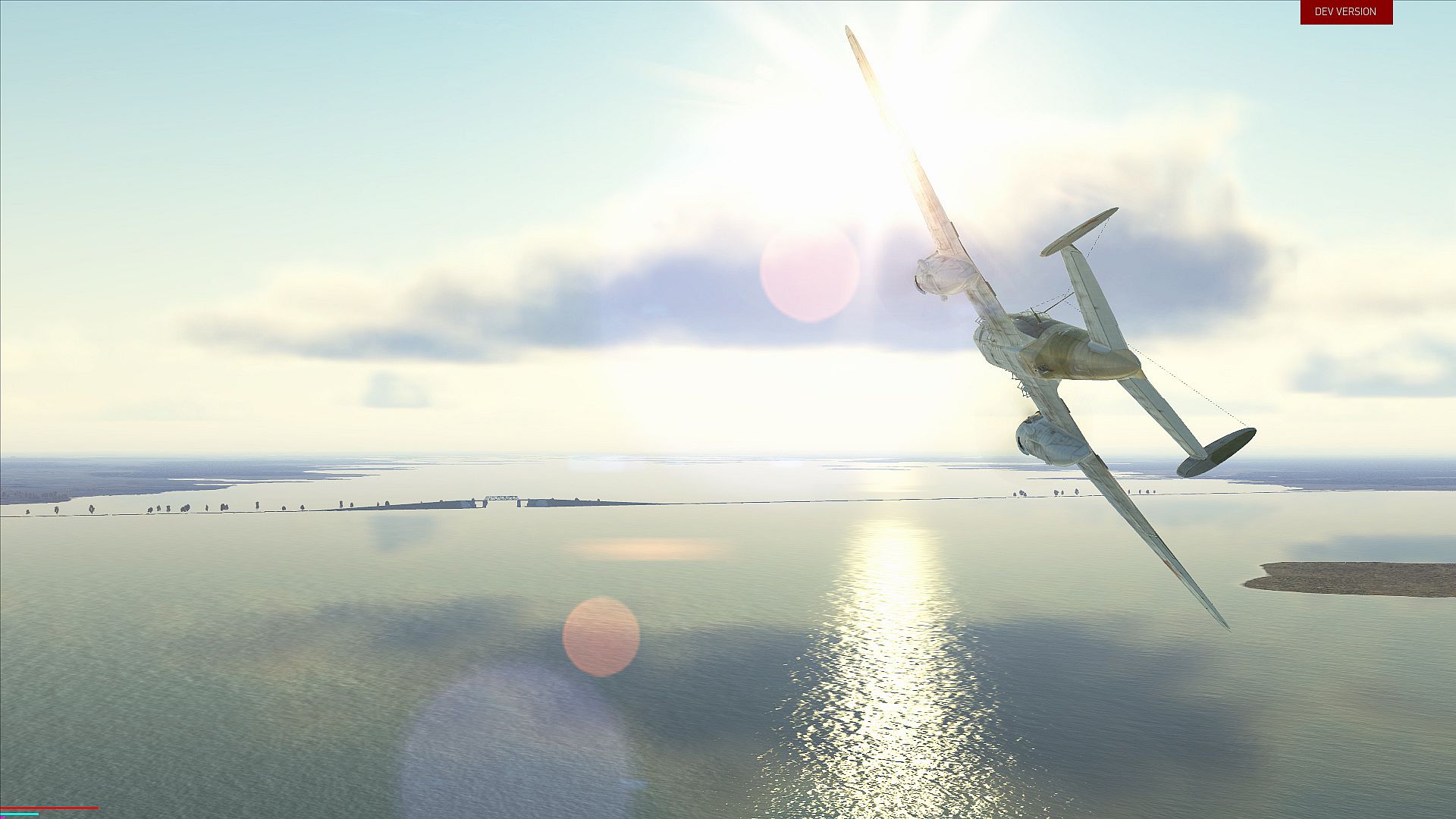
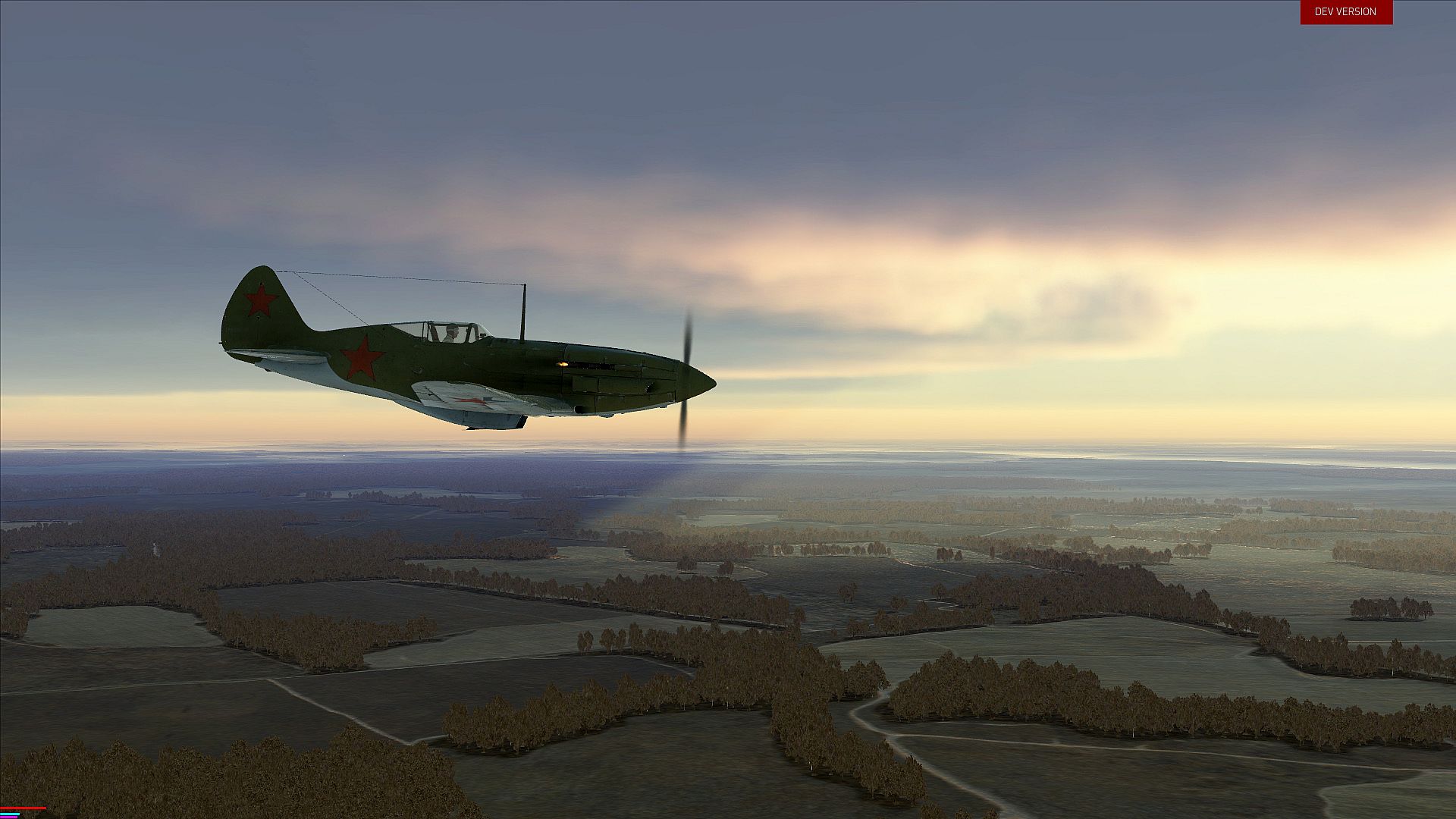
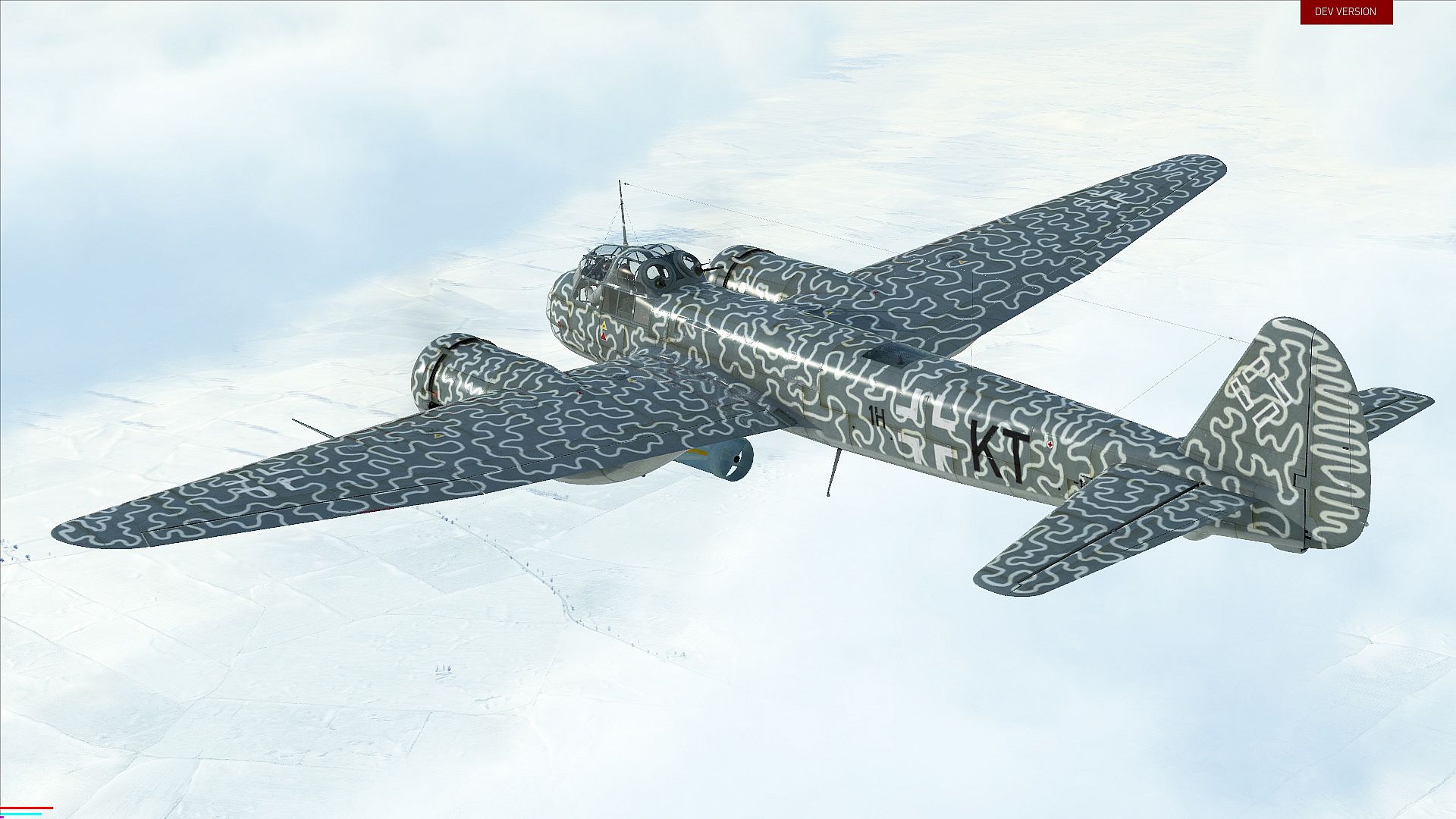
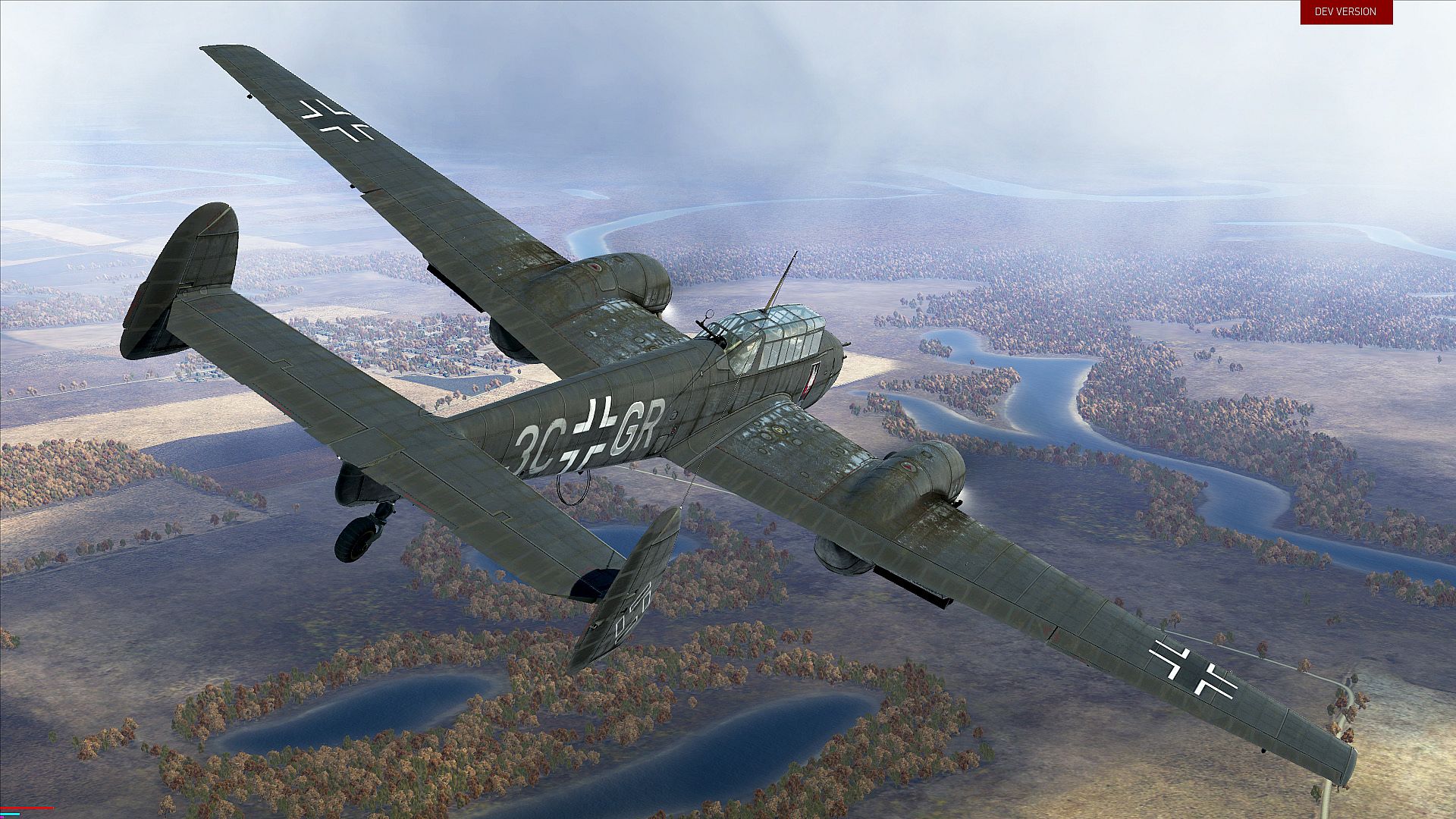
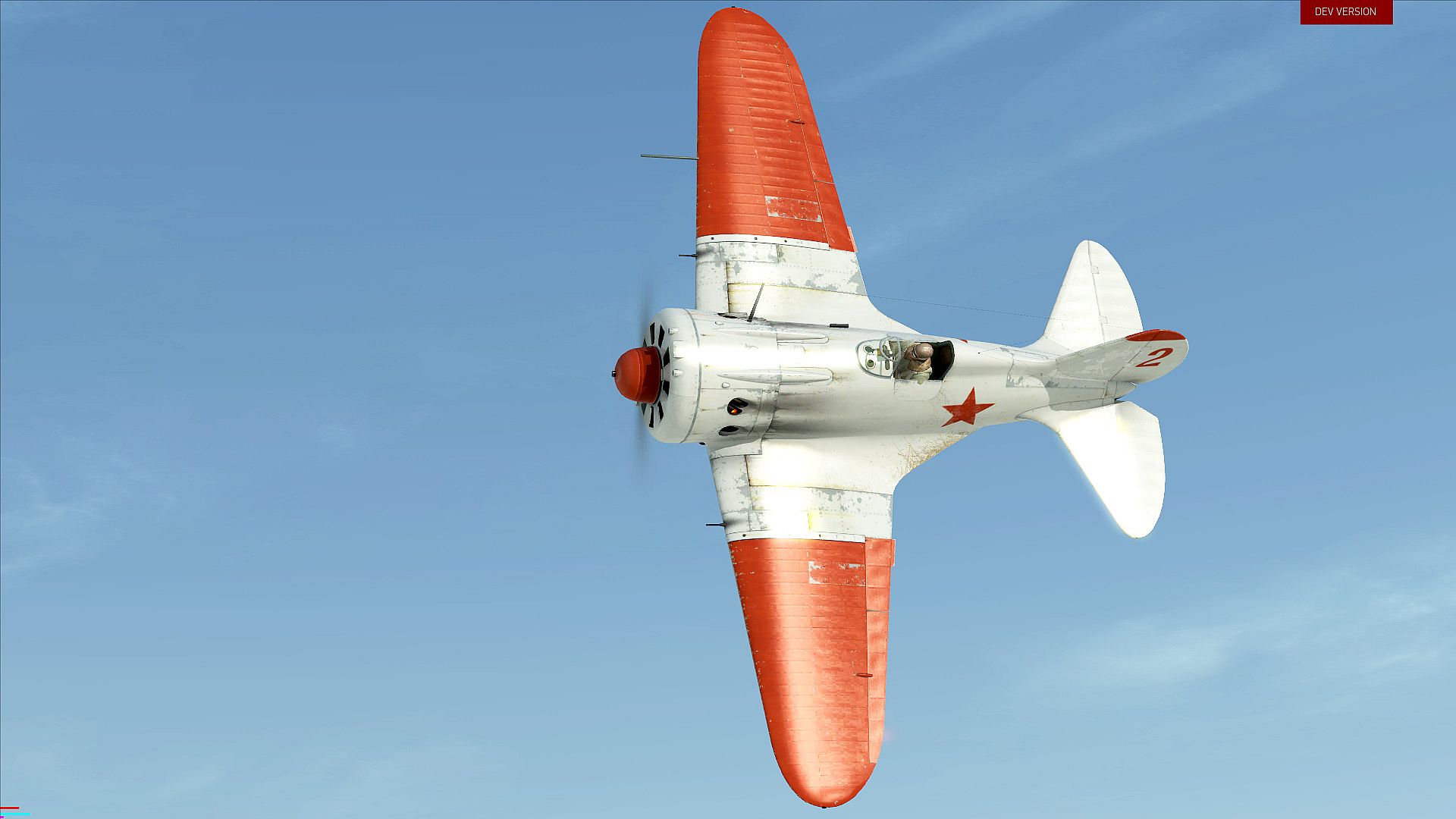
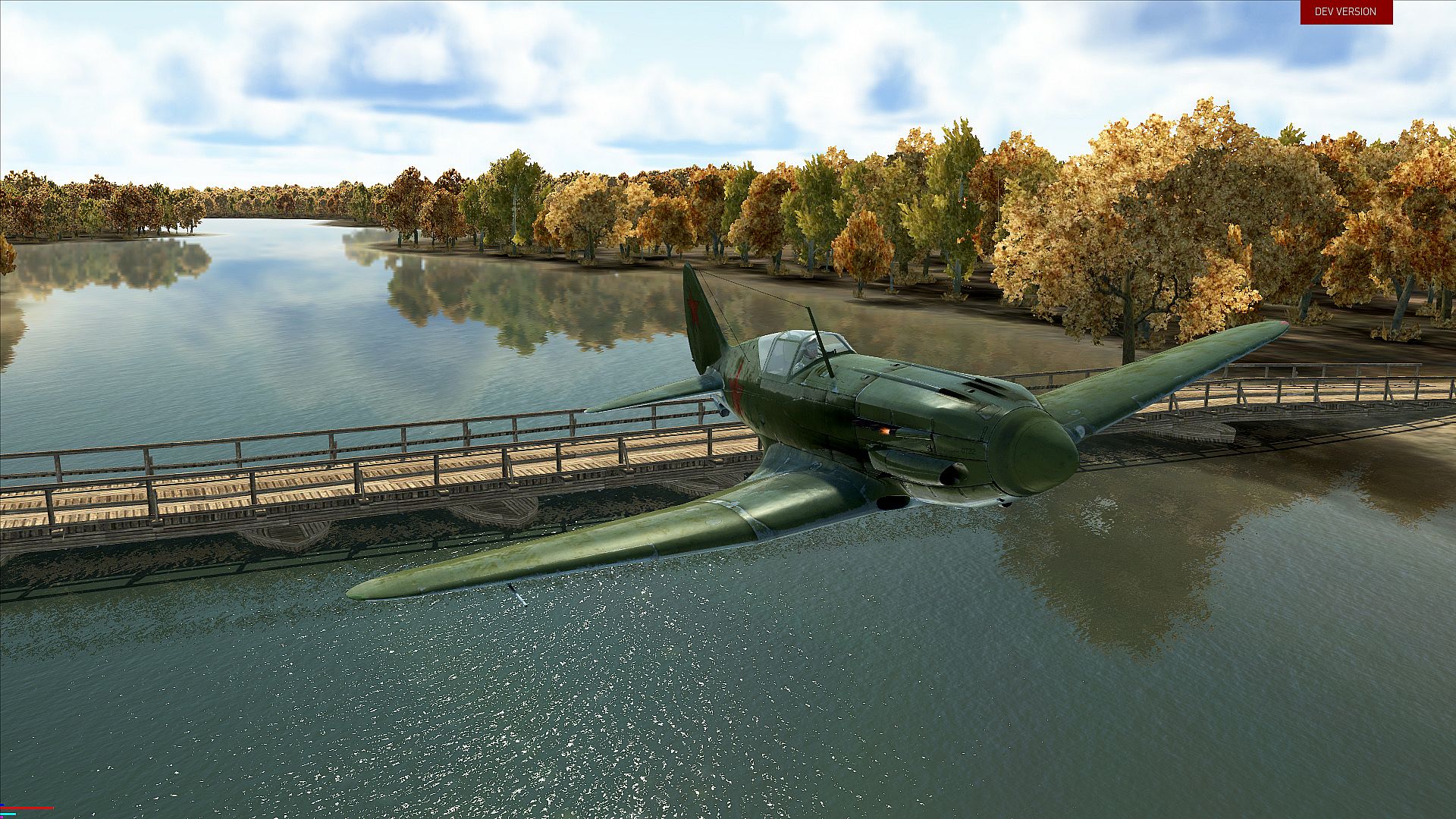
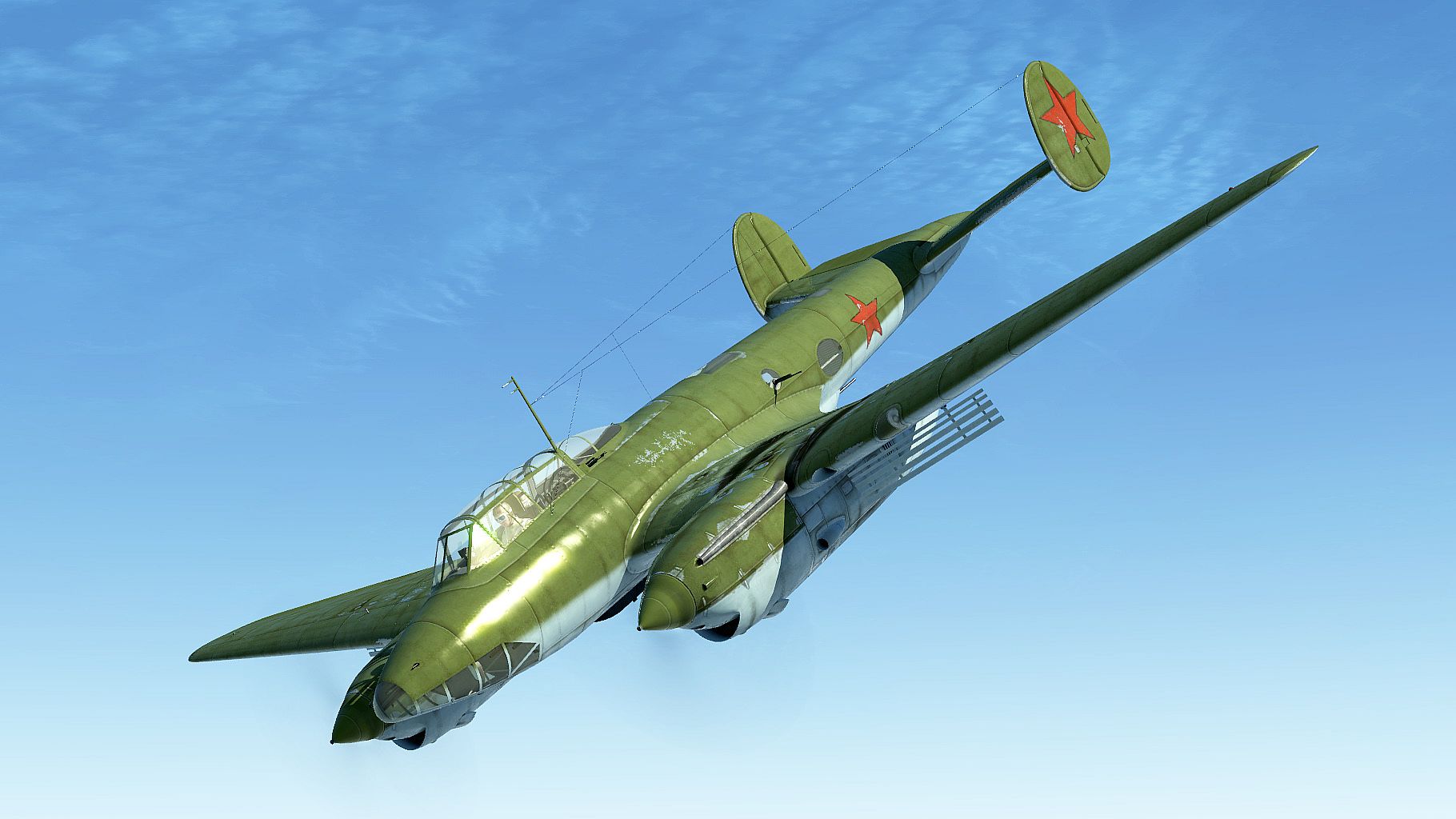
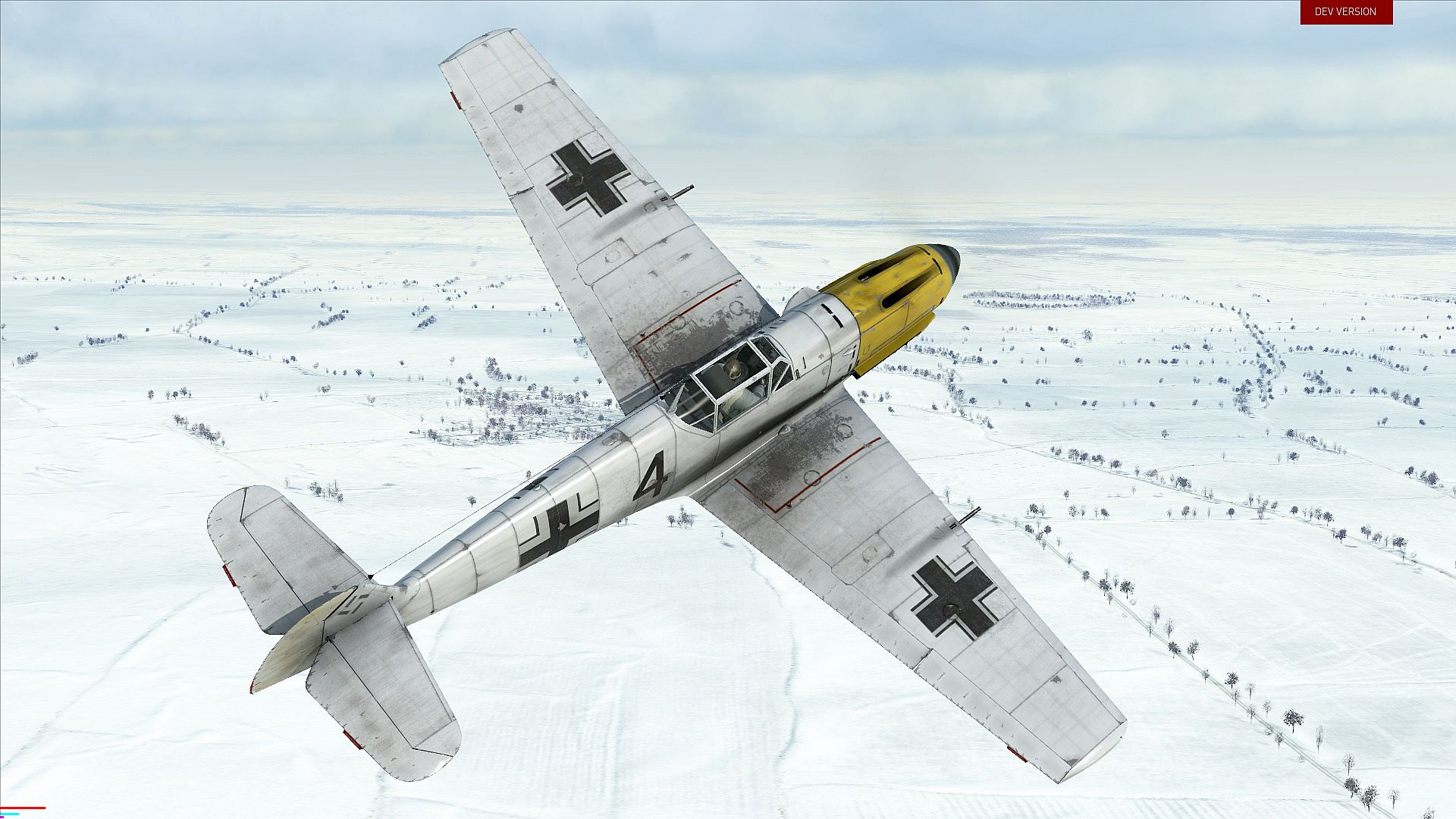
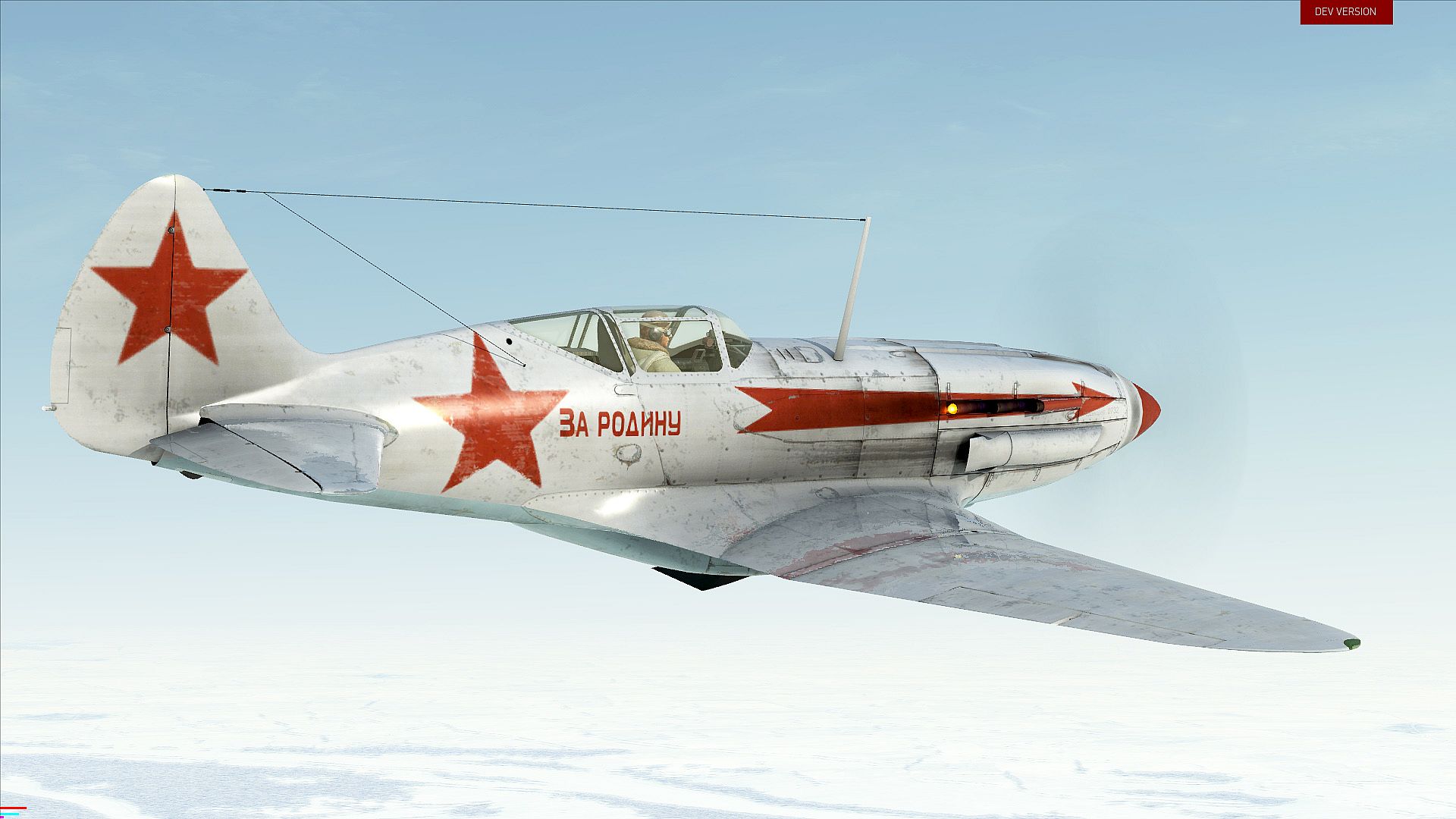
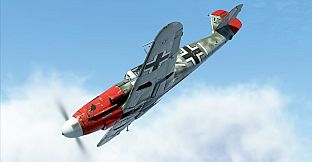
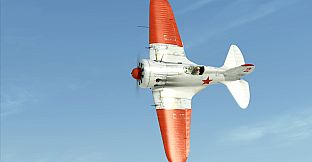
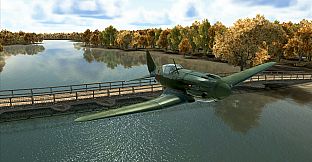
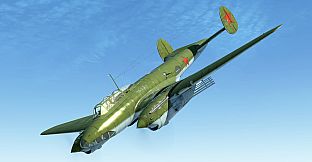
The core experience revolves around realistic flight modeling based on detailed blueprints and historical data for eight aircraft. Soviet options include the I-16 Type 24 fighter, MiG-3 fighter, IL-2 model 1941 ground attack plane, and Pe-2 Series 35 bomber. German aircraft consist of the Bf-109 E-7 and F-2 fighters, Bf-110 E-2 ground attack plane, and Ju-88 A-4 bomber. Each plane handles with attention to aerodynamics, engine performance, and armament that matches period specifications.
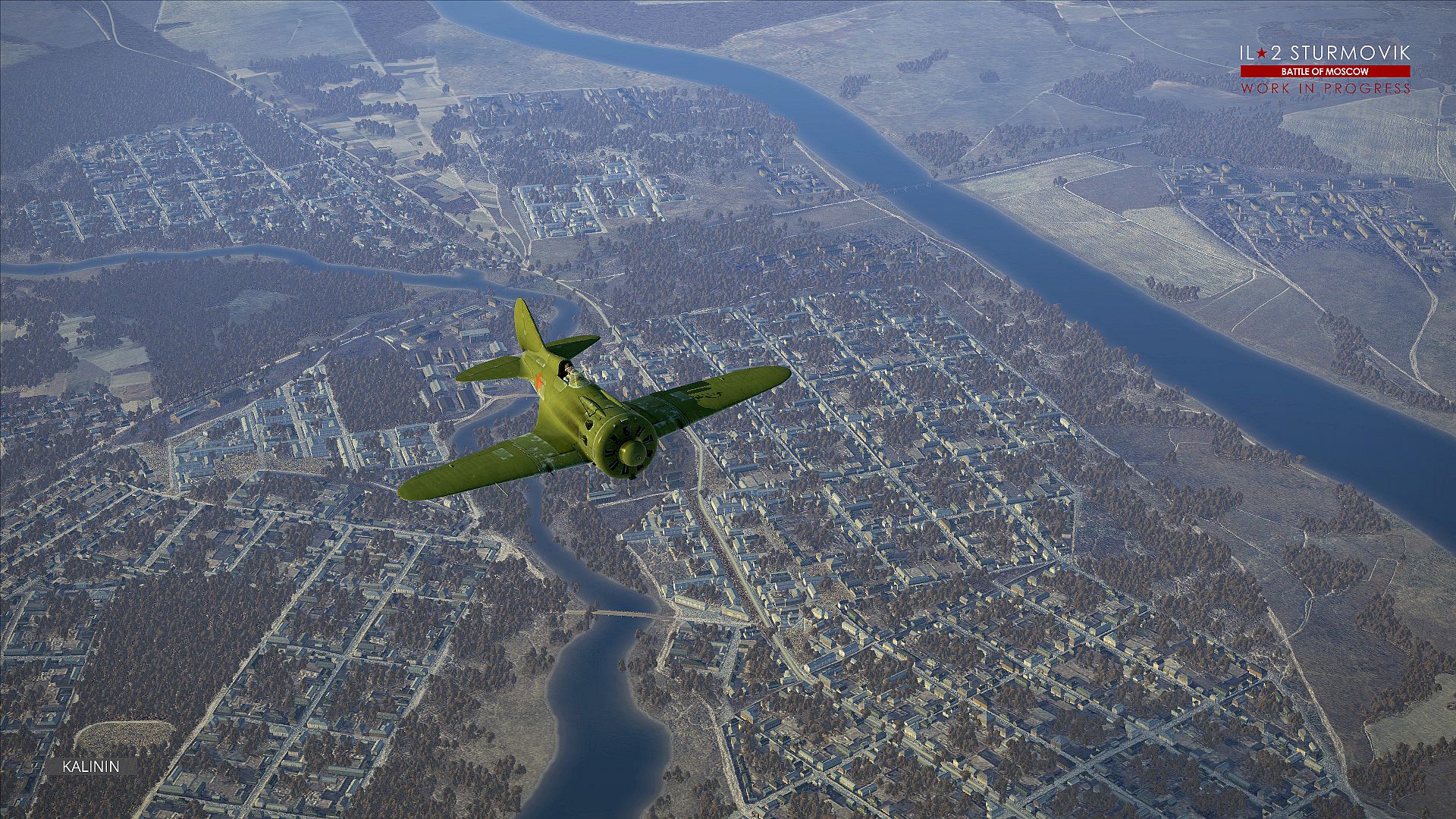
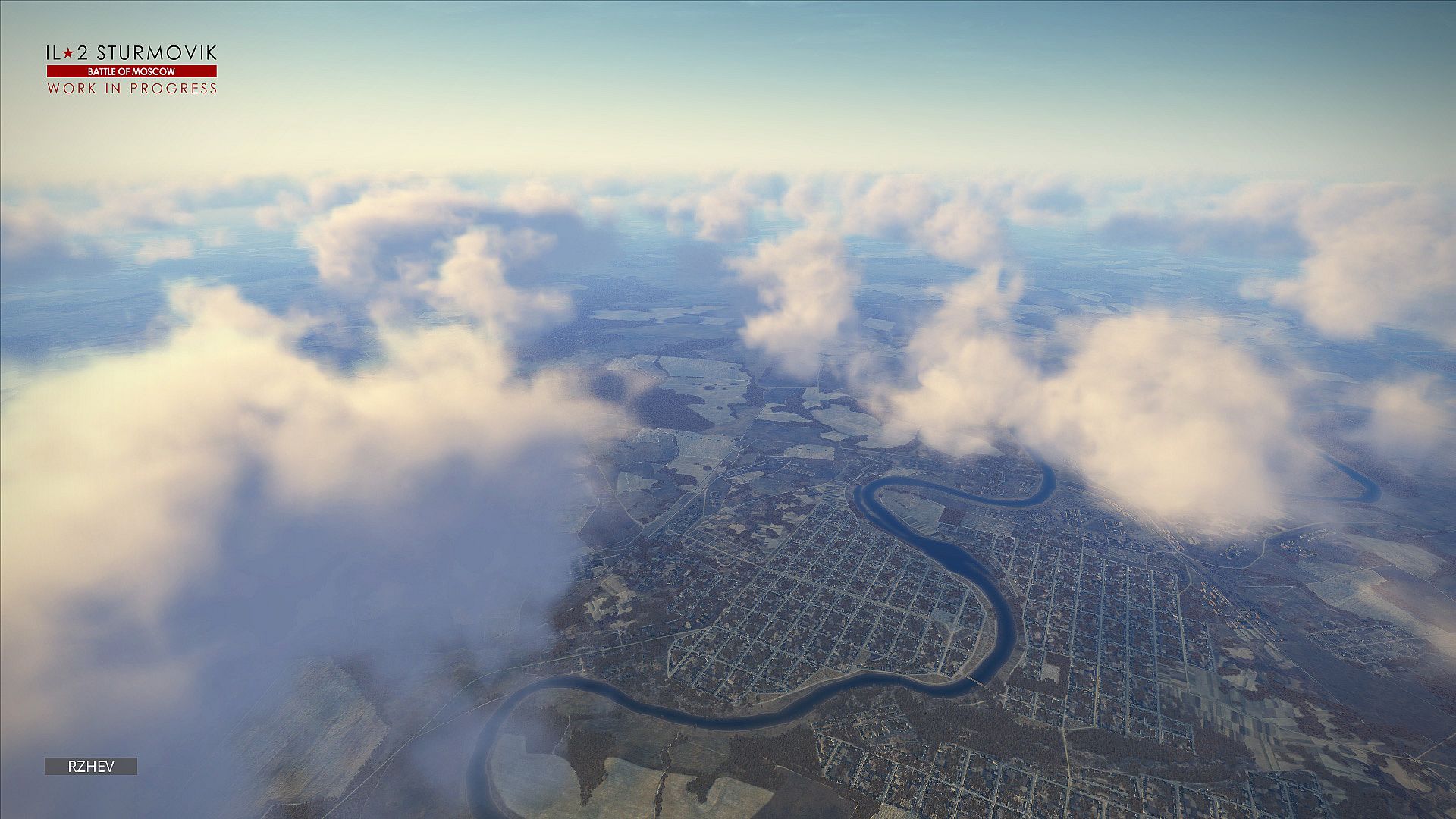
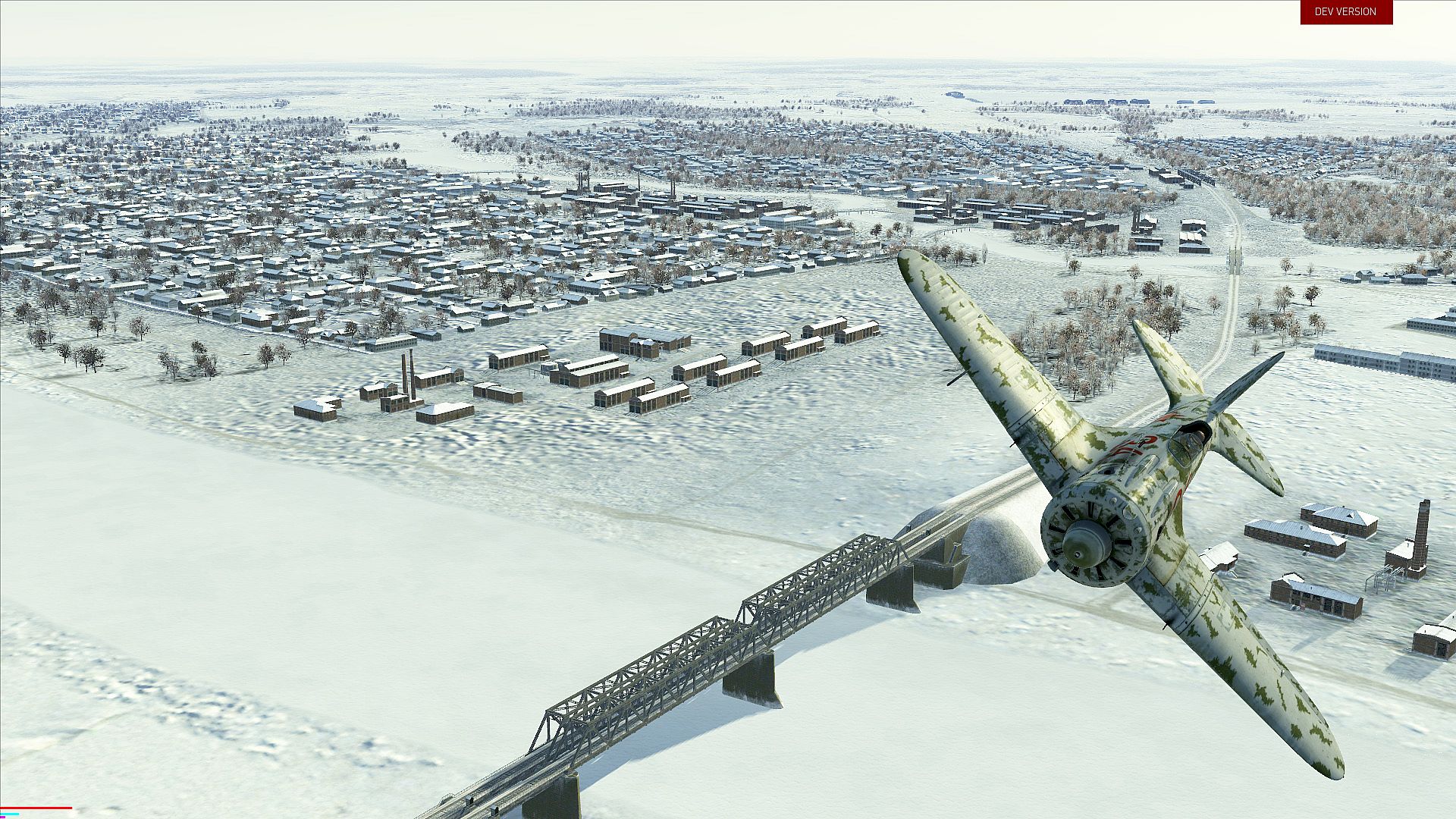
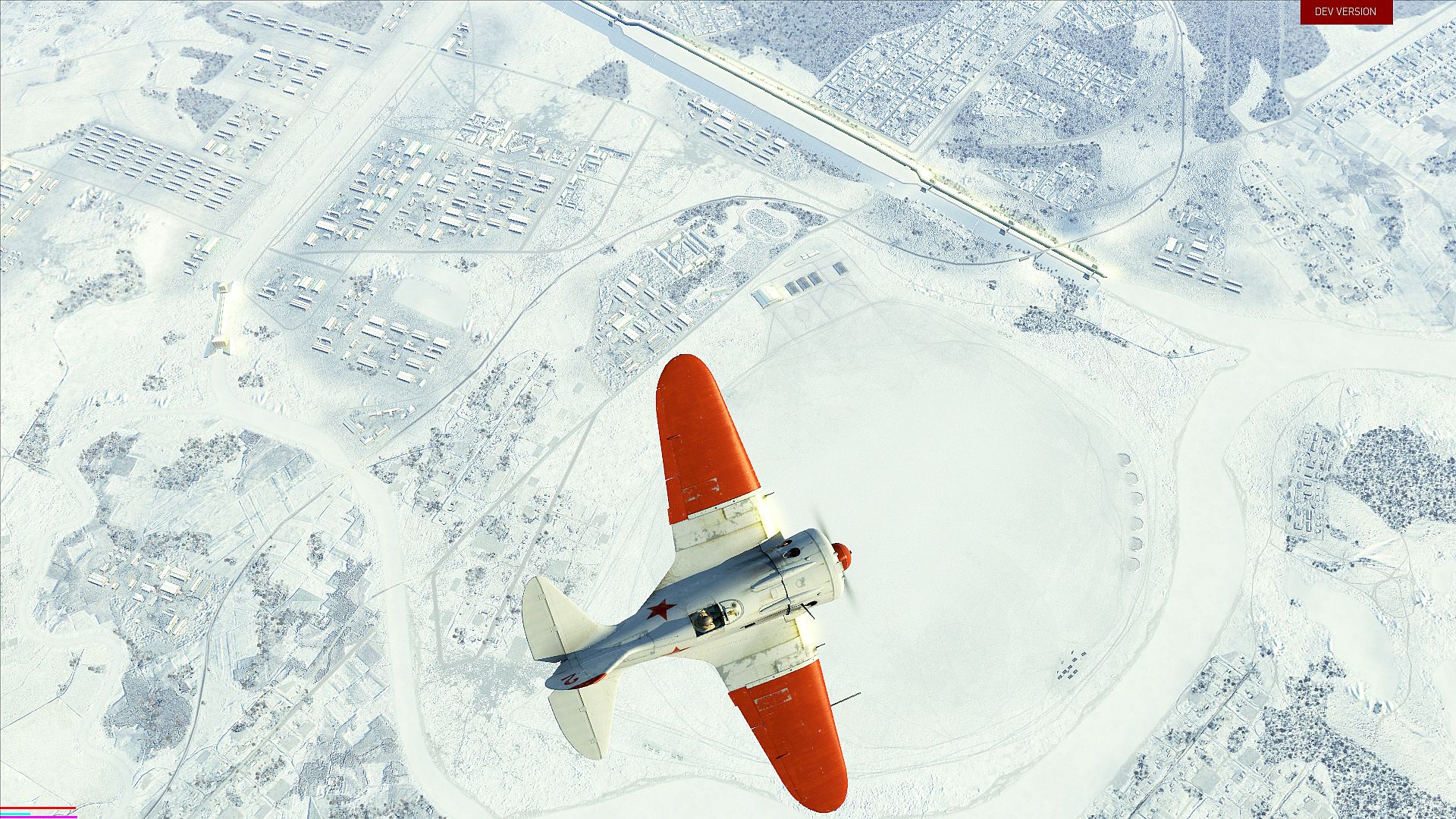
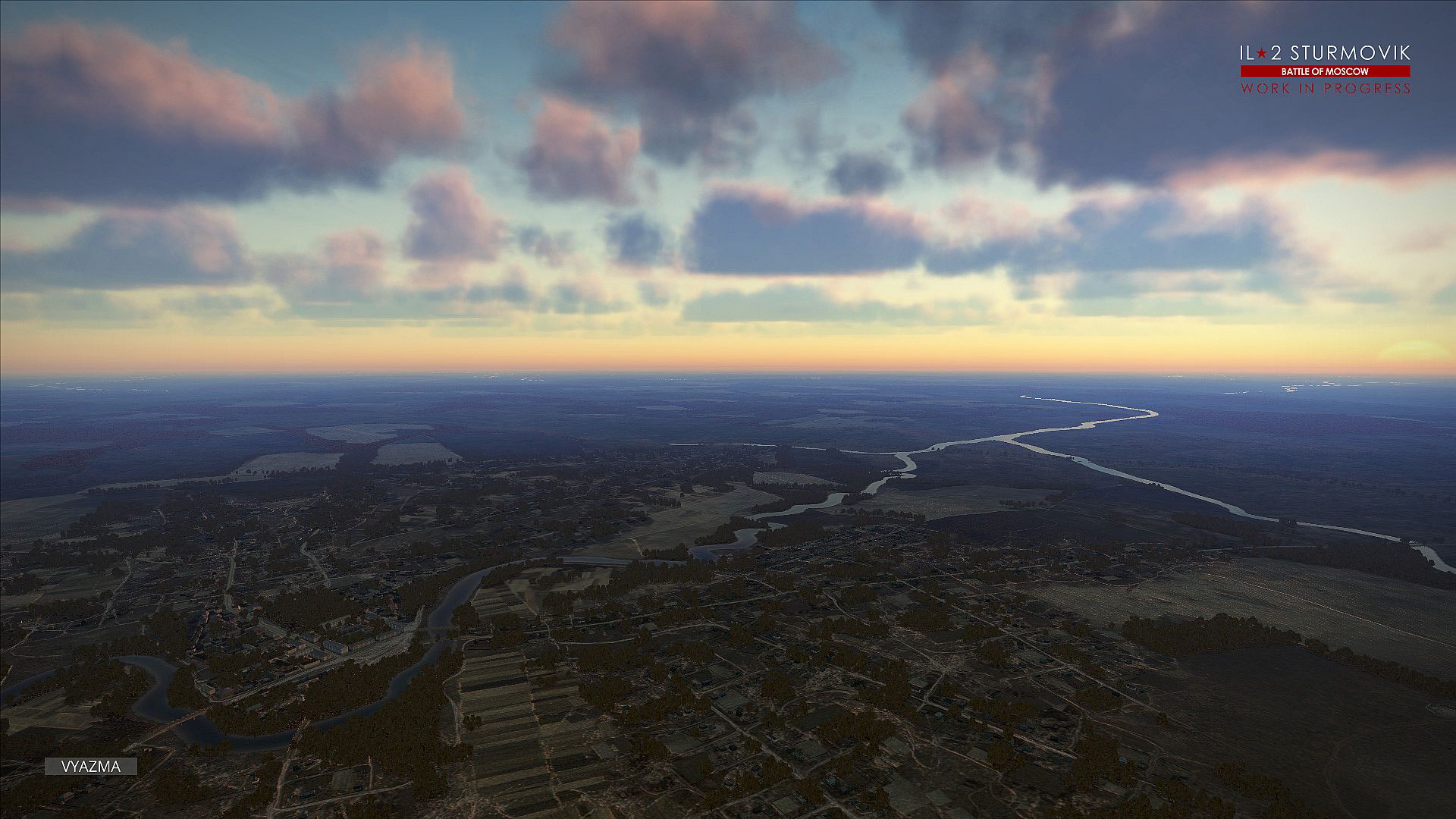
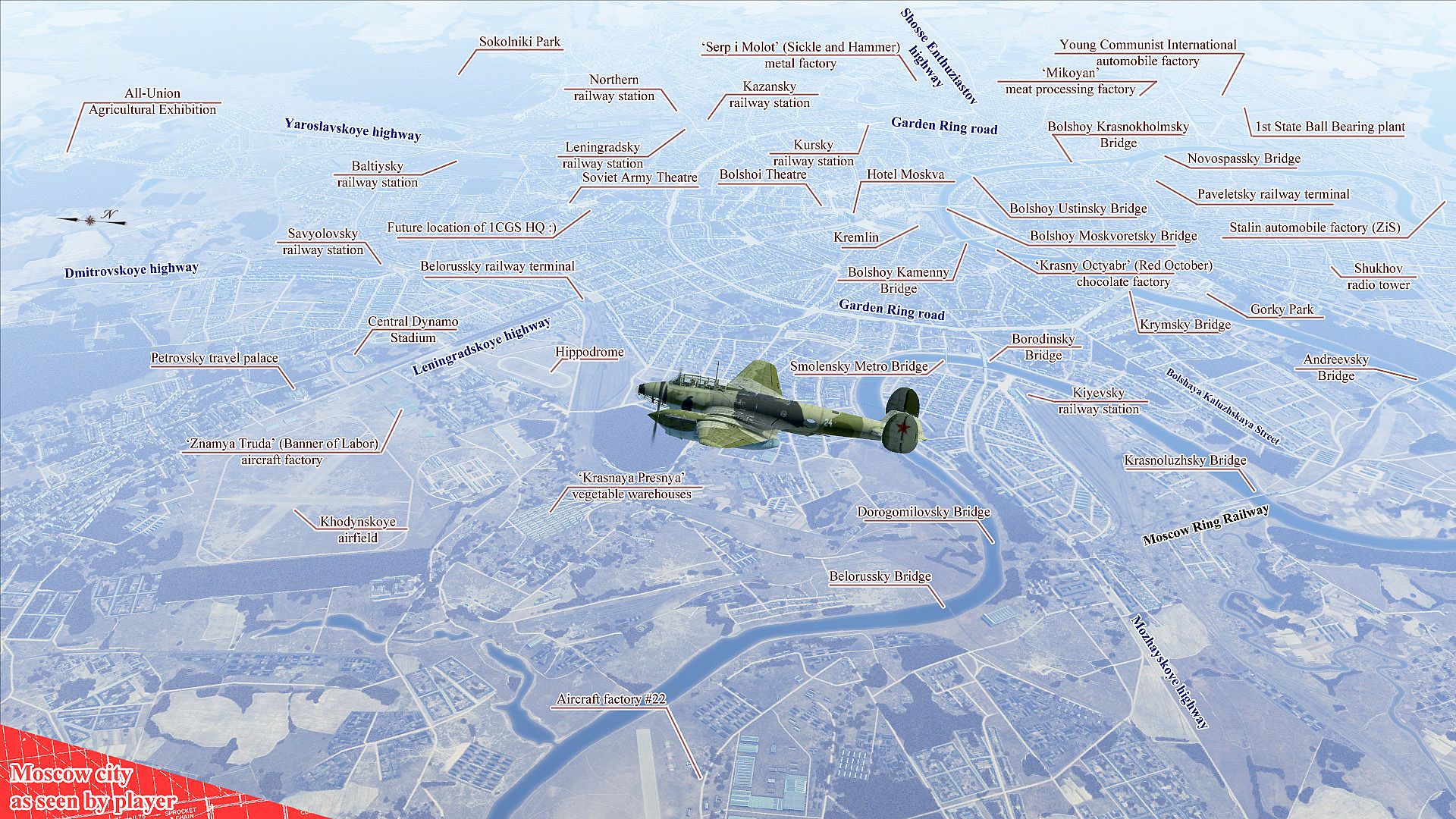
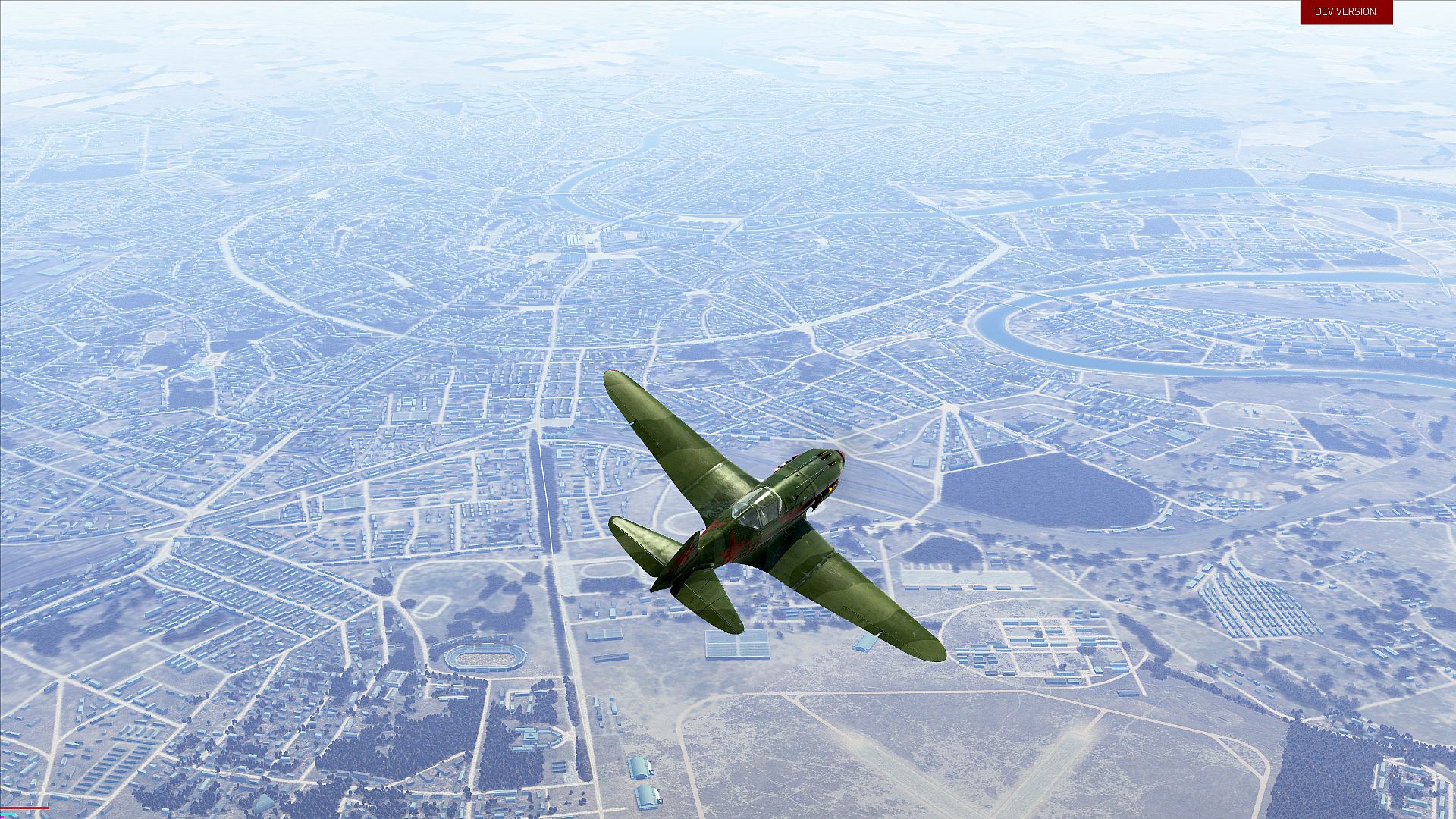
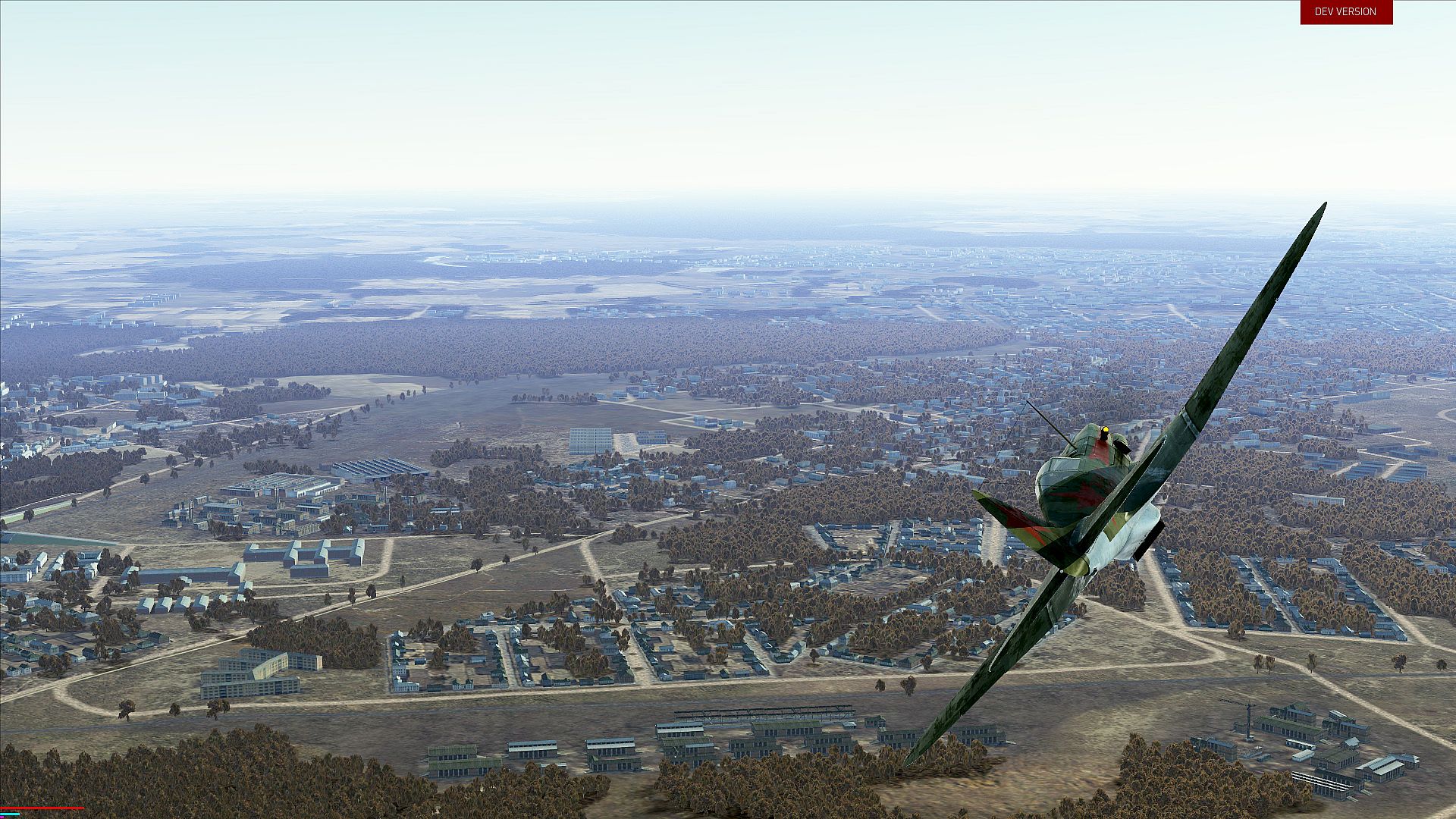
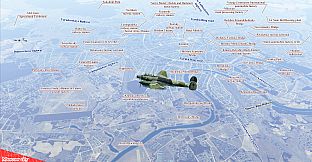
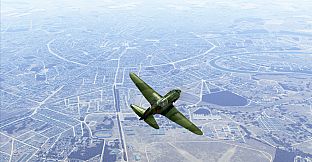
Airfields appear as they did historically, with concrete runways, unpaved strips, and temporary grass fields supported by minimal infrastructure. The map incorporates five major towns plus a visible but restricted Moscow area, all constructed from 1941 aerial imagery for accurate layouts. Seasonal changes affect visibility and ground conditions during missions that range from fighter intercepts to bomber raids and ground attack operations.
Game Modes
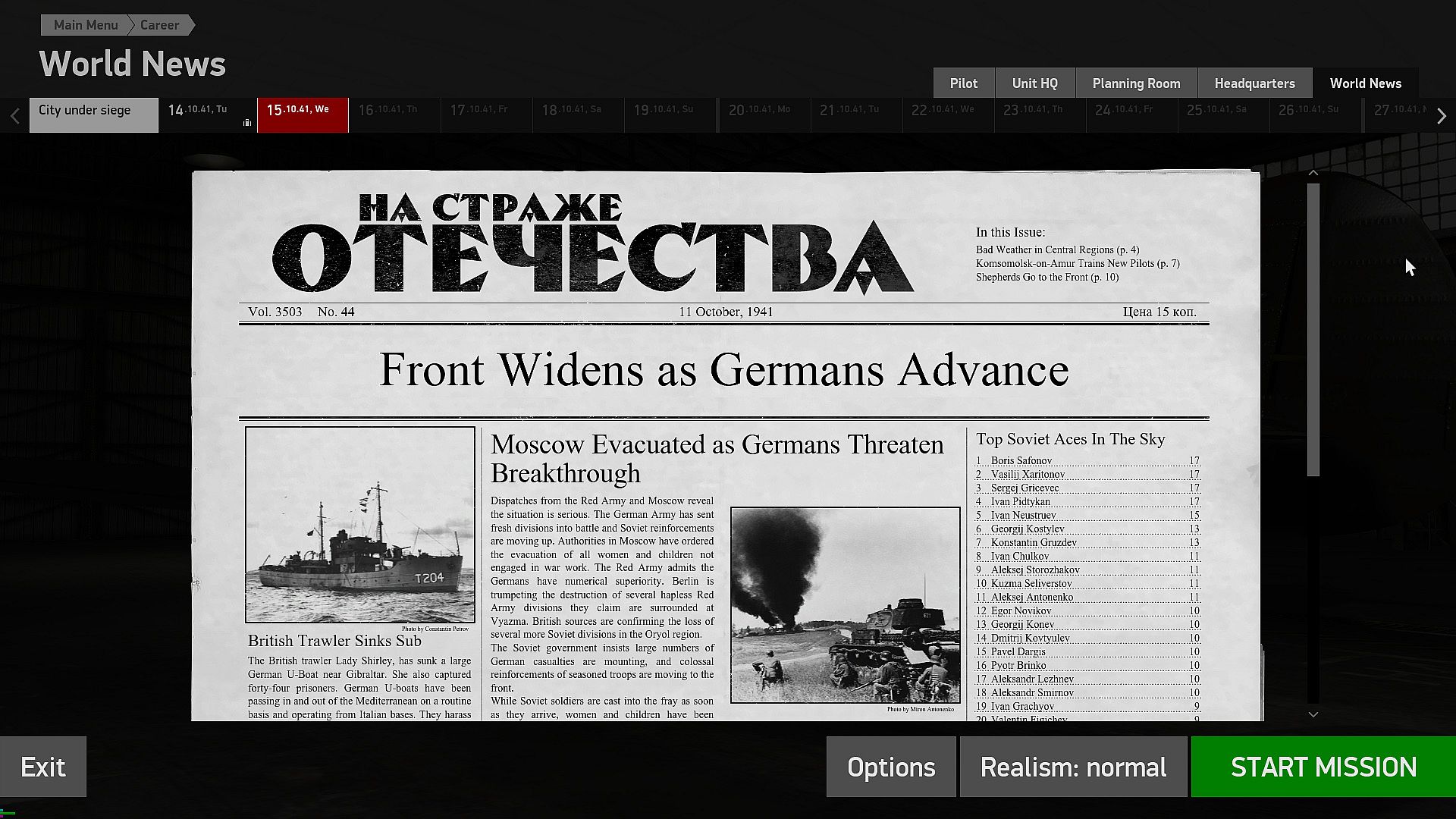
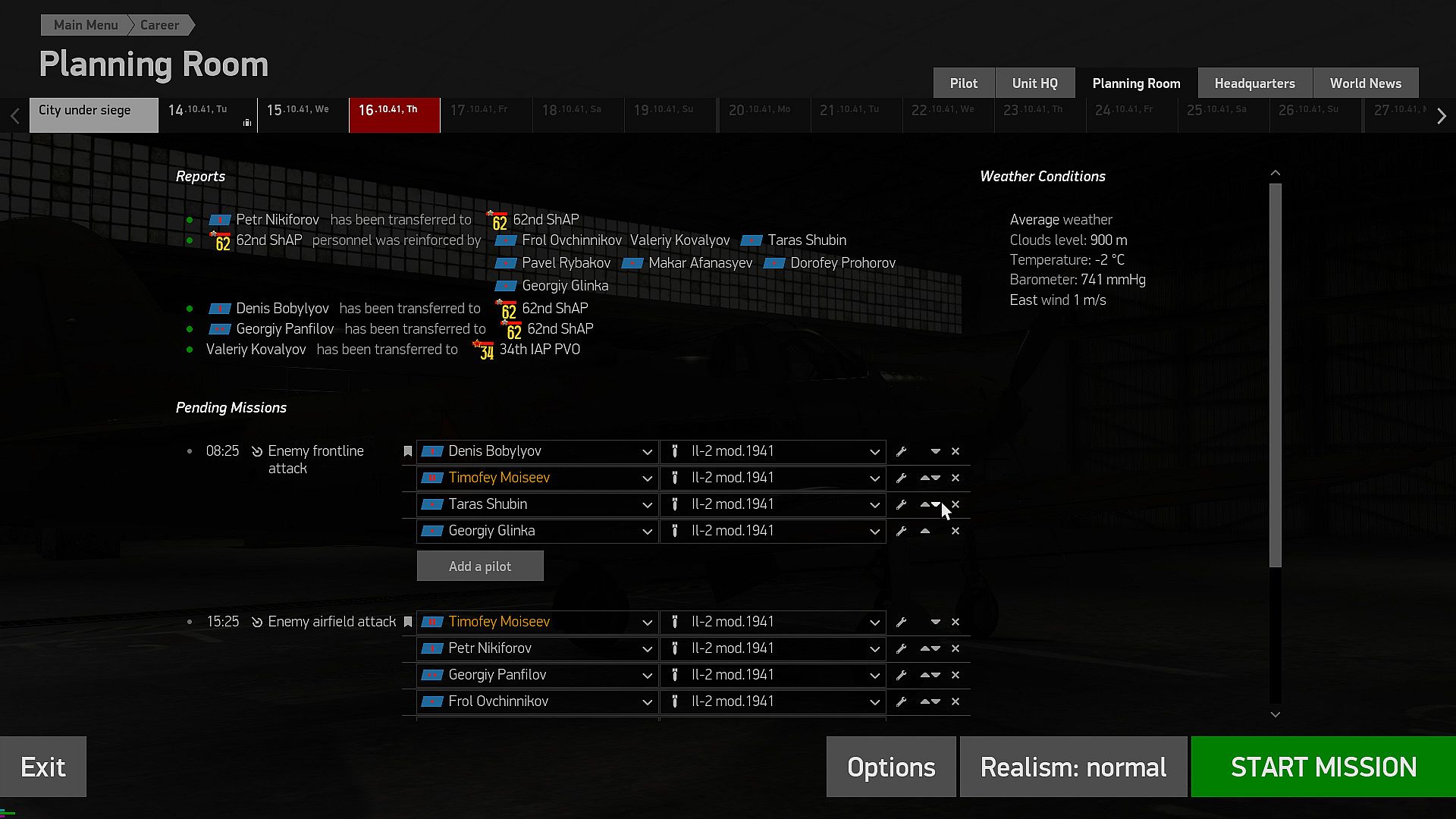
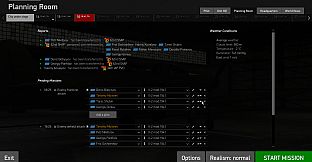
Career mode provides a structured singleplayer progression that covers every phase of the Moscow battle across 1941 and 1942. Pilots advance through a series of missions tailored to fighter, bomber, or attack roles, with performance influencing ongoing campaign events.
Additional options include individual scenario missions that recreate specific historical encounters and a mission generator for creating custom sorties. Multiplayer supports cooperative sessions and competitive deathmatch formats where pilots engage in team-based or free-for-all aerial combat.
Historical Accuracy and Environment
Development drew from wartime reconnaissance photos and personal records to position airfields and structures correctly. Towns such as Vyazma, Rzhev, Kalinin, Klin, and Serpukhov receive detailed treatment that reflects their 1941 appearance. Overflights of Moscow remain prohibited in line with the historical context of the campaign.
Ground elements include support personnel and basic airfield features that contribute to the overall sense of operating in a wartime theater without modern conveniences. The combination of large map scale and seasonal terrain shifts creates varied conditions for navigation and combat across multiple mission types.
Is It Worth Playing?
This module delivers a focused simulation of one of the Eastern Front's pivotal air campaigns for players who value historical detail and precise aircraft handling. It integrates with the broader series through shared career progression when additional modules are present, extending the pilot experience across multiple theaters.
Steam user reviews rate the content Very Positive based on 94 reviews with an 81 percent approval rating. The game remains available as a standalone purchase that requires the base title for full functionality, appealing primarily to those seeking authentic World War II aviation challenges rather than arcade-style action.