



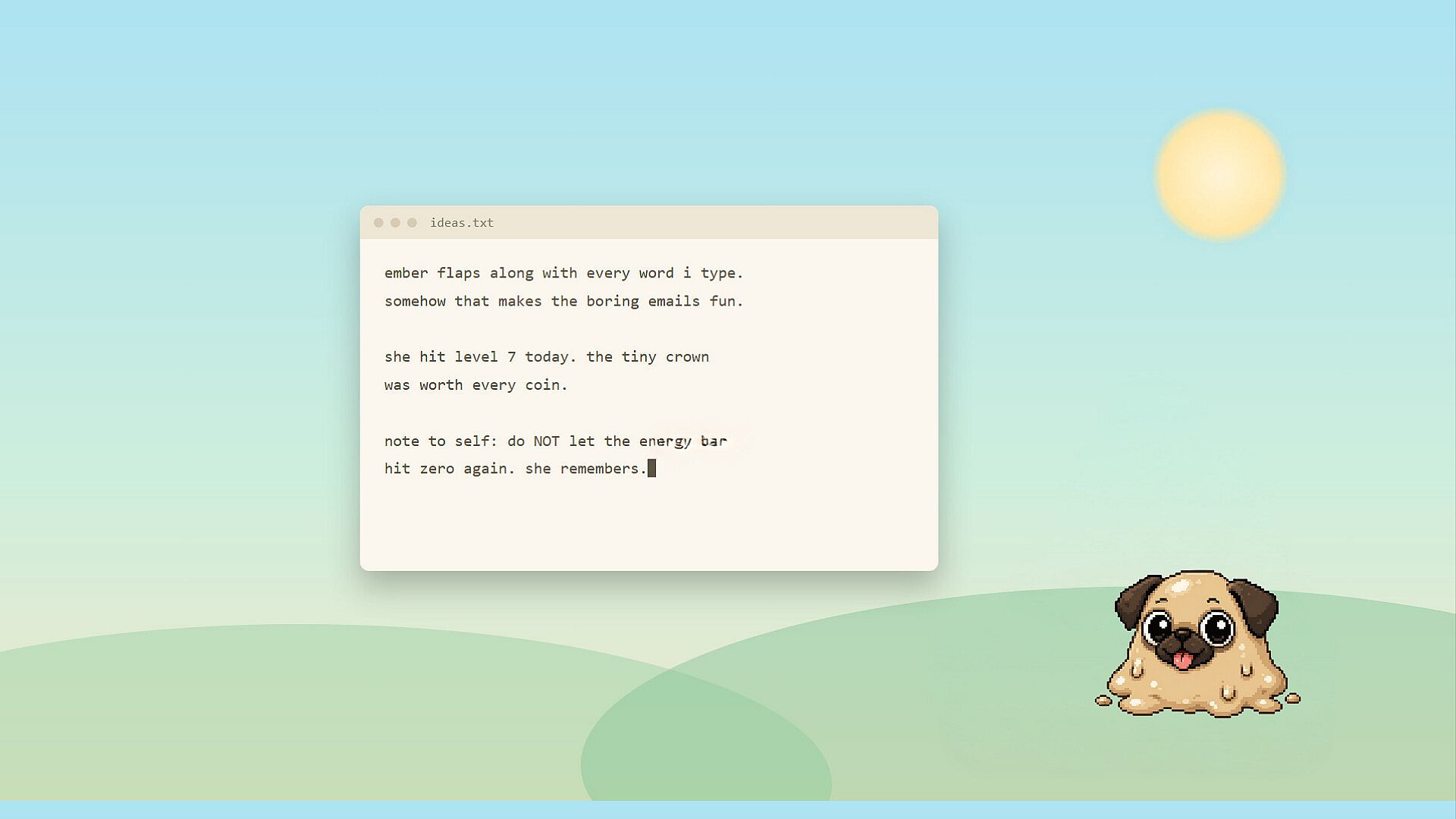
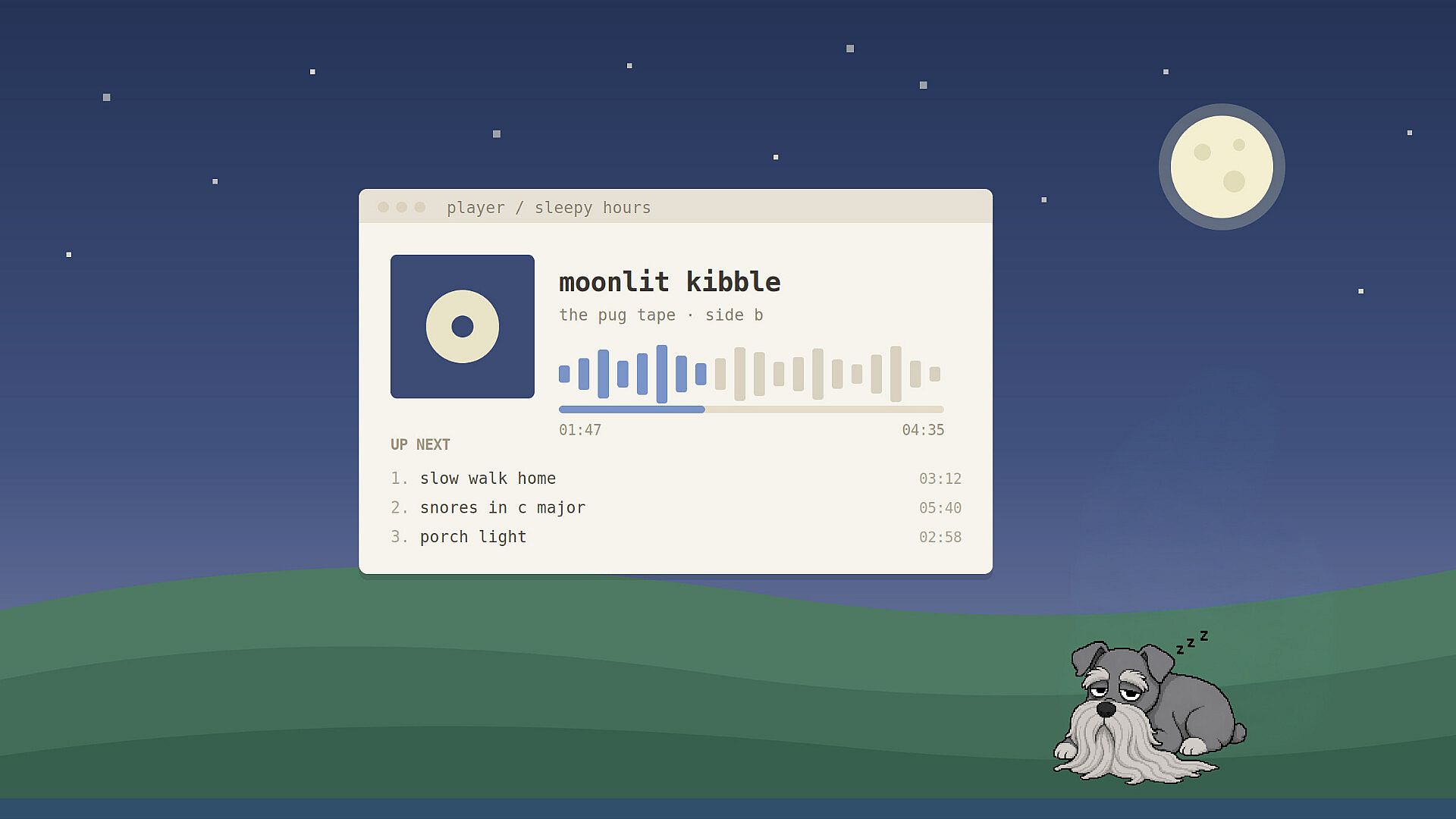
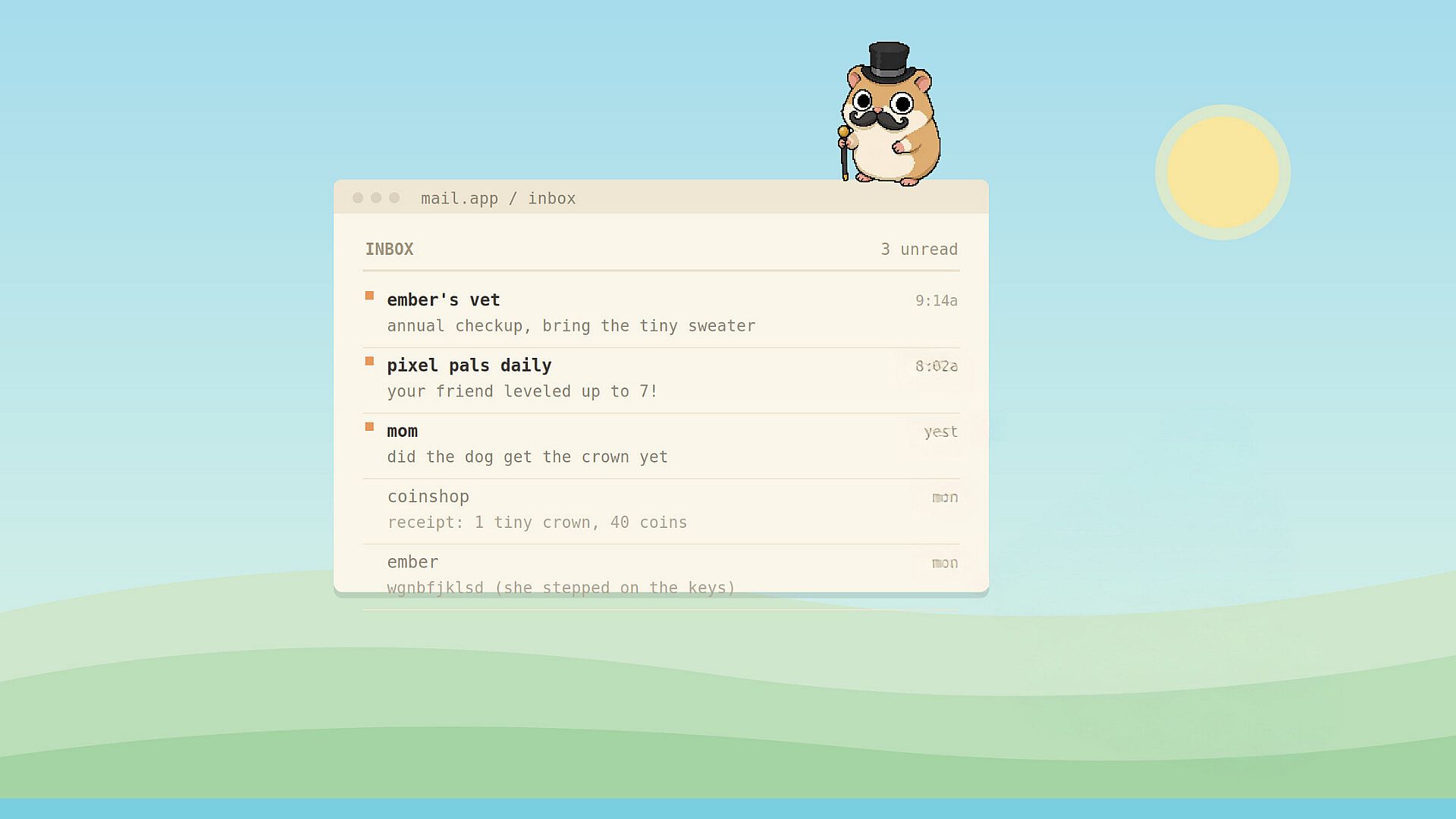
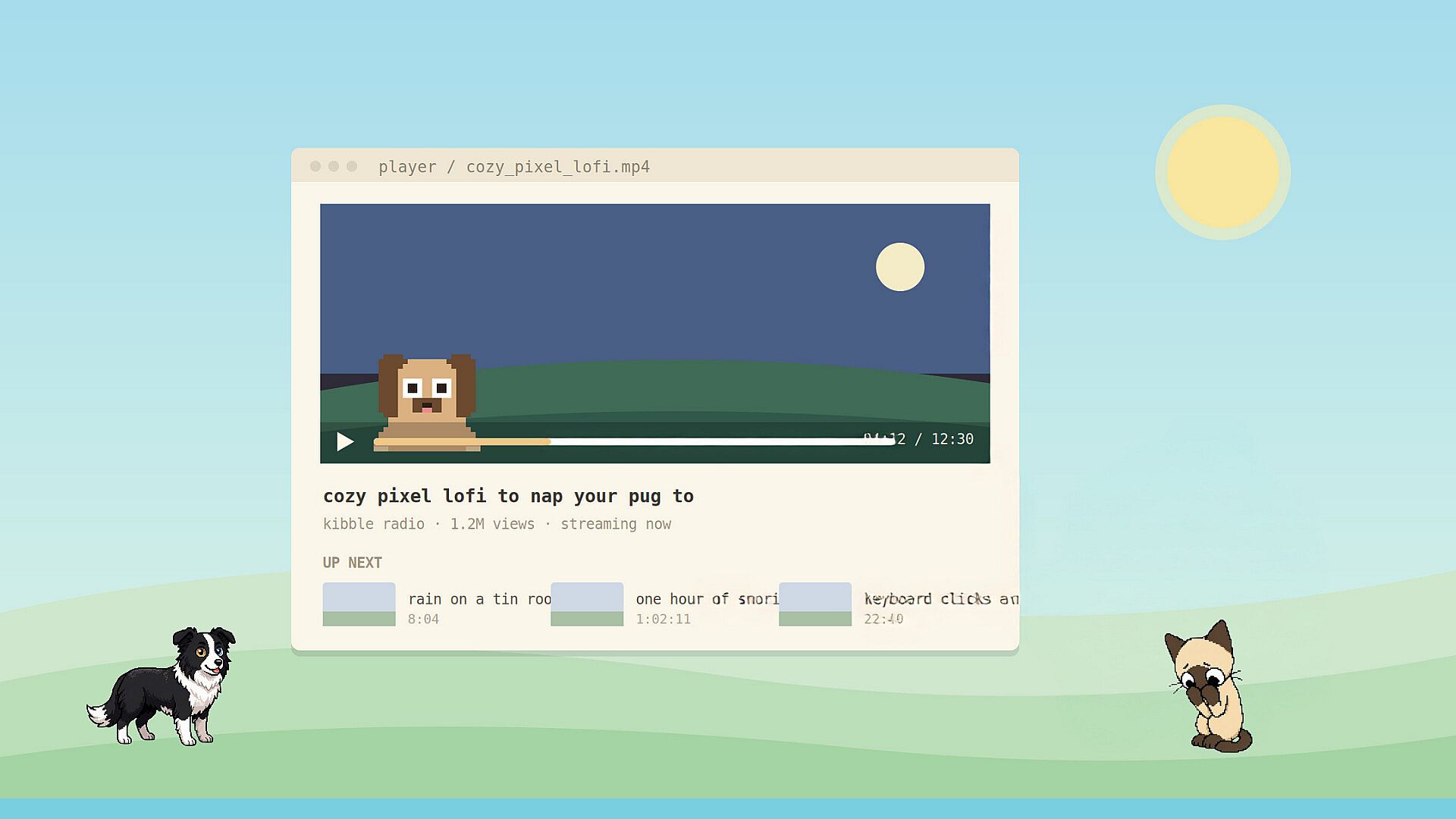

TomoBuddy é um jogo casual de simulação que posiciona um pequeno pet virtual diretamente na área de trabalho do PC. Os jogadores chocam ou desbloqueiam um companheiro, como um filhote de dragão ou cachorro, e cuidam de suas necessidades diárias enquanto ele reage à digitação e outras interações em uma janela transparente sobreposta. A experiência combina produtividade com o cuidado do pet, já que a criatura se movimenta, dorme de acordo com o horário local e ganha pontos de experiência ao reagir às teclas pressionadas, sem registrar ou transmitir o conteúdo digitado.
Gameplay
O ciclo principal gira em torno do gerenciamento em tempo real de fome, felicidade, higiene e energia. Esses atributos diminuem gradualmente, exigindo atenção constante por meio de alimentação, brincadeiras, limpeza e descanso. A alimentação transforma palavras digitadas em refeições complementadas por ração do inventário. Fazer carinho é feito ao manter o clique para gerar corações, enquanto arrastar reposiciona o pet de forma permanente na tela. Menus de botão direito oferecem comandos diretos para alimentar, brincar, limpar e dormir. A negligência ativa um aviso de dez minutos antes da perda permanente caso dois atributos cheguem a zero, resgatando a mecânica clássica dos pets virtuais portáteis dos anos 1990. O modo de sono automático é ativado à noite por segurança, e o pet ocasionalmente produz pequenos presentes que precisam ser recolhidos. A privacidade é garantida: o sistema de digitação apenas conta eventos globalmente, sem ler, armazenar ou transmitir qualquer dado das teclas pressionadas.
A progressão ocorre por meio de níveis conquistados com digitação e cuidados, liberando evoluções, chapéus, paletas de cores e outros itens colecionáveis. Moedas obtidas nas atividades permitem compras na loja do jogo. É possível criar vários pets ao mesmo tempo, mantendo apenas um ativo na área de trabalho enquanto os demais ficam guardados em uma área separada chamada Playpen. Um registro de memórias armazena eventos e conquistas em formato recolhível para consulta.
Game Modes
Os minijogos são as principais atividades estruturadas e fonte de moedas. Food-fueled Frenzy foca em mecânicas rápidas de alimentação ligadas à dieta do pet. Tag envolve perseguição e interação direta. Workout destaca rotinas de exercício que aumentam felicidade e energia. Shower cleaning combina tarefas de higiene com jogabilidade baseada em tempo. Essas sessões integram-se ao ciclo de cuidados, permitindo atender atributos específicos enquanto geram recursos para a loja e ampliam a coleção.
Fora dos minijogos, a área de trabalho funciona como espaço principal de interação. O pet reage em tempo real aos comandos do teclado durante o uso normal do computador, batendo asas ou respondendo a teclas pressionadas em qualquer ponto da tela. O Playpen oferece um ambiente contido para gerenciar pets secundários sem interferir na área de trabalho.
Features and Progression
A personalização é expandida por meio de desbloqueios por nível e compras na loja, permitindo ajustar aparência e comportamento ao longo do tempo. O sistema incentiva a construção contínua de coleções em vez de liberações únicas. Conquistas registram marcos de longo prazo, e o registro de memórias preserva o histórico de desenvolvimento de cada pet com valor sentimental. Os requisitos de sistema são modestos: funciona no Windows 10 ou 11 com gráficos integrados básicos e pouco espaço em disco.
Atualizações futuras estão planejadas pela equipe de dois desenvolvedores, mas a versão atual prioriza a simulação de cuidados e a integração com o teclado com foco em privacidade. O jogo funciona totalmente offline, sem qualquer atividade de rede.
Is It Worth Playing?
TomoBuddy é indicado para quem gosta de gerenciamento leve de pets virtuais no estilo Tamagotchi, especialmente quem busca um companheiro que se encaixa em sessões de trabalho ou estudo. O decaimento em tempo real e as consequências permanentes por negligência criam um senso de responsabilidade sem exigir atenção constante. Os minijogos adicionam variedade ao gerenciamento de atributos, enquanto a progressão por níveis e o Playpen sustentam sessões mais longas para colecionadores. Sem avaliações disponíveis no lançamento e com estreia prevista para agosto de 2026, a recepção ainda é incerta, mas as mecânicas descritas visam fãs de simulações tranquilas e baseadas em rotinas. Quem valoriza interações simples e persistentes na área de trabalho, em vez de narrativas complexas ou multiplayer, encontrará maior apelo no ciclo focado de cuidados com o pet.