

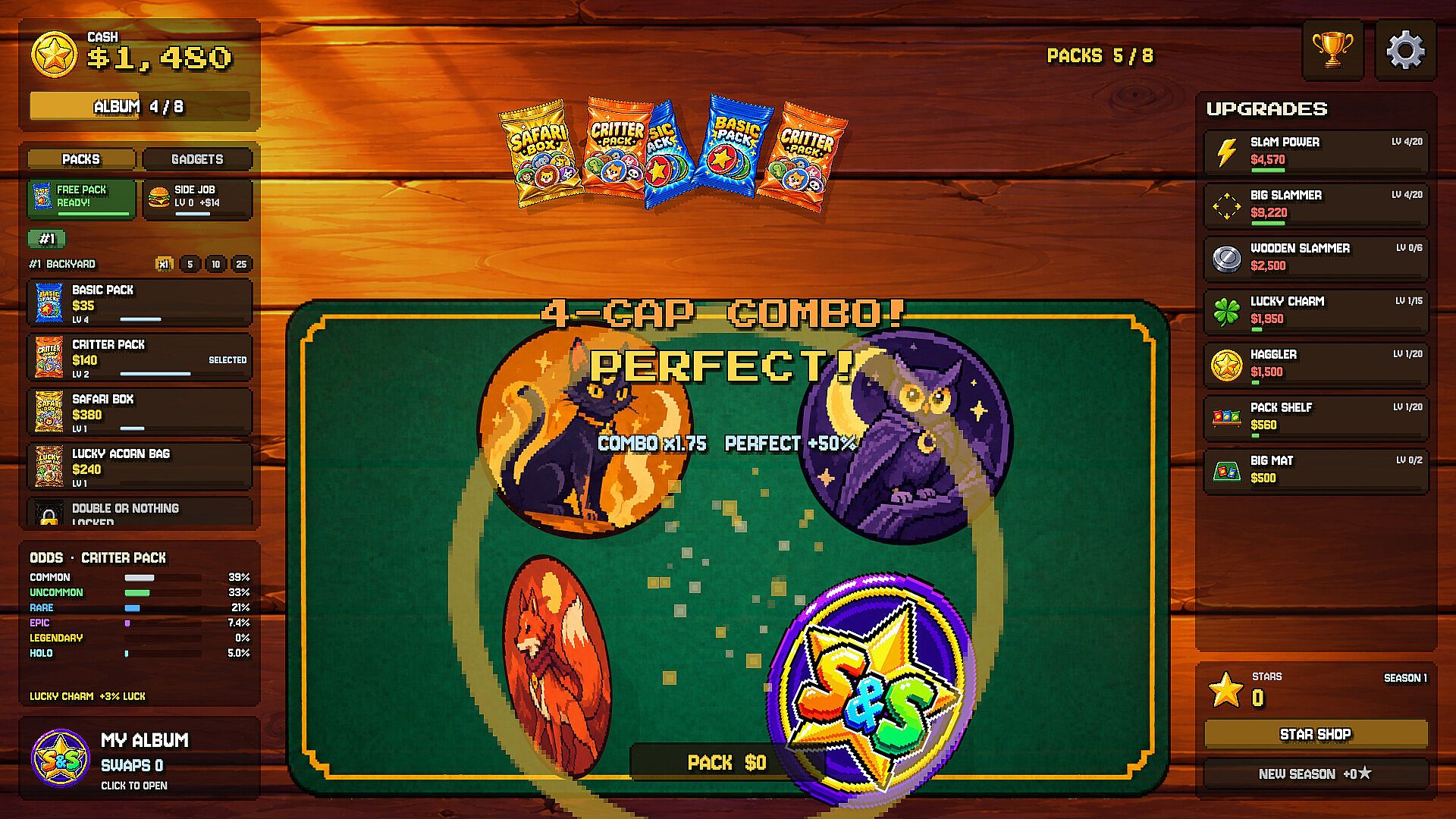

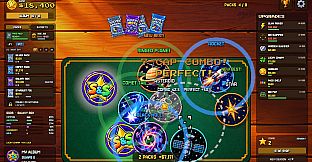

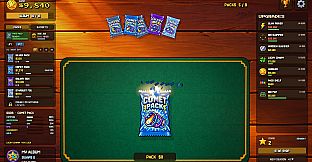

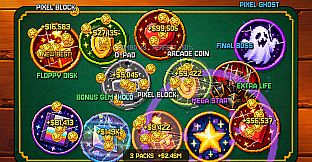

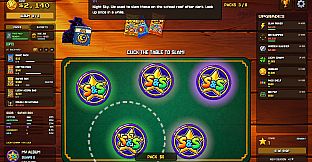

Smash & Stash is an indie casual game built around the classic mechanics of cap slamming and set collection. Players open packs of face-down caps, slam them with a slammer to reveal common, rare, or legendary designs, and work to complete albums while managing duplicates for cash. The experience blends idle progression with precise timing on each slam, all wrapped in retro 90s pixel art and an optional CRT filter.
Gameplay
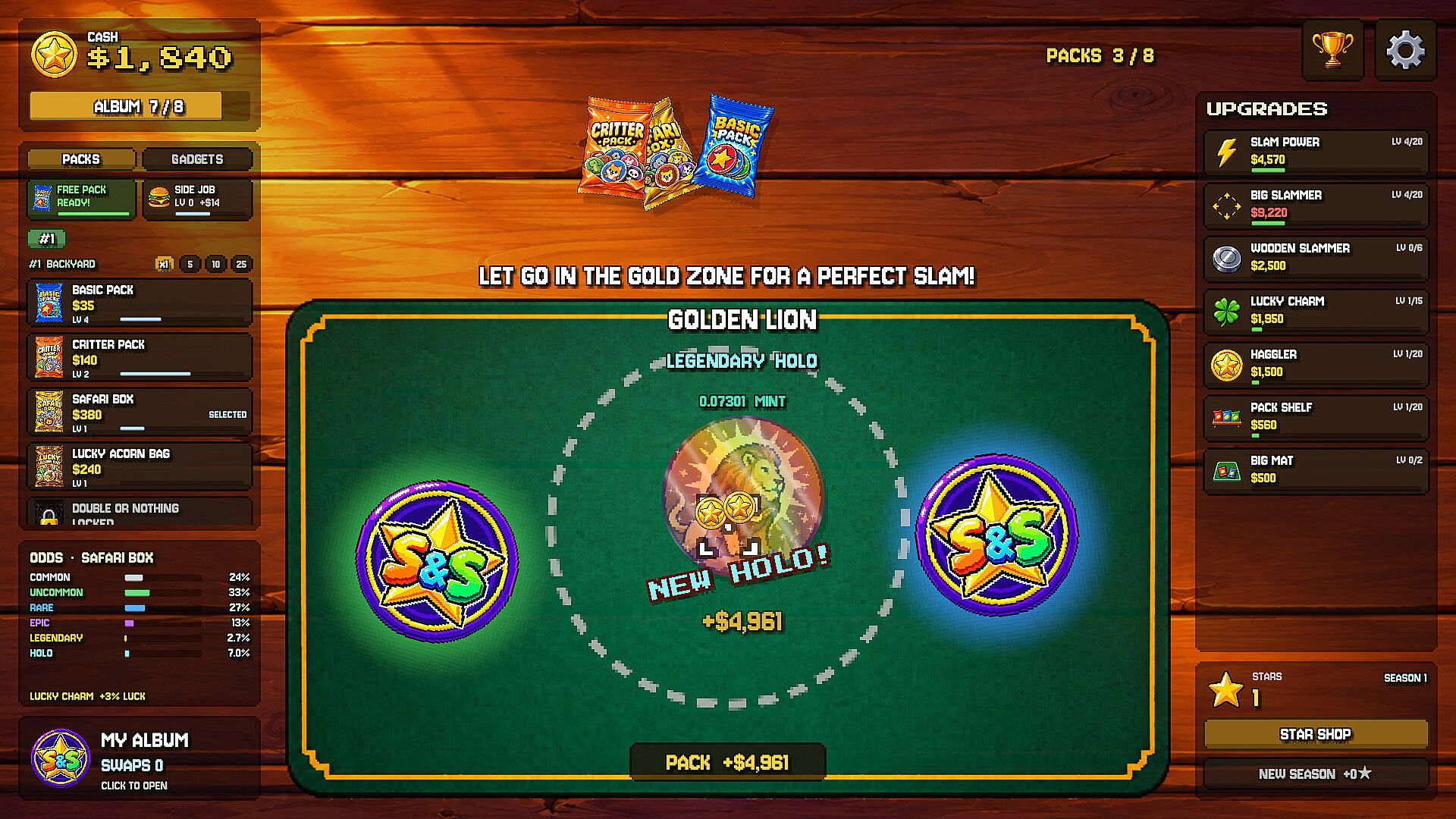
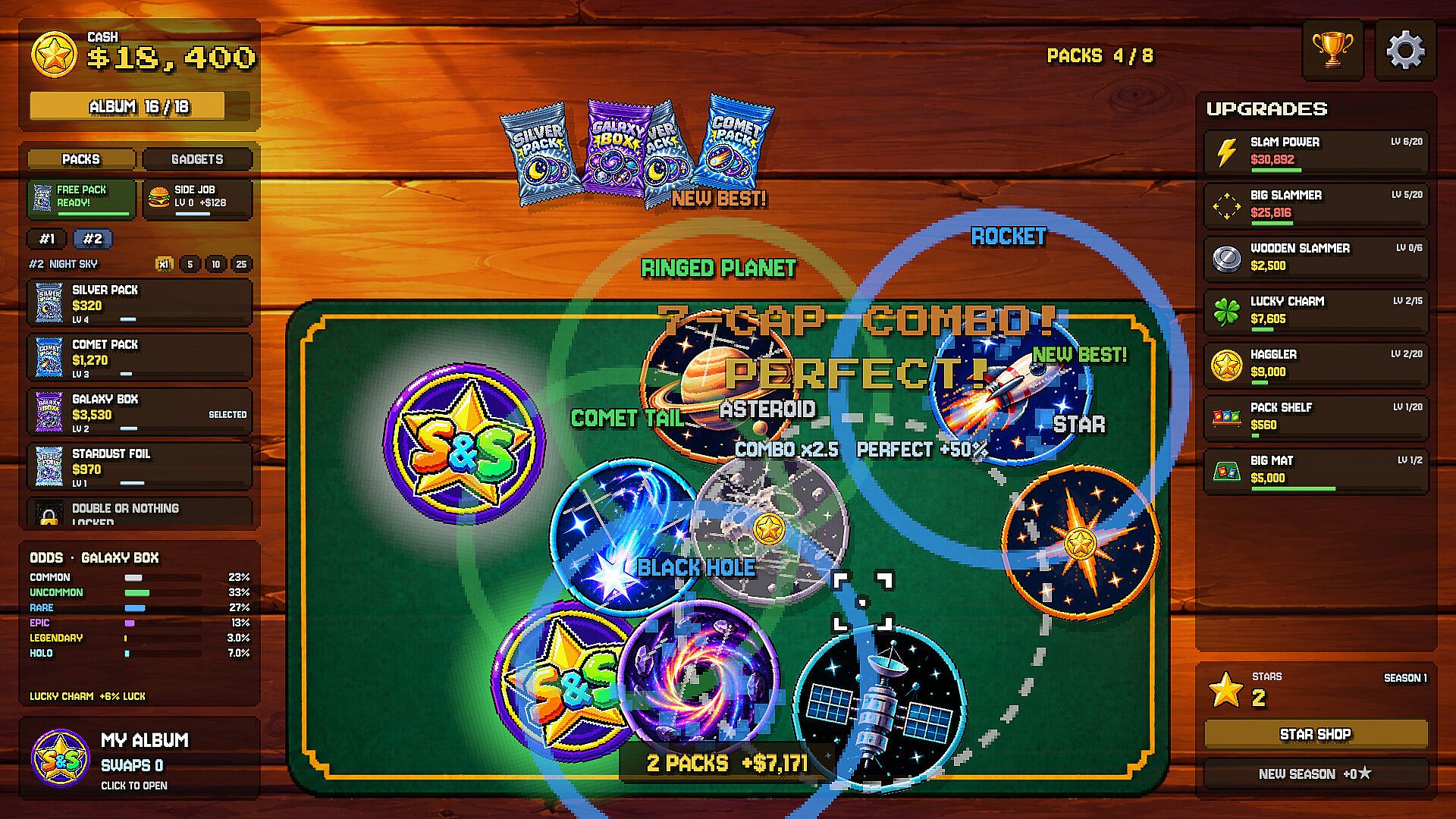
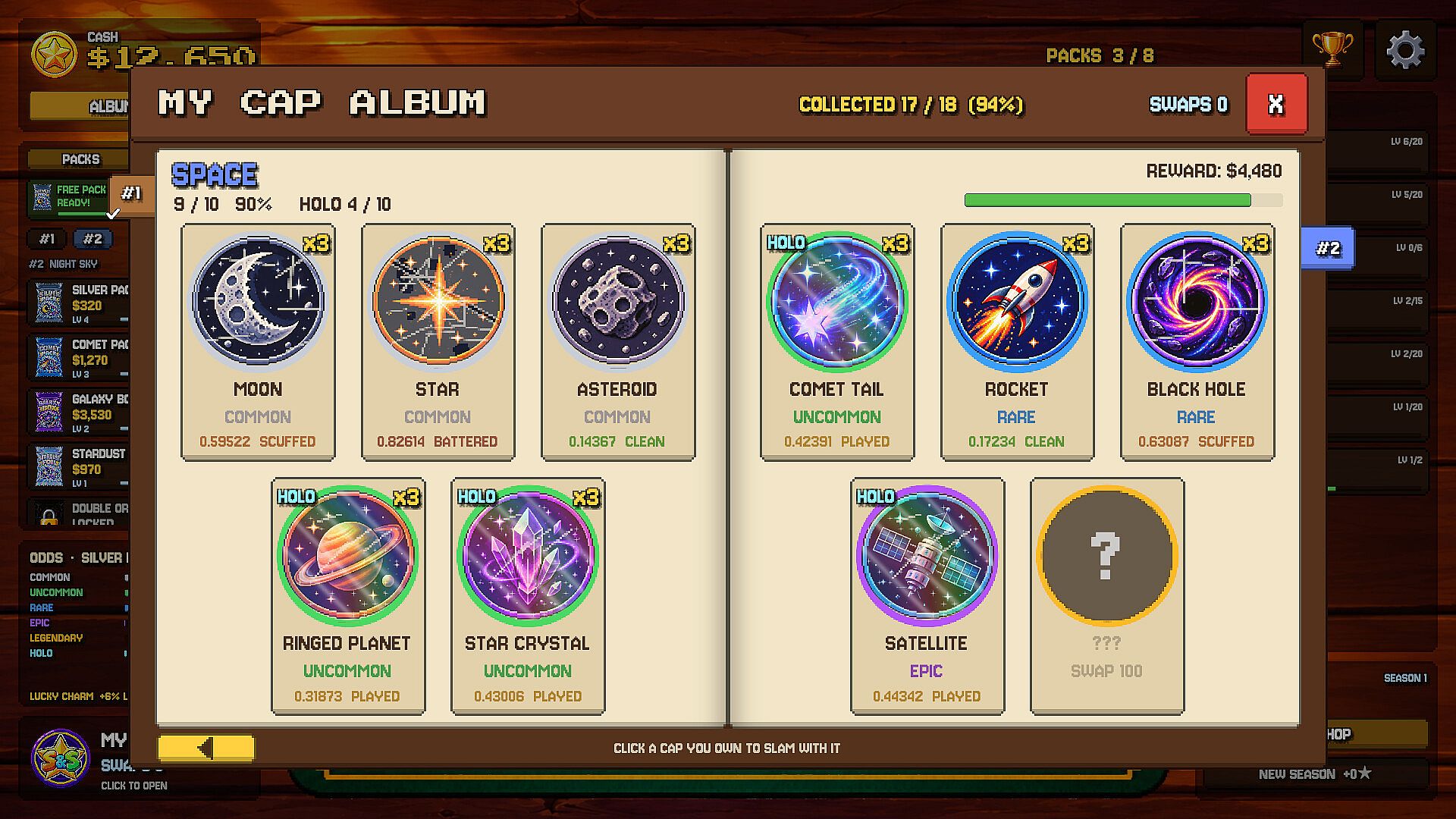
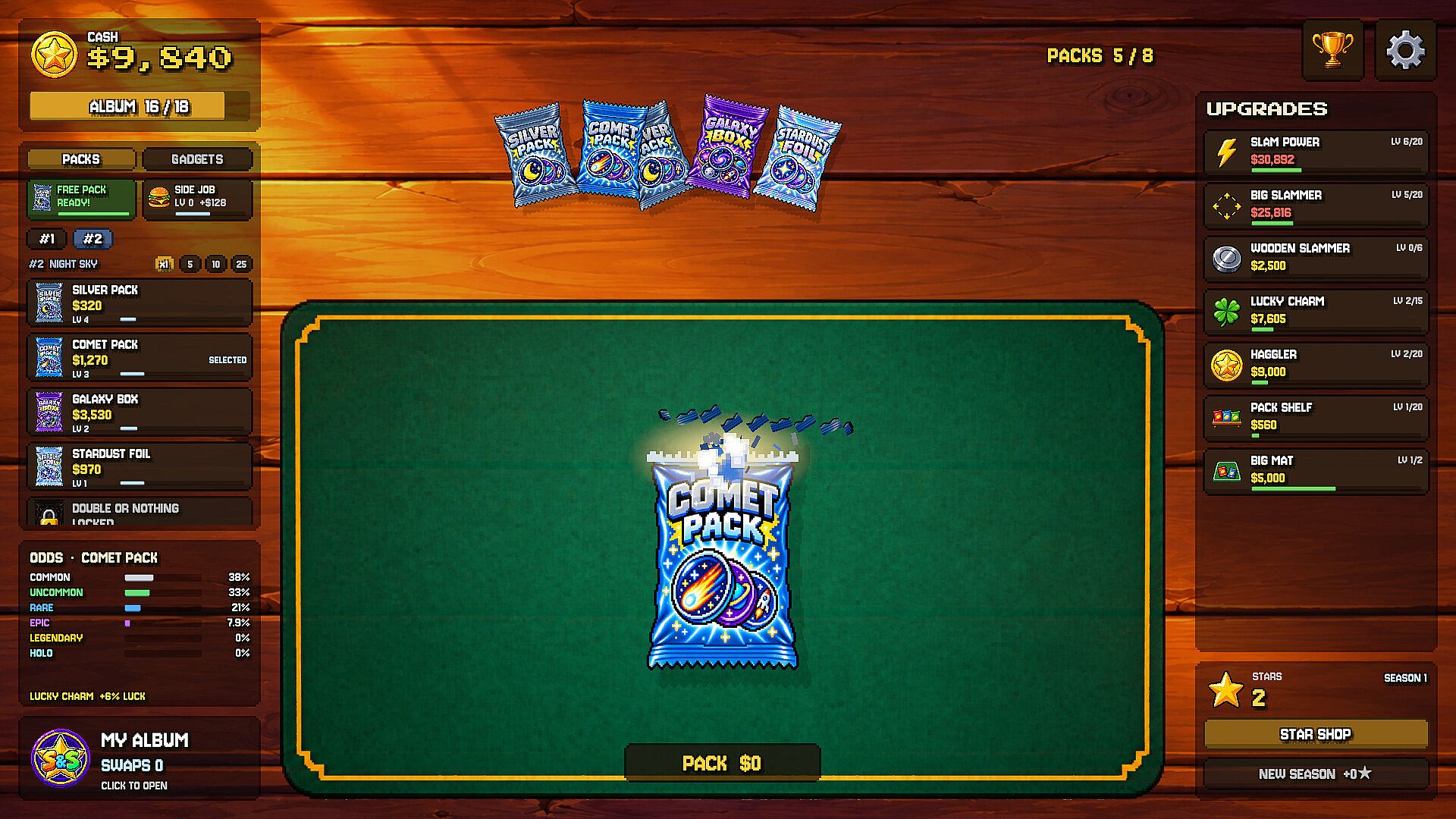
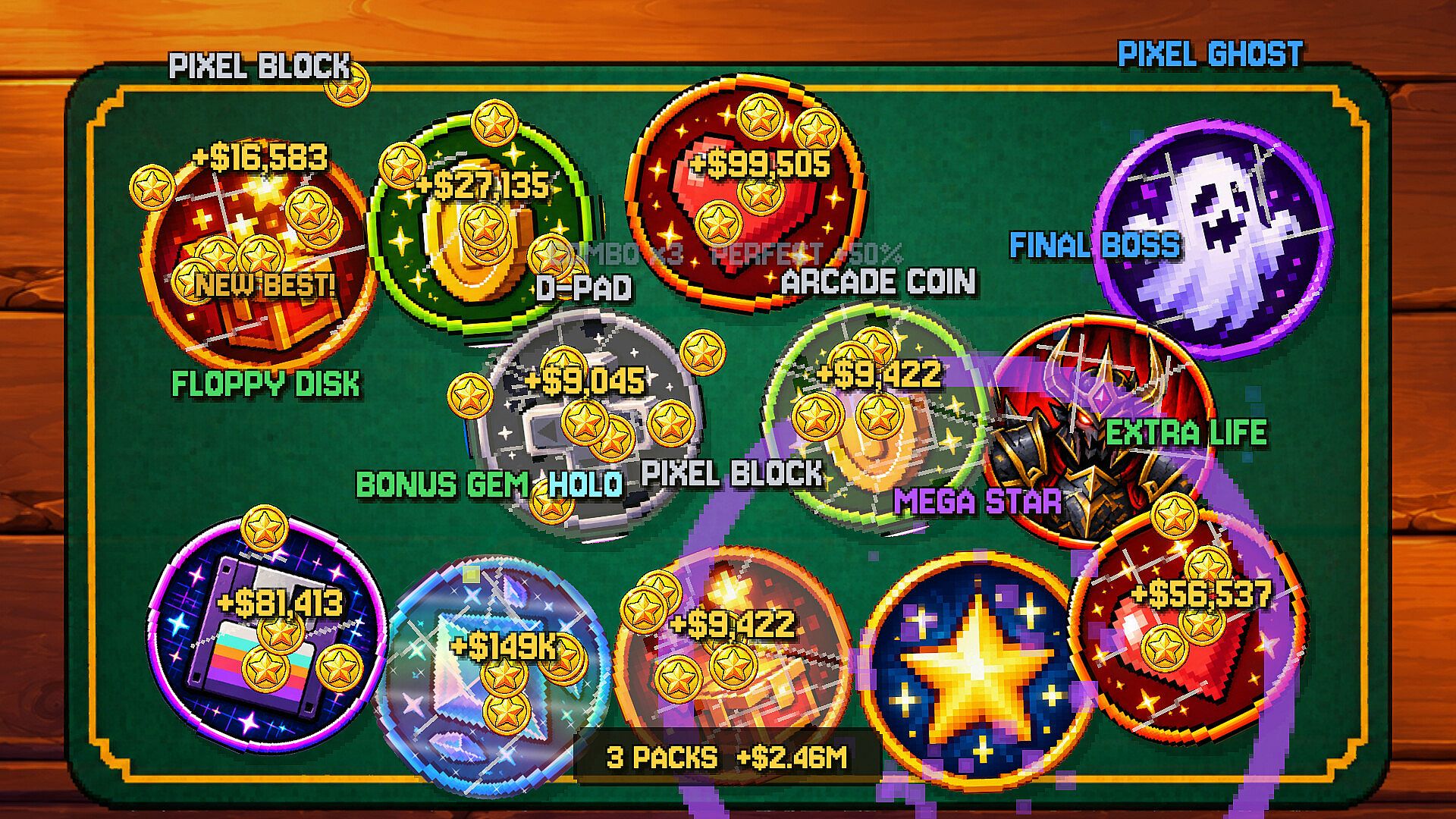
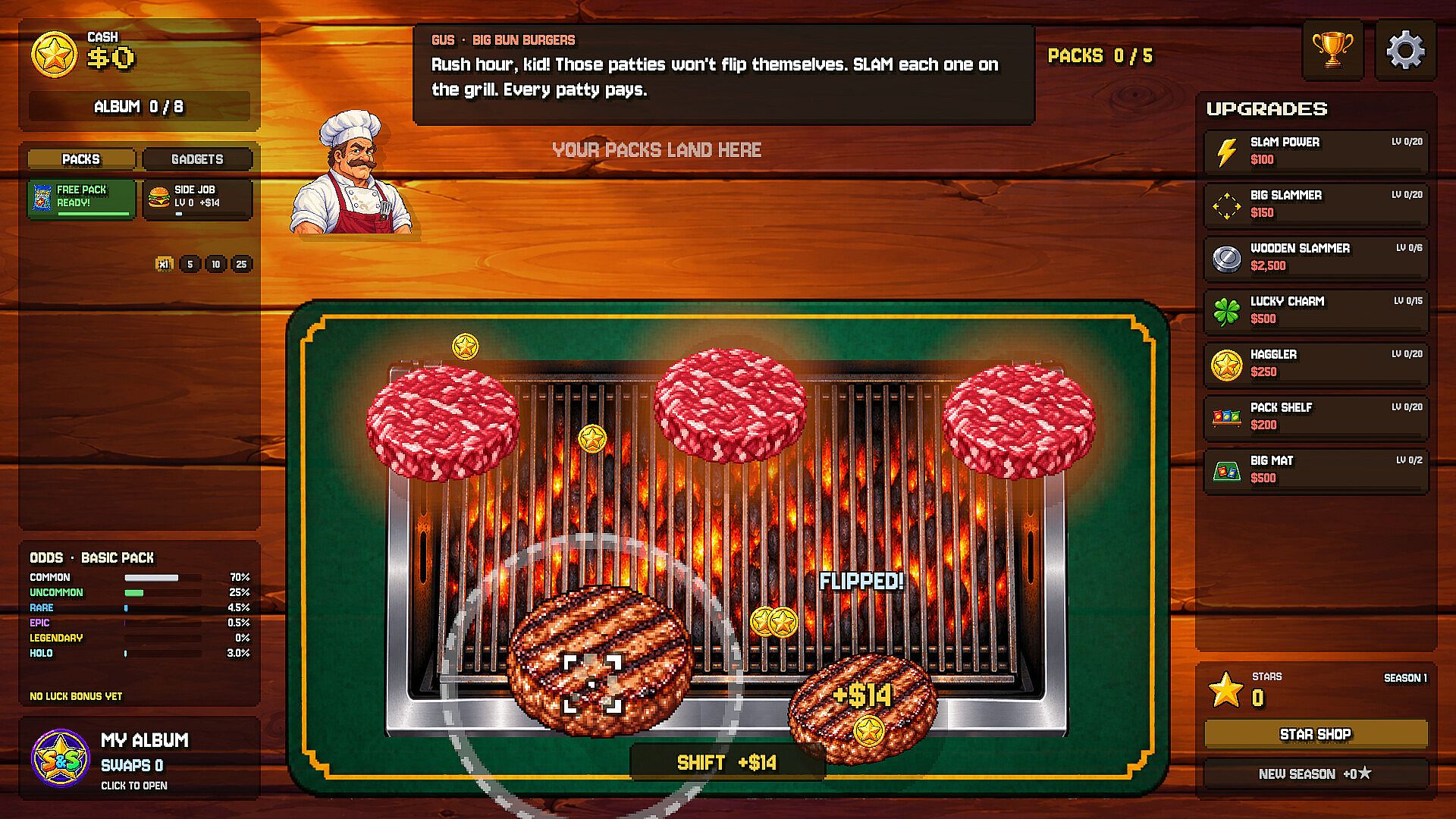
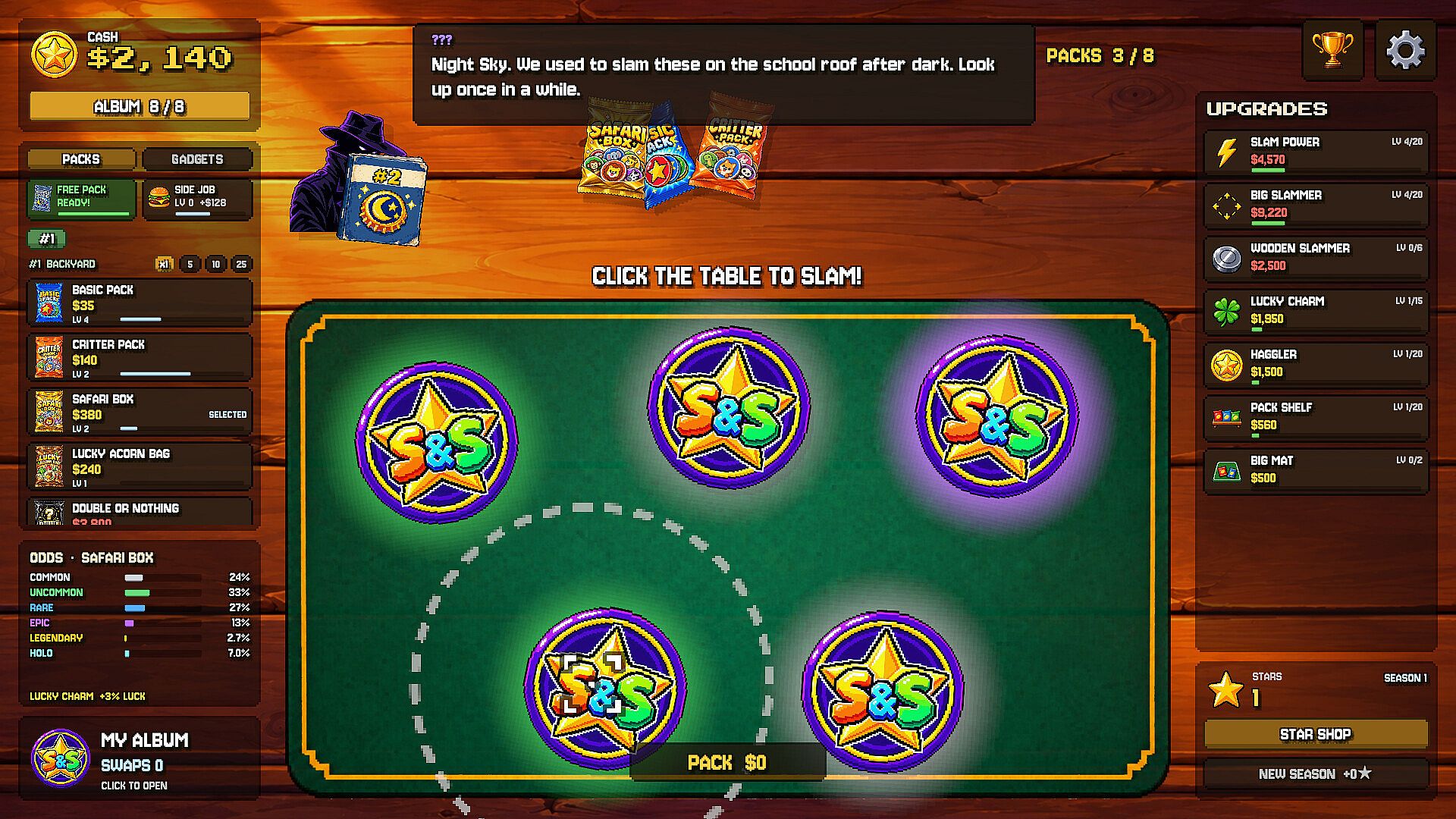
The core loop centers on opening packs and executing slams. A fresh pack lands on the desk, caps tumble out face-down, and the player raises the slammer. A quick click performs a basic slam, while holding the button charges for a wider hit that can flip more caps at once. Timing the release at the perfect moment maximizes results and reveals higher-value pieces. Every cap enters an album, duplicates convert directly into cash, and that cash funds upgrades such as a heavier slammer or luckier packs. Progression begins with modest earnings from flipping burgers and scales through thousands, millions, and eventually trillions as the player expands the collection. Each cap also has a shiny holo variant to hunt, adding a layer of chase to the album completion.
Visual presentation stays faithful to 90s aesthetics with crisp pixel art. The optional CRT filter enhances the nostalgic feel without altering core mechanics. All packs are purchased using in-game earnings, keeping the loop self-contained and free of external purchases.
Game Modes
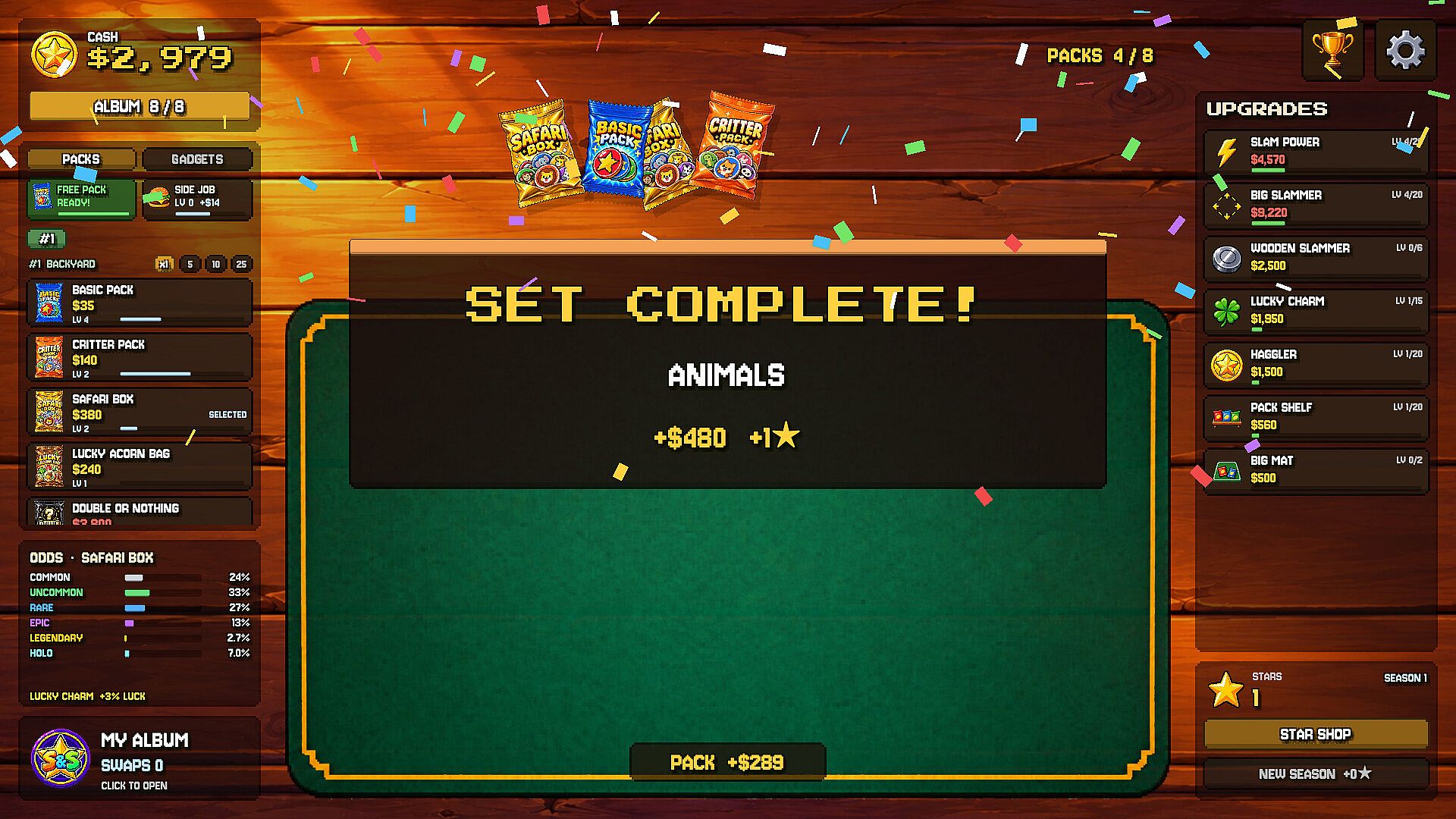
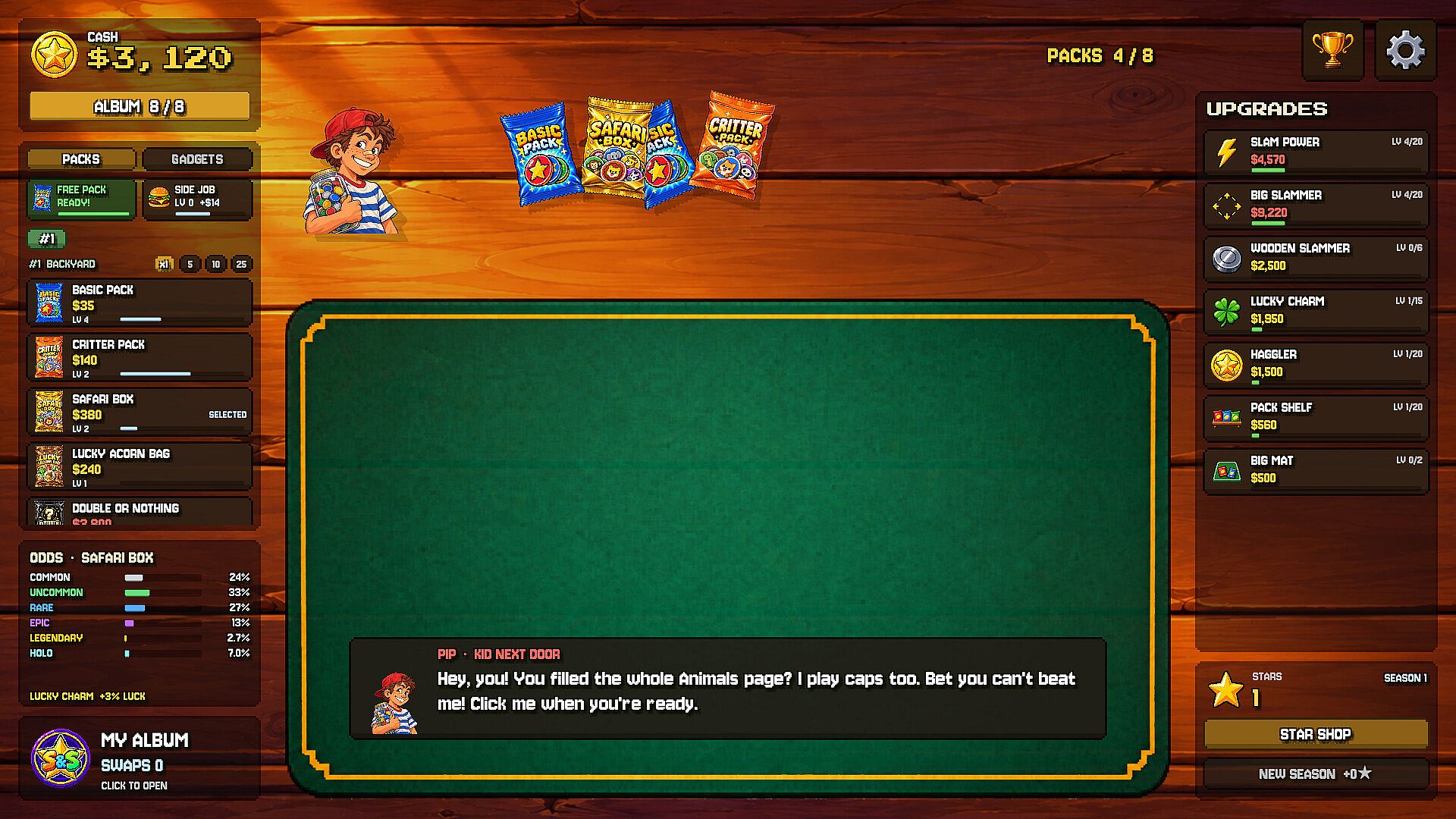
The primary experience is single-player collection and progression. Players focus on opening packs, completing sets, and scaling earnings through repeated slams and upgrades. A secondary element appears once a set finishes: a rival collector arrives for a match under schoolyard rules. Both participants use the same slammer in a best-of-three format where aim and timing determine the winner and the caps that change hands. The game also features recurring visits from a silent courier who delivers new catalogs, introducing fresh cap designs over time.
No additional named modes exist beyond these core systems. The rival encounters integrate directly into the single-player flow rather than functioning as separate multiplayer sessions.
Progression and Upgrades
Earnings start small and grow steadily. Early cash comes from simple jobs, then shifts to duplicate sales and successful slams. Upgrades improve slam power, hit radius, and pack quality, creating a steady sense of advancement. The journey toward trillions encourages repeated play sessions focused on album completion and holo hunting. New catalogs from the courier keep the collection expanding without requiring external input.
Is It Worth Playing?
Smash & Stash suits players who enjoy deliberate collection loops, timing-based mini-games, and steady idle-style progression. The slam mechanic rewards practice with satisfying results, while the album and holo chase provide long-term goals. Rival matches add brief competitive tension without shifting the game into full multiplayer territory. Because the title remains unreleased with no user reviews available, any final judgment depends on personal interest in retro pixel art, cap-slamming nostalgia, and self-contained single-player systems. Those drawn to the described mechanics will find a focused experience built around one clear loop.