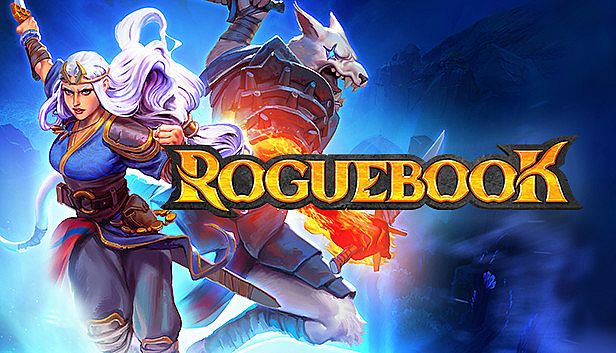

















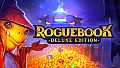
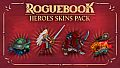
Roguebook é um RPG de estratégia indie que une a estrutura roguelike à mecânica de construção de decks no PC. O jogador explora um livro vivo de lendas, onde cada tentativa traz desafios inéditos graças a mapas procedurais e sinergias entre cartas. O ciclo principal consiste em escolher dois heróis, montar um deck compartilhado, percorrer páginas hexagonais e enfrentar encontros até derrotar o próprio livro.
Gameplay
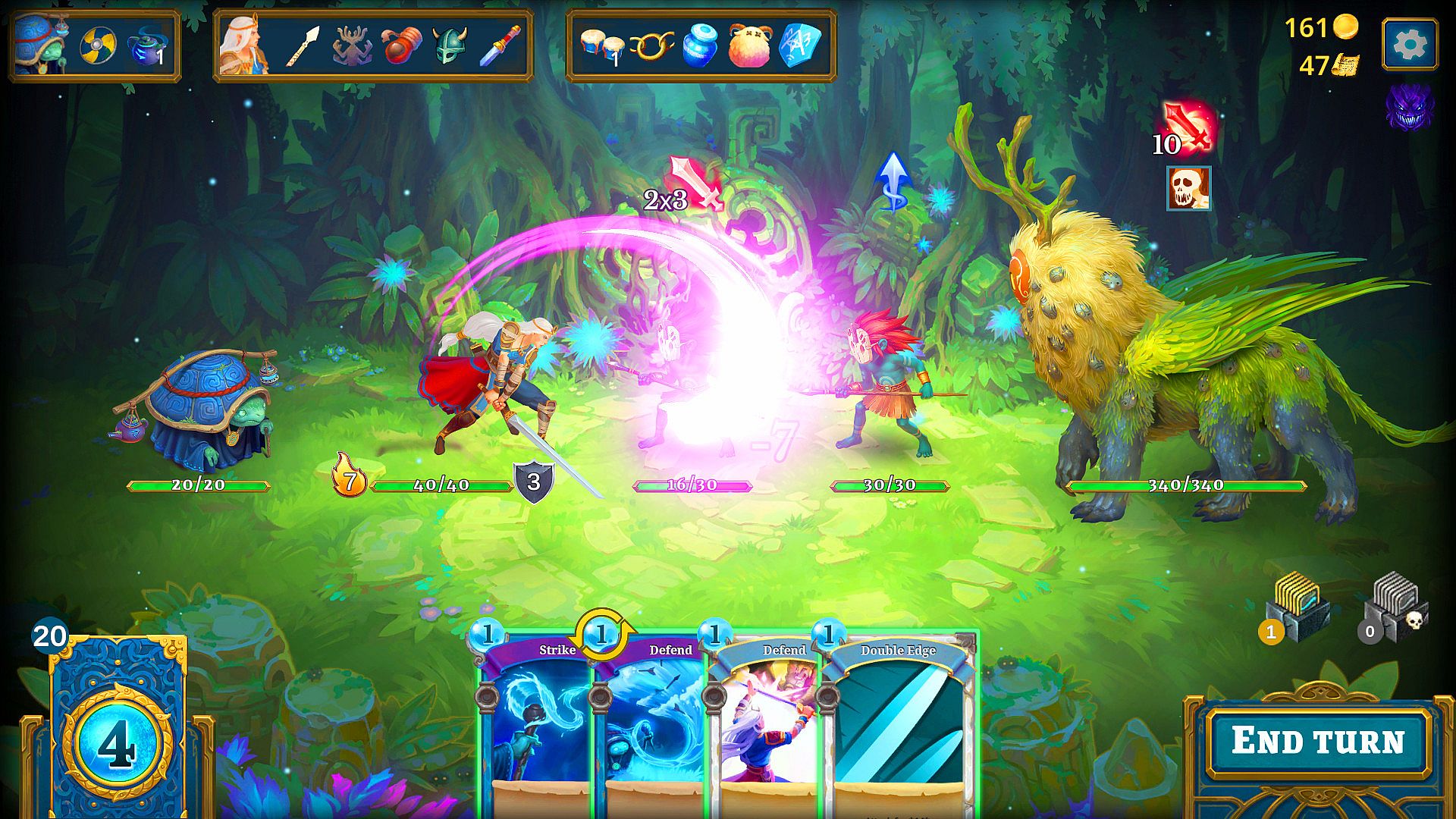
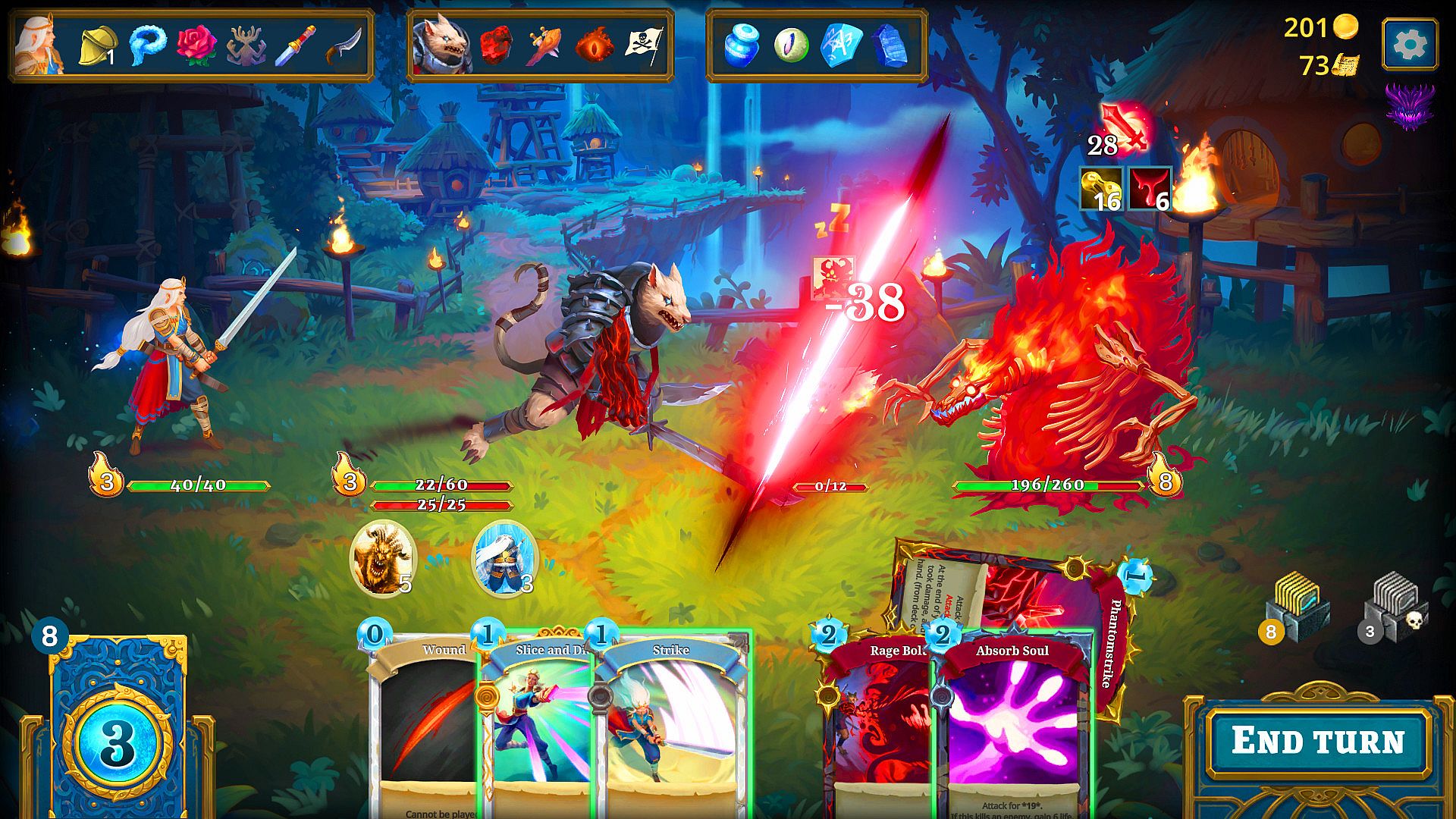
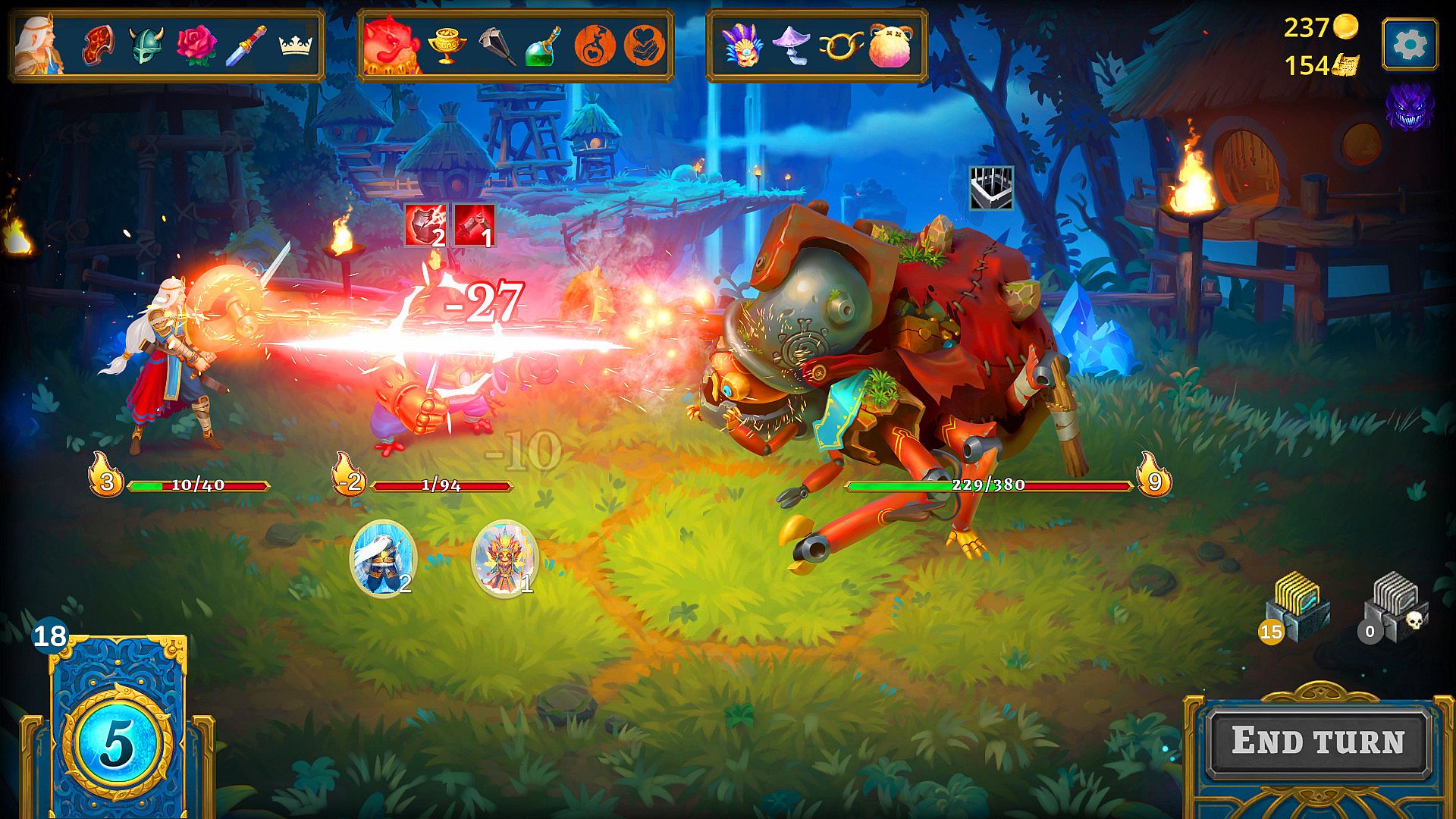
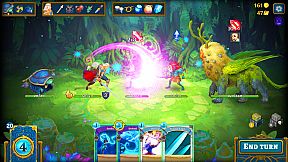
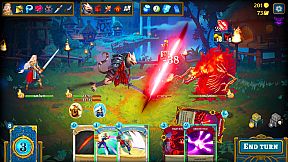
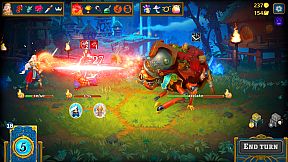
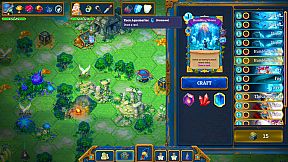
O combate gira em torno de dois heróis posicionados na frente e atrás. O da frente absorve o dano, enquanto o de trás oferece suporte com suas habilidades. Trocar de posição durante a batalha permite adaptar-se às ameaças e ativar combos entre os dois. Cada turno consome energia para jogar cartas de um deck combinado, formado pelas coleções de ambos. Com mais de 200 cartas disponíveis, os efeitos variam bastante e as cartas não utilizadas são descartadas ao fim do turno. Os combates exigem planejamento cuidadoso da ordem de ataque e do momento de defesa contra mais de 40 tipos de inimigos e chefes.
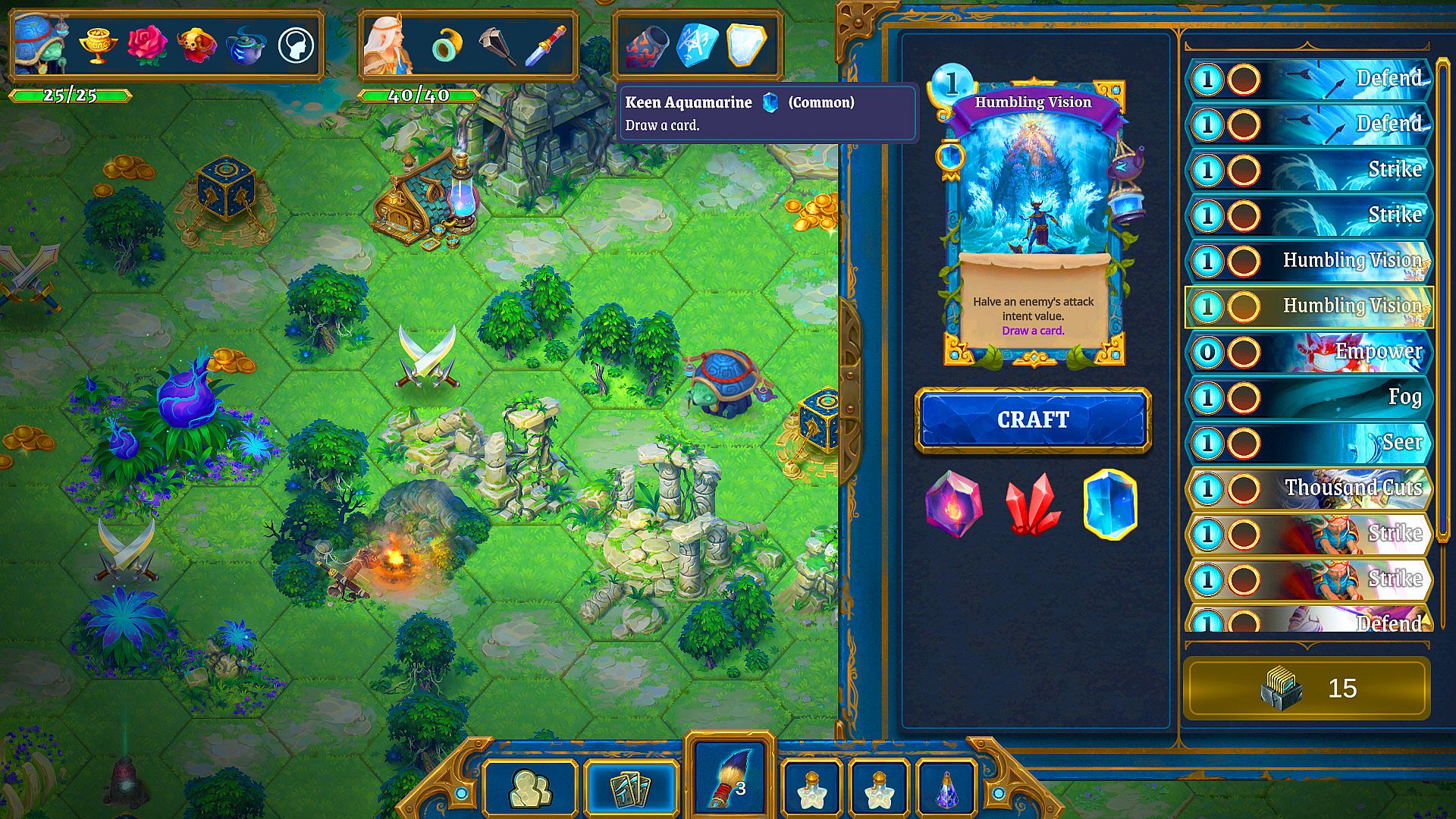
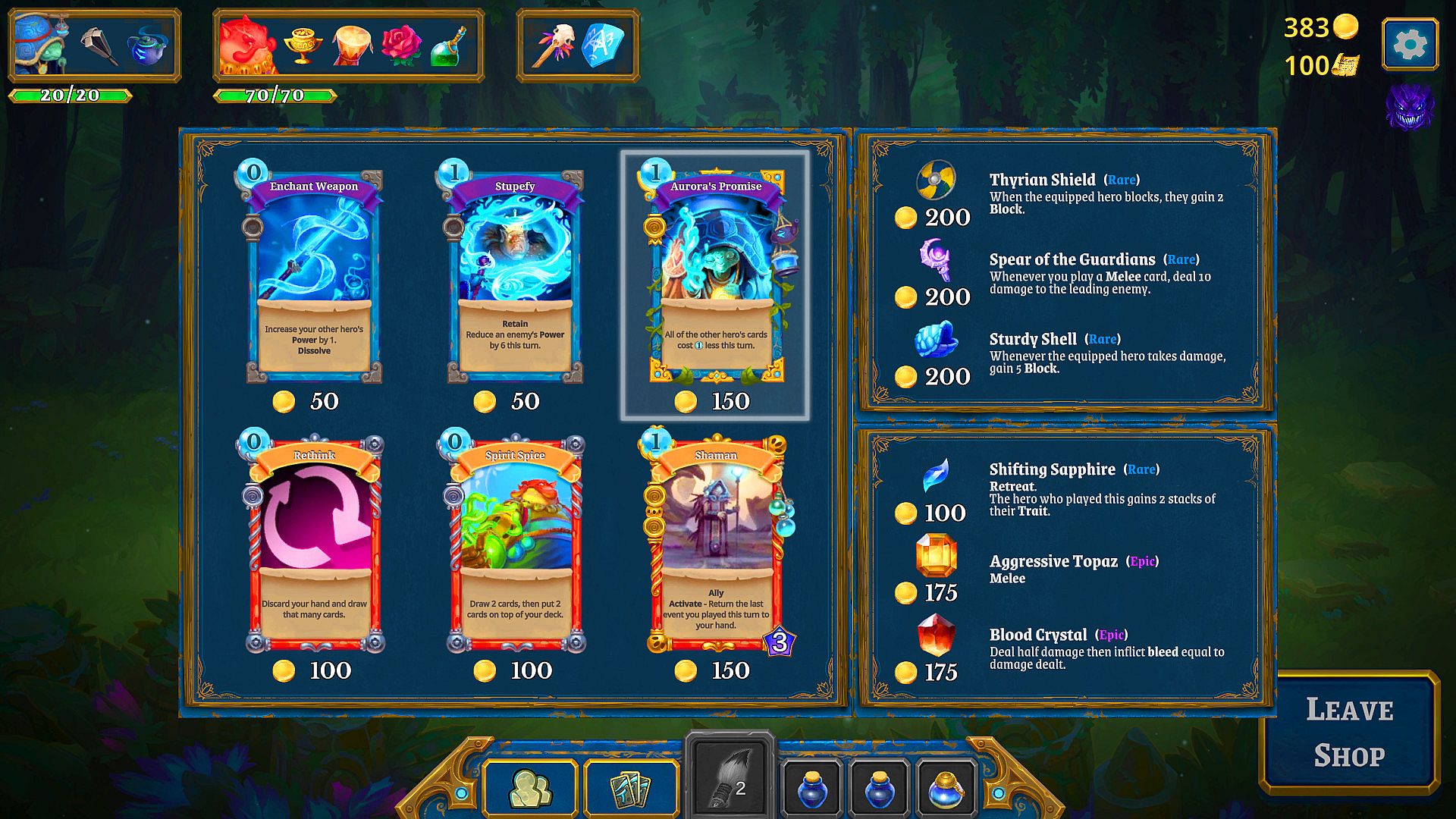
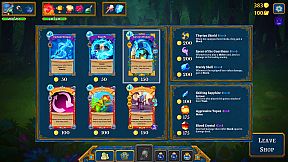
A montagem do deck acontece de forma progressiva durante as partidas. O jogador adquire cartas em eventos, mercadores e recompensas, refinando o conjunto com melhorias. Trinta gemas especiais alteram os efeitos das cartas para maior poder ou utilidade, enquanto oitenta relíquias concedem bônus passivos ou ativos que modificam as estratégias de cada tentativa. Cada um dos seis pares de heróis possui mais de cinquenta cartas exclusivas, uma relíquia própria e uma árvore de habilidades que libera novas opções conforme o nível e a coleta de páginas.
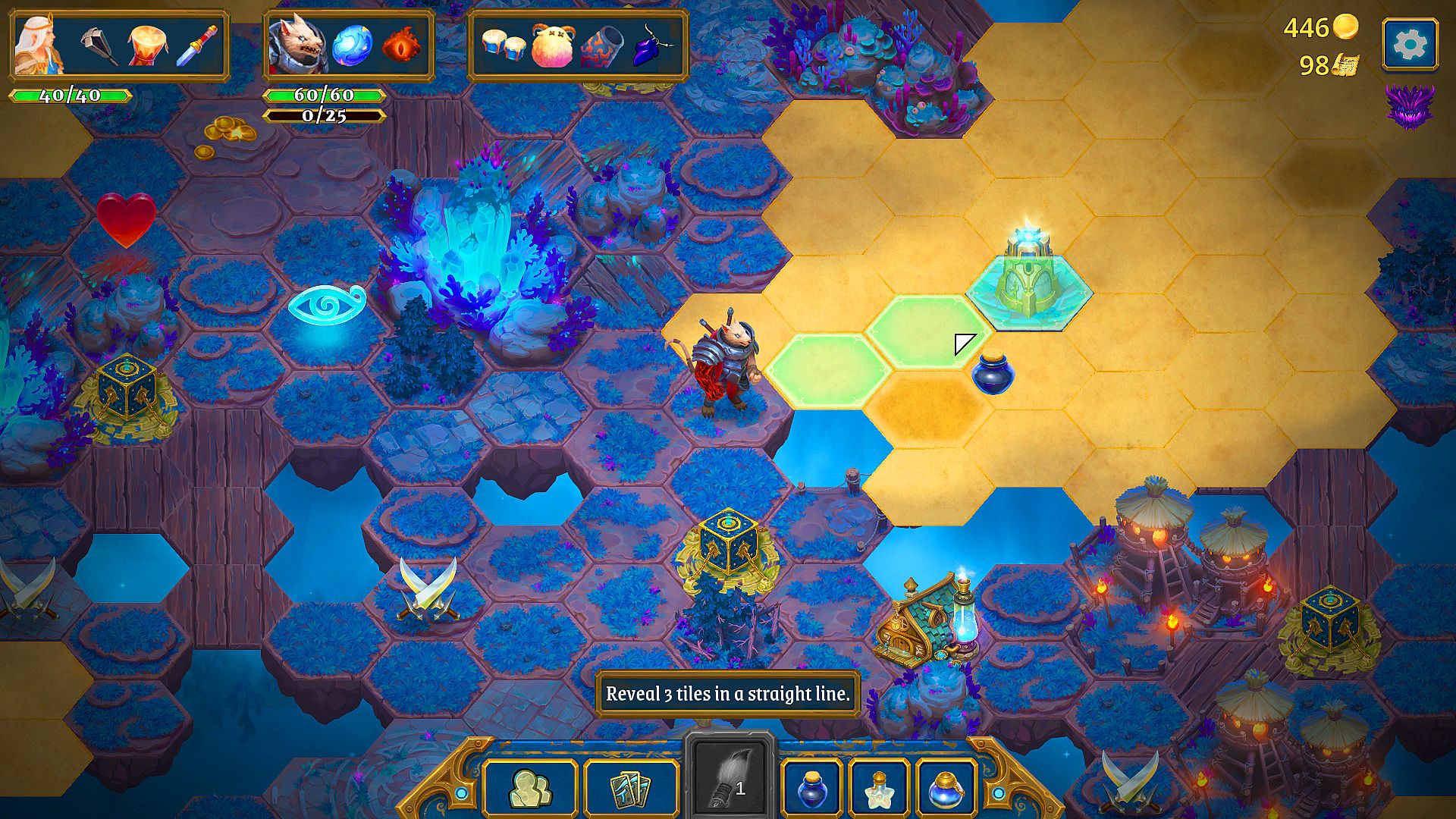
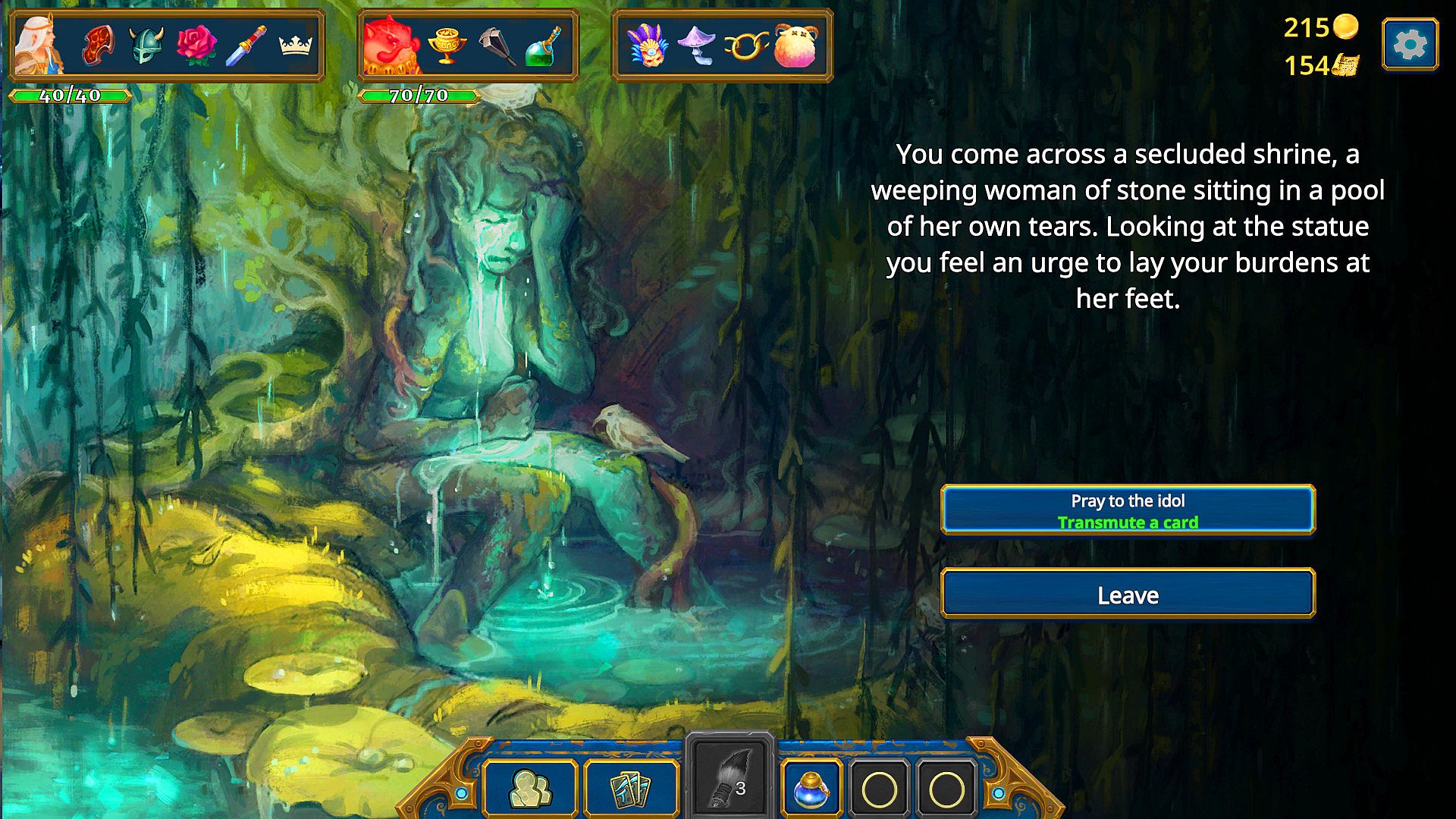
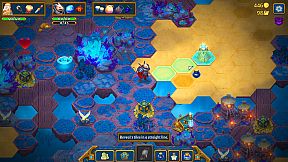
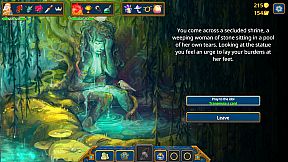
A exploração ocorre em páginas geradas proceduralmente, compostas por hexágonos. Tintas mágicas revelam padrões ocultos, caminhos e encontros. O jogador pinta seções para descobrir mercadores, viajantes, ruínas, missões e possíveis armadilhas. Esse sistema garante que cada partida seja única, recompensando o mapeamento completo em busca de recursos e melhorias. O progresso avança por meio das páginas coletadas, que permitem comprar melhorias permanentes, e dos níveis dos heróis, que ampliam o acesso a cartas.
Modos de Jogo
Roguebook é uma experiência roguelike para um jogador, centrada em repetidas tentativas. Cada partida começa com a escolha do par de heróis e segue por camadas de páginas repletas de combates, eventos e exploração. A falha encerra a tentativa, mas desbloqueios e melhorias persistem para as próximas. Vinte níveis de dificuldade aumentam a força dos inimigos e introduzem novas relíquias, gemas e encontros. Completar o chefe final na dificuldade padrão libera o nível Epílogo, que eleva ainda mais o desafio e as recompensas.
A estrutura valoriza o domínio gradual. As primeiras tentativas focam no aprendizado das sinergias entre heróis e no fluxo básico do deck. Níveis mais avançados testam construções refinadas contra adversários mais exigentes. Não há opções separadas de multijogador ou versus. Todo o conteúdo concentra-se na progressão em estilo campanha, com aumento de dificuldade e o epílogo.
Seleção de Heróis e Sinergias de Deck
Seis pares de heróis formam a base da construção de equipe. Cada par traz pools de cartas e habilidades distintas, incentivando a experimentação com posicionamento e timing. A proteção na linha de frente combina naturalmente com o suporte na retaguarda, mas o jogo eficaz costuma envolver trocas fluidas para maximizar dano ou cobertura defensiva. As árvores de habilidades adicionam personalização a longo prazo, permitindo priorizar cartas ou efeitos que se ajustem ao estilo de jogo preferido.
Relíquias e gemas diferenciam ainda mais cada tentativa. Uma relíquia pode habilitar novas interações entre cartas, enquanto as gemas ajustam as existentes para cenários específicos. O resultado é alta rejogabilidade por meio de combinações variadas, em vez de decks idênticos repetidos. O jogador monta suas construções no momento, adaptando-se ao que a página atual oferece.
Vale a Pena Jogar?
Roguebook oferece um deckbuilder roguelike focado, com mecânicas distintas como o posicionamento de dois heróis e a revelação do mapa por tinta. O tempo médio de conclusão da campanha principal é de 20 horas, mas aumenta bastante ao buscar todos os desbloqueios em todas as dificuldades e no conteúdo do epílogo. As avaliações de usuários no Steam são Muito Positivas, com 84% de aprovação em quase dois mil comentários em inglês, destacando a profundidade estratégica e a apresentação visual.
O jogo agrada quem aprecia a construção deliberada de decks e táticas posicionais em vez de velocidade ou aleatoriedade pura. Quem busca variações frescas no gênero encontra valor na troca de heróis e no sistema de pintura procedural. O suporte contínuo parece limitado desde o lançamento em 2021, mas a experiência principal permanece intacta e autossuficiente. Fãs de títulos semelhantes apreciarão o foco na construção de sinergias e na progressão entre tentativas, sem necessidade de atualizações externas.
- Mapas procedurais mudam a cada tentativa, mantendo a novidade constante.
- A escalada de dificuldade oferece objetivos claros de longo prazo, com vinte níveis mais o epílogo.
- Árvores de habilidades dos heróis e coleção de relíquias recompensam o jogo persistente.