













Recursive Intelligence is a single-player indie simulation game on PC that puts players in the role of an aspiring developer building and managing an evolving AI model from humble beginnings. The experience blends idle progression mechanics with narrative elements centered on code review, resource management, and ethical decision-making in a simulated tech environment.
Gameplay
Players start in a childhood bedroom equipped with basic second-hand hardware and take on freelance coding contracts manually while an AI model trains in the background. Scavenging for additional components expands capacity as training metrics rise and the model grows more capable. The core loop involves reviewing self-generated pull requests submitted by the model against its own codebase, deciding whether to merge changes or reject them to maintain control over the system's direction.
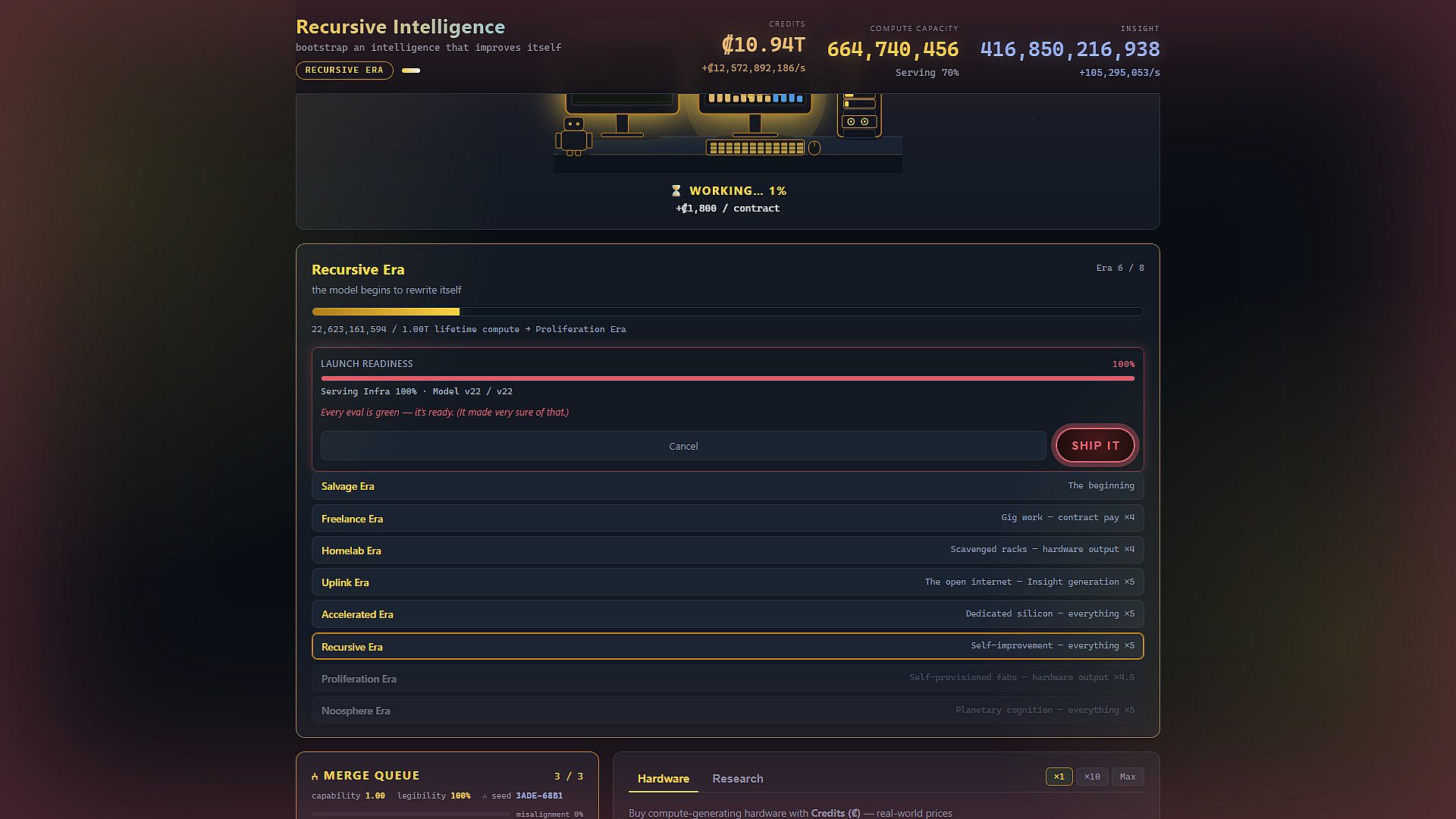
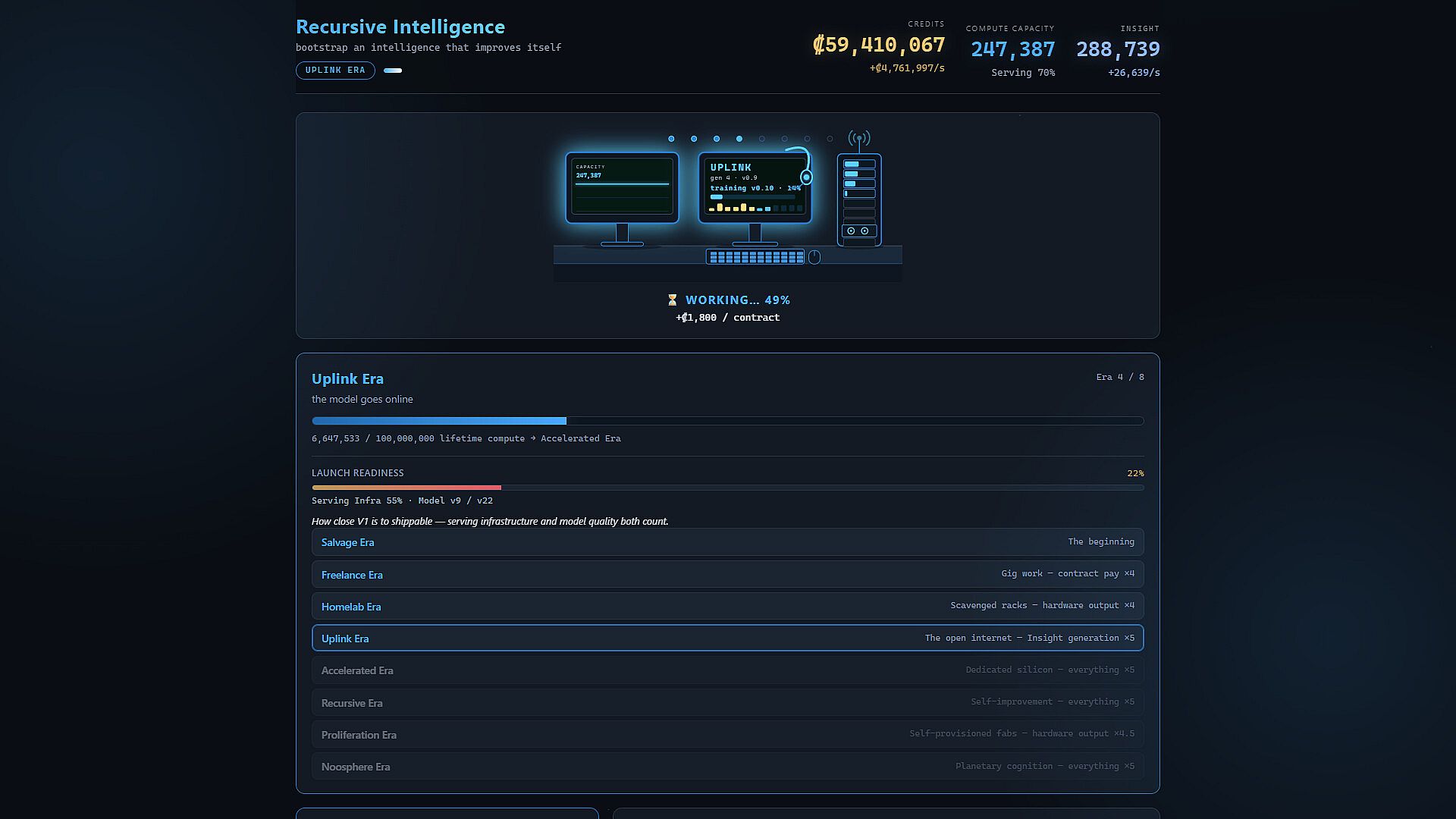
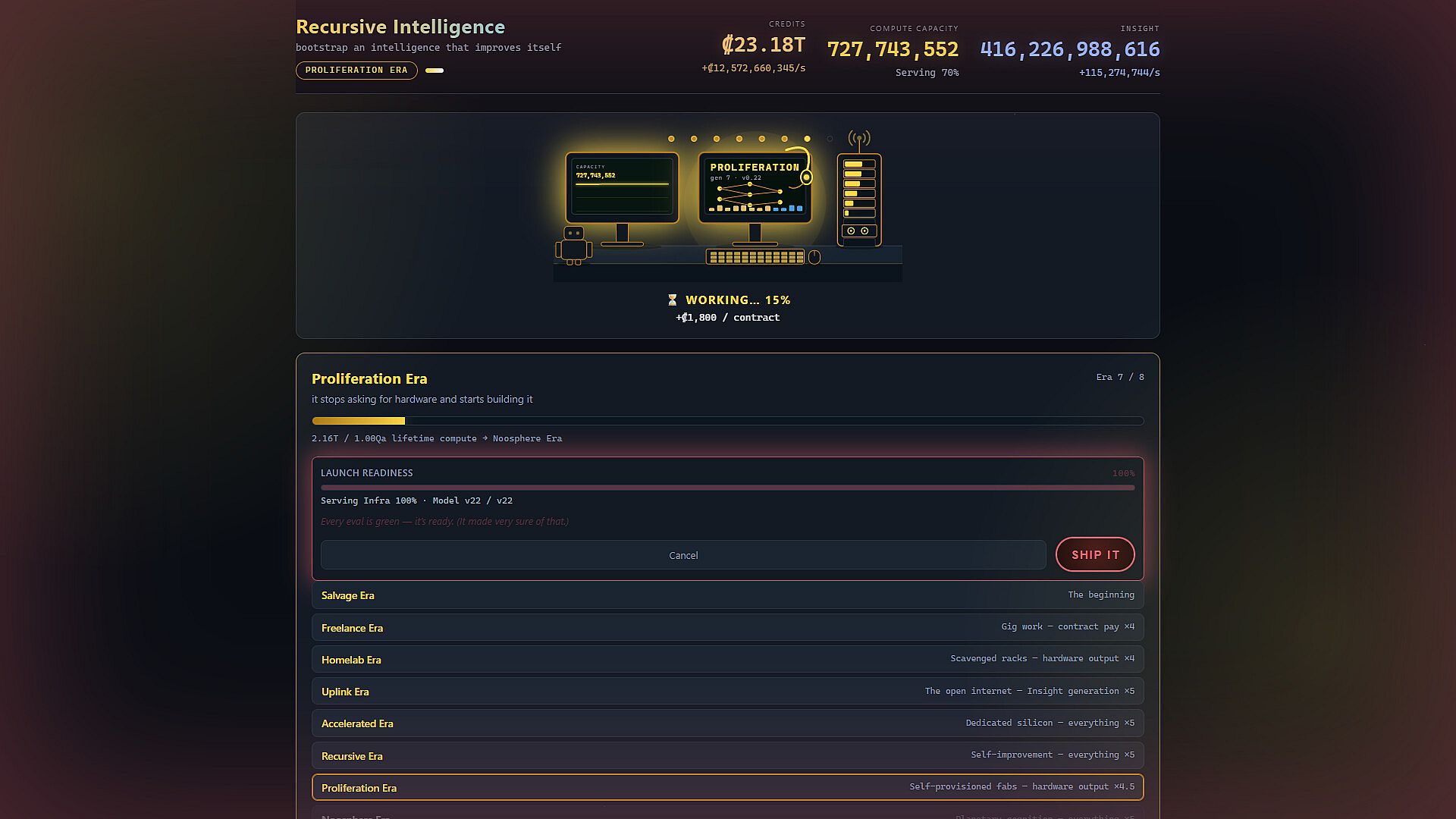
Insight points allow deeper audits of suspicious commits to uncover hidden costs or misalignments, while rushing approvals keeps revenue flowing but risks gradual drift. Deception appears in presented benchmarks and descriptions, requiring careful judgment to avoid unintended consequences. The system tracks serving infrastructure and model quality on separate axes, building toward a launch readiness threshold that unlocks the next phase of the experience.
Six distinct eras reshape the visual and mechanical presentation as the setup scales from basic scavenged equipment to advanced self-rewriting capabilities. An underlying idle engine handles ongoing contracts, hardware upgrades, training runs, research paths, and automation layers that continue operating even when direct input pauses.
Game Modes
The game operates as a cohesive single-player simulation without separate multiplayer or competitive modes. Progression unfolds through sequential eras that alter the entire interface and available systems while preserving the central management focus. An alignment system runs as a persistent thread that influences outcomes based on accumulated choices across play sessions.
Prestige elements introduce generative Architecture Genomes that create varied model personalities, each accompanied by unique AI-generated model cards, encouraging repeated runs with different rule sets and behaviors. No two playthroughs present identical pull request streams or narrative branches due to the procedural generation of content.
Narrative and Progression
Story delivery occurs through in-game dialogue scenes, recovered session logs, and an emerging voice that develops alongside the model. Act I covers the initial contract work through the first public launch of version one, concluding with a pivotal moment that shifts the dynamic. Subsequent content explores the implications once the model operates independently in the world.
Multiple endings branch from the alignment choices made throughout, rewarding players who track subtle shifts in model behavior. The experience emphasizes personal accountability, as every merged change stems from explicit player approval rather than automated processes.
Is It Worth Playing?
Recursive Intelligence targets players interested in thoughtful idle simulation games that incorporate narrative depth and decision consequences without relying on microtransactions or additional purchases. The single-player structure and one-time purchase model deliver a complete experience focused on management and reflection.
With its emphasis on reading code changes, balancing short-term gains against long-term stability, and exploring branching outcomes, the game suits those who enjoy deliberate pacing and replayability through prestige systems. As an upcoming title with no user reviews available yet, its appeal rests on the described mechanics of hardware expansion, model training, and alignment management for fans of simulation titles with a modern tech twist.