



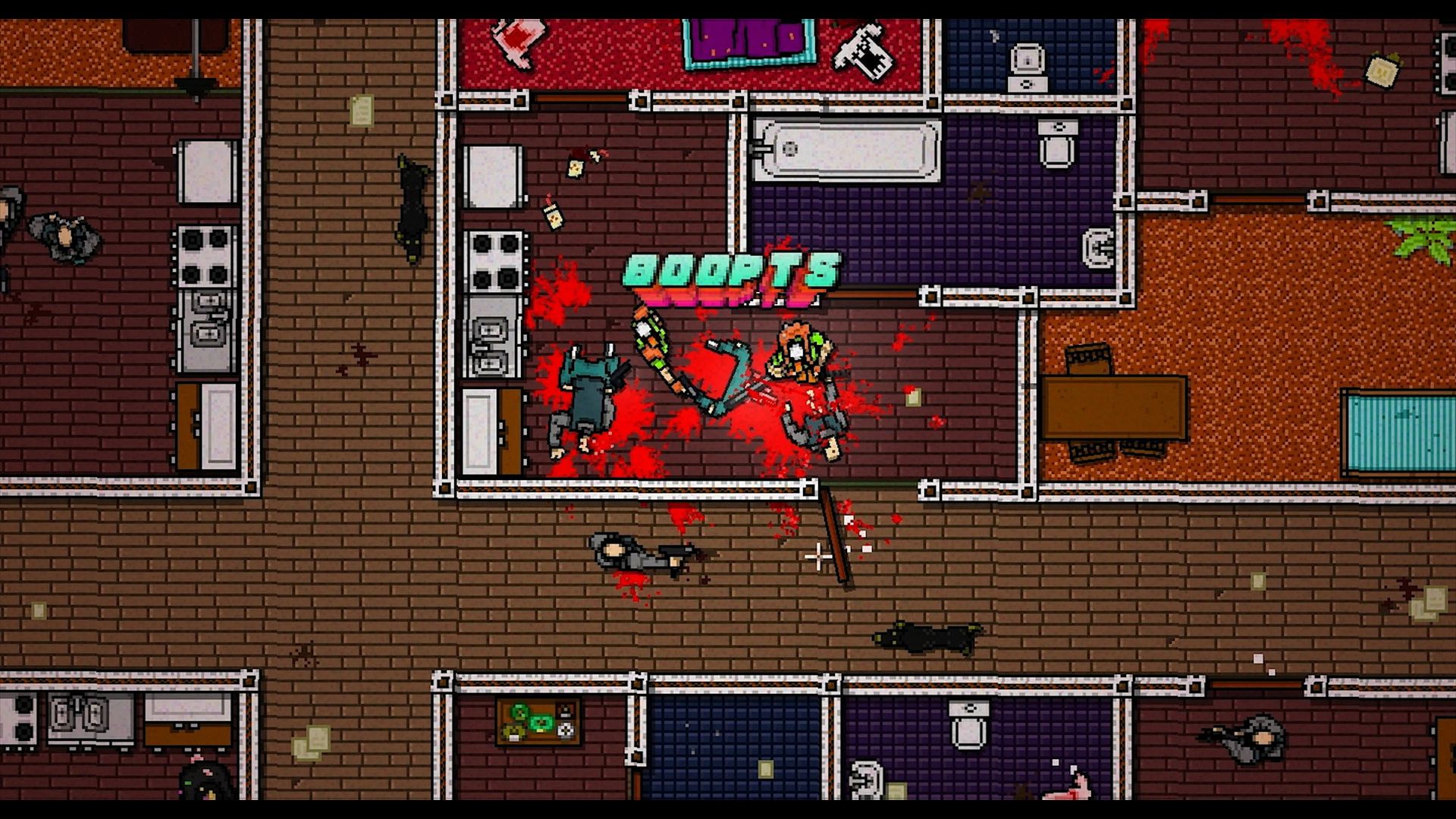
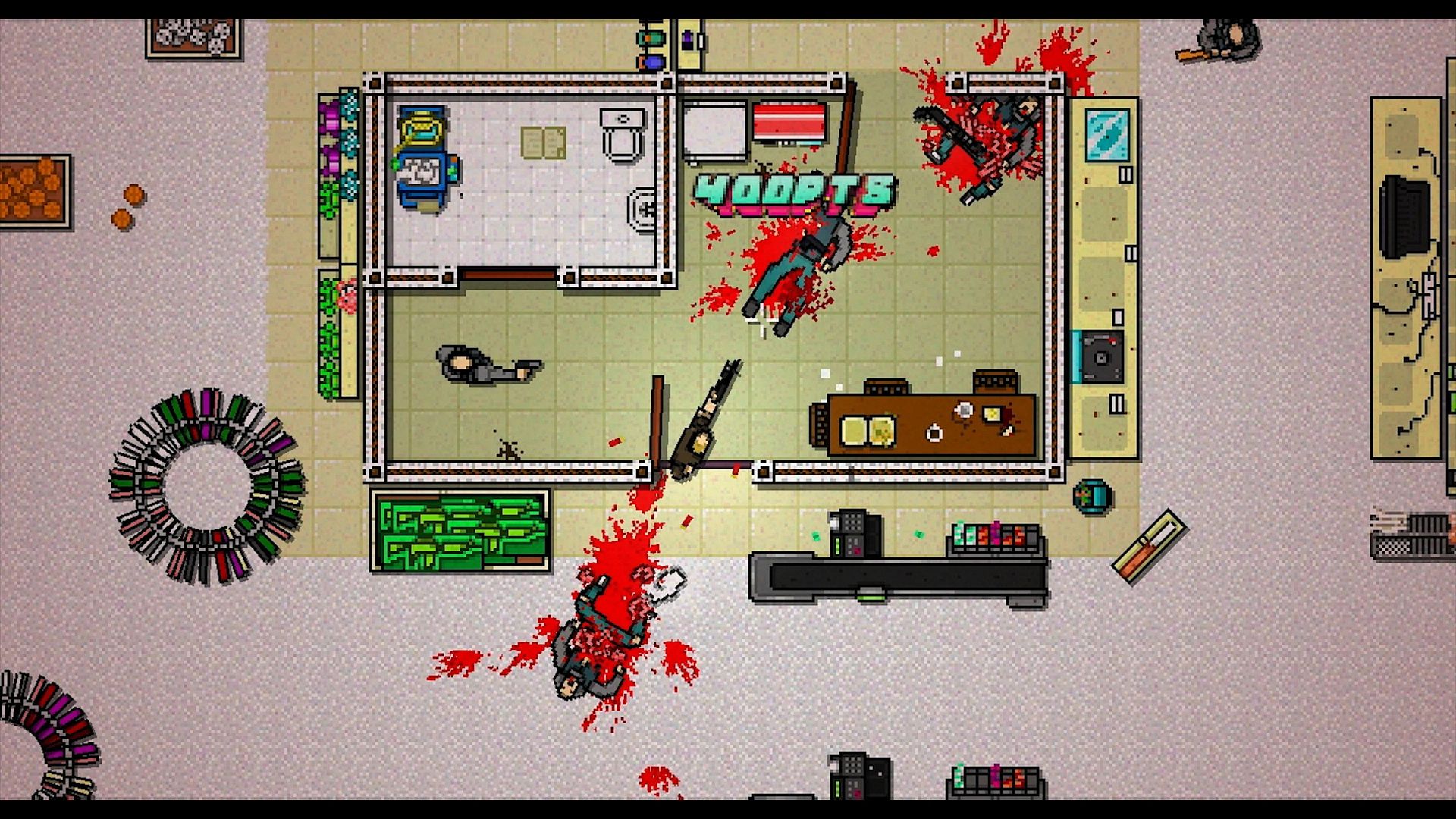
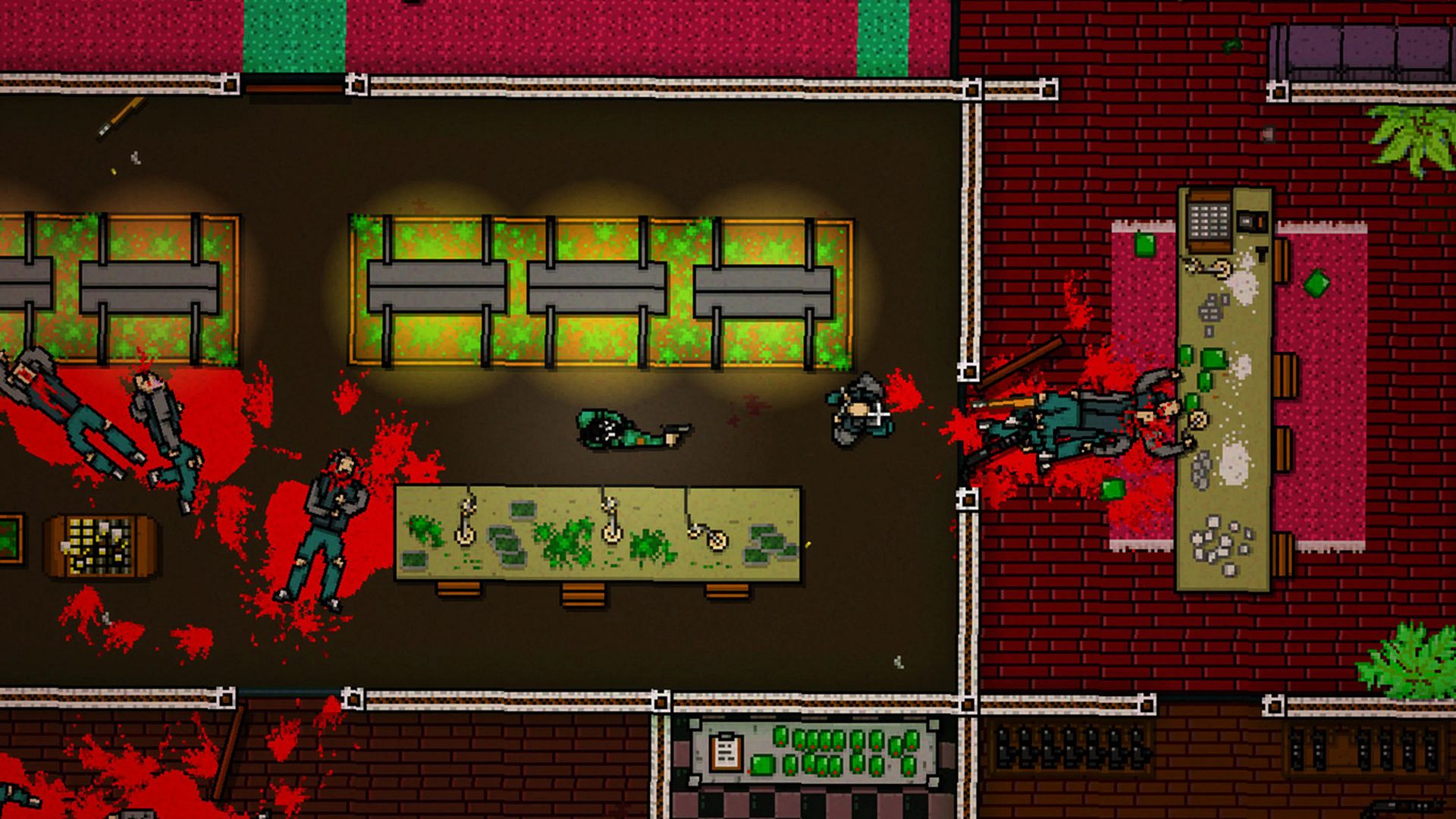
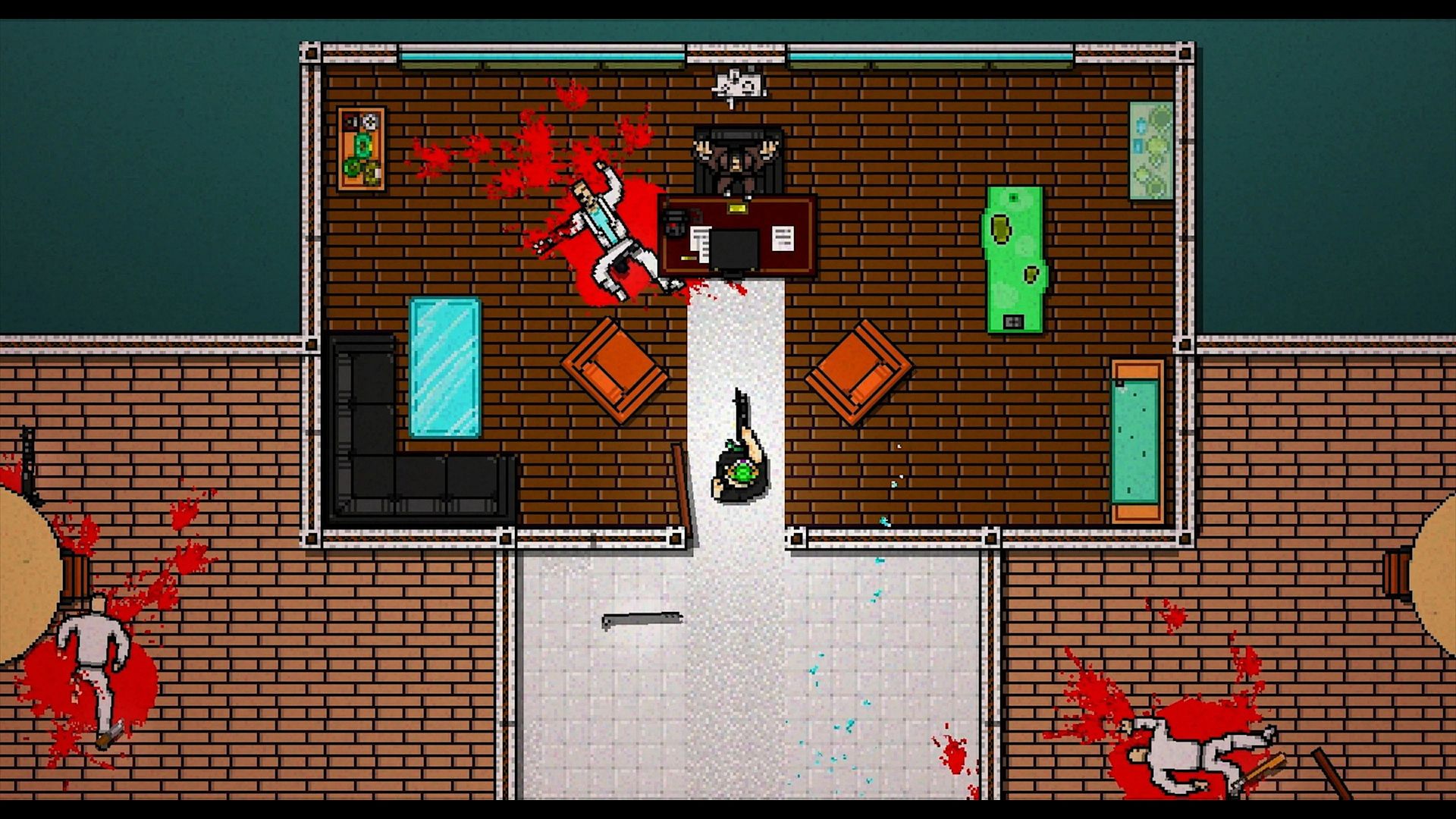
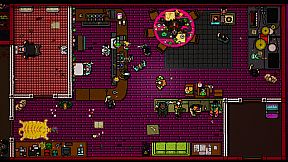
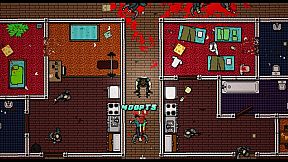
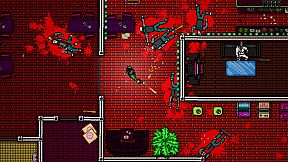
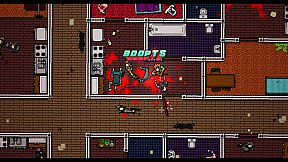
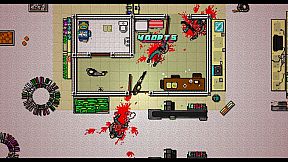
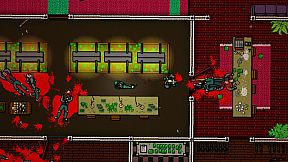
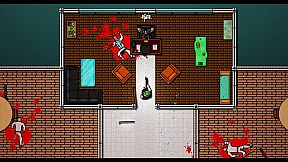
Hotline Miami 2: Wrong Number delivers a top-down action shooter experience centered on precise, high-stakes combat in neon-lit environments. Players navigate levels filled with enemies, using a combination of melee strikes, firearms, and environmental interactions to clear every threat before advancing. The game emphasizes quick decision-making, as both the player character and opponents fall to a single well-placed hit, rewarding careful positioning and rapid execution over sustained firefights.
Gameplay
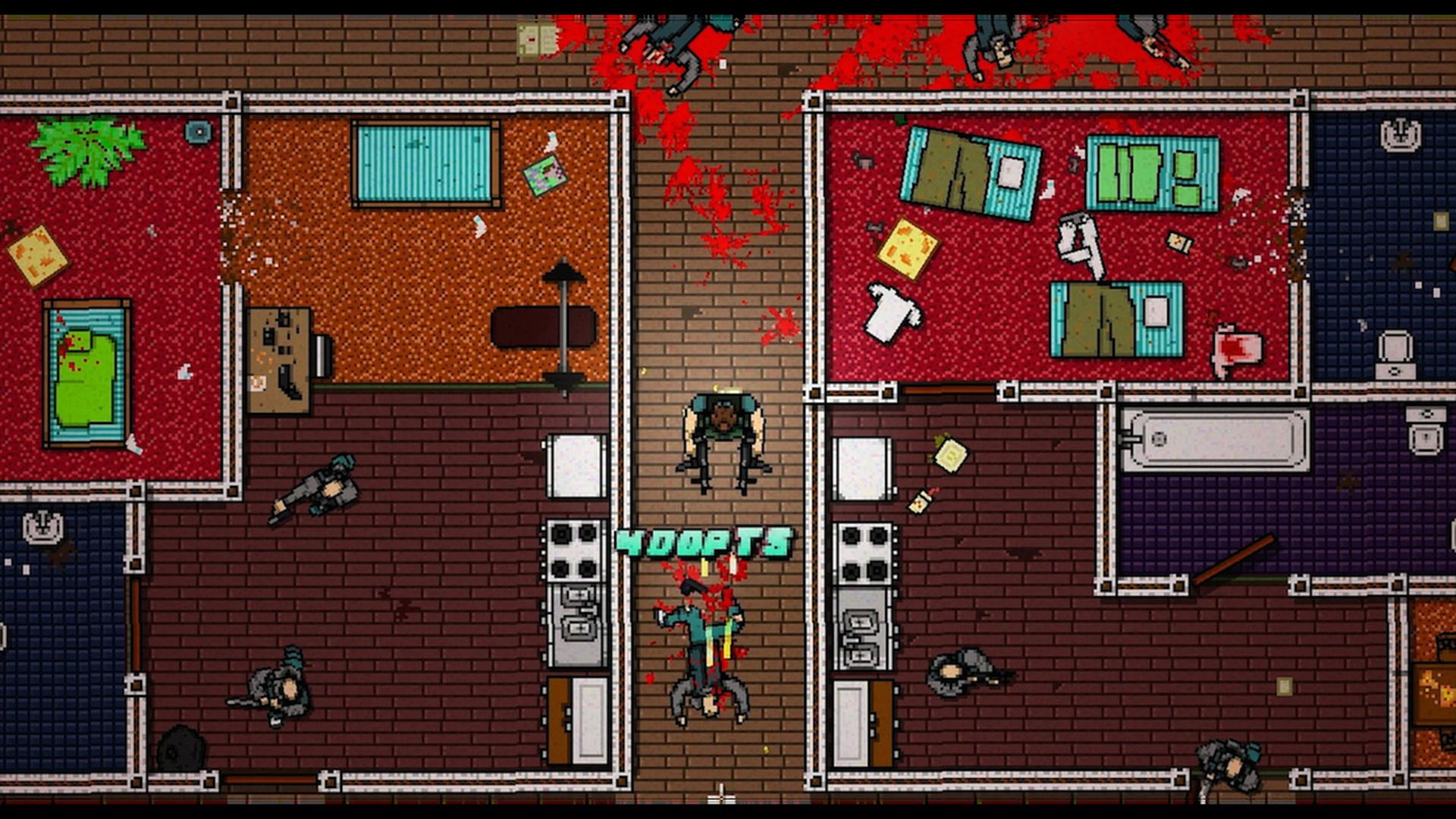
The core loop revolves around entering structured scenes, eliminating all hostiles through direct confrontation or clever use of doors for knockouts and finishers, then exiting. Levels feature open rooms with multiple approach angles, forcing players to adapt routes on the fly amid patrolling foes. Different playable characters appear across the campaign, each bringing distinct movement options and combat preferences that alter how encounters unfold. Some focus on close-range dominance, others on ranged precision or evasive maneuvers, while certain sequences introduce restrictions like limited weapon choices or non-lethal priorities that shift priorities mid-mission.
Enemy variety adds layers to planning, with types that resist specific attacks such as unarmed strikes or require particular counters. Weapons scattered throughout scenes provide temporary advantages, and the fast restart system after death encourages repeated attempts to refine paths and timing. The result is a rhythm of movement and violence where small errors compound quickly in larger, more complex layouts compared to earlier entries in the series.
Game Modes
The primary experience unfolds through a single-player campaign structured as interconnected acts and scenes that follow multiple perspectives. Progression involves completing these narrative-driven segments in sequence, with each one presenting tailored challenges based on the active character. Upon finishing the main story on standard difficulty, a hard mode unlocks that increases enemy aggression, removes certain aiming assists, reduces ammunition availability, and rearranges level elements for fresh difficulty.
No separate multiplayer or cooperative options exist. The focus remains on solo mastery of the campaign's escalating confrontations, where replaying scenes to improve performance forms a natural extension of the core systems.
Story and Characters
Set as the conclusion to the original game's events, the narrative tracks several factions navigating the fallout of prior violence. Each group operates with its own methods and goals, leading to intersecting paths that blend retribution, investigation, and escalating conflict. Players switch between these viewpoints, experiencing how individual choices and encounters ripple outward into broader chaos across Miami and beyond.
Character-specific traits tie directly into gameplay, such as enhanced mobility for dodging gunfire or unique weapon handling that demands adjusted strategies. This structure expands the scope while keeping the emphasis on personal agency amid the bloodshed and uncertainty.
Visuals, Audio, and Presentation
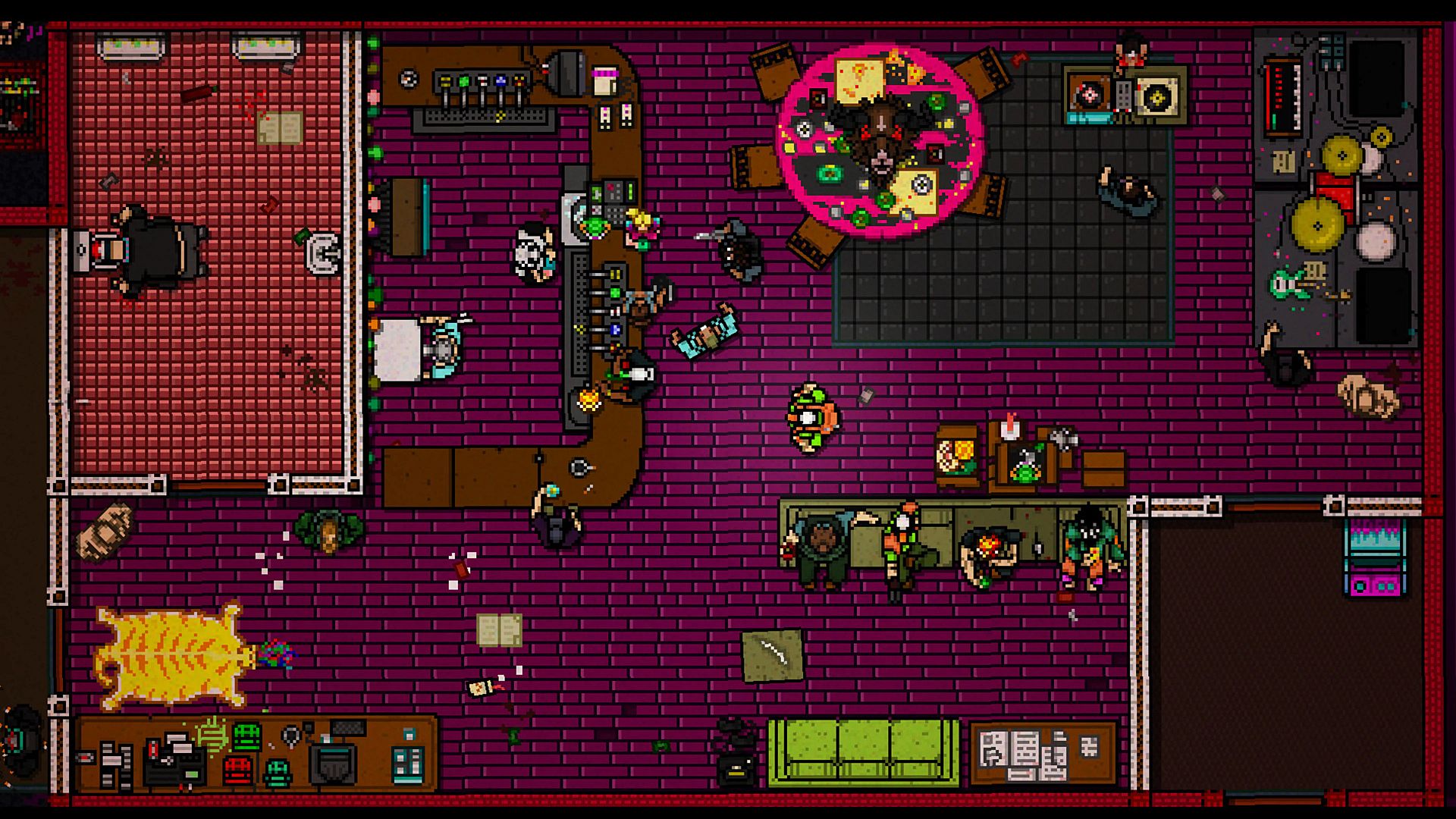
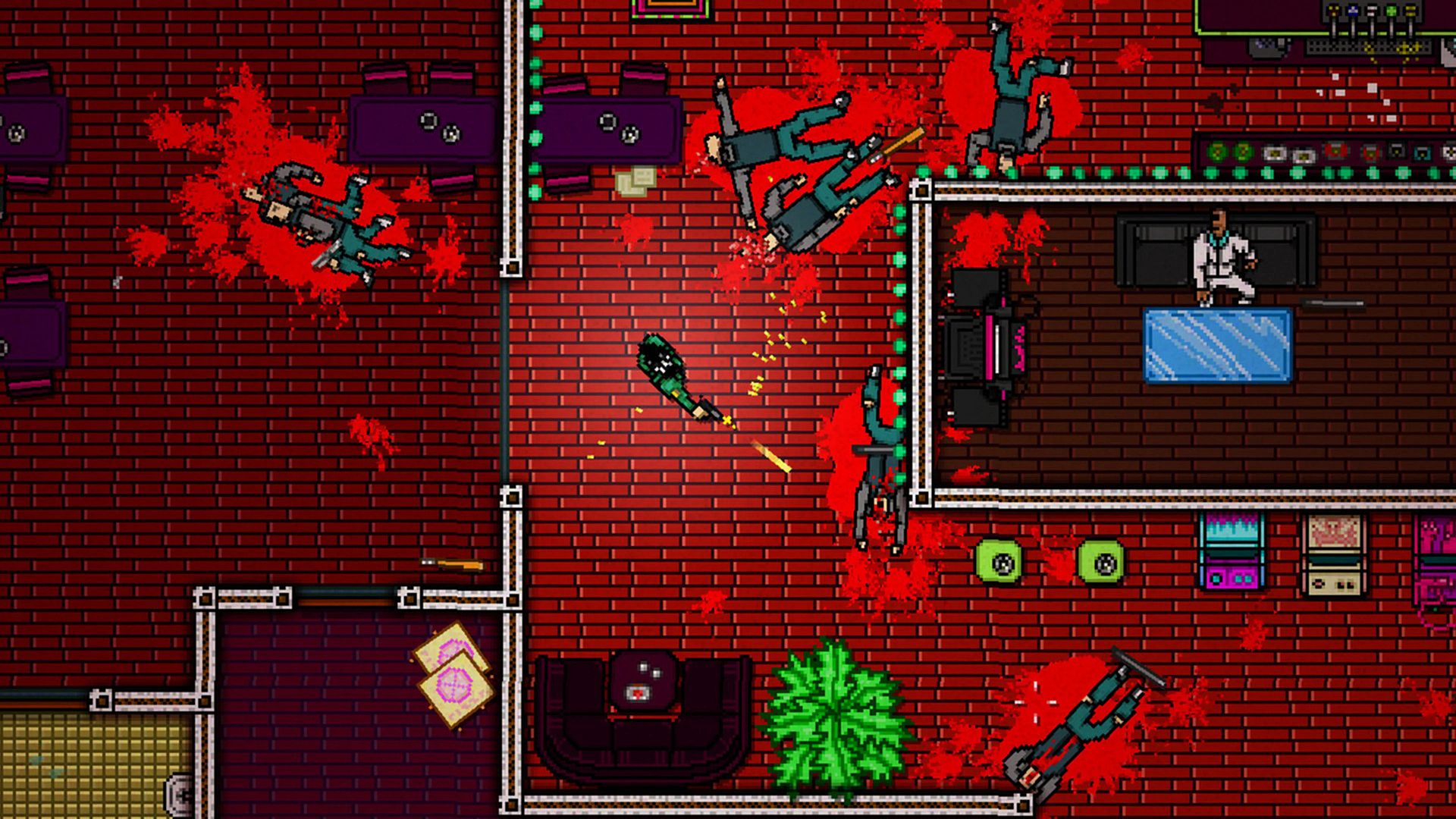
The game maintains a distinctive retro-inspired aesthetic with vibrant color palettes that contrast sharply against pools of red during intense sequences. Level designs vary from cramped interiors to more expansive spaces, incorporating windows, furniture, and sightlines that influence combat flow. The soundtrack pulses with electronic tracks that sync to the action, heightening tension during clears and underscoring the relentless pace.
Controls prioritize responsiveness on PlayStation hardware, mapping movement to the left stick and aiming to the right for fluid execution of attacks and dodges. Quick restarts and clear feedback on hits keep sessions focused on improvement rather than frustration from technical hiccups.
Is It Worth Playing?
Hotline Miami 2: Wrong Number suits players who enjoy demanding top-down shooters that prioritize skill, pattern recognition, and creative problem-solving over accessibility features or lengthy tutorials. Its campaign delivers a substantial single-player journey with meaningful variety through character switches and level scale, though the increased complexity and one-hit lethality create a steep curve that rewards persistence.
Critics noted the stylish presentation and intense loops while pointing to longer stages that can feel less focused than predecessors. Aggregated scores land in the mid-70s range across platforms, reflecting a solid but divisive reception. On PS4 and PS5, the game runs as a complete, self-contained package without ongoing updates or seasonal content, making it a straightforward purchase for those drawn to its particular brand of brutal, replayable action. If precise, high-tension combat appeals and the neon-soaked violence of the first game left an impression, this serves as a worthy extension; those seeking lighter or more forgiving experiences may find the difficulty punishing.