


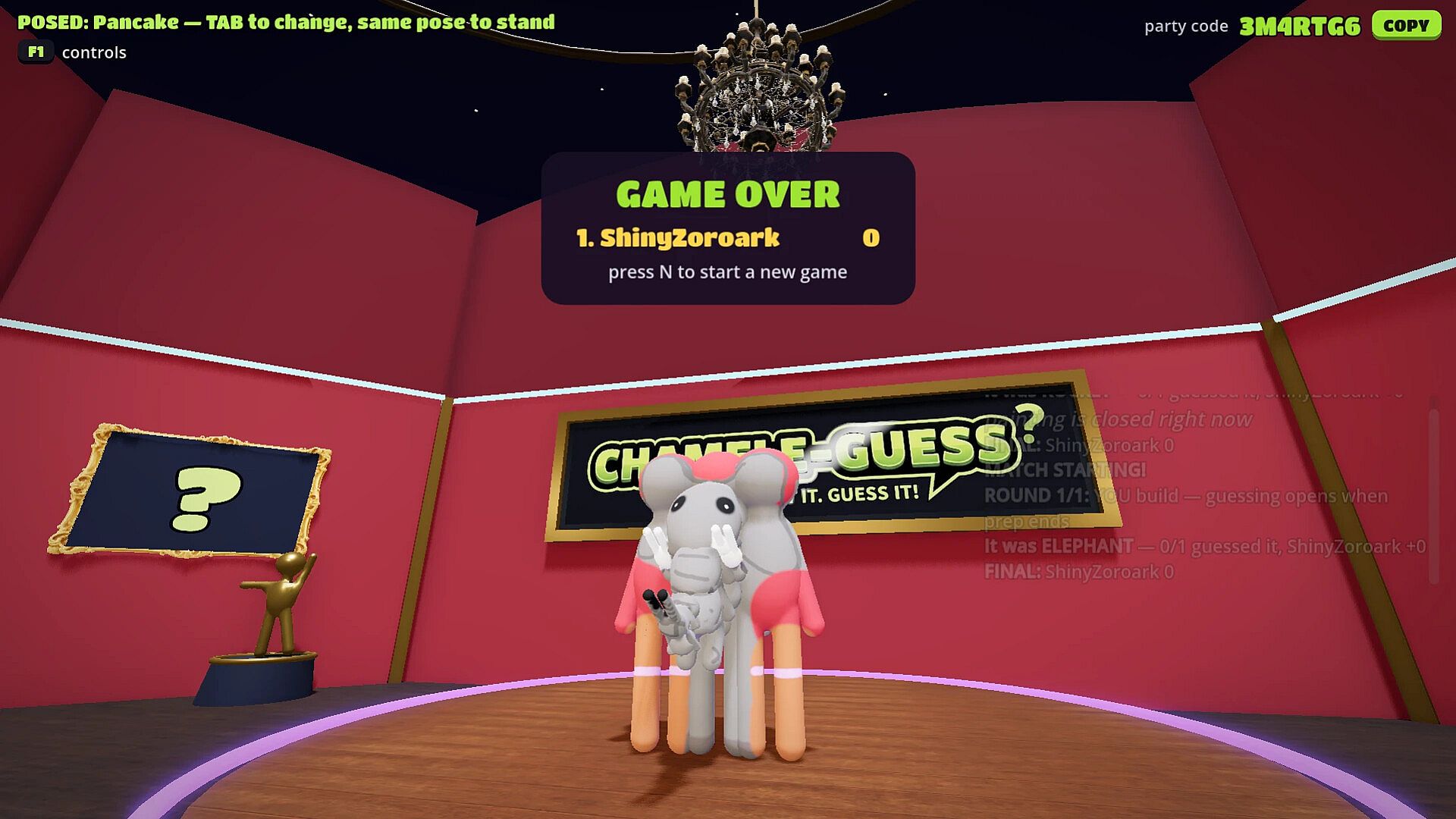




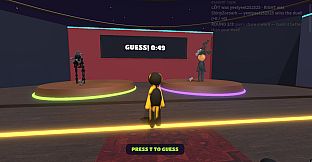

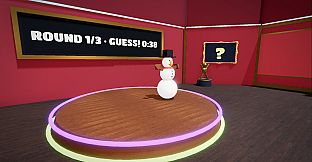
Chamele-Guess is a casual multiplayer party game for PC where players use their own bodies as the canvas for a high-energy guessing challenge. One participant receives a secret word and constructs a representation on a hidden stage using poses, clones, blocks, and paint, while the rest of the group races to identify it once the curtain rises. The experience blends creative building with quick thinking and laughter, making it ideal for small groups seeking a fresh take on classic draw-and-guess formats.
Gameplay
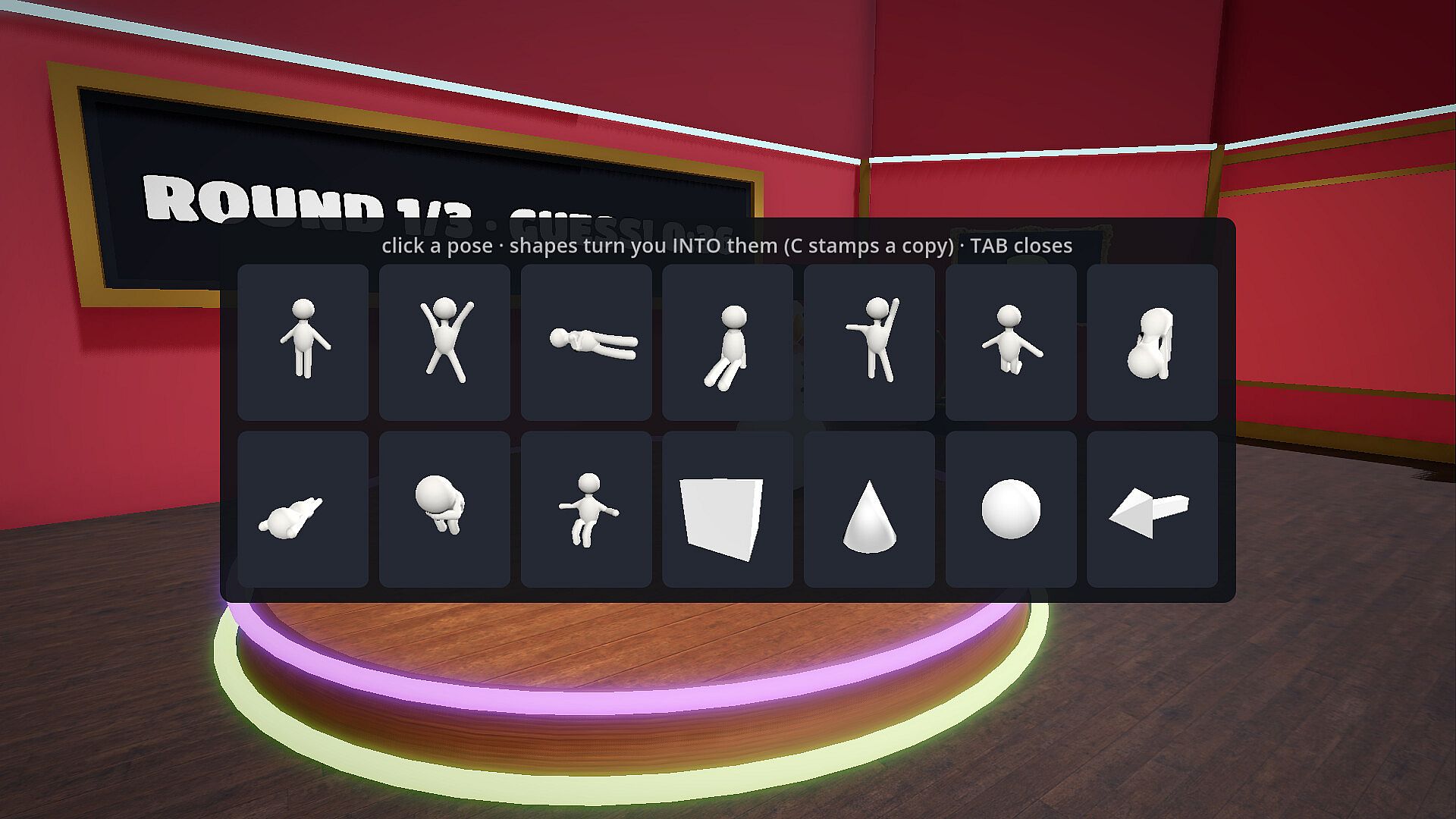
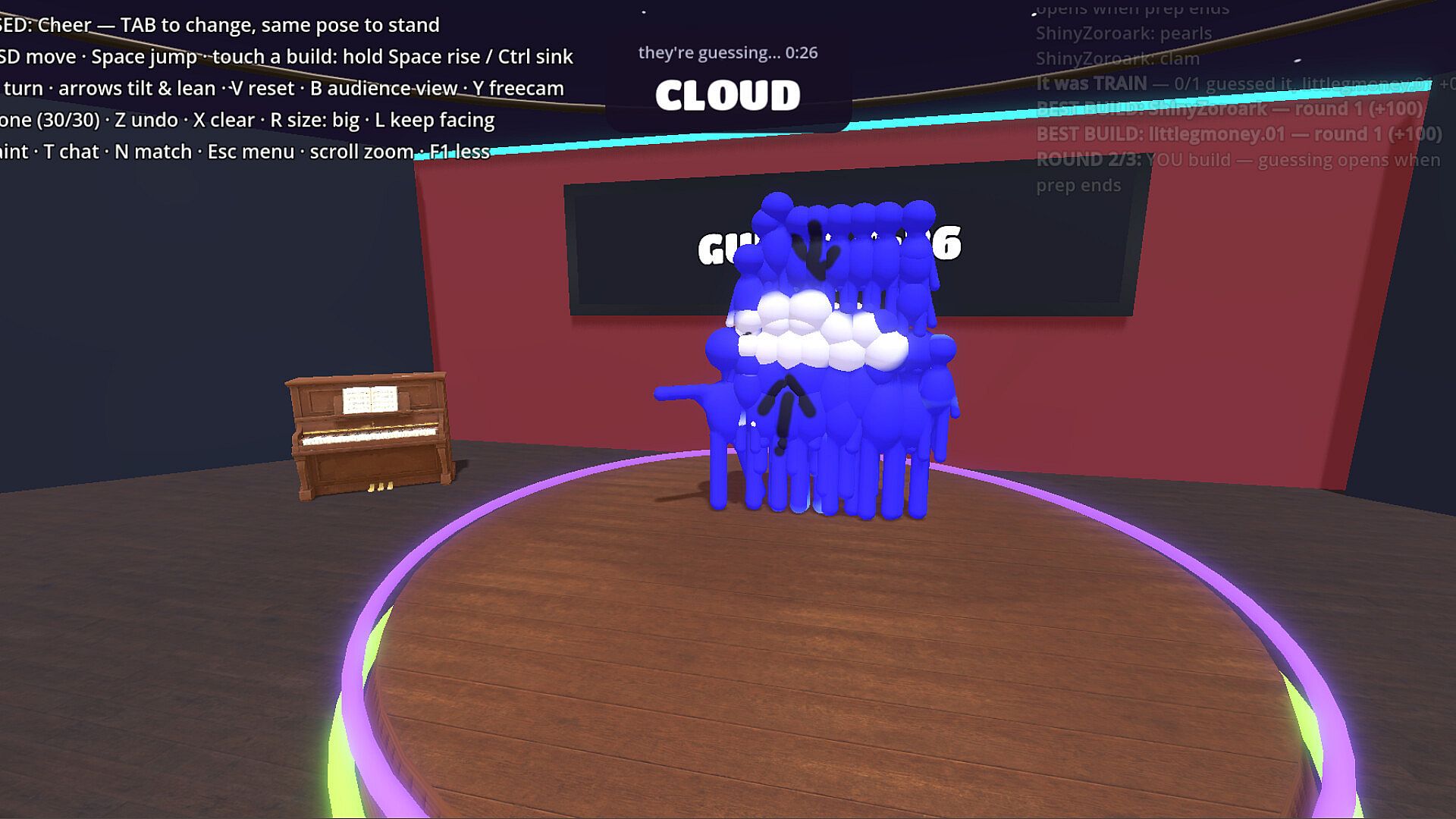
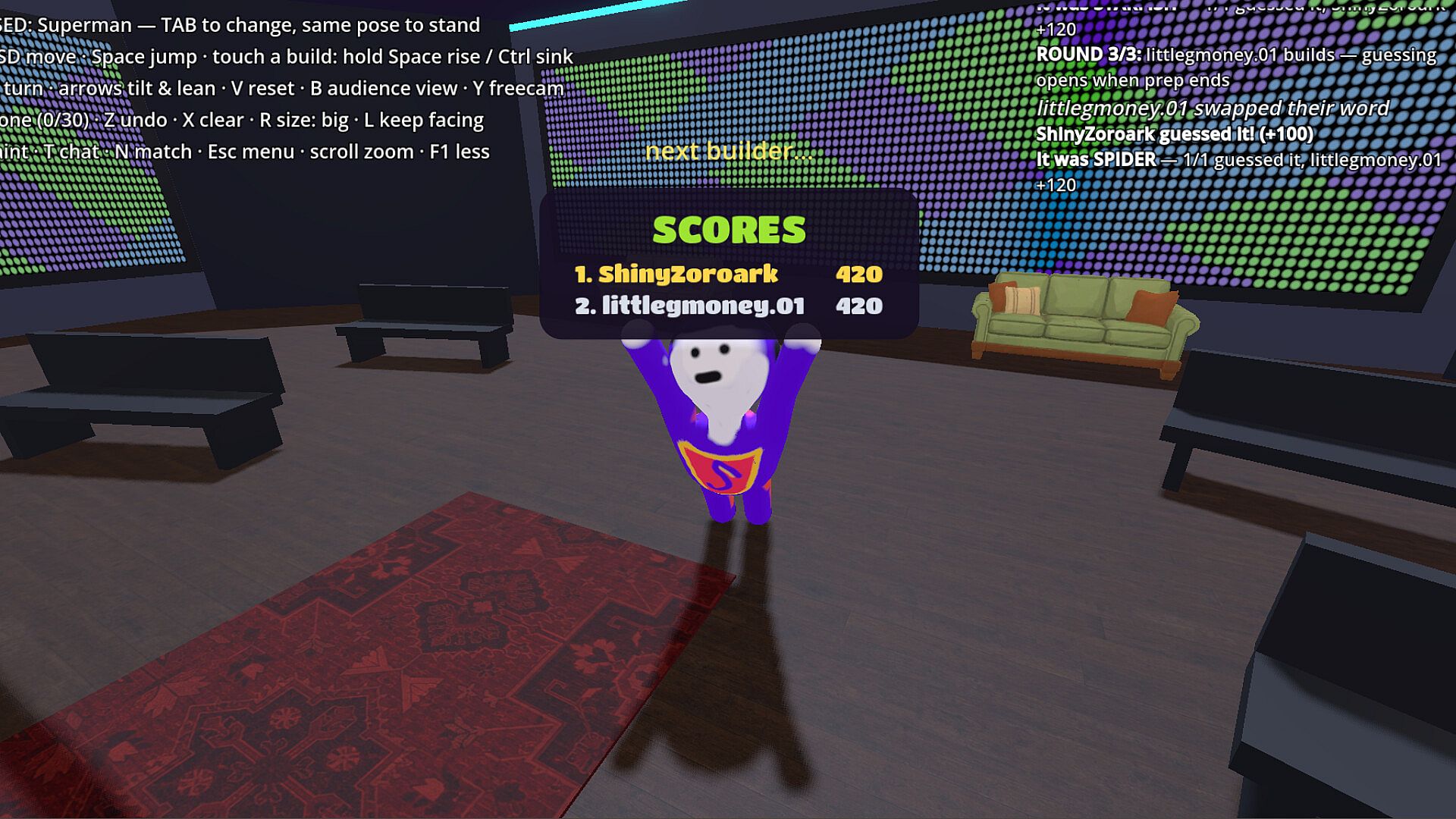
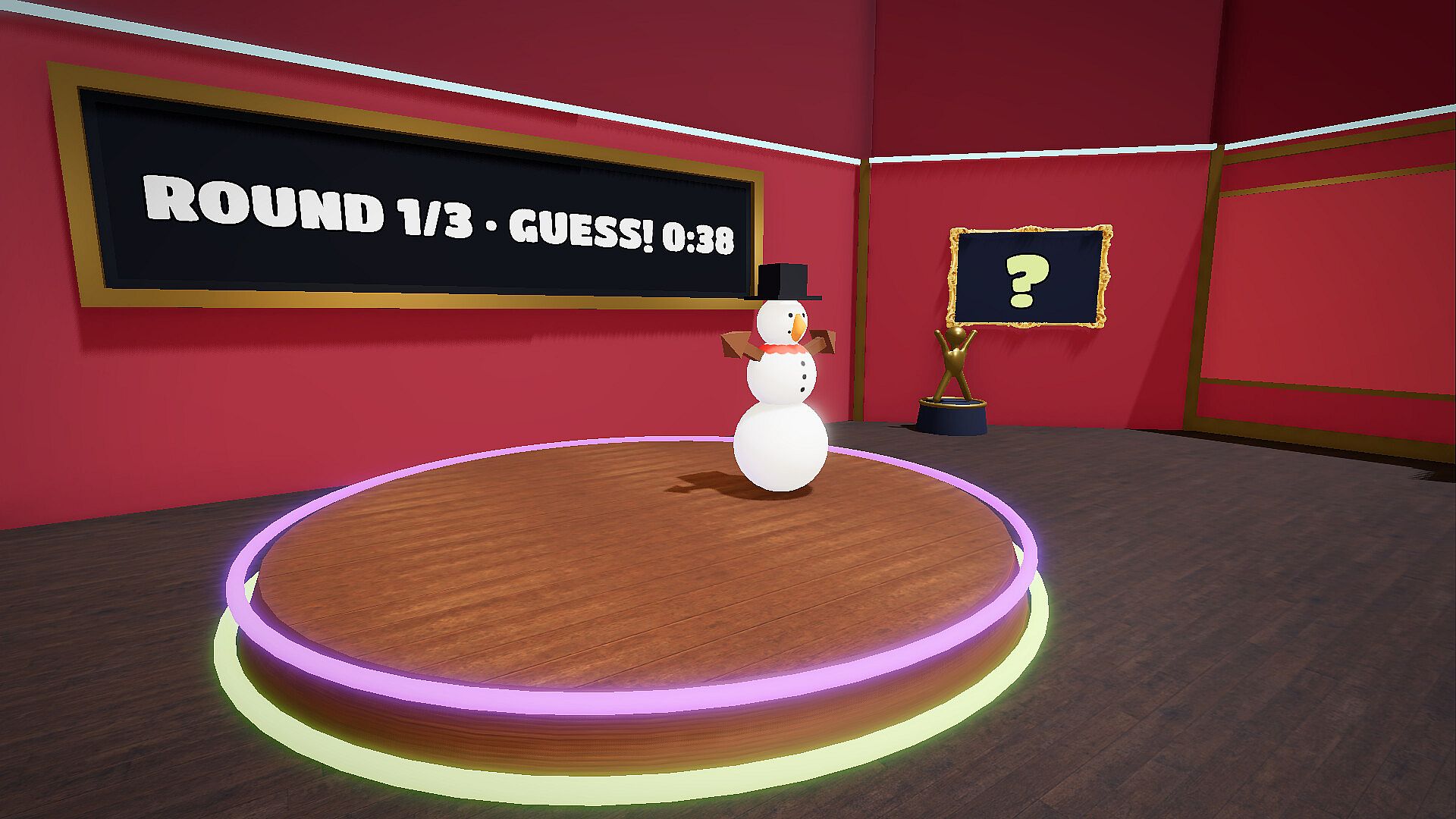
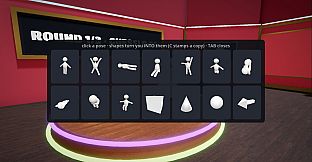
The core loop centers on a single builder who receives a word and works behind a curtain to assemble a visual clue. Tools include a variety of body poses with full tilt and rotation, the ability to create up to 30 clones that can be stacked, tilted, or resized, and the placement of basic shape blocks such as cubes, cones, and spheres. A free-aim paint system adds detail through a color wheel, eyedropper for sampling, and a slider that adjusts finishes from matte to glossy. Once complete, the curtain opens to reveal the creation, and the remaining players move around the stage to inspect it from different angles before shouting their guesses. Points reward fast and accurate responses, while the builder earns credit when the group succeeds.
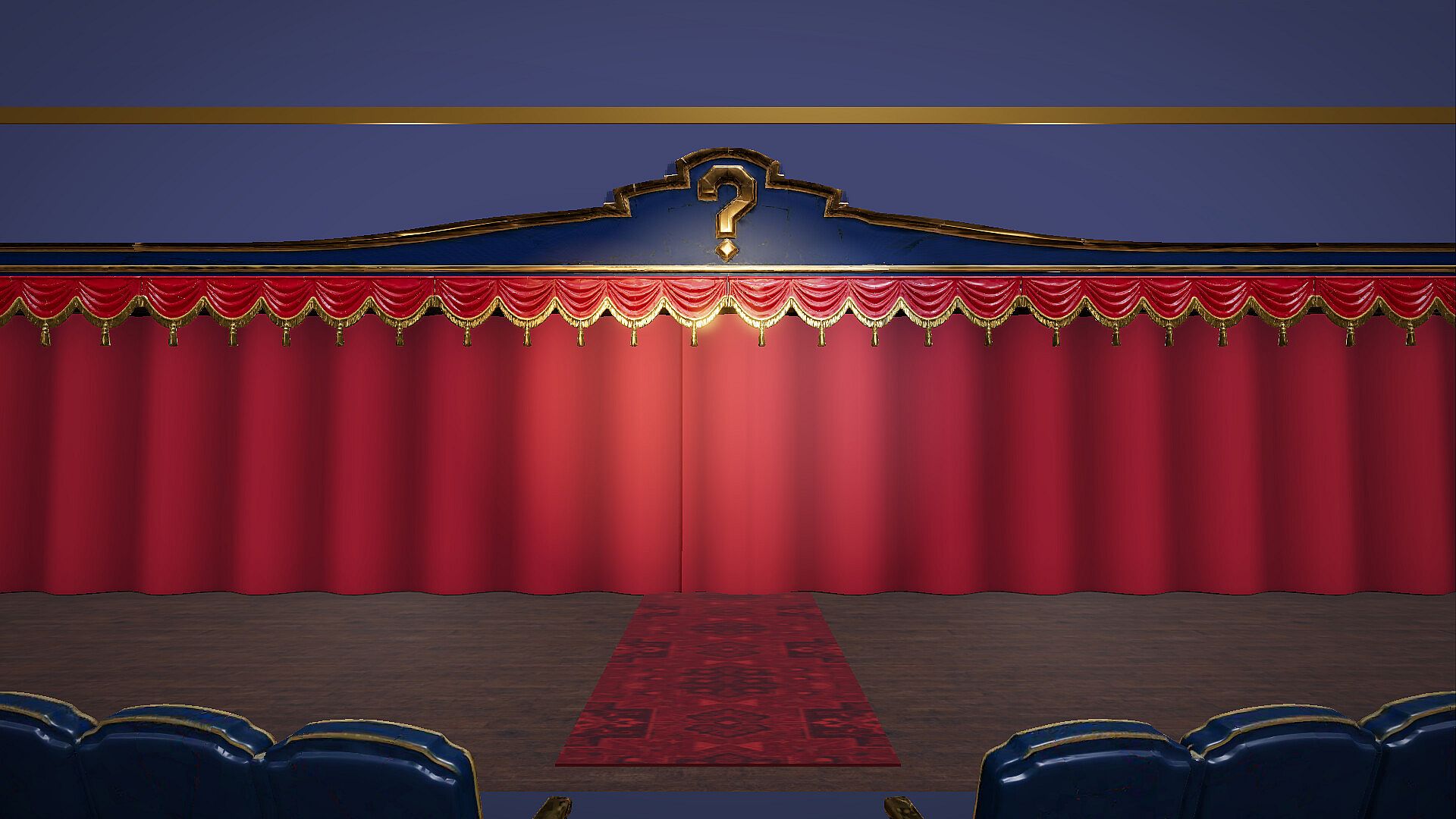
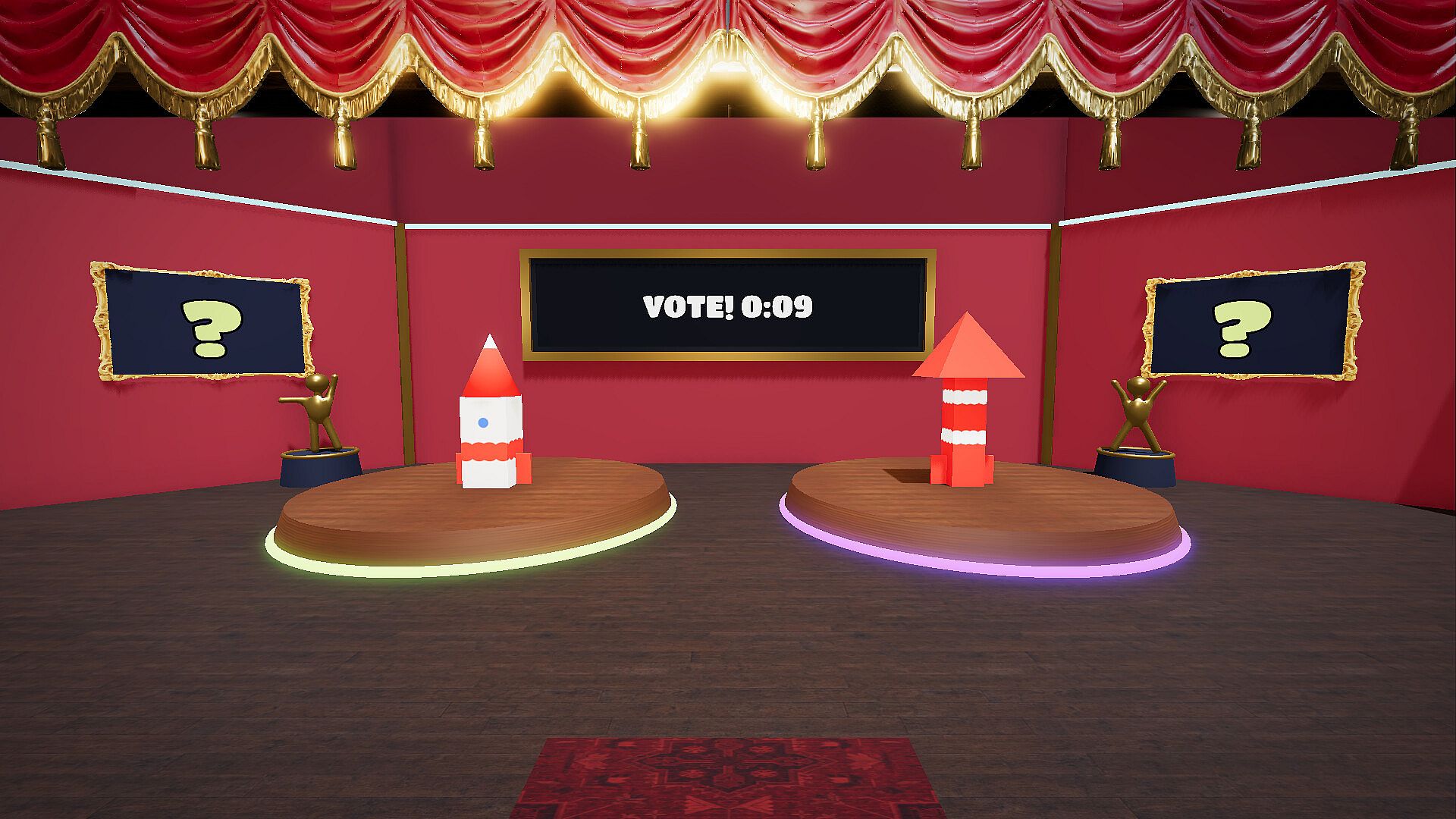
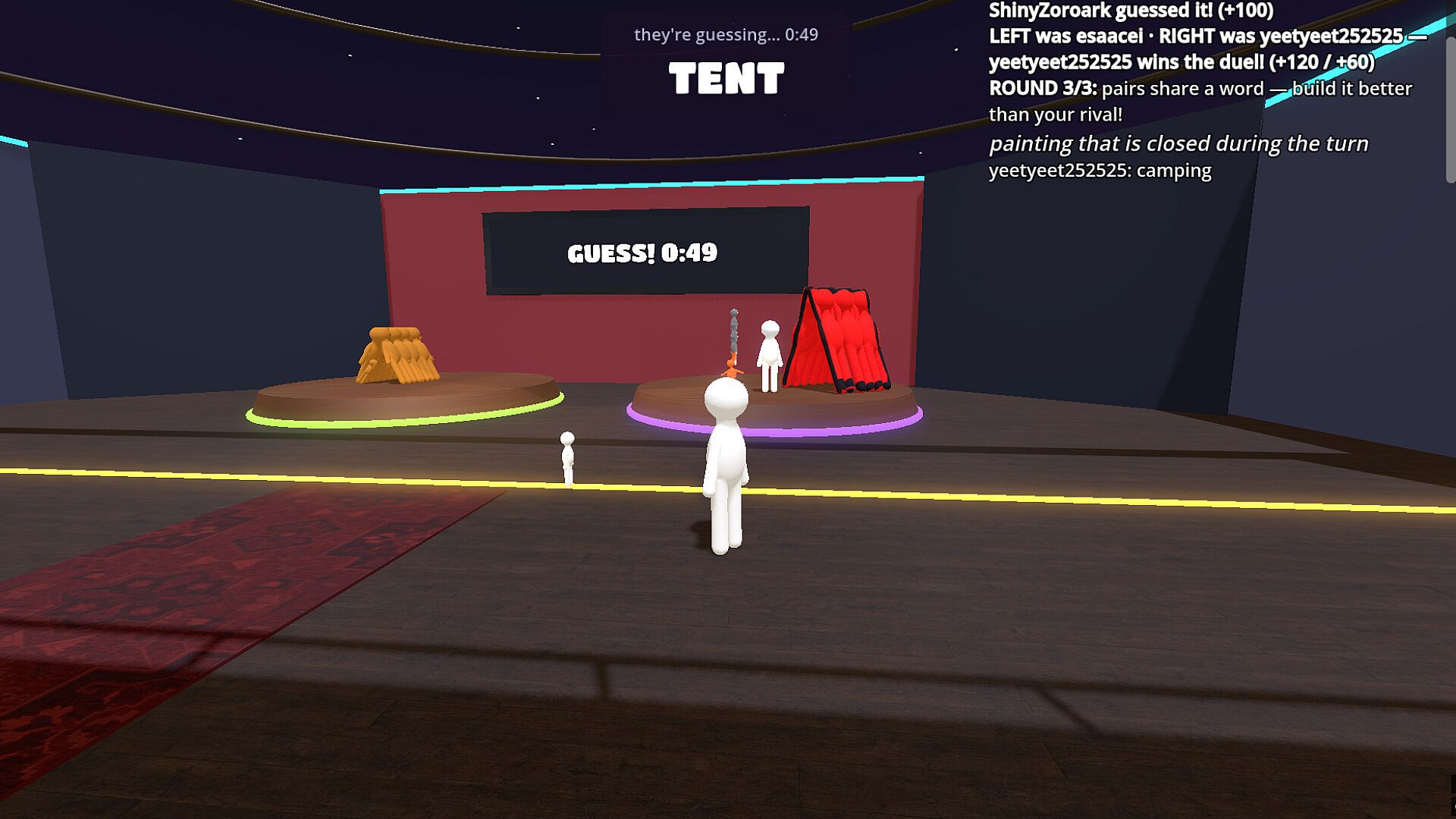
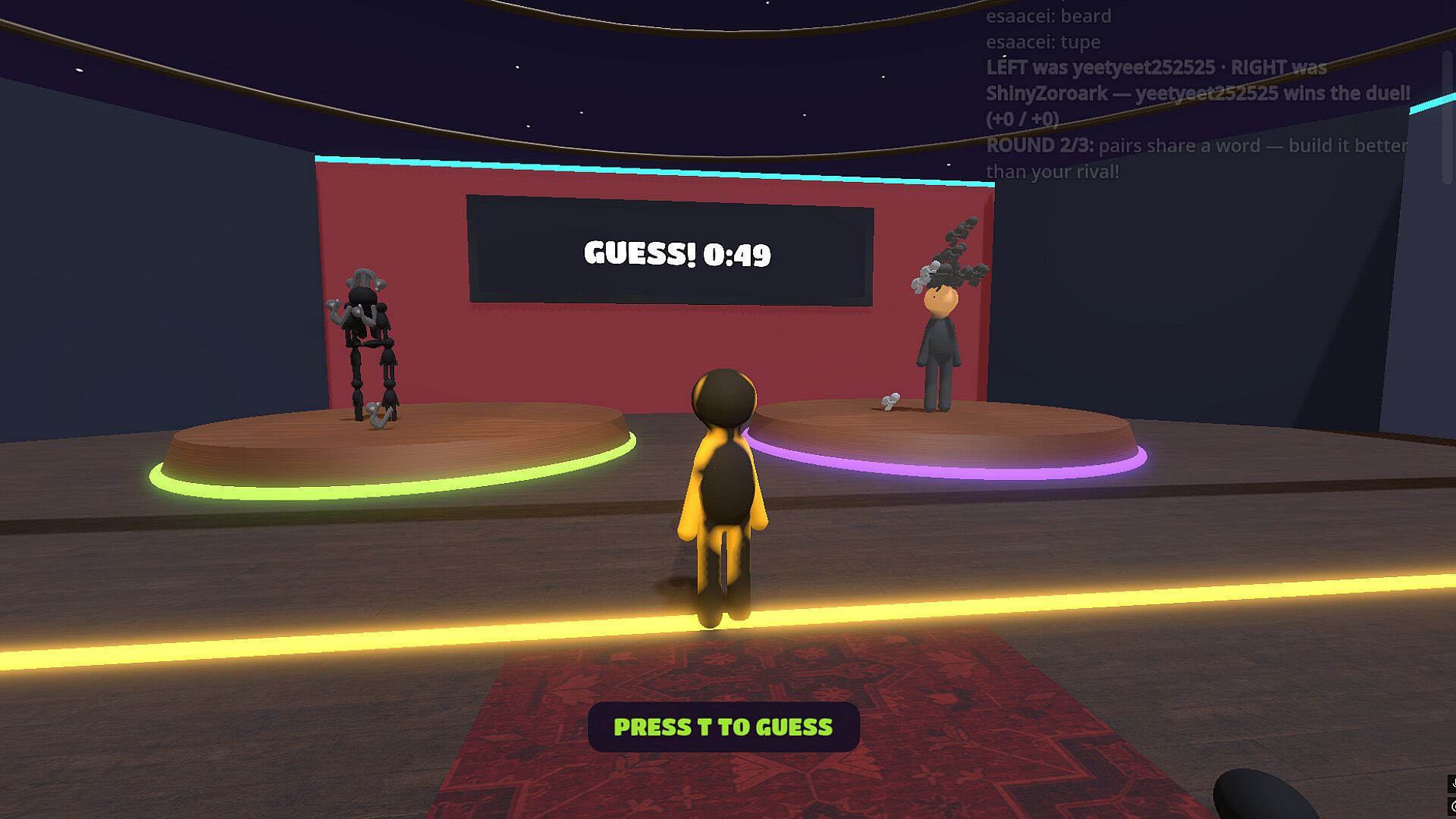
The presentation takes the form of a game show theater complete with a physical curtain reveal, LED status boards that track progress, duel podiums for competitive rounds, and a starfield dome overhead. Proximity-free chat keeps communication clear during the guessing phase, and the entire setup requires no additional hardware or lengthy preparation beyond joining a hosted session.
Game Modes
The primary experience revolves around the standard guessing round described above, where one builder works alone against a group of guessers. A dedicated head-to-head mode introduces direct competition by assigning the same word to two builders who work simultaneously on separate podiums without seeing each other. After the reveals, the audience guesses both creations and then votes on which one better captured the word, with the winner claiming the larger share of points.
Word selection supports three difficulty tiers to suit different skill levels, and players can import custom word packs containing inside jokes or group-specific terms. This flexibility keeps sessions fresh across repeated play without relying on a fixed list of prompts.
Multiplayer and Accessibility
Sessions support three to eight players online through a simple host-and-join system that uses short codes for quick entry. The design emphasizes spectator friendliness, allowing observers to watch builds and guesses without disrupting the flow. Controls focus on intuitive body manipulation and painting rather than complex menus, so new participants can join and contribute almost immediately. The emphasis on physical comedy and shared creativity makes the game particularly suited to groups of friends who enjoy lighthearted competition and unexpected results.
Is It Worth Playing?
Chamele-Guess delivers a distinctive party format that rewards creativity and quick reactions in equal measure. Its body-based building system turns a familiar guessing concept into something physically expressive and visually chaotic, which tends to generate memorable moments even on first play. With support for custom words and a head-to-head option that adds direct rivalry, the game offers enough variety to sustain interest across multiple sessions. Because it requires only a stable connection and a small group, it serves well as a low-commitment activity for casual gatherings. Players who appreciate short, repeatable rounds centered on improvisation and group interaction will find the mechanics engaging, while those seeking deeper progression or solo content may prefer other genres. The planned September 2026 release positions it as an accessible addition to the casual multiplayer library once it becomes available.