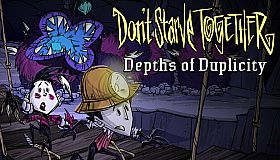


Don't Starve Together is a multiplayer survival game set in a procedurally generated wilderness known as the Constant. Players control survivors who must manage hunger, health, and sanity while gathering resources, crafting tools, and building bases to endure seasonal extremes and hostile creatures.
Gameplay
The core loop centers on day-to-day resource management and preparation. Days cycle between light and dark periods, with night bringing increased danger from shadow creatures and environmental threats. Players forage for food, hunt animals, chop trees, mine rocks, and explore biomes including forests, swamps, grasslands, and underground caves. Crafting progresses through science machines and other stations that unlock new recipes for clothing, weapons, farms, and structures.
Seasons introduce distinct challenges. Winters bring freezing temperatures and food scarcity, while summers risk wildfires and overheating. Spring often features heavy rain that affects mobility and farming. Players track three main meters: hunger depletes over time and requires regular eating, health drops from damage or starvation, and sanity falls from darkness, monsters, or certain actions, potentially summoning hallucinations. Base building provides shelter, storage, and defenses against periodic hound attacks and seasonal giants.
Death mechanics allow continuation through ghost forms that teammates can revive using specific items or structures. Exploration reveals ancient ruins and lunar areas with unique resources and dangers. The game supports cooperative play where survivors share a world but maintain individual maps, encouraging communication for efficient gathering and defense.
Game Modes
Don't Starve Together offers several world presets that alter death penalties, world persistence, and overall difficulty. Survival mode serves as the standard experience, emphasizing cooperation where deceased players become ghosts that drain nearby sanity, and the world resets if the entire group perishes without revival.
Endless mode provides a more forgiving option with no world reset, allowing ghosts to revive at the central portal even if the group is wiped out. Wilderness mode scatters players across random starting locations on the map, removes ghost states entirely, and forces a full character restart upon death, suiting those who prefer isolated or high-risk runs.
Additional presets include Relaxed for reduced environmental threats and easier resurrection, and Lights Out for permanent darkness that heightens reliance on artificial light sources. World settings further customize resource abundance, season lengths, creature populations, and events, letting groups tailor the experience before generation.
Characters and Progression
Each survivor brings distinct traits that influence playstyles. Wurt, introduced as a merm-aligned character, excels at befriending merms through feeding and structures like Craftsmerm Houses. She gains movement speed on marsh turf, detects hidden tentacles, and benefits from a crowned merm king that boosts her stats and provides defensive support from loyal guards.
Progression involves unlocking recipes, expanding bases, and tackling optional bosses in ruins or surface areas for rare materials. Players often form long-term worlds where repeated seasons test preparation and adaptation. The ocean expansion adds boating, fishing, and new biomes that integrate with surface survival.
Is It Worth Playing?
Don't Starve Together maintains strong player engagement with consistent updates that add content like new bosses, tools, and seasonal events. Reviews remain very positive across hundreds of thousands of submissions, highlighting the depth of its crafting systems and cooperative survival challenges. The game suits groups seeking a demanding multiplayer experience focused on resource management and base defense rather than linear objectives.
Solo players can adjust settings for a more accessible run, though the design rewards teamwork in managing threats and reviving fallen allies. Ongoing development keeps the world fresh without requiring additional purchases for core features. Those who enjoy methodical planning, exploration, and adapting to procedural worlds will find substantial replay value in its sandbox structure.