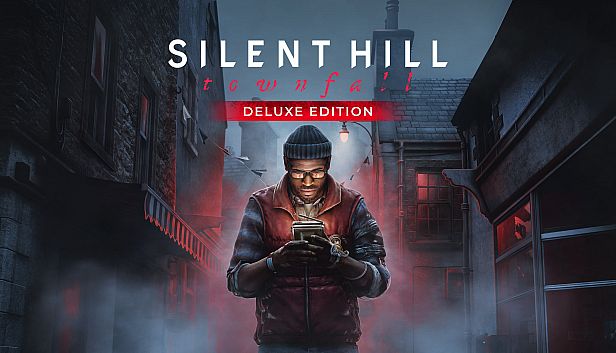



SILENT HILL: Townfall is a first-person psychological survival horror game set in the fog-covered Scottish town of St. Amelia in 1996. Players take on the role of Simon Ordell, who returns to the isolated coastal location with fractured memories and a need to resolve unfinished matters. The experience centers on careful exploration, threat detection, and tense decision-making as the environment shifts between ordinary streets and more nightmarish states.
Gameplay
The core loop revolves around navigating fog-shrouded streets, shorelines, and buildings while managing limited resources and visibility. A handheld device called the CRTV serves as the central tool, allowing players to tune analog signals for detecting nearby threats through walls or mist, revealing hidden clues, and piecing together narrative fragments. This mechanic demands precise manual adjustments that heighten immersion and risk.
Stealth forms the primary survival strategy. Players can hide behind cover, lock doors to block paths, or create distractions with environmental objects like radios. When encounters become unavoidable, combat relies on melee weapons such as wooden planks or pipes. These tools permit blocking and striking but degrade quickly, and enemies prove resilient, making direct fights punishing and often best avoided. Puzzles integrate directly into the story, requiring attention to details in the surroundings and signals from the CRTV to progress.
The first-person perspective places emphasis on tactile interactions and vulnerability. DualSense features support vibration and adaptive triggers during key actions, while performance and quality modes let players choose between smoother frame rates or enhanced visuals on PS5. The setting draws from real coastal Scottish towns, resulting in detailed, realistic environments that reinforce the sense of isolation.
Game Modes
SILENT HILL: Townfall operates as a single-player experience with no separate multiplayer or competitive modes. The structure follows a continuous narrative campaign that blends exploration, puzzle-solving, and survival elements across the town and its altered states. Difficulty settings allow adjustments to combat intensity and puzzle guidance, but the focus remains on one cohesive story path rather than branching or replay-focused variants.
Progression occurs through sequential areas and objectives tied to Simon's personal connections to St. Amelia. Autosaves and manual save points at phone booths maintain tension without frequent checkpoints, encouraging deliberate movement and planning.
Atmosphere and Design
The game builds dread through its consistent use of fog, static-filled signals, and shifting environments that reveal grotesque creatures and unsettling details. Sound design amplifies unease with creaking structures, distant threats, and the distinctive tuning of the CRTV. Visual fidelity stands out on PS5, with realistic textures and lighting that make everyday locations feel both familiar and oppressive.
Monsters exhibit varied behaviors, hunting players who draw attention and forcing constant awareness. The overall presentation adopts a cinematic aspect ratio in its default view, contributing to a focused, film-like tension during play sessions.
Is It Worth Playing?
Hands-on previews highlight strong atmospheric tension, effective use of the CRTV for both utility and horror, and a convincing sense of vulnerability in combat and stealth. The first-person view and detailed Scottish setting distinguish the experience within the series, appealing particularly to players who favor deliberate pacing and environmental storytelling over action-heavy encounters.
Those drawn to psychological horror that rewards observation and careful resource management will find the mechanics engaging. The single-player focus delivers a self-contained story without additional modes or ongoing content cycles. As an upcoming title with positive early feedback on its core systems, it suits fans seeking a fresh yet faithful entry in the survival horror genre on PS5.