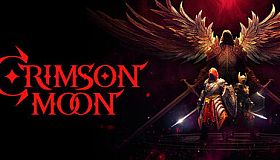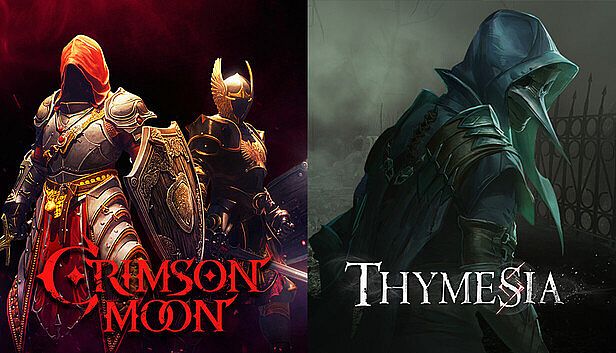


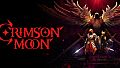
Crimson Moon x Thymesia pairs two distinct action RPGs that emphasize melee combat in dark fantasy settings. Crimson Moon places players in control of a Nephilim, a human-angel hybrid tasked with reclaiming the fallen city of Gildenarch from demons, undead, vampires, and other abominations. Thymesia follows Corvus, a plague doctor figure navigating a kingdom ravaged by an alchemical plague. Both titles draw on soulslike mechanics but differ in structure and scope, with Crimson Moon supporting cooperative play and Thymesia remaining strictly single-player.
Gameplay
Crimson Moon centers on visceral melee encounters where the Nephilim wields weapons alongside supernatural abilities. Combat incorporates parries, finishers, angelic arts, and temporary transformations that deliver powerful attacks. Missions involve fighting through districts filled with hordes and culminating in boss fights against entities known as the Dead Gods. Players return to a church hub between runs to handle upgrades, interact with NPCs, and plan at a war table. Dynamic difficulty scaling adjusts enemy composition and challenge level based on player performance.
Thymesia builds its loop around aggressive third-person combat without a stamina system. Corvus relies on saber strikes for standard damage and claw attacks to inflict plague damage that prevents enemy health regeneration. Executing foes allows temporary access to their weapons through the plague weapon system, with permanent unlocks available via memory shards and a talent tree. Defenses focus on timed parries or dodges, and light and heavy attack combinations encourage constant pressure on opponents. Exploration yields additional shards and upgrades that expand combat options across several skill trees.
Game Modes
Crimson Moon supports solo play or two-player online co-op. In co-op, players share a life pool and can resurrect fallen allies while missions scale to the group. Runs feature modifiers that alter objectives and enemy setups on subsequent attempts, encouraging repeated visits to the same areas with fresh challenges. Thymesia offers only single-player mode across its compact campaign. Progress occurs through linear sequences of areas that reward aggressive play and experimentation with plague weapons and talent allocations.
Core Mechanics and Progression
Both games feature hub-based progression where players spend resources earned from combat to improve capabilities. Crimson Moon emphasizes build flexibility through equipment upgrades and evolving Nephilim powers without traditional classes. Thymesia ties advancement to specific talent trees focused on saber, claw, deflection, dodging, and strategy options, allowing reallocation of points at beacons. Enemy variety in each title influences tactical choices, with Crimson Moon highlighting executions unique to enemy types and Thymesia rewarding the collection of disease-based abilities.
Is It Worth Playing?
Crimson Moon delivers short, repeatable missions suited to players who enjoy co-op sessions or quick solo runs in a gothic action RPG framework. Its reception has been mixed, with some noting solid combat ideas alongside issues like camera work and impact feel. Thymesia provides a focused single-player experience with kinetic combat that rewards aggression and weapon experimentation. It maintains very positive player feedback years after release and suits those seeking a concise soulslike title. The bundle appeals to fans of melee-focused action RPGs who want one option with cooperative elements and another with a distinctive plague weapon mechanic. Availability on PC makes it accessible for those interested in either or both experiences without additional platform requirements.