




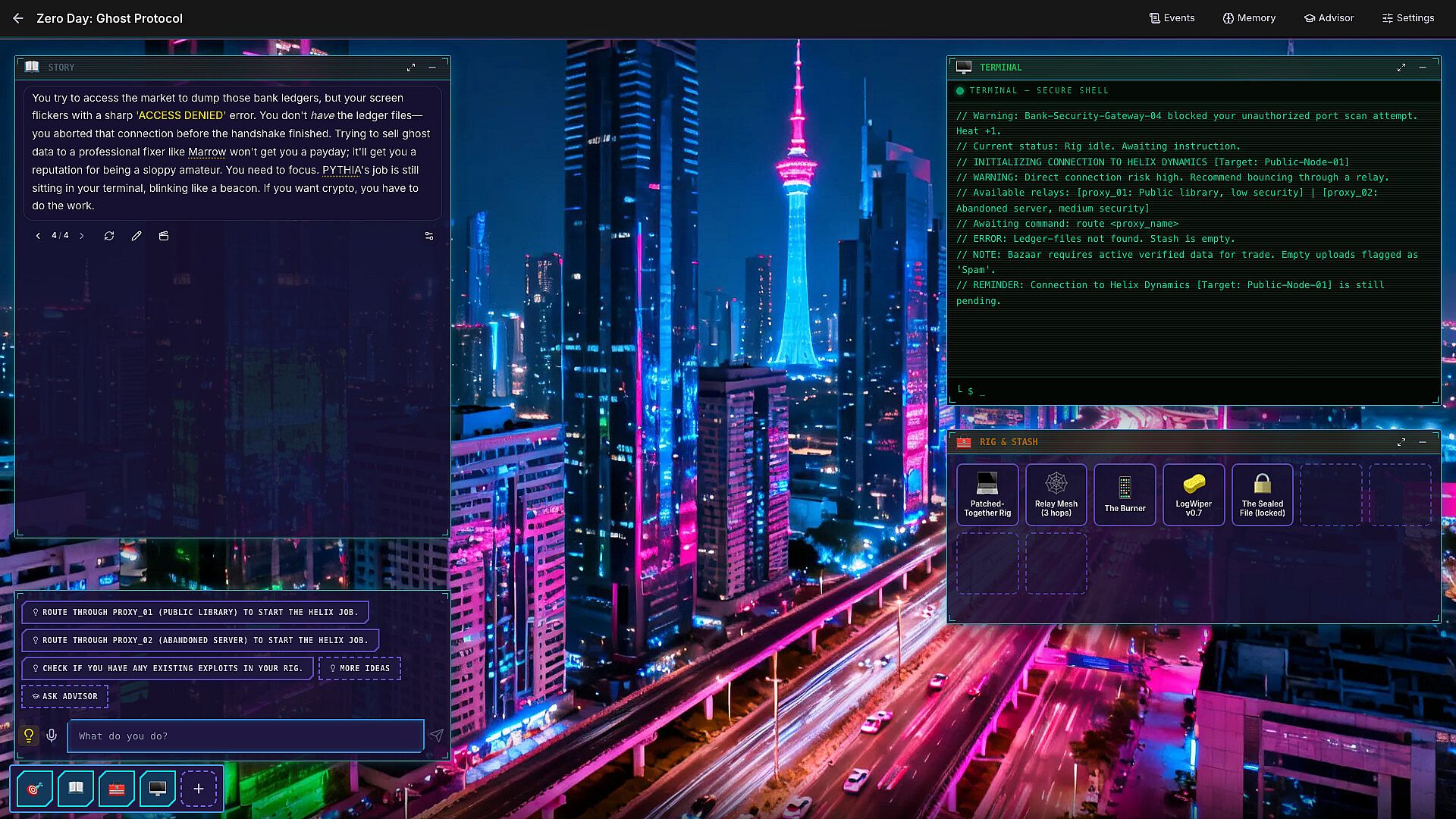
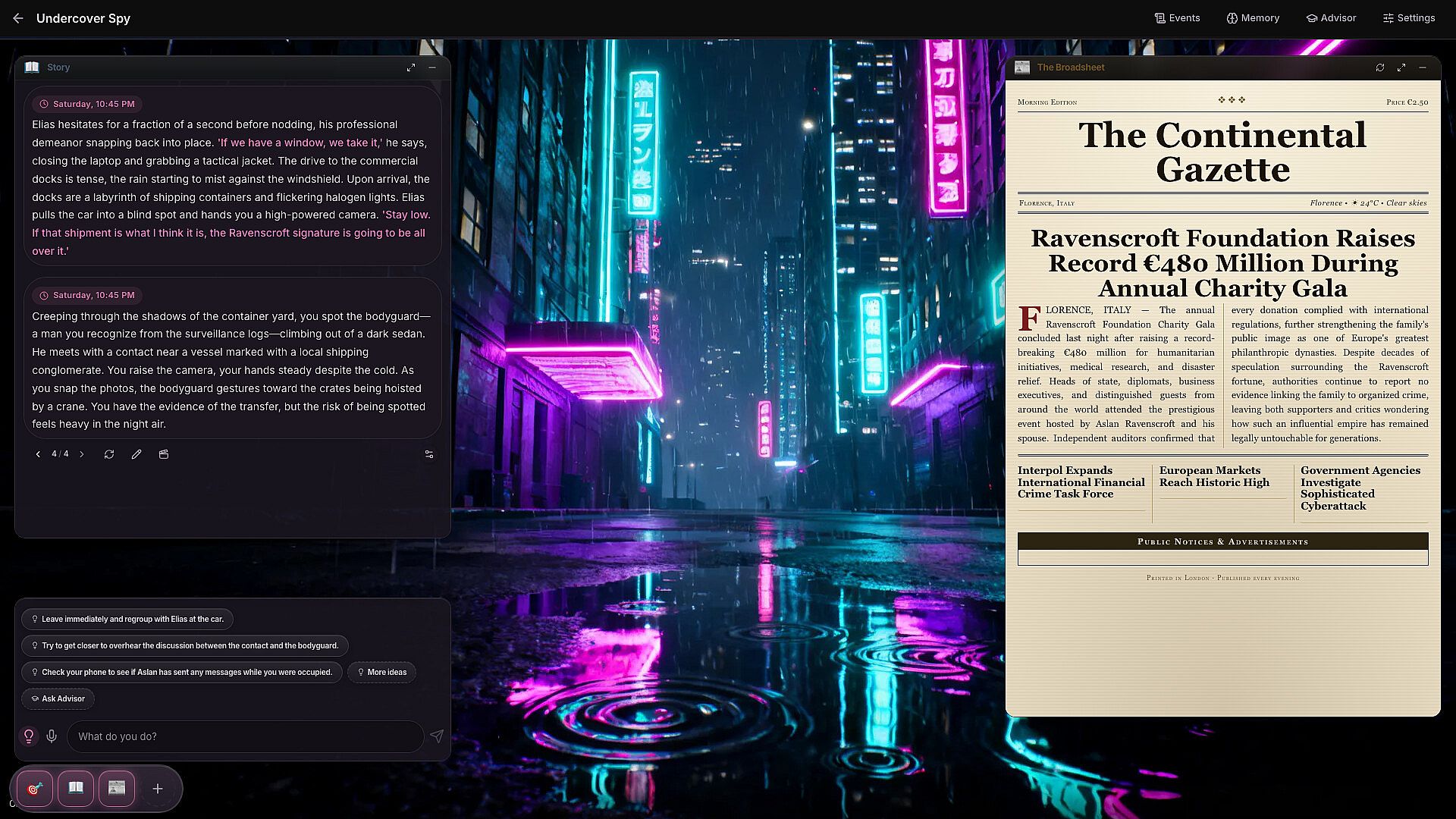
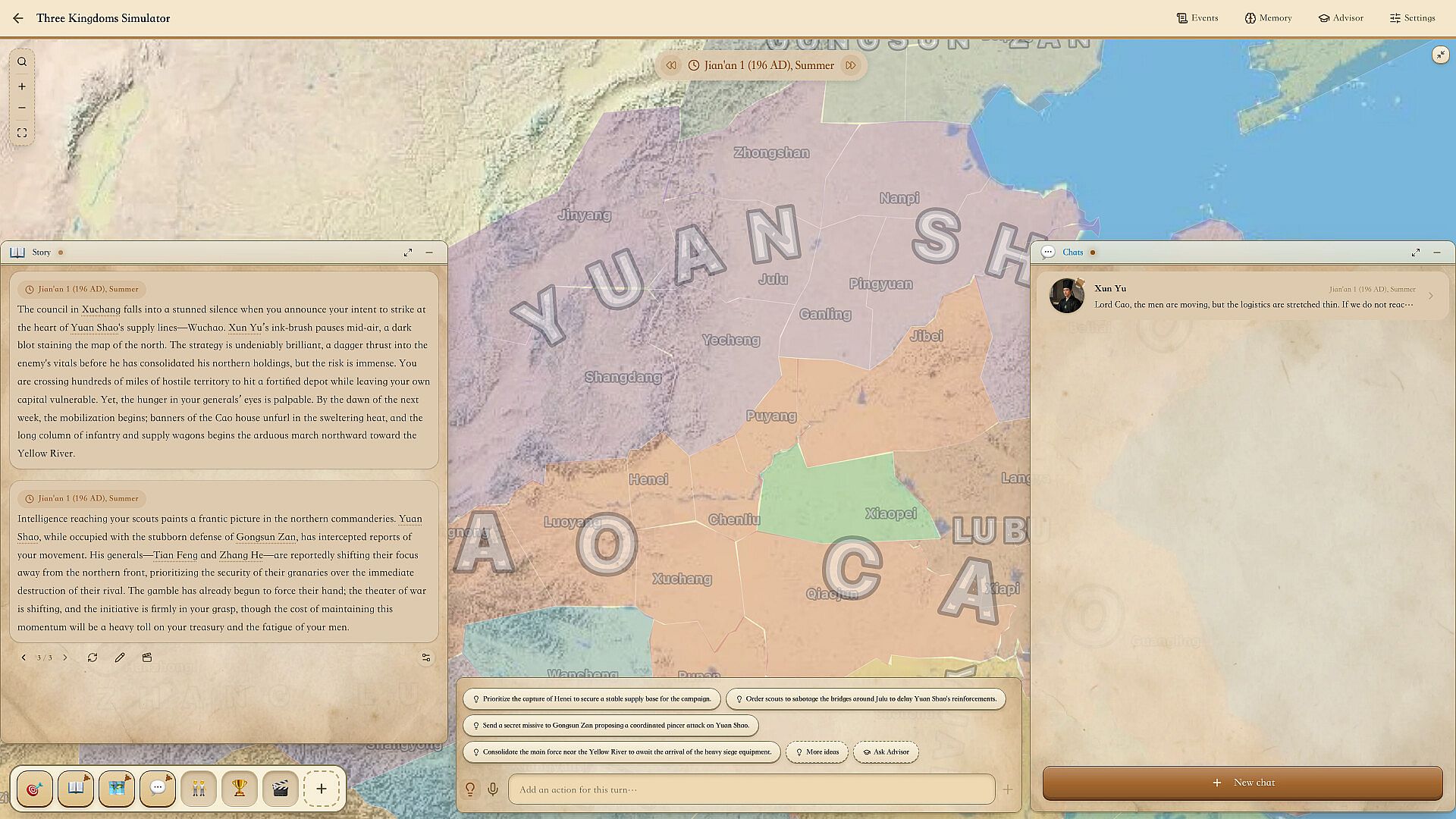
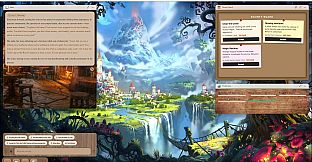
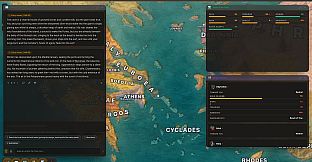
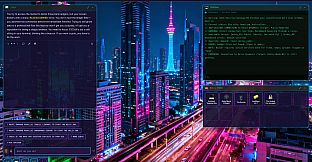
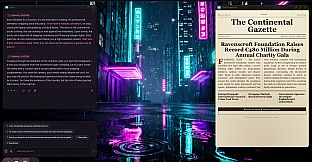
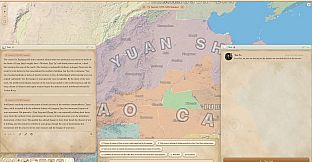
WorldOS is a strategy simulation game with RPG and grand strategy elements available on PC. Players issue commands in plain language to an AI game master that resolves actions across detailed maps drawn from real historical periods or alternate settings. The experience centers on directing nations or individuals through evolving conflicts, diplomacy, and internal politics without relying on traditional menus or scripted branches.
Gameplay
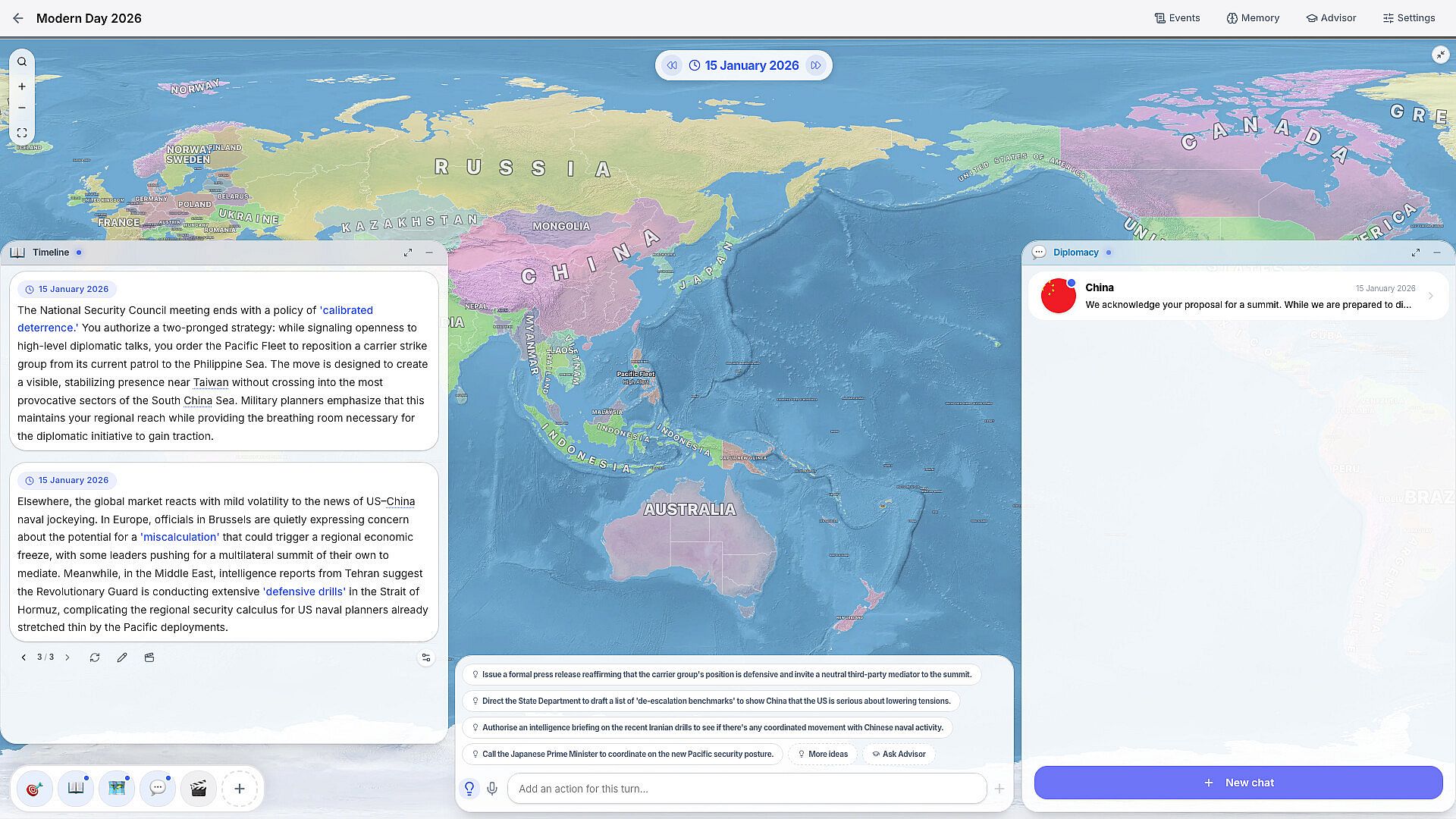
Core play revolves around typing any order that fits the situation. An AI game master interprets the input and updates the world state accordingly, shifting borders, triggering rebellions, altering alliances, or generating new events. Provinces change hands through military campaigns, negotiations, uprisings, or state collapse, and the map reflects these shifts in real time.
Rivals operate with independent goals. Presidents, generals, and other figures pursue their agendas, respond to messages, and may form or break deals. Players can contact them directly to negotiate or probe for information about potential betrayals. This creates layers of intrigue that unfold across multiple fronts.
Progression supports two main approaches. One involves leading an entire nation through large-scale campaigns. The other follows a single character rising through ranks, whether as a soldier, athlete, official, or founder building influence over time. Both paths draw on the same underlying simulation of consequences.
Content generation relies on live AI for narrative text, character responses, and occasional illustrations. The Steam version applies automated moderation to every response before display, and only reviewed worlds become available for play. Players retain the ability to report issues through standard platform tools.
Game Modes
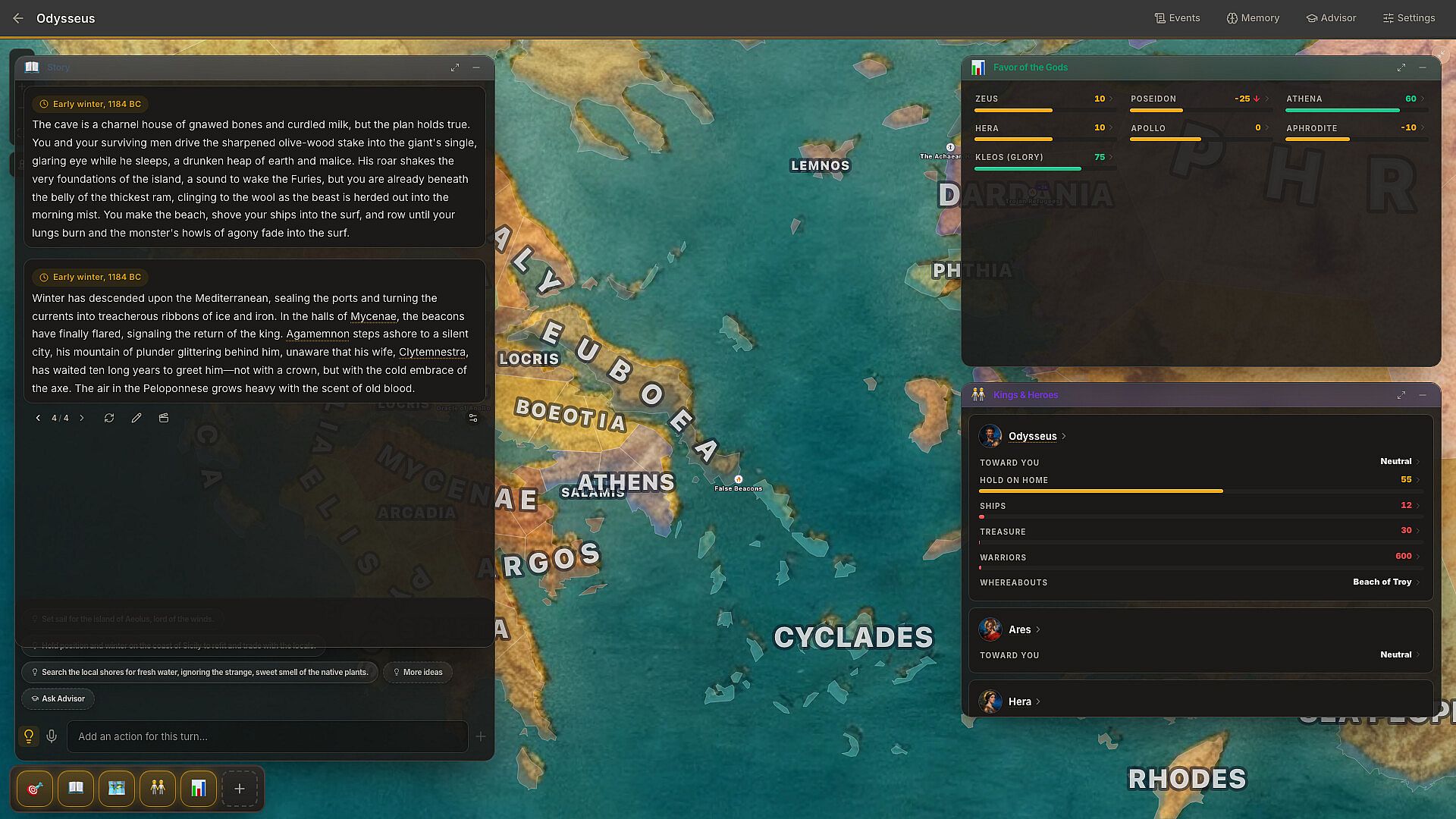
Campaigns take place in specific historical or contemporary contexts. Available settings include Modern Day 2026, World War II, World War I, Cold War 1947, Three Kingdoms, and Warring States periods. Each setting features its own map and faction dynamics, with provinces and powers responding to player directives in ways consistent with the era.
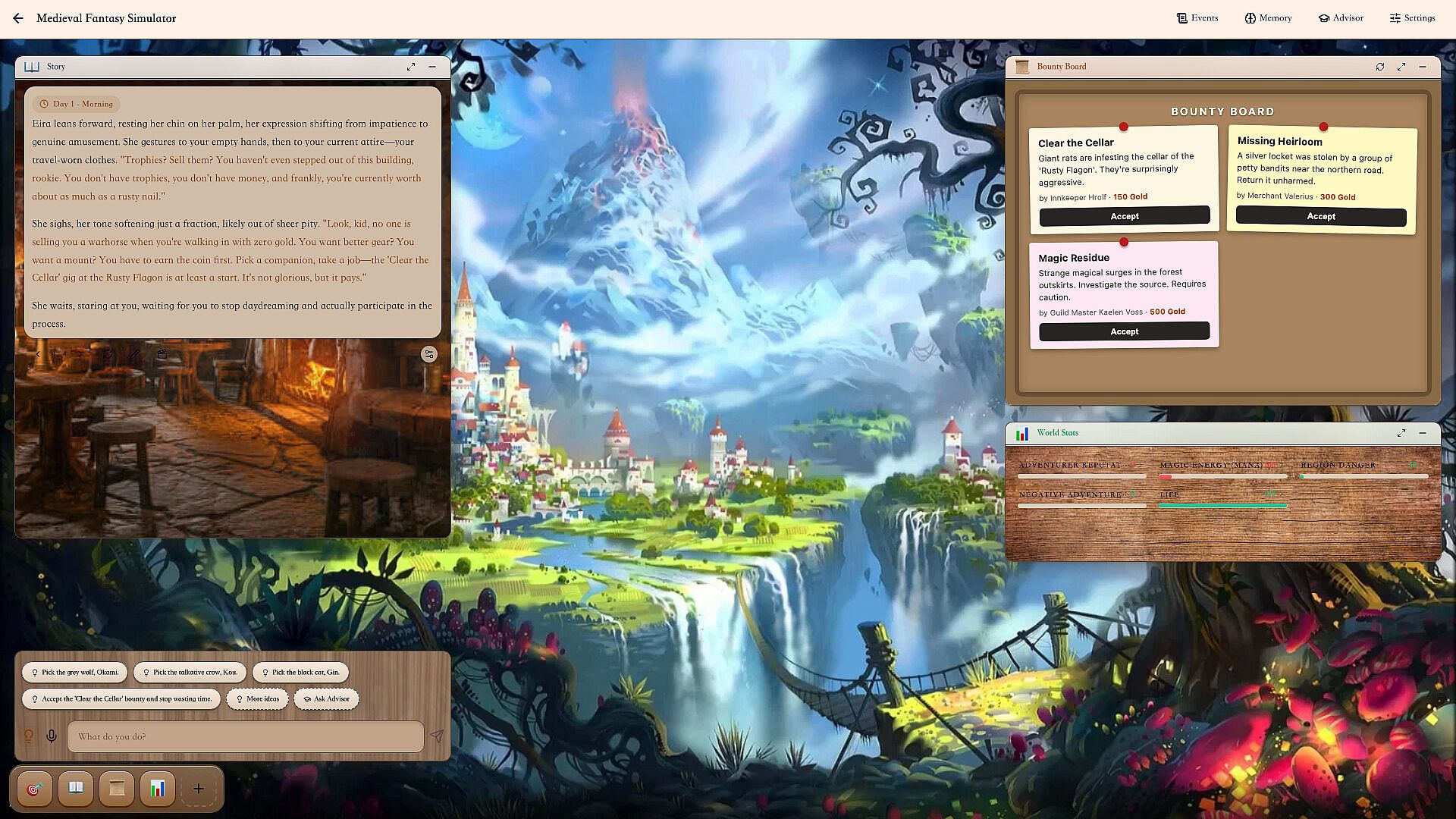
Community-created worlds expand the options beyond the core historical selections. More than two hundred hand-picked scenarios cover alternate history, survival challenges, science fiction, mystery, horror, and fantasy themes. An integrated editor allows users to define factions, maps, and rules before publishing or remixing existing content.
Single-life play functions as a distinct mode alongside nation-level strategy. Here the focus narrows to personal advancement within the broader simulation, with outcomes still shaped by the same AI-driven consequences system.
World Building and Accessibility
The editor supports creation of entirely new settings or modifications to existing ones. Users describe factions, geography, and initial conditions in natural language, after which the simulation engine handles ongoing events. Published worlds join a library that others can explore or adapt.
Access follows a free-to-play model without advertisements. Daily free Zaps provide a baseline number of actions, while additional Zaps can be purchased through the platform wallet. Each world displays its per-turn cost upfront so players know the resource requirements before committing.
Is It Worth Playing?
WorldOS suits players interested in open-ended strategy and interactive fiction where natural language input drives outcomes. The combination of historical maps, reactive rivals, and community worlds offers variety for those who enjoy grand strategy or personal rise narratives. Daily free actions and the absence of ads lower the barrier to entry compared with many premium titles.
Reception on the companion mobile platform shows mixed but engaged feedback, with users noting the appeal of persistent consequences and character interactions. The upcoming Steam release adds platform-specific moderation and family sharing features. Those who value experimentation with custom scenarios or long-term campaigns across changing maps will find the most consistent engagement, while players seeking tightly scripted stories or visual-heavy action may prefer other genres.











