

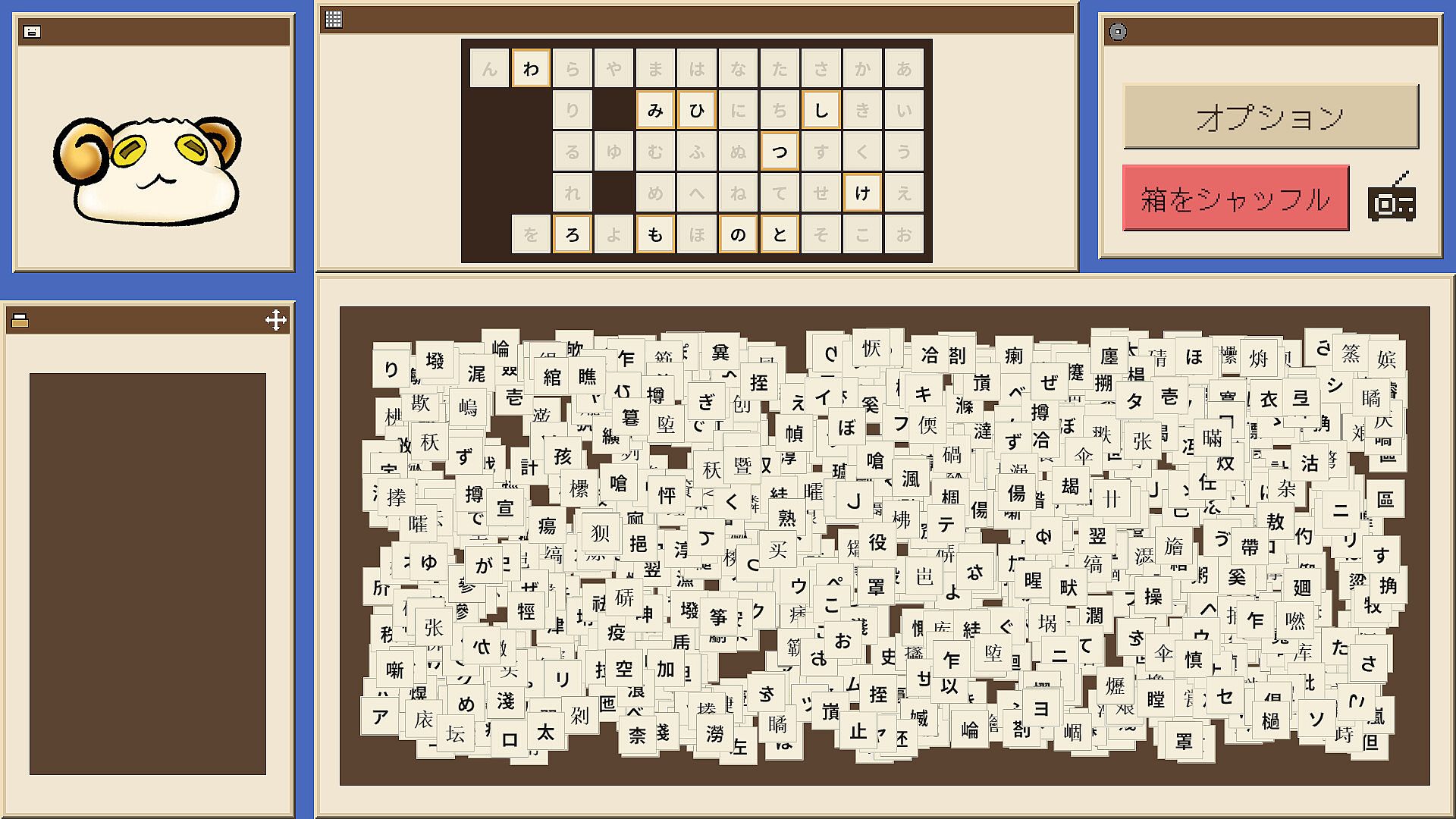
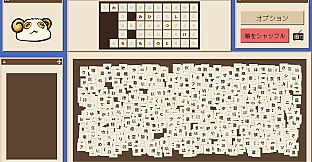
文字探し-JP-Not Every Letter Is a Letter is an indie casual puzzle game for PC that challenges players to identify exact hiragana shapes among a cluttered pile of paper slips. The core premise centers on a simple visual task: match 46 precise hiragana forms against a reference chart while discarding everything else. No reading or language skill is required, only careful shape comparison in a desktop-style interface that evokes old office software.
Gameplay
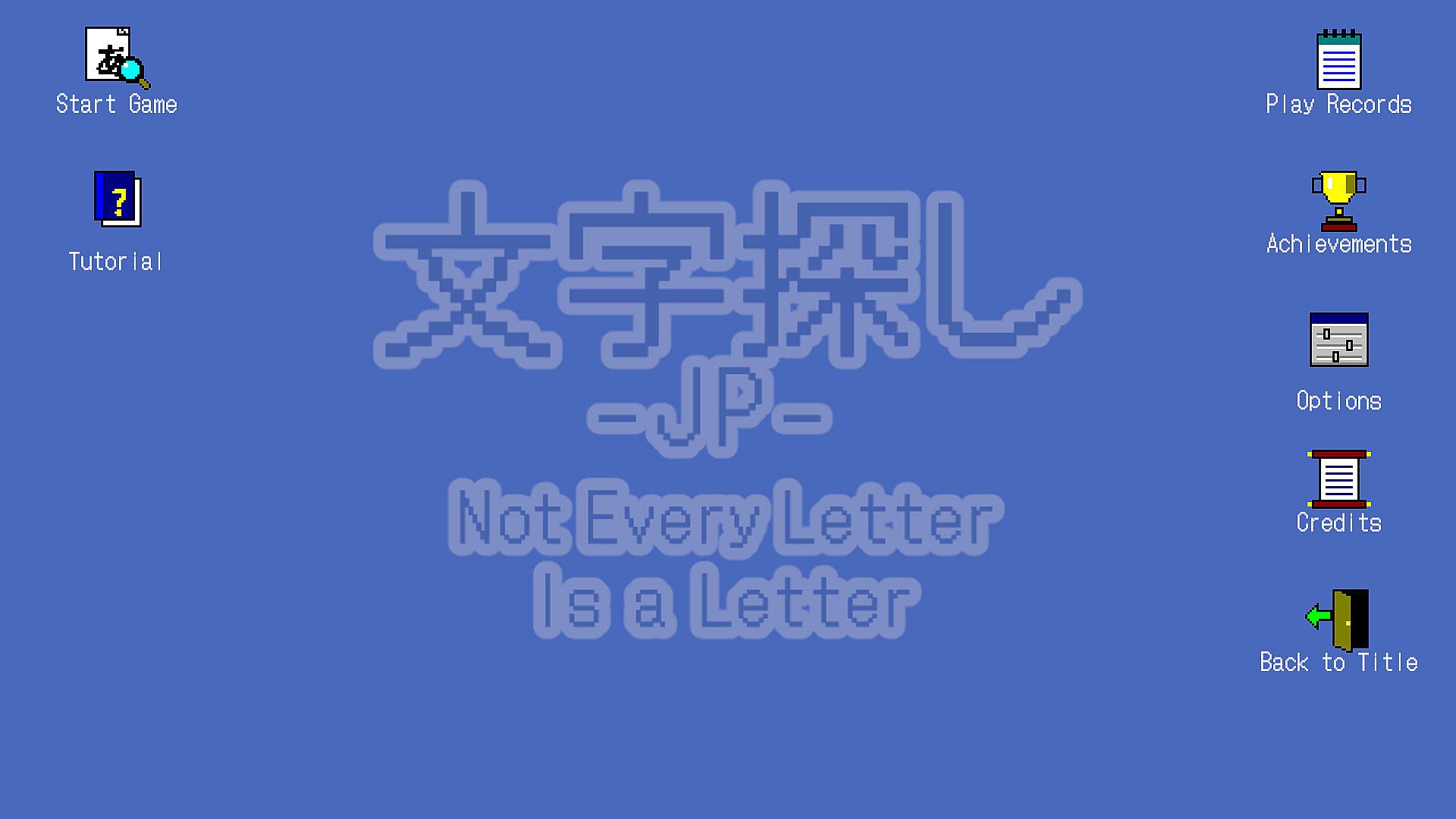
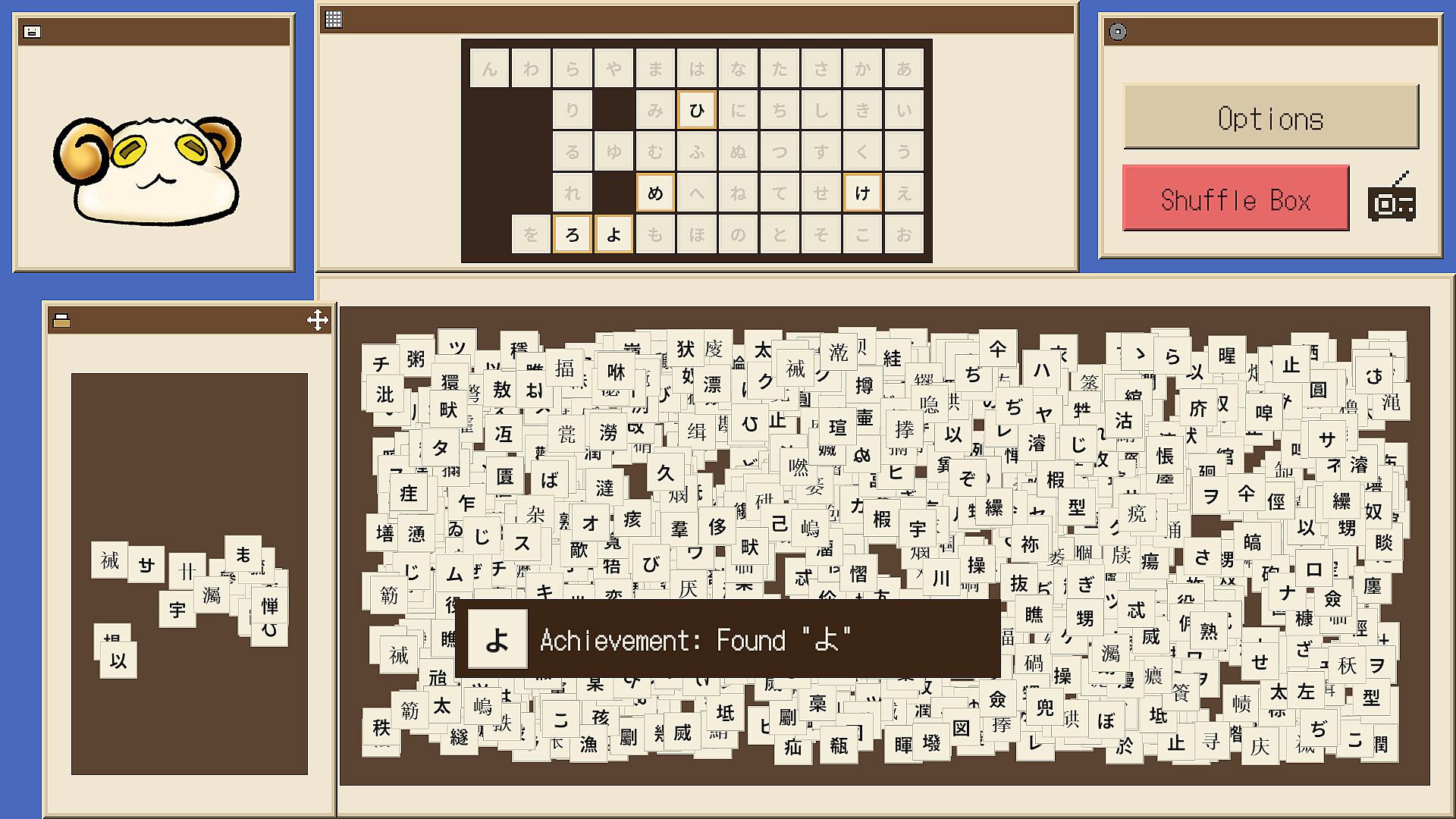
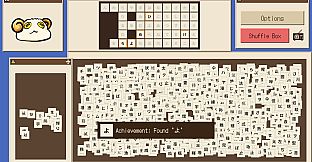
The main loop involves sifting through slips scattered across the screen. Players drag individual papers or entire trays to inspect them, then decide whether to place a match onto the corresponding outline in the hiragana table or discard mismatches. Suspicious items can be set aside in a movable tray for later review. Wrong papers go to a goat that accepts them one by one or in bulk, returning any accidental correct slips along with fresh incorrect ones to keep the box full. Mouse controls handle all actions through dragging, right-dragging to reposition the box, and scrolling to zoom in on details. The interface stays minimal and nostalgic, with faint outlines guiding placement and a radio icon for optional background music generated through AI tools.
Variant forms of characters receive special attention because they can closely resemble the target shapes. The game encourages a deliberate pace, suitable for short sessions or longer focused play without timers or pressure. Once a correct hiragana lands on its cell, that spot fills permanently, progressing toward completion of the full table.
Game Modes
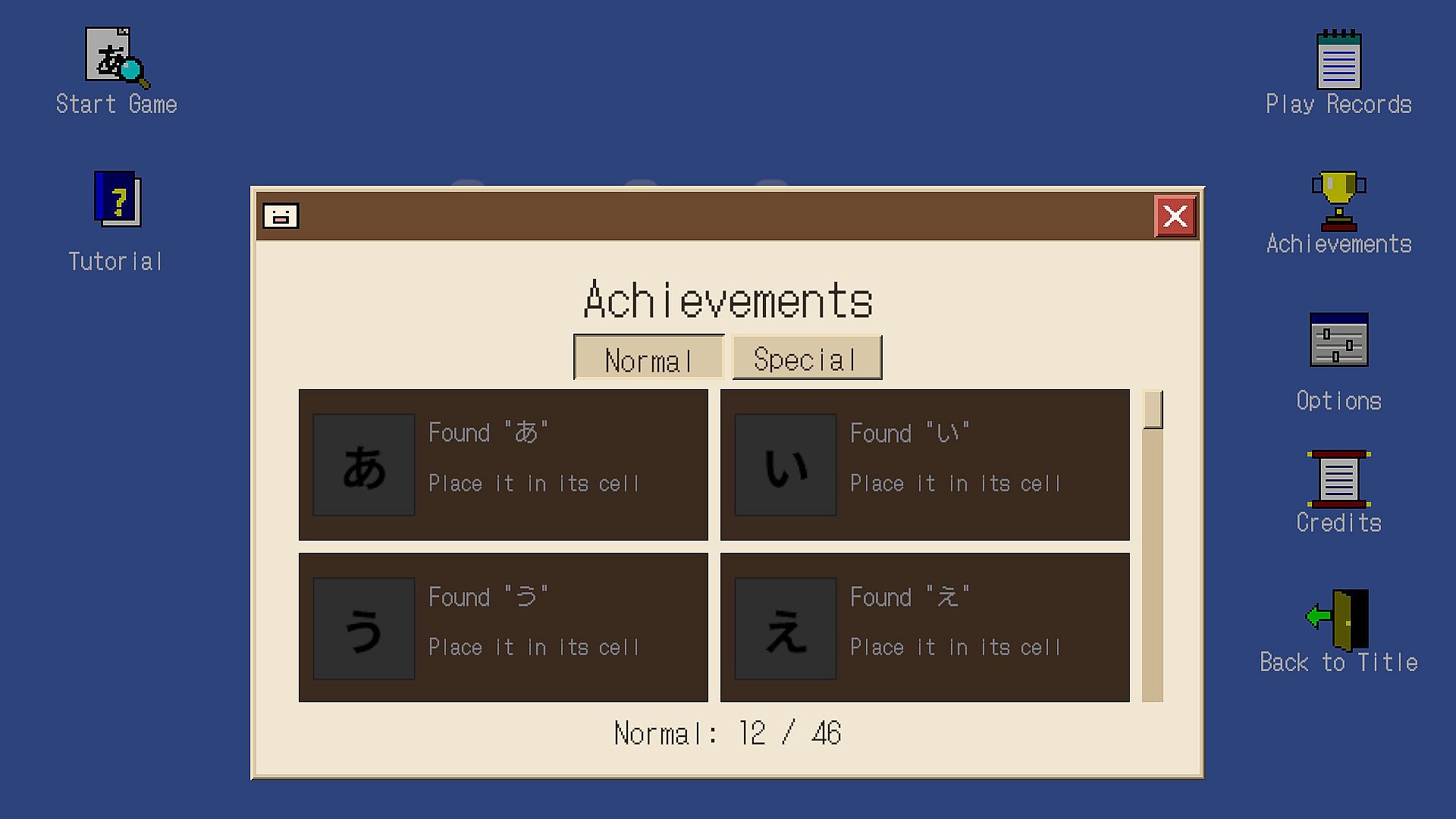
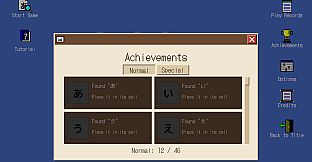
Standard play uses the initial box of 1,000 slips containing exactly 46 correct hiragana. Clearing the table once unlocks Sage Mode, which expands the challenge to 10,000 papers while retaining the same matching rules. Achievements track progress across both modes, covering each of the 46 hiragana twice plus additional hidden objectives that reward thorough exploration of the mechanics.
These two modes provide the only confirmed variations in scale and difficulty. No other named modes appear in the available details.
Controls and Accessibility
Everything runs through mouse input alone, making the experience straightforward for players who prefer point-and-click interactions. The tray system lets users organize the workspace freely, and the zoom function helps distinguish fine details in crowded piles. Music remains optional and defaults to off, supporting quiet play or background listening during streams. The game explicitly permits streaming, Let's Plays, and monetized video uploads without additional permissions.
Is It Worth Playing?
This title suits players seeking a relaxed visual puzzle that emphasizes observation over speed or reflexes. Its single-player focus and mouse-only design appeal to those who enjoy methodical tasks in a calm setting, much like sorting through documents at a desk. The progression from standard to Sage Mode offers a clear step up in volume without changing core rules, and the achievement list provides replay motivation through completion tracking. Availability on PC keeps the experience accessible for anyone with basic hardware, and the absence of language barriers broadens its reach to shape-matching enthusiasts regardless of Japanese familiarity. Those who appreciate short, repeatable sessions with a light nostalgic aesthetic will find the mechanics consistent and self-contained.