




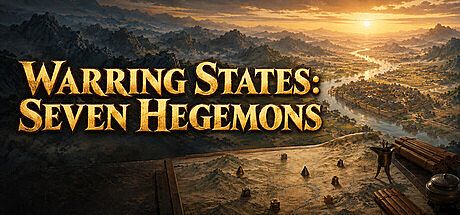


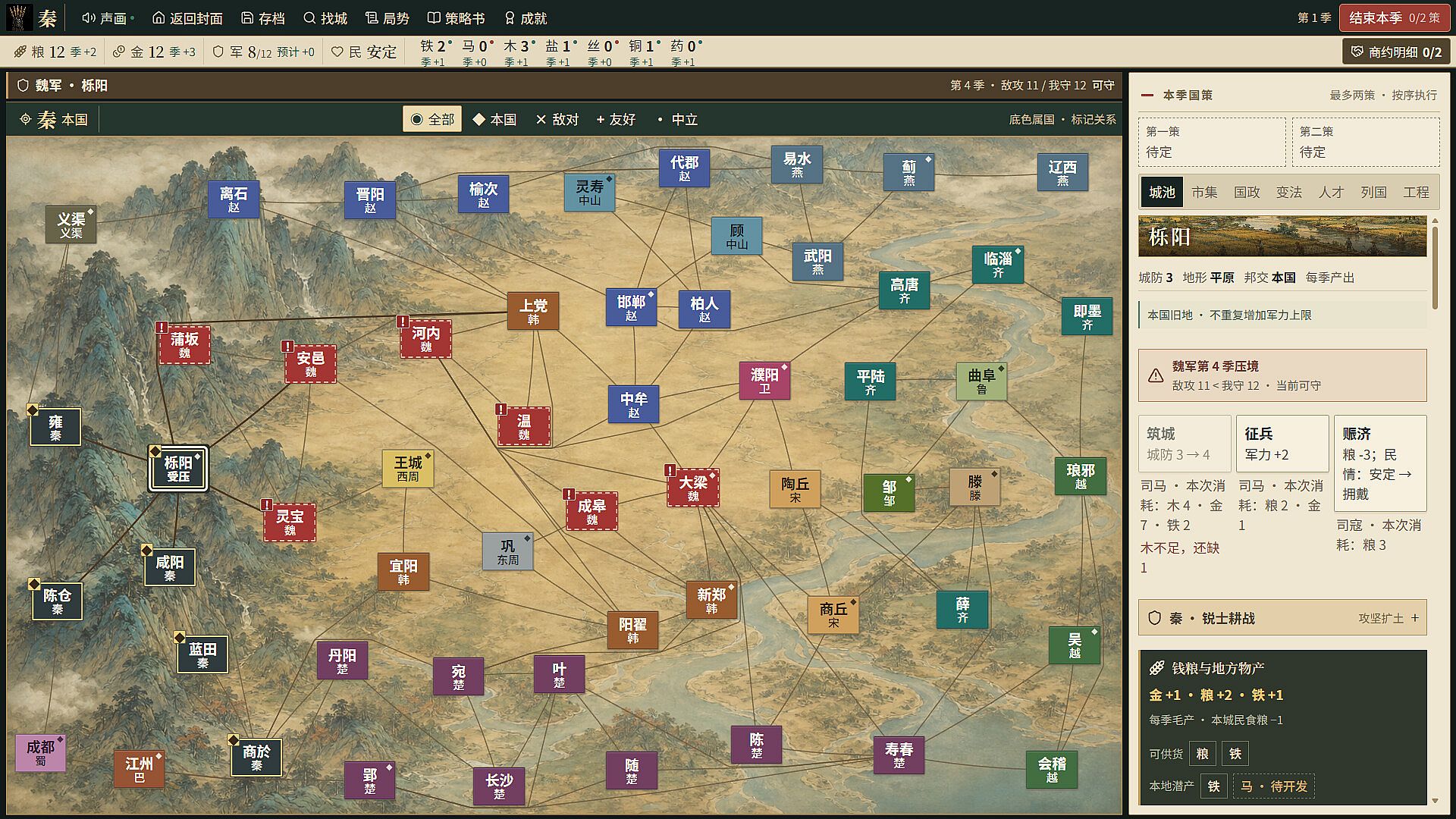
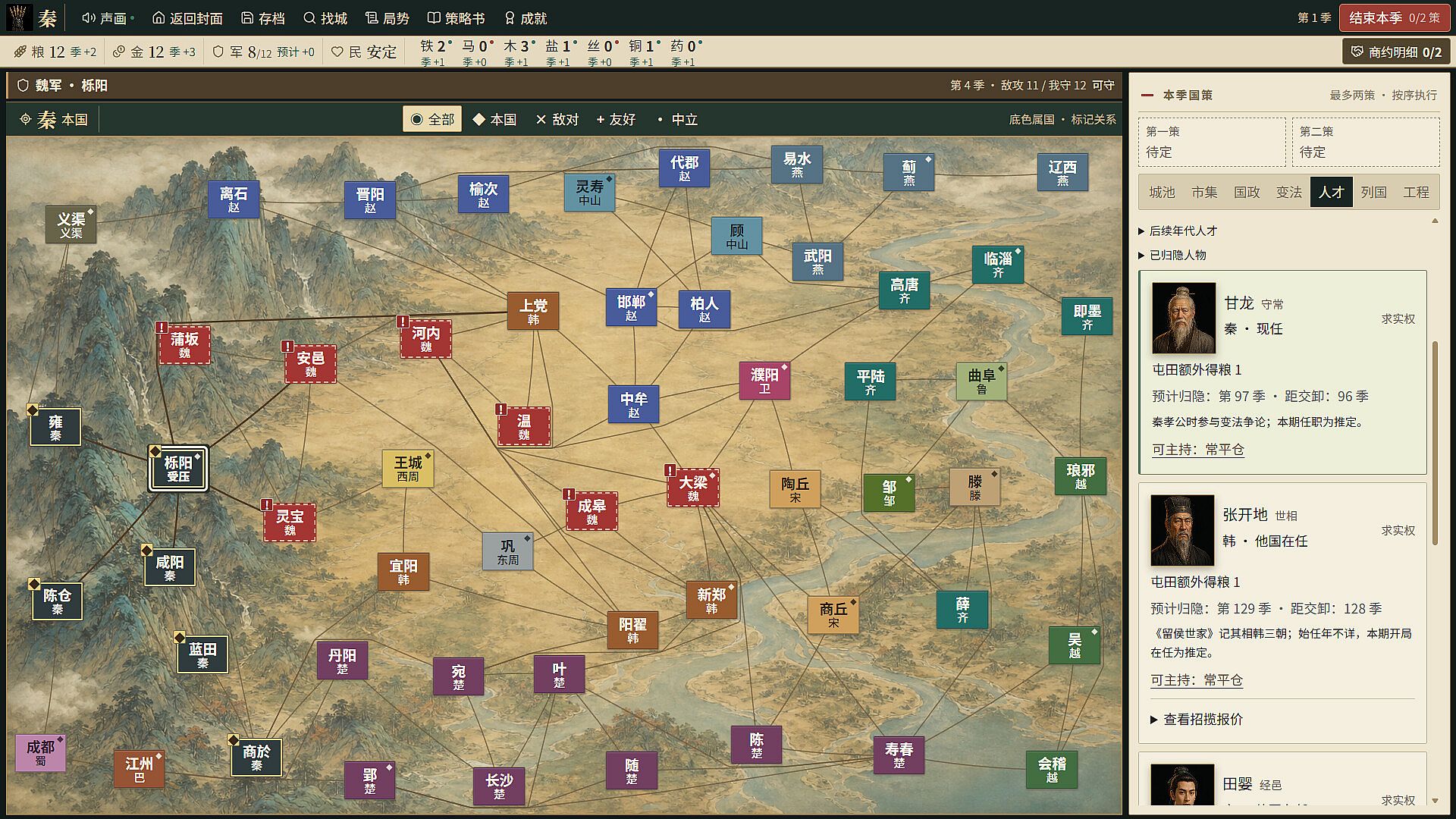
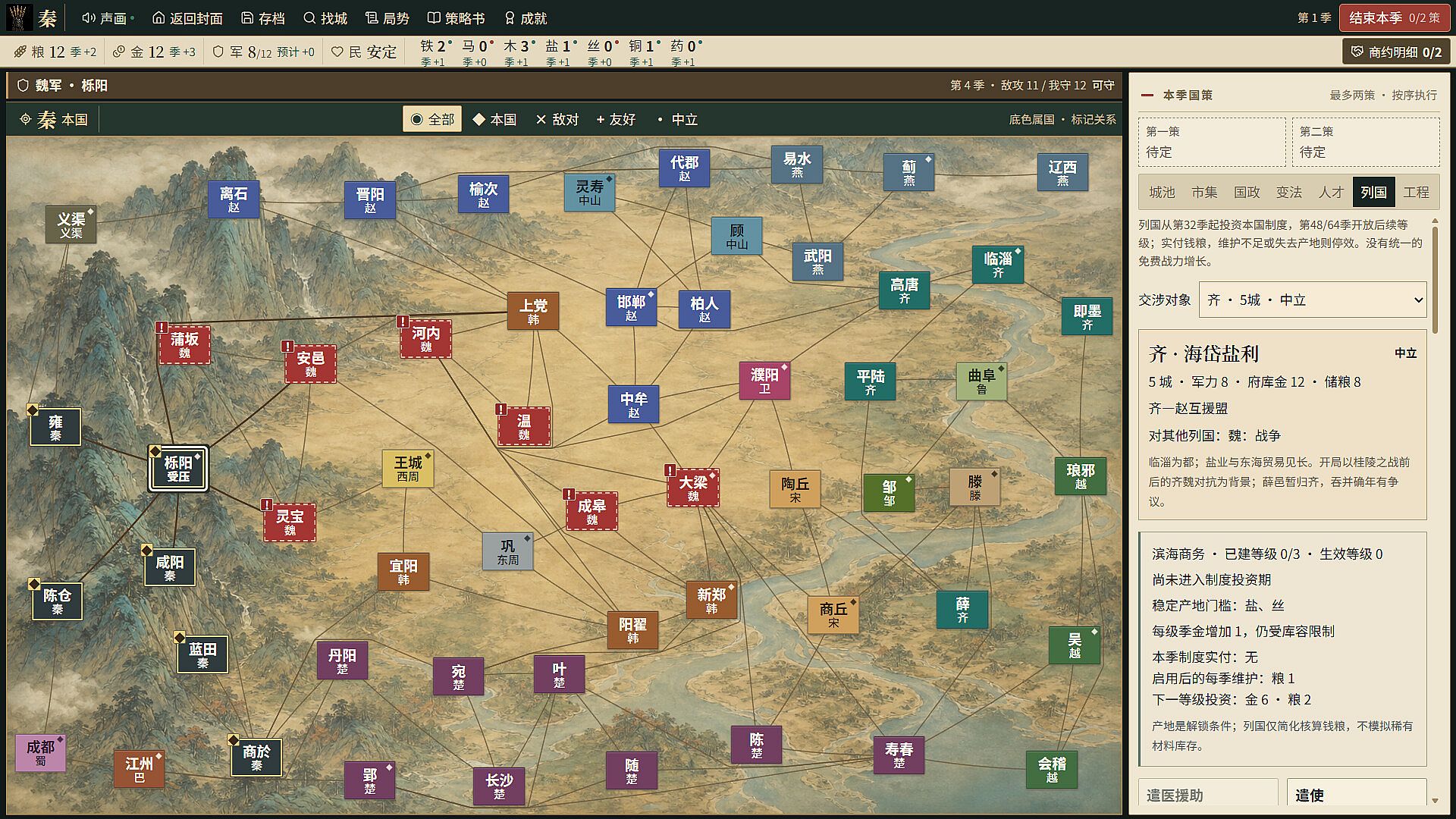
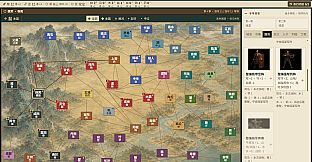
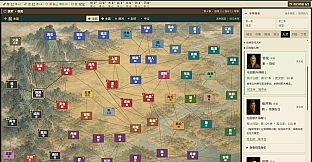
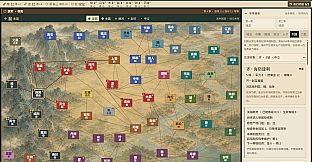
Warring States: Seven Hegemons is a single-player turn-based strategy and simulation game set during the Warring States period of ancient China. Players lead one of eight rival states through seasonal turns, managing resources, recruiting officials, handling diplomacy, and conducting wars while keeping the underlying economy and population stable.
Gameplay
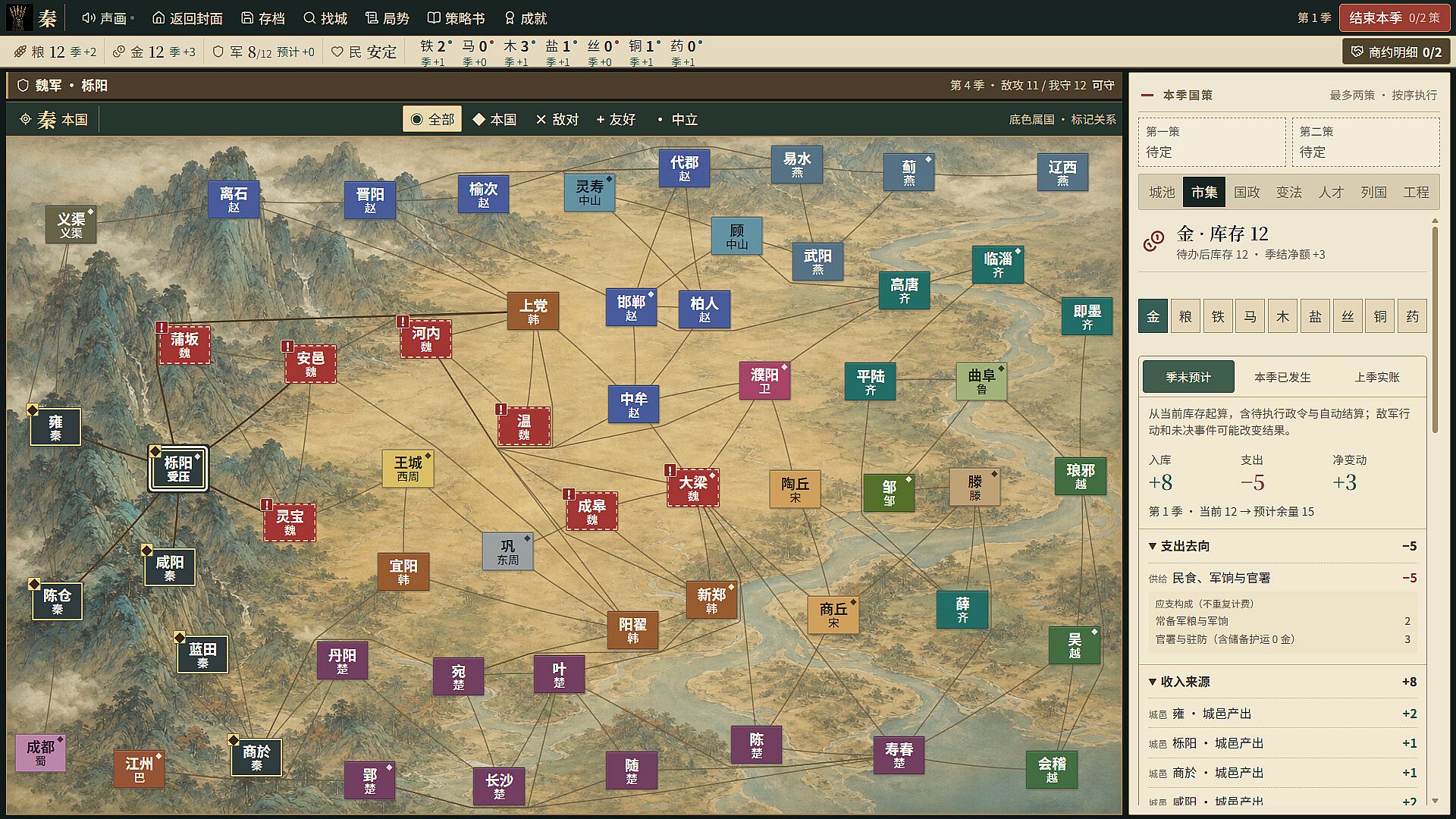
The core loop revolves around issuing orders each season that address economy, population needs, foreign relations, and military actions. Resource development involves exploiting local materials, constructing industries, and launching large projects that require oversight. Grain deteriorates over time, buildings demand maintenance, and flooding the market with identical goods lowers prices, so players consult a resource ledger to balance investments and spending.
Recruitment focuses on historical figures offered positions, payments, or gifts. Specific reforms or projects require particular individuals in office, and appointments are limited. Skilled people can depart for rival states, forcing trade-offs between retaining talent and managing budgets. Diplomacy includes trade pacts, aid, protection arrangements, and vassalage, while warfare drains supplies and influences public opinion. Conquered cities require pacification and restored production before they add to state strength.
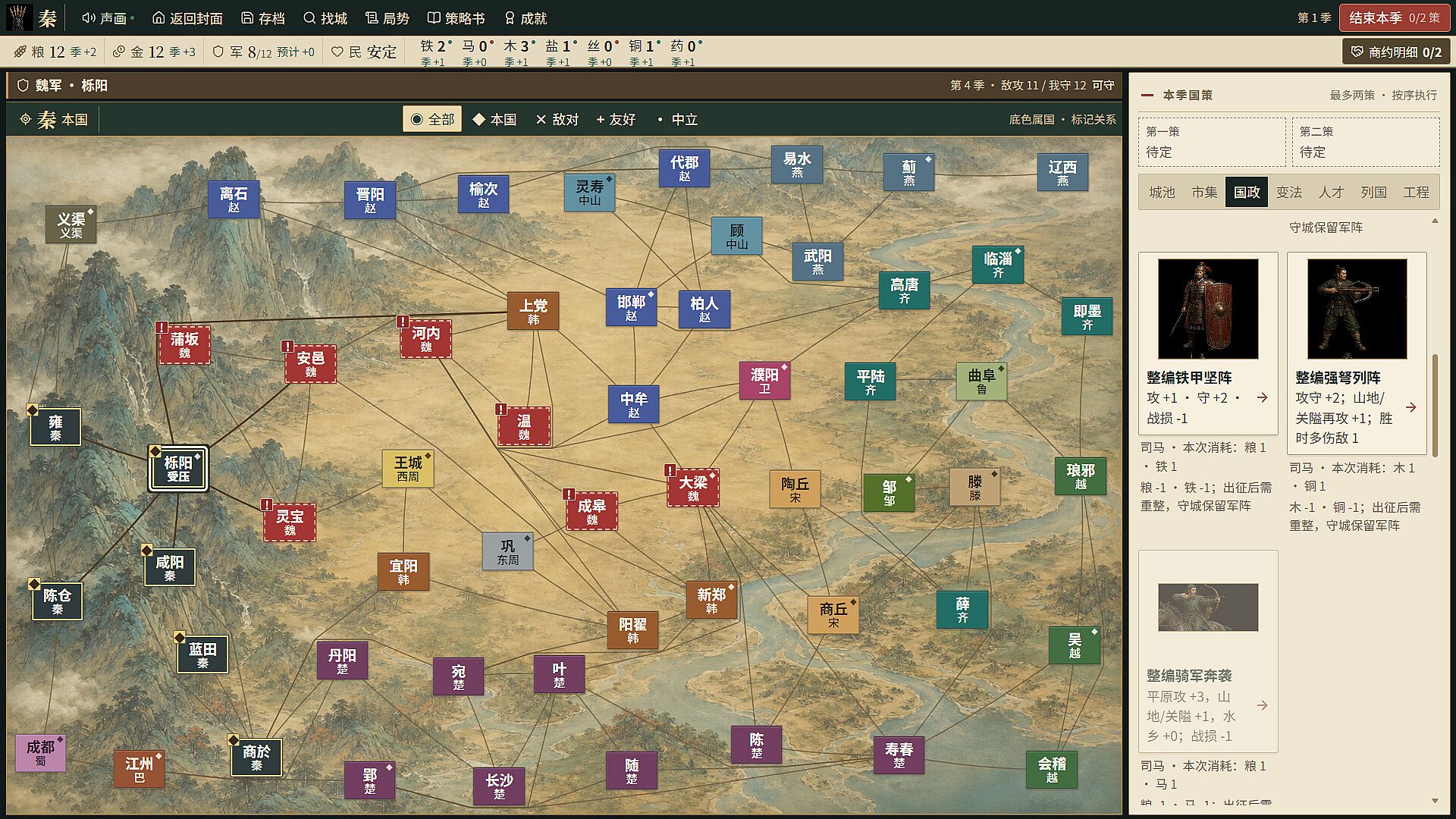
Combat decisions center on army composition, terrain considerations, and supply lines rather than real-time unit control. The game resolves battles automatically once preparations are complete. Seasonal events cover famines, labor demands, trade disruptions, and talent opportunities, requiring choices that weigh short-term strain against longer-term advantages.
Game Modes
Two campaign lengths structure play. A short campaign spans fifteen seasons and suits focused runs aimed at specific accomplishments. A long campaign extends further and allows continued governance after initial objectives are met. Accomplishments track progress through trade and prosperity paths or through territorial growth and consolidation.
Both modes emphasize the same underlying systems of state management. Players respond to events and make appointments within the constraints of limited offices and budgets, with outcomes carrying forward across turns.
States and Starting Conditions
Eight playable states each bring distinct geography, resources, historical figures, and policy options. Qin, Chu, Qi, Yan, Zhao, Wei, Han, and Yue present varied starting positions that reward different approaches, from aggressive border expansion to trade-focused development. Unique policies tied to each state shape available reforms and long-term strategies.
Is It Worth Playing?
This title suits players who enjoy deliberate, single-player strategy focused on layered management rather than direct battlefield control. The emphasis on sustaining armies through economic health, retaining capable officials, and navigating diplomacy alongside conquest creates a cohesive simulation of statecraft. Those drawn to turn-based systems that reward planning across multiple interconnected systems will find depth in the seasonal decision-making and the need to balance immediate pressures with sustained growth. As an indie release built around these mechanics, it targets audiences seeking thoughtful historical strategy without real-time elements or multiplayer components.











