







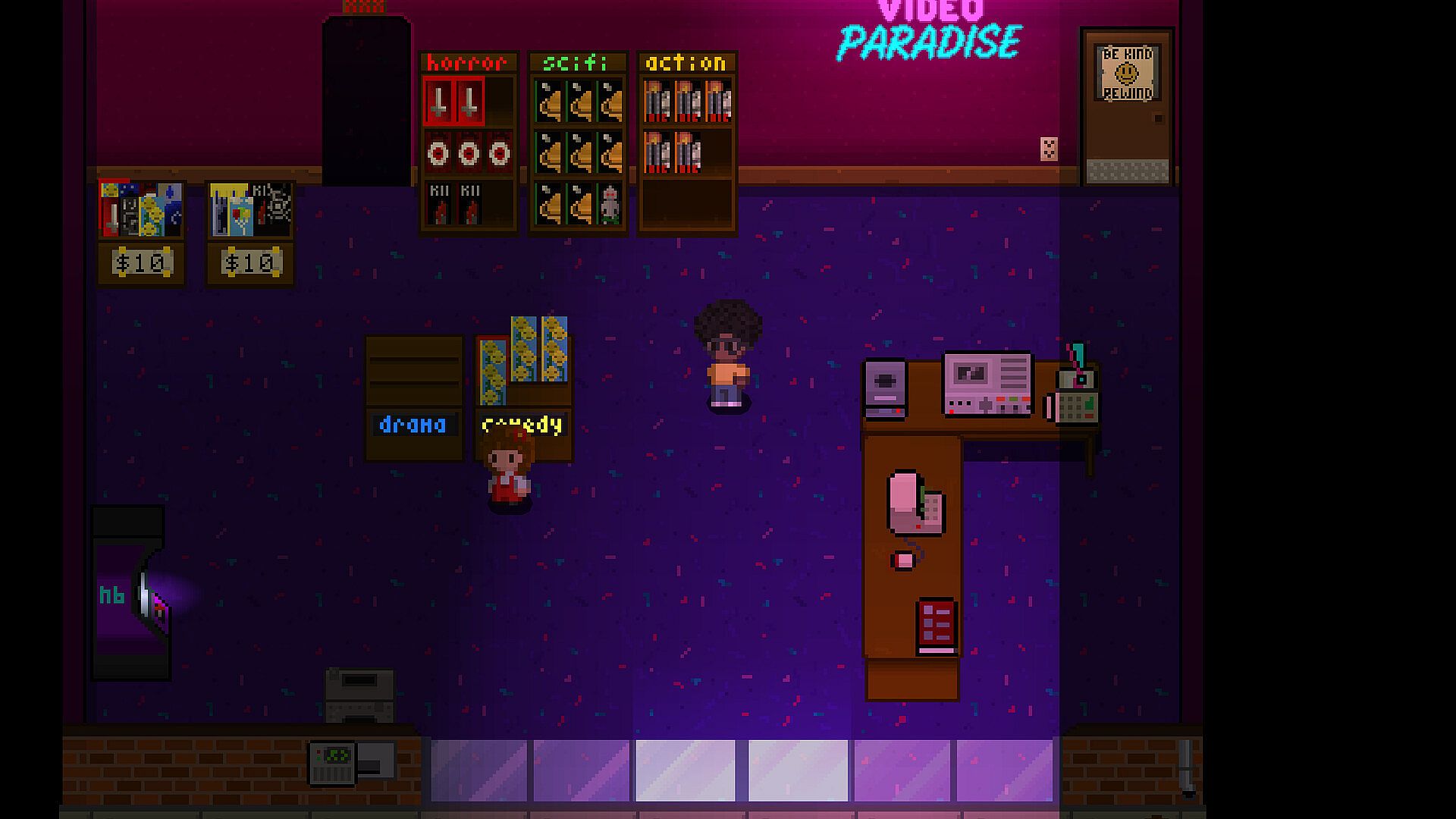
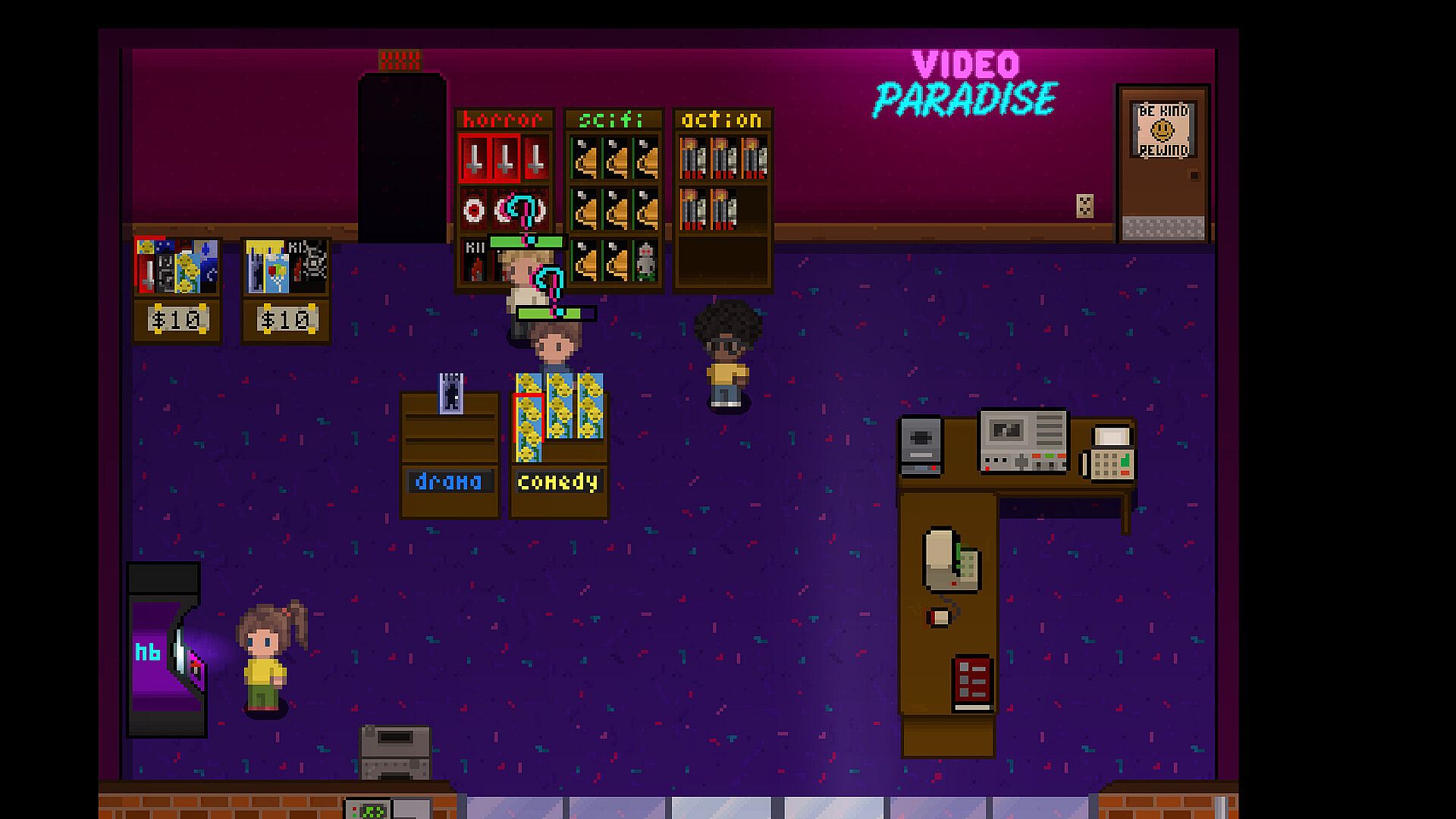

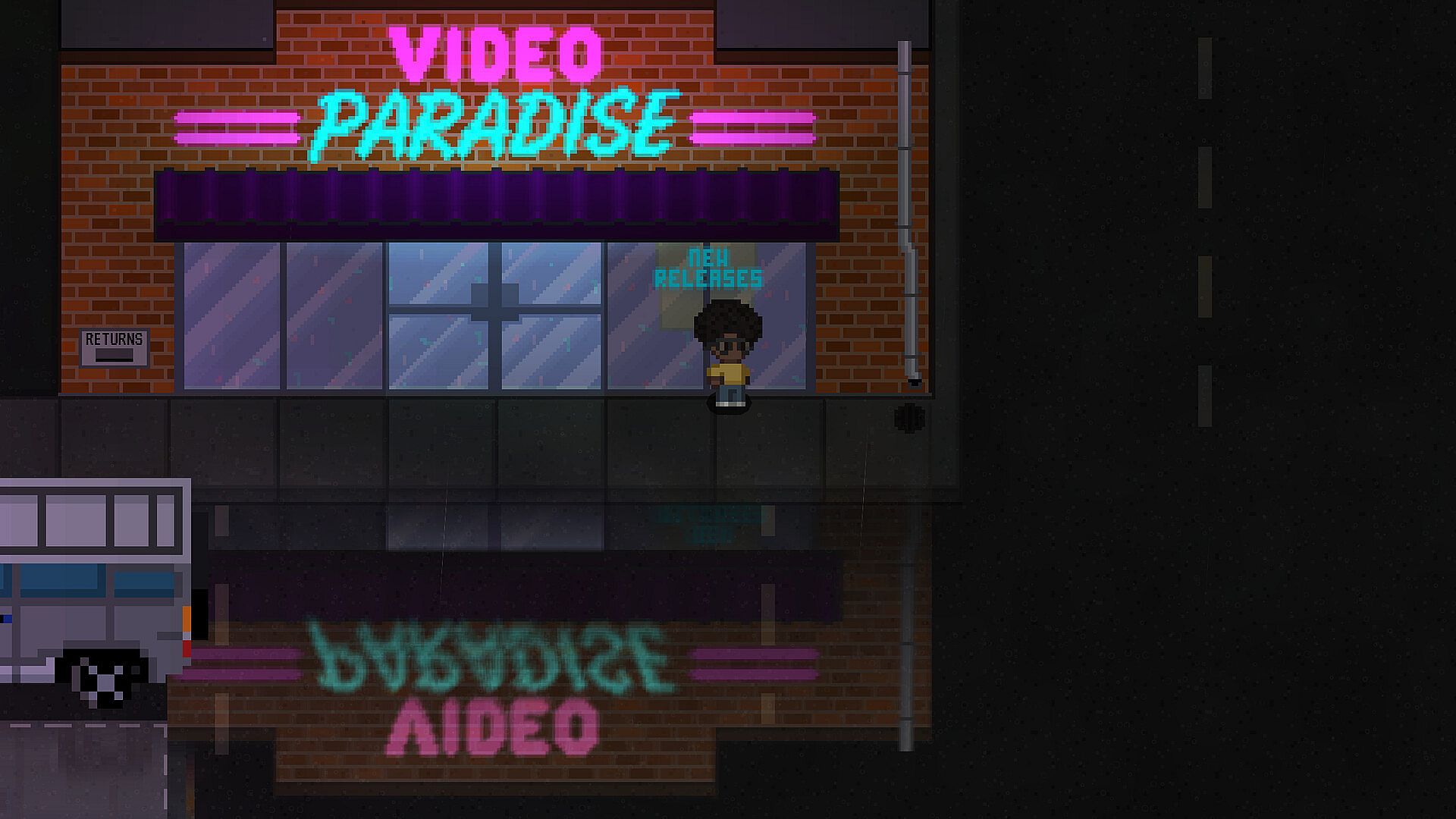


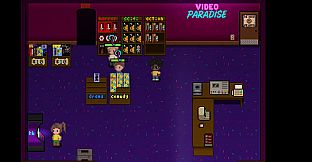


Video Paradise is an indie simulation RPG focused on managing a 1980s video rental store. Players inherit the business from its previous owner and handle everything from daily routines to long-term decisions about stock, pricing, and customer relationships in a single-player experience on PC.
Gameplay
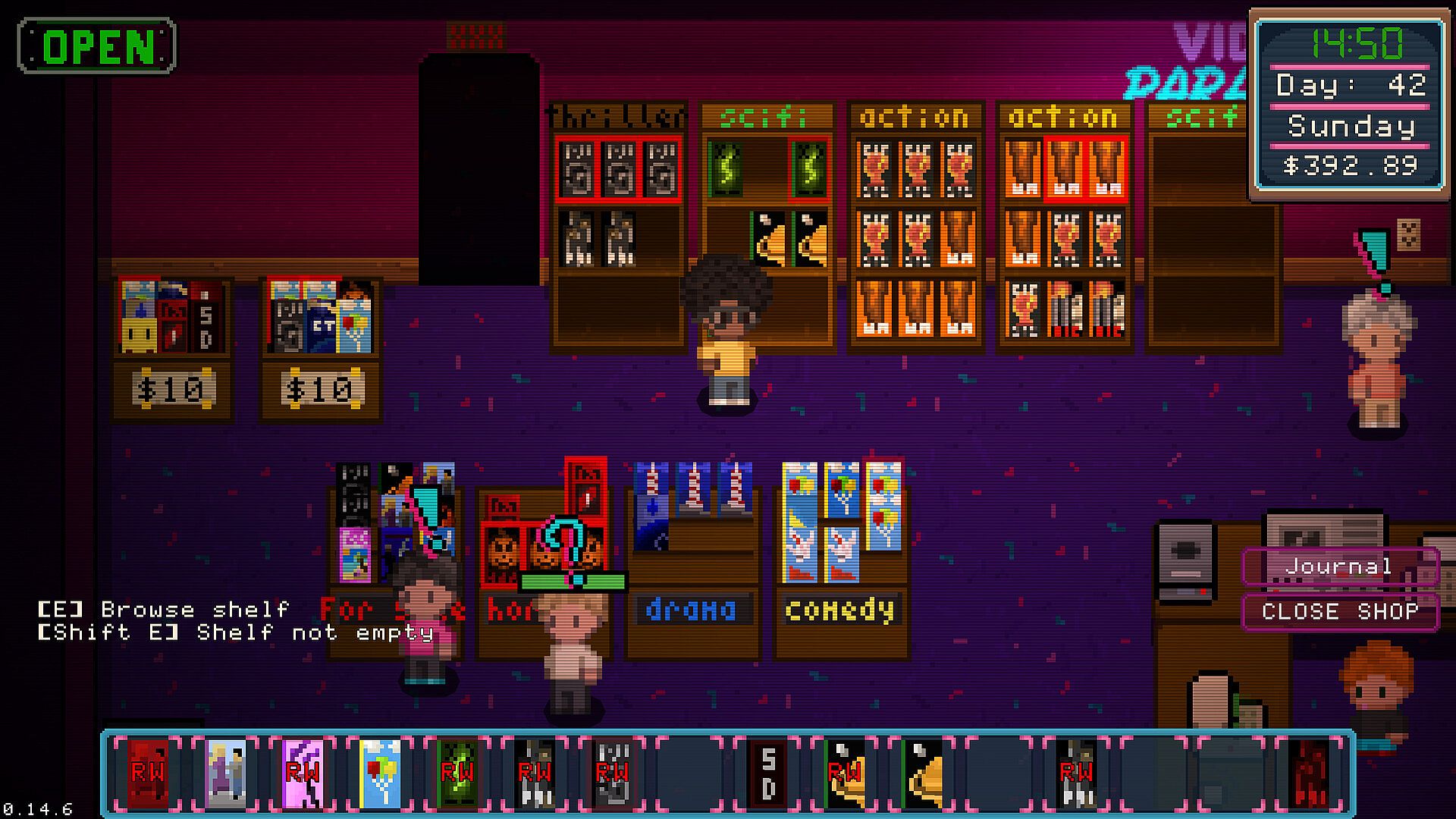
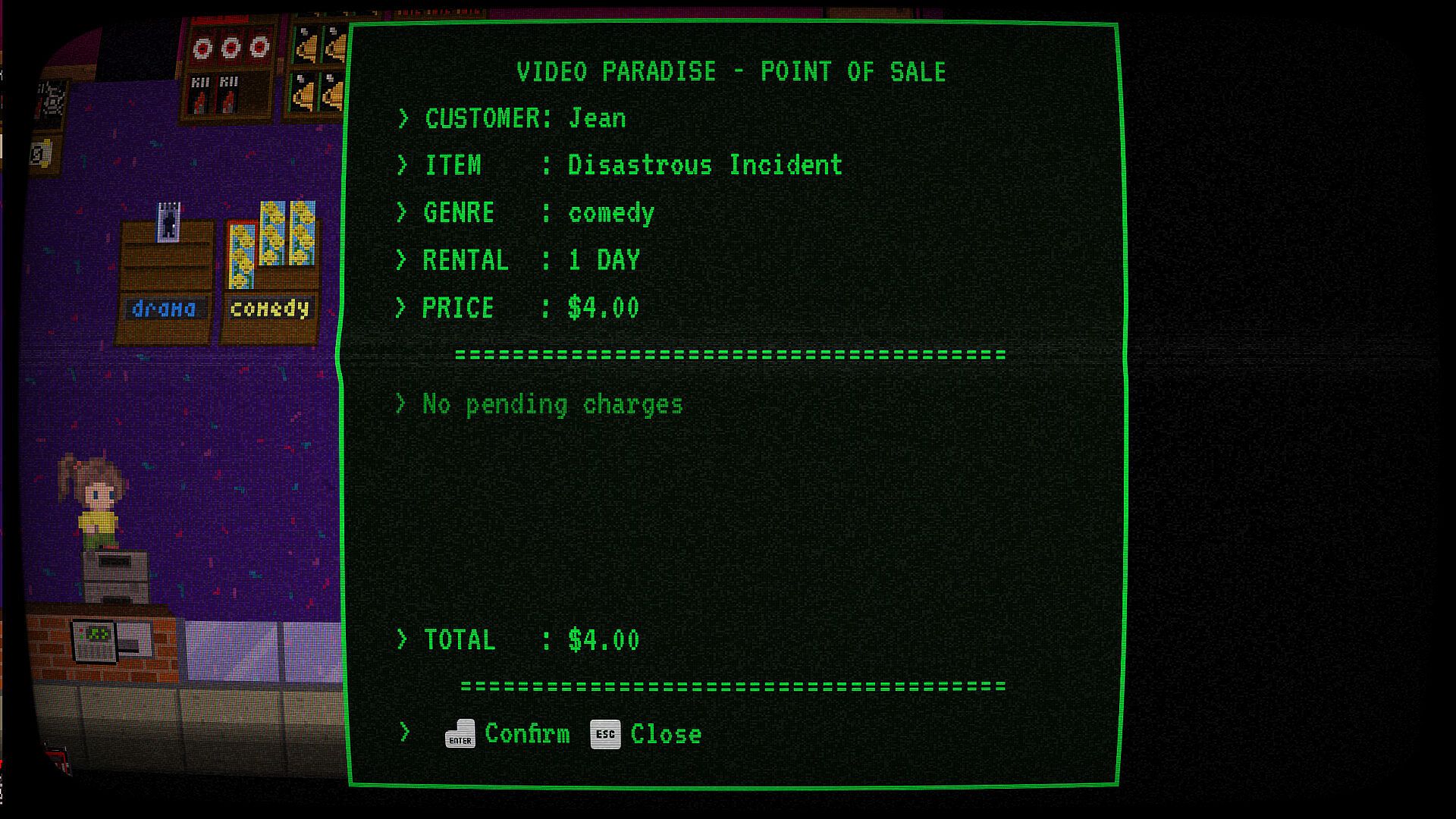
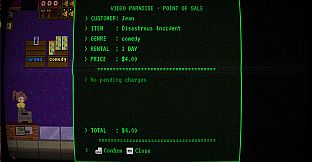
The core loop centers on running the store through a series of hands-on tasks. Each day begins with unlocking the door, sorting returns from the box, rewinding tapes that need it, repairing damaged ones, and restocking shelves before customers arrive. Ordering new titles and older catalog items happens through a weekly fax catalog, while prices for rentals and late fees are adjusted on a DOS terminal. Shelves can be rearranged for better visibility, and excess stock moves to a discount bin when necessary.
Customer interactions add depth to the routine. Regulars each have distinct preferences and reactions, so recommendations, fee waivers, or handing over imperfect tapes influence how they respond in future visits. These choices affect the store's reputation over time. Rare film fragments sometimes appear during rewinds or returns, which can be collected and pieced together by showing them to locals who knew the previous owner.
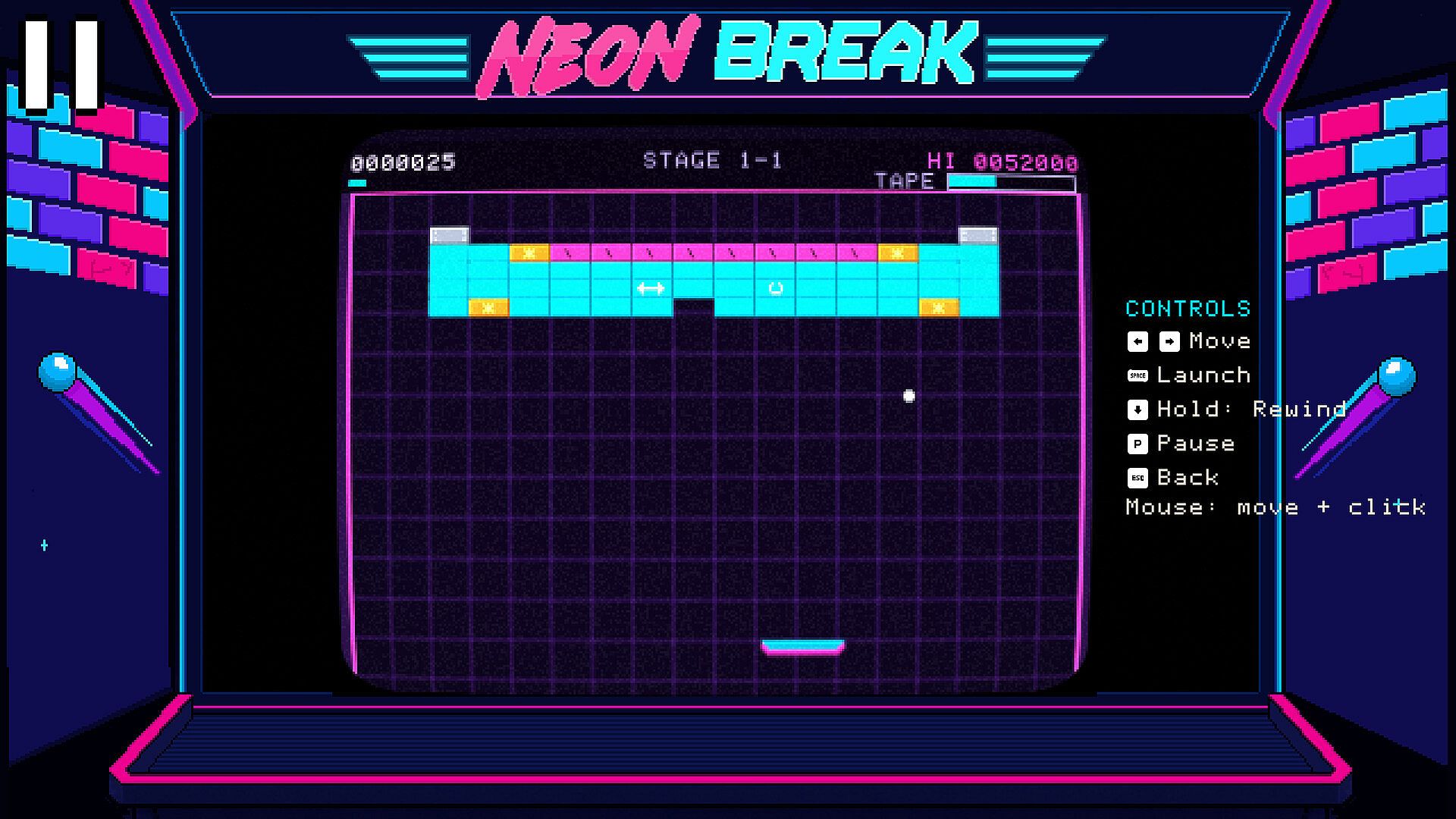
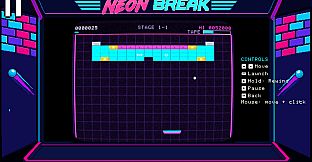
After hours, additional activities open up through late-night contacts. These involve bidding on lots, exploring storage units, and negotiating with collectors. As the store expands, options grow to include console game rentals and arcade cabinets, alongside preparation for peak periods such as seasonal events.
Game Modes
Video Paradise operates as a single-player title with no multiplayer components. Progression follows two main paths that diverge based on player priorities: one emphasizes commercial growth through hiring staff and scaling into a drive-thru format, while the other focuses on curating rare films and building connections within the community. Each direction influences available opportunities without locking out the other entirely.
Daily management remains consistent across paths, but the emphasis shifts according to decisions on pricing, stock selection, and how time is spent outside operating hours. The structure encourages repeated playthroughs to explore alternate approaches to the same core systems.
Store Management and Progression
Early stages keep operations simple with limited shelves and basic stock. Growth comes from consistent revenue, which funds expansions like additional staff or new rental categories. Pricing strategy directly impacts sales, as overly high rates lead customers to return items without renting them. Seasonal spikes, particularly around holidays, test inventory planning and staff readiness.
Collecting and assembling the lost film fragments serves as a secondary layer that ties into the town's history. Showing pieces to the right people reveals connections and backstory without requiring combat or timed challenges.
Is It Worth Playing?
Video Paradise suits players who enjoy deliberate management simulations combined with light narrative elements and customer-driven storytelling. The focus on routine tasks, reputation building, and branching business paths creates a steady pace that rewards attention to detail over fast action. Those drawn to relaxed indie titles with RPG-style character memory and simulation depth will find the described systems align closely with that preference. As an unreleased title, its final reception will depend on how the mechanics feel in practice once available.











