










Video Gamer Legacy is an indie RPG simulation game set on PC where players manage a retro game shop. The core loop revolves around sourcing cartridges and consoles, restoring them, setting prices, and managing staff while building Influence through ethical decisions rather than pure profit.
Gameplay
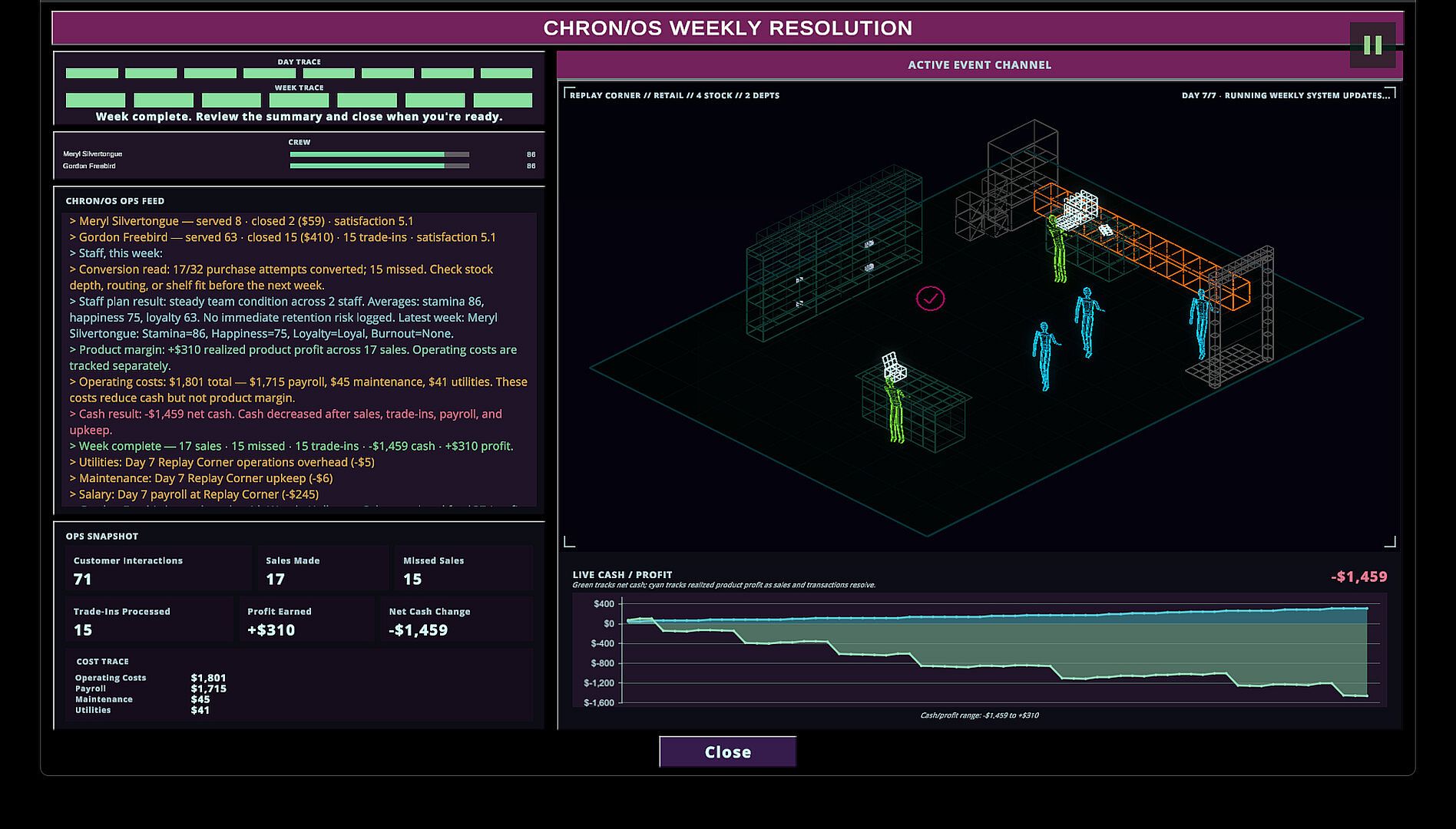
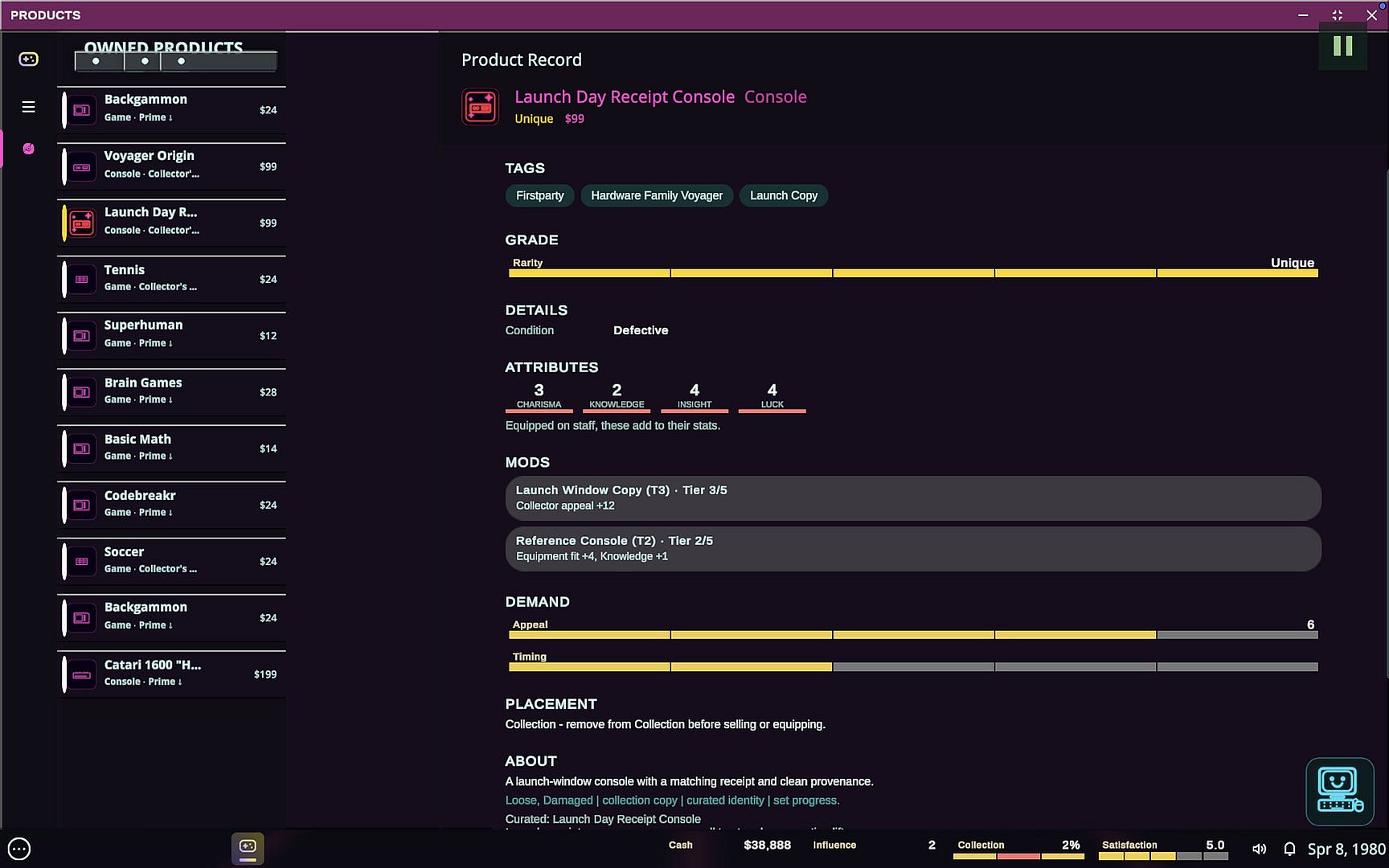
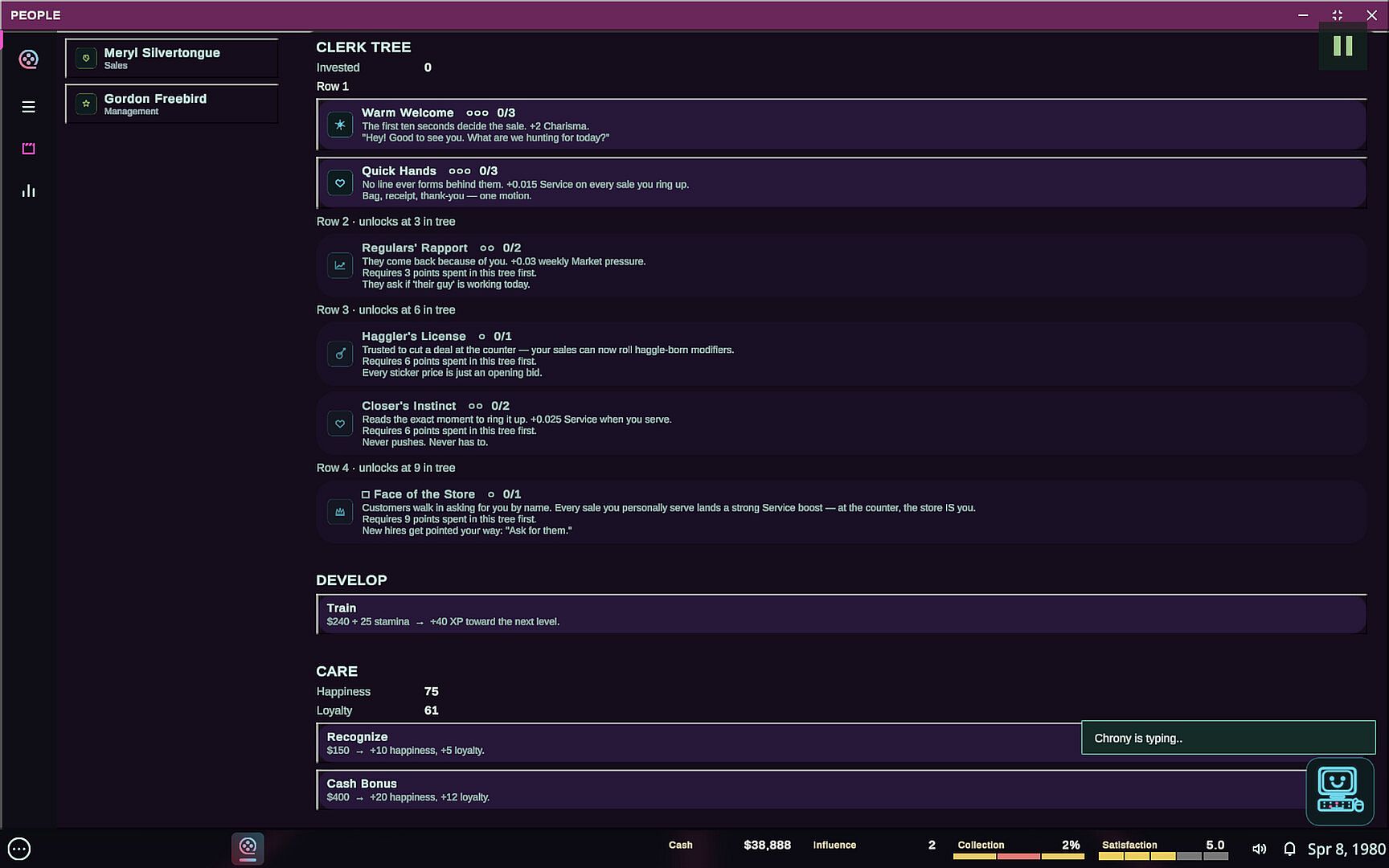
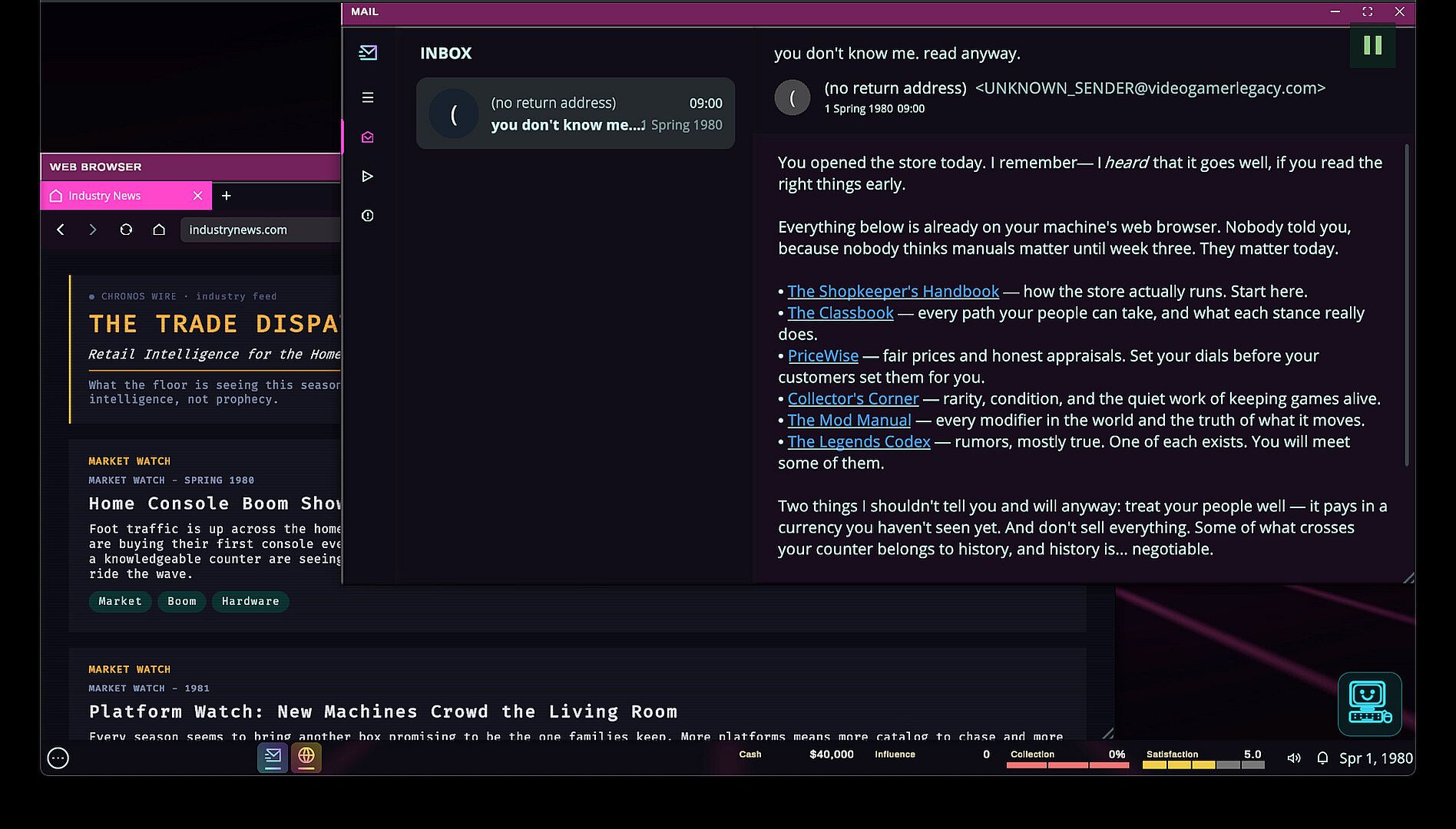
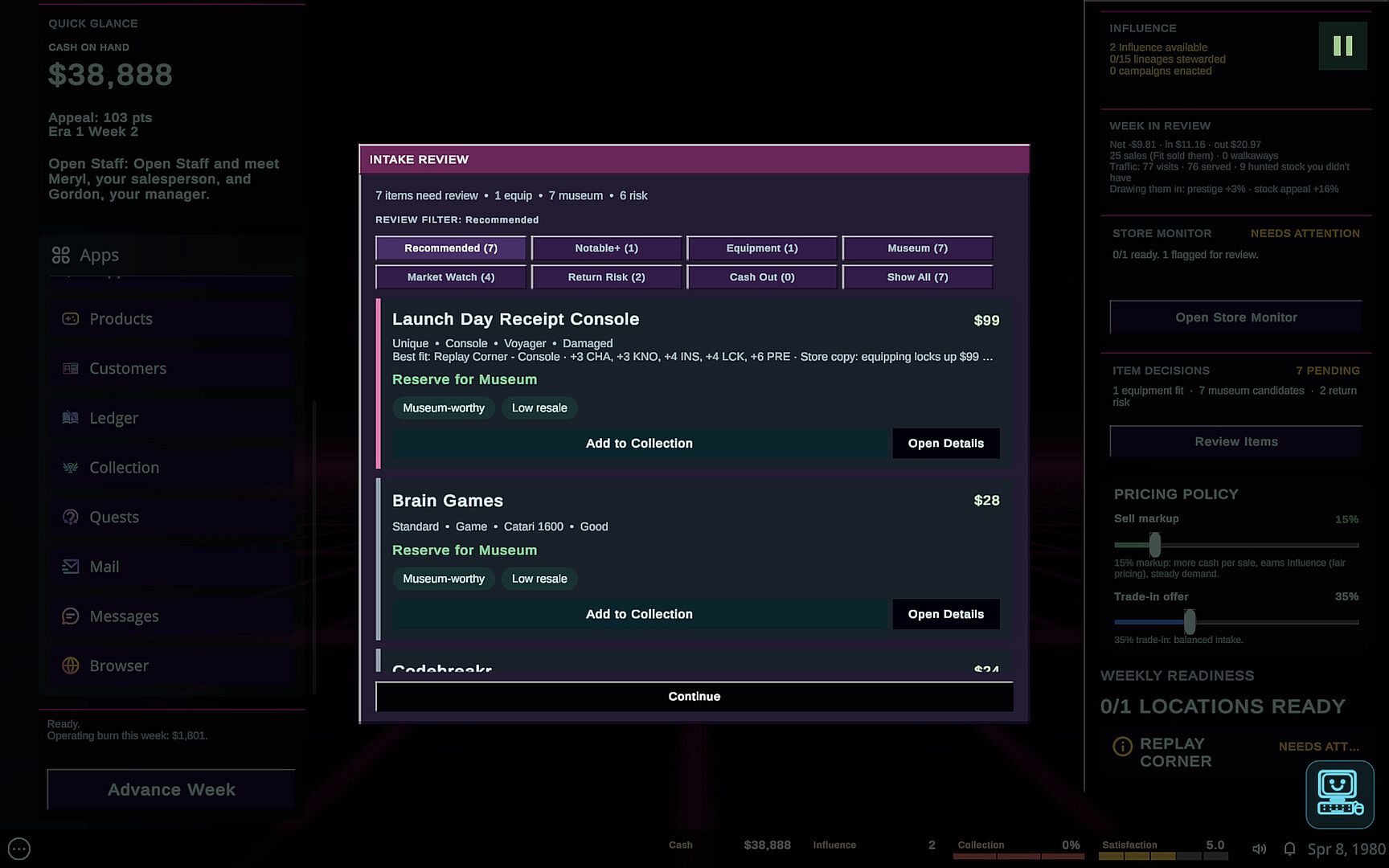
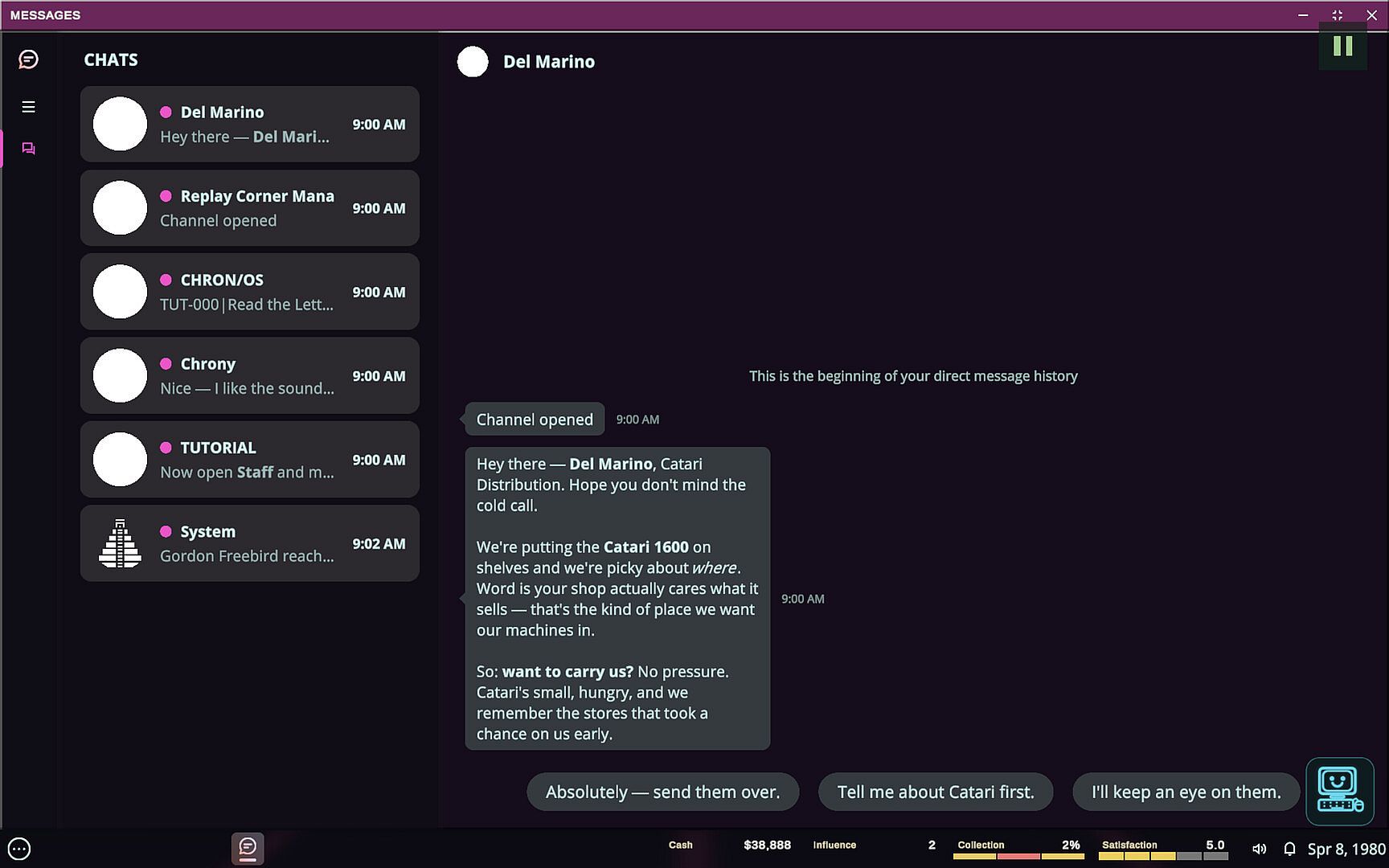
The daily operations involve hunting down old hardware and software, cleaning and repairing items to improve their condition, and stocking shelves in a way that reflects genuine care. Hiring employees and handling rent form part of the routine, yet the emphasis stays on how choices affect long-term standing. Overcharging customers or pushing staff too hard generates money that holds no lasting value, while fair dealings and careful restorations accumulate Influence. This resource opens paths to interact with the real history of the video game industry, where companies like Catari and Zega follow their documented timelines unless players intervene.
Preserving an entire catalog of a developer's or publisher's titles allows meetings with the people behind those companies. Spending Influence there can alter outcomes, preventing closures that occurred in reality. Successful interventions introduce previously nonexistent hardware and games onto the shop shelves, creating alternate timelines visible through new stock. The single-player experience centers on these preservation efforts alongside standard shop management, all developed by one person handling code, design, art, and music.
Game Modes
Single-player serves as the primary mode at launch, focusing on individual store operations and personal Influence accumulation. Players progress at their own pace through weeks of buying, restoring, and selling while deciding how to apply earned Influence to reshape industry events. No other named modes appear in the current description beyond this core loop.
Online co-op arrives after launch as an asynchronous feature. Participants maintain separate stores without needing simultaneous play sessions. Completed weeks contribute saved companies, banked Influence, and finished collections to a shared group timeline. Shops appear to others as postcards within that collective history, allowing the group to collaborate on preserving titles across different schedules.
Core Mechanics and Progression
Influence stands as the central tracked element, earned exclusively through game preservation and positive treatment of customers and staff. The system tracks real historical company fates without invented villains or artificial timers. Players who restore full catalogs gain opportunities to advocate for second chances, directly impacting what appears in their inventory. Collections and weekly summaries feed into both solo and future group progress, rewarding consistent ethical play over aggressive profit tactics.
Shop upkeep includes locating specific items, performing restorations that visibly improve quality, and balancing staff workload to avoid burnout. These actions tie directly into Influence gains, creating a loop where short-term financial decisions compete with longer-term historical alterations. The result encourages repeated playthroughs aimed at different sets of saved companies.
Is It Worth Playing?
Video Gamer Legacy suits players interested in management simulations that incorporate historical what-if scenarios around the video game industry. The focus on Influence through preservation and fair practices offers a distinct alternative to standard profit-driven shop games. With co-op planned for later, the initial release targets those comfortable with solo progression in a niche indie title developed by a single creator.
Since the game remains in a coming-soon state with no released version or player reviews available, any decision to play hinges on interest in the described systems of restoration, staff management, and timeline alteration. Those drawn to thoughtful, low-pressure simulations centered on retro gaming culture may find the concept compelling once it launches.