





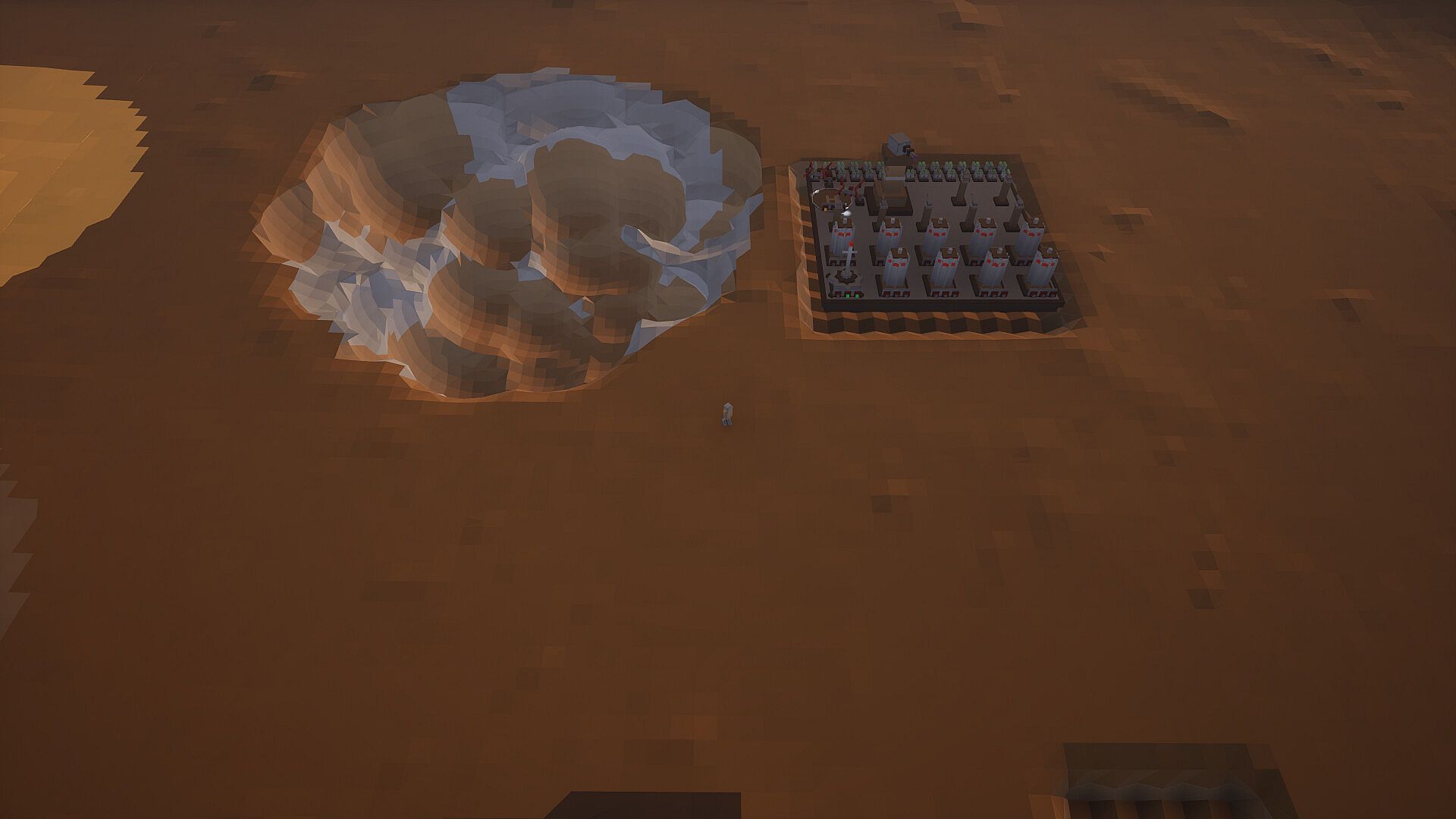
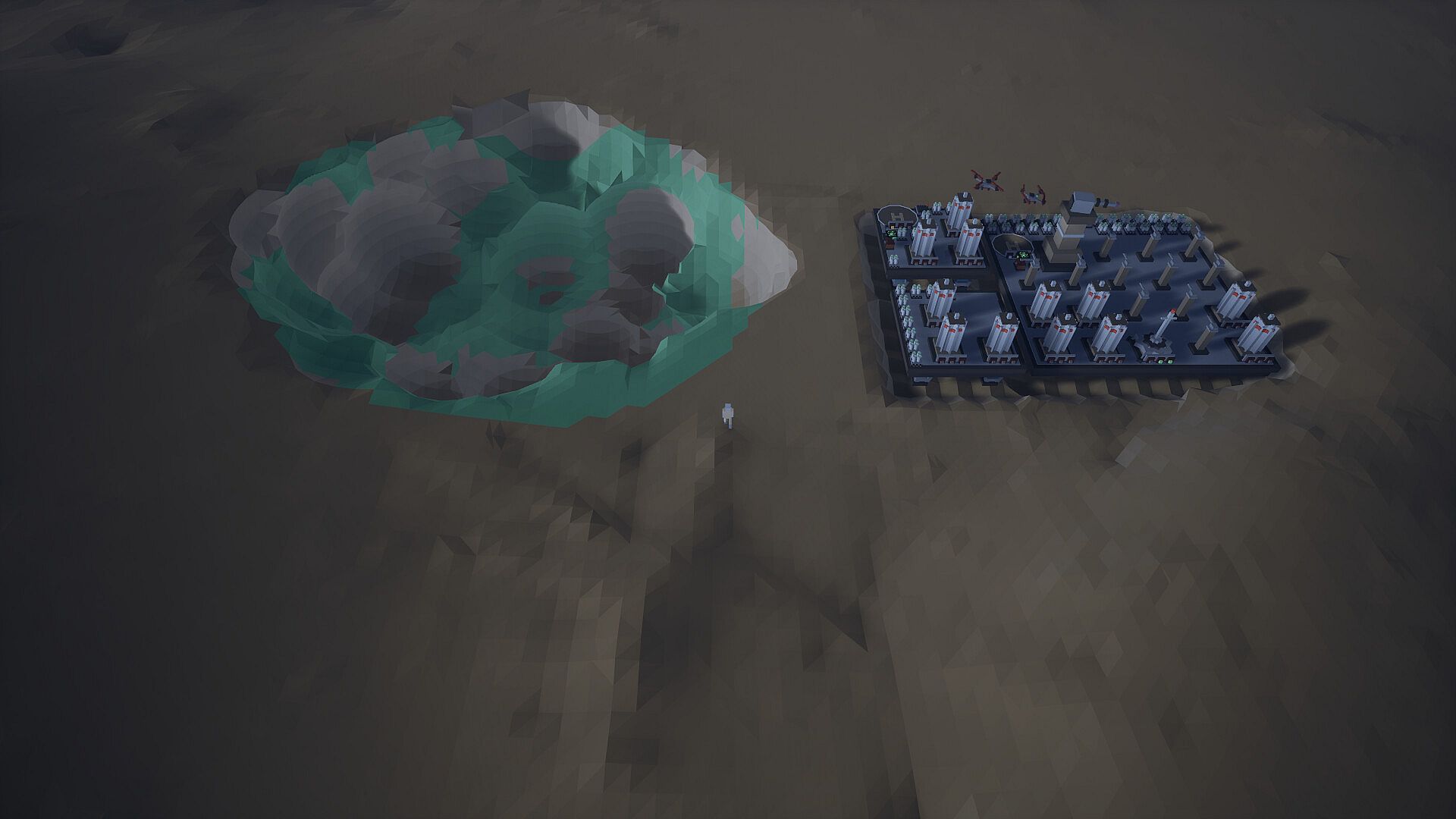
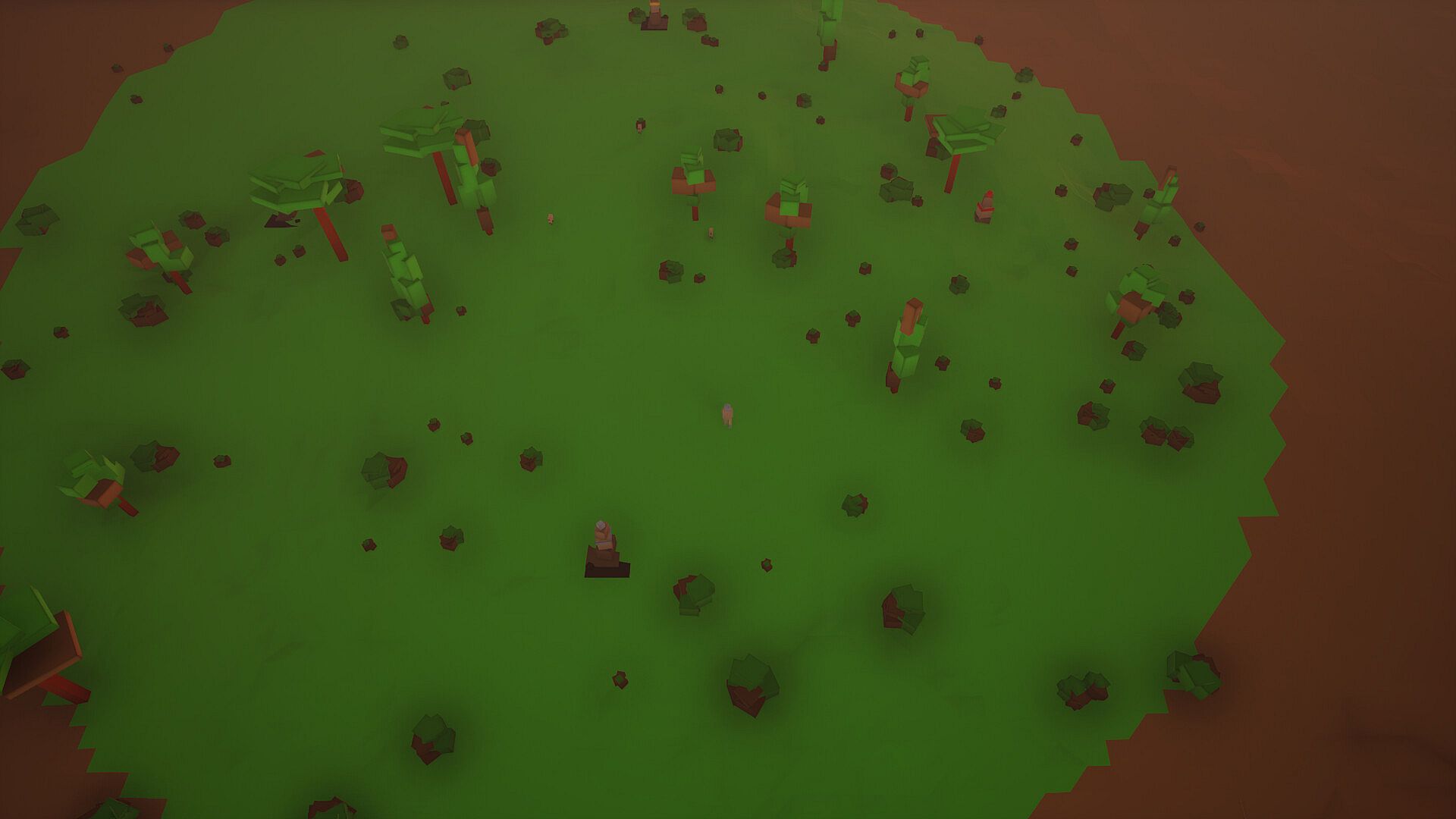
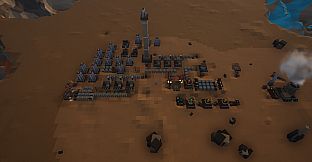
Valley of Stability is a single-player strategy, indie, and simulation game for PC in which players revive dying alien planets through factory construction, precise chemical and nuclear processes, and atmospheric management. The core experience centers on landing on a hostile world, extracting real isotopes from the ground, and building systems that respect actual scientific principles to restore habitability before departing for the next challenge.
Gameplay
Players begin by crash-landing on a toxic, thin-atmosphere planet and immediately focus on resource extraction using real isotopes such as carbon-12, iron-56, and uranium-238. Minerals are identified through emission spectra, and compounds form only when valence and oxidation states match reality, with the assembler correctly labeling results like Fe₂O₃ as hematite. Elements absent from local deposits can be created via alpha and beta decay chains, leading to advanced steps such as breeding plutonium-239 for fission reactors or trapping positrons to produce antimatter.
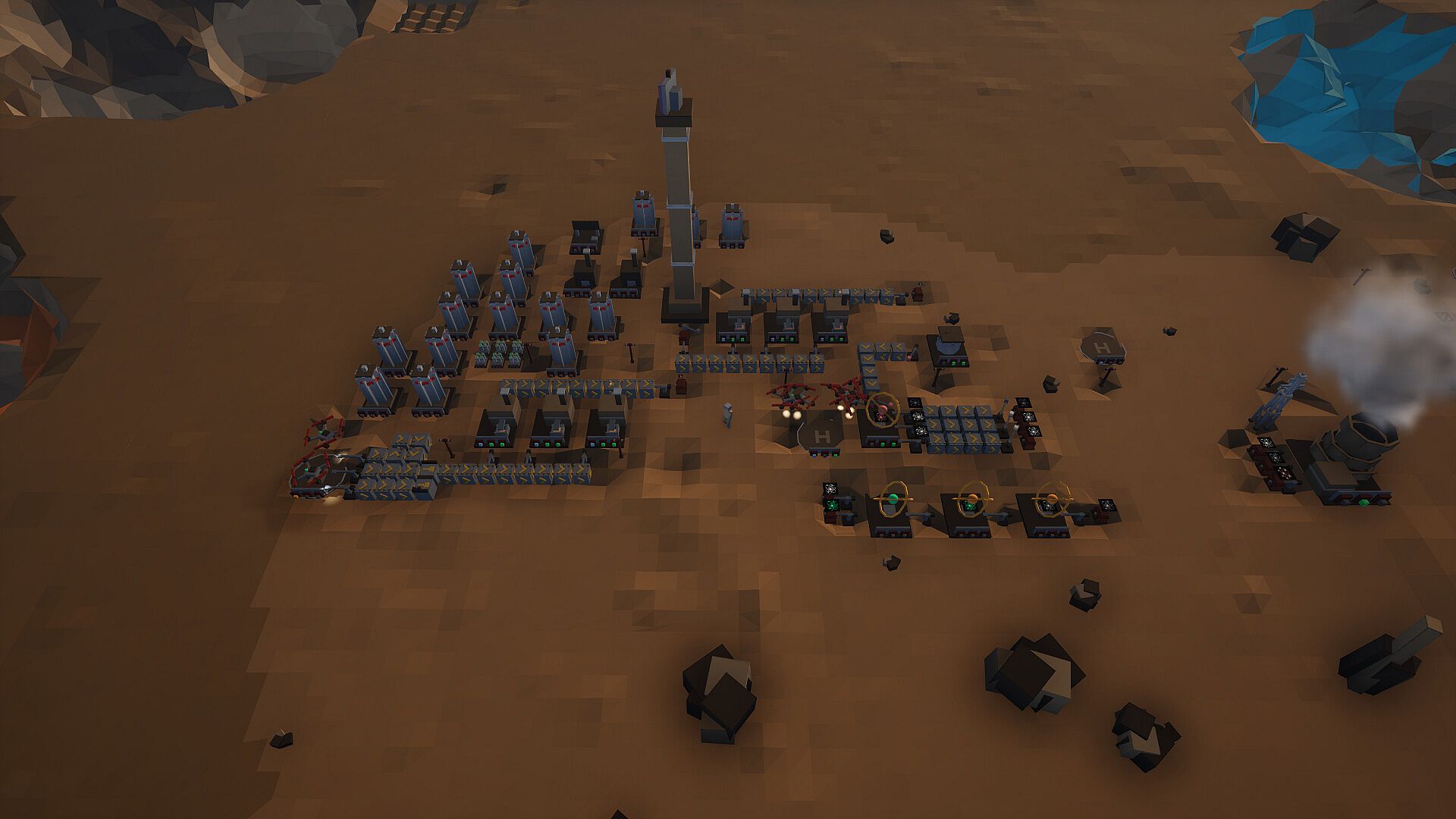
Factory automation relies on belts, inserters, filters, splitters, refineries, and drone logistics networks that move cargo on demand. Power grids require manual wiring of poles while balancing generation, storage, and consumption, as excess draw creates detectable signals. Circuit networks use a full binary logic system with AND, OR, and XOR gates, memory cells, and wireless channels to automate responses, including interlocking cooling systems with water supply or switching entire grids based on planetary signals. The logic kit supports complex constructions such as ripple-carry adders and memory accumulators.
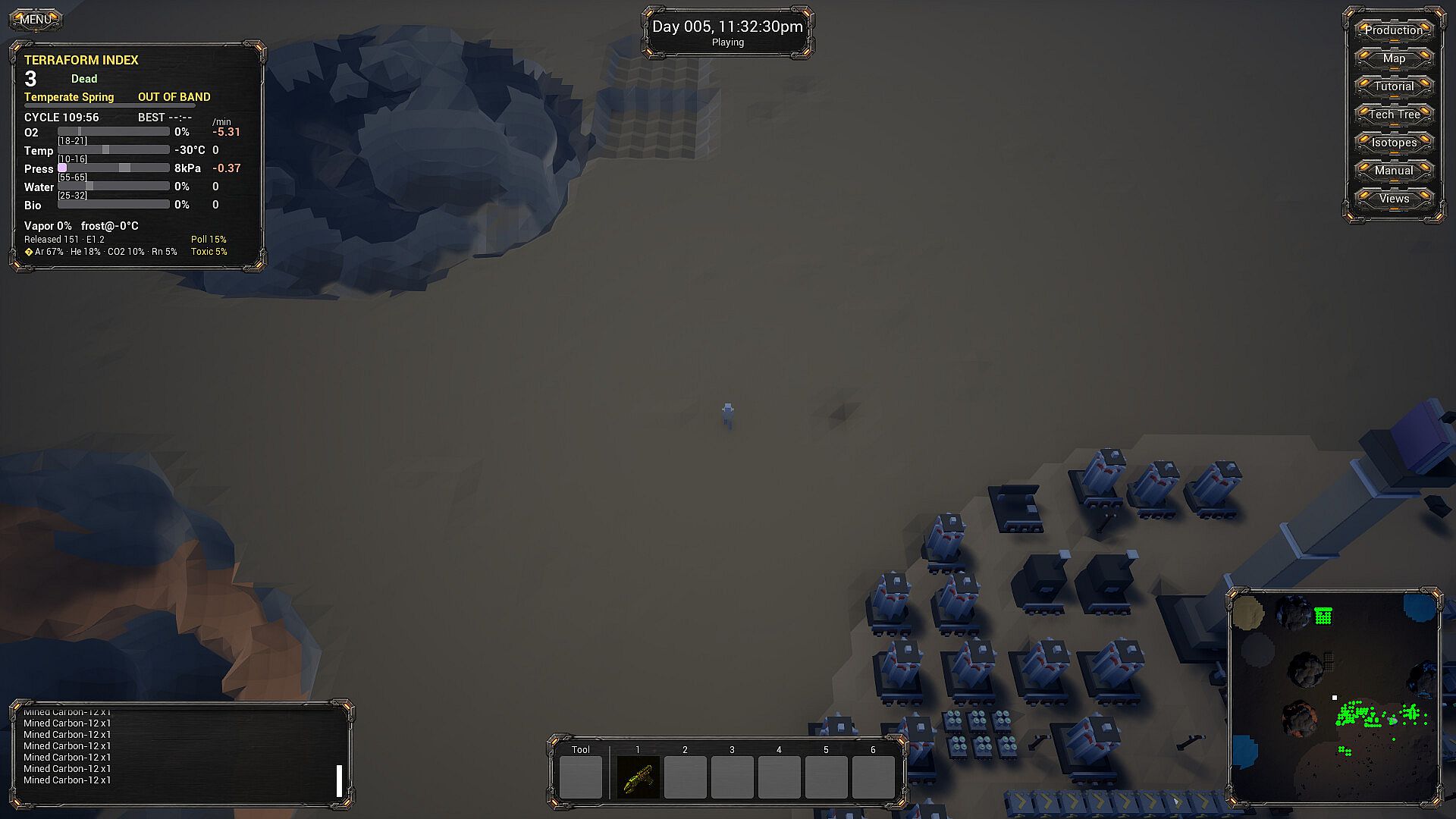
Terraforming tracks individual gases in the atmosphere, where pressure equals total volume and oxygen percentage depends on the O₂ fraction. Water exists as vapor with a pressure-scaled frost line, and carbon combustion adds CO₂ through exact stoichiometry. The planet requires four simultaneous seasonal bands of pressure, temperature, oxygen, and water to stabilize. Fully destructible voxel terrain allows digging and mining anywhere, while flying platforms can relocate entire factory sections. Sandworms detect electrical signatures and target high-power areas, forcing players to use seismic radar for evacuation, build in quiet rock formations, or relocate structures.
Game Modes
The game operates entirely in single-player mode with no multiplayer options or additional modes listed. Progression follows a linear yet open-ended sequence of reviving one world at a time, building toward extraction of a buried ship fueled by self-produced antimatter. Modding support allows editing of data and logic through plain Lua files, extending the core single-player experience without altering its fundamental structure.
Core Systems and Progression
Every system ties directly to the periodic table as the tech tree, where incorrect chemistry prevents machines from functioning. Automation extends to reading planetary demands through circuits and maintaining closed-loop atmospheric simulation across all gases. Threats from sandworms add tension to base placement and power management, while the ultimate goal of locating and fueling the escape ship provides a clear endpoint for each planet. The voxel terrain supports free-form construction, and the emphasis on real physics and chemistry shapes every decision from mining to reactor operation.
Is It Worth Playing?
Valley of Stability suits players who enjoy detailed factory automation combined with scientific accuracy in a single-player setting. Its mechanics reward careful planning of power grids, chemical synthesis, and atmospheric balance while introducing environmental hazards that require adaptive base design. With no user reviews available and a release date still to be announced, the game remains in development, but the described systems offer a distinctive approach to simulation and strategy for those interested in precise, science-driven gameplay on PC.












