

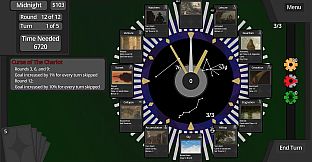
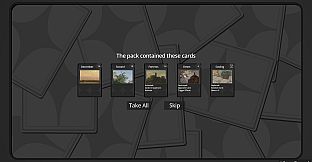
Until Midnight is a strategic roguelike game developed for PC that blends deck management, resource decisions, and board building across a fixed set of twelve rounds. Players aim to survive until midnight by constructing a capable setup that meets rising targets while handling card decay and limited resources. The experience draws from indie and casual strategy traditions, emphasizing careful planning over fast reflexes.
Gameplay
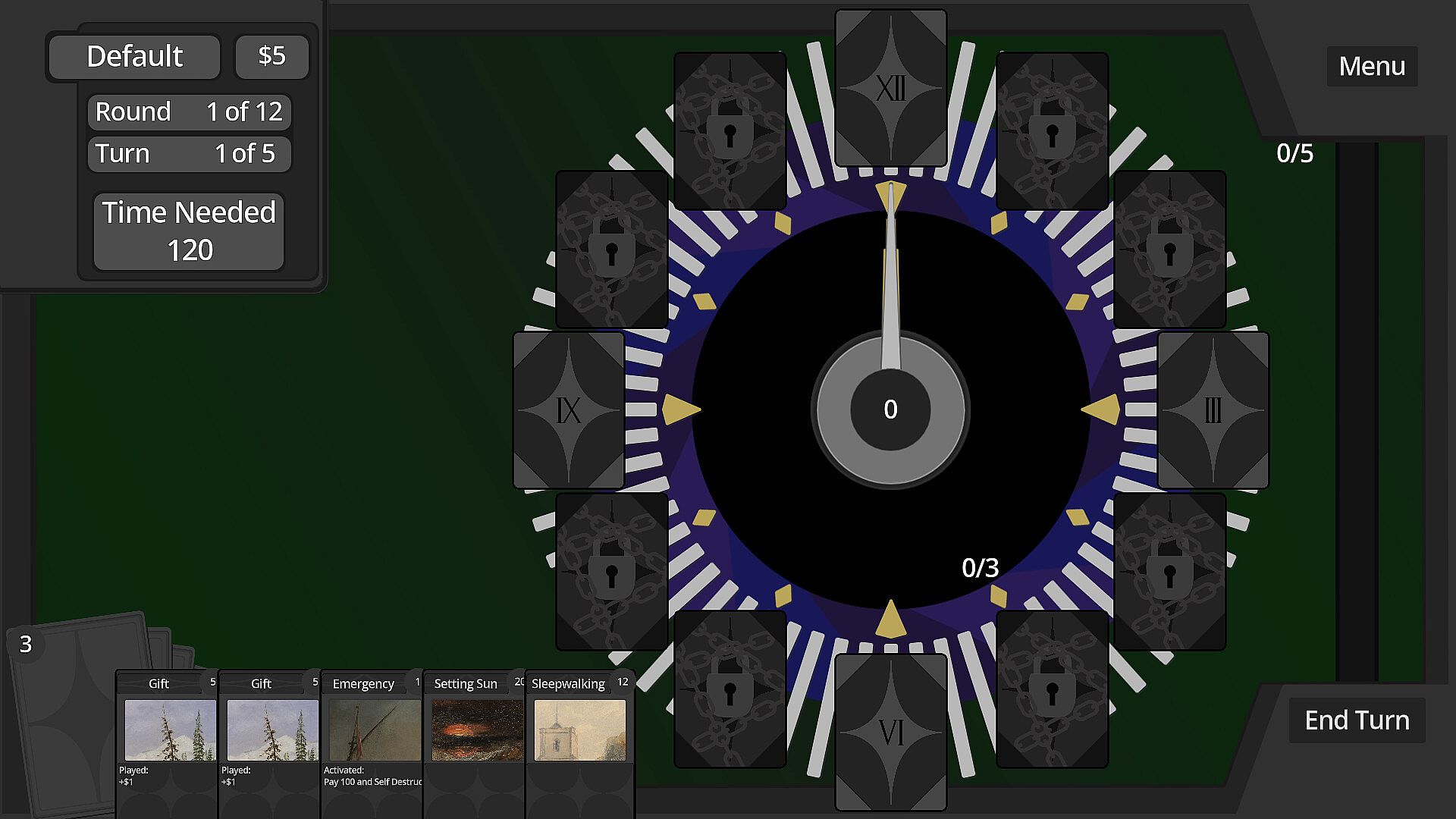
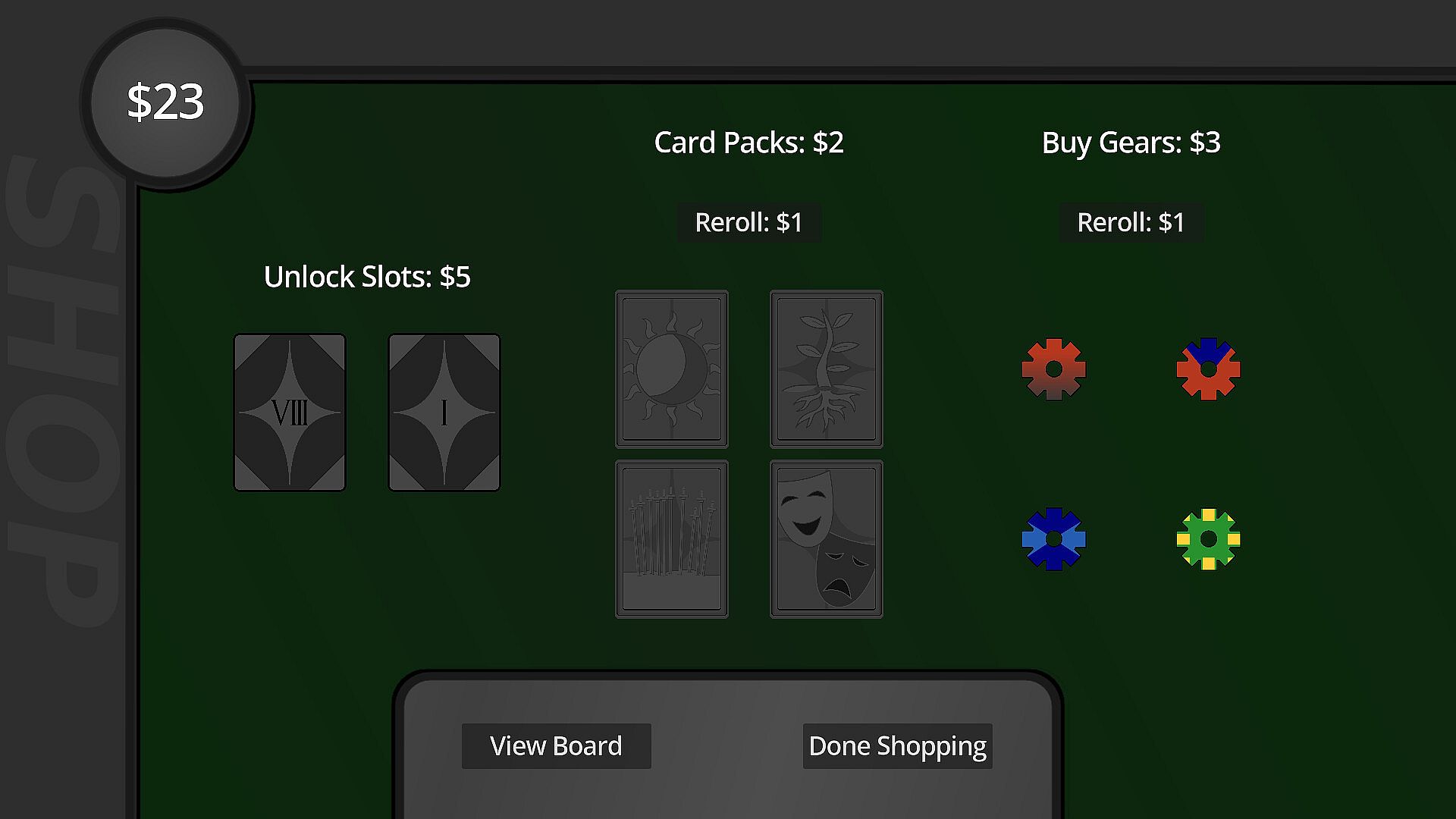
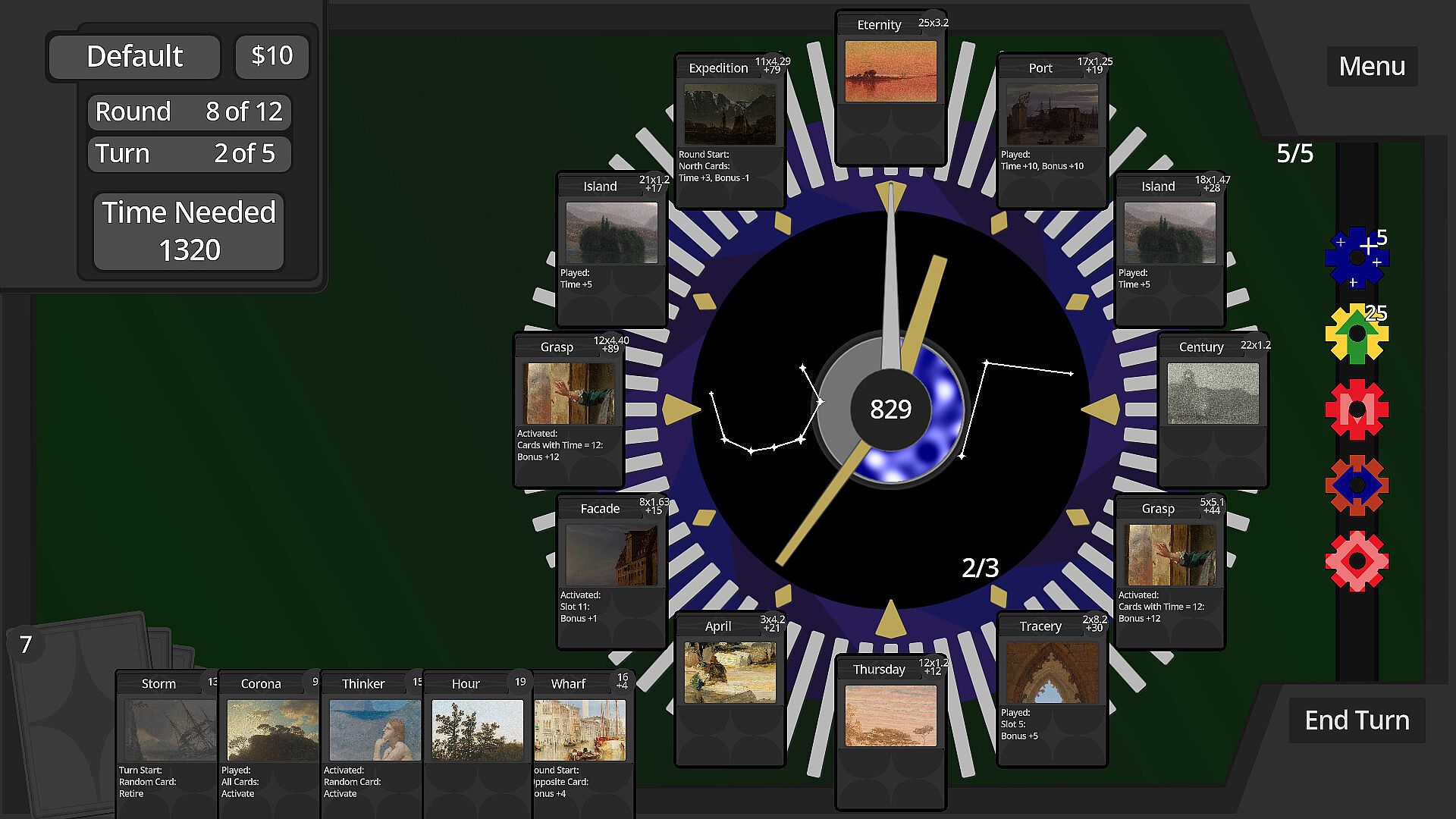
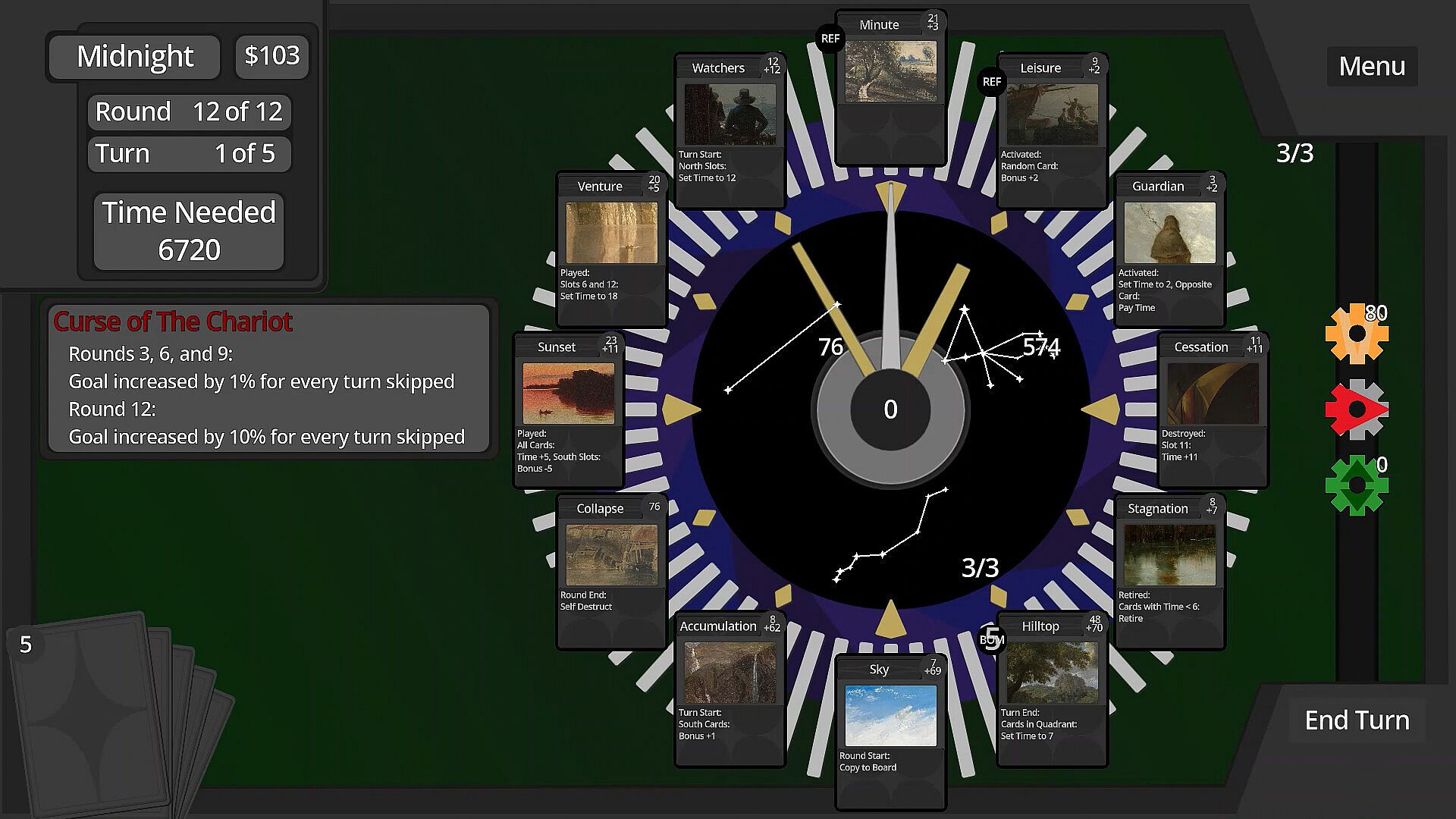
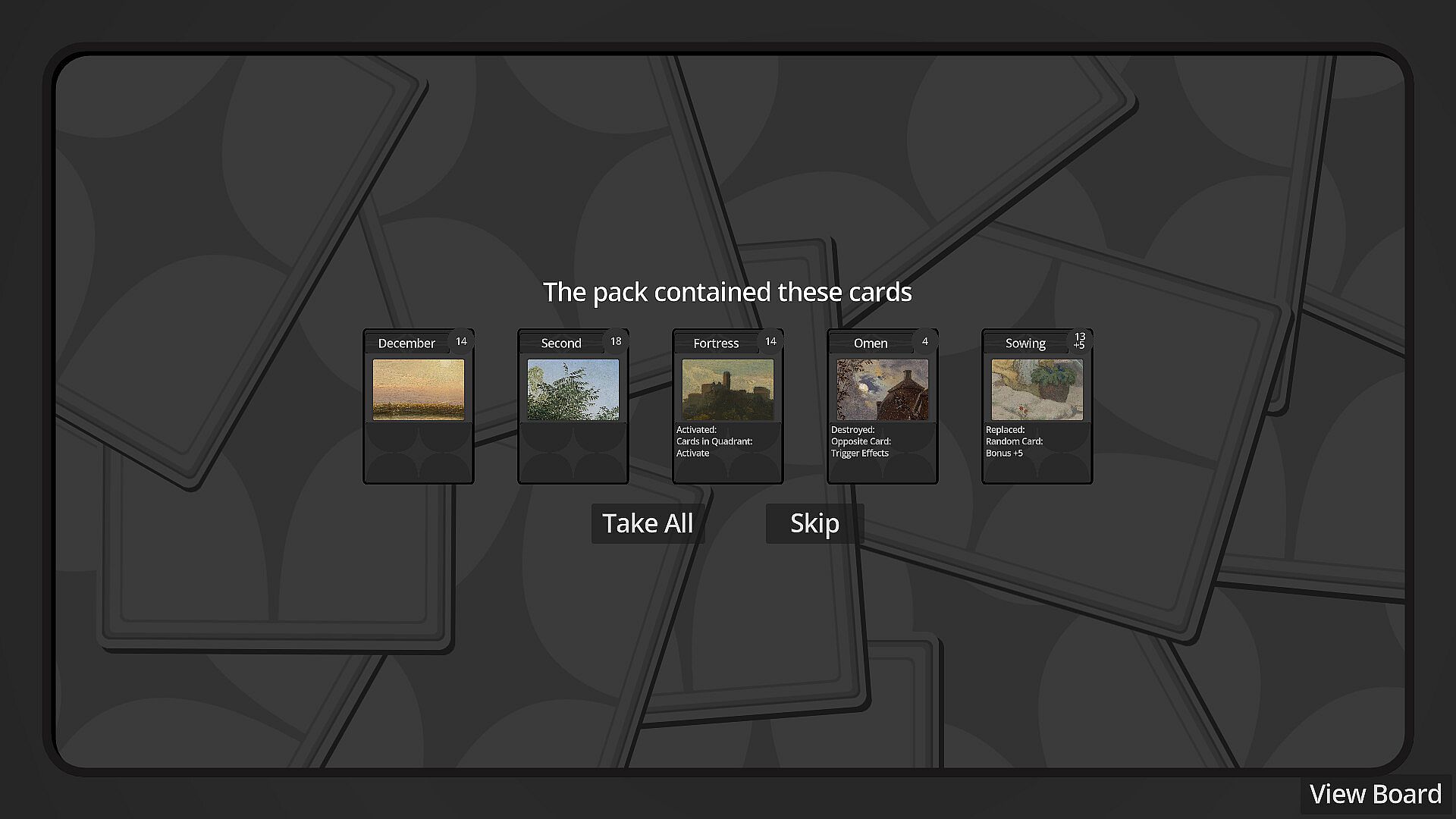
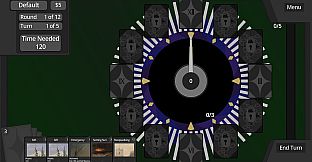
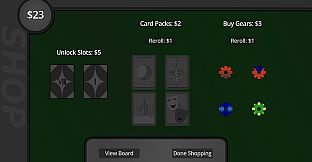
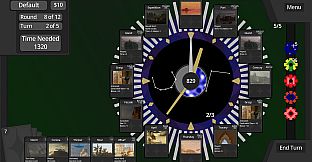
The core loop centers on twelve rounds where goals increase steadily. Each round involves playing cards that hold unique values and effects but decay over time without returning to the deck. This forces ongoing adjustments to the layout rather than repeated use of the same options. Money management plays a key role, as players visit a shop after every round to acquire new cards, purchase items, and expand the available board space.
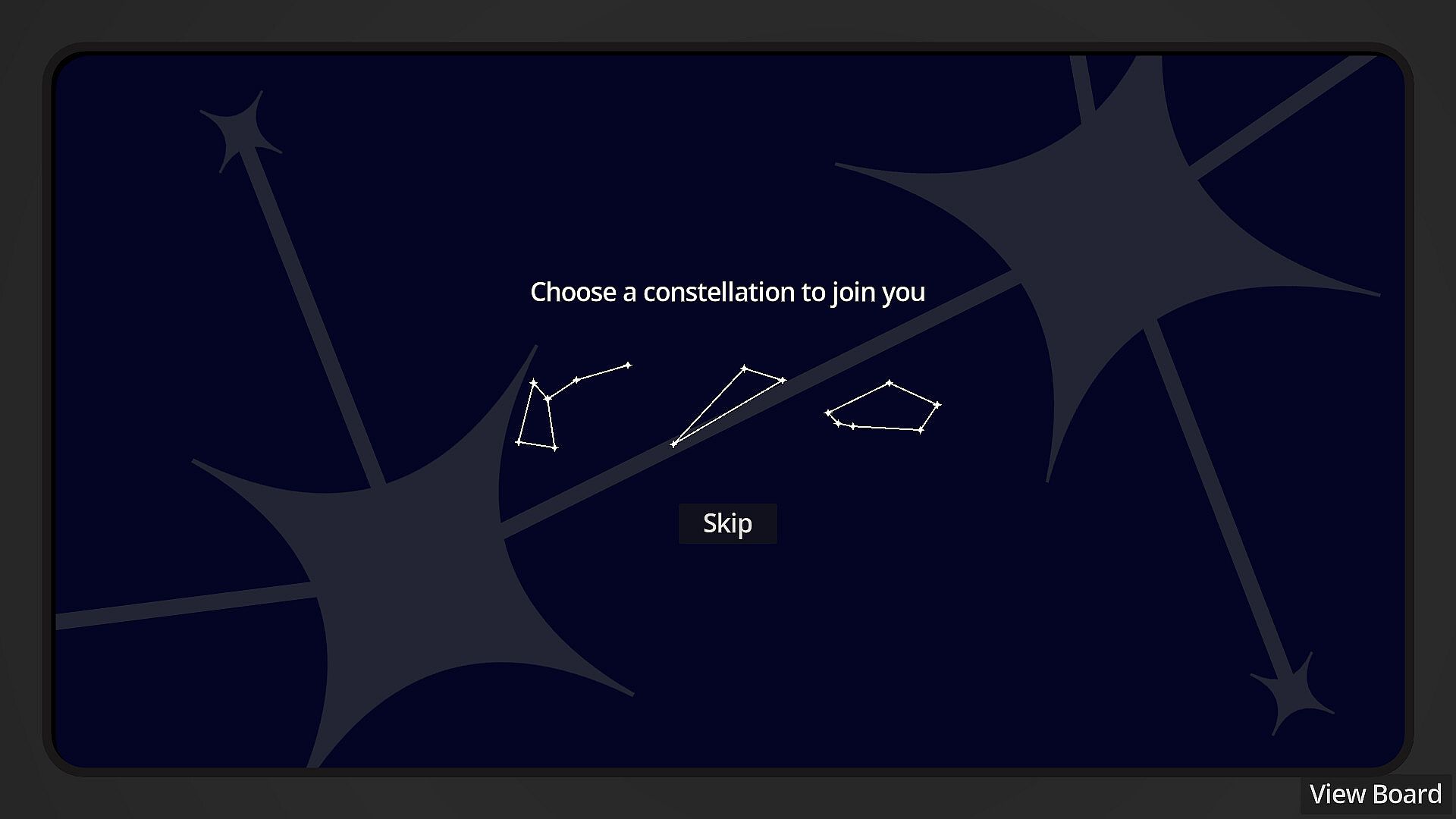
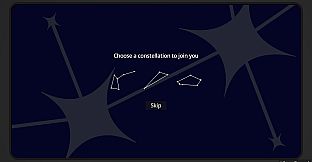
Complementary pieces come from gears and constellations that alter how the board functions. Gears provide passive or active effects that can shift priorities mid-run, while constellations add further layers to the setup. Tokens attach to cards for extra modifiers, opening paths for combinations that address specific round demands. The system rewards experimentation with synergies that keep the board functional through later, more demanding stages.
Decisions branch into aggressive scoring paths or steadier approaches that prioritize cash bonuses for future rounds. The overall structure stays single-player and focuses on one continuous run per attempt, with the entire sequence designed to test sustained board maintenance rather than isolated moments.
Game Modes
Three distinct modes allow players to approach the same twelve-round structure with different priorities and constraints. Each mode alters the balance of scoring, resource gains, and risk in ways that suit varied play styles without changing the fundamental card and board systems.
One mode leans toward maximizing final scores through bolder plays. Another emphasizes consistent cash accumulation for steadier long-term growth. The third introduces its own set of trade-offs that change how rounds unfold. Together they provide replay paths that highlight different aspects of the same underlying mechanics.
Progression and Challenges
Twelve incremental difficulty levels unlock progressively and scale the pressure across rounds. Higher settings introduce twenty-two special curses that further modify rules and force adaptations to the board. These layers build on the base systems of card decay, shop visits, and piece collection rather than adding entirely separate content.
The card collection includes two hundred individual entries spread across eight pack types available in the shop. Over one hundred twenty gears and ninety-one constellations expand options for customization, while ten token types attach directly to cards. Players combine these elements to handle escalating targets, with success depending on maintaining viable synergies throughout the full run.
Visuals and Audio
The presentation uses a straightforward style that highlights card artwork drawn from public-domain pieces held by the Metropolitan Museum of Art. These historical illustrations from the seventeenth through twentieth centuries provide visual variety without complex animations or effects. The approach keeps focus on the board state and decision points.
Audio features a jazzy soundtrack composed by Kevin MacLeod. The tracks support the steady pace of rounds and shop phases without overpowering the strategic elements. System requirements remain modest, supporting play on a wide range of PCs with basic integrated graphics.
Is It Worth Playing?
Until Midnight targets players who enjoy deliberate strategy and roguelike runs built around deck control and synergy discovery. The fixed twelve-round structure and emphasis on board maintenance create a contained experience that rewards repeated attempts at higher difficulties. Those drawn to systems involving card decay, shop management, and layered modifiers will find depth in the available combinations of gears, constellations, and tokens.
The game remains in a pre-release state with no user reviews available yet. Its single-player focus and modest hardware needs make it accessible for those seeking thoughtful sessions rather than action-heavy or multiplayer formats. Potential buyers interested in the described mechanics can follow its development for updates on the exact release window and any refinements to the three modes or curse system.