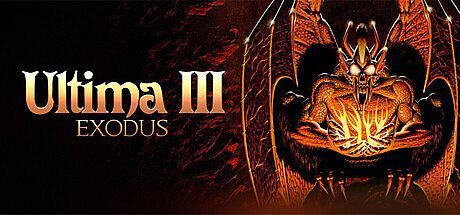




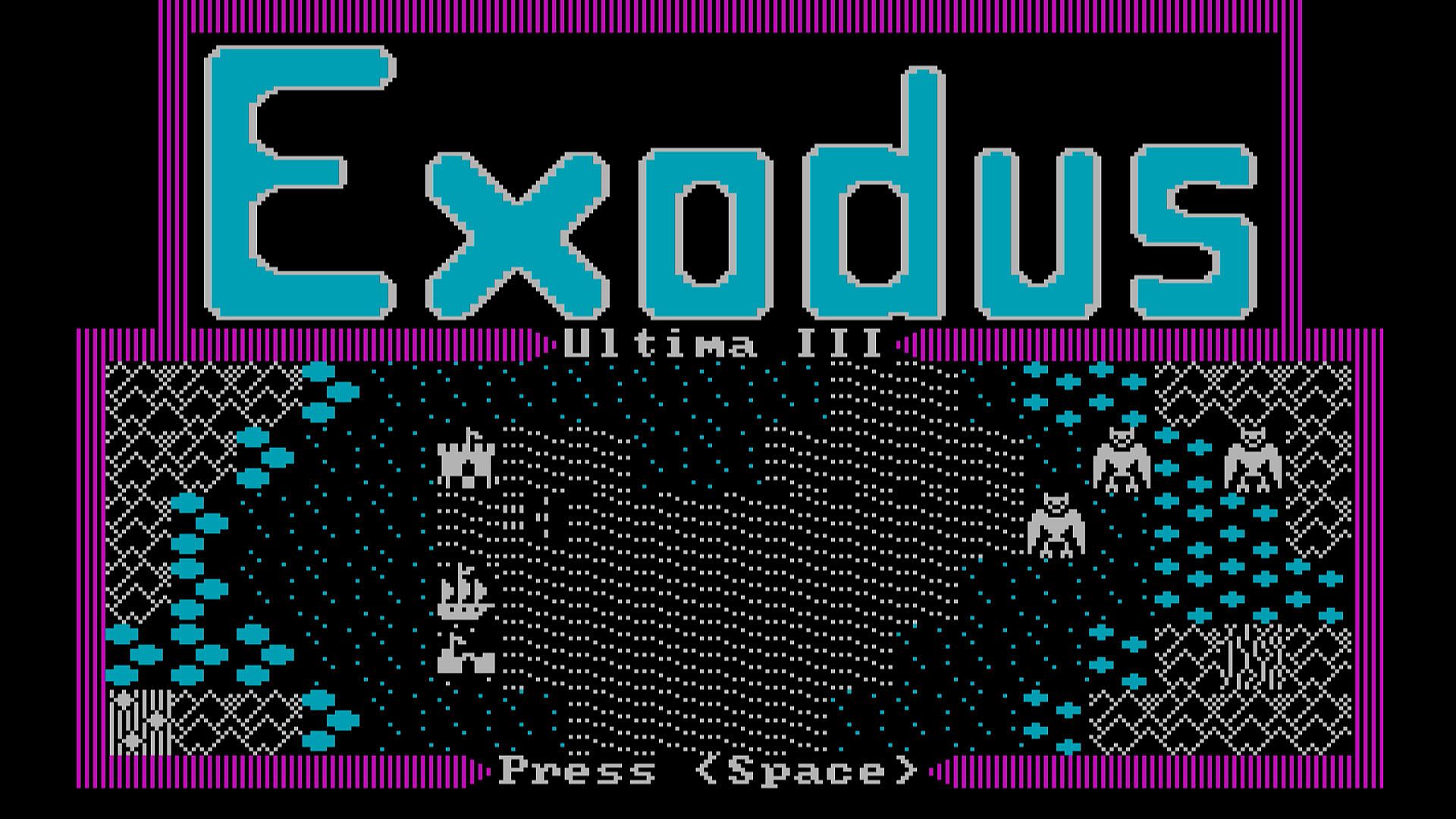
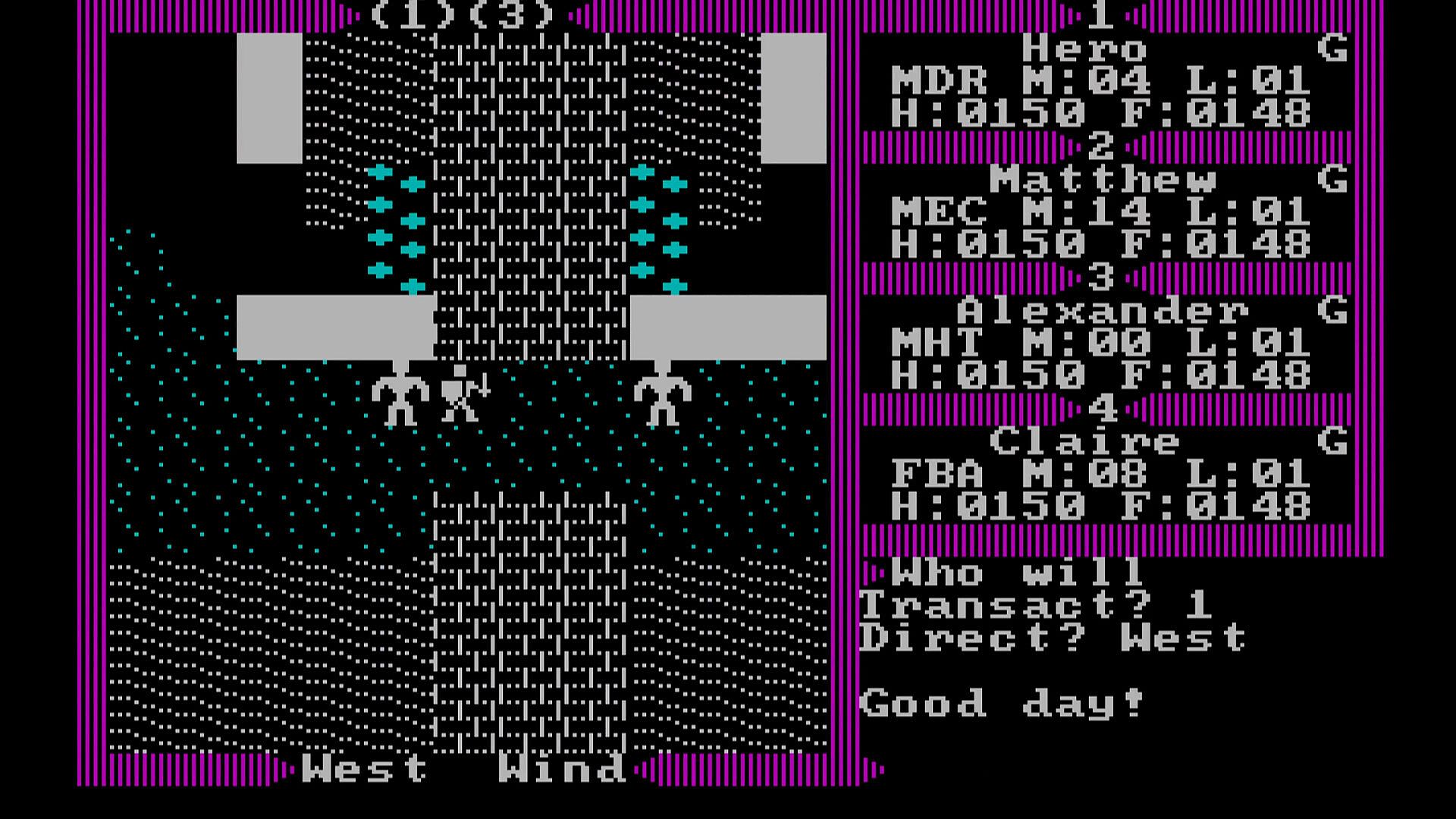
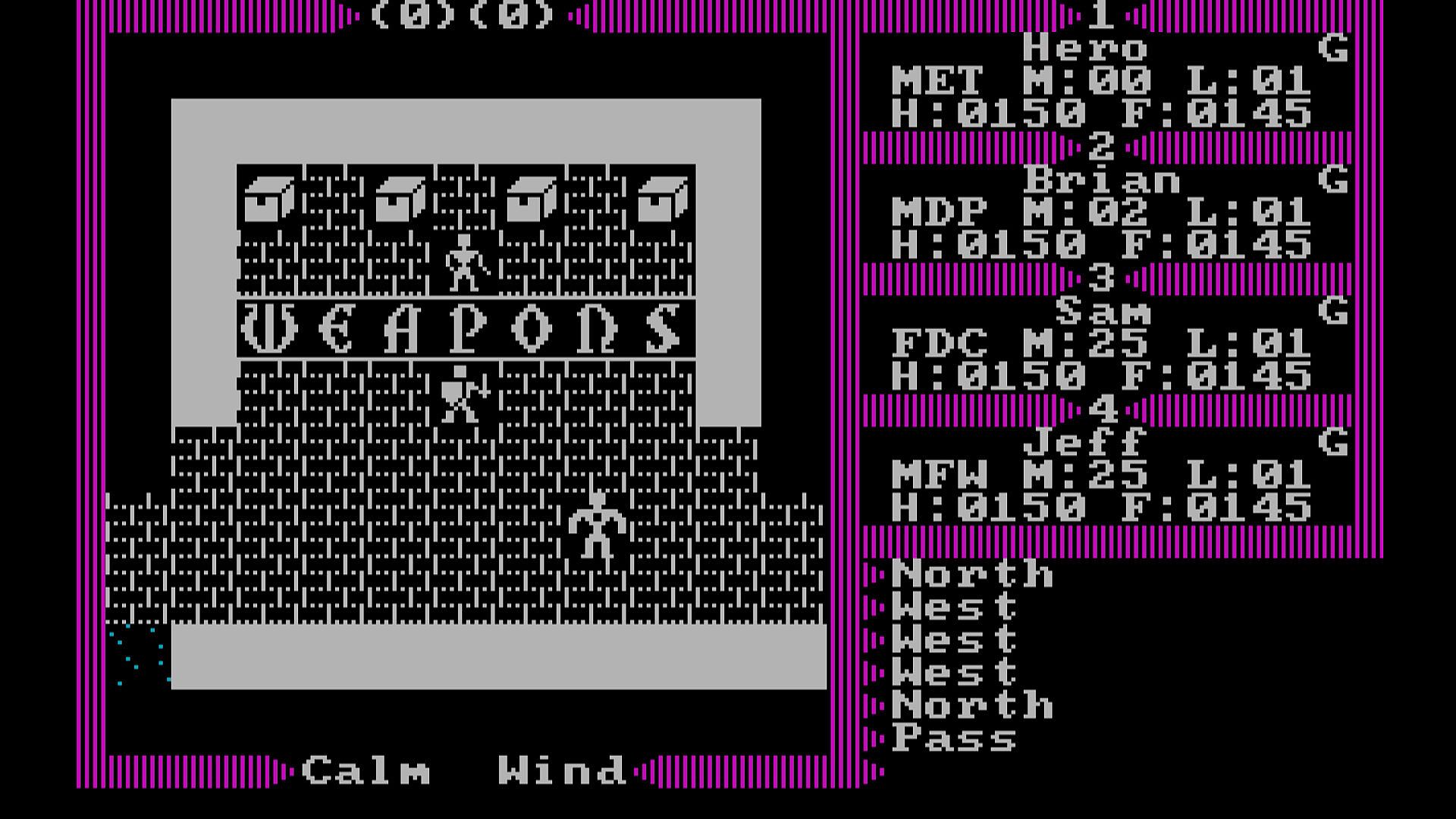
Ultima III: Exodus is a classic single-player RPG and adventure game for PC that places players in control of a party of adventurers in the fantasy world of Sosaria. The story follows the defeat of the evil wizard Mondain and his apprentice Minax, with the new threat being their offspring Exodus. Players must assemble a team, explore towns and dungeons, gather information from NPCs, and ultimately confront the final antagonist through a combination of combat, resource management, and puzzle-solving.
Gameplay
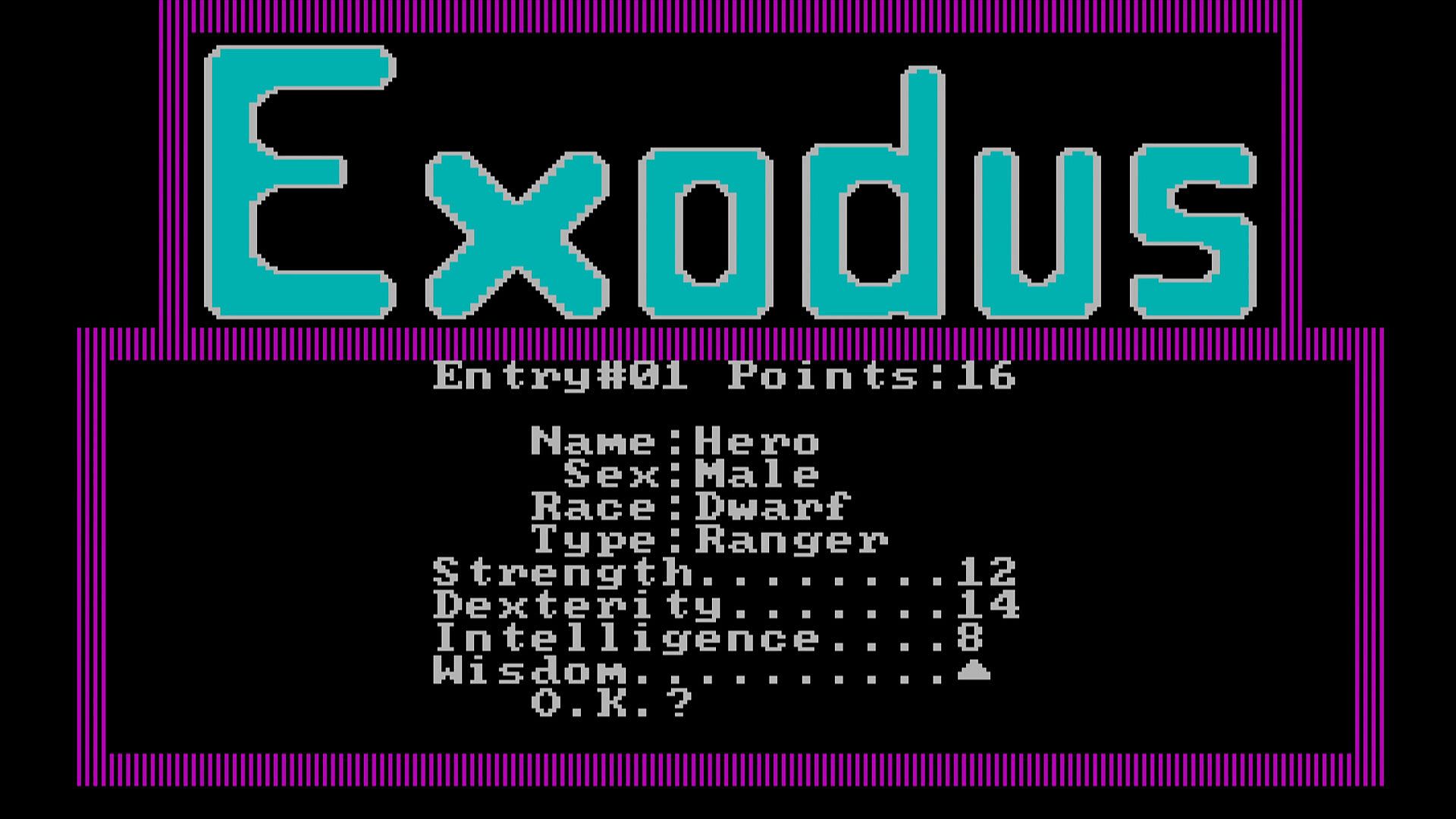
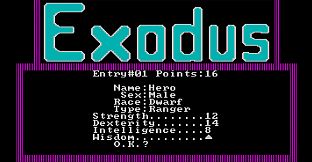
Players begin by creating characters from a roster that supports up to 20 entries. Each character belongs to one of five races and one of eleven classes, with points allocated across four attributes that influence combat effectiveness, spellcasting capacity, and other abilities. A party of up to four characters moves together on the overworld map, where vision is limited by line-of-sight around terrain features such as forests and mountains.
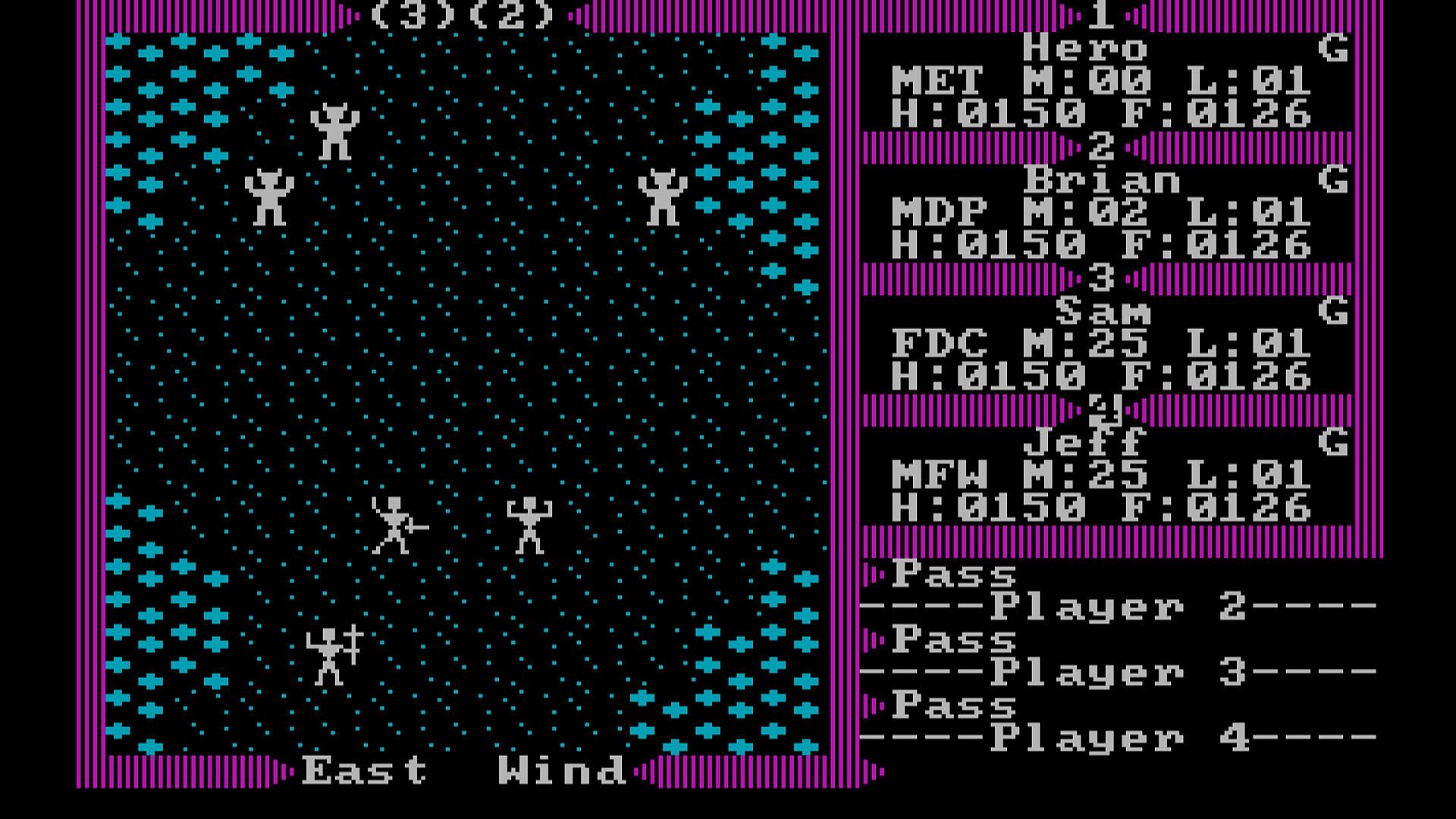
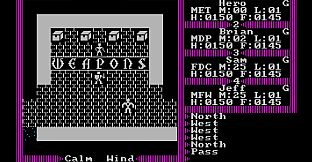
Exploration involves traveling on foot, by horseback, or by ship across the land of Sosaria. Food must be managed as it depletes over time, and encounters with enemies trigger a shift to a separate tactical combat screen. On this screen, each party member acts individually in turn-based order against groups of foes, allowing commands for attacks, spellcasting, or positioning. Weapons range from basic to magical varieties, and armor types provide varying protection, with additional items and spells expanding tactical options.
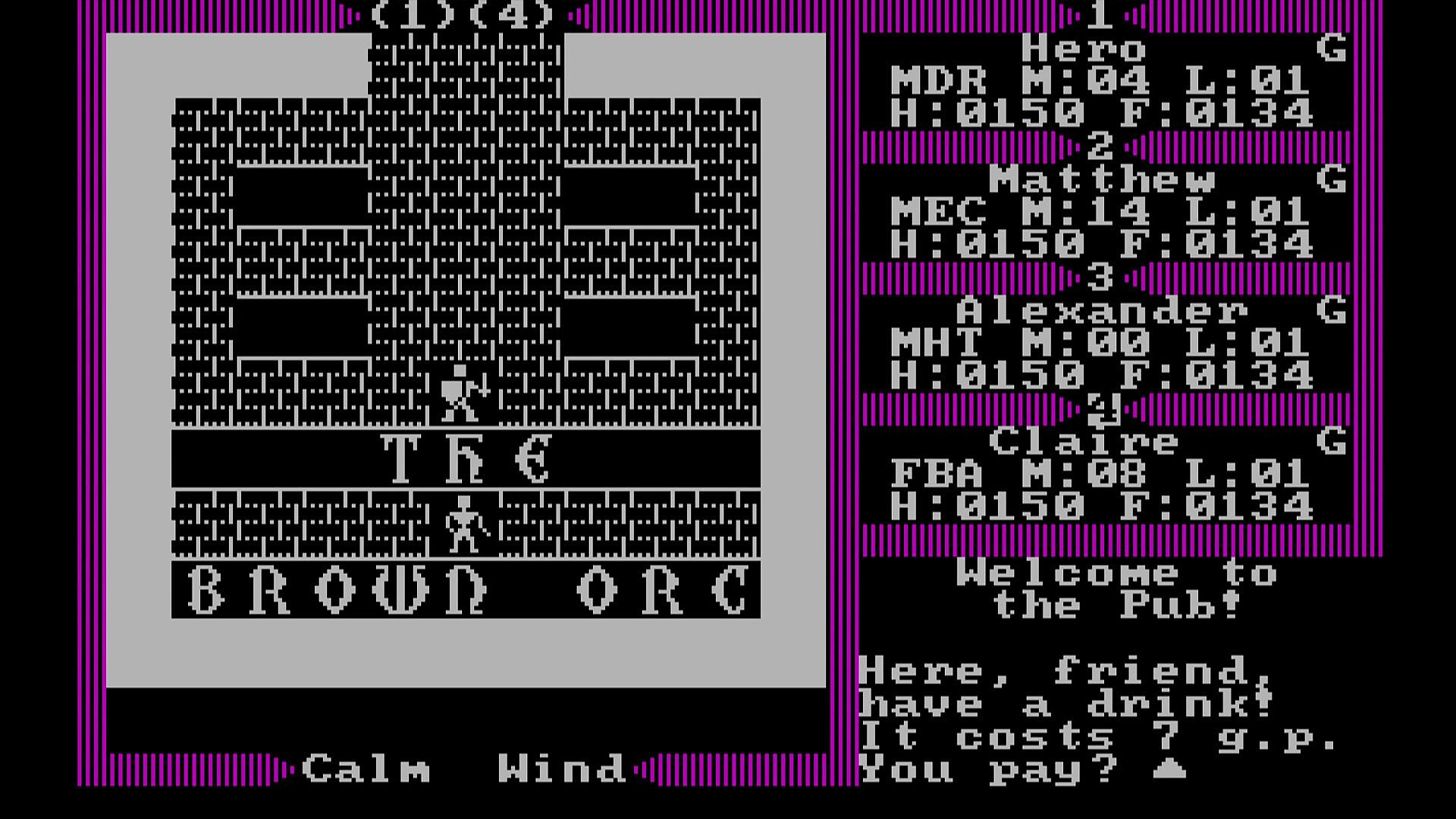
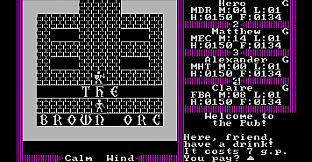
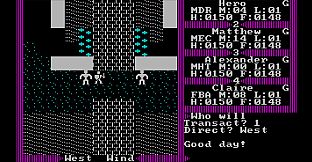
Dungeons feature improved graphics compared to earlier entries, including solid walls and hidden elements that reward careful navigation. Towns contain NPCs who provide single lines of dialogue that often hold key clues for progression. Leveling occurs through experience gained in combat, with further stat improvements available through specific locations reached later in the game.
Game Modes
The game operates as a single continuous campaign focused on open exploration and quest completion. There are no separate multiplayer or competitive modes. Core activities include overworld travel, town interactions, random and fixed encounters, dungeon delving for marks and equipment, and ship-based movement or combat when vessels are acquired. Progression relies on discovering hidden areas, solving environmental and dialogue-based puzzles, and preparing the party for increasingly difficult battles.
Character Creation and Progression
Character creation emphasizes balance within the four-member party, as different classes excel in fighting, magic, or thieving skills. Races impose limits on maximum attribute values, encouraging varied party compositions. Experience points raise levels individually up to an effective cap of 25, after which hit points stabilize. Gold collected from defeated enemies funds equipment purchases and occasional stat boosts at specialized sites. Magic consists of two distinct systems with a combined total of 32 spells that consume points restored through rest or other means.
Is It Worth Playing?
Ultima III: Exodus appeals to players interested in foundational CRPG mechanics and the evolution of the genre. Its party-based system, tactical combat, and emphasis on exploration and information gathering distinguish it from simpler predecessors. The game presents a challenging experience that rewards persistence with a sense of accomplishment upon completion. Modern re-releases preserve the original design, making it accessible for those who appreciate retro titles without modern conveniences like autosaves or extensive tutorials. It suits single-player adventurers who enjoy piecing together objectives through world interaction rather than guided narratives.