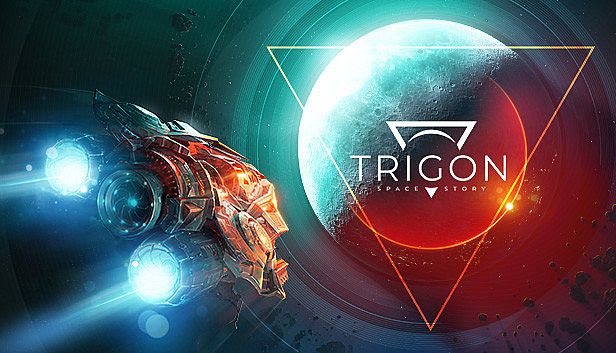













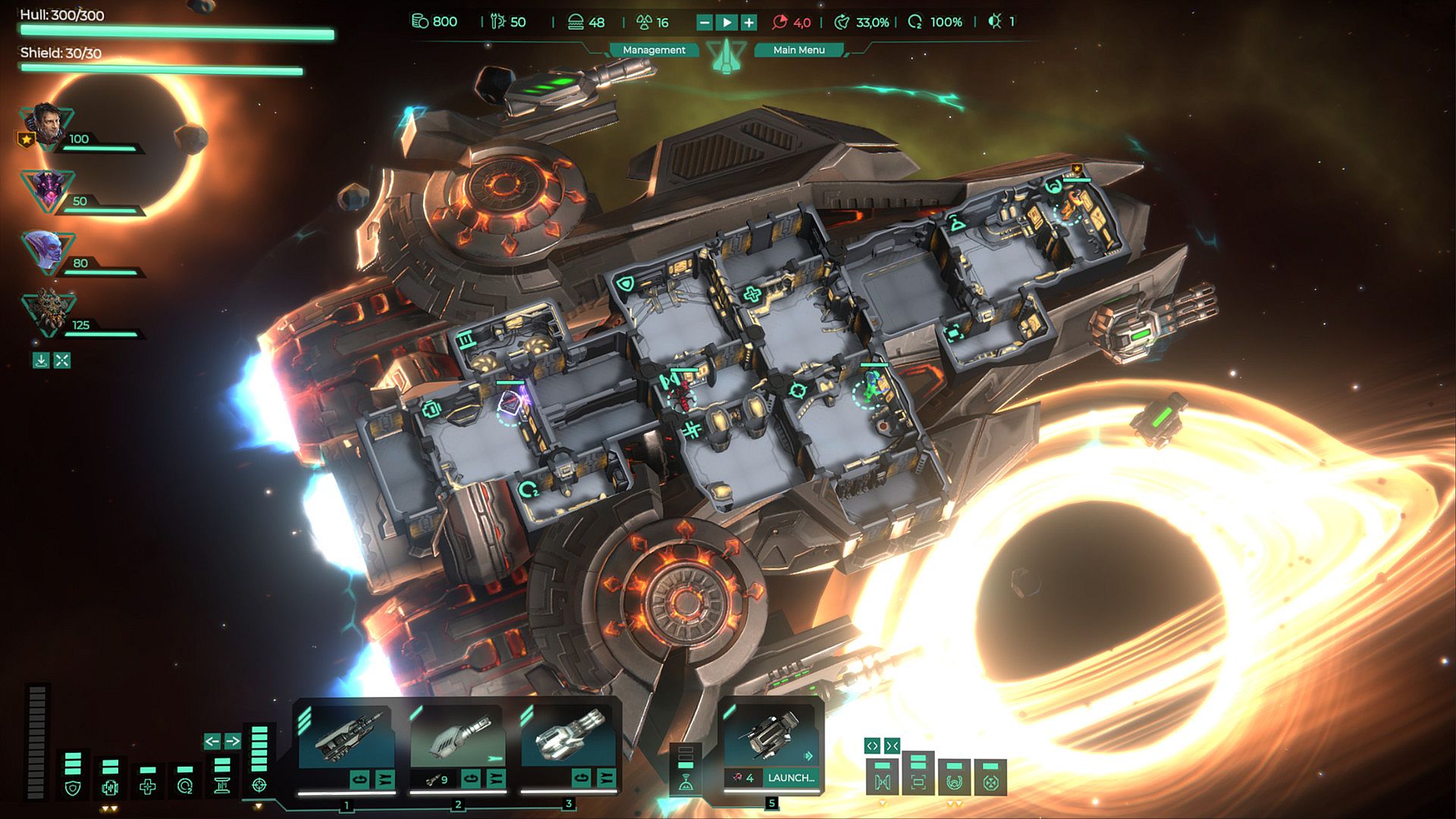
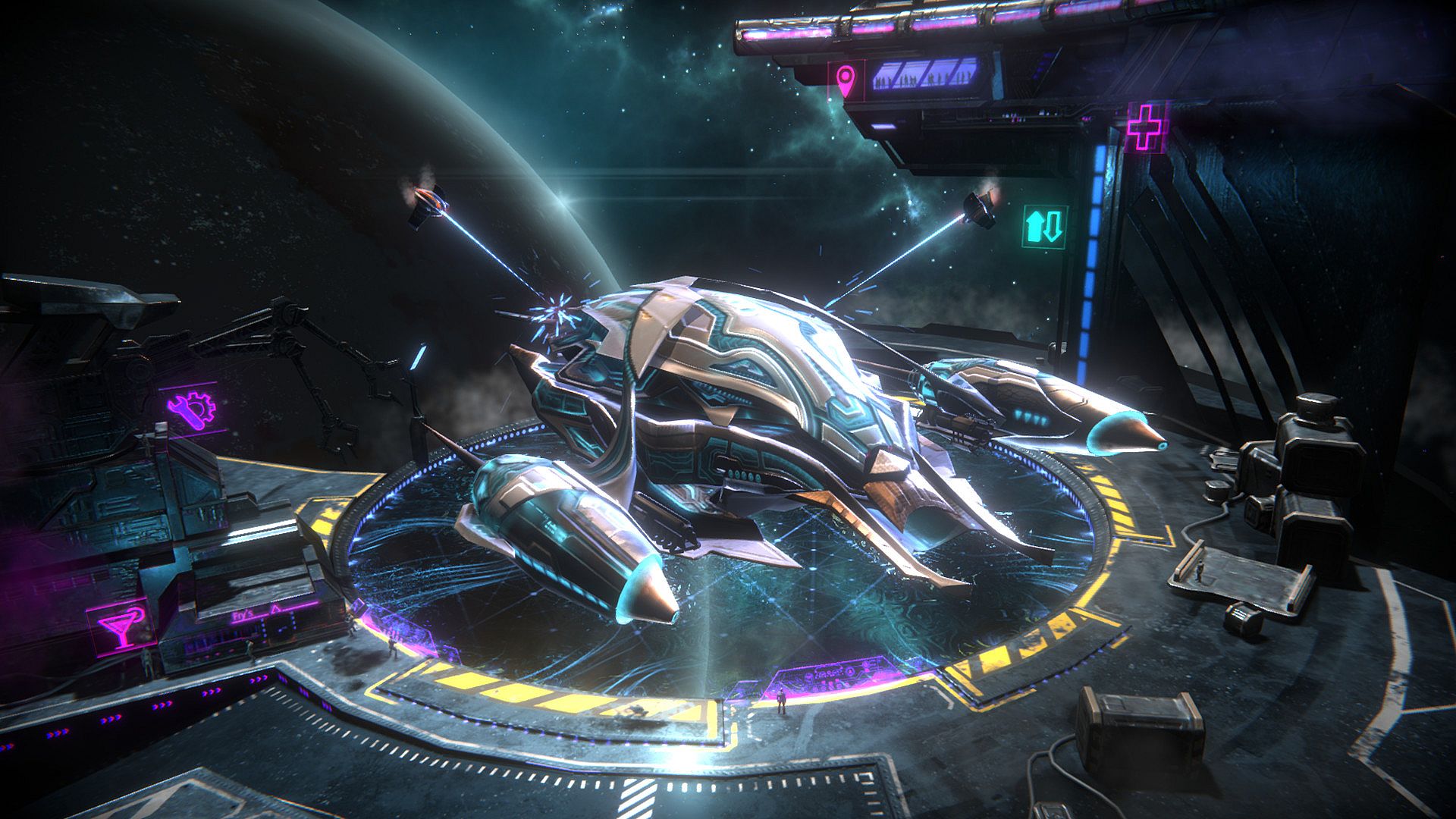
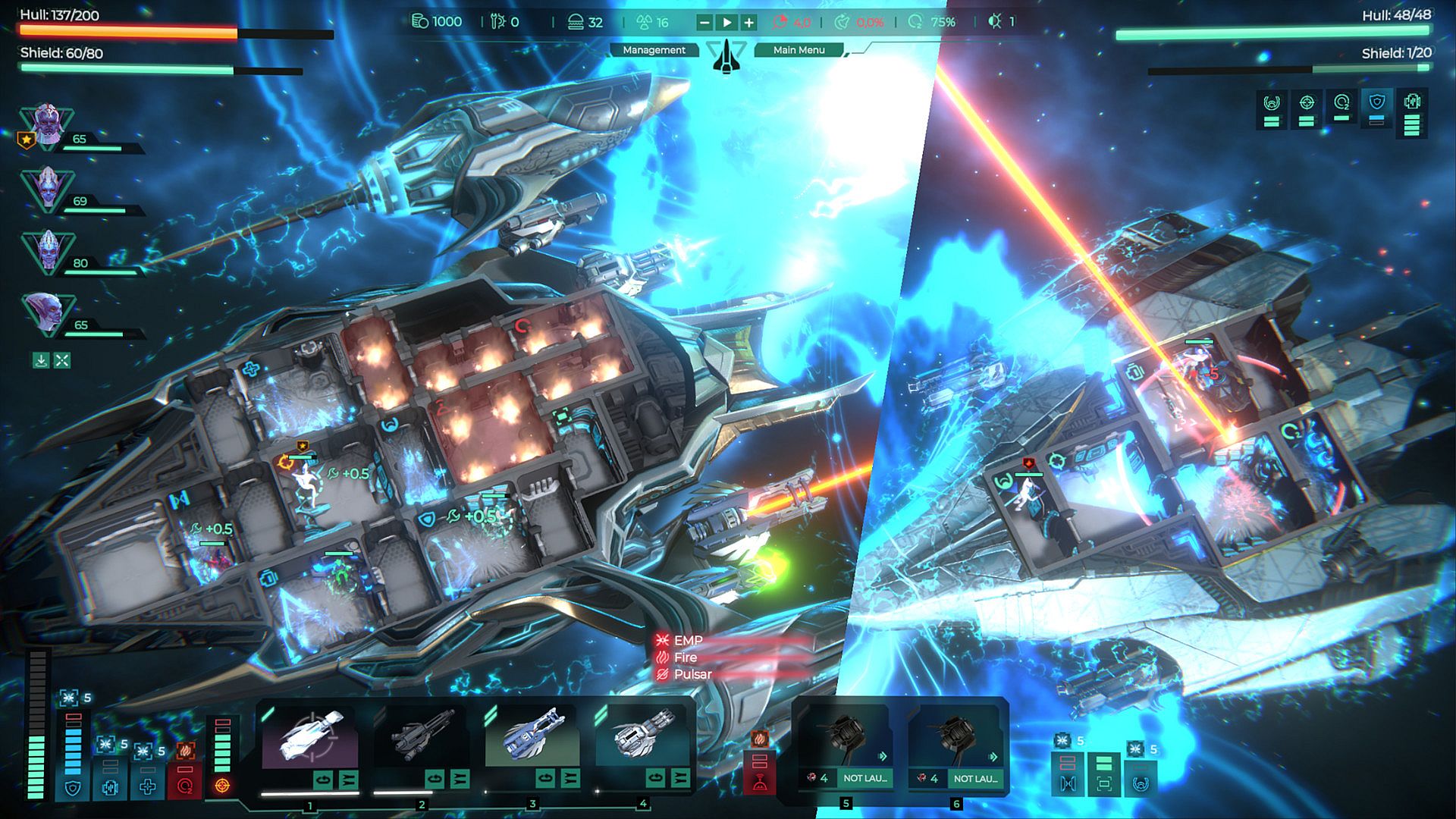

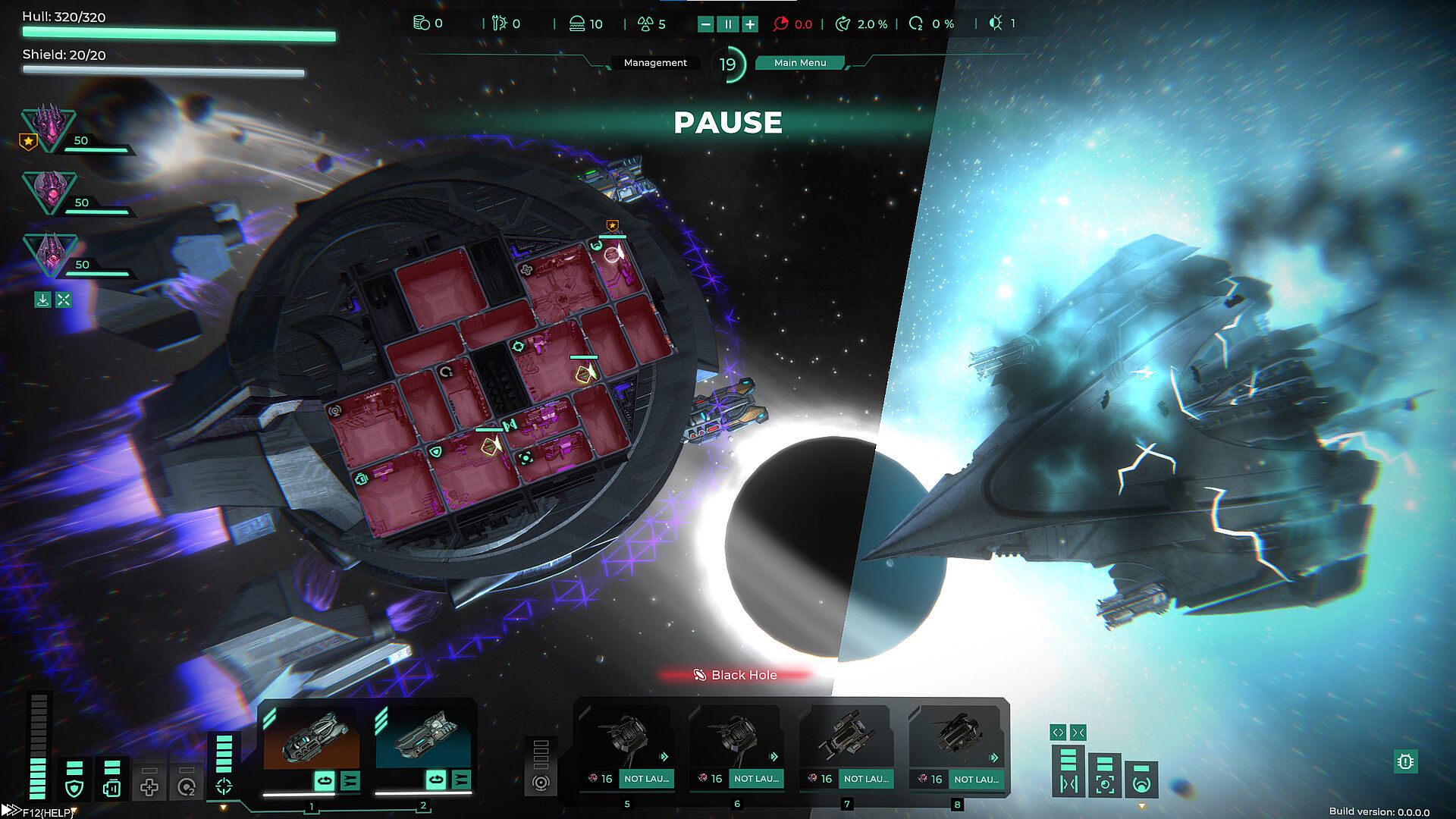
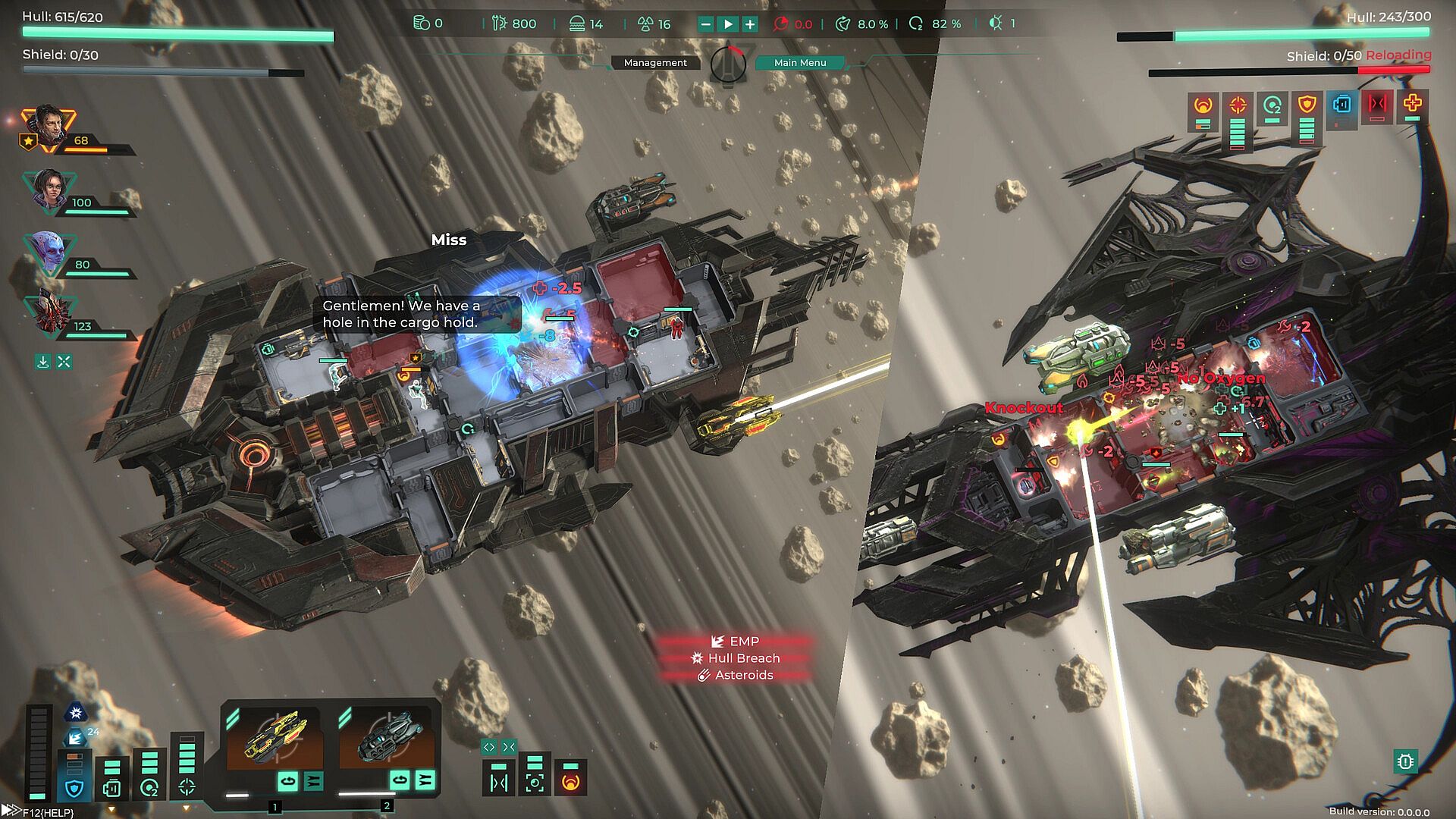
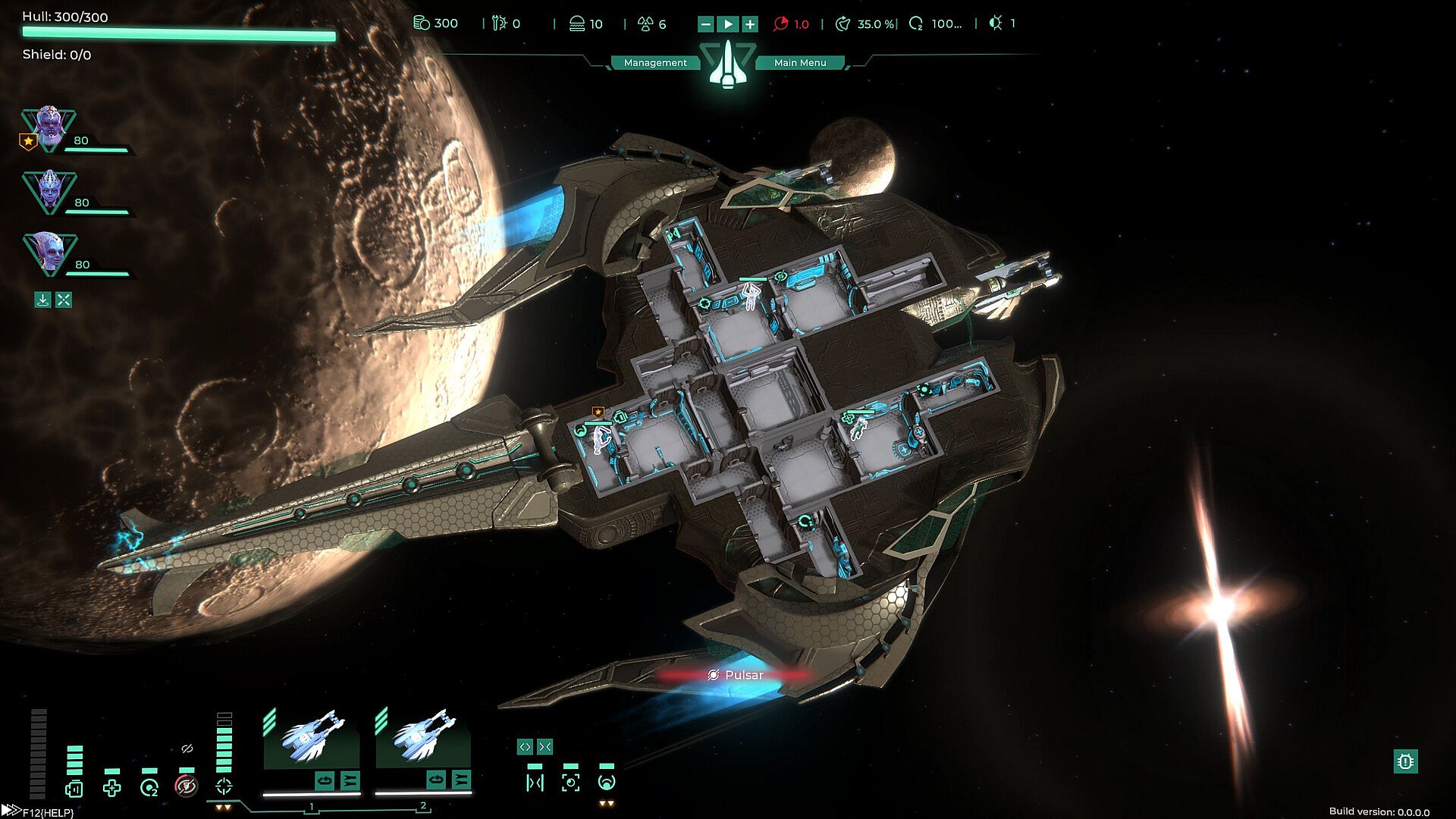
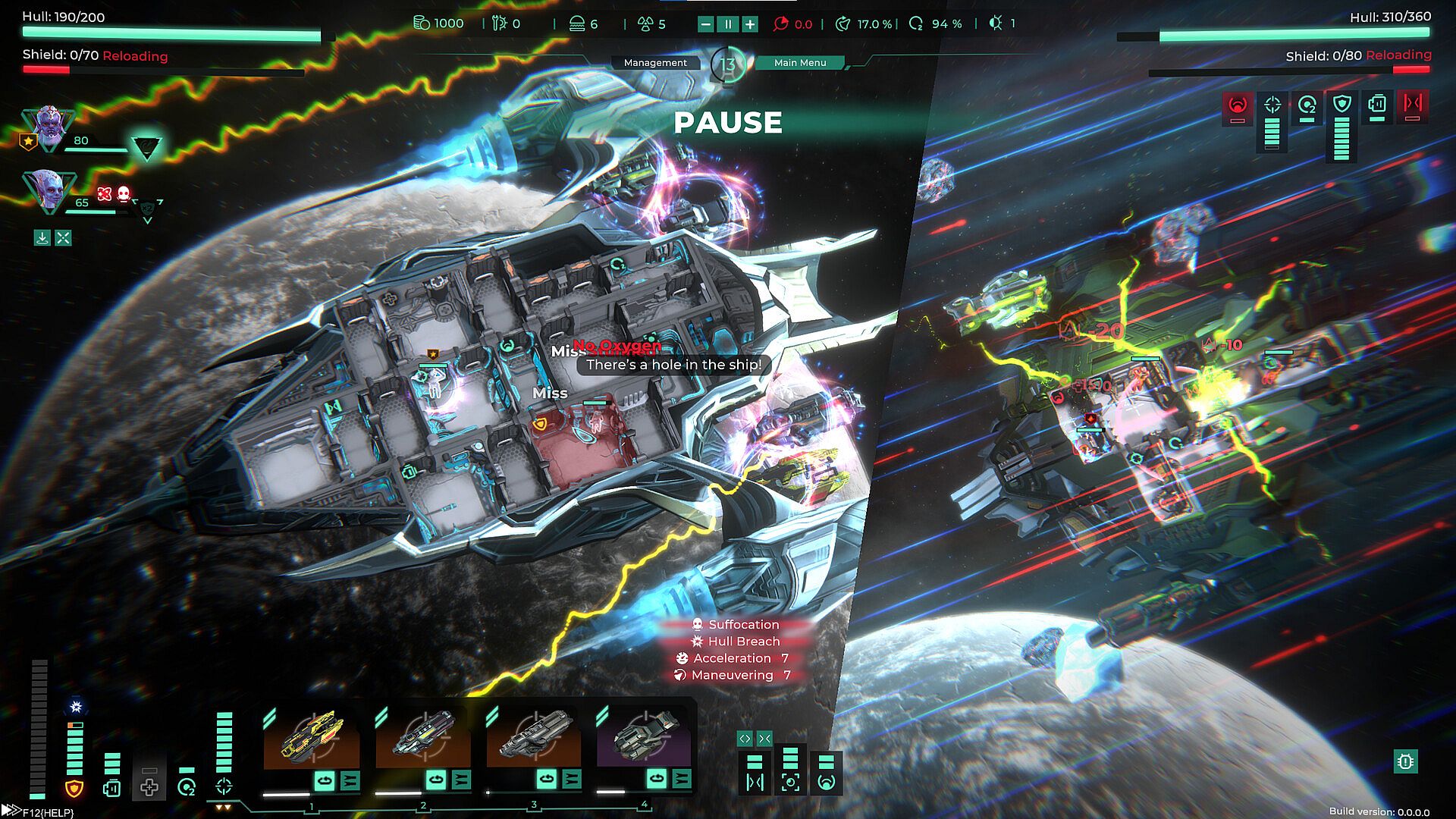
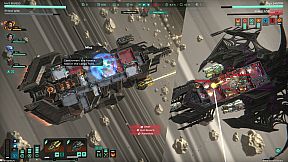
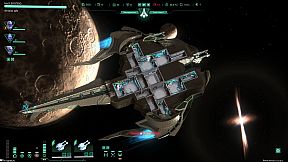
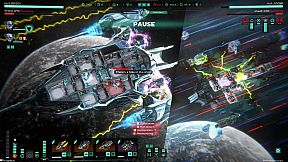
Trigon: Space Story is a single-player roguelike strategy game that combines tactical spaceship combat with crew management and resource decisions. Players take command of a vessel in a sci-fi setting and navigate a procedurally generated universe filled with battles, exploration opportunities, and moral choices that affect the outcome of each run.
Gameplay
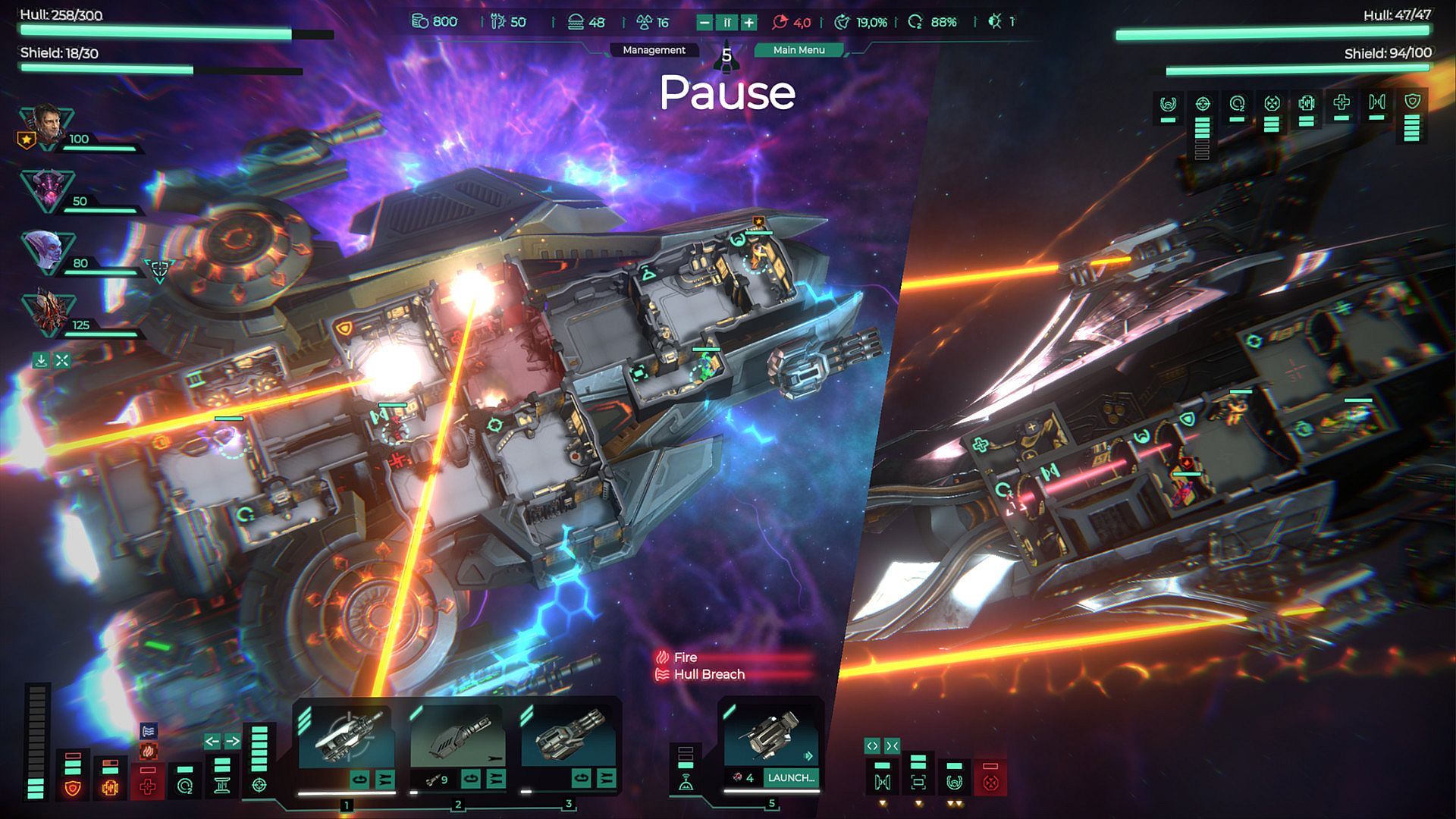
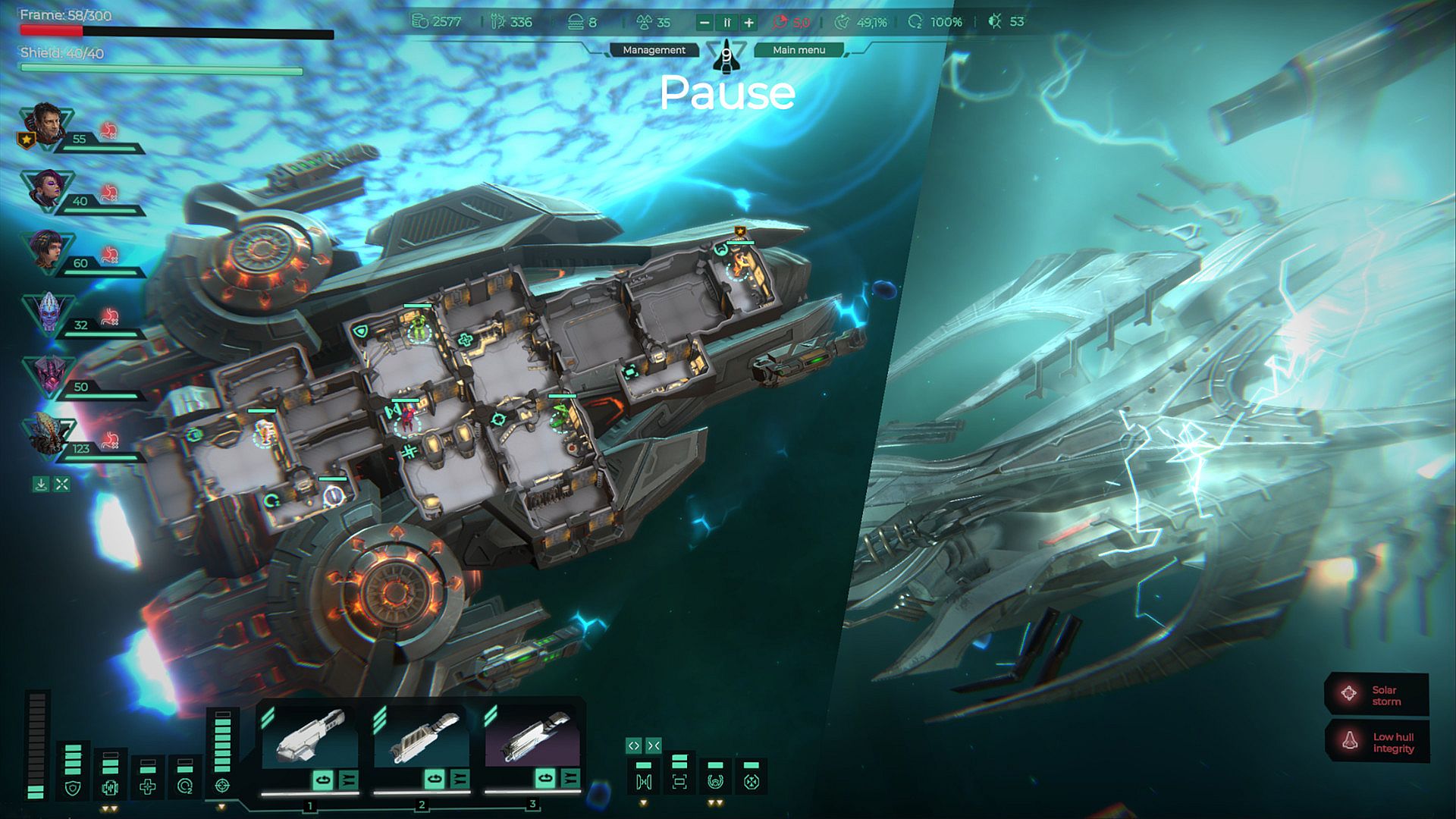
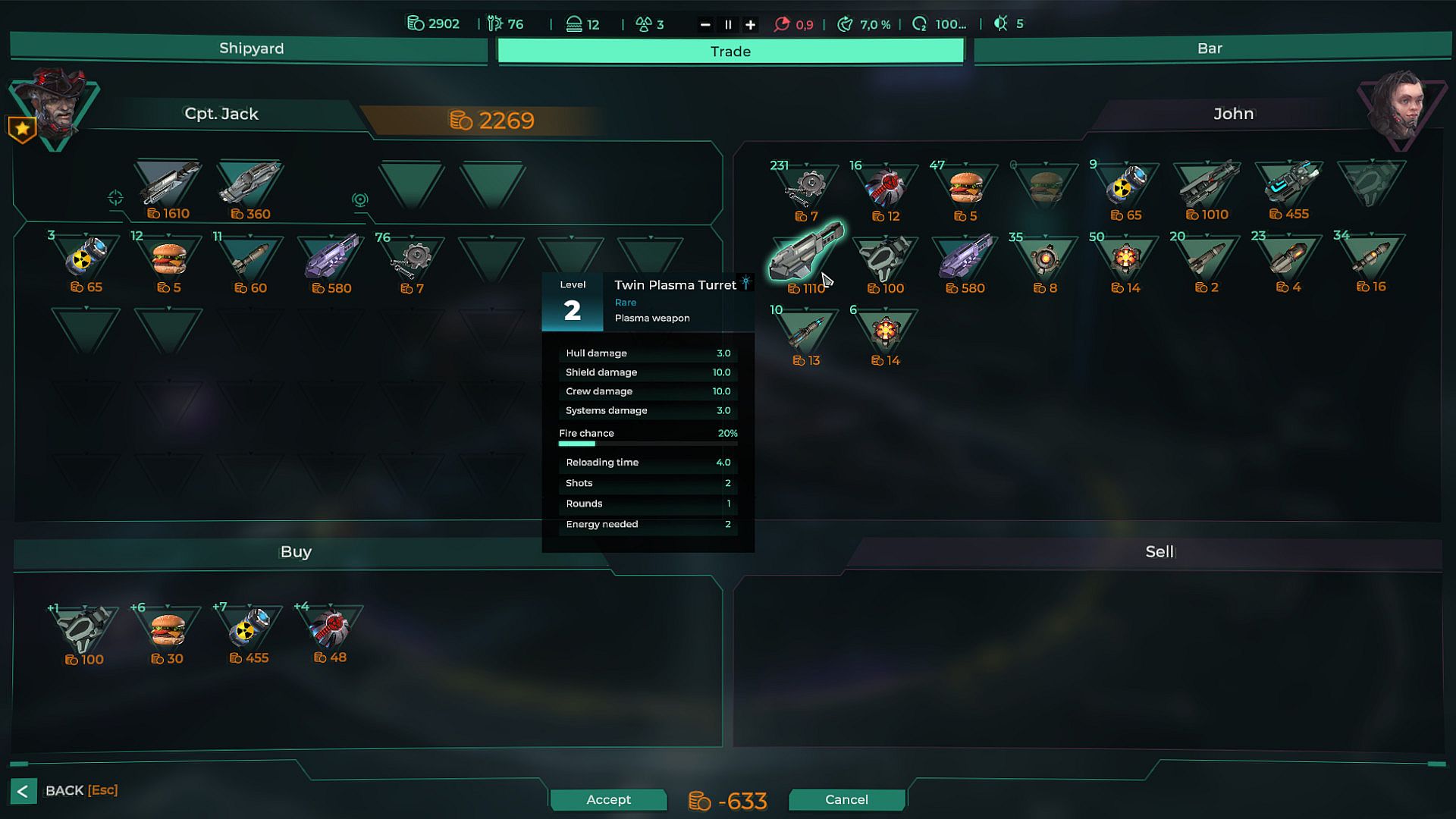
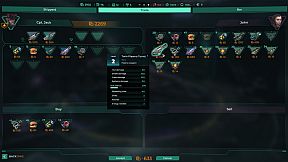
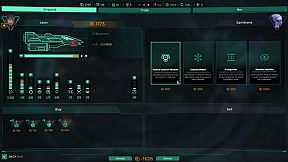
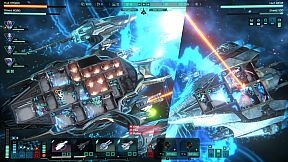
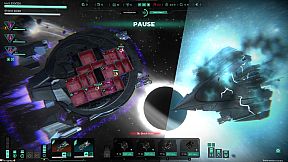
The core loop centers on real-time tactical battles that can be paused at any moment to issue commands. Up to 100 weapons are available, ranging from lasers and turrets to plasma cannons, space bombs, and combat drones. Players assign crew members to stations based on their individual strengths and weaknesses, then upgrade ship systems using resources gathered during play. Death ends the run permanently, which forces careful planning and repeated experimentation with different loadouts and crew assignments.
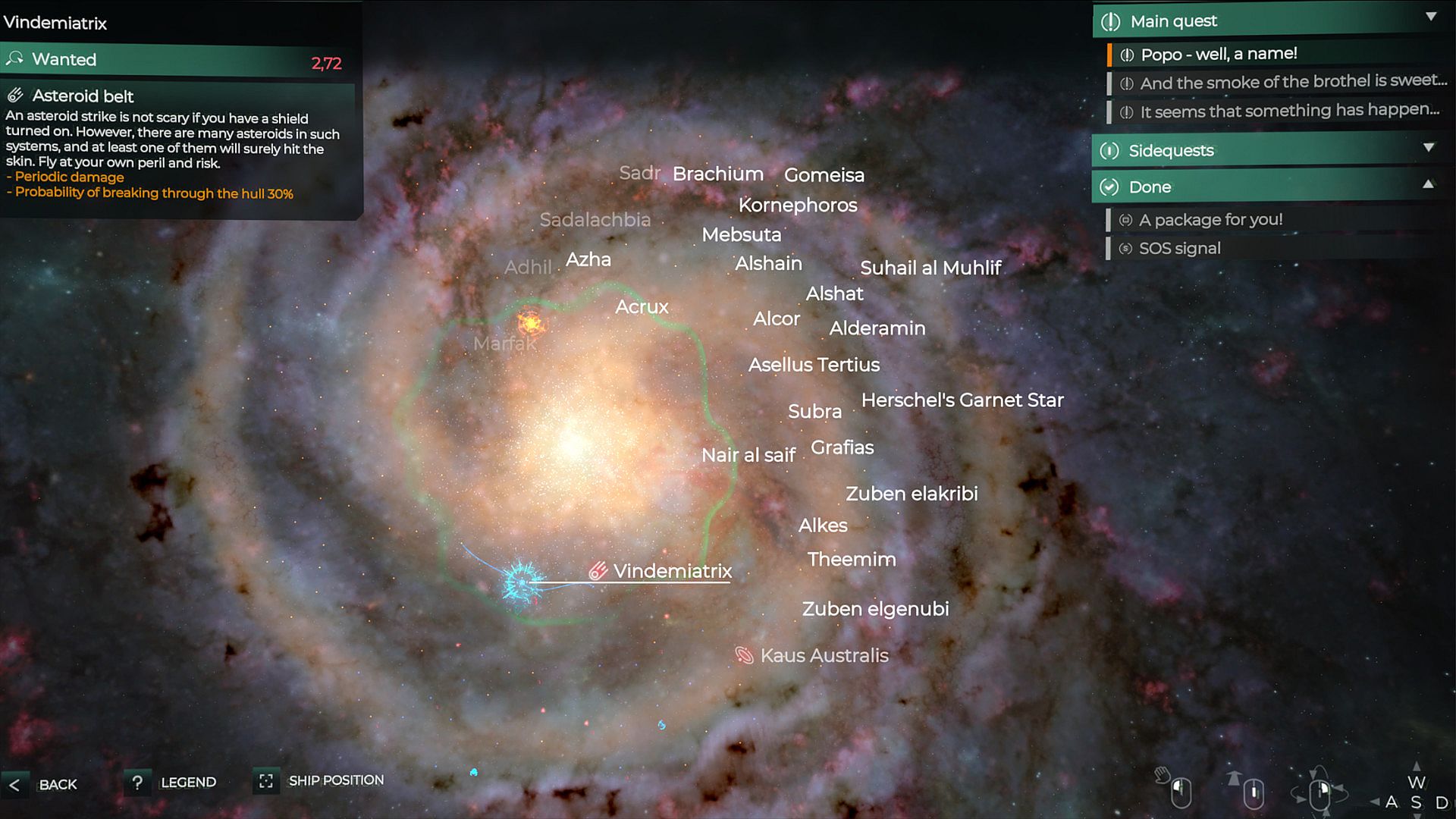
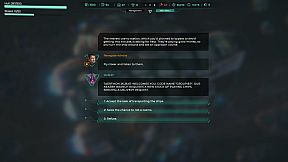
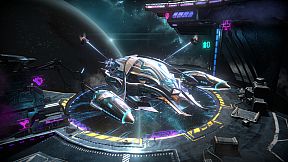
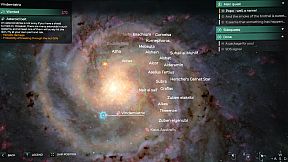
Exploration involves visiting space stations, abandoned colonies, and resource nodes while encountering four distinct races. Each race brings unique technologies and philosophies that influence interactions and available options. Quests and random events provide experience points that unlock new skills for future encounters. Ship selection at the start includes human, Etari, Rakkhi, and Taertikon models, each with different starting efficiencies that shape early strategy.
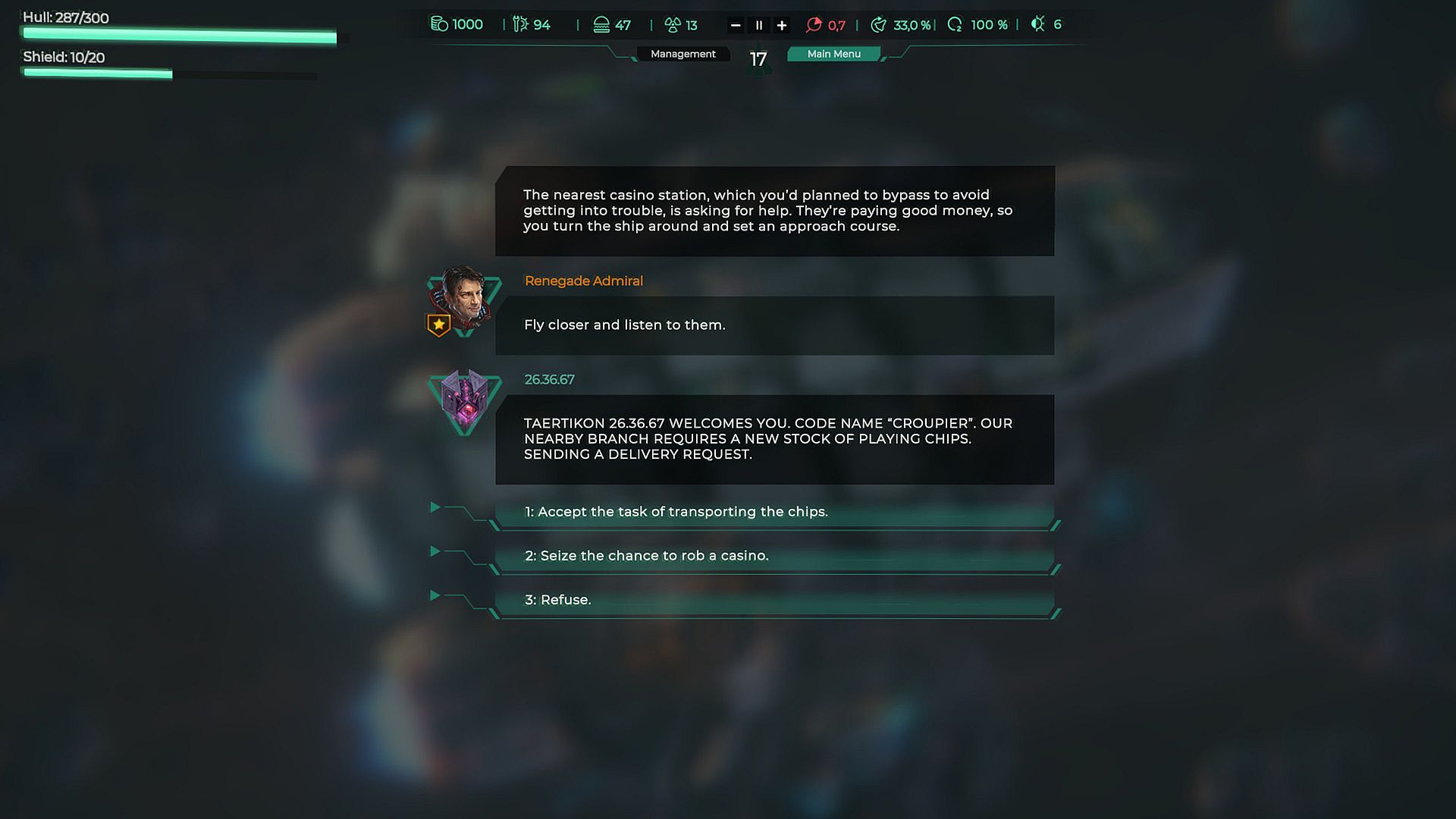
Resource management extends to weapon upgrades and board technology improvements. Moral decisions arise during events, and the consequences carry forward because the universe does not reset between runs in the same way a traditional campaign might. The combination of pause-enabled combat and permanent crew loss creates a loop where every battle requires attention to positioning, target priority, and crew deployment.
Game Modes
Two primary modes structure the experience. The story campaign follows a narrative arc in which players choose a captain archetype and pursue objectives across sectors. Progress comes from completing quests, surviving battles, and making decisions that alter available paths and alliances.
The endless mode removes the campaign structure and focuses on sustained survival across an infinite series of encounters. Procedural generation ensures each attempt features different layouts, events, and enemy compositions. Both modes share the same combat and management systems, but endless mode emphasizes long-term optimization and repeated testing of strategies without a fixed endpoint.
Key Mechanics and Systems
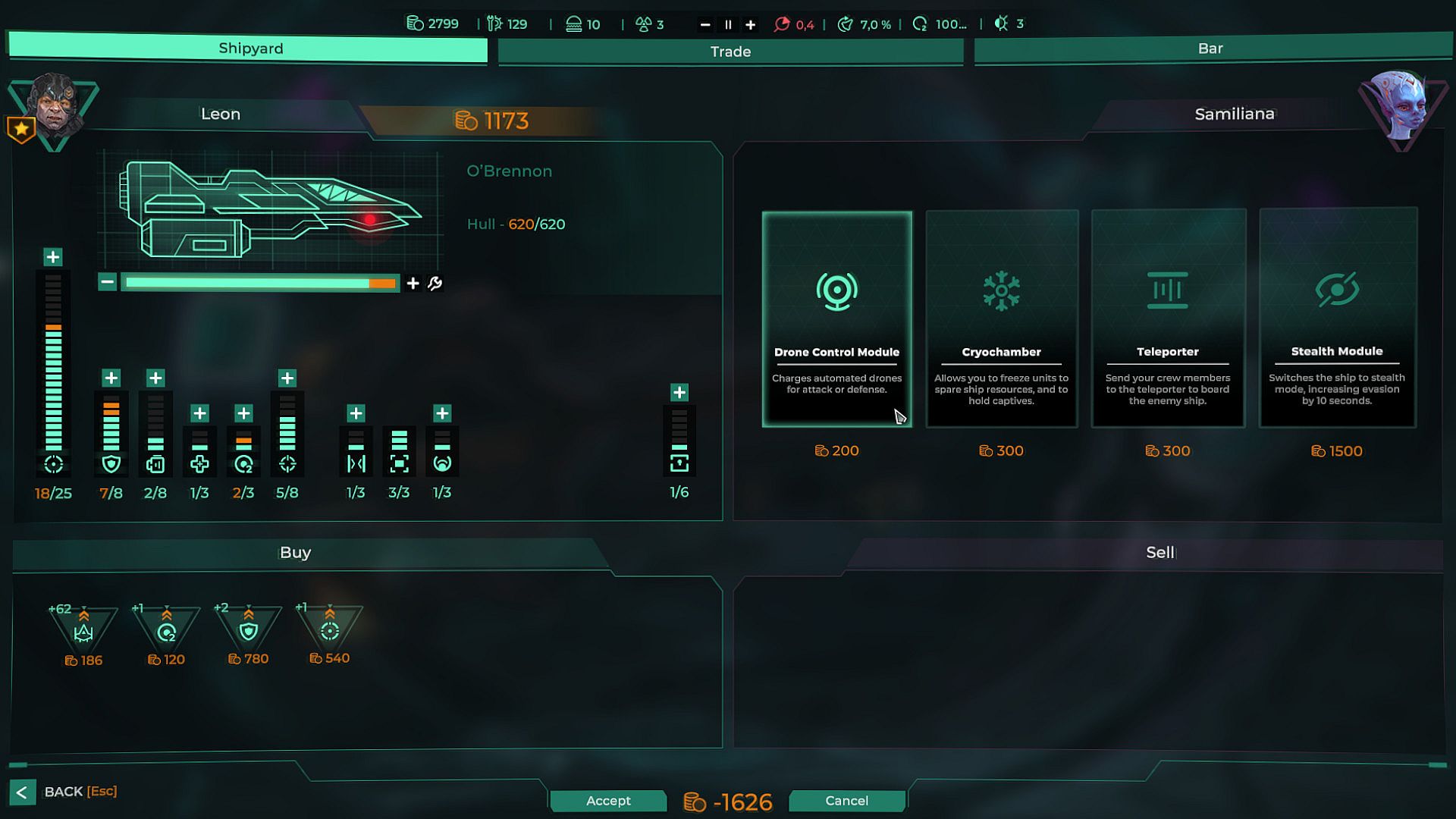
Crew assignment forms the backbone of success. Each member has defined roles and limitations, so mismanagement during a fight can lead to cascading failures in power distribution or weapon firing. Resources collected from victories fund incremental improvements to weapons and defensive systems rather than wholesale ship replacements.
The four races add variety through distinct ship designs and interaction styles. Human vessels offer balanced starting points, while Etari models prioritize efficiency, Rakkhi emphasize biological adaptations, and Taertikon focus on advanced technology. These differences influence both combat effectiveness and the types of events that appear during travel.
Procedural generation applies to sector layouts, event triggers, and enemy placements. Combined with the pause system, this setup rewards players who pause frequently to reassess threats and reassign crew in response to changing conditions. No two runs play identically because of these layered random elements.
Is It Worth Playing?
Trigon: Space Story suits players who enjoy roguelike structure and tactical decision-making in a space setting. The permanent death mechanic and crew-focused combat create tension that rewards careful preparation and adaptation. Mixed reception on Steam, with 67 percent positive reviews from over 1,200 submissions, reflects both appreciation for the combat depth and criticism of balance in certain encounters.
The game remains available as a complete title with no ongoing seasonal content or major post-launch updates documented in recent periods. Those who appreciate FTL-style roguelikes will find familiar systems enhanced by three-dimensional visuals and expanded weapon variety. Players seeking a lighter experience or consistent progression without restarts may find the roguelike elements frustrating. Overall, the title delivers its intended loop of tactical space battles and crew management for those aligned with its genre conventions.