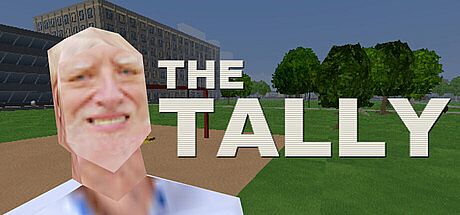


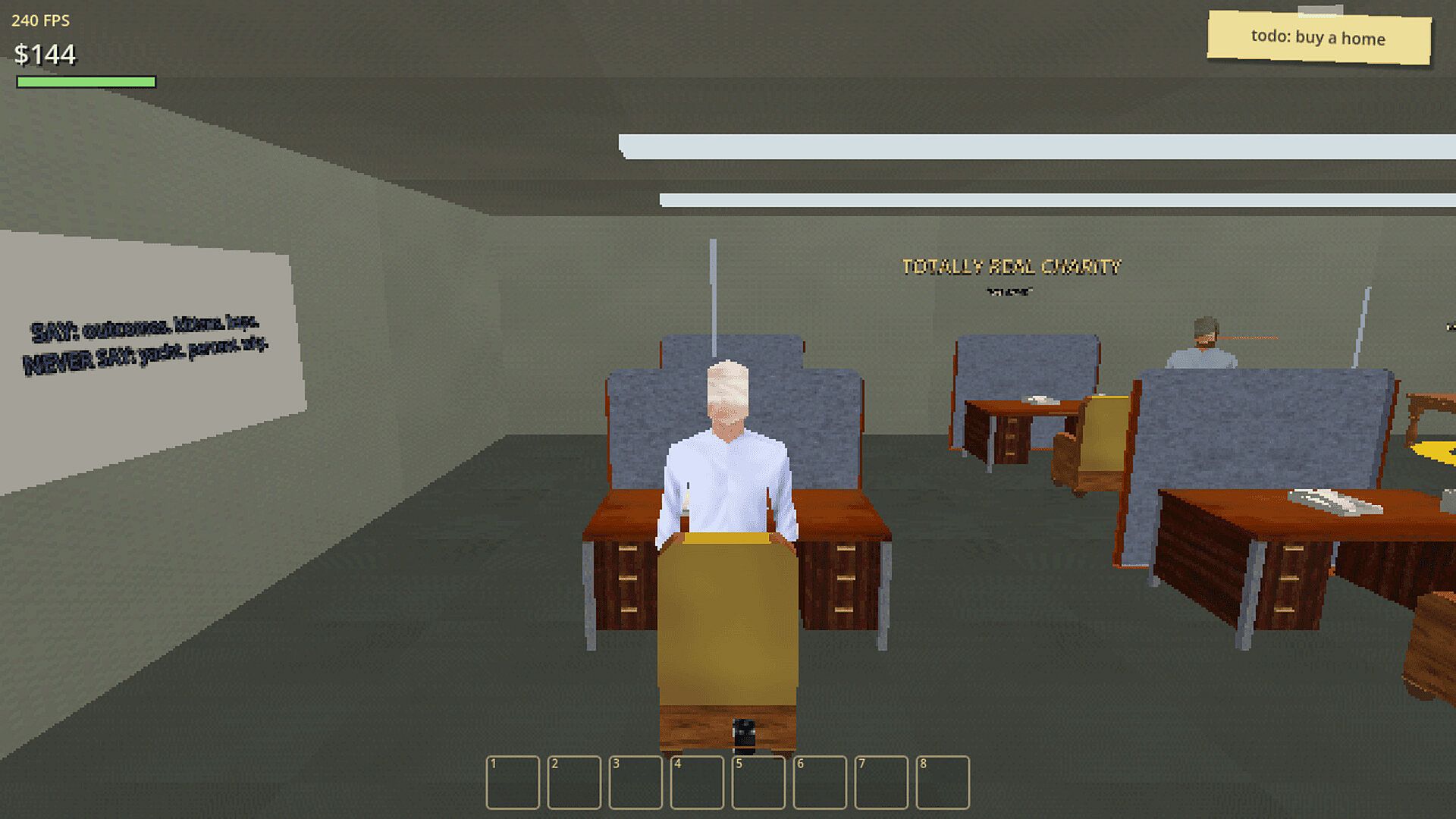
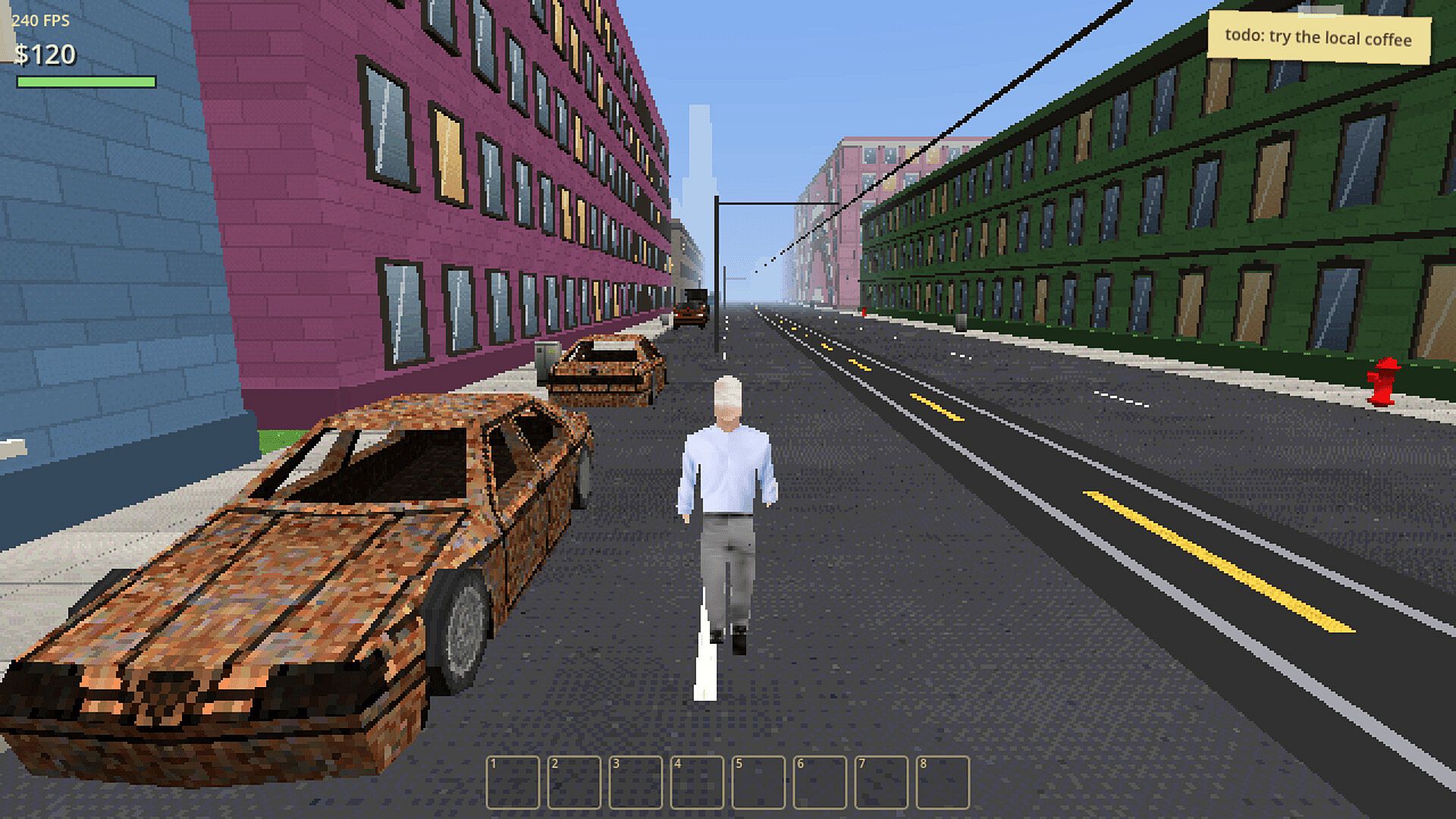
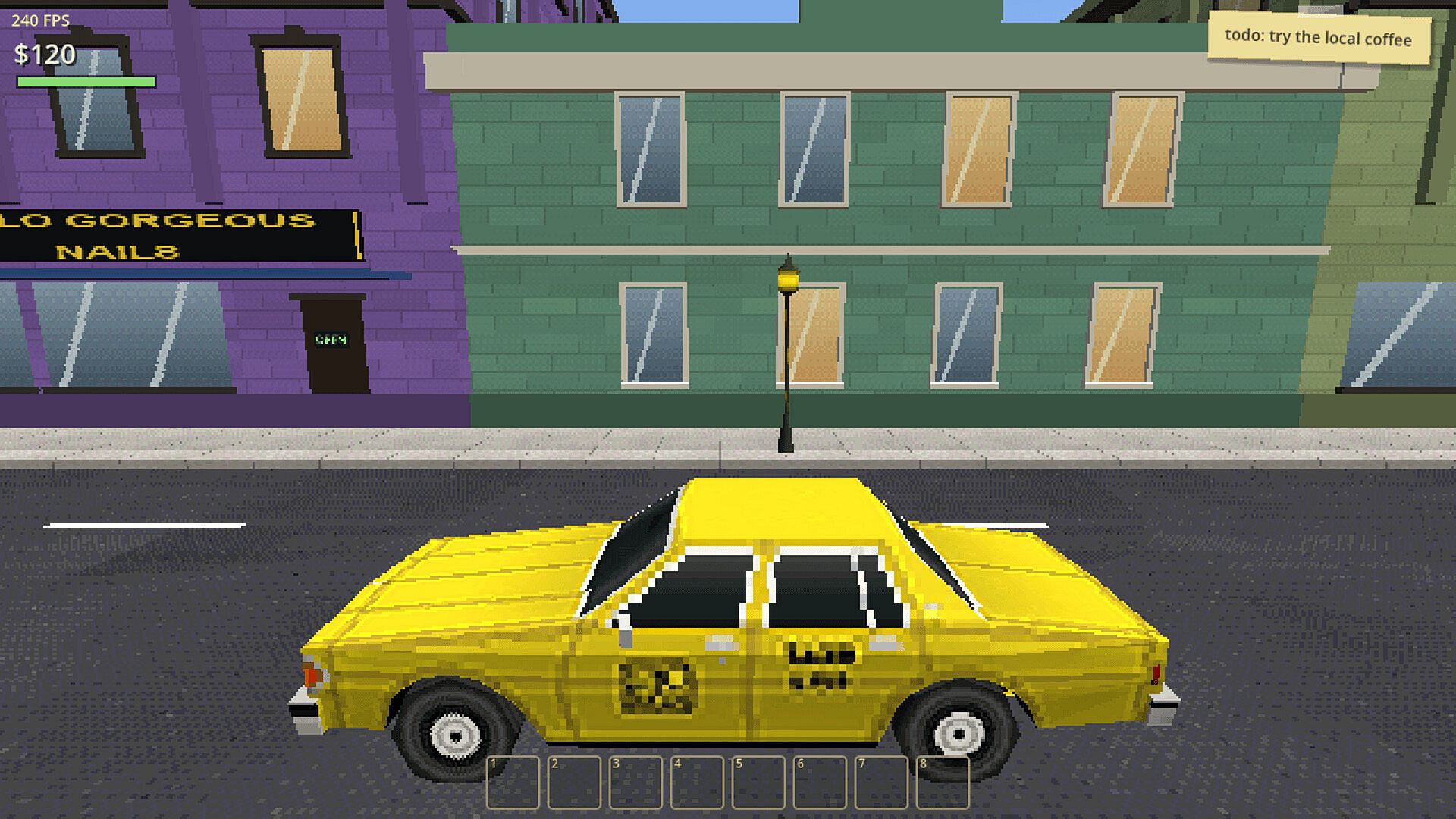
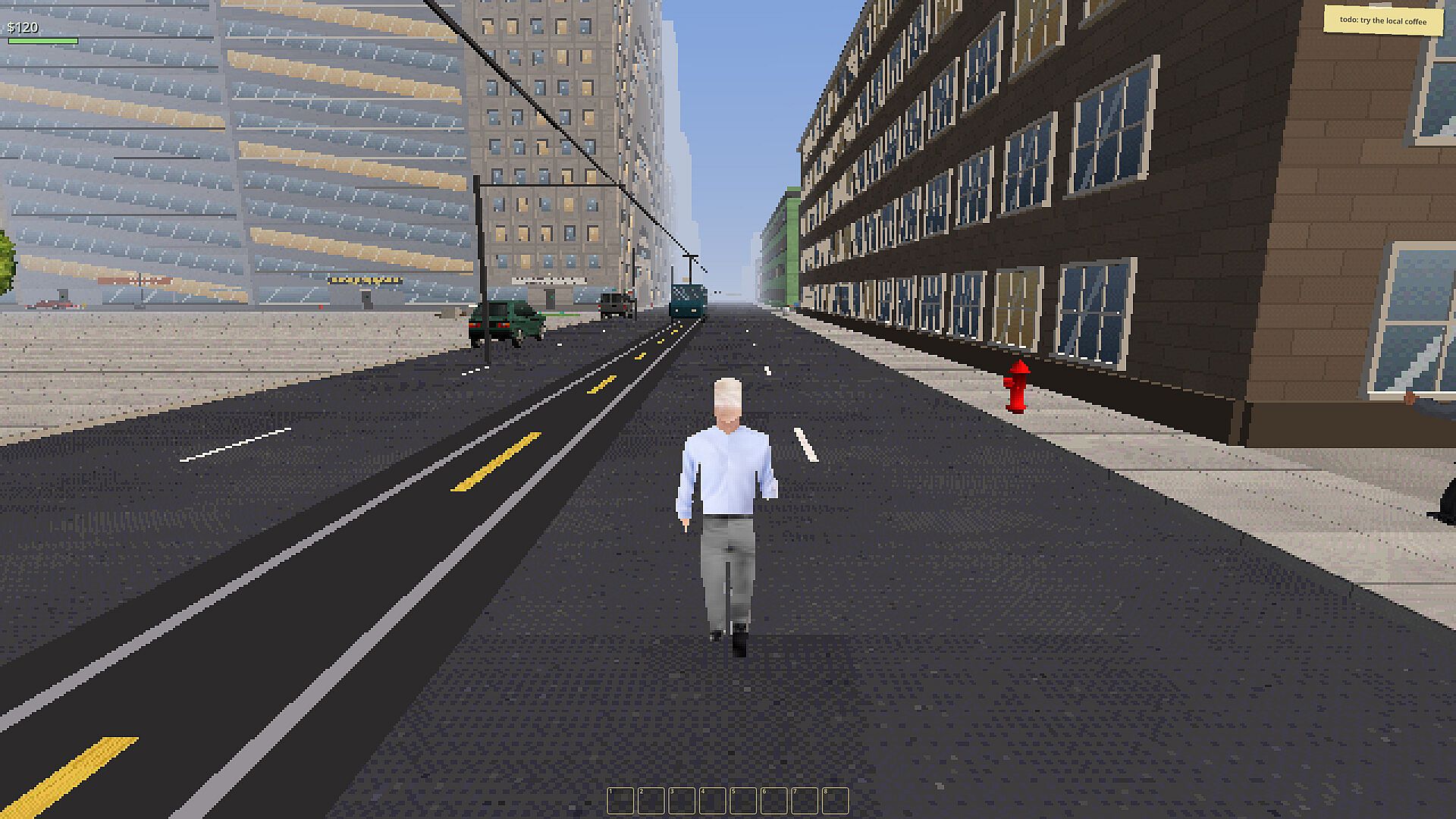
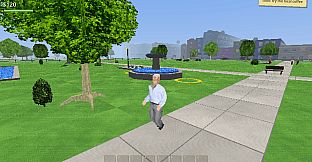
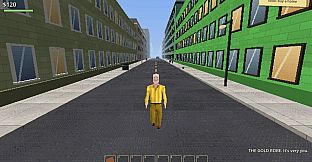
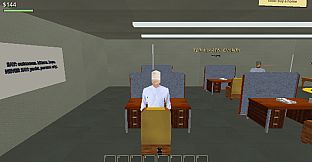
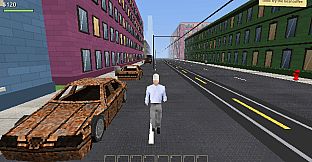
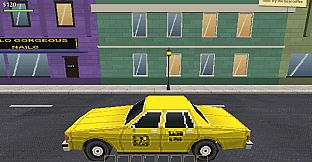

The Tally is a casual simulation game built around the quiet rhythms of everyday life in a compact city setting. Players step into the role of a newcomer arriving in Corvid City, where the focus rests on finding work, navigating daily routines, and navigating a series of small decisions that accumulate over time. The experience unfolds in a single continuous playthrough that lasts roughly ninety minutes from start to finish, emphasizing personal choices without any external scoring systems or guidance prompts during play.
Gameplay
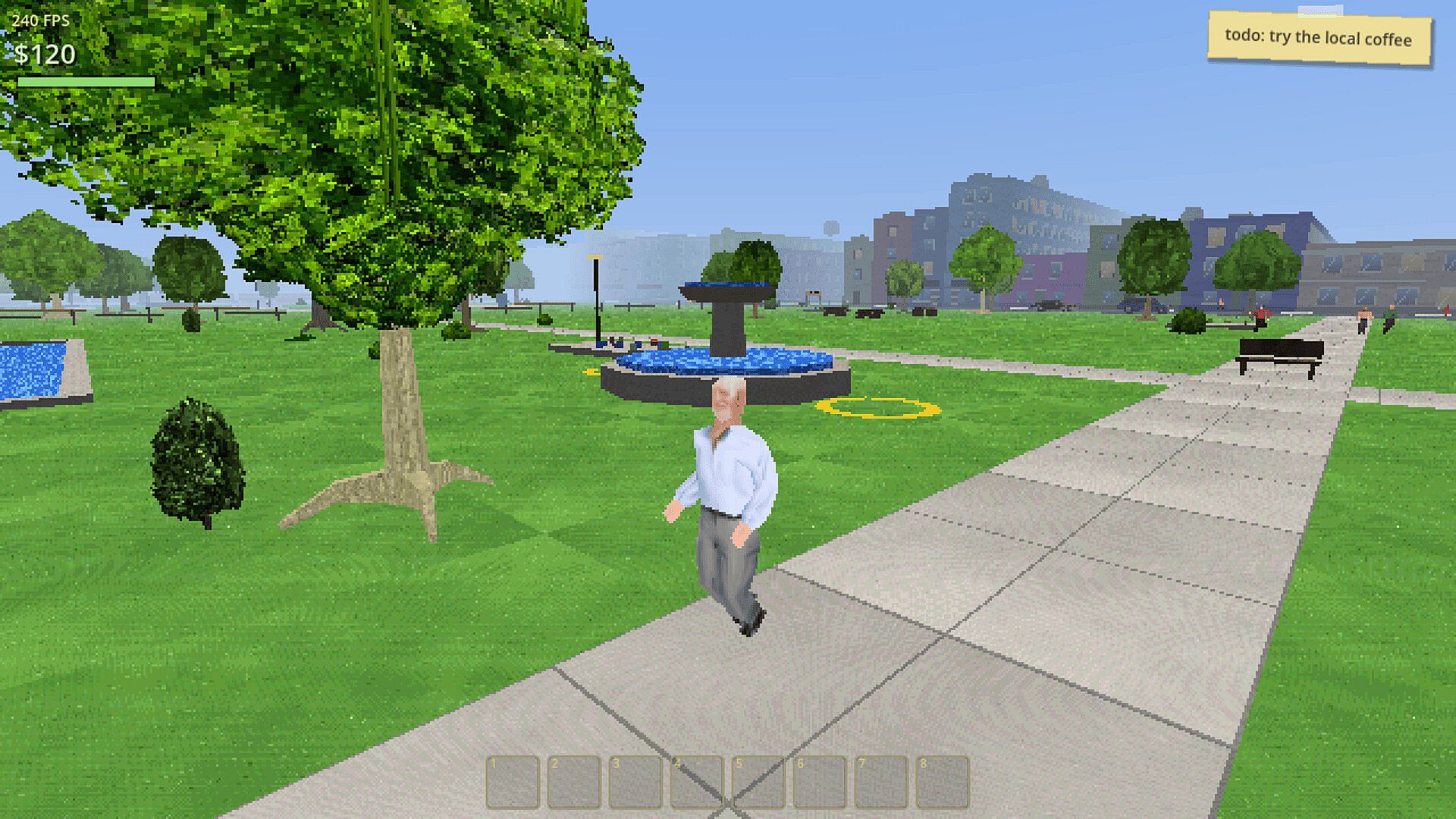
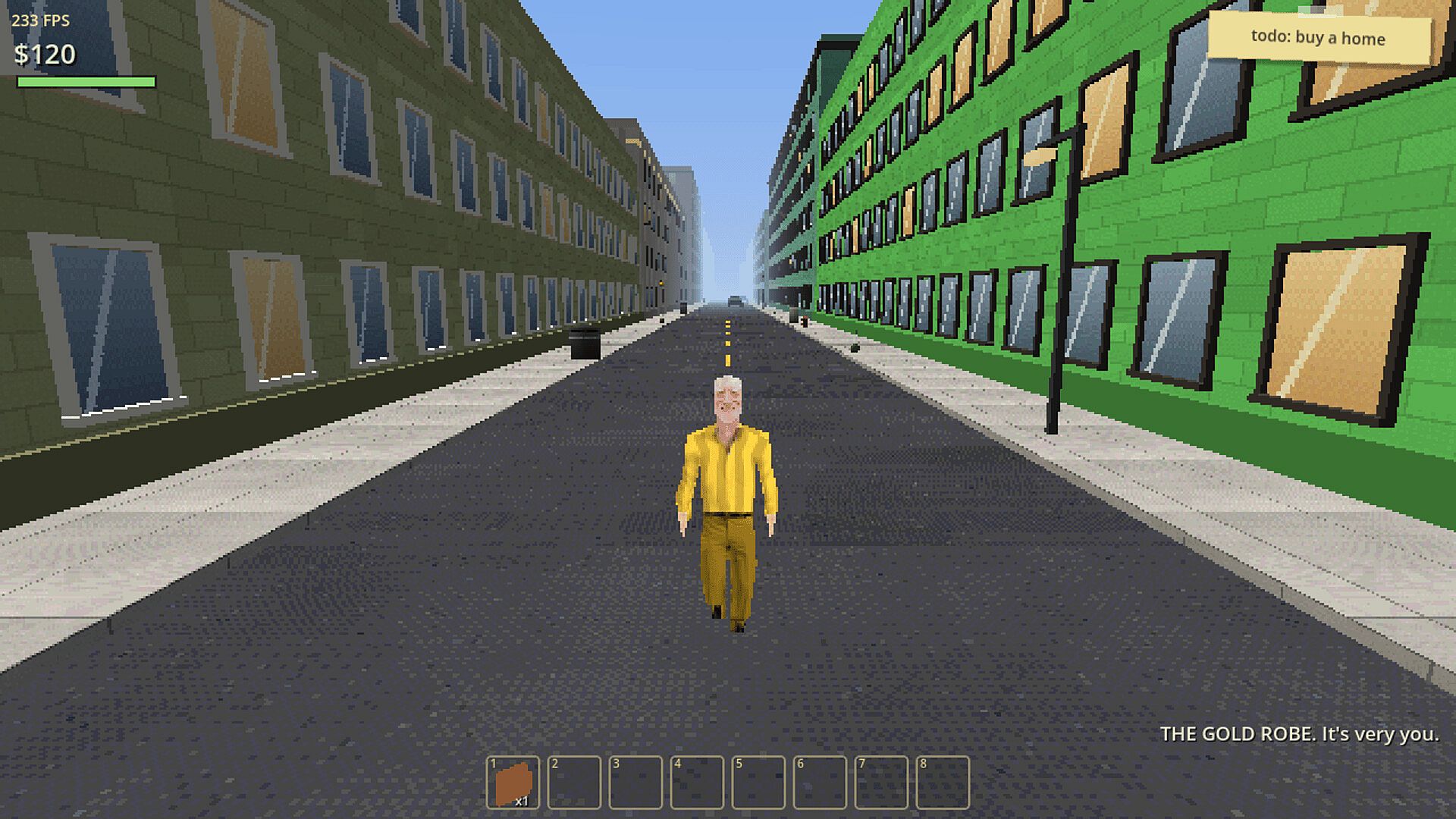
Core gameplay centers on living out a complete life cycle through routine activities and interactions. Players handle work shifts across eight available jobs, explore shops and streets on a skateboard, capture images for the local Tourism Board using an in-game camera, and build familiarity with recurring residents who respond to prior encounters. The city environment includes changing weather, functional locations, and a phone loaded with simple apps that support these activities. Movement and tasks feel grounded in a low-poly aesthetic reminiscent of earlier console eras, with no on-screen meters tracking behavior or progress. Every action, from holding a door to taking a shortcut or telling a minor untruth, registers internally and contributes to the final accounting.
The loop encourages repeated short sessions through its contained length, allowing players to experiment with different approaches to the same daily structure. Regulars remember previous meetings, which influences later conversations and opportunities. The skateboard serves as a practical traversal tool while also tying into affordability challenges that mirror real-world constraints. Photography assignments provide structured side activities that integrate naturally into exploration without overriding the central focus on living day to day.
Game Modes
The Tally operates exclusively as a single-player title with no separate multiplayer components or selectable modes. The entire experience flows as one uninterrupted narrative arc that begins with arrival in the city and concludes with a definitive ending. There are no branching campaigns, competitive elements, or cooperative features. Instead, the structure relies on the player's organic choices within the fixed timeframe to shape outcomes, supported by the persistent memory of non-player characters and environmental details.
The City and Daily Life
Corvid City functions as a self-contained, hand-crafted space that responds to player presence through jobs, commerce, and weather patterns. Residents maintain consistent schedules and reactions based on accumulated interactions, creating a sense of continuity across the short lifespan. The eight jobs range across typical urban roles that players cycle through or select based on immediate needs, while the phone apps facilitate coordination of tasks like photography gigs. Affordability mechanics around items such as the skateboard add practical layers to resource management without complex systems. This setup rewards attentive play through subtle changes in how the world acknowledges the player over time.
The Receipt and Resolution
Once the allotted time concludes, the game delivers a comprehensive summary known as THE RECEIPT. This document itemizes every recorded action, positive or otherwise, and determines the player's placement in the afterlife. The resolution emphasizes the cumulative weight of minor decisions rather than any single dramatic event. Players receive this accounting without prior indicators of success or failure, aligning with the design choice to avoid tutorials or visible progress trackers throughout the session.
Is It Worth Playing?
The Tally suits players who appreciate concise, choice-driven simulation experiences that prioritize personal reflection over extended campaigns or competitive elements. Its single continuous playthrough and emphasis on unguided living make it accessible for short sessions, while the memory systems and final receipt provide replay value through different decision paths. With no user reviews available and the title listed as coming soon, current interest centers on the described mechanics of job variety, character interactions, and the unique ending structure. Those drawn to narrative-focused casual simulations without hand-holding or long-term progression systems will find the contained format aligns closely with the core appeal of completing a full life arc in under two hours.