













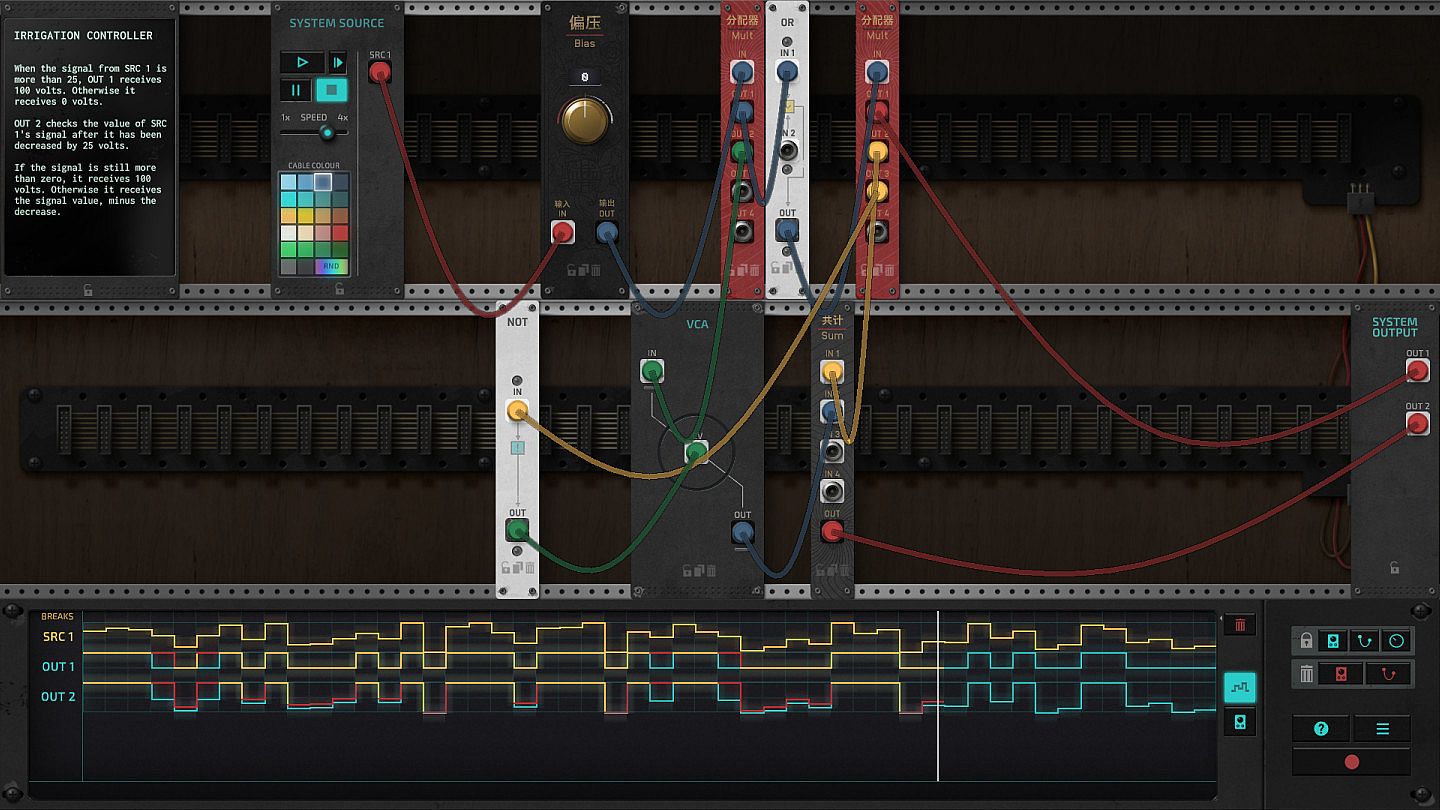
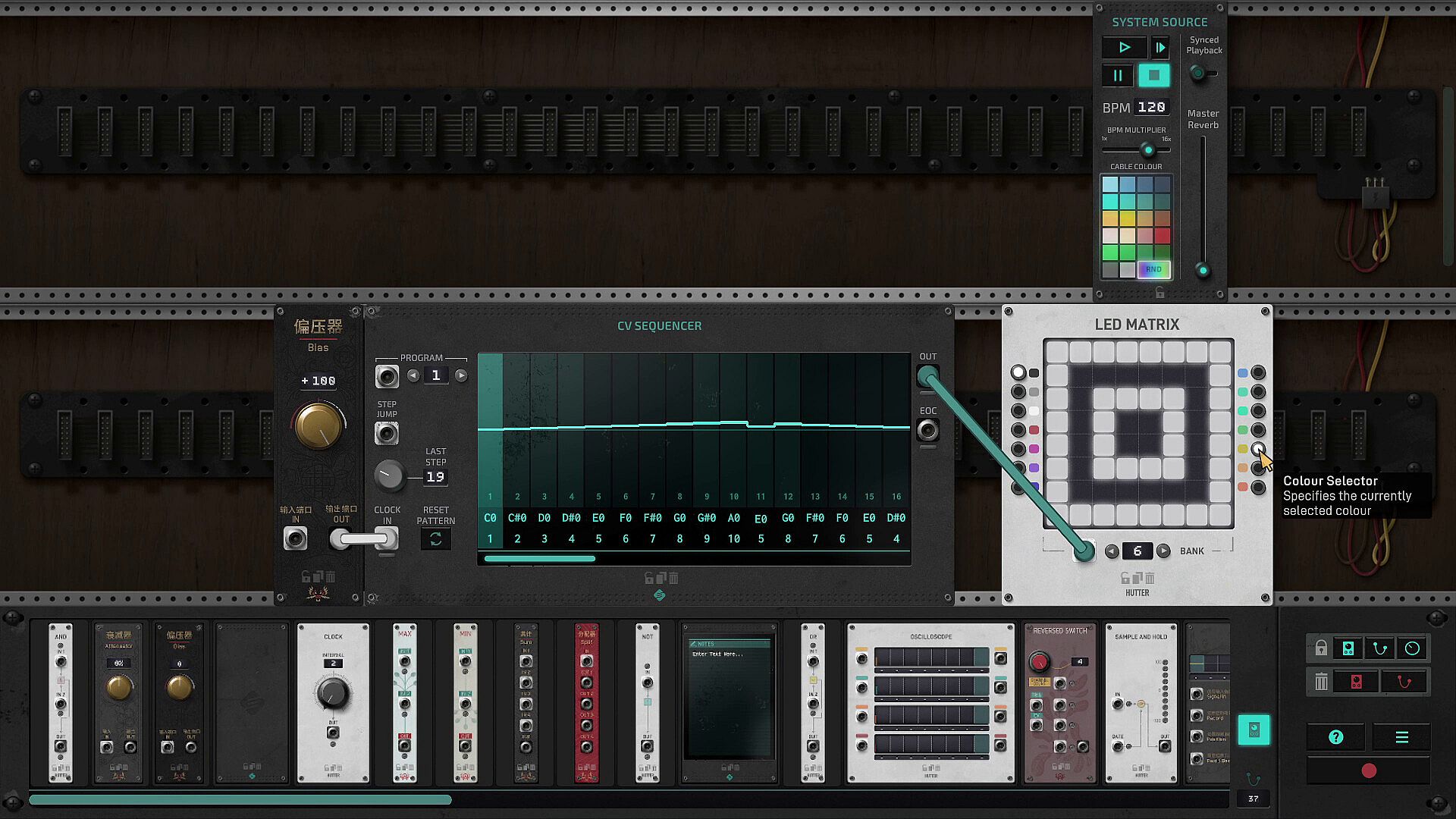
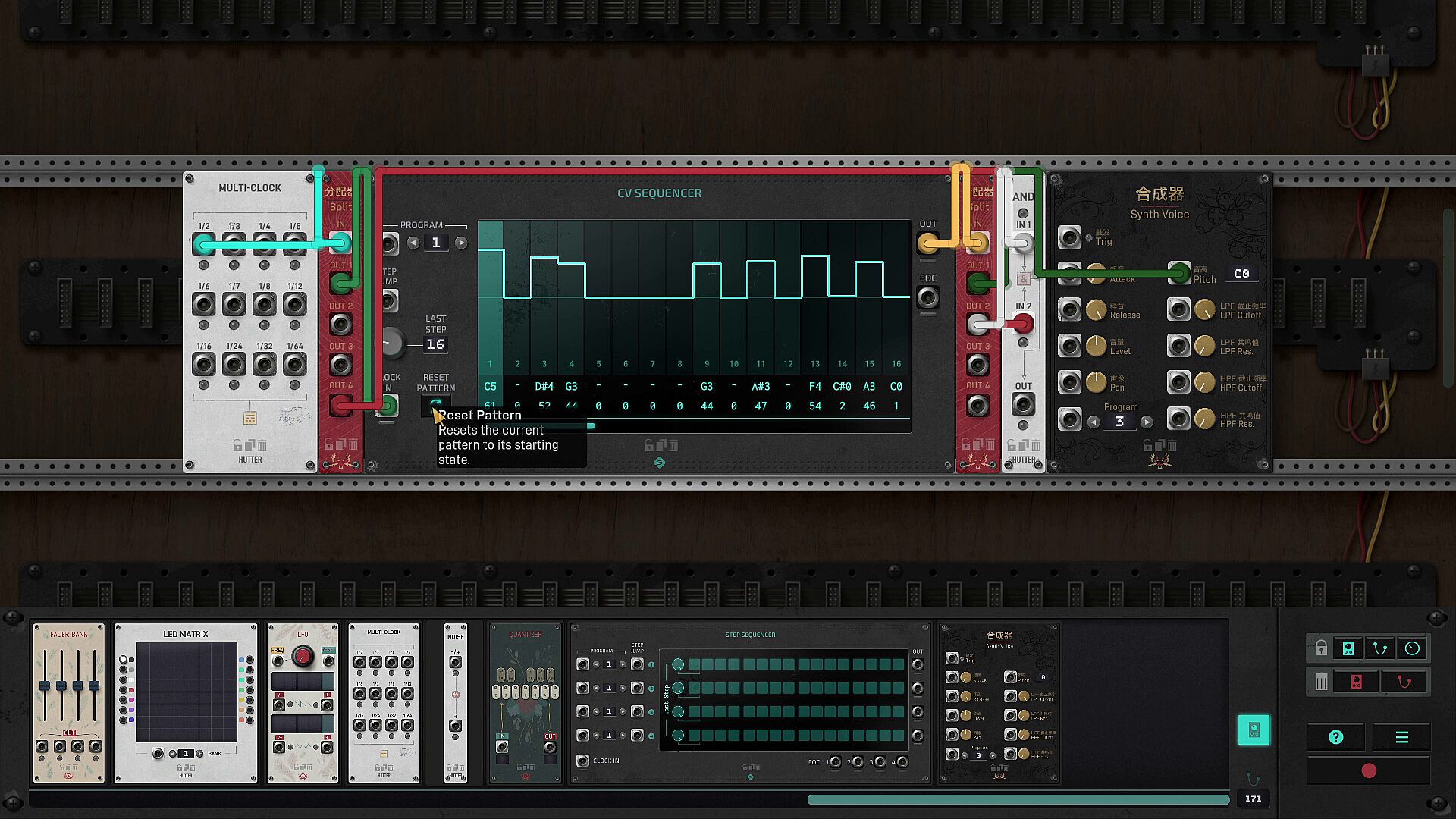
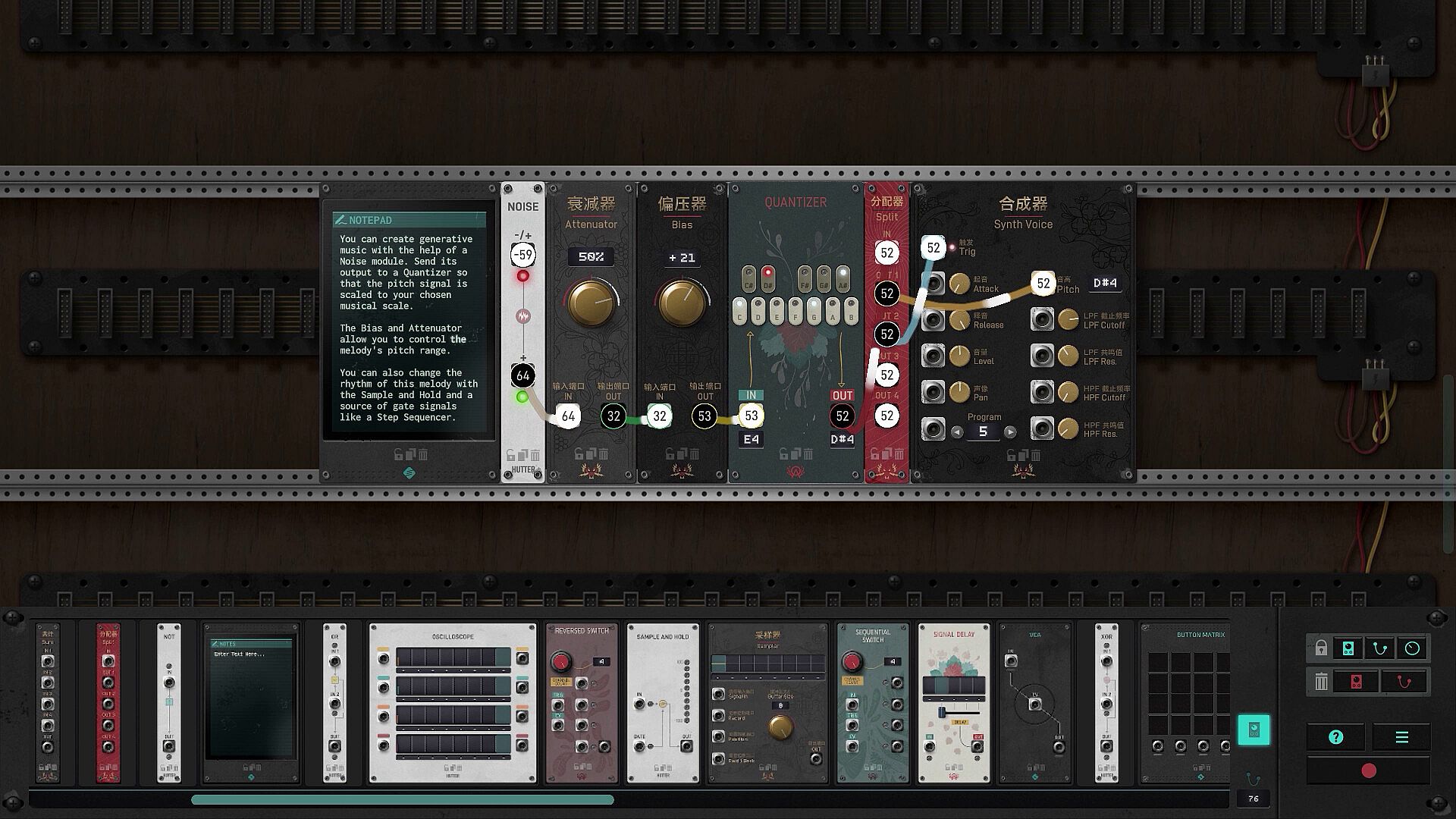
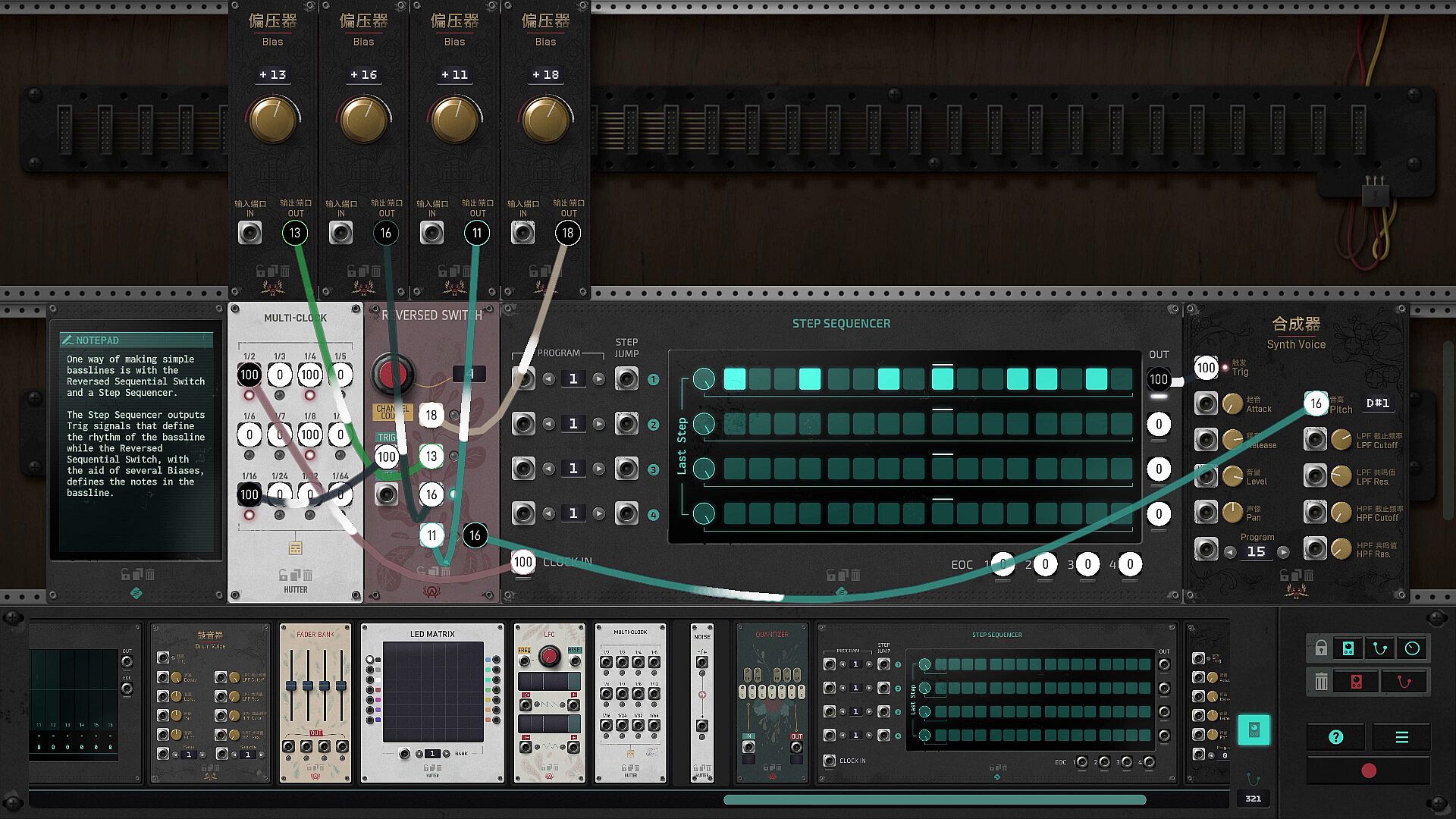
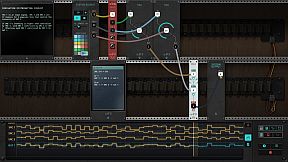
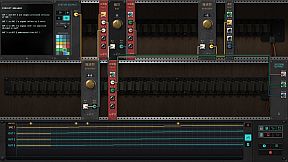
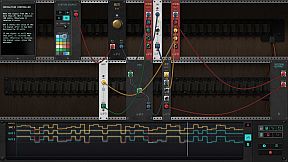
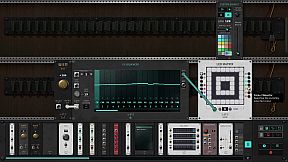
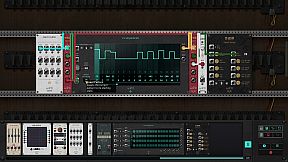
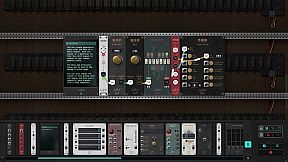
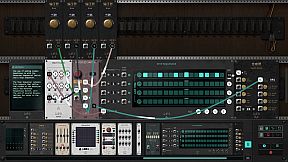
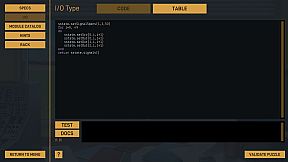

The Signal State is a simulation game centered on logic puzzles that draw direct inspiration from modular synthesizers. Players work to keep a signal alive by routing audio and control voltages through specialized modules connected by patch cables. The core loop revolves around analyzing input signals, selecting the right modules for each task, and building functional signal paths that meet precise output requirements.
Gameplay
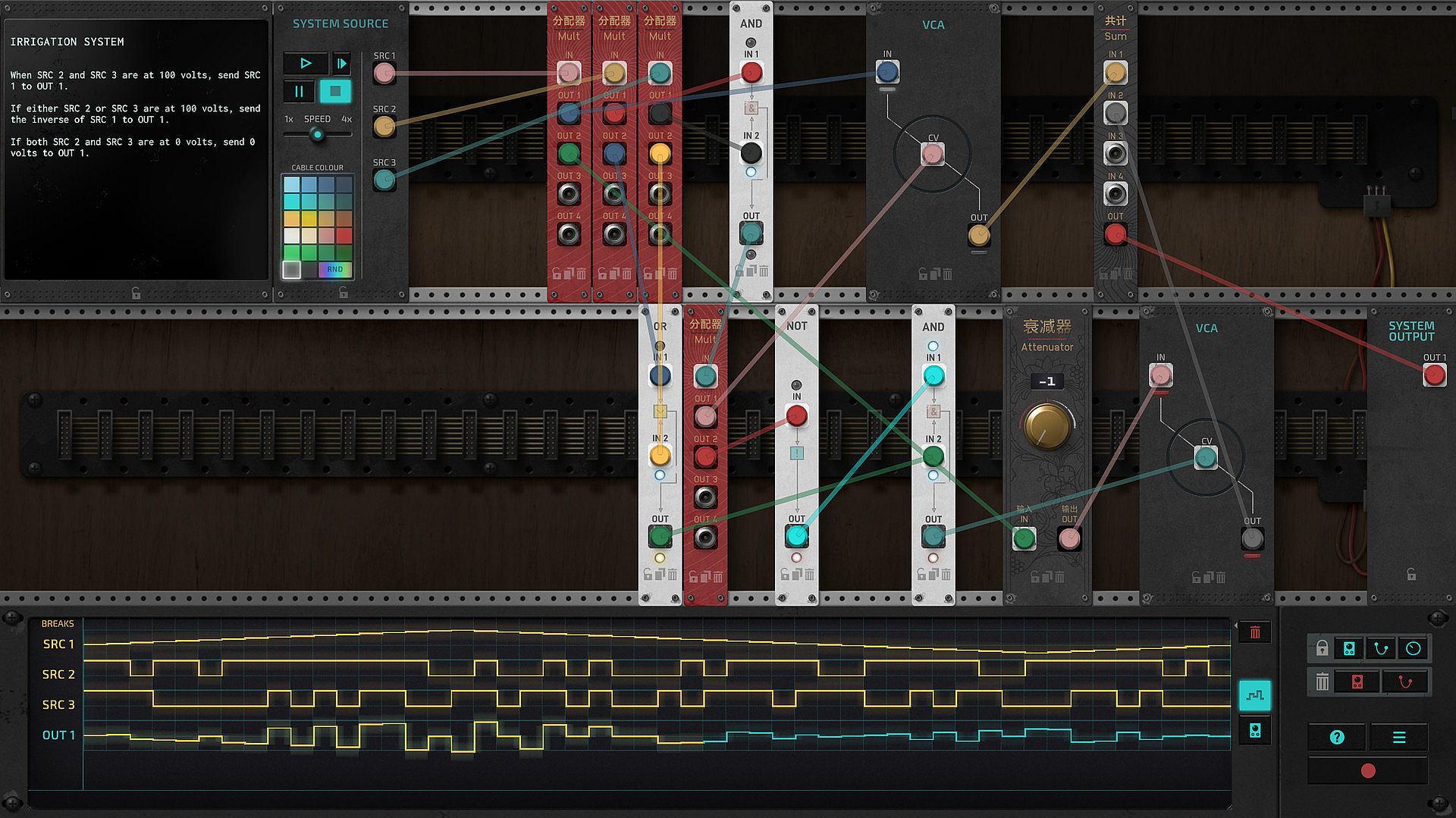
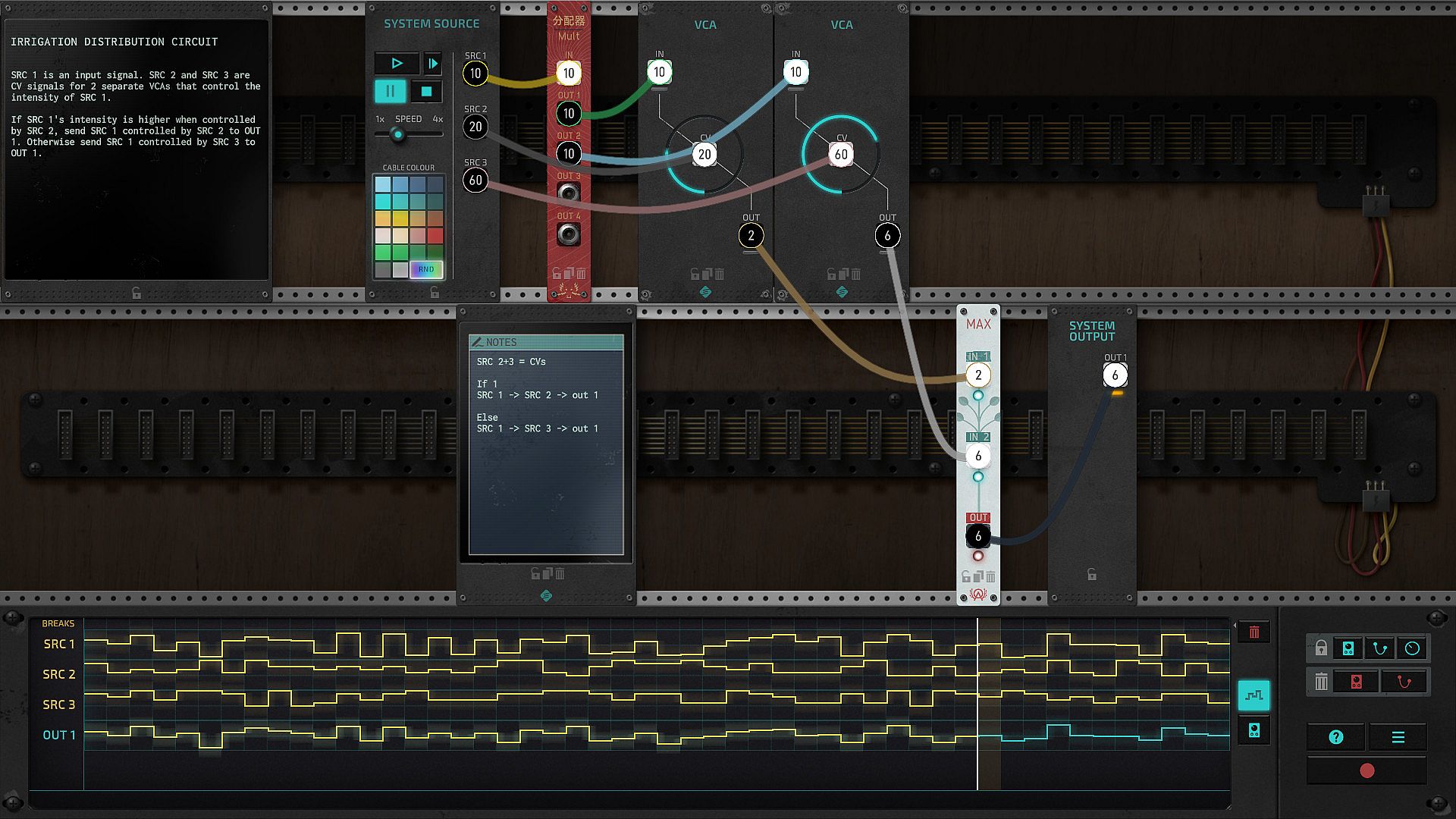
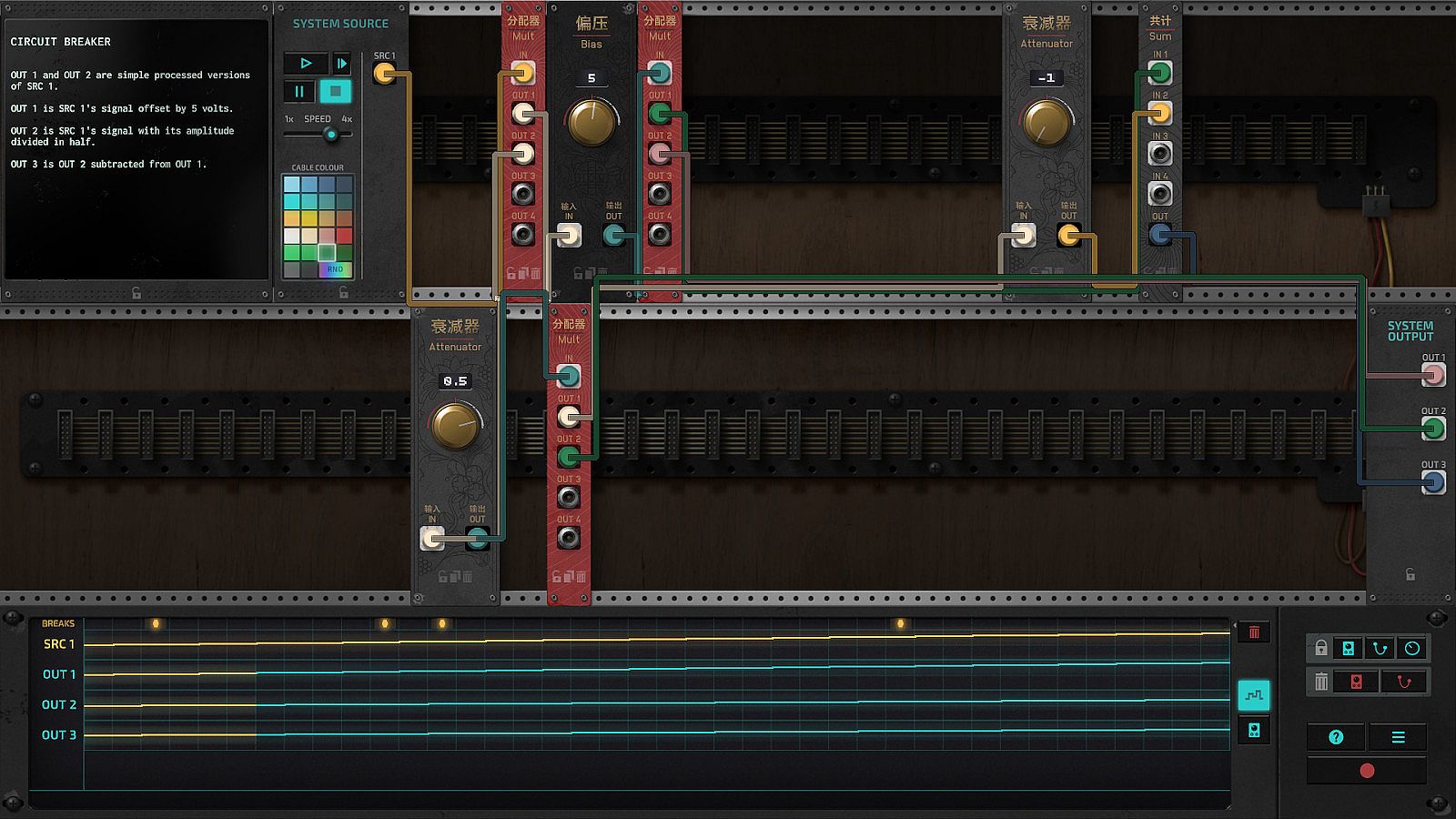
Each puzzle presents a set of input signals that must be transformed into specific outputs. Modules perform functions such as filtering, sequencing, mixing, and generating waveforms. Connections happen through a drag-and-drop interface that lets players route cables between any available jacks on the modules. Success depends on understanding how each module processes signals and how they interact when chained together. The game provides more than 40 puzzles that gradually introduce new modules and increase in complexity, requiring careful planning of signal flow and timing.
Visual feedback shows signal activity in real time, helping players debug their setups. Color options for cables and three distinct rendering styles allow users to adjust the display for better readability during long sessions. The interface remains focused on the patchbay, with minimal distractions so attention stays on the logic of the connections.
Game Modes
The main experience consists of structured puzzle levels that teach module behavior step by step. Completing these levels unlocks additional modules for use elsewhere. Leaderboards track performance on each puzzle, encouraging efficient solutions with fewer modules or shorter cable runs.
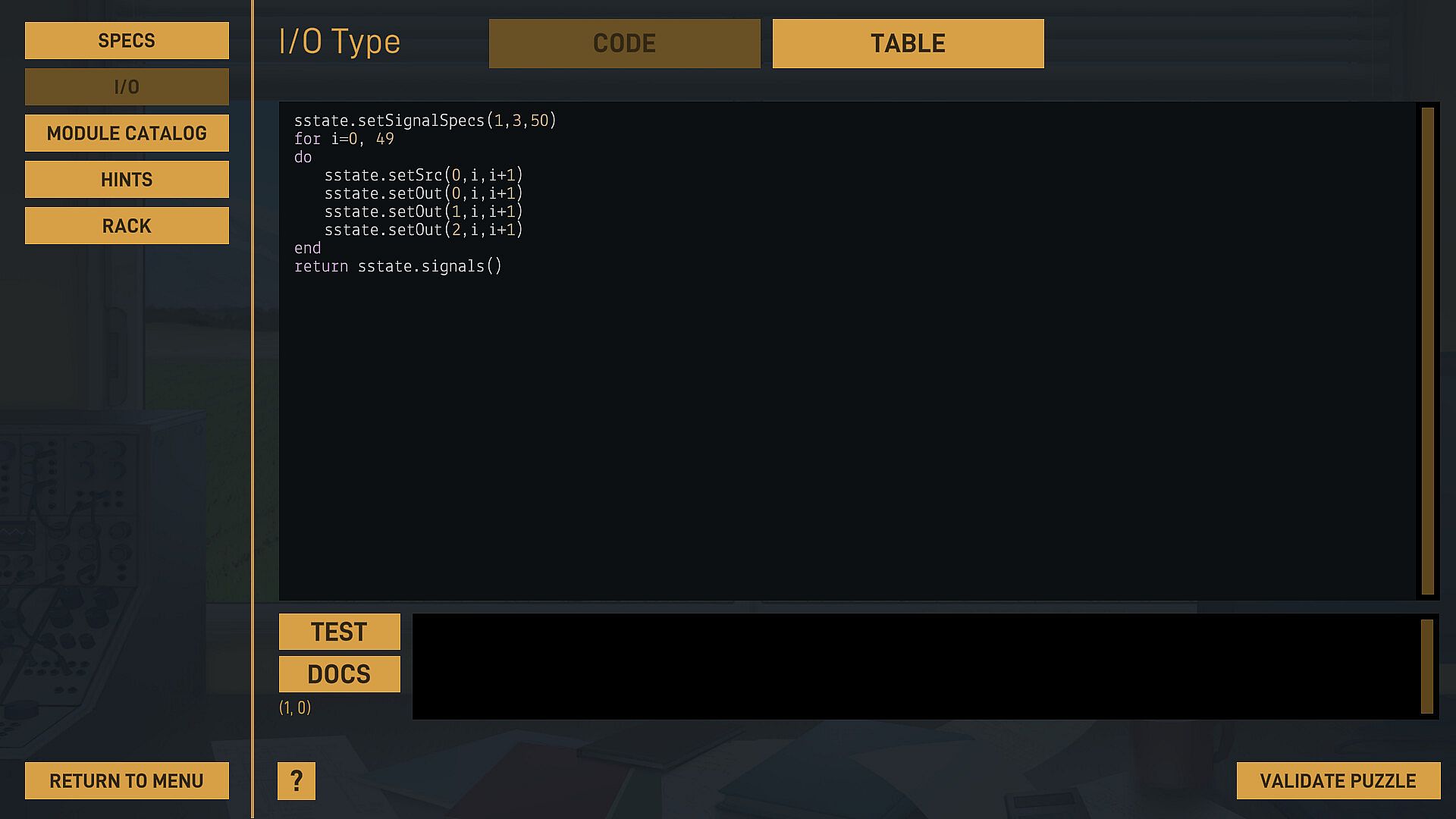
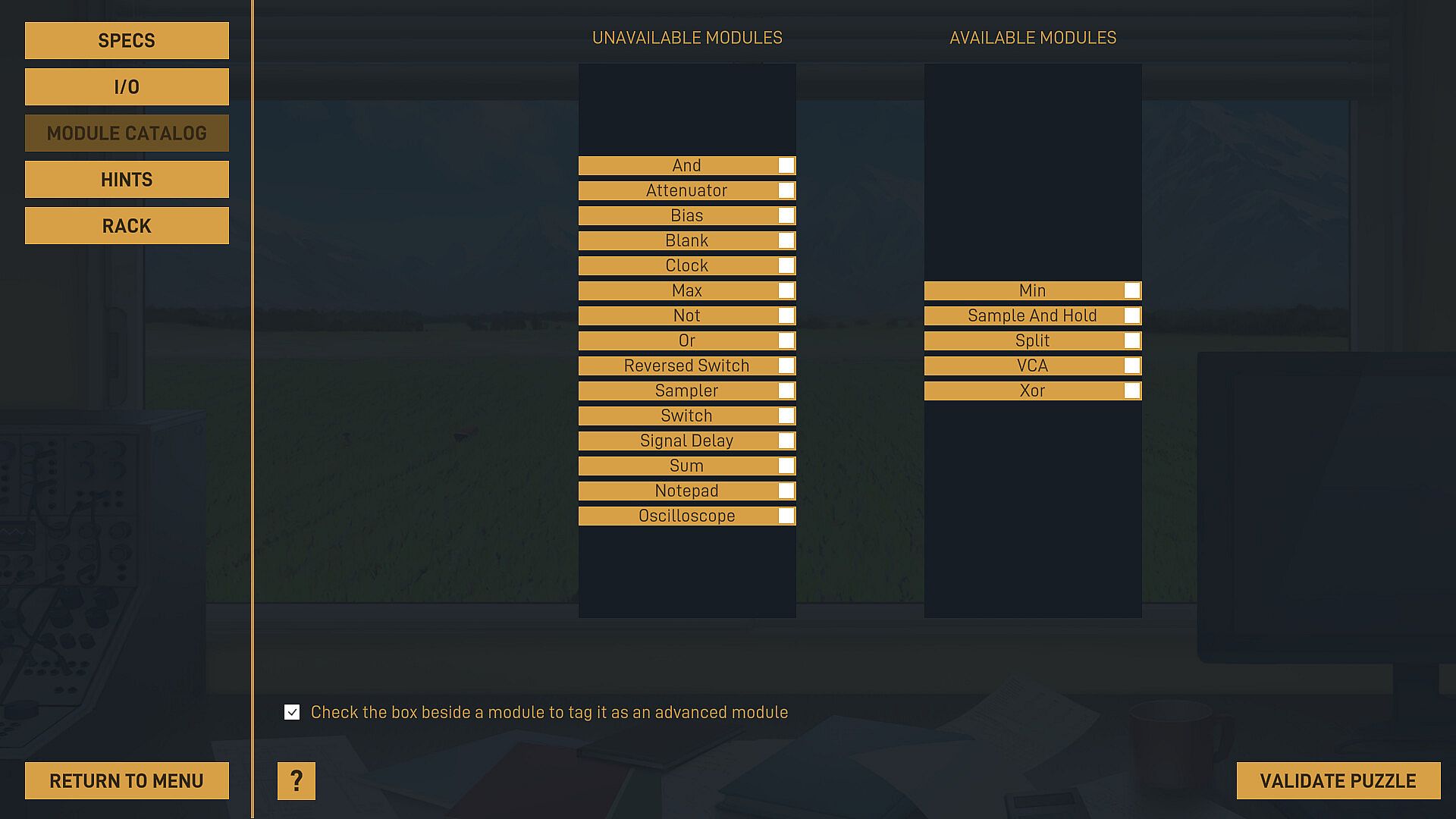
Sandbox mode removes all constraints and provides every module at once. Players can build any configuration they imagine, experiment with sound generation, or simply explore signal routing without goals or timers. A built-in puzzle designer lets users create their own challenges and share them through integrated workshop support, extending the available content beyond the original set of levels.
Customization and Immersion
Interface options extend beyond cable colors and styles. Players can rearrange module layouts within the workspace and save preferred setups for quick access during puzzle solving. The module designs emphasize tactile, hardware-like details that reinforce the synthesizer theme without requiring prior knowledge of electronic music equipment.
Progression feels steady because each new puzzle introduces one or two modules at a time. This measured approach helps players internalize how signals move and combine before facing more open-ended problems.
Is It Worth Playing?
The Signal State appeals most to players who enjoy methodical logic challenges and systems thinking. Its reception has been very positive, with the majority of reviews highlighting the satisfying moment when a complex patch finally works as intended. The combination of guided puzzles and unrestricted sandbox play gives it strong replay value for those who like to tinker.
Anyone interested in simulation games that reward precise planning and iterative testing will find a focused experience here. The absence of time pressure in most modes keeps the emphasis on understanding rather than speed. Current player feedback indicates the game remains stable and complete, with the full set of features available from launch onward. If modular patching and signal logic sound engaging, the title delivers a consistent and well-scoped package on PC.