





















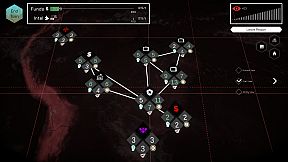
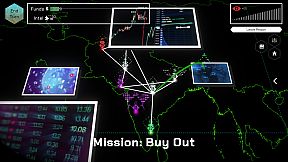
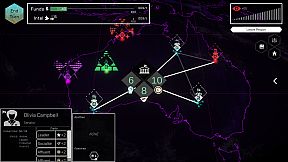
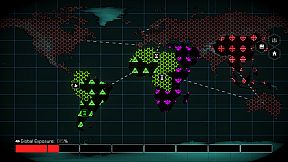
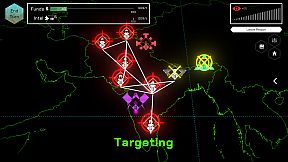
The Shadow Government Simulator is a turn-based strategy and simulation game for PC where players lead a secret organization in a bid for global domination. The experience centers on infiltration, network building, and careful resource management across procedurally generated maps.
Gameplay
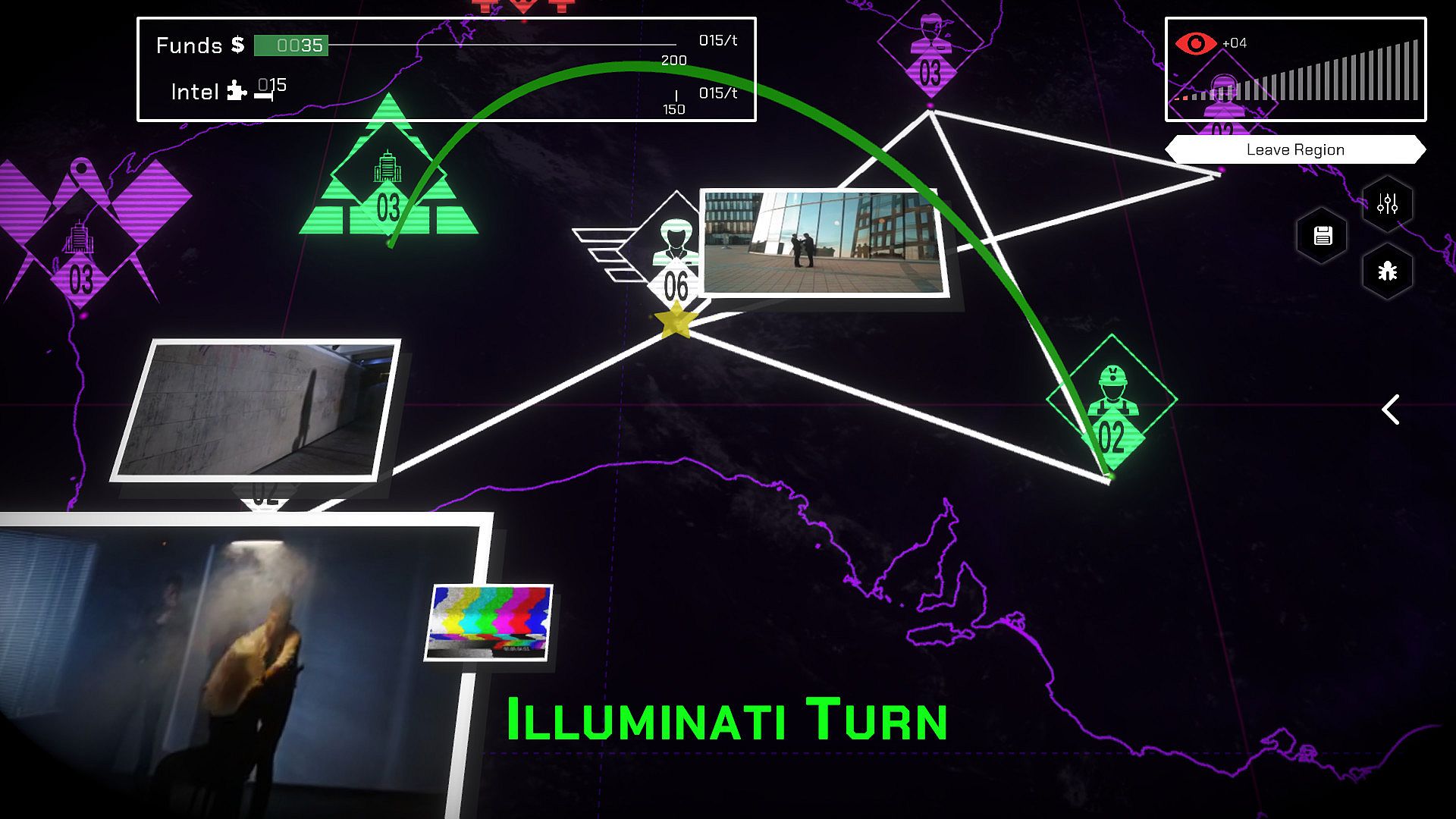
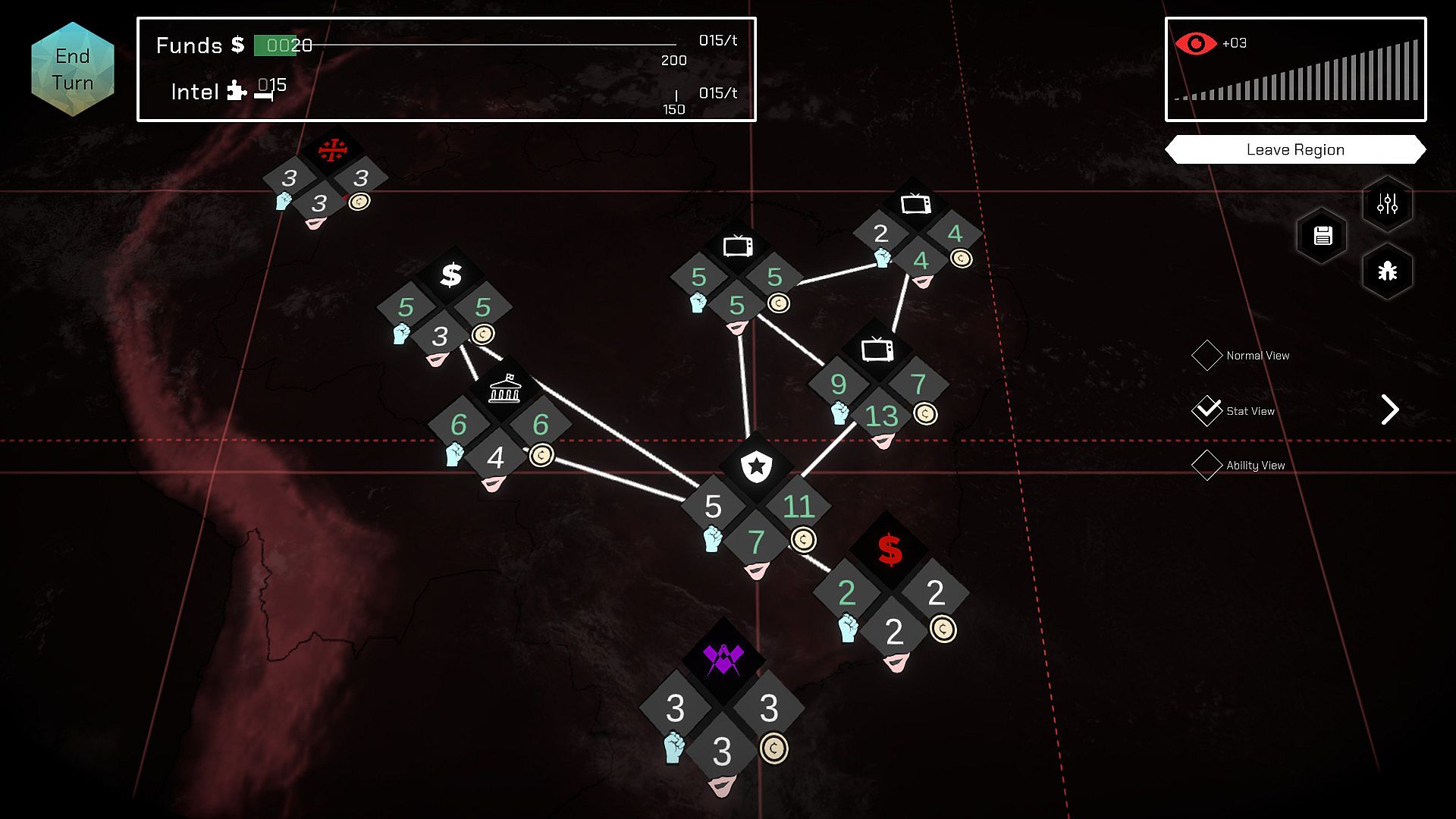
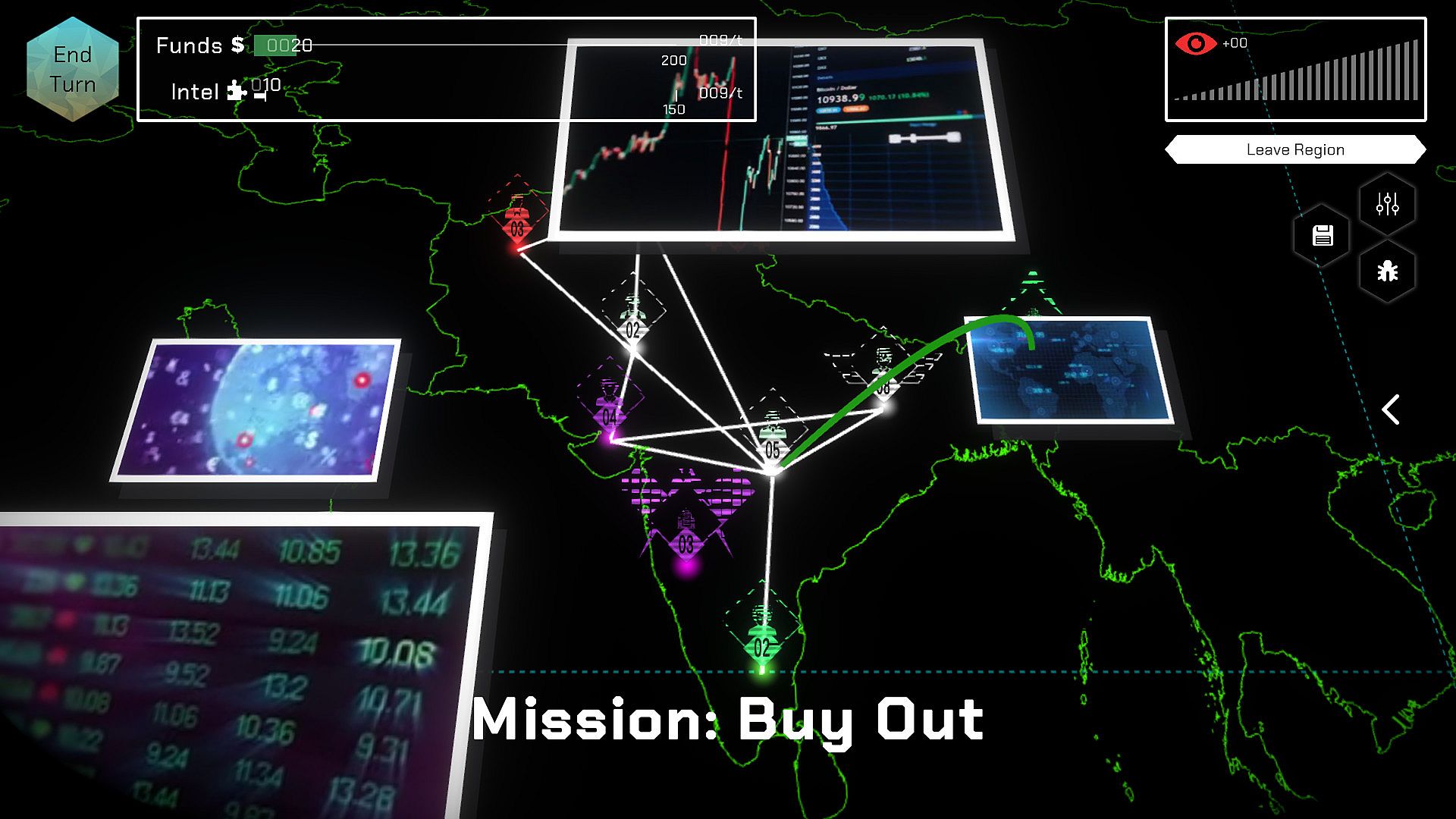
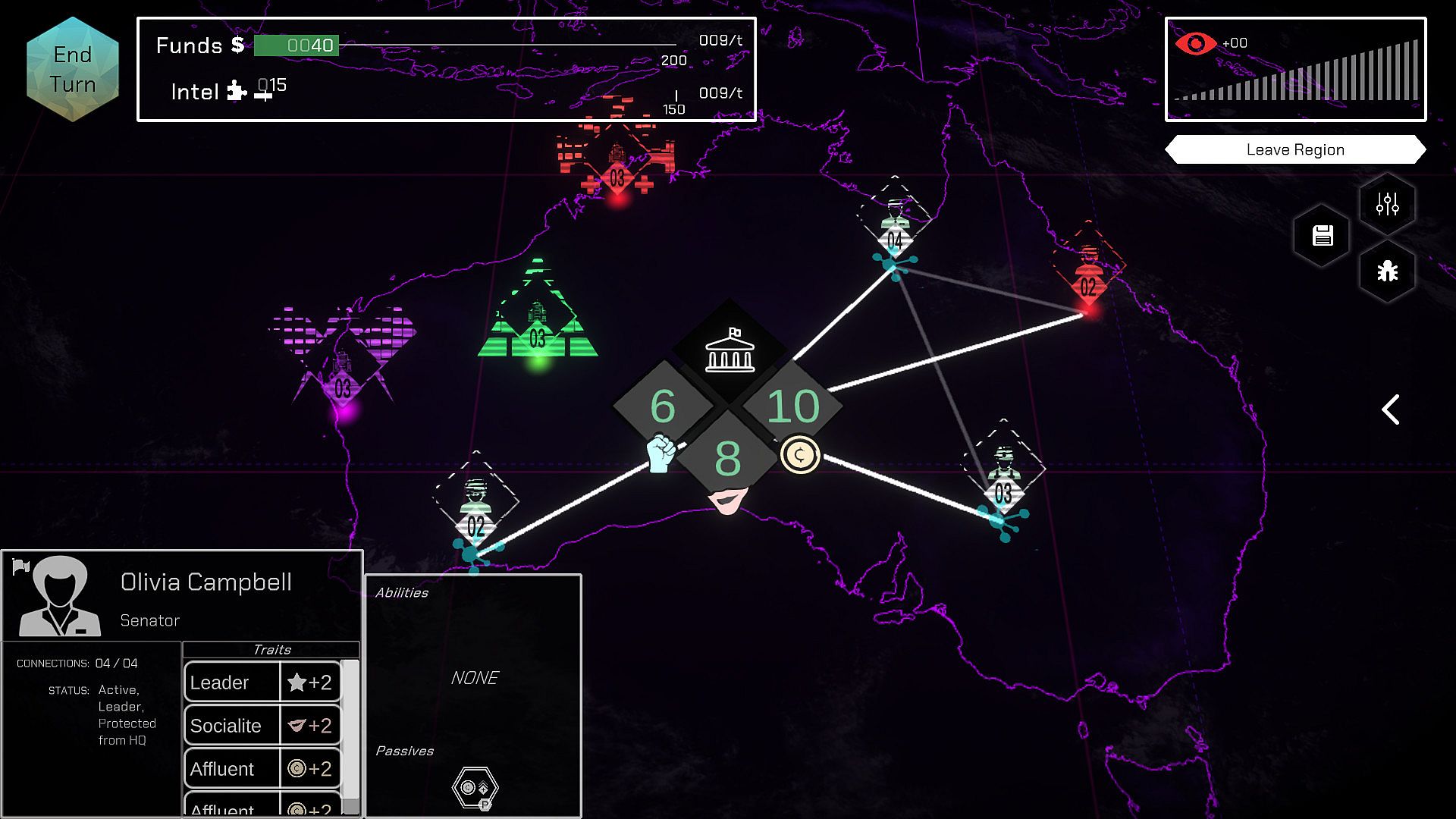
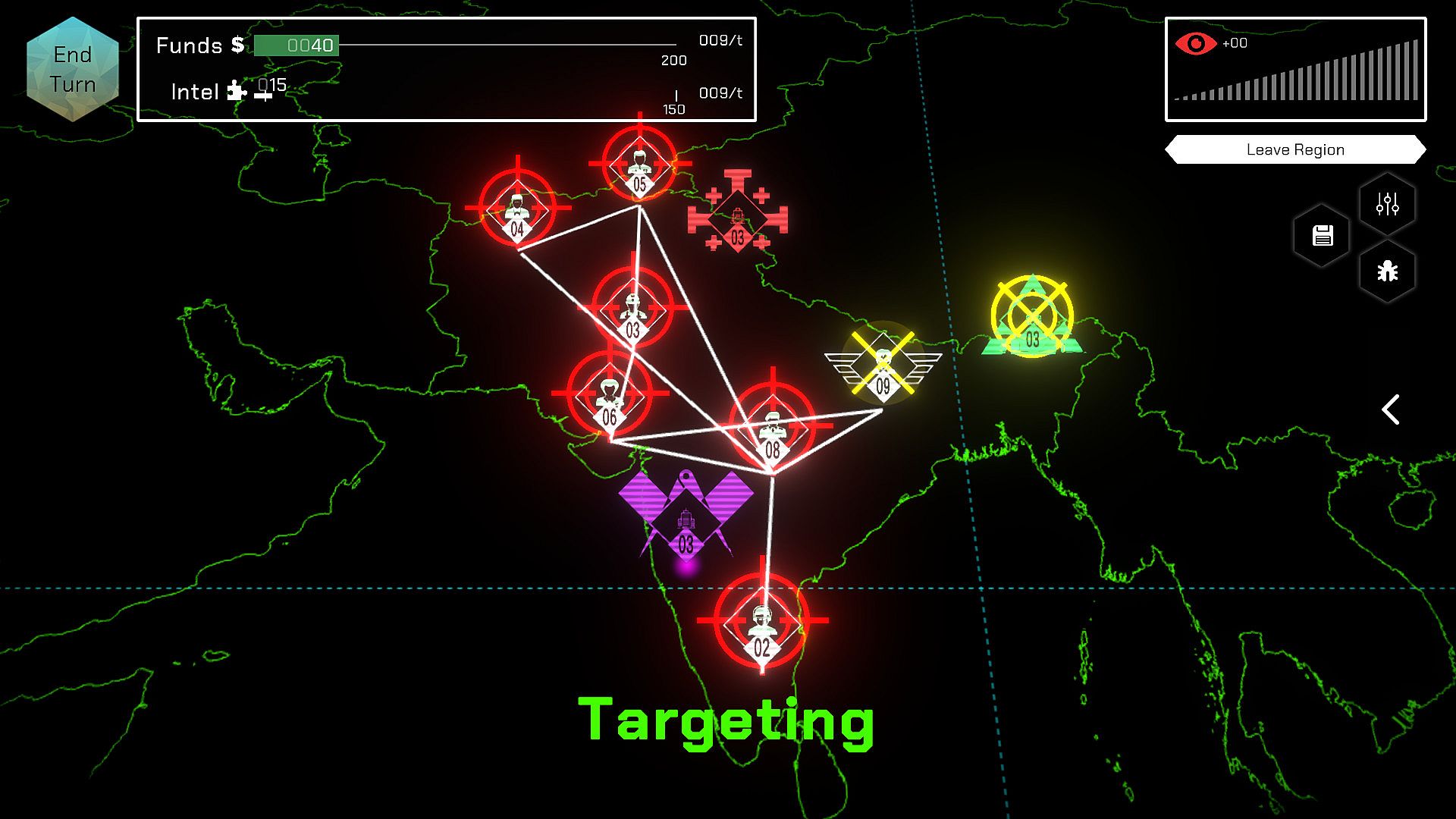
Players begin each campaign with a single headquarters in a chosen nation and limited starting information. Actions unfold in turns as agents investigate influential figures, uncovering traits, connections, and power levels within regional networks. Conversion happens through targeted approaches that exploit discovered weaknesses, gradually expanding control person by person.
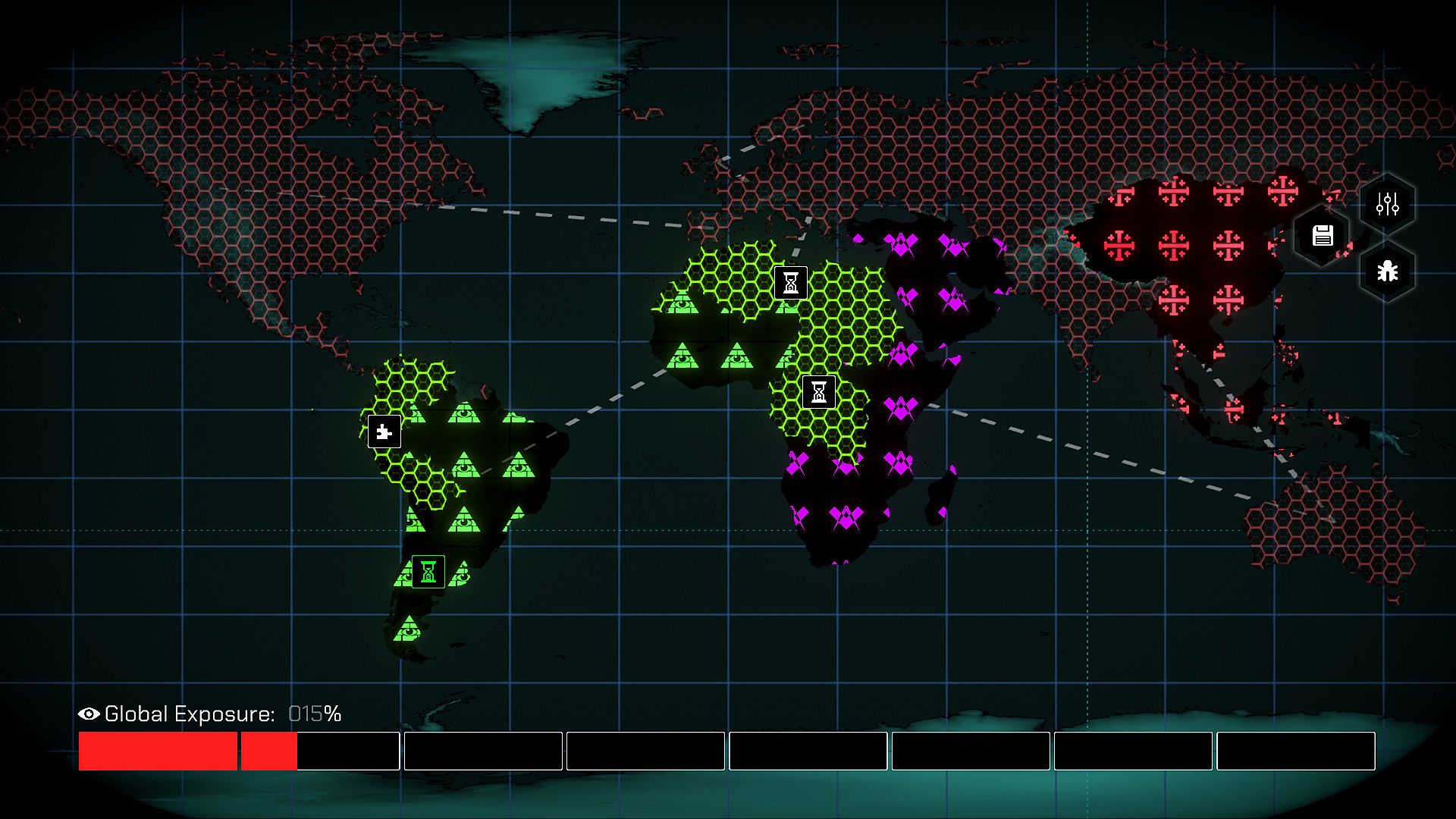
Visibility rises with network size, increasing the risk of exposure and countermeasures from nations or rivals. Management involves pruning or forging links to maintain secrecy while scaling operations. Resources such as Intel and Money limit actions each turn and replenish at the start of the next, forcing prioritization between expansion, defense, and adaptation.
Organization growth occurs through captured units that gain new traits, altering agent capabilities to match shifting global conditions. Procedural generation ensures each region presents unique network layouts, with later stages introducing modifiers that heighten difficulty and variety.
Game Modes
The primary experience consists of single-player conquest campaigns. These campaigns task players with selecting starting regions that grant specific bonuses alongside distinct challenges before expanding worldwide.
Campaigns emphasize strategic sequencing, as early choices influence available tools and the strength of opposing forces that unite against growing visibility. No additional named modes appear in verified details, keeping focus on the core loop of infiltration and network dominance.
Factions and Organization Building
Three playable factions provide different starting strengths and weaknesses: the Illuminati, the Freemasons, and the Templars. Each faction influences how traits and abilities develop during play.
Building proceeds by unlocking and customizing traits on captured agents and structures. These modifications support long-term strategies for maintaining shadow operations while countering unified national resistance and rival organizations.
Is It Worth Playing?
The game suits players who enjoy deliberate, numbers-driven turn-based strategy with an emphasis on infiltration and incremental control rather than direct confrontation. Its procedural elements and faction variety support multiple campaigns, though the experience remains single-player only.
Reception stands at Mostly Positive based on user reviews, with praise for the core mechanics and atmosphere of secrecy. Development concluded shortly after the 2022 release with no further updates or seasons added. Those seeking a compact, challenging simulation of shadow influence may find it worthwhile, particularly if they appreciate similar titles focused on global manipulation through indirect means.














