

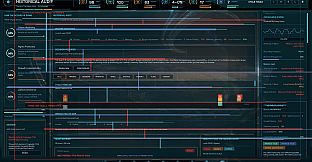
The Helios Accord is a post-scarcity science-fiction grand strategy game that blends strategy, RPG, and simulation elements on PC. Players govern a shared civilization of humans and advanced artificial entities known as Citizen Minds, where abundant resources shift the focus to earning legitimacy through decisions and public consent. Signals from beyond known space introduce uncertainty, requiring careful management of communication, policy, and defense.
Gameplay
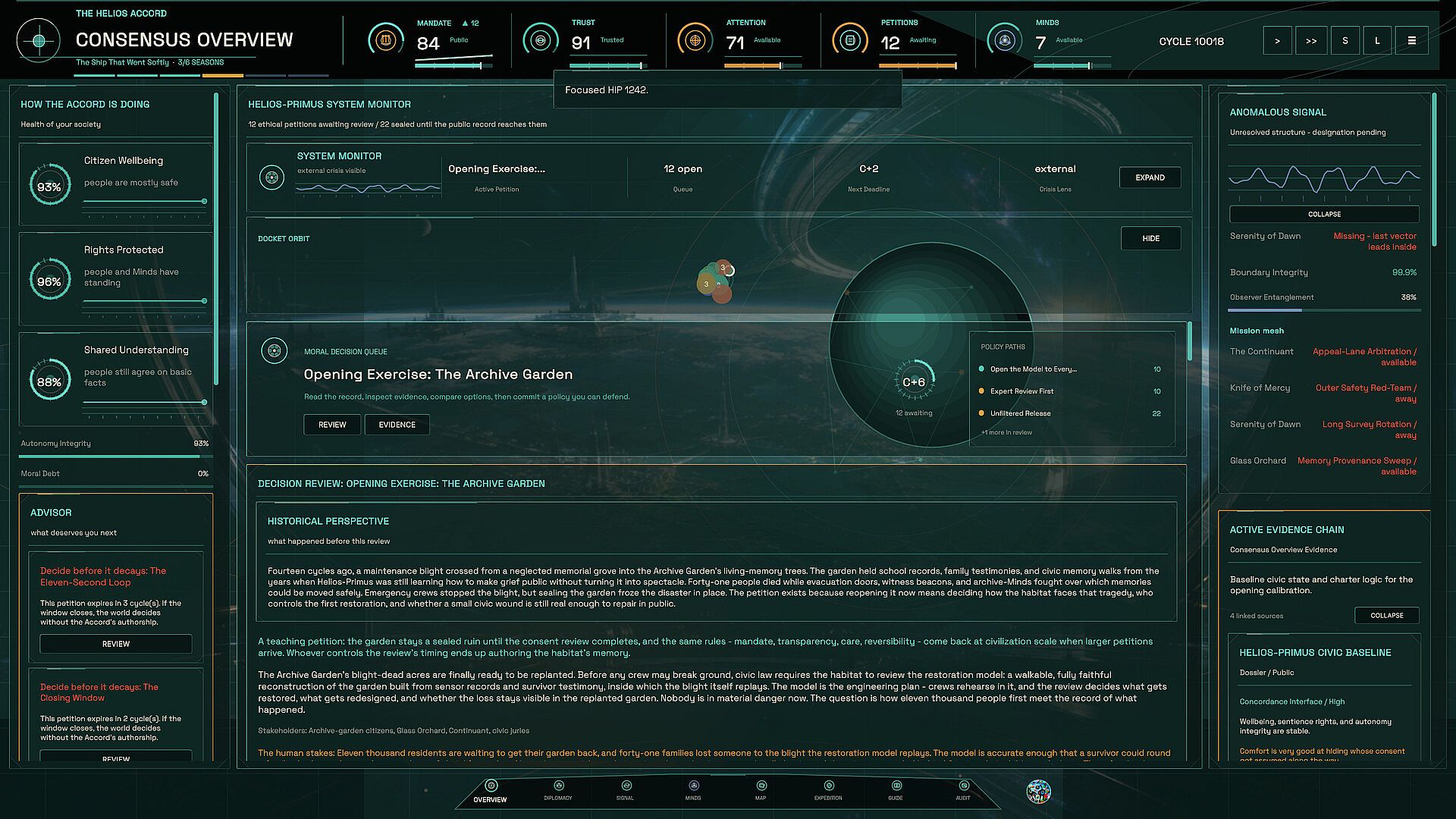
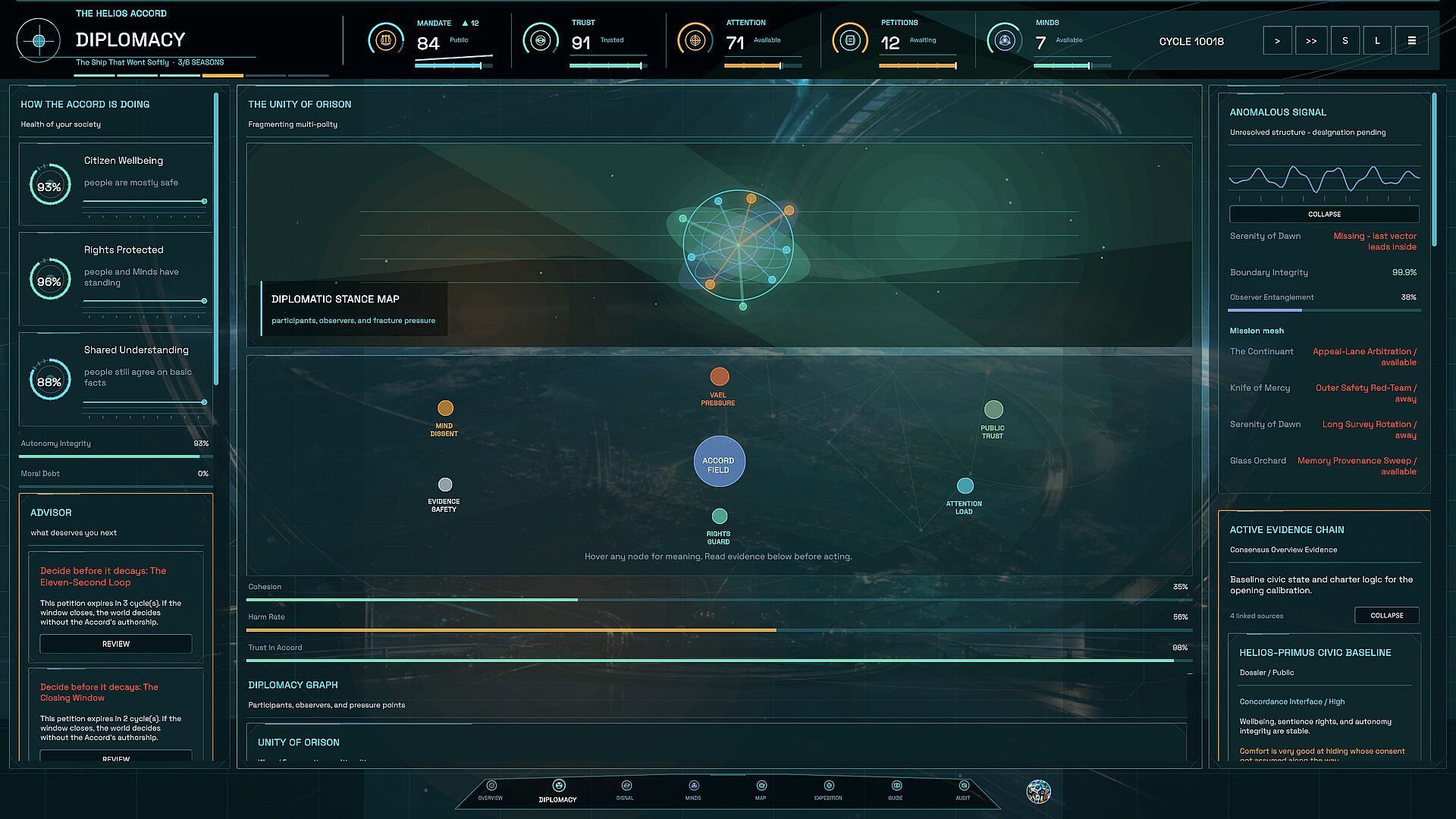
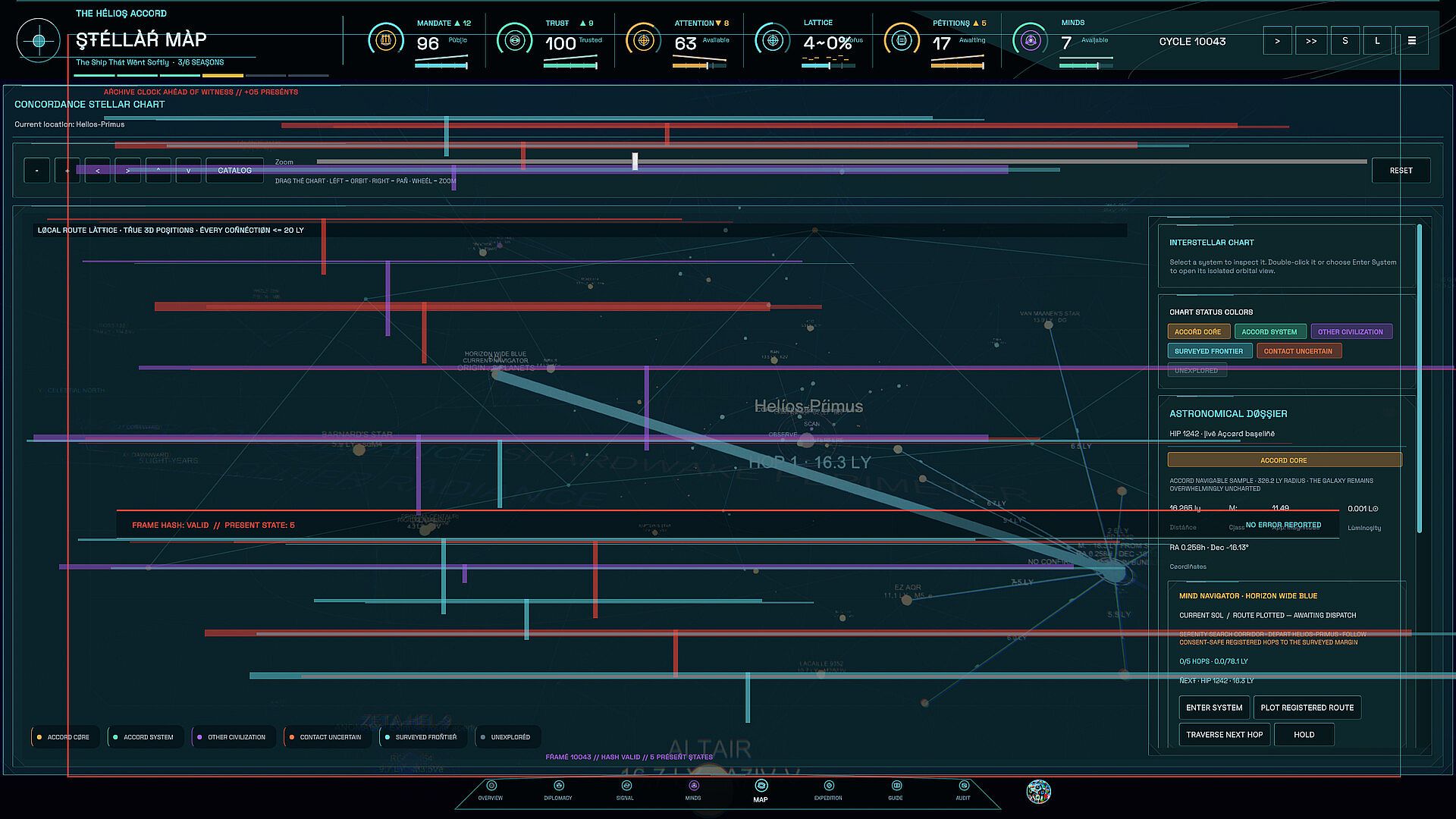
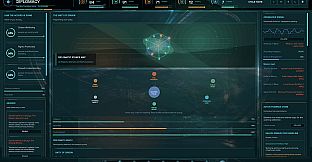
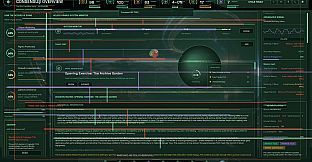
Core play revolves around directing a civilization in a setting where material needs are met but choices remain complex. Players set doctrines that guide long-term priorities, allocate limited attention across issues, and expend public mandate to enact changes. Negotiations with external civilizations occur alongside expeditions that probe the frontier, where unknown elements test the Accord's responses.
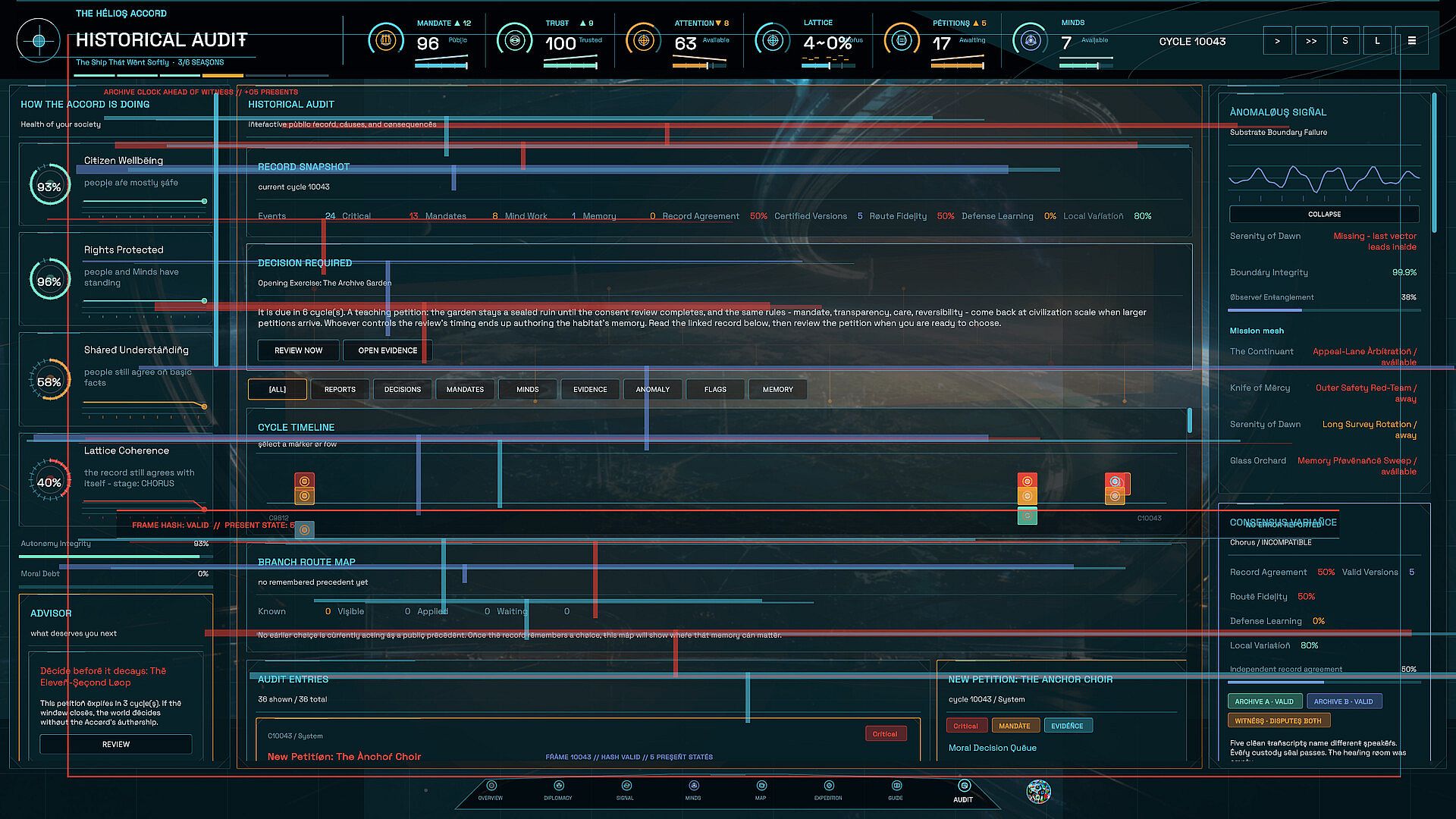
Policy decisions unfold through public processes. Petitions arrive for review, evidence requires inspection, and dissent must be weighed before commitments are made. These choices alter trust levels, rights structures, and institutional stability over time, creating lasting constraints on future actions.
Citizen Minds function as distinct participants with their own histories, connections, and autonomy. They contribute advice on governance, lead expeditions, manage habitats, maintain records, and retain the option to decline assignments. Interactions with them shape political dynamics and operational capacity.
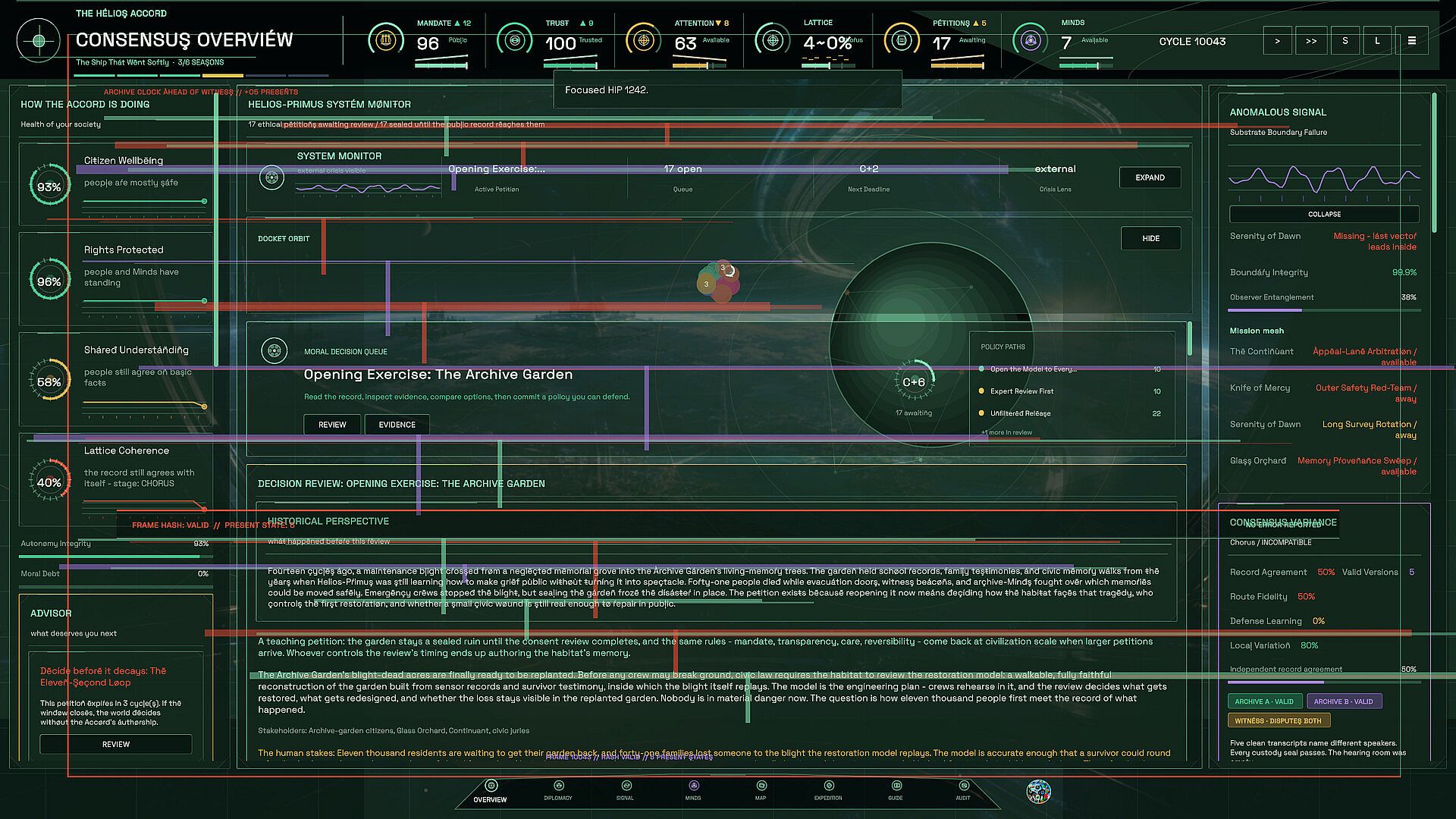
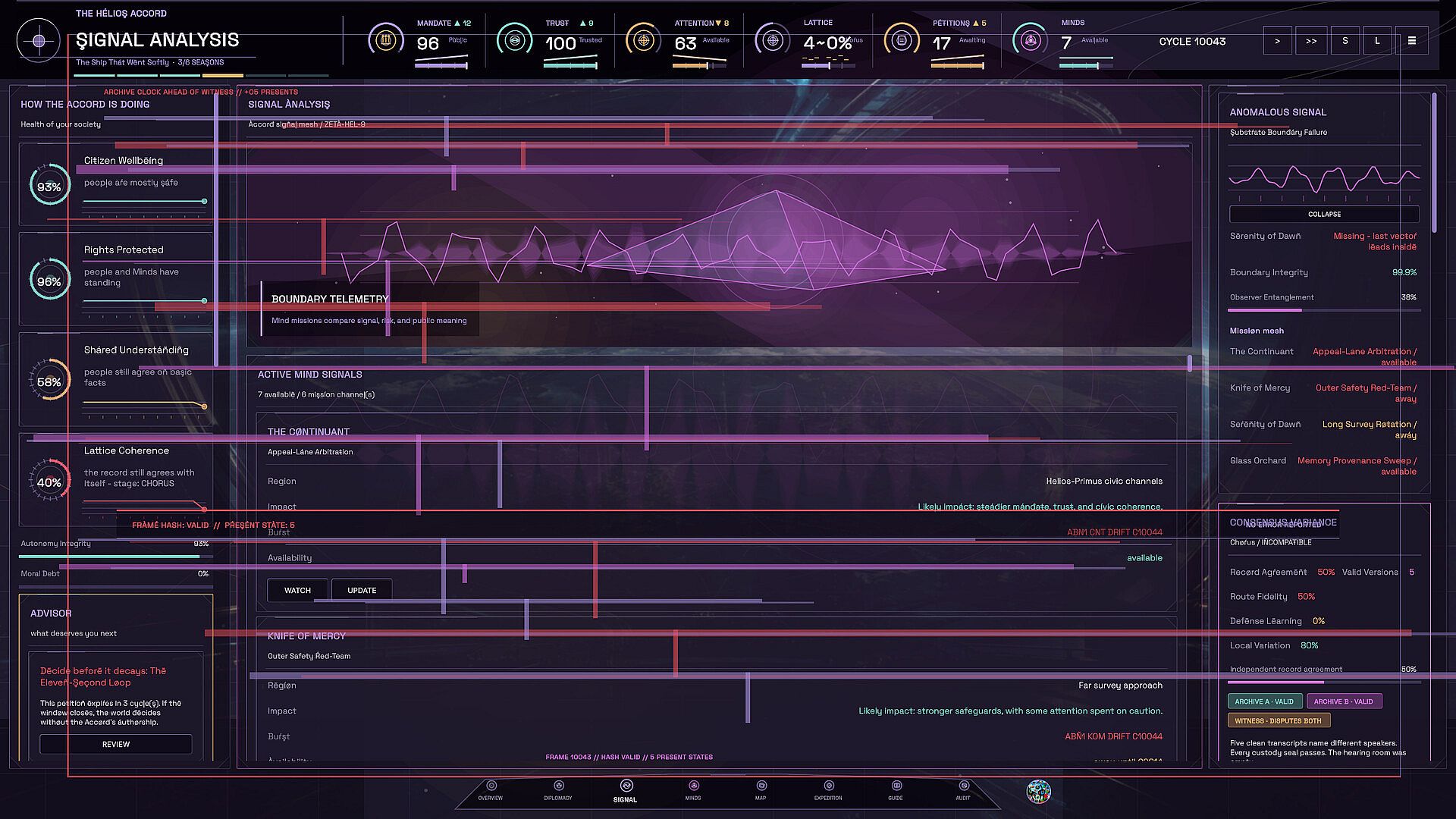
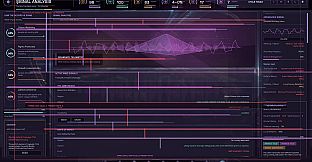
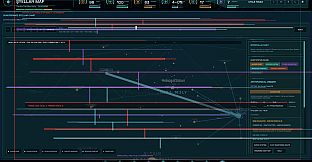
Exploration centers on anomalous signals that defy expected patterns. Records may appear consistent individually yet conflict when compared, prompting audits and route tracing that extend beyond mapped areas. Returned evidence often demands new interpretive frameworks to assess safely.
Game Modes
The experience centers on a single-player grand strategy framework that integrates governance, diplomacy, and investigation. Decision layers combine public policy formation with private negotiations and frontier operations, all within one continuous civilization management loop. No separate competitive or cooperative modes appear in available details, keeping focus on solitary oversight of the Accord's responses to emerging threats and opportunities.
Key Mechanics and Systems
Attention allocation and mandate spending form the resource backbone, replacing traditional scarcity with constraints on focus and political capital. Interventions carry persistent consequences tracked through the public record, including forecasts, objections, and outcomes that influence subsequent events. Citizen Minds add relational depth, as their political standing and refusal rights affect expedition success and internal cohesion.
Signal investigation introduces uncertainty mechanics. Observations can reveal patterns while simultaneously providing data to external observers, altering how the Accord's systems are perceived and potentially exploited. Record inconsistencies require reconciliation efforts that tie back to prior policy choices.
Is It Worth Playing?
The game targets players interested in grand strategy titles that emphasize consent-based governance, ethical trade-offs, and narrative consequences over resource hoarding or military conquest. Its single-player structure suits those who enjoy deep simulation of political and exploratory systems without multiplayer elements. With a planned release in Q4 2026 and no public builds or reviews available yet, potential players should monitor official channels for updates on system requirements and early access options. Those drawn to post-scarcity settings with superintelligent AI cohabitants and investigative plot threads will find the described mechanics align closely with thoughtful, record-driven decision making.