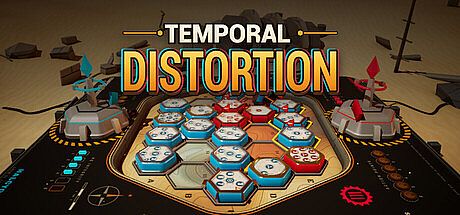


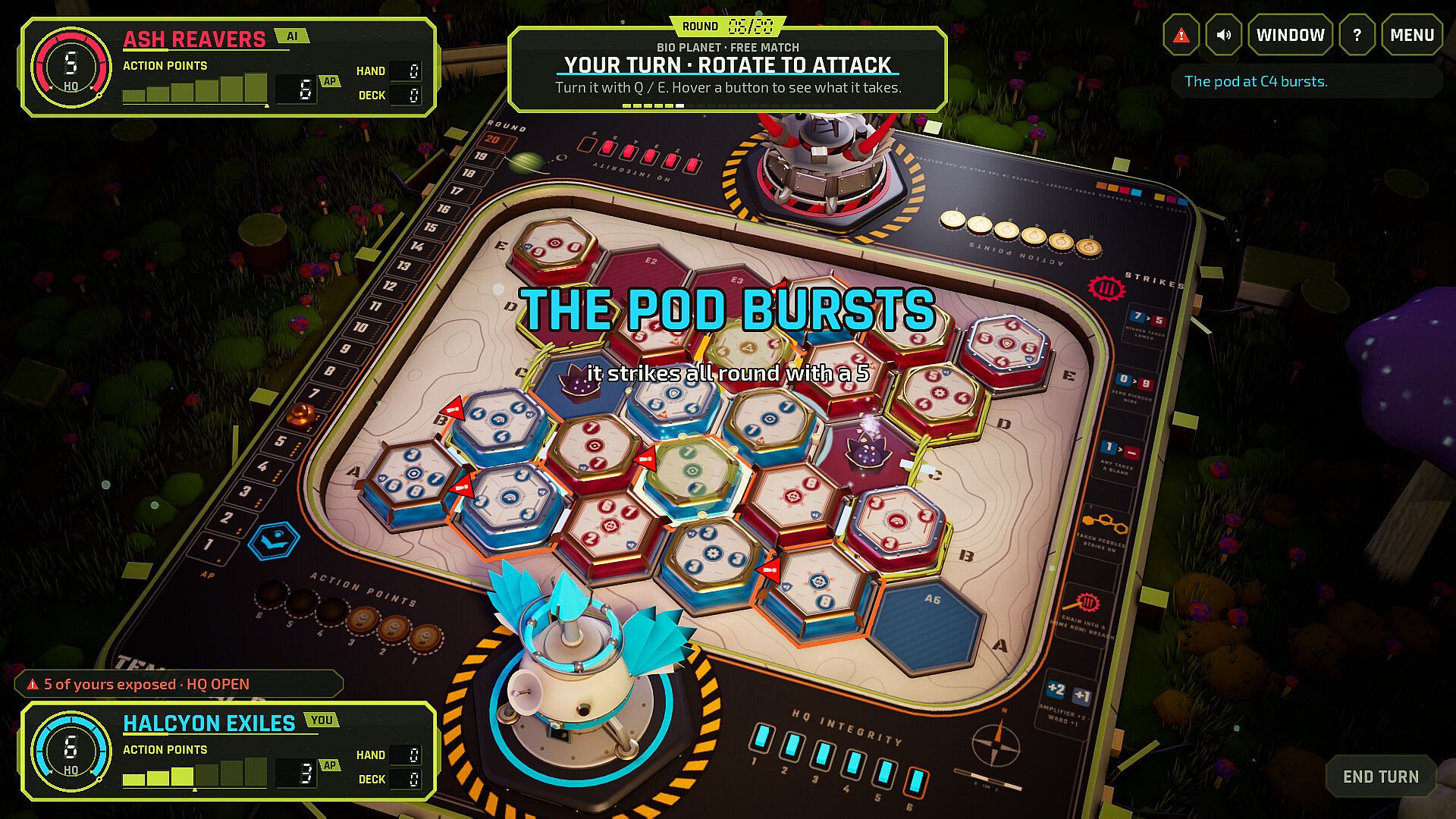
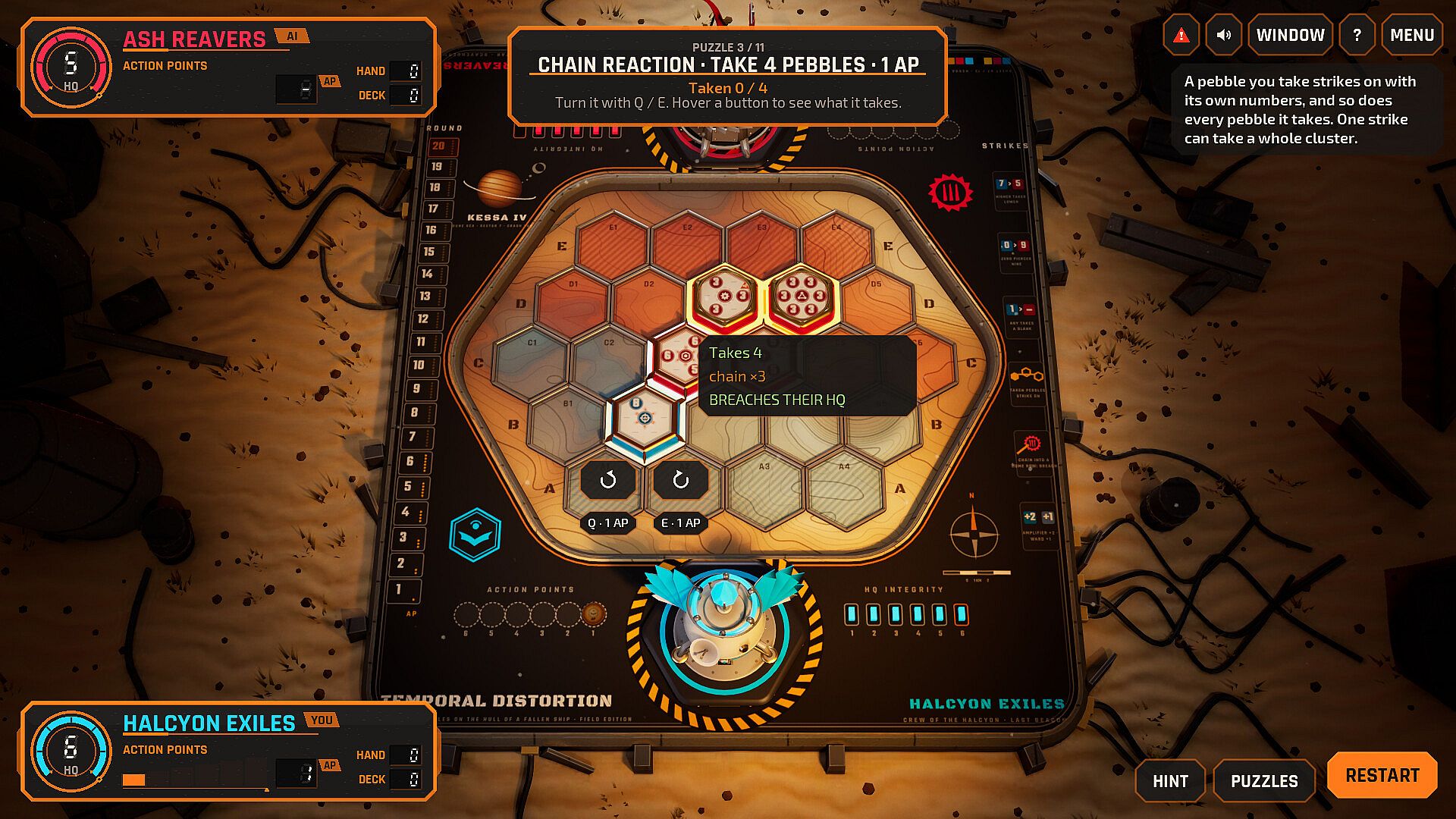
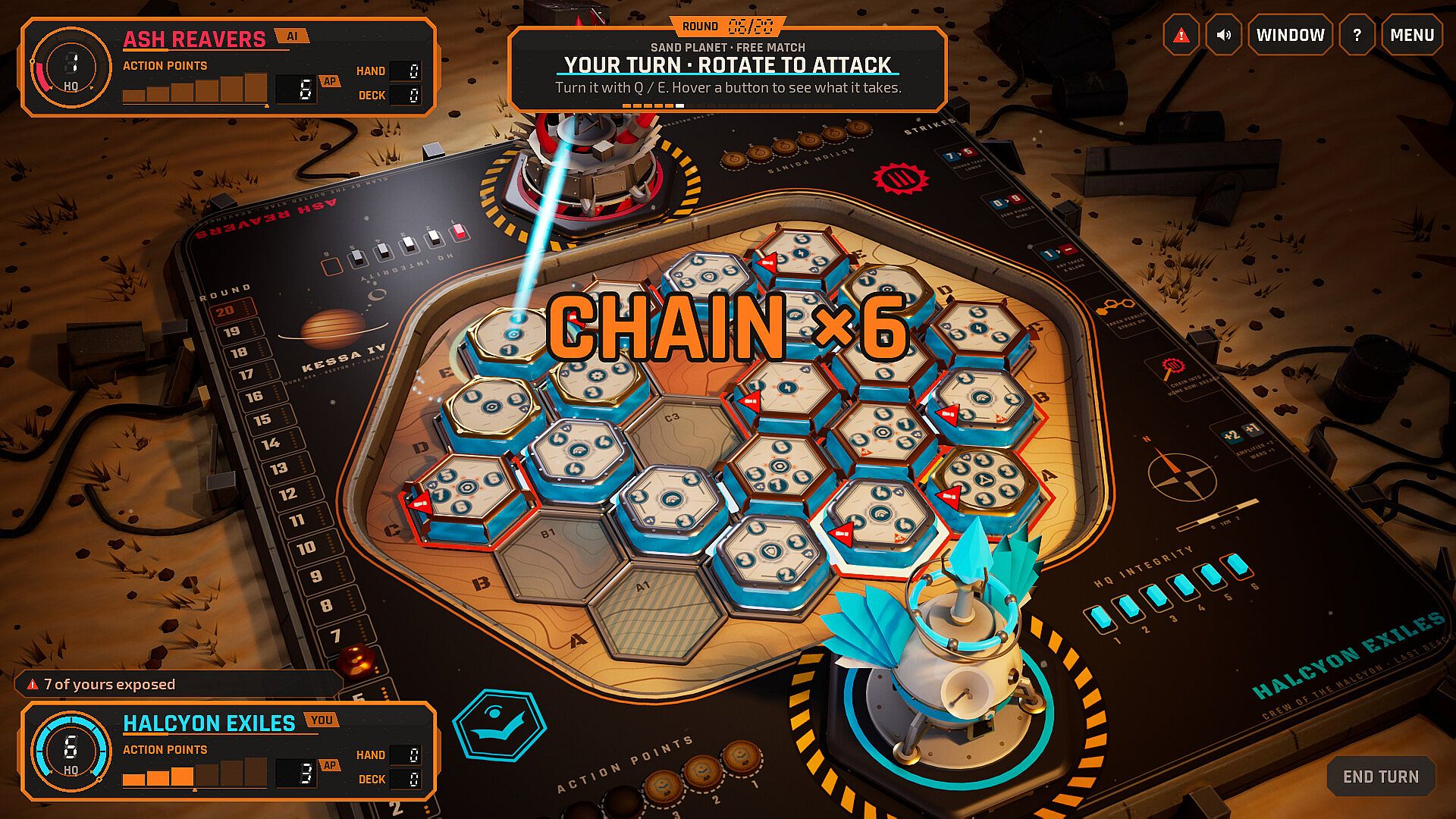
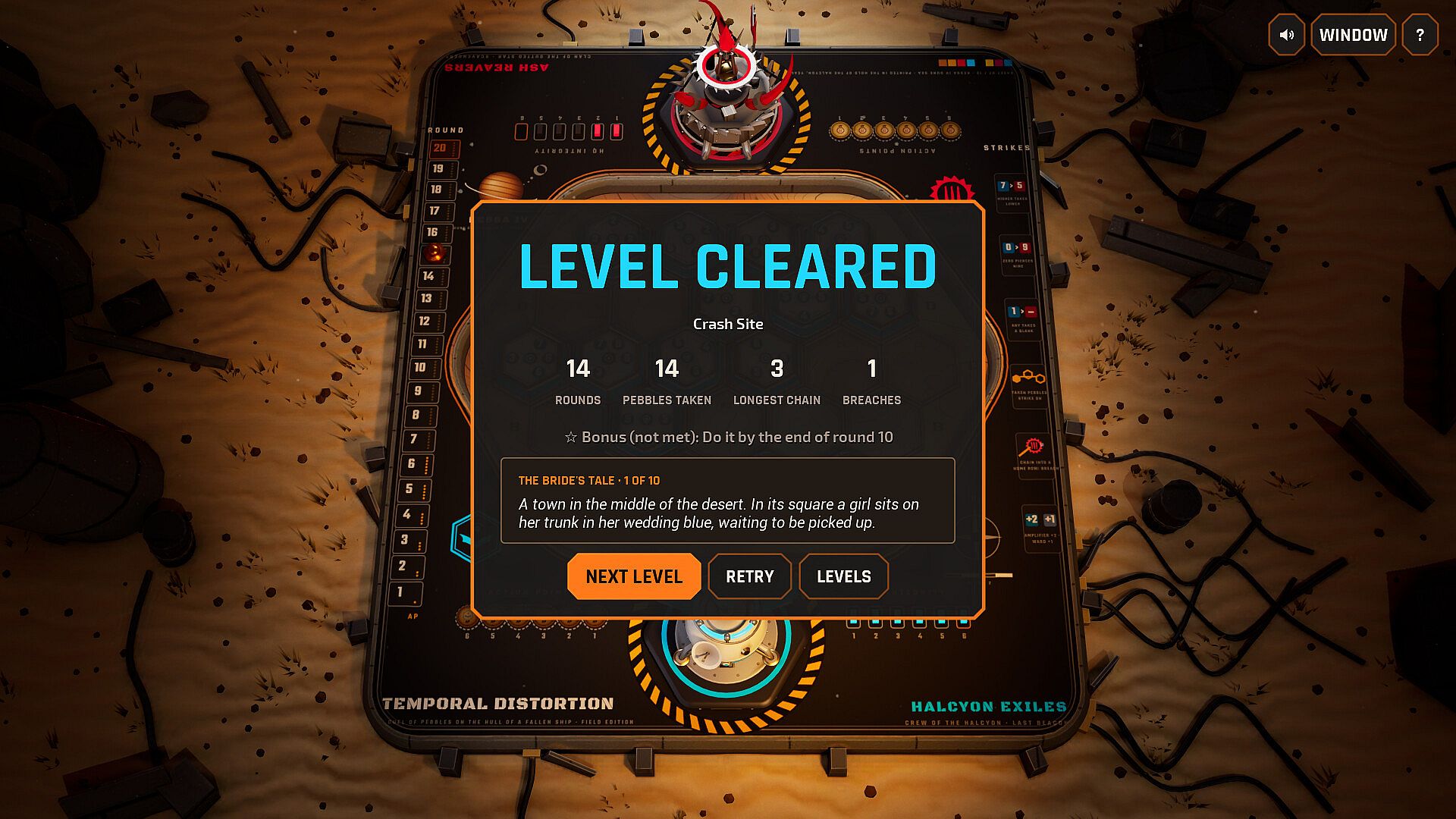
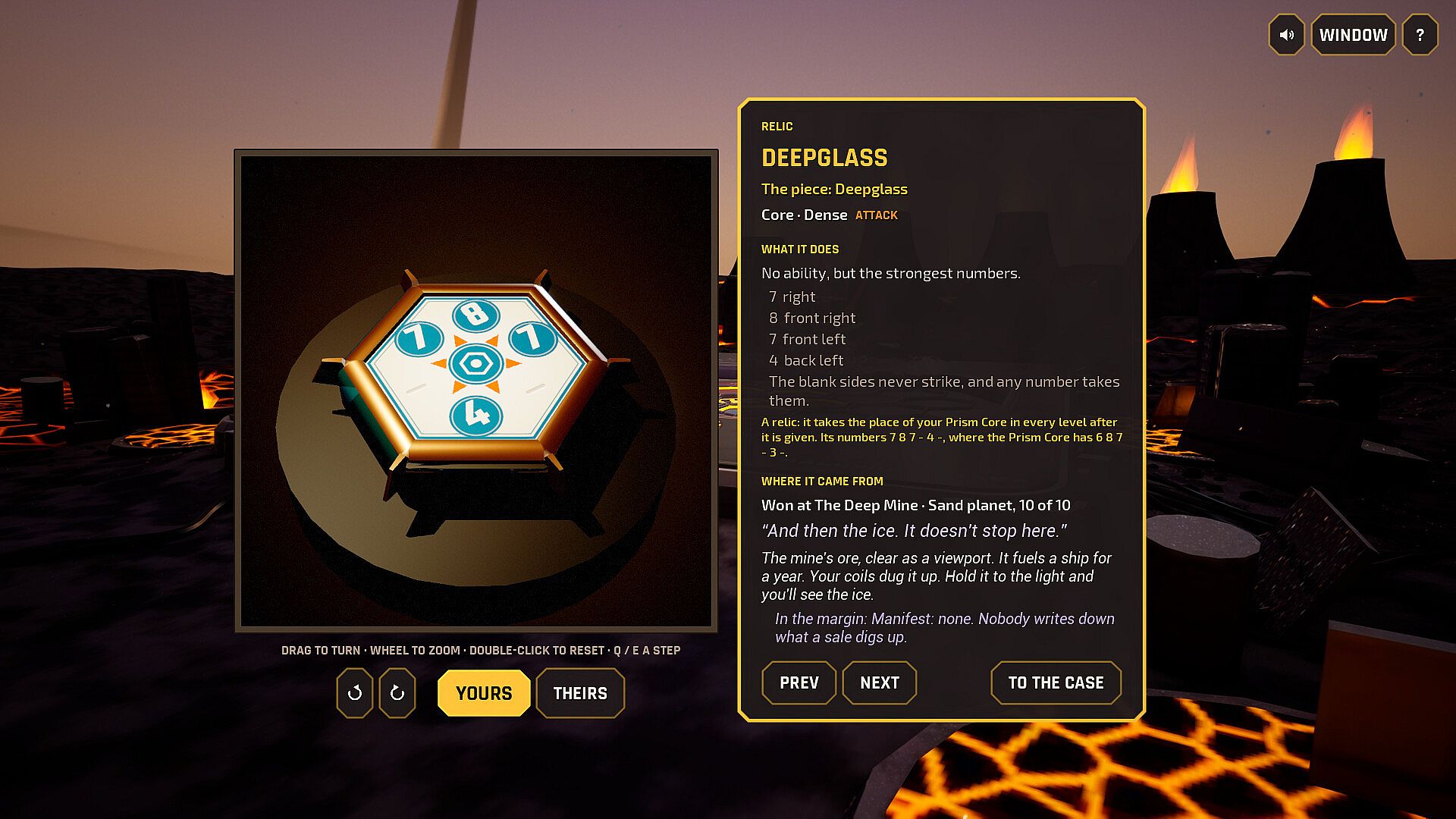

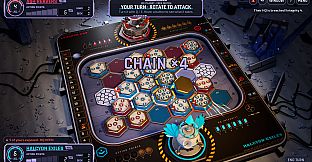

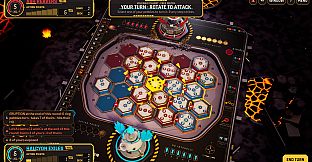





Temporal Distortion is a single-player strategy indie game set on PC that recreates the feel of a physical board game played across a lamplit table. Players place and rotate hexagonal pebbles with numbered edges to trigger precise chain reactions that breach an opponent's headquarters. The experience unfolds through a hand-crafted campaign on four distinct worlds, each introducing environmental hazards that alter how pebbles interact and chains resolve.
Gameplay
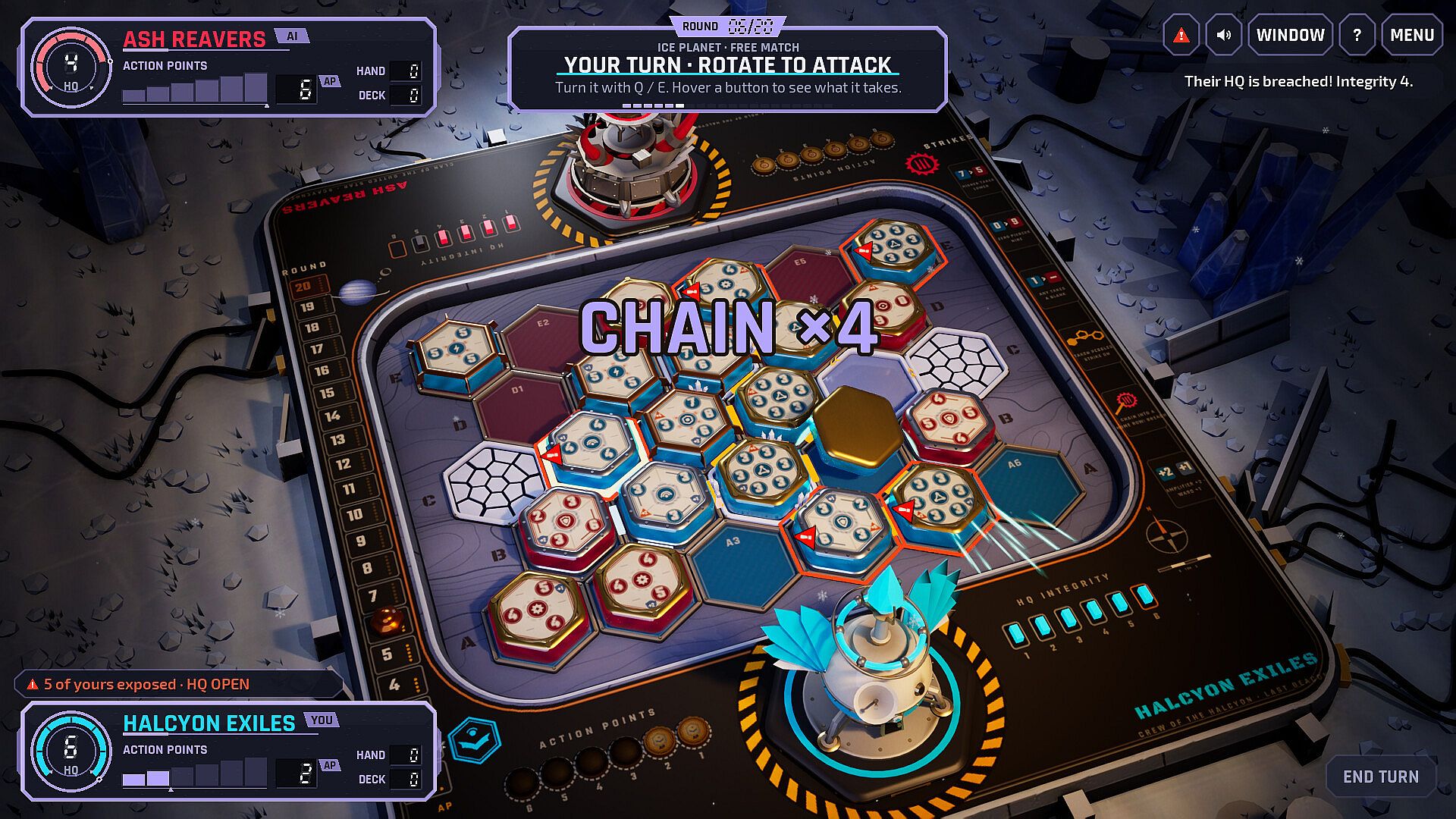
Core play revolves around positioning pebbles on a hex grid and spending limited action points to rotate them in 60-degree increments. Each rotation causes strikes where higher numbers capture lower ones, and captured pebbles immediately strike outward in turn. This creates cascading chains that can clear large portions of the board in a single sequence. Placement matters because it determines reach, while rotation choices determine which edges activate and what falls next.
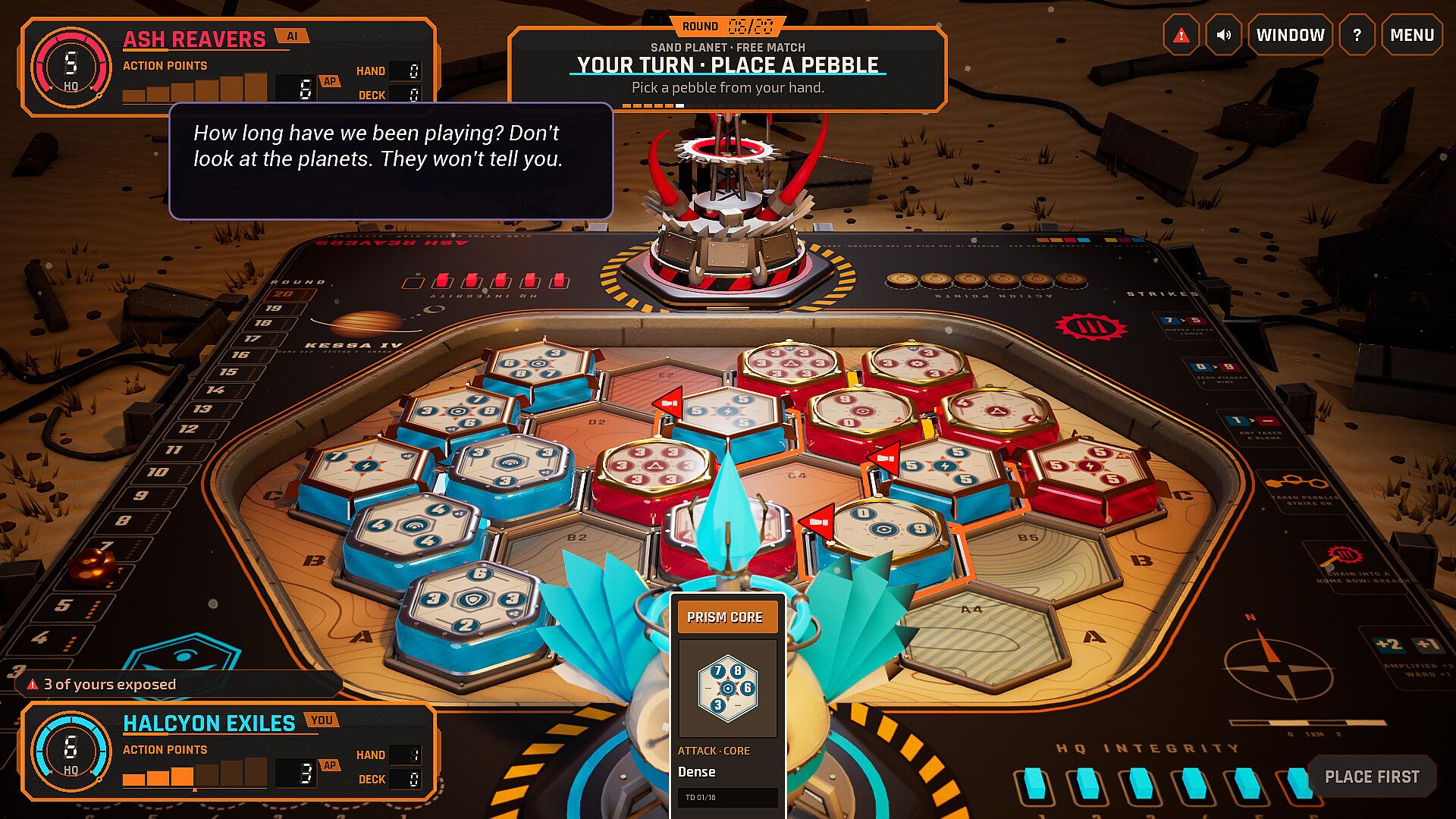
Blanks never strike but can be taken by any number, and a zero edge captures a nine. Players manage a limited pool of pebbles drawn from shuffled decks, with positioning and adjacency proving critical to success. Certain pebbles fill specialized roles: attack types include cores with high values, sparks that trigger on equals, and breachers aimed at the headquarters; defence options feature aegis plates immune to chains and wards that strengthen neighbors; utility pieces include gyros that rotate without cost, gears that reverse neighbor directions, and amplifiers that boost values.
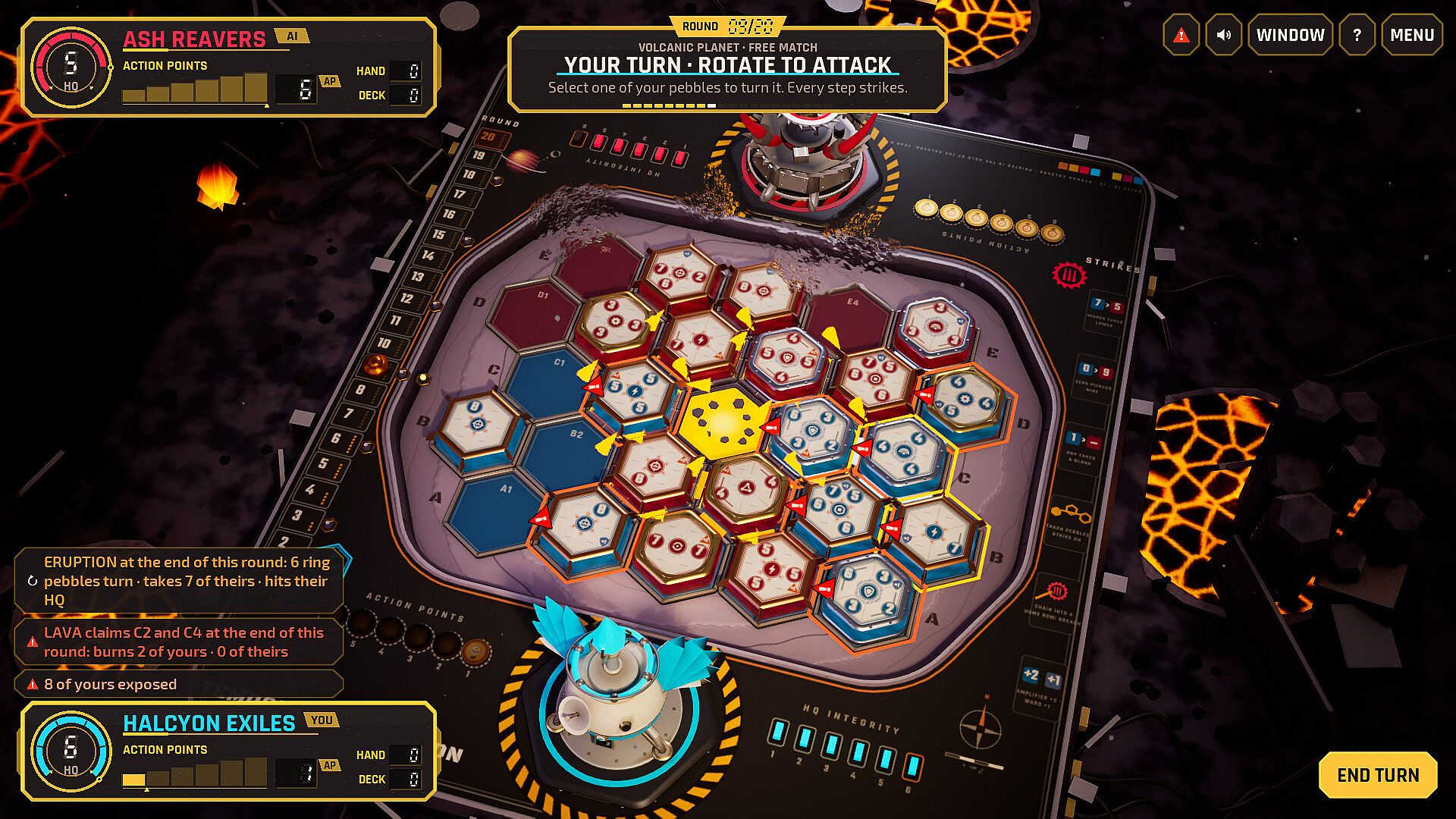
Environmental effects on each world modify these rules. Sand levels introduce basic pebble variety, ice surfaces cause extra rotations or halt chains, spore areas add bridging roots and gas clouds that weaken pieces, and volcanic rings increase damage while risking eruptions that rotate or remove pebbles on schedule. A threat overlay highlights enemy capture opportunities and upcoming hazards, supporting exact planning without randomness in outcomes.
Game Modes
The main experience is a linear campaign of forty-seven levels divided across four worlds, with ten levels per world followed by a final chapter that revisits all boards. Individual levels take forms such as standard matches, direct breaches, single-turn puzzles, defensive sieges, and timed races, each carrying a bonus objective alongside the primary goal of reducing enemy headquarters integrity to zero. A boss encounter caps each world.
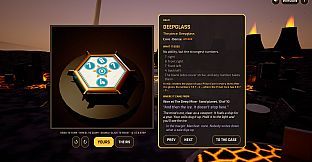
Additional practice options include eleven standalone puzzles that present a single turn with a specific goal and restricted action points, plus free matches against an AI opponent available at three difficulty settings. The AI evaluates the board state exactly and anticipates responses. A ten-lesson tutorial introduces mechanics progressively on the physical-style board, while story fragments unlock after victories and collect into a ledger alongside physical relics that serve as upgraded pebble variants.
Worlds and Narrative
Progression moves between Crash Site on sand dunes, Glacier Shelf with its slick and cracking ice, Spore Thicket filled with roots and drifting gas, and Caldera around a volcanic crater. Completing a world advances the timeline, shifting the table setting and introducing the next set of environmental rules. Between levels a stranger shares pieces of five interconnected tales about the people of each world and the player's past as a trader, delivered incrementally and stored for review.
Every level remains identical on replay, turning defeats into opportunities to refine placement and rotation sequences. The presentation emphasizes a tangible board-game aesthetic with printed maps, resin pebbles, foil-sealed cards, and flipable coins, all viewed from a fixed table perspective amid the changing world backdrops.
Is It Worth Playing?
Temporal Distortion suits players who enjoy deterministic strategy games where every outcome can be calculated in advance and losses provide clear lessons for improvement. The absence of dice or random hit resolution, combined with the emphasis on chain setup and environmental adaptation, rewards careful observation and repeated attempts on the same layouts. Its single-player focus and fixed campaign structure deliver a complete, self-contained experience without ongoing updates or additional purchases required.
Those drawn to precise tactical puzzles and the interplay of piece types on a hex grid will find substantial depth in managing action points and adjacency effects across the forty-seven levels. The tutorial and puzzle modes lower the entry barrier, while the AI practice matches allow refinement of tactics before tackling the full campaign. With its upcoming release and no existing player reviews available, the game appeals most to fans of board-game adaptations and exacting turn-based systems who value consistency over variability.