


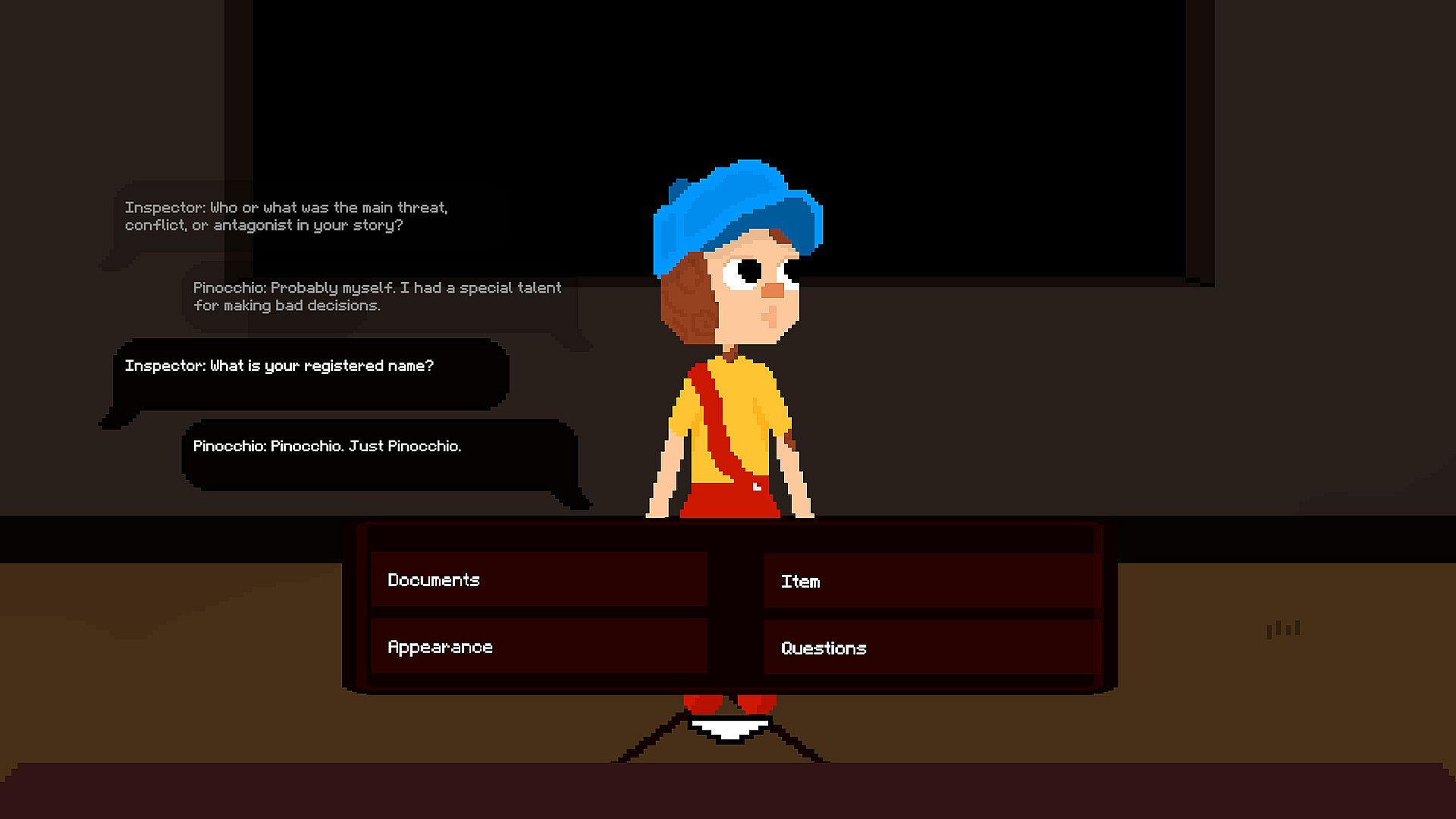
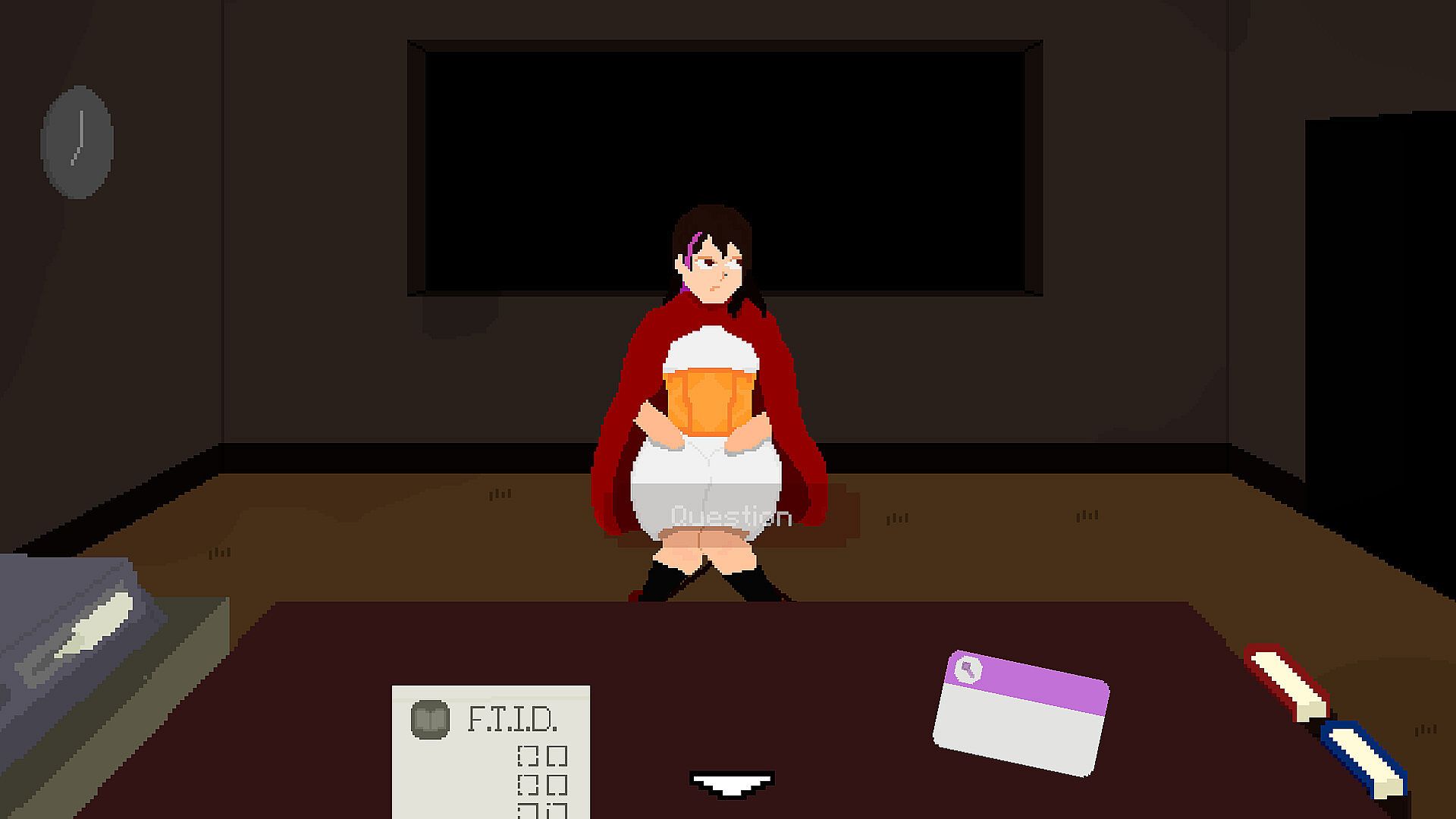
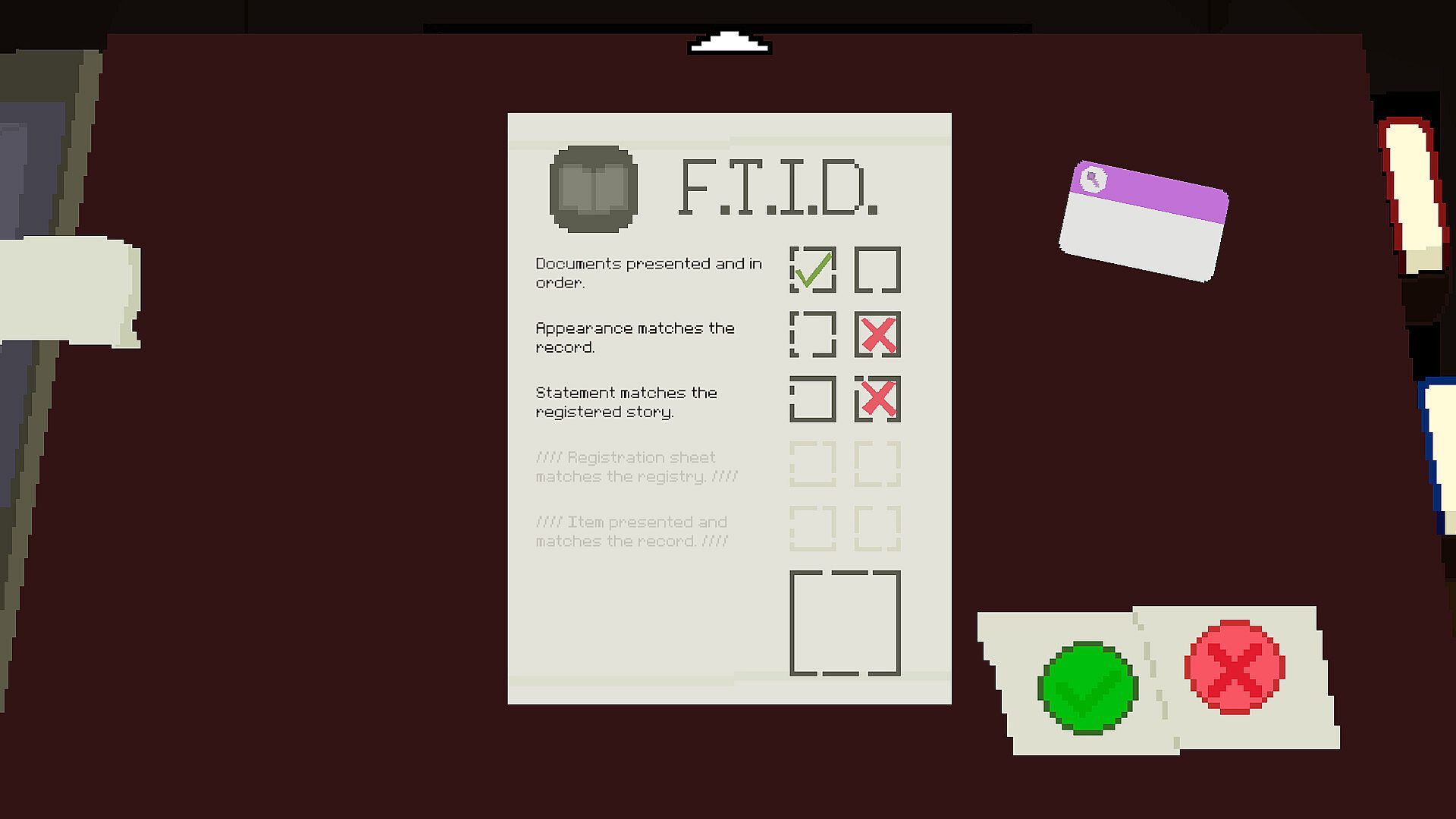
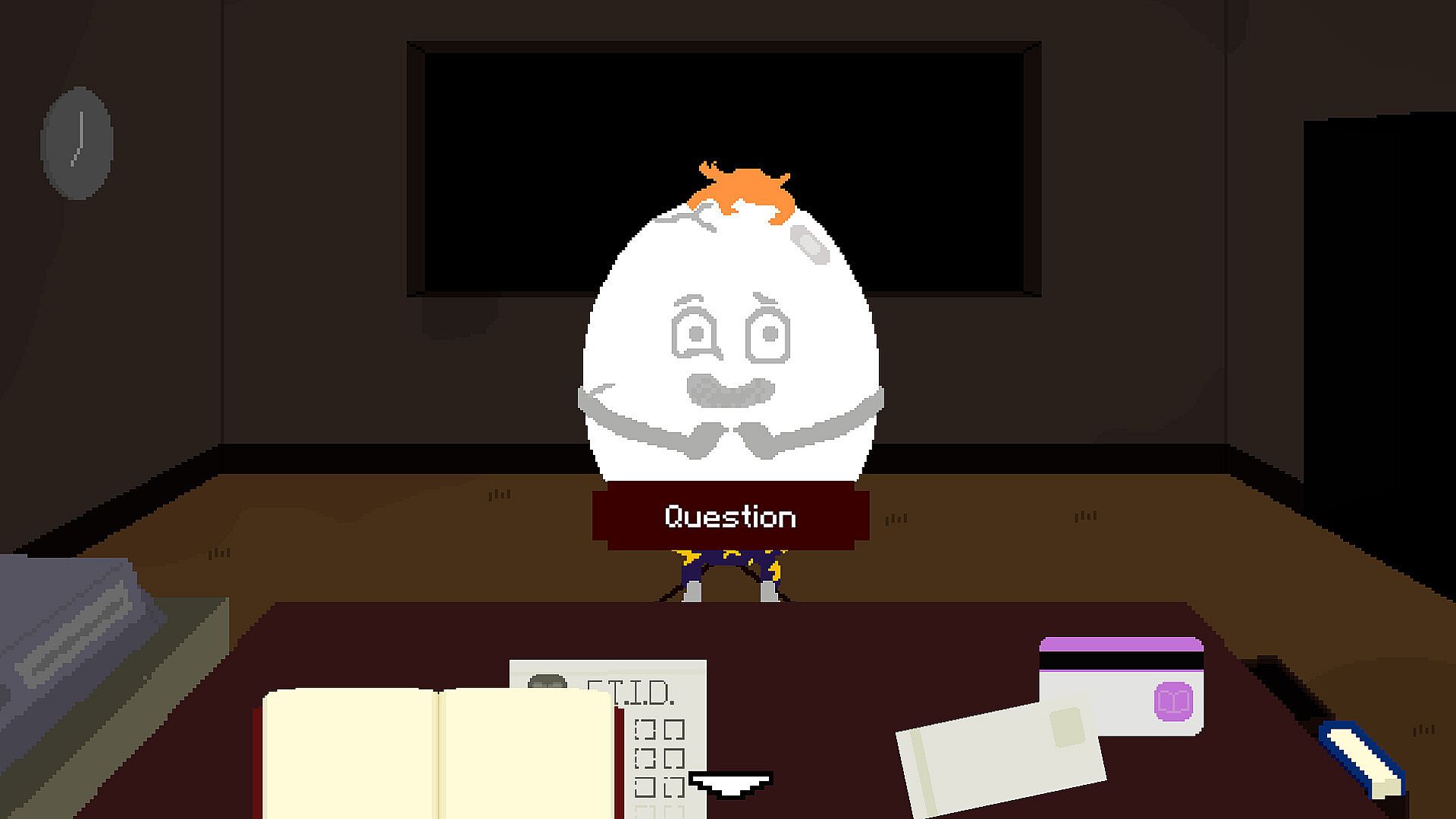
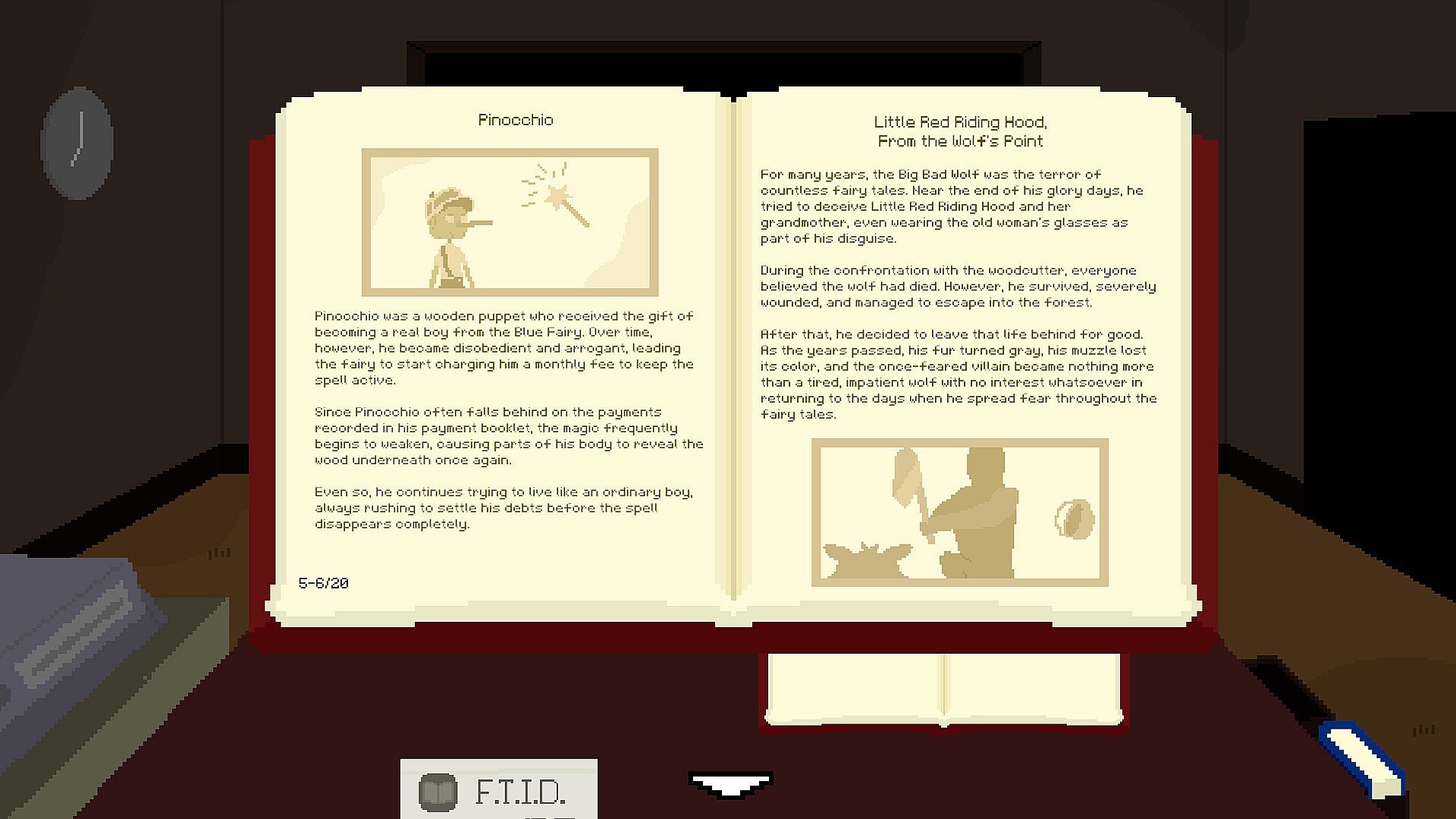


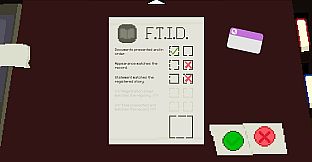

Tell Me Your Tale is a strategy indie casual simulation game for PC in which players serve as inspectors for the Fairy Tale Inspection Department. The core premise places you at a checkpoint where characters from fairy tales, fables, legends, and folklore seek entry. Your task centers on verifying identities through careful examination of documents, physical appearance, belongings, and spoken answers against official records. Small inconsistencies can determine whether a genuine figure passes or an impostor or aberration slips through.
Gameplay
Each shift unfolds as a sequence of individual interviews. You review paperwork, compare visual details against descriptions in department books, inspect carried items, and pose questions to test consistency with known stories. The process demands attention to contradictions that reveal whether a visitor is the original character, an impostor stealing an identity, or an aberration formed from a warped version of the tale. Rules and procedures evolve across shifts, introducing new requirements that increase complexity over time. Decisions on approval or rejection carry forward consequences that shape later events and produce varied endings based on accumulated choices and errors.
Game Modes
The experience operates as a continuous single-player campaign built around successive inspection shifts. Progression occurs through advancing days that layer additional rules and situations onto the core inspection loop. There are no separate competitive or cooperative modes; the structure remains focused on sequential decision-making within the department setting. Players advance by applying observation, questioning, comparison, and final judgment to each visitor while managing the growing intricacy of daily protocols.
Core Mechanics and Progression
Progression ties directly to the accumulation of shifts and the introduction of fresh procedures. Early inspections emphasize basic document checks and appearance comparisons, while later ones incorporate more layered contradictions and expanded rule sets. The simulation aspect emerges from tracking multiple variables across visitors and adapting to changing guidelines without external assistance. Strategy elements arise from prioritizing which details to verify first and deciding when to consult reference materials versus relying on memory of prior encounters. The indie presentation keeps the focus narrow on these inspection sequences rather than expansive exploration or resource management.
Who the Game Appeals To
This title suits players who enjoy methodical puzzle-solving and narrative consequence systems within a contained simulation framework. Those drawn to games that reward close reading of text and visual cues will find the inspection process engaging, particularly as rules compound and force reevaluation of earlier assumptions. The casual pacing allows sessions to fit around individual shifts, while the strategy layer rewards repeated playthroughs aimed at different outcomes. It offers a self-contained experience without reliance on external progression systems or community features.
Is It Worth Playing?
The game delivers a focused inspection loop centered on fairy tale characters and identity verification, with choices that alter endings through accumulated decisions. Its strength lies in the gradual escalation of rules and the satisfaction of spotting contradictions before they cause problems. Players who appreciate deliberate, detail-oriented gameplay in a single-player format will likely find the structure rewarding. Those seeking fast action, multiplayer elements, or broad open-world systems may find the narrow scope limiting. Availability on PC supports straightforward access for those interested in the described mechanics. Overall, it provides a distinct take on simulation and strategy through its fairy tale inspection premise, best suited to fans of careful observation and branching narrative results.