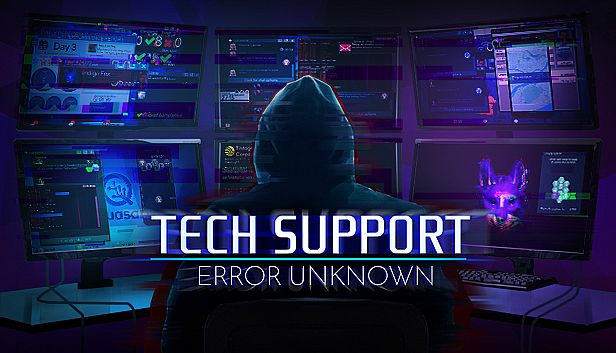


















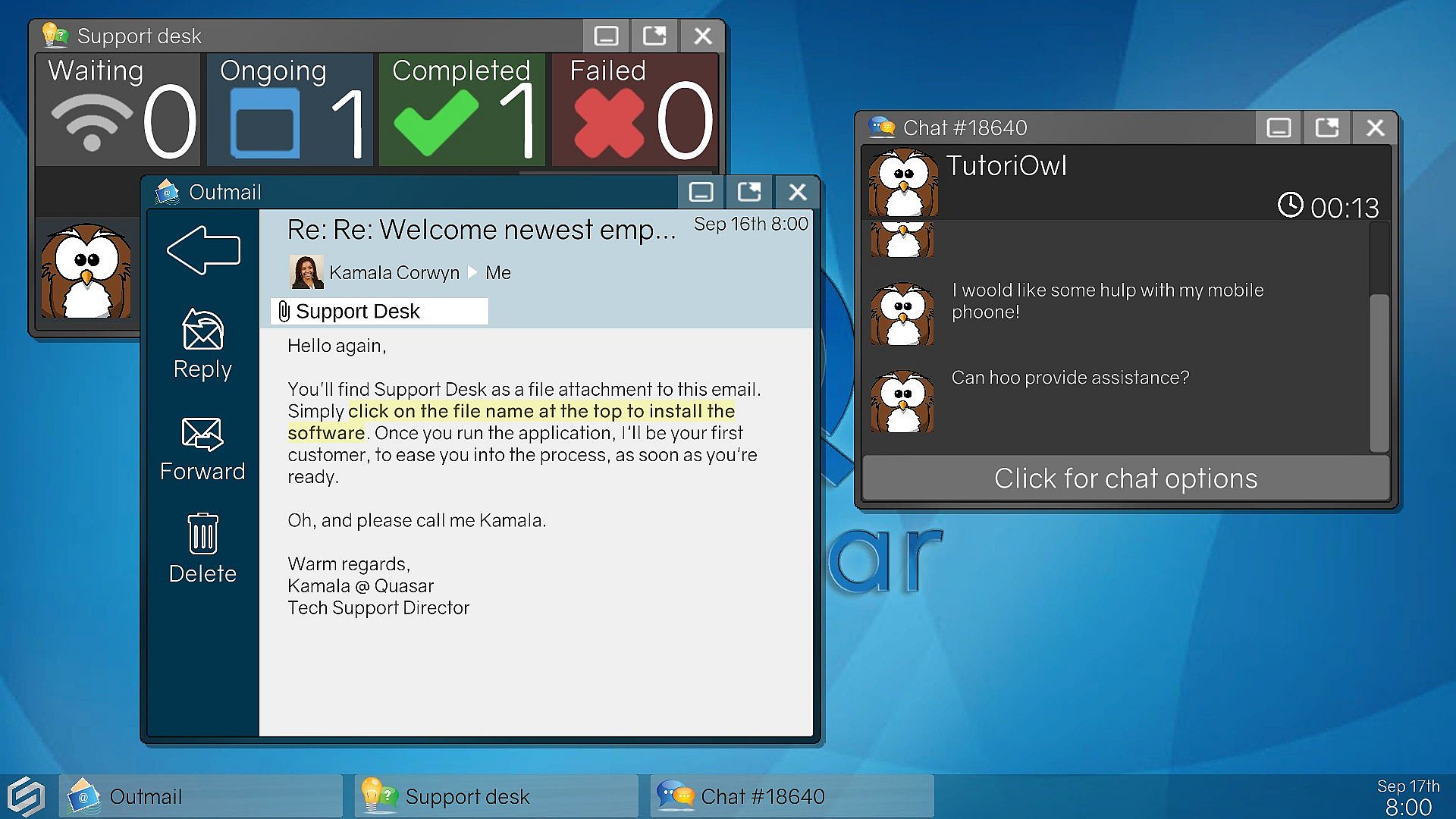
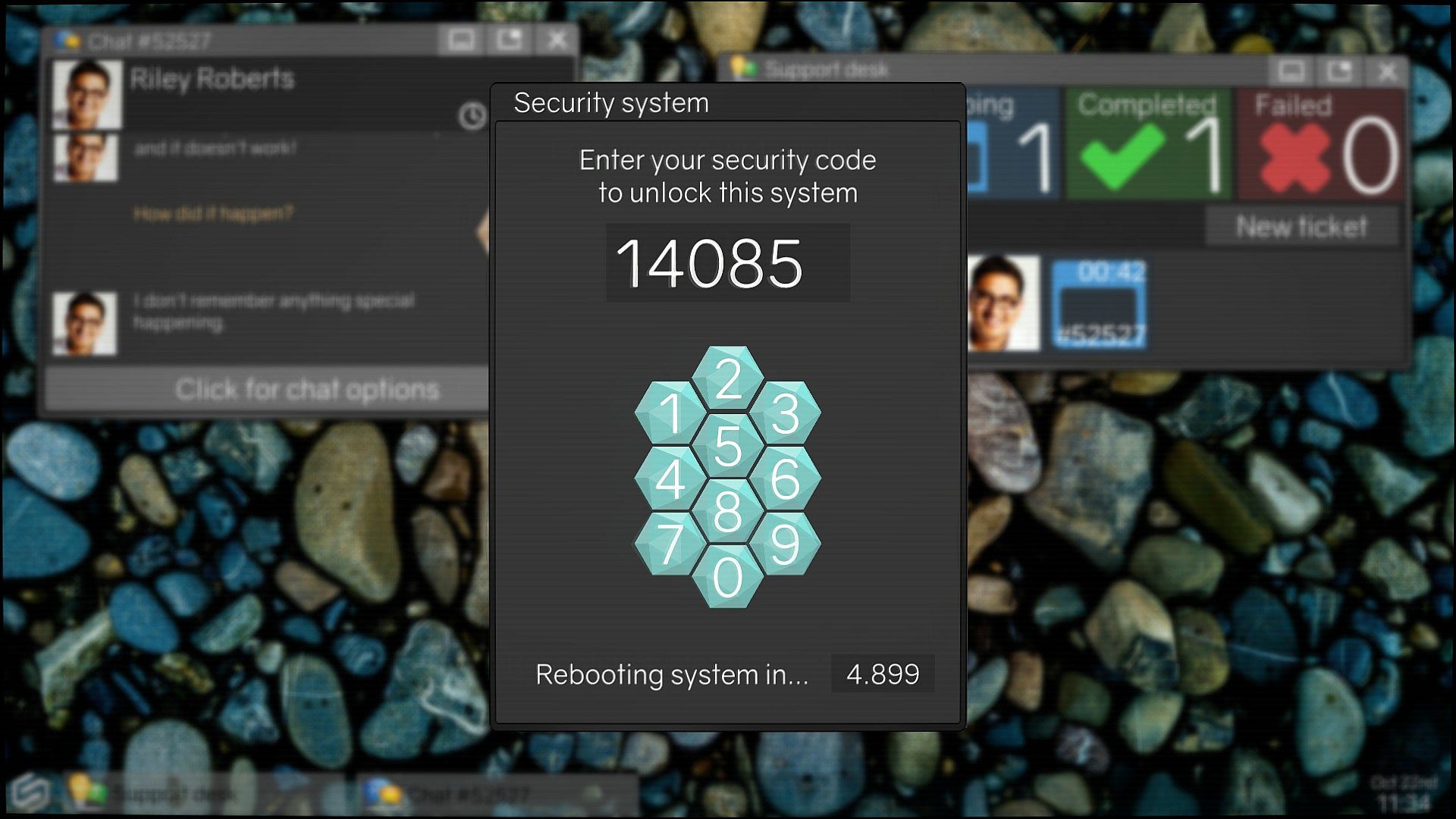
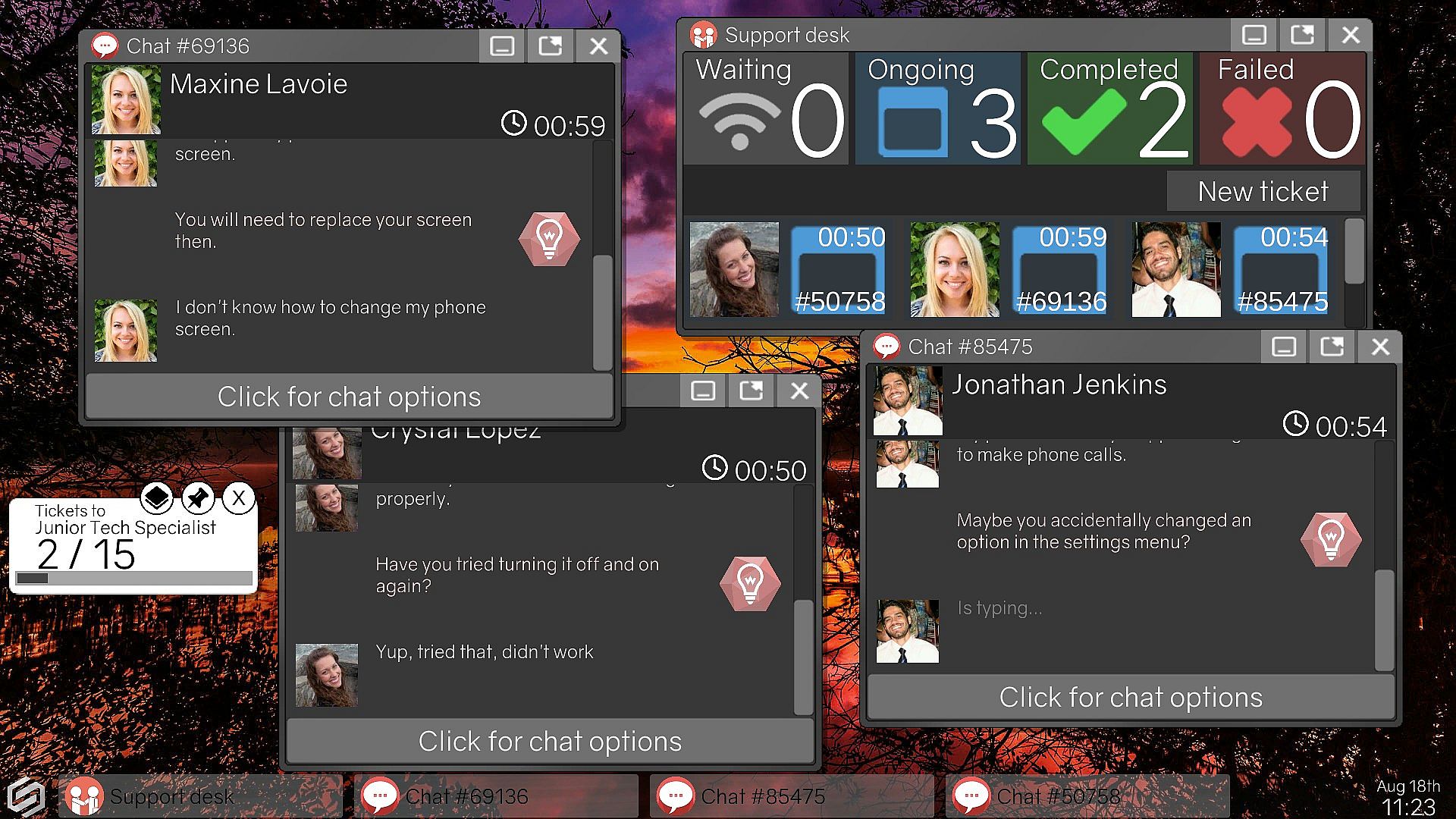
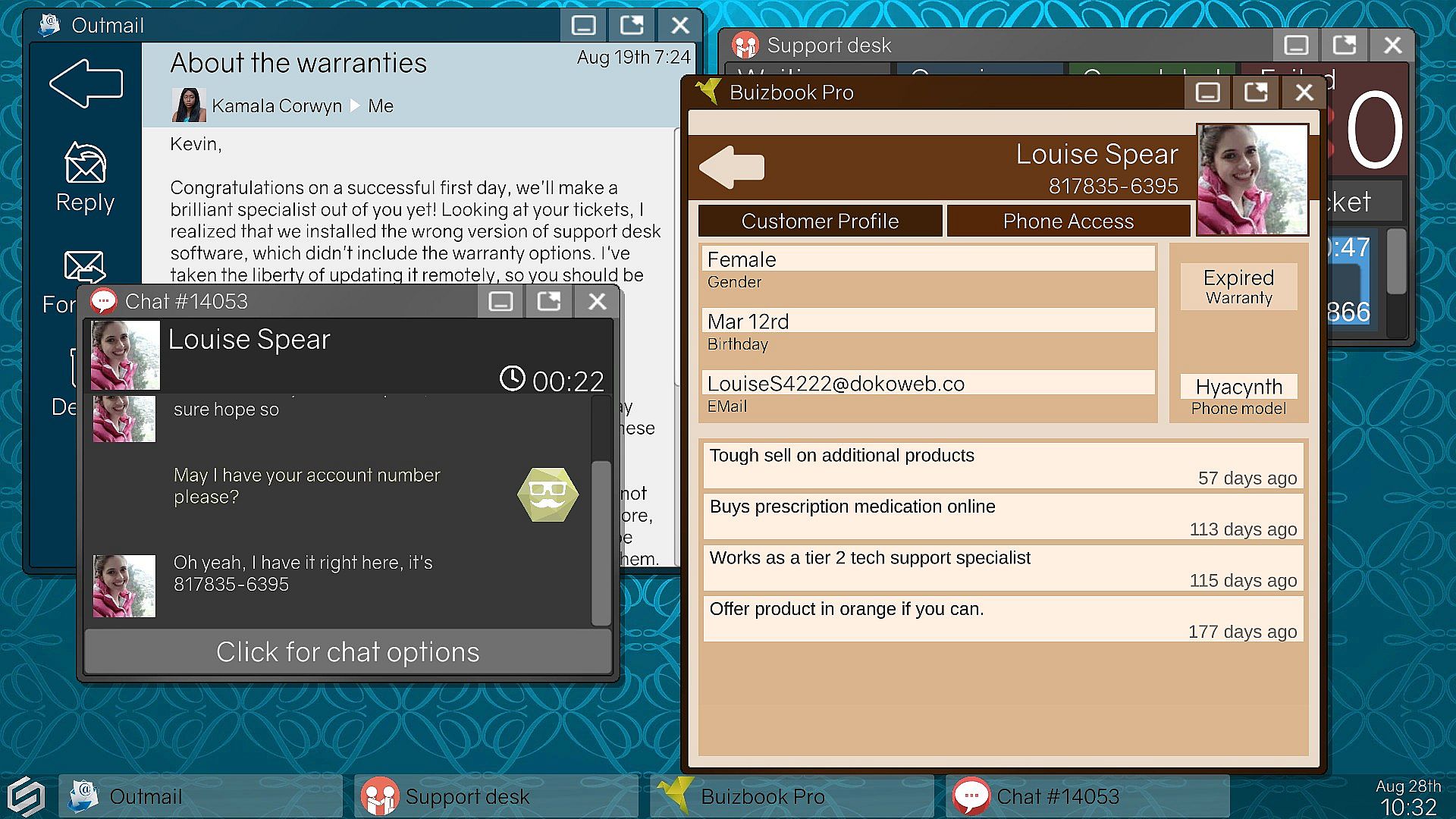
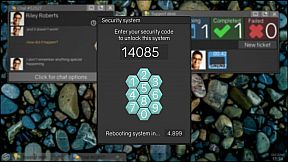
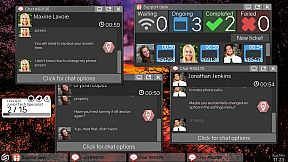
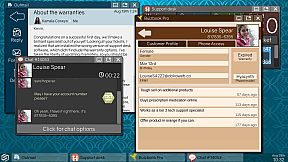
Tech Support: Error Unknown is an indie simulation adventure game that puts players in the role of a remote technical support specialist for Quasar Telecommunications. The experience unfolds entirely through a virtual desktop interface, where everyday customer service tasks mix with opportunities for deeper system manipulation and narrative choices. Built around puzzle and simulation elements, the game emphasizes careful observation of software tools, customer interactions, and the consequences of each decision in a single-player setting.
Gameplay
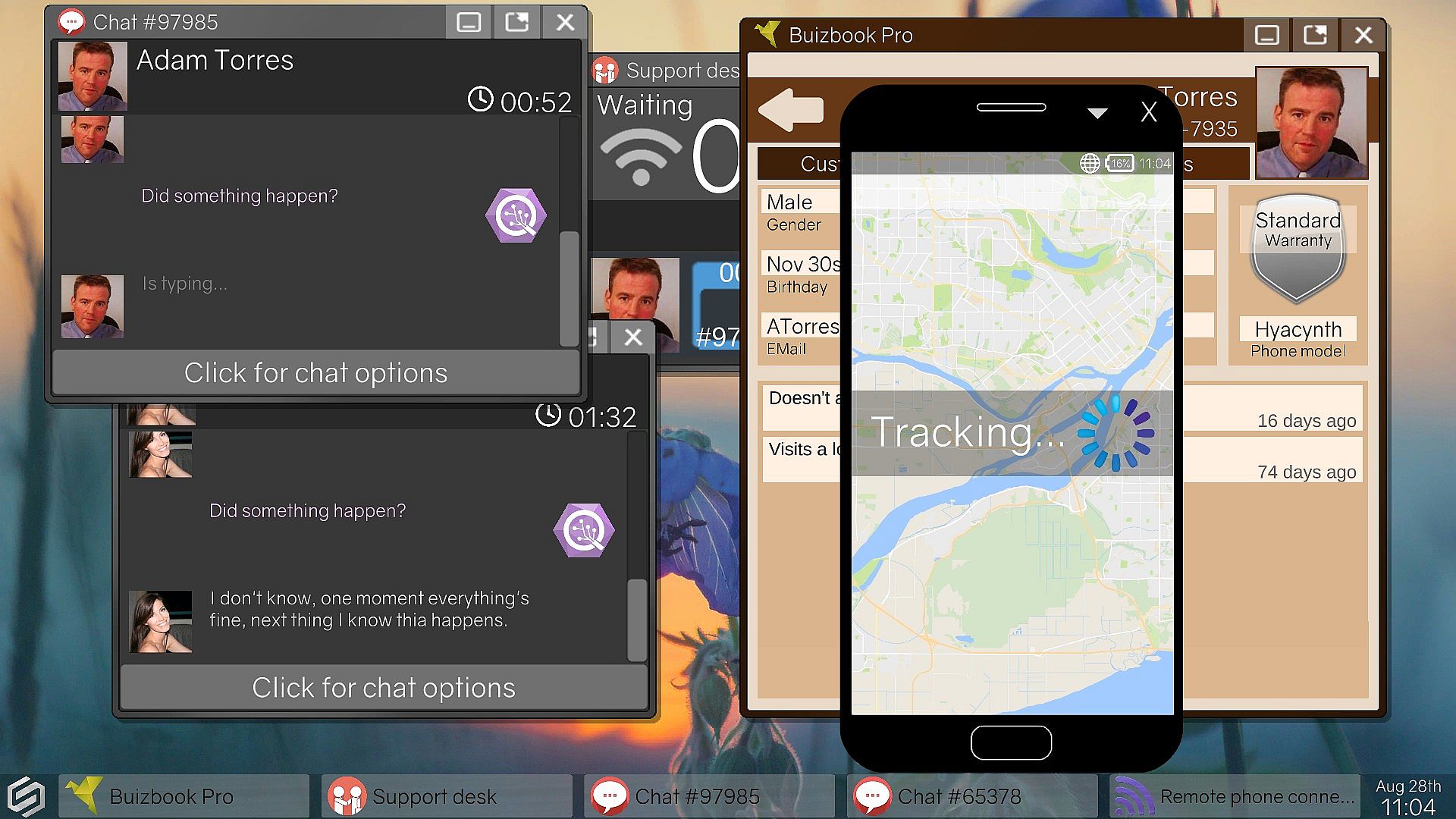
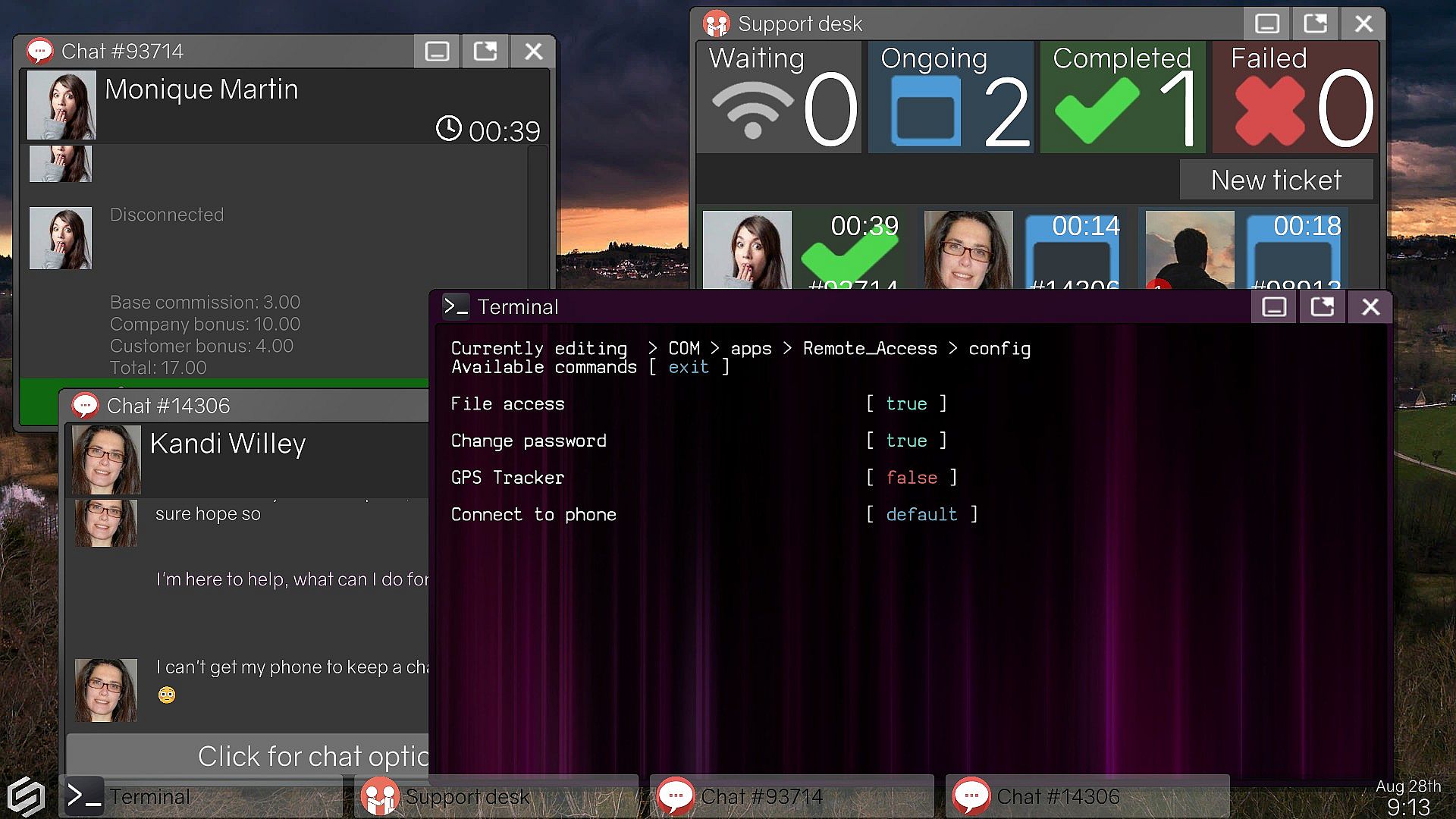
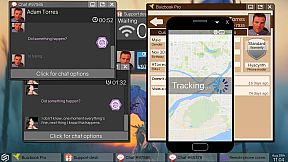
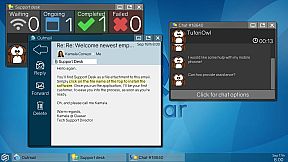
The core loop revolves around managing incoming support tickets on a simulated computer screen. Players navigate limited applications including email, a basic browser, banking software, and music players to diagnose and resolve issues. Common fixes involve guiding customers through standard steps, but the sandbox nature of the desktop allows experimentation with additional functions such as GPS tracking on devices or profile scanning. These tools open paths for personal benefit, including extracting information that could lead to leverage over callers.
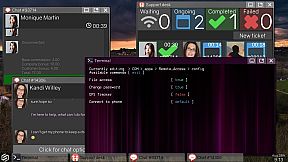
Dialogue with customers and colleagues operates through a procedural system that generates varied responses based on prior actions and selected approaches. Each interaction builds toward larger story developments, as the player uncovers tensions between the corporate employer and external groups. Hacking elements expand the desktop capabilities over time, unlocking further options for information gathering or system alteration while maintaining the mouse-only control scheme for broad accessibility.
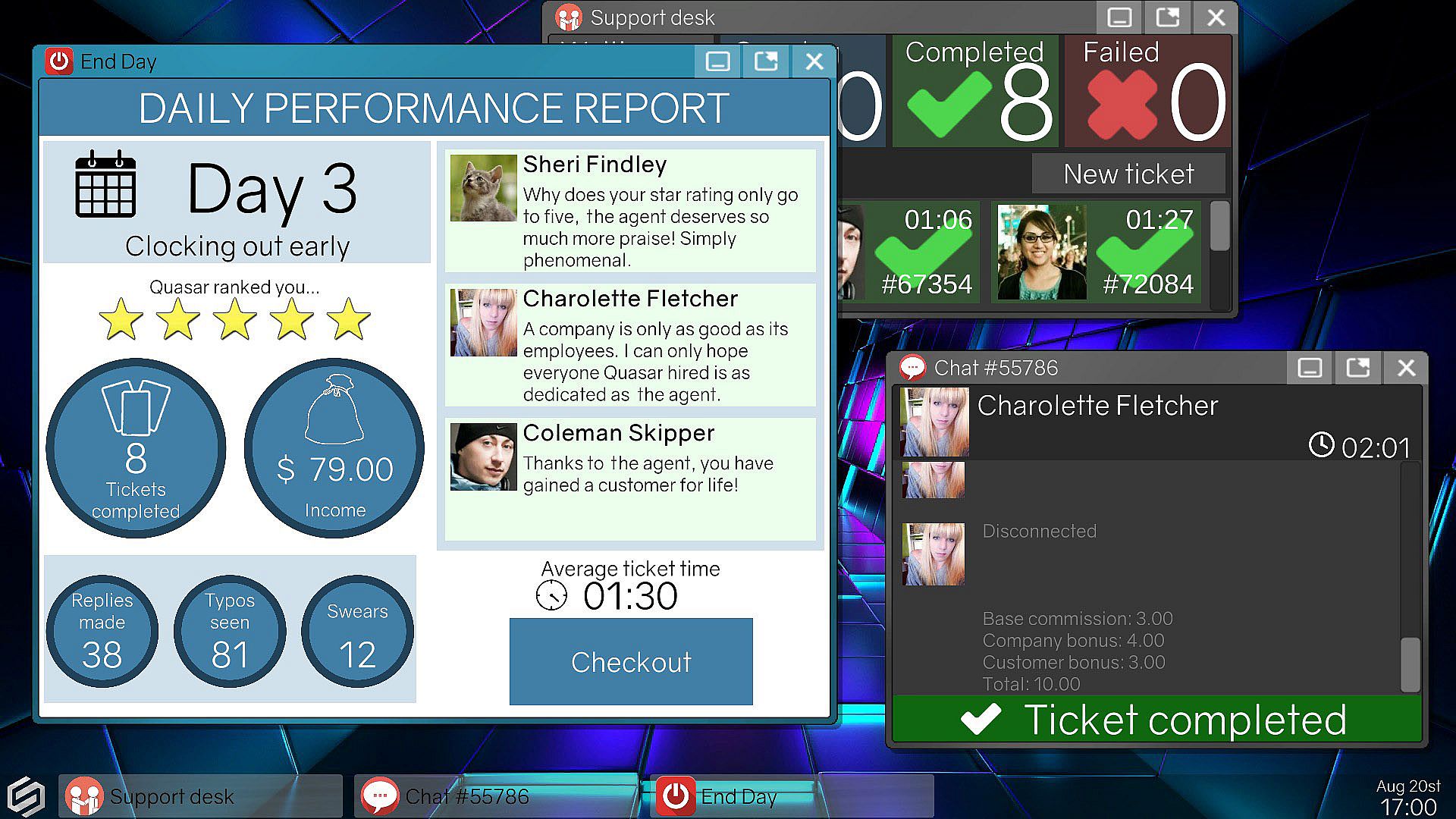
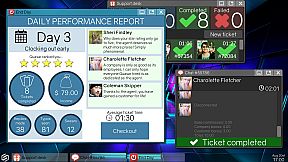
Progression ties directly to performance on the job and the alliances formed through choices. Completing tickets efficiently advances the workday, yet deviations from protocol introduce risks and rewards that shape available paths forward.
Game Modes
The game operates as a single continuous narrative experience without separate multiplayer or competitive modes. Instead, variety emerges from the branching structure created by player decisions during support sessions. Siding with the corporate structure, aligning with the hacktivist collective known as Indigo, assisting law enforcement, or pursuing independent objectives each unlock distinct sequences of events and desktop tools.
These paths intersect with the procedural dialogue and sandbox interactions, producing different ticket resolutions and story developments on subsequent playthroughs. The design encourages experimentation across multiple runs to explore how small manipulations early on influence later outcomes and available endings.
Narrative and Choices
A central conflict drives the story once the player begins receiving contact from the hacktivist group opposing Quasar Telecommunications. Decisions made while handling customer requests gradually reveal information about the corporation's practices and the group's motives. Players weigh loyalty to the employer against opportunities presented by Indigo or involvement with police investigations.
Personal agendas remain viable throughout, allowing focus on individual gain through blackmail or data collection rather than faction alignment. The procedural dialogue ensures conversations reflect these evolving stances, with colleagues and customers reacting differently based on accumulated actions. Over twenty major and minor endings reflect the range of possible conclusions.
Is It Worth Playing?
Tech Support: Error Unknown suits players interested in simulation mechanics combined with meaningful choice systems and multiple narrative outcomes. The mouse-driven interface keeps focus on decision-making rather than reflexes, while the desktop environment creates an authentic sense of performing the job. Those who enjoy uncovering hidden options through experimentation will find replay value in testing different allegiances and approaches to tickets.
Reception highlights the satisfying simulation of support work alongside the intrigue of the unfolding corporate conflict. The game remains available as a complete single-player title with no ongoing seasonal content or required updates for the core experience. Individuals seeking short-to-medium sessions with strong emphasis on consequence and discovery will likely appreciate its focused design.
- Procedural dialogue that adapts to player history
- Sandbox desktop tools for both legitimate fixes and alternative strategies
- Branching paths tied to corporate, hacktivist, or independent goals
- Multiple endings reflecting varied playstyles